
No products in the cart.
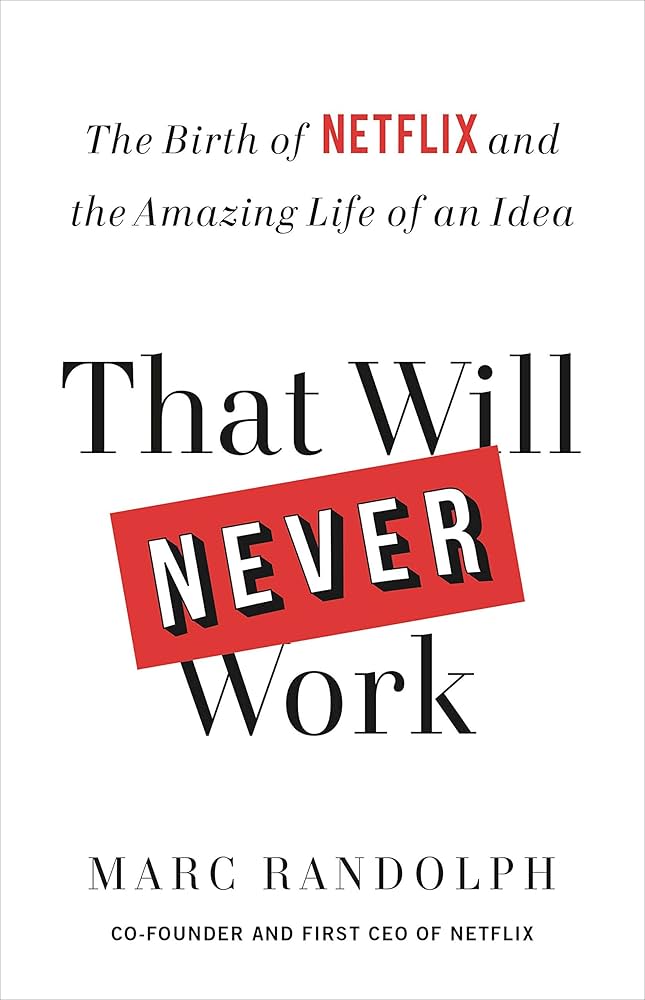
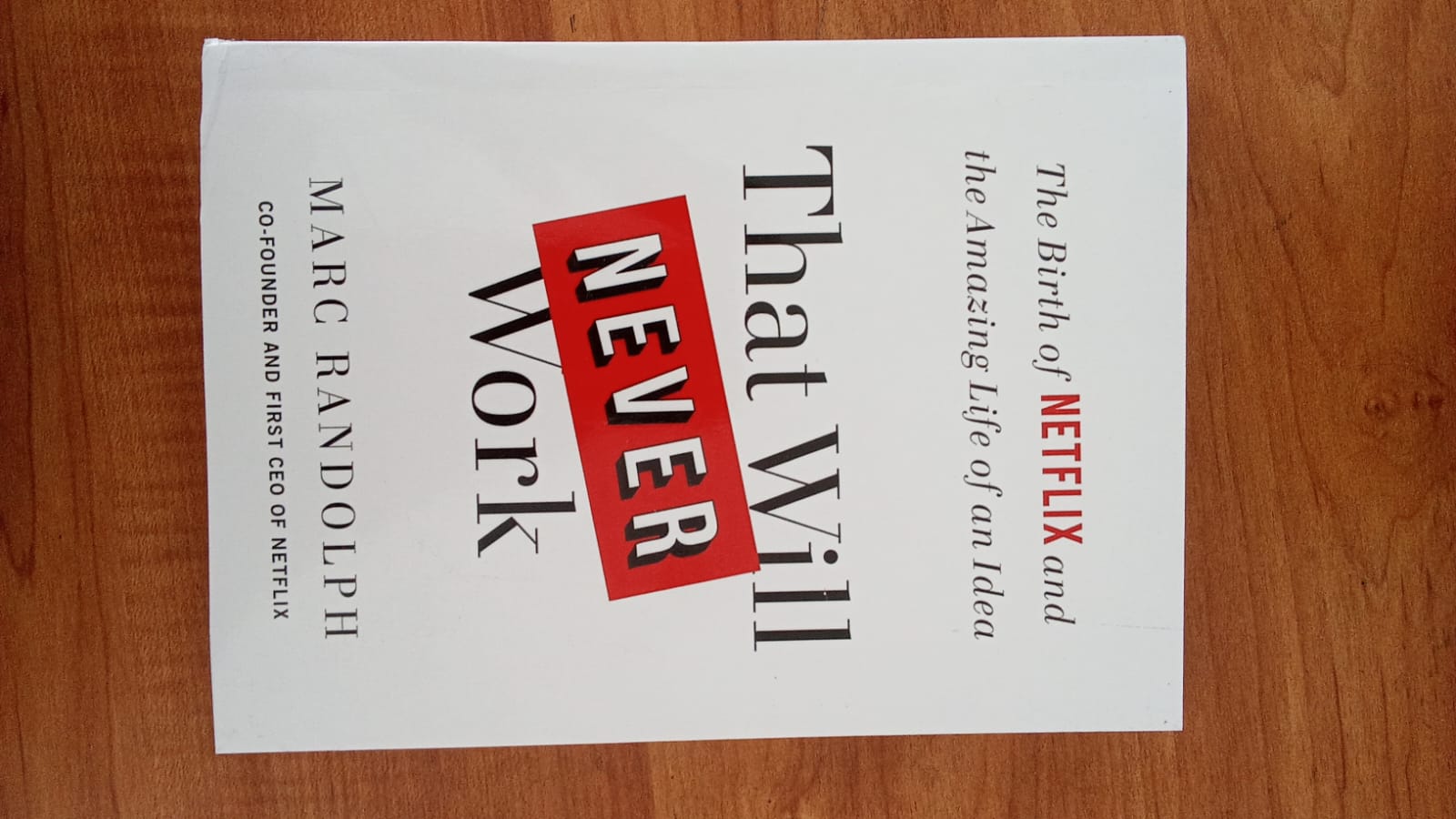
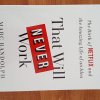


That Will Never Work by Marc Randolph


රු1,950.00
3 X Rs. 650.00 or 8% Cashback with


or 3 X රු650.00 with


or up to 4 X රු487.50 with


Product Description:
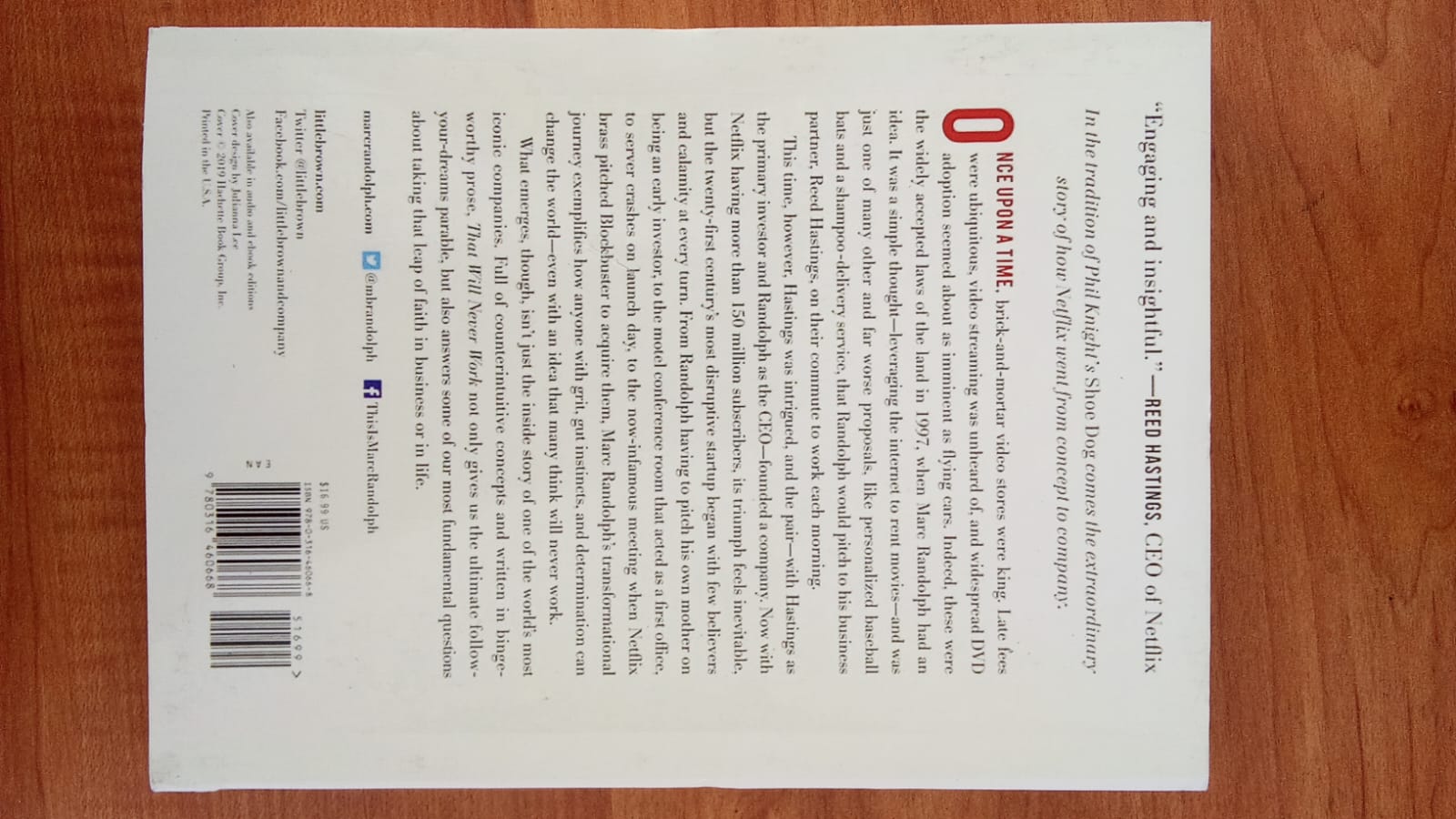
That Will Never Work by Marc Randolph is an inspiring startup memoir that tells the real story behind the creation of Netflix. Through honest and engaging storytelling, the book shares valuable lessons on entrepreneurship, innovation, and persistence. It highlights how great ideas grow through experimentation, teamwork, and learning from failure. Perfect for entrepreneurs, business enthusiasts, and anyone with big ideas, this book offers practical insights on turning simple concepts into successful ventures.
4 in stock
That Will Never Work by Marc Randolph
That Will Never Work by Marc Randolph is a candid business memoir about the early days of Netflix and the messy reality of turning a simple idea into a successful company.
Marc Randolph was Netflix’s first CEO and one of its co-founders.
In this book, he looks back at the company’s beginning and explains how the business developed through testing, mistakes, debate, persistence, and constant adjustment.
The story is not presented as a perfect startup success.
It is presented as a process.
About That Will Never Work
That Will Never Work explores how Netflix moved from an uncertain idea to a company that changed the entertainment industry.
At the beginning, there was no guarantee that the concept would succeed.
The founders tested different ideas.
Some failed.
Some looked promising but later had to change.
Others only became valuable after repeated experimentation.
This makes the book especially useful for readers interested in entrepreneurship.
It shows that successful companies rarely begin with a perfect plan.
Why the Title Matters
The phrase “that will never work” captures one of the central ideas in the book.
New ideas are often criticized before they are tested.
Sometimes the criticism is correct.
Sometimes it is not.
Randolph argues that the only reliable way to find out is to test the idea in the real world.
That mindset becomes one of the book’s strongest lessons.
7 Powerful Lessons from That Will Never Work
1. Ideas Are Only a Starting Point
People often become attached to ideas.
But an idea has very little value until it is tested.
Randolph emphasizes action.
Instead of spending too long trying to predict whether something will work, entrepreneurs can build a simple version and learn from the response.
This approach helped shape Netflix’s early development.
2. Start Small
One of the strongest lessons in That Will Never Work is the importance of simple experiments.
You do not need a perfect product before testing demand.
A small test can reveal whether customers are interested.
It can also show where the biggest problems are.
Starting small reduces risk.
It also speeds up learning.
3. Failure Provides Information
Many early ideas around Netflix did not work.
That did not automatically make them useless.
A failed experiment can reveal what customers do not want.
It can also point toward a better approach.
Randolph treats failure as part of the process.
The important thing is to learn quickly.
4. Business Models Must Evolve
The first version of a business may not be the version that succeeds.
Netflix changed significantly during its early years.
Pricing models changed.
Customer habits changed.
Operational decisions changed.
The company had to adapt.
This is a useful reminder that flexibility matters.
5. Customers Matter More Than Assumptions
Entrepreneurs often think they know what customers want.
Real behaviour may tell a different story.
That Will Never Work repeatedly shows the value of observing actual customer responses.
Data from real users can challenge assumptions.
That feedback can improve the product.
6. Teams Need Honest Debate
Building a company requires disagreement.
Strong teams do not always agree immediately.
They challenge ideas.
They test assumptions.
They debate priorities.
Randolph’s story shows that productive disagreement can improve decisions when the team remains focused on the goal.
7. Persistence Must Be Flexible
Persistence is important.
But blindly repeating the same approach is not.
The book distinguishes between persistence and stubbornness.
Entrepreneurs should stay committed to solving the problem.
But they may need to change the method.
That difference is critical.
The Early Netflix Idea
Netflix began at a time when video rental looked very different from today.
Physical stores dominated the market.
Customers had to visit those stores, rent a title, and return it on time.
The rise of DVDs created a new opportunity.
DVDs were smaller and easier to mail than VHS tapes.
That made a mail-based rental model more practical.
But the concept still had to be tested.
Testing the Mailing Idea
One of the most famous early experiments involved mailing a disc.
The founders needed to know whether a DVD could survive normal postal delivery.
This was a simple test.
But it answered an important question.
That experiment reflects the broader philosophy of the book.
Test the risky assumption first.
Do not spend months debating something that can be checked quickly.
The Problem with Early Business Models
The first version of Netflix was not immediately perfect.
The company initially experimented with individual rentals.
That model had limitations.
Customers did not always want to pay for each rental separately.
The team continued testing.
Eventually, the subscription model became much more important.
This shows why business models need to evolve.
The Importance of Customer Experience
Netflix needed more than a good idea.
It needed a smooth customer experience.
Customers had to find titles easily.
They had to trust the service.
Delivery had to be reliable.
Returns had to be simple.
These details mattered.
A business can have a strong concept and still fail if the customer experience is frustrating.
Competition and Pressure
Building Netflix also meant dealing with larger competitors.
Existing video rental companies already had brand recognition and physical locations.
That created pressure.
A small startup could not simply copy them.
It needed a different model.
This forced Netflix to think differently about convenience, selection, pricing, and customer relationships.
Working with Reed Hastings
Reed Hastings plays a major role in the story.
He and Randolph brought different strengths and perspectives.
Their relationship involved cooperation as well as disagreement.
That dynamic provides useful lessons about co-founders.
Successful partnerships do not require identical personalities.
They do require communication and clarity.
When Founders Disagree
Founders may disagree about strategy.
They may disagree about leadership.
They may also disagree about what the company should become.
That Will Never Work does not hide those tensions.
This makes the book more useful than a simplified success story.
Startup relationships can be complicated.
Honest discussion becomes essential.
Culture Matters Early
Company culture does not suddenly appear after a business becomes large.
It begins early.
The habits of the first team often influence the future company.
How people communicate matters.
How decisions are made matters.
How failure is treated matters.
These choices can shape the organization for years.
The Role of Timing
A strong idea can still fail if the timing is wrong.
Netflix benefited from several changes happening together.
DVD adoption was increasing.
Internet usage was growing.
Consumers were becoming more comfortable with online services.
These trends created an opportunity.
Entrepreneurs therefore need to understand not only the idea but also the environment around it.
Execution Beats Inspiration
Many people have good ideas.
Far fewer turn them into working businesses.
Execution requires patience.
It requires testing.
It requires operations.
It requires customer support.
It requires difficult decisions.
That Will Never Work makes this point clearly.
The glamorous part of entrepreneurship is small.
Most of the work is practical.
Who Should Read This Book?
That Will Never Work is ideal for entrepreneurs, startup founders, business students, product managers, and readers interested in Netflix.
It is especially useful for people who want a realistic view of startup life.
Readers who enjoy books about experimentation and product development may also find it valuable.
The book is accessible even if you do not have a business background.
Its lessons are explained through stories rather than heavy theory.
About Marc Randolph
Marc Randolph is an entrepreneur, investor, mentor, and co-founder of Netflix.
He served as the company’s first CEO.
His career includes work in technology, direct marketing, startups, and business mentoring.
In That Will Never Work, Randolph focuses on the earliest phase of Netflix.
Readers can learn more through the official Marc Randolph website.
Product Details
Title: That Will Never Work
Subtitle: The Birth of Netflix and the Amazing Life of an Idea
Author: Marc Randolph
Genre: Business / Entrepreneurship / Memoir / Startups
Language: English
Original Publication: 2019
Publisher: Little, Brown and Company
A commonly listed edition carries ISBN 9780316530200.
Page count and format may vary by edition.
Always check the ISBN and page count printed on your physical copy before entering final WooCommerce specifications.
Explore More Business Books
That Will Never Work is a valuable reminder that successful companies are rarely built from perfect ideas.
They are built through testing.
They are improved through mistakes.
They evolve through customer feedback.
And they survive because teams keep learning.
The early story of Netflix shows how experimentation can turn uncertainty into progress.
Readers interested in startups, entrepreneurship, leadership, and business growth can explore more Business, Finance & Economics Books at Bargain Books.
For readers who want a realistic startup story filled with practical lessons, That Will Never Work is an engaging and useful read.
Be the first to review “That Will Never Work by Marc Randolph”
Related products
Out of stock
Self-Help & Psychology
රු1,900.00
3 X Rs. 633.33 or 8% Cashback with
or 3 X රු633.33 with
or up to 4 X රු475.00 with
Non-Fiction & Knowledge
රු2,250.00
3 X Rs. 750.00 or 8% Cashback with
or 3 X රු750.00 with
or up to 4 X රු562.50 with
-24%
Out of stock
Non-Fiction & Knowledge
Original price was: රු2,500.00.රු1,900.00Current price is: රු1,900.00.
3 X Rs. 633.33 or 8% Cashback with
or 3 X රු633.33 with
or up to 4 X රු475.00 with
Out of stock
Non-Fiction & Knowledge
රු1,600.00
3 X Rs. 533.33 or 8% Cashback with
or 3 X රු533.33 with
or up to 4 X රු400.00 with
-29%

Self-Help & Psychology
Original price was: රු1,750.00.රු1,250.00Current price is: රු1,250.00.
3 X Rs. 416.67 or 8% Cashback with
or 3 X රු416.67 with
or up to 4 X රු312.50 with
-13%

Out of stock
Non-Fiction & Knowledge
Original price was: රු3,900.00.රු3,400.00Current price is: රු3,400.00.
3 X Rs. 1,133.33 or 8% Cashback with
or 3 X රු1,133.33 with
or up to 4 X රු850.00 with
රු2,000.00
3 X Rs. 666.67 or 8% Cashback with
or 3 X රු666.67 with
or up to 4 X රු500.00 with
-23%

Non-Fiction & Knowledge
Original price was: රු2,200.00.රු1,700.00Current price is: රු1,700.00.
3 X Rs. 566.67 or 8% Cashback with
or 3 X රු566.67 with
or up to 4 X රු425.00 with
Reviews
There are no reviews yet.