
No products in the cart.
-21%
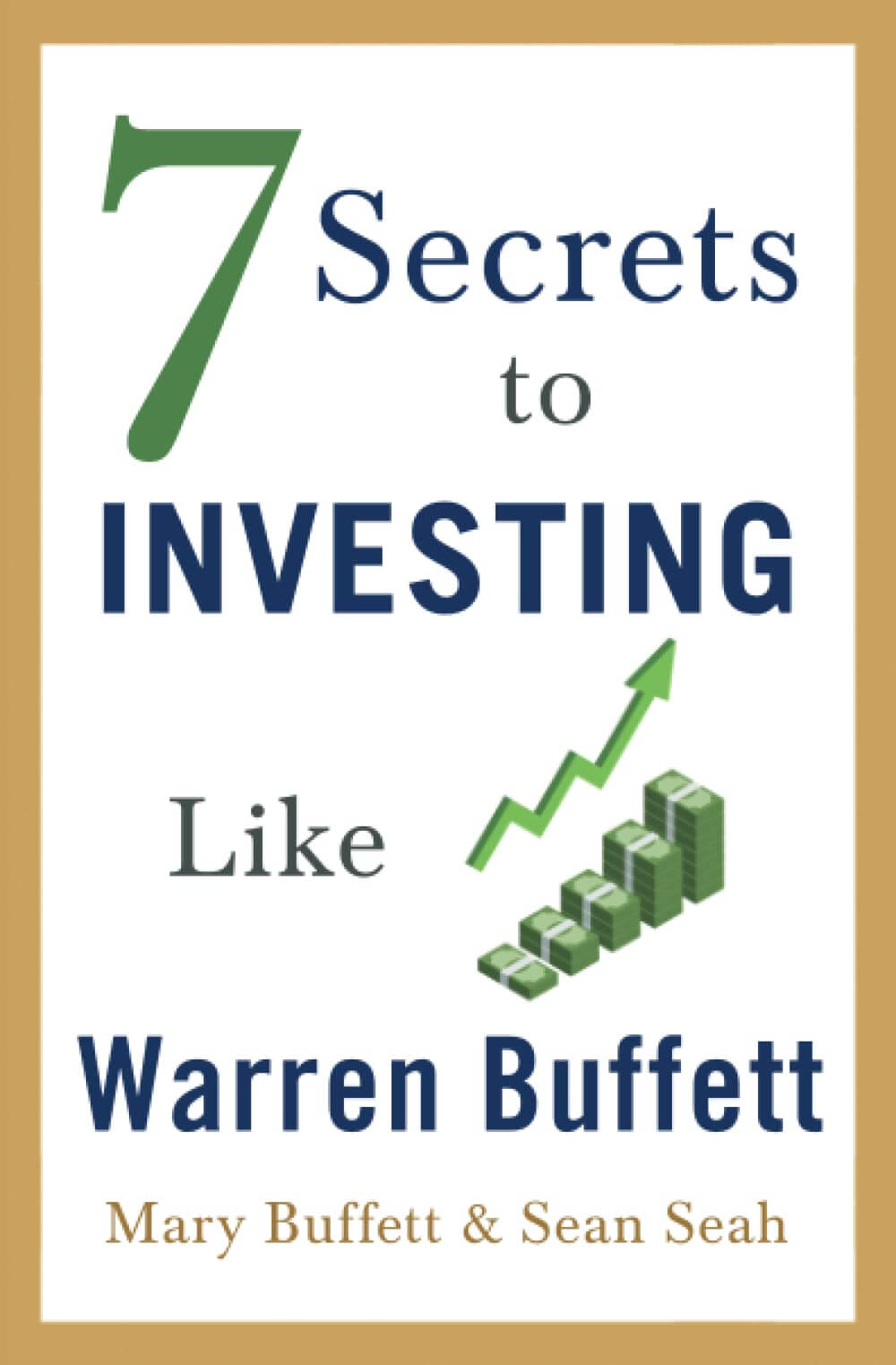
7 Secrets to Investing Like Warren Buffett by Mary Buffett & Sean Seah


Original price was: රු1,900.00.රු1,500.00Current price is: රු1,500.00.
3 X Rs. 500.00 or 8% Cashback with


or 3 X රු500.00 with


or up to 4 X රු375.00 with


7 Secrets to Investing Like Warren Buffett by Mary Buffett and Sean Seah is a beginner-friendly guide to understanding value investing and developing the habits and mindset associated with long-term investing.
Rather than focusing only on buying and selling stocks, the authors begin with personal habits, financial discipline and the importance of thinking like a long-term investor.
The book then moves into practical investment topics such as finding promising companies, understanding financial information, estimating value, looking for a margin of safety and building a diversified portfolio.
Questionnaires, charts and examples are used to make investing concepts easier to understand for readers who may not have a professional finance background.
Product details:
- Title: 7 Secrets to Investing Like Warren Buffett
- Authors: Mary Buffett and Sean Seah
- Publisher: Simon & Schuster UK
- Format: Paperback
- Language: English
- Pages: 240
- ISBN-13: 9781471188978
- ISBN-10: 1471188973
- Publication date: 22 October 2019
- Dimensions: 23.4 × 15.3 × 1.7 cm
- Weight: Approximately 290 g
- Categories: Personal Finance, Investing and Wealth Management
- Key themes: Value investing, stock selection, valuation, margin of safety and portfolio management
Note: This book is educational material about investing principles and should not be treated as personalised financial or investment advice.
4 in stock
7 Secrets to Investing Like Warren Buffett by Mary Buffett & Sean Seah
7 Secrets to Investing Like Warren Buffett by Mary Buffett and Sean Seah is a practical introduction to value investing designed especially for readers who want to understand how long-term investors evaluate companies and make investment decisions.
The book combines investing principles with personal habits and mindset.
Instead of beginning immediately with complicated stock-market terminology, the authors first look at behaviours that may support long-term financial success.
7 Secrets to Investing Like Warren Buffett
7 Secrets to Investing Like Warren Buffett aims to make value investing easier for beginners to understand.
Mary Buffett is known for co-authoring books in the Buffettology series, while Sean Seah is an investor and educator who has taught investing across Asia.
Together, they present a structured introduction to habits, stock research, valuation and portfolio management.
The book is not written by Warren Buffett himself.
Instead, it explains investing principles associated with Buffett-style value investing and ideas influenced by Benjamin Graham.
Start with the Right Habits
One of the distinctive features of the book is that it does not treat investing as purely a mathematical exercise.
The early chapters discuss habits and lifestyle choices.
Topics include work, debt, health and the way personal behaviour can influence long-term financial decisions.
This reflects an important idea: investment success can be affected by what happens outside the stock market.
Avoid Unnecessary Debt
Financial flexibility can be difficult to maintain when too much income is committed to debt.
The book therefore discusses avoiding unnecessary debt as part of developing stronger financial habits.
Reducing financial pressure can make it easier to think long term.
It may also reduce the temptation to make investment decisions based on short-term financial needs.
Think Like a Long-Term Investor
Value investing generally focuses on understanding the underlying business rather than treating stocks simply as prices moving up and down.
7 Secrets to Investing Like Warren Buffett encourages readers to examine the company behind the stock.
Useful questions may include:
- What does the company actually do?
- How does it make money?
- Does it have a strong business model?
- Are its finances understandable?
- Does it appear financially stable?
- Is the stock available at a reasonable price?
This shifts attention from speculation toward business analysis.
Understand Value Investing
Value investing is one of the central subjects of the book.
The basic principle is that the market price of a stock and the underlying value of the business are not always identical.
A company can be excellent but overpriced.
Another company may temporarily trade below what an investor believes its underlying business is worth.
The challenge is estimating value carefully enough to make an informed decision.
Learn from Benjamin Graham’s Principles
The authors connect their approach with ideas associated with Benjamin Graham, widely known for his influence on value investing.
Graham’s approach emphasized analysing businesses carefully and avoiding the assumption that market prices are always rational.
One of the important ideas connected with this tradition is the margin of safety.
The book uses these principles to introduce readers to valuation and risk management.
Finding Potential Investments
Beginners often ask where they should start looking for companies.
The book includes material on finding stock ideas and using financial websites.
This is useful because having an investment philosophy is only the beginning.
Investors also need a process for identifying businesses worth researching.
The next step is separating interesting companies from genuinely attractive investments.
Study the Business
A stock represents ownership in a business.
That idea is easy to forget when watching prices move throughout the trading day.
Value investors tend to focus more heavily on the underlying company.
They may examine:
- Revenue
- Earnings
- Debt
- Cash generation
- Profitability
- Competitive position
- Management
- Historical performance
No single measurement gives the complete answer.
The goal is to understand the business from several angles.
Read Financial Information
7 Secrets to Investing Like Warren Buffett introduces readers to financial information used when analysing companies.
Beginners may initially find accounting terminology intimidating.
However, learning to interpret financial statements can make investment decisions more informed.
Important information may include the income statement, balance sheet and cash-flow statement.
These help investors understand profitability, assets, liabilities and cash generation.
Look for Quality
A cheap stock is not automatically a good investment.
A company’s share price may be low because the underlying business has significant problems.
Value investing therefore involves both quality and price.
Investors may look for businesses with characteristics such as:
- Understandable operations
- Consistent financial performance
- Reasonable debt
- Durable competitive advantages
- Strong management
- Healthy cash generation
Only after evaluating the company does valuation become meaningful.
Understand Valuation
A major section of the book is dedicated to valuation.
Google Books’ contents show topics including net-net investing, price-to-book value, price-to-earnings ratios, dividend yield and growth-based valuation.
Valuation attempts to answer a basic question:
What is this business reasonably worth?
This is important because even a high-quality company can become a poor investment if purchased at an unrealistic price.
Price-to-Earnings Ratio
The price-to-earnings ratio, commonly called the P/E ratio, is one of the most widely discussed valuation measures.
It compares a company’s share price with its earnings.
However, a P/E ratio should not normally be viewed in isolation.
Different industries and companies can justify different valuations.
Investors need context.
Price-to-Book Value
Price-to-book compares a company’s market value with the accounting value of its net assets.
This measurement may be more useful in some industries than others.
The book introduces it as one of several valuation tools rather than suggesting one ratio can solve every investment decision.
Dividend Yield
Dividend yield compares a company’s dividend payments with its share price.
Income-focused investors may pay particular attention to this measure.
However, a high dividend yield alone does not guarantee a strong investment.
Investors should still examine whether the underlying company can sustainably support its dividend payments.
Margin of Safety
One of the most important value-investing principles discussed in 7 Secrets to Investing Like Warren Buffett is purchasing with a margin of safety.
If an investor estimates a business is worth a certain amount, buying considerably below that estimate may provide some protection against errors.
Valuation is never perfectly precise.
A margin of safety acknowledges that uncertainty.
Avoid Trying to Time the Market
The book’s value-investing approach differs from strategies centred on predicting short-term market movements.
Rather than constantly attempting to guess what the market will do tomorrow, readers are encouraged to focus on company quality and valuation.
This can reduce the temptation to react emotionally to every market movement.
Long-term thinking becomes more important than short-term noise.
Build a Portfolio
The final part of the book covers portfolio management.
Finding one interesting stock is different from managing an entire investment portfolio.
The authors discuss selecting quality stocks, paying sensible prices and diversifying across several investments.
Diversification can help reduce the impact of one investment performing badly.
However, diversification does not eliminate investment risk entirely.
Understand Risk
Risk should not be confused only with share-price volatility.
A stock price can move sharply even when the underlying company remains healthy.
A more fundamental risk is permanent loss of capital.
Investors therefore need to think about the quality of the business, financial strength and the price they pay.
Buying without understanding the company increases uncertainty.
Control Emotion
Successful investing can be difficult because markets involve both money and emotion.
Fear may encourage people to sell during declines.
Excitement may encourage them to buy after prices have already risen dramatically.
A disciplined investing process can reduce the influence of these emotional reactions.
Research, valuation and clear investment criteria provide structure.
Create an Investment Checklist
One practical way to apply the book’s ideas is to create a checklist.
Before buying a stock, ask:
- Do I understand the business?
- Does the company appear financially healthy?
- What competitive strengths does it have?
- Is management trustworthy and capable?
- What is my estimate of value?
- Is there a sufficient margin of safety?
- How does this investment fit my portfolio?
A checklist cannot guarantee success.
It can help prevent impulsive decisions.
Keep Learning
Investing knowledge develops over time.
Readers may need to study accounting, valuation, economics and business strategy in greater depth after finishing this introductory guide.
The book can therefore function as a starting point.
It introduces the questions beginners need to learn how to answer.
Useful for Beginning Investors
7 Secrets to Investing Like Warren Buffett is particularly designed for people who are new to investing.
The publisher describes it as a complete guide for beginning investors who want to understand Buffett-style value investing.
Charts, questionnaires and explanations are included to make the concepts more accessible.
About Mary Buffett
Mary Buffett is the co-author of the bestselling Buffettology series.
Her work has focused extensively on explaining Warren Buffett-related investment concepts for general readers.
She has also contributed to publications including HuffPost and Thrive Global.
About Sean Seah
Sean Seah is an investor and financial educator.
Simon & Schuster notes that he has lectured at colleges, universities and financial institutions throughout Asia.
He has also collaborated with Mary Buffett on investor education.
Who Should Read This Book?
7 Secrets to Investing Like Warren Buffett may appeal to:
- Beginning investors
- Personal-finance readers
- Business students
- Value-investing enthusiasts
- Readers interested in Warren Buffett
- Investors learning valuation
- People learning how to analyse companies
- Readers building long-term portfolios
The book is especially suitable for readers who want a relatively accessible introduction before moving into more technical investing material.
Product Details
Product title: 7 Secrets to Investing Like Warren Buffett
Authors: Mary Buffett and Sean Seah
Publisher: Simon & Schuster UK
Format: Paperback
Language: English
Page count: 240 pages
ISBN-13: 9781471188978
ISBN-10: 1471188973
Publication date: 22 October 2019
Dimensions: 234 × 153 × 17 mm
Weight: Approximately 290 grams
Categories: Personal Finance, Investing and Wealth Management
Key themes: Value investing, valuation, stock analysis, margin of safety and portfolio management
Why Choose 7 Secrets to Investing Like Warren Buffett?
7 Secrets to Investing Like Warren Buffett gives beginners a structured introduction to both the mindset and practical analysis involved in long-term value investing.
Mary Buffett and Sean Seah move from personal financial habits into company research, valuation and portfolio management.
The book explains why buying a stock involves more than watching its price.
Readers are encouraged to understand businesses, analyse financial information and think carefully about valuation before investing.
For readers interested in Warren Buffett-style investing, personal finance and long-term wealth building, 7 Secrets to Investing Like Warren Buffett is a practical addition to a business and finance bookshelf.
Explore our complete business, finance and investing books collection to discover more titles about value investing, personal finance, wealth management and stock-market analysis.
Educational note: Investing involves risk, including possible loss of capital. The concepts in this book and description are educational and are not personalised financial advice.
View the official publication details for
7 Secrets to Investing Like Warren Buffett
.
| Author | Mary Buffett and Sean Seah |
|---|---|
| Language | English |
| Type | Paperback Printed Book |
Be the first to review “7 Secrets to Investing Like Warren Buffett by Mary Buffett & Sean Seah”
Related products
![Stories of bible [hardcover]](https://bargainbooks.lk/wp-content/uploads/Stories-of-bible-hardcover-3-2-300x450.jpeg)
Damaged & Imperfect Books
රු1,750.00
3 X Rs. 583.33 or 8% Cashback with
or 3 X රු583.33 with
or up to 4 X රු437.50 with
Out of stock
Business, Finance & Economics
රු1,700.00
3 X Rs. 566.67 or 8% Cashback with
or 3 X රු566.67 with
or up to 4 X රු425.00 with
Damaged & Imperfect Books
රු1,700.00
3 X Rs. 566.67 or 8% Cashback with
or 3 X රු566.67 with
or up to 4 X රු425.00 with
Business, Finance & Economics
රු2,500.00
3 X Rs. 833.33 or 8% Cashback with
or 3 X රු833.33 with
or up to 4 X රු625.00 with
-32%
Out of stock
Business, Finance & Economics
Original price was: රු2,800.00.රු1,900.00Current price is: රු1,900.00.
3 X Rs. 633.33 or 8% Cashback with
or 3 X රු633.33 with
or up to 4 X රු475.00 with
-16%
Out of stock
Business, Finance & Economics
Original price was: රු1,900.00.රු1,600.00Current price is: රු1,600.00.
3 X Rs. 533.33 or 8% Cashback with
or 3 X රු533.33 with
or up to 4 X රු400.00 with
Out of stock
Business, Finance & Economics
රු1,900.00
3 X Rs. 633.33 or 8% Cashback with
or 3 X රු633.33 with
or up to 4 X රු475.00 with
Out of stock
Damaged & Imperfect Books
රු1,700.00
3 X Rs. 566.67 or 8% Cashback with
or 3 X රු566.67 with
or up to 4 X රු425.00 with
Reviews
There are no reviews yet.