
No products in the cart.
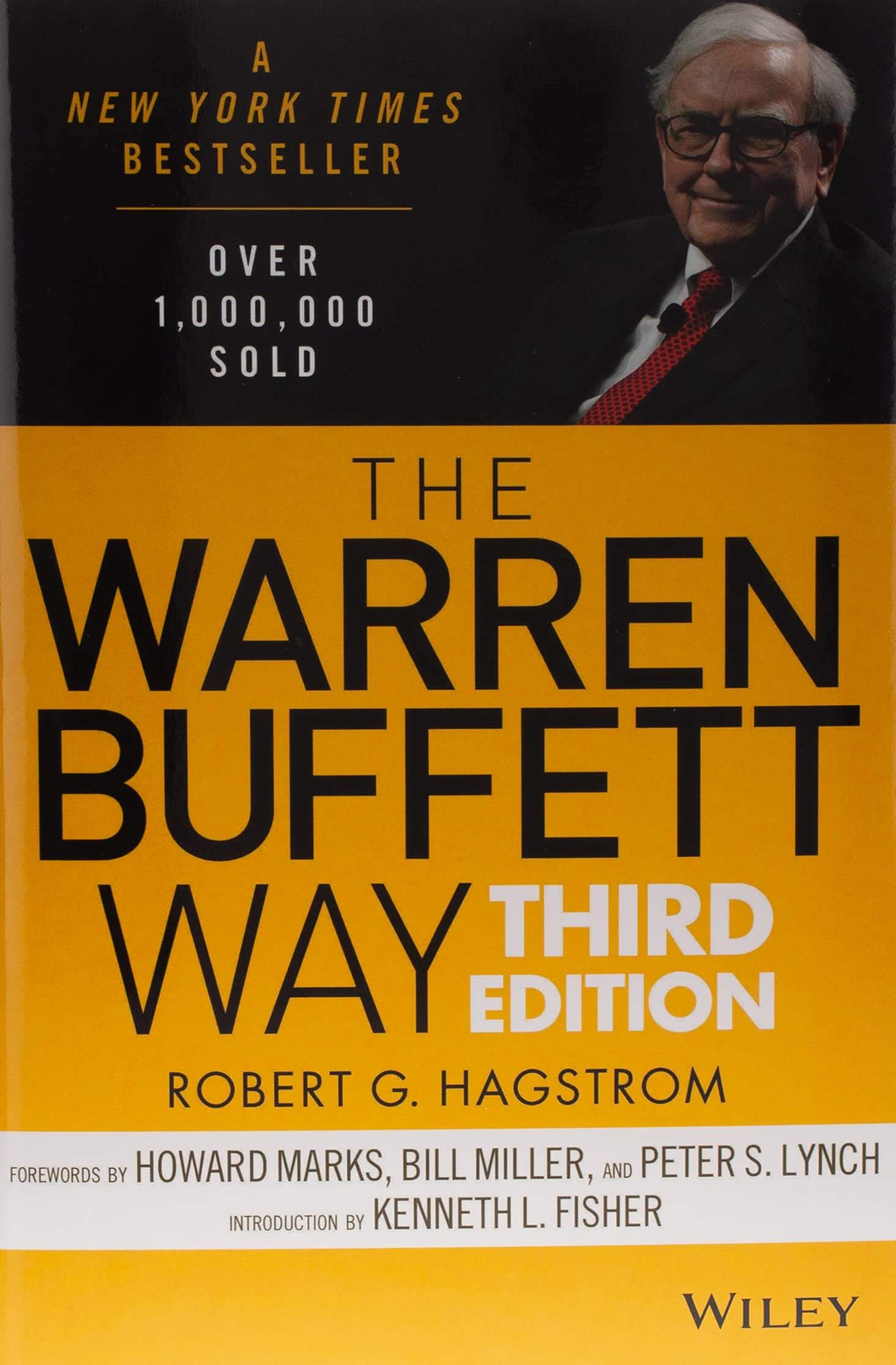
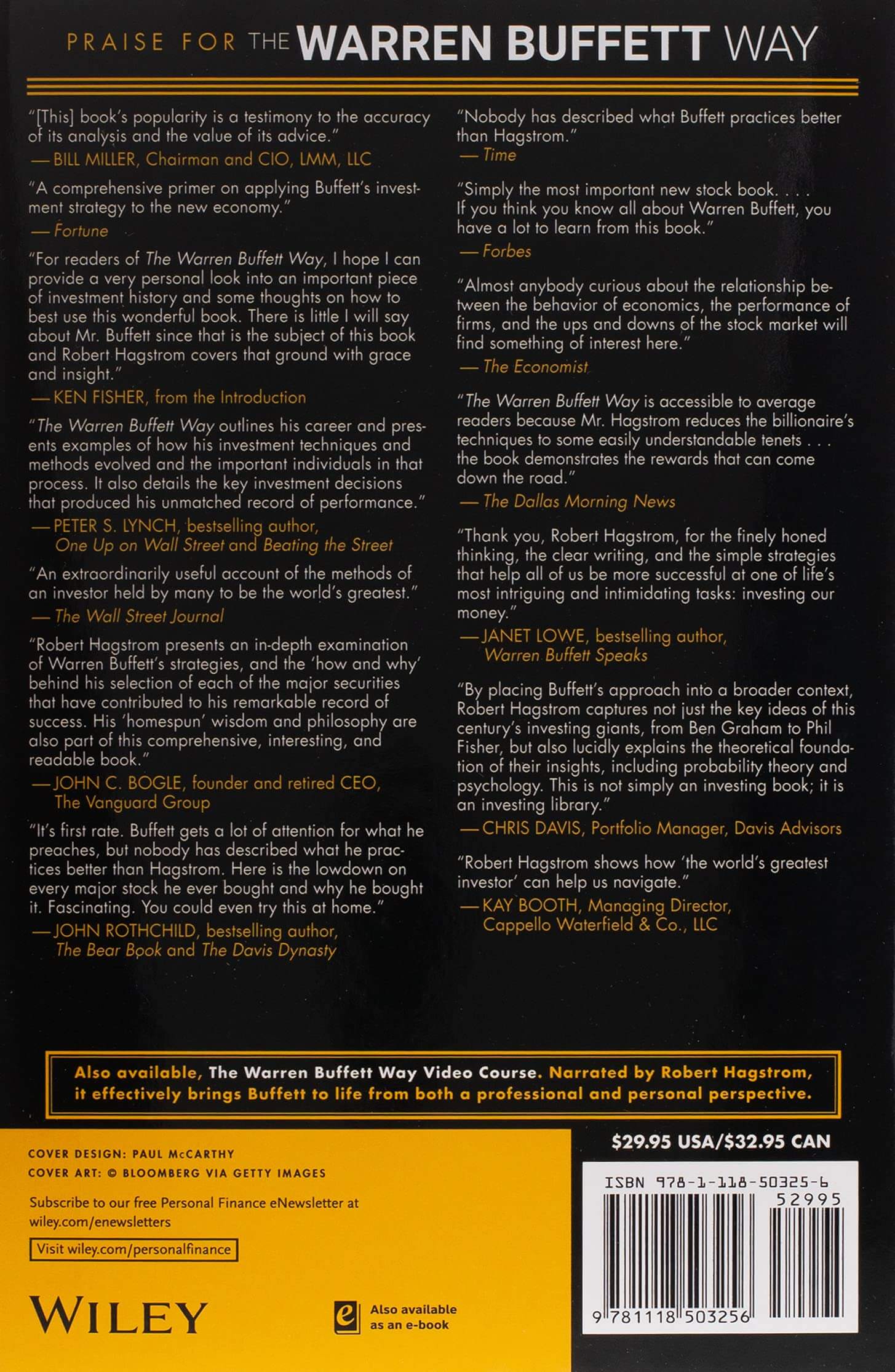



The Warren Buffett Way by Robert G. Hagstrom
The Warren Buffett Way by Robert G. Hagstrom is a practical investing book that explains the principles behind Warren Buffett’s approach to selecting businesses and building long-term wealth.
The book focuses on disciplined investing.
It looks at business quality, management, financial strength, valuation, patience, and long-term thinking.
Rather than chasing market trends, Hagstrom explains how Buffett studies companies as businesses.
About The Warren Buffett Way
The Warren Buffett Way is one of the best-known books about Warren Buffett’s investment philosophy.
Robert G. Hagstrom has studied Buffett’s methods for decades.
The book organizes those methods into a clear framework.
Wiley describes the approach as business-driven investing.
The idea is simple.
Do not think only about stock prices.
Think about the company behind the stock.
7 Powerful Lessons from The Warren Buffett Way
1. Buy Businesses, Not Ticker Symbols
One of the biggest lessons in The Warren Buffett Way is to think like a business owner.
A stock represents ownership in a company.
That means investors should ask real business questions.
What does the company sell?
How does it make money?
Does it have loyal customers?
Can it remain competitive?
The price matters.
But the business comes first.
2. Understand the Business
Buffett prefers businesses he can understand.
That does not mean a company must be simple.
It means the investor should understand how it earns money.
A business that is impossible to understand is difficult to value.
That makes decision-making weaker.
3. Look for Strong Economics
A good business should have attractive economics.
That may include strong margins.
Consistent profits.
Healthy cash flow.
Low capital requirements.
Or a durable competitive advantage.
The Warren Buffett Way encourages readers to study the underlying economics rather than only recent share-price movements.
4. Management Quality Matters
Numbers are important.
But management matters too.
Leaders allocate capital.
They decide where money goes.
They influence company culture.
They decide whether profits are reinvested, distributed, or wasted.
Hagstrom explains why Buffett pays close attention to management quality and honesty.
5. Think Long Term
Buffett is famous for long holding periods.
The book explains why patience can be powerful.
Good businesses need time to compound value.
Constantly buying and selling can interrupt that process.
Long-term thinking can also reduce emotional reactions to short-term volatility.
6. Buy With a Margin of Safety
A strong company can still be a poor investment if the price is too high.
Valuation matters.
Investors need to compare price with estimated business value.
Buying with a margin of safety creates room for error.
This is one of the classic principles associated with value investing.
7. Control Your Emotions
Investing is not only about analysis.
Behavior matters.
Fear can cause people to sell at the wrong time.
Greed can cause people to overpay.
The book emphasizes patience, discipline, and emotional control.
Wiley’s latest edition also includes discussion of the psychology of long-term investing and common investor mistakes.
Buffett’s Business Tenets
One part of the framework focuses on the business itself.
Is the company understandable?
Does it have a consistent operating history?
Does it have favorable long-term prospects?
These questions help investors avoid businesses that are too unpredictable.
Management Tenets
Management is another major category.
Does management allocate capital rationally?
Is it honest with shareholders?
Does it avoid following competitors blindly?
Strong management can protect shareholder value.
Weak management can destroy it.
Financial Tenets
The book also looks at financial performance.
Return on equity matters.
Owner earnings matter.
Profit margins matter.
Capital efficiency matters.
The goal is to identify businesses that generate strong economics over time.
Market Tenets
The final decision involves price.
What is the business worth?
Can it be purchased at a reasonable discount?
A great company at an unreasonable price may still be a weak investment.
This keeps valuation central to the process.
Warren Buffett and Benjamin Graham
Buffett was heavily influenced by Benjamin Graham.
Graham taught the importance of value.
He emphasized buying securities below estimated intrinsic worth.
Buffett later combined that discipline with a stronger focus on business quality.
That shift became an important part of his investment philosophy.
Charlie Munger’s Influence
Charlie Munger also had a major influence on Buffett.
Munger encouraged paying more attention to outstanding businesses.
The 30th Anniversary Edition includes additional material on Munger’s idea of worldly wisdom.
This means investors should learn from multiple disciplines.
Economics.
Psychology.
Accounting.
History.
Business strategy.
Better thinking can improve investment decisions.
Competitive Advantage
A strong company often has something competitors find difficult to copy.
Brand strength.
Network effects.
Cost advantages.
Customer loyalty.
Distribution.
Intellectual property.
These advantages may help protect profits over time.
This is often described as an economic moat.
Owner Earnings
Accounting profit is useful.
But cash generation matters too.
Buffett often focuses on the cash a business can generate for its owners.
This helps investors think beyond headline earnings.
A company may report profits but still require huge amounts of reinvestment.
That changes its economic attractiveness.
Capital Allocation
A business can earn money and still use it badly.
Management must decide what to do with cash.
Reinvest.
Pay dividends.
Repurchase shares.
Acquire another company.
Hold cash.
Good capital allocation can increase value.
Poor decisions can destroy it.
Concentration vs. Overdiversification
Buffett has often held meaningful positions in businesses he understands well.
That does not mean concentration is appropriate for everyone.
Concentrated portfolios can create higher risk.
The larger lesson is to understand what you own.
Blind diversification does not replace analysis.
Market Volatility
Share prices move constantly.
Business value usually changes more slowly.
That difference creates opportunity.
A strong investor should not automatically treat every price movement as new information about the business.
This is where patience becomes important.
The Psychology of Investing
Human behavior can create mistakes.
Investors copy crowds.
They panic.
They become overconfident.
They chase recent winners.
The Warren Buffett Way encourages a calmer approach.
Good investing requires both analysis and temperament.
The 12 Investment Tenets
Wiley describes the latest edition as covering 12 investment tenets behind Buffett’s business-driven strategy.
These tenets combine business analysis, management quality, financial performance, and valuation.
The framework is useful because it gives readers a repeatable checklist.
30th Anniversary Edition
The newest 30th Anniversary Edition updates Hagstrom’s classic work.
Wiley lists a new author preface.
It also includes material on Charlie Munger’s worldly wisdom.
Academic references have been expanded.
The edition also includes Berkshire Hathaway’s common-stock portfolios from 1977 through 2021.
Who Should Read This Book?
The Warren Buffett Way is ideal for readers interested in value investing, stock market investing, business analysis, portfolio management, and Warren Buffett.
Beginners may appreciate the structured framework.
More experienced investors may find the discussion of business quality and investor psychology useful.
Business students may also benefit from the sections on management and capital allocation.
Important Investing Note
This book explains an investing framework.
It does not provide personalized financial advice.
Investment decisions should consider risk tolerance, time horizon, financial goals, taxes, diversification, and personal circumstances.
Markets can fall.
Companies can fail.
Past performance does not guarantee future returns.
Readers should do independent research or seek qualified financial advice when appropriate.
About Robert G. Hagstrom
Robert G. Hagstrom is an investment author and professional investor.
Wiley says he has studied and written about Warren Buffett since 1984 and has more than 40 years of professional investing experience.
His books include The Warren Buffett Way, The Warren Buffett Portfolio, and Warren Buffett: Inside the Ultimate Money Mind.
Readers can learn more through the official Wiley page for The Warren Buffett Way.
Product Details
Title: The Warren Buffett Way
Author: Robert G. Hagstrom
Genre: Investing / Finance / Business
Language: English
Main Topics: Value Investing, Business Analysis, Portfolio Management, Warren Buffett
3rd Edition
Publisher: Wiley
ISBN-13: 9781118503256
Edition: 3rd Edition
Pages: 320
Publication Date: September 2013
Wiley confirms these details for the 3rd Edition.
30th Anniversary Hardcover Edition
Publisher: Wiley
ISBN-13: 9781394239849
Format: Hardcover
Pages: 352
Publication Date: April 2024
Wiley confirms this as the updated 30th Anniversary hardcover edition.
30th Anniversary Paperback Edition
ISBN-13: 9781394377992
Format: Paperback
Pages: 352
Publication Date: April 2026
Wiley lists this paperback as part of the 30th Anniversary Edition.
Always check the ISBN on your physical copy before entering final WooCommerce specifications.
Explore More Investing Books
The Warren Buffett Way shows that successful investing is not simply about predicting the next market move.
It is about understanding businesses.
Studying management.
Evaluating financial strength.
Paying a sensible price.
And remaining patient.
Readers can explore more Business, Finance & Economics Books at Bargain Books.
For readers interested in Warren Buffett, value investing, long-term thinking, and business analysis, The Warren Buffett Way offers a clear framework for understanding one of the world’s most studied investment approaches.
| Author | Robert G. Hagstorm |
|---|---|
| Language | English |
| Type | Paperback Printed Book (Second Quality Copy) |
Be the first to review “Warren buffet way by Robert G. Hagstorm”
Related products
-31%
Business, Finance & Economics
Original price was: රු1,600.00.රු1,100.00Current price is: රු1,100.00.
3 X Rs. 366.67 or 8% Cashback with


or 3 X රු366.67 with


or up to 4 X රු275.00 with

-39%
Out of stock
Self-Help & Psychology
Original price was: රු2,450.00.රු1,500.00Current price is: රු1,500.00.
3 X Rs. 500.00 or 8% Cashback with
or 3 X රු500.00 with
or up to 4 X රු375.00 with
Out of stock
රු1,500.00
3 X Rs. 500.00 or 8% Cashback with
or 3 X රු500.00 with
or up to 4 X රු375.00 with

Out of stock
Damaged & Imperfect Books
රු1,700.00
3 X Rs. 566.67 or 8% Cashback with
or 3 X රු566.67 with
or up to 4 X රු425.00 with
-33%
Out of stock
Business, Finance & Economics
Original price was: රු2,300.00.රු1,550.00Current price is: රු1,550.00.
3 X Rs. 516.67 or 8% Cashback with
or 3 X රු516.67 with
or up to 4 X රු387.50 with

Out of stock
Business, Finance & Economics
රු1,900.00
3 X Rs. 633.33 or 8% Cashback with
or 3 X රු633.33 with
or up to 4 X රු475.00 with
![Stories of bible [hardcover]](https://bargainbooks.lk/wp-content/uploads/Stories-of-bible-hardcover-3-3-300x450.jpeg)
Damaged & Imperfect Books
රු1,750.00
3 X Rs. 583.33 or 8% Cashback with
or 3 X රු583.33 with
or up to 4 X රු437.50 with
![Stories of bible [hardcover]](https://bargainbooks.lk/wp-content/uploads/Stories-of-bible-hardcover-4-1-300x450.jpeg)
Damaged & Imperfect Books
රු1,750.00
3 X Rs. 583.33 or 8% Cashback with
or 3 X රු583.33 with
or up to 4 X රු437.50 with
Reviews
There are no reviews yet.