
No products in the cart.
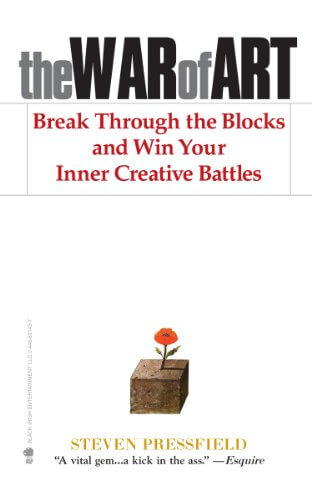
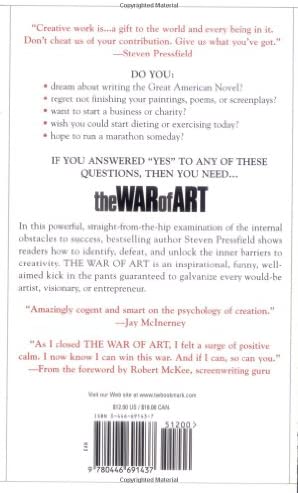


The War of Art by Steven Pressfield
The War of Art by Steven Pressfield is a direct and practical book about overcoming procrastination, fear, self-doubt, perfectionism, distraction, and the invisible force that stops people from doing the work they know they should do.
Pressfield calls that force Resistance.
Resistance appears whenever you try to create something meaningful.
Write a book.
Start a business.
Exercise consistently.
Learn a skill.
Make art.
Build a project.
Change your life.
The closer something is to your deeper goals, the stronger Resistance may feel.
About The War of Art
The War of Art is not a traditional productivity book.
It does not focus heavily on calendars, apps, or complicated systems.
Instead, Steven Pressfield focuses on the internal battle.
Why do people avoid work they genuinely care about?
Why do creative projects remain unfinished?
Why do people wait for motivation?
Why does perfectionism become an excuse?
Pressfield argues that Resistance is predictable.
Once you recognize it, you can begin working despite it.
7 Powerful Lessons from The War of Art
1. Resistance Is the Real Enemy
The central idea in The War of Art is that Resistance appears between intention and action.
You know what you should do.
But something stops you.
You delay.
You overthink.
You clean your room.
You check your phone.
You wait for the perfect mood.
Pressfield argues that this is not random.
Resistance becomes strongest around work that matters.
2. Procrastination Is a Form of Resistance
Procrastination does not always look like laziness.
Sometimes it looks productive.
Researching endlessly.
Planning endlessly.
Buying better tools.
Waiting for inspiration.
All of these can become ways to avoid the real work.
The book encourages readers to notice when preparation has become avoidance.
3. Professionals Work Even When They Do Not Feel Like It
One of Pressfield’s most important ideas is the difference between an amateur and a professional.
The amateur waits for inspiration.
The professional works on schedule.
The amateur depends on mood.
The professional develops discipline.
This does not mean professionals never struggle.
It means they do the work anyway.
4. Fear Can Point Toward What Matters
Fear is not always a reason to stop.
Sometimes fear shows you exactly where your growth is.
If a project scares you because it matters deeply, that may be a sign to move toward it.
Pressfield encourages readers to stop treating fear as proof that they should quit.
5. Perfectionism Can Become Self-Sabotage
Perfectionism sounds admirable.
But it can easily become another excuse.
If something must be perfect before it is finished, it may never be finished.
The book encourages action.
Write the draft.
Make the call.
Start the project.
Improve it later.
6. Showing Up Matters More Than Inspiration
Inspiration is unreliable.
Discipline is more useful.
A writer cannot wait for a perfect creative mood every day.
A business owner cannot wait until confidence appears.
A student cannot rely entirely on motivation.
The War of Art emphasizes showing up consistently.
7. Do the Work Before Judging the Outcome
People often stop because they imagine failure too early.
What if nobody reads it?
What if the business fails?
What if the idea is bad?
These questions can prevent action before the work even begins.
Pressfield encourages readers to focus first on completing the work.
Evaluation comes later.
What Is Resistance?
Resistance is Pressfield’s name for the internal force that blocks meaningful action.
It may appear as:
Fear.
Self-doubt.
Procrastination.
Perfectionism.
Distraction.
Excuses.
Overplanning.
Avoidance.
The form changes.
The function stays the same.
It stops you from moving forward.
Resistance Gets Stronger Near Important Work
People rarely feel intense Resistance toward meaningless tasks.
Resistance often appears when the work matters.
Finishing a novel.
Starting a company.
Changing careers.
Launching a creative project.
Committing to recovery.
Building a healthier life.
The stronger the emotional importance, the stronger Resistance may become.
That is one of the book’s most useful observations.
The Professional Mindset
Pressfield’s solution is to “turn pro.”
A professional treats the work seriously.
They show up.
They build routine.
They accept boredom.
They work through doubt.
They understand that motivation rises and falls.
The work continues anyway.
Routine Beats Mood
A routine reduces negotiation.
If you decide to write only when you feel inspired, you may not write often.
If you write at the same time every day, you remove part of the decision.
That makes Resistance weaker.
The same idea applies to exercise, study, business, and other long-term goals.
Fear of Failure
Fear of failure is obvious.
Nobody wants to fail publicly.
Nobody wants to invest time into something that does not work.
But fear of failure can become worse than failure itself.
Failure provides information.
Avoidance provides nothing.
The War of Art encourages readers to accept the possibility of failure as part of meaningful work.
Fear of Success
Pressfield also discusses fear of success.
Success changes expectations.
It creates visibility.
It creates responsibility.
People may fear what happens if their project actually works.
That fear can create procrastination too.
Recognizing it is important.
Self-Doubt
Self-doubt does not disappear just because someone becomes experienced.
Writers doubt themselves.
Artists doubt themselves.
Entrepreneurs doubt themselves.
Professionals simply learn to keep working while doubt is present.
That distinction is central to the book.
Perfectionism
Perfectionism can feel like high standards.
Sometimes it is.
But sometimes it is fear in disguise.
If the standard is impossible, the work never has to be released.
That protects the ego.
But it also prevents progress.
Pressfield pushes readers toward completion.
Distraction
Modern life makes Resistance easy.
Phones.
Notifications.
Streaming.
Social media.
Email.
News.
There is always something available to interrupt difficult work.
The book predates some of today’s biggest digital distractions, but its message still applies strongly.
Attention must be protected.
Creative Work
Although The War of Art is especially popular among writers and artists, its ideas apply more broadly.
Any meaningful project can create Resistance.
A fitness goal.
A business idea.
A degree.
A career change.
A personal commitment.
The specific project changes.
The internal battle does not.
Discipline Over Motivation
Motivation feels powerful.
But it is unreliable.
Discipline creates consistency.
A professional understands that some days will feel exciting.
Others will not.
The goal is not to feel ready.
The goal is to start.
Turning Pro
Pressfield later expanded this idea in his book Turning Pro.
His official site describes the professional mindset as replacing amateur habits with professional habits.
But The War of Art is the best place to begin because it first identifies the enemy.
Do the Work
Pressfield also wrote Do the Work, which focuses more specifically on the Resistance points people encounter during projects.
His official site describes three common danger points: before beginning, midway through a project, and after finishing when it is time to release the work.
These books work well together.
Who Should Read This Book?
The War of Art is ideal for writers, artists, entrepreneurs, students, creators, freelancers, business owners, and anyone struggling to start or finish meaningful work.
It may especially help readers dealing with procrastination.
Creative blocks.
Perfectionism.
Fear.
Self-doubt.
Or chronic overthinking.
The book is short and direct.
That makes it easy to revisit.
About Steven Pressfield
Steven Pressfield is an American author and screenwriter.
He wrote for many years before achieving commercial success.
On his official site, he describes working numerous jobs across many states while continuing to write for decades before his first novel was published.
His books include The War of Art, Turning Pro, Do the Work, The Legend of Bagger Vance, and Gates of Fire.
Readers can learn more through the official Steven Pressfield website.
Product Details
Title: The War of Art
Author: Steven Pressfield
Genre: Self-Help / Creativity / Productivity / Personal Development
Language: English
Original Publication: 2002
Main Themes: Resistance, Procrastination, Fear, Discipline, Creativity, Self-Doubt, Professionalism
Several editions of the book are available.
ISBNs, page counts, dimensions, and cover designs vary by edition.
Always check the ISBN printed on your physical copy before entering final WooCommerce specifications.
Explore More Self-Help and Creativity Books
The War of Art is built around one clear message.
The hardest part of meaningful work is often not talent.
It is beginning.
Then continuing.
Then finishing.
Resistance will always try to create another reason to stop.
The solution is not waiting until Resistance disappears.
The solution is working anyway.
Readers looking for more books about discipline, creativity, mindset, and personal development can explore Self-Help & Psychology Books at Bargain Books.
You can also explore Business, Finance & Economics Books at Bargain Books.
For readers struggling with procrastination, perfectionism, fear, or creative blocks, The War of Art offers a memorable framework for recognizing Resistance and getting back to work.
| Author | Steven Pressfield |
|---|---|
| Language | English |
| Type | Paperback Printed Book (Second Quality Copy) |
Be the first to review “War of Art by Steven Pressfield”
Related products

Non-Fiction & Knowledge
රු1,700.00
3 X Rs. 566.67 or 8% Cashback with


or 3 X රු566.67 with


or up to 4 X රු425.00 with

Out of stock
Non-Fiction & Knowledge
රු1,600.00
3 X Rs. 533.33 or 8% Cashback with
or 3 X රු533.33 with
or up to 4 X රු400.00 with
-33%

Self-Help & Psychology
Original price was: රු2,300.00.රු1,550.00Current price is: රු1,550.00.
3 X Rs. 516.67 or 8% Cashback with
or 3 X රු516.67 with
or up to 4 X රු387.50 with
-23%

Non-Fiction & Knowledge
Original price was: රු2,200.00.රු1,700.00Current price is: රු1,700.00.
3 X Rs. 566.67 or 8% Cashback with
or 3 X රු566.67 with
or up to 4 X රු425.00 with
-13%
Out of stock
Non-Fiction & Knowledge
Original price was: රු3,900.00.රු3,400.00Current price is: රු3,400.00.
3 X Rs. 1,133.33 or 8% Cashback with
or 3 X රු1,133.33 with
or up to 4 X රු850.00 with
Non-Fiction & Knowledge
රු2,250.00
3 X Rs. 750.00 or 8% Cashback with
or 3 X රු750.00 with
or up to 4 X රු562.50 with
-24%
Non-Fiction & Knowledge
Original price was: රු2,300.00.රු1,750.00Current price is: රු1,750.00.
3 X Rs. 583.33 or 8% Cashback with
or 3 X රු583.33 with
or up to 4 X රු437.50 with
-24%
Out of stock
Non-Fiction & Knowledge
Original price was: රු2,100.00.රු1,600.00Current price is: රු1,600.00.
3 X Rs. 533.33 or 8% Cashback with
or 3 X රු533.33 with
or up to 4 X රු400.00 with
Reviews
There are no reviews yet.