
No products in the cart.
-24%
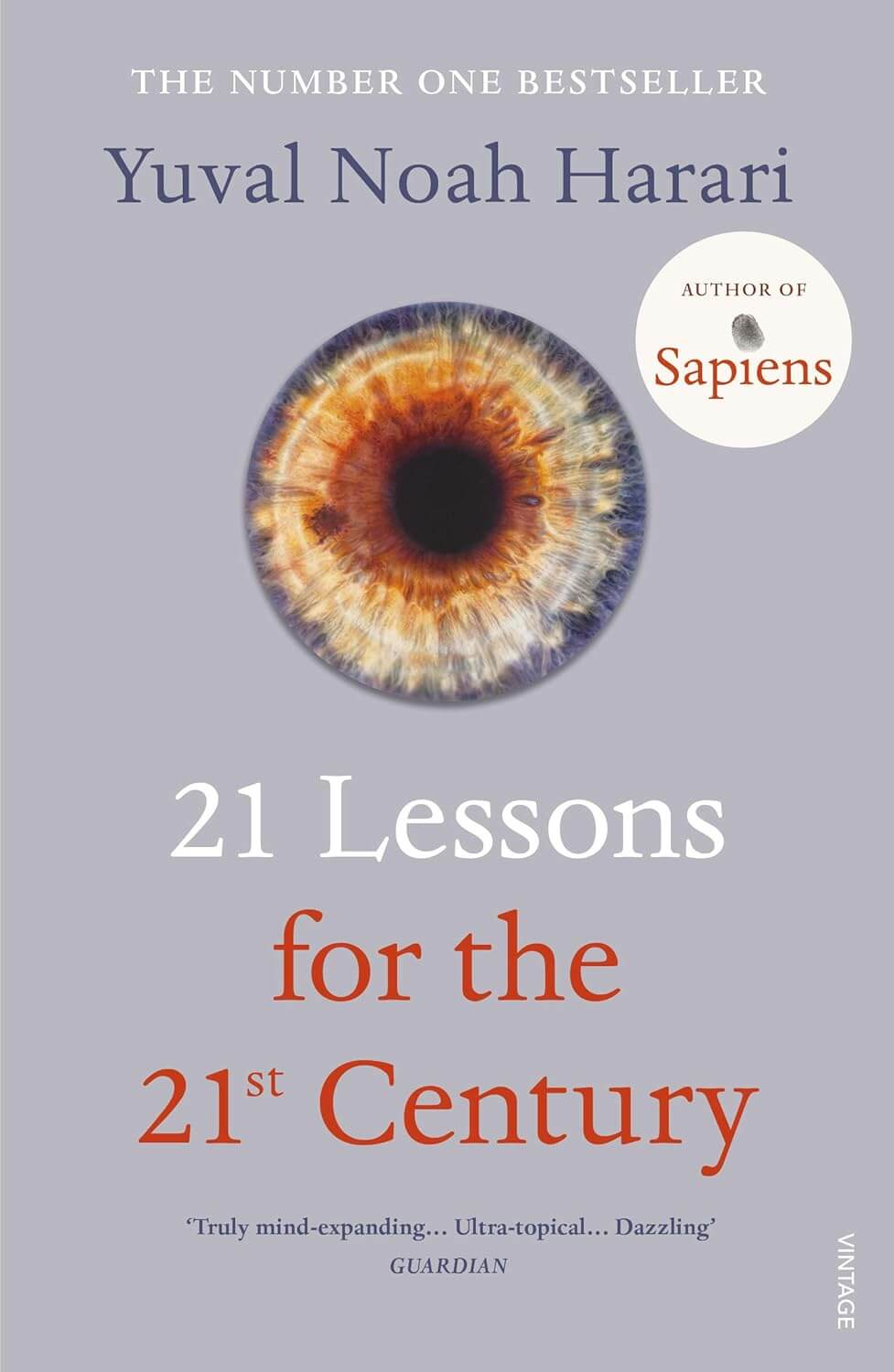
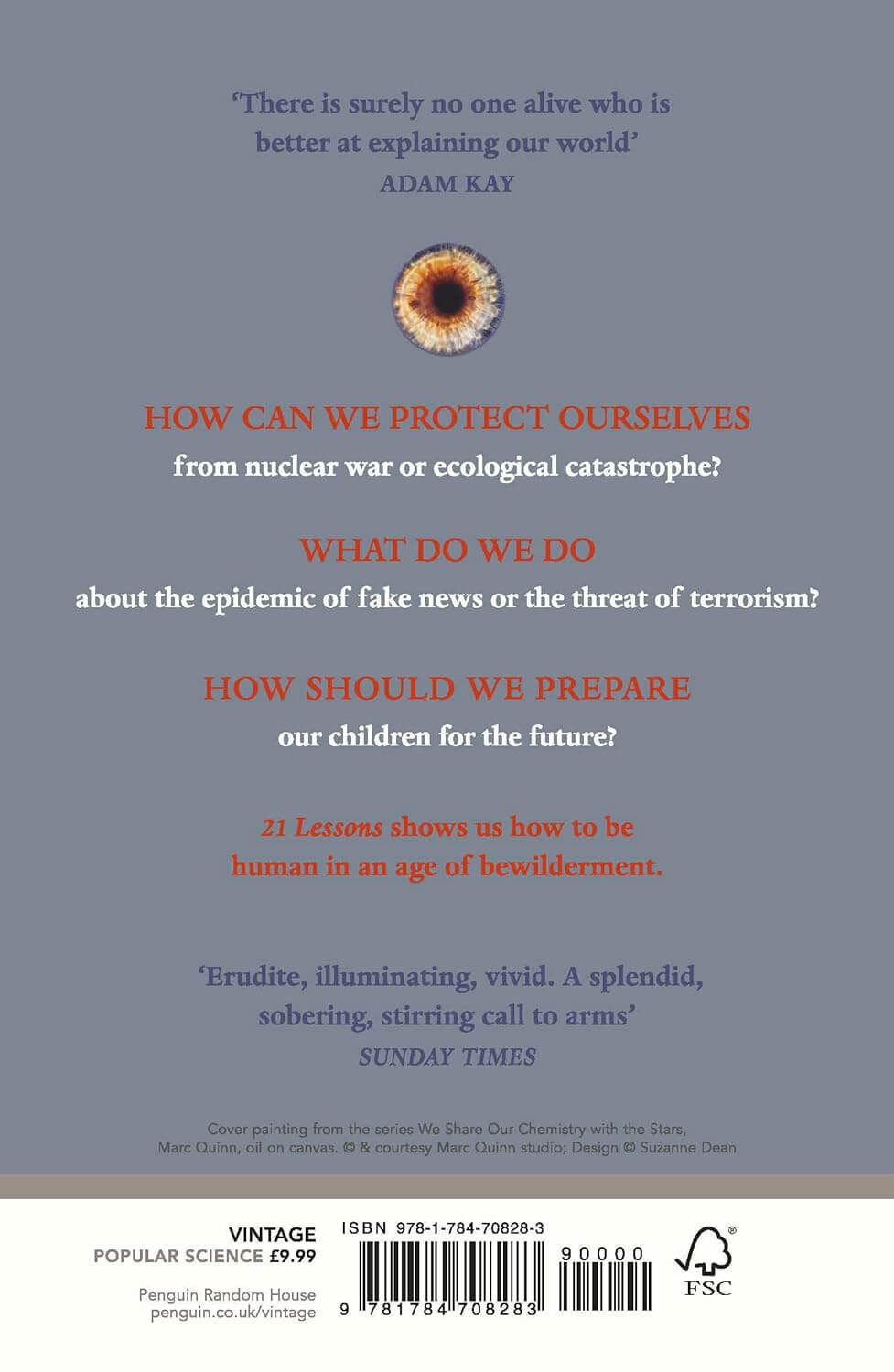
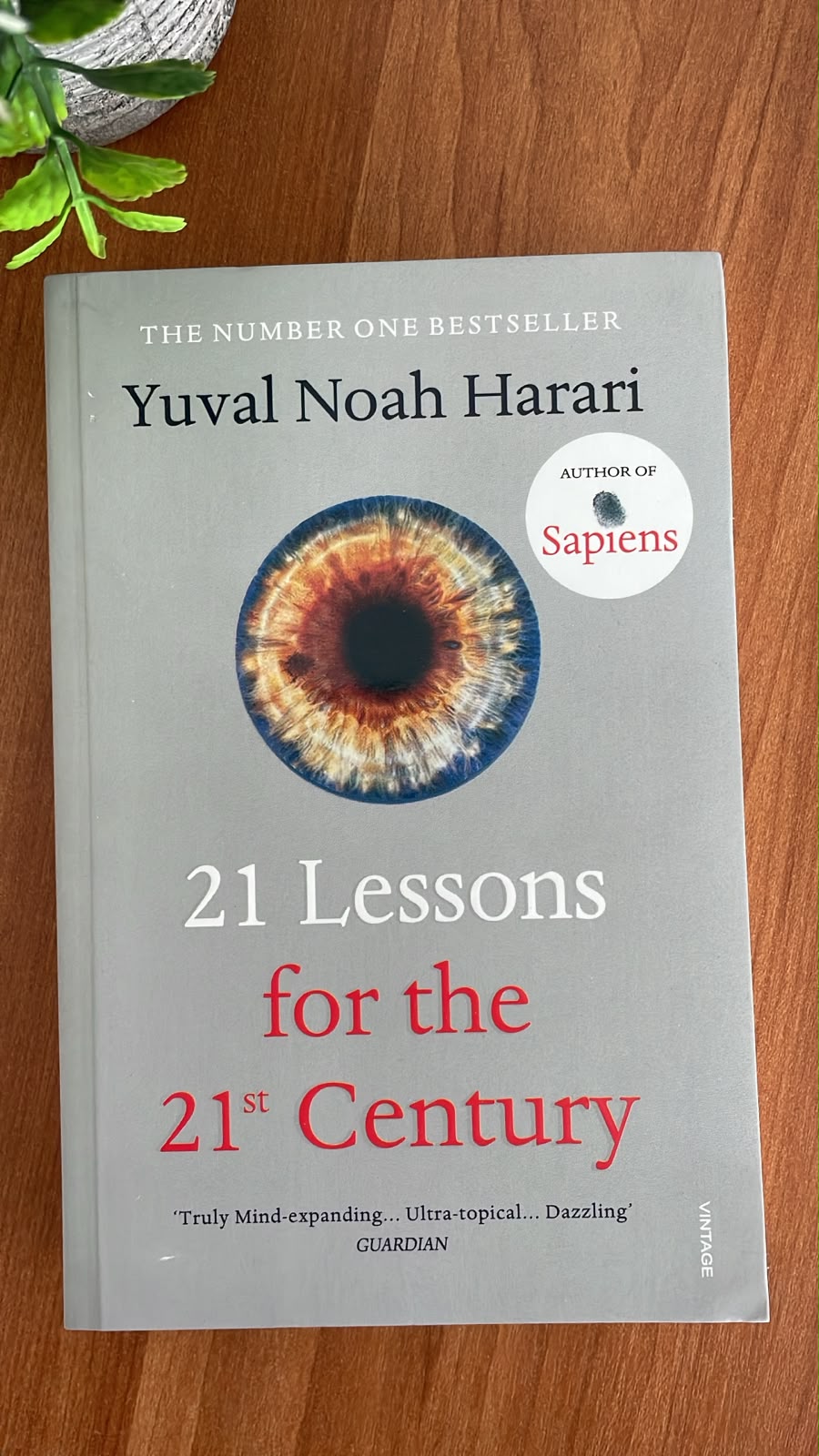
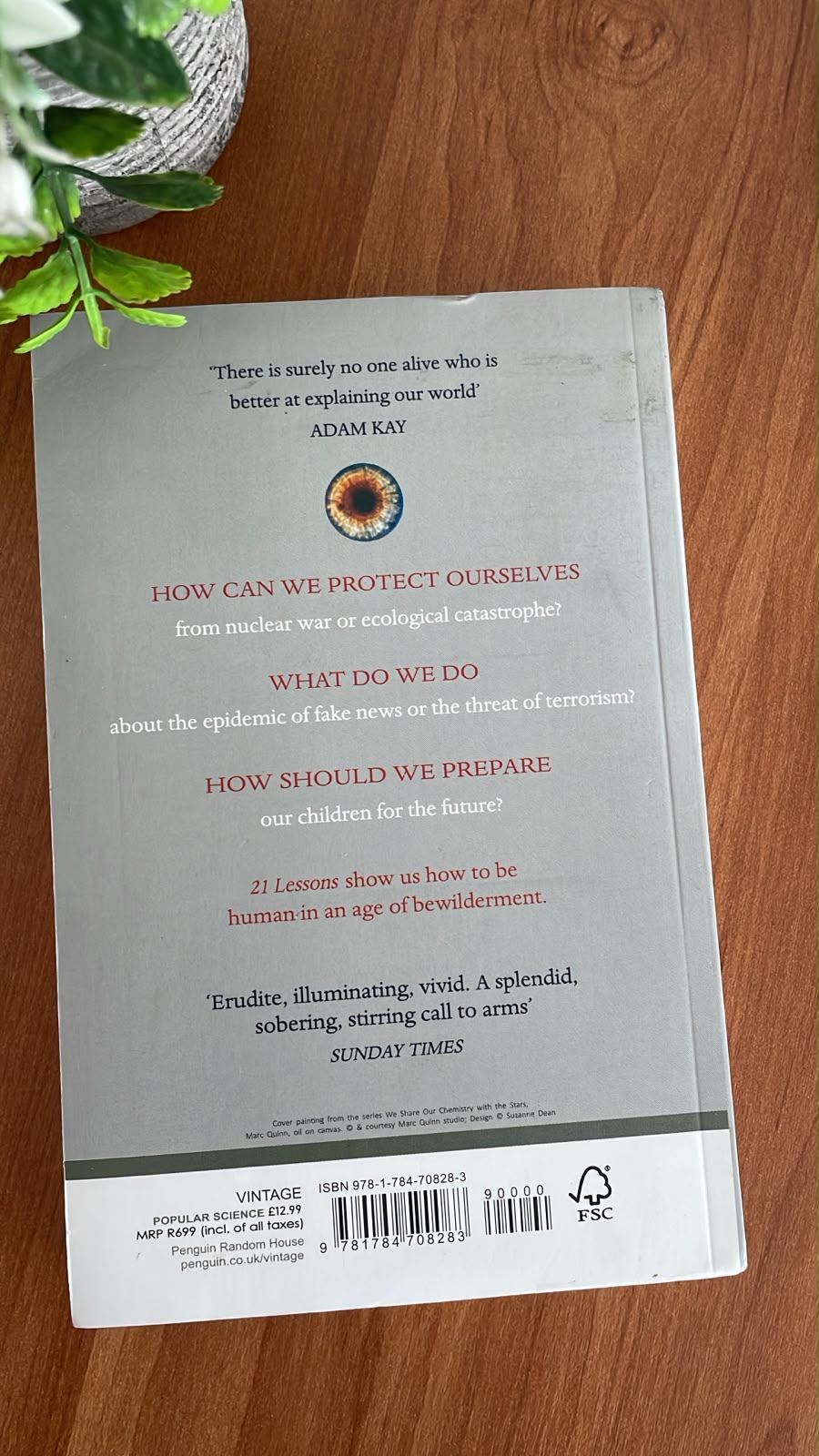
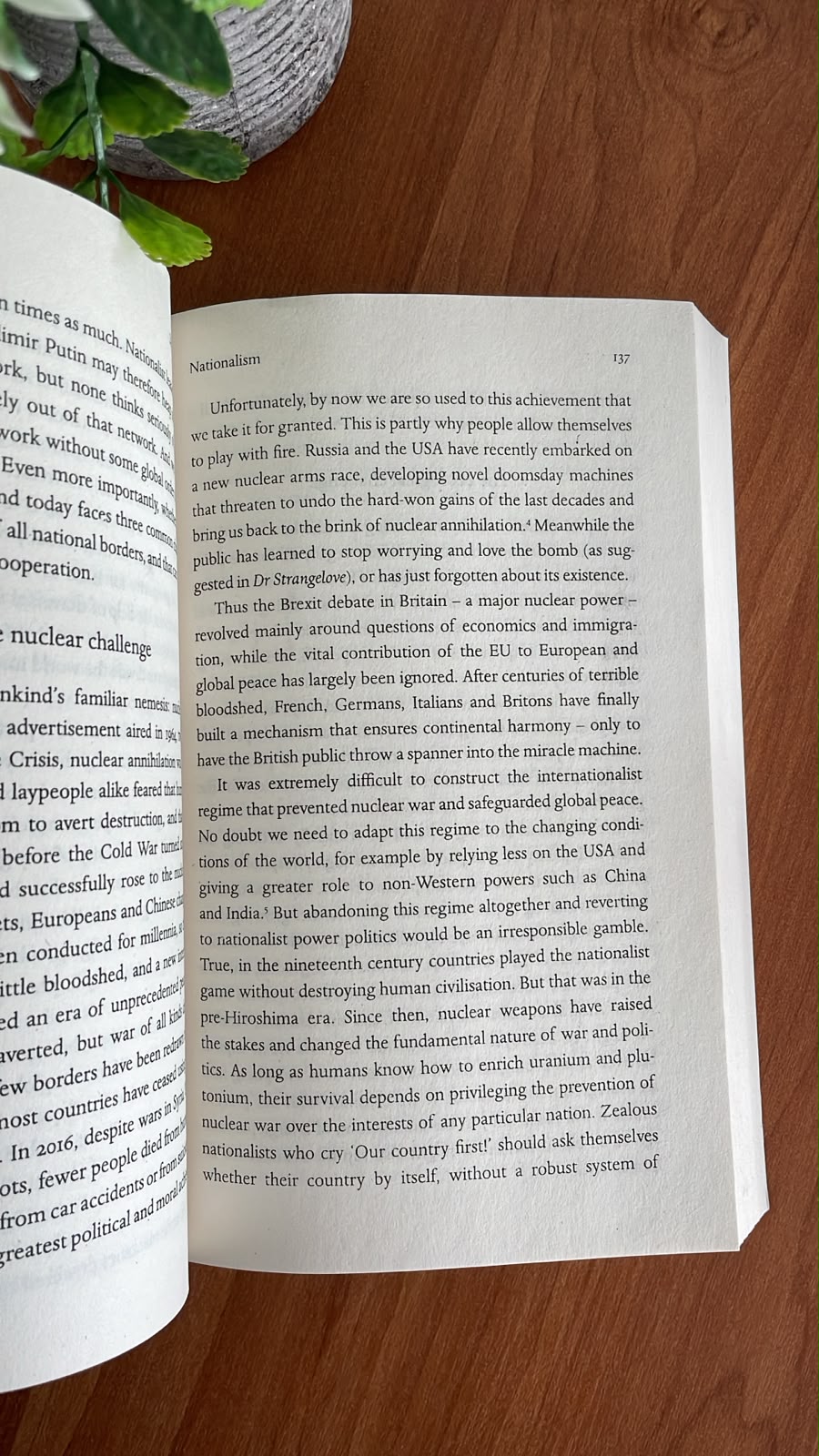
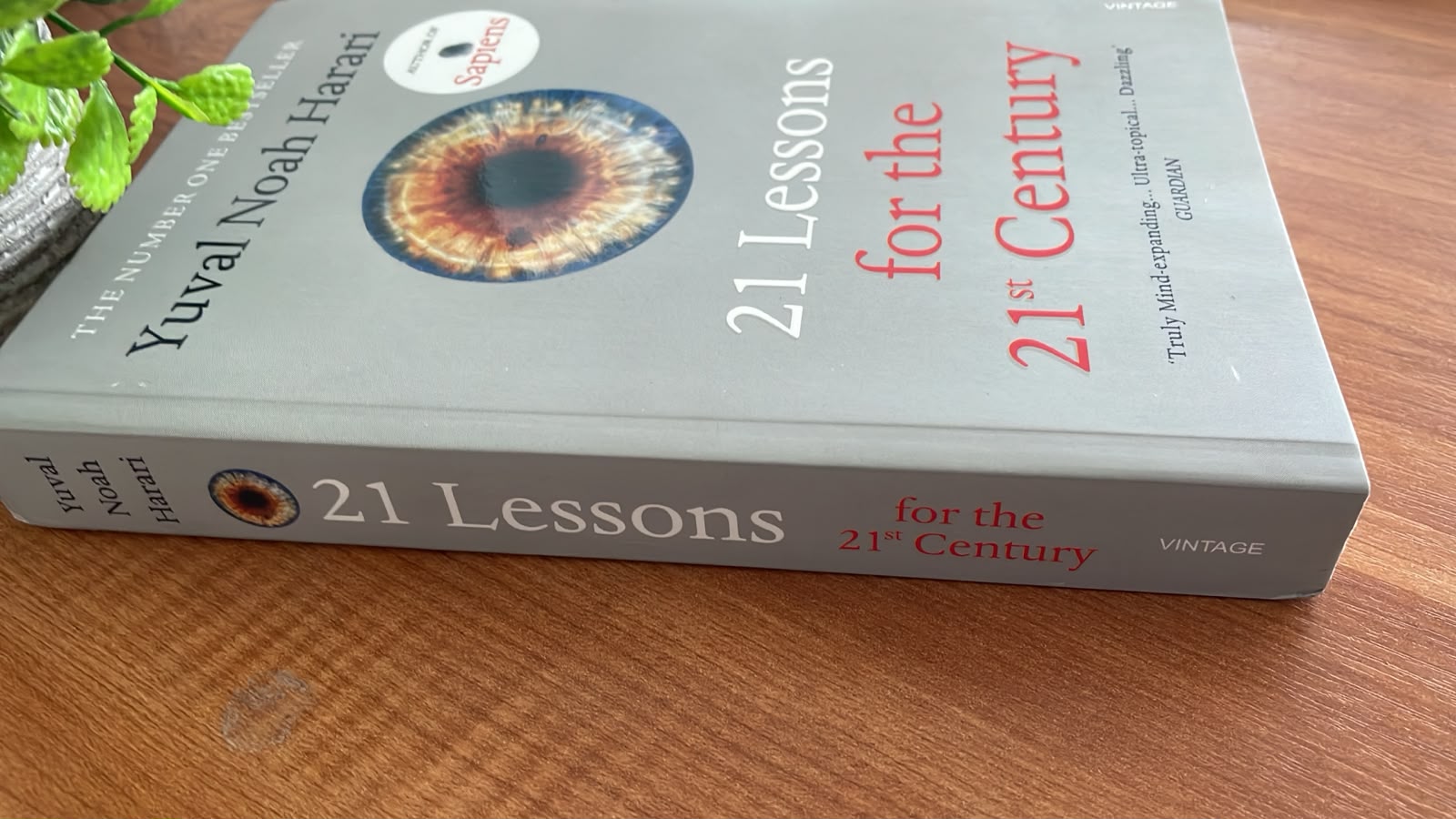
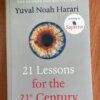


21 Lessons for the 21st Century by Yuval Noah Harari


Original price was: රු2,100.00.රු1,600.00Current price is: රු1,600.00.
3 X Rs. 533.33 or 8% Cashback with


or 3 X රු533.33 with


or up to 4 X රු400.00 with


21 Lessons for the 21st Century by Yuval Noah Harari is a thought-provoking nonfiction book examining some of the most urgent questions facing people in the modern world.
After exploring humanity’s past in Sapiens and possible futures in Homo Deus, Harari turns his attention to the present. He considers challenges involving technological disruption, misinformation, terrorism, ecological threats, nuclear conflict, education and the difficulty of maintaining focus in a rapidly changing world.
Written in twenty-one accessible lessons, the book encourages readers to think critically about politics, technology, society and what it means to remain informed and adaptable during periods of uncertainty.
Product details:
- Author: Yuval Noah Harari
- Publisher/Imprint: Vintage
- Format: Paperback
- Pages: 432
- Language: English
- ISBN-13: 9781784708283
- ISBN-10: 1784708283
- Publication date: 22 August 2019
- Dimensions: 19.7 × 3.4 × 13.0 cm
- Weight: 376 g
- Categories: History, Society, Current Affairs and Philosophy
- Key themes: Technology, misinformation, education, conflict, social change and humanity’s future
Out of stock
Email when stock available
21 Lessons for the 21st Century by Yuval Noah Harari
21 Lessons for the 21st Century is Yuval Noah Harari’s exploration of the challenges, uncertainties and opportunities shaping modern life.
Where Sapiens examined humanity’s past and Homo Deus considered possible futures, this book focuses on the present. Harari asks how individuals and societies can understand a world being transformed by technology, political tension, environmental pressures and rapidly changing information systems.
21 Lessons for the 21st Century
21 Lessons for the 21st Century is organised into twenty-one discussions about issues that affect contemporary society.
Harari examines questions surrounding technology, conflict, education, misinformation, identity, social change and the challenge of remaining focused when people are constantly exposed to competing information.
The book does not present one simple solution to every problem.
Instead, it encourages readers to think carefully about the assumptions they bring to difficult global questions.
Understanding a Rapidly Changing World
Modern life can change quickly.
Technologies that barely existed a generation ago now influence communication, work, education, business and politics.
Harari asks readers to consider how individuals and institutions can adapt when technological change moves faster than traditional systems.
Useful questions include:
- Which skills will remain valuable?
- How should education change?
- How can people evaluate information?
- What happens when technology changes employment?
- How do societies adapt without losing stability?
These questions make the book relevant to readers interested in both personal and societal change.
Technology and Disruption
Technological disruption is one of the major concerns explored in 21 Lessons for the 21st Century.
Advances in automation, artificial intelligence and data processing create new possibilities while also raising difficult questions.
Technology may improve productivity and convenience.
At the same time, rapid innovation can change jobs, organisations and social structures.
Harari encourages readers to look beyond excitement about new technology and consider its broader effects.
The important question is not only what technology can do.
It is also how people decide to use it.
Information and Fake News
Modern societies have access to enormous amounts of information.
That does not automatically make people better informed.
21 Lessons for the 21st Century discusses the difficulty of distinguishing useful information from misleading claims, propaganda and misinformation.
Readers are encouraged to think critically about:
- Where information comes from
- Who benefits from a particular claim
- Whether reliable evidence exists
- How emotional reactions influence judgment
- Whether multiple trustworthy sources agree
These habits are increasingly important in a world where information moves extremely quickly.
Maintaining Focus
Penguin describes the challenge of maintaining both collective and individual focus as one of the central threads running through the book.
Modern life constantly competes for attention.
News, social media, entertainment, advertising and digital communication can make it difficult to decide which issues deserve serious thought.
21 Lessons for the 21st Century asks whether people are still capable of understanding the complex world they have created.
That question gives the book much of its urgency.
Education for the Future
Education is another important topic.
Harari asks what children should learn when nobody can predict exactly what the world will look like several decades from now.
Traditional education often emphasises the transfer of information.
But when information is available almost instantly, adaptability and critical thinking become increasingly important.
Readers may consider skills such as:
- Learning how to learn
- Evaluating information
- Communicating clearly
- Adapting to change
- Thinking critically
- Managing uncertainty
- Cooperating with others
Education therefore becomes not only about preparing for a particular job but also about preparing for continued change.
Global Challenges
21 Lessons for the 21st Century examines problems that cannot always be solved by one individual country acting alone.
Penguin specifically highlights issues such as nuclear war, ecological catastrophe, technological disruption, terrorism and misinformation.
These challenges cross borders.
That makes cooperation more important while also making political disagreement more complicated.
Harari asks readers to consider how communities can preserve identity and local interests while still responding to problems that require international cooperation.
Politics and Identity
People naturally organise themselves into communities.
Identity can come from nationality, religion, culture, language, profession or many other sources.
These identities can create belonging.
They can also create conflict when people begin treating their own group as completely separate from everyone else.
The book encourages readers to think about how identity influences political and social decisions.
Rather than demanding that everyone abandon local identities, Harari examines the tension between local loyalties and global responsibilities.
Fear, Terrorism and Public Reaction
Terrorism receives attention not only as a security problem but also as a psychological and political phenomenon.
Fear can influence decisions beyond the direct physical scale of an attack.
This means governments, media organisations and individuals need to think carefully about how they respond to frightening events.
The broader lesson is that emotional reactions can sometimes shape public behaviour as strongly as objective risk.
Readers are encouraged to examine both the event itself and the response it produces.
Meaning in an Age of Uncertainty
Rapid change can create practical problems, but it can also create personal uncertainty.
People may ask:
- What should I believe?
- What kind of work should I pursue?
- Which institutions can I trust?
- What does success mean?
- How should I respond to constant change?
21 Lessons for the 21st Century does not provide one universal answer.
Instead, it encourages readers to become more aware of the stories, beliefs and assumptions that influence their decisions.
Think Critically Rather Than React Quickly
One of the most useful ways to approach the book is as an exercise in critical thinking.
Readers do not need to agree with every argument.
A stronger approach is to examine each idea carefully.
Ask:
- What is the author claiming?
- What evidence supports it?
- What assumptions are being made?
- What alternative interpretation exists?
- How does this relate to current events?
- What do I agree or disagree with?
This turns reading into active reflection rather than passive acceptance.
Twenty-One Accessible Lessons
Although the subjects are large, the book is organised into separate lessons.
This makes it easier to read gradually.
A reader can complete one section and stop to consider the central question before continuing.
The format works well for:
- Personal reading
- Book clubs
- University discussion
- Current-affairs reading
- Philosophy discussions
- Social-science study
- Reflective reading
The individual lessons can also be revisited independently.
Connection with Sapiens and Homo Deus
21 Lessons for the 21st Century forms a natural companion to Harari’s other major books.
Sapiens examines how human societies developed.
Homo Deus considers possible directions humanity may take in the future.
21 Lessons for the 21st Century concentrates on the difficult questions confronting people now.
Readers do not have to complete the earlier books first, but those familiar with them may recognise recurring themes around technology, institutions, culture and human cooperation.
About Yuval Noah Harari
Yuval Noah Harari is a historian, philosopher and bestselling author.
Penguin identifies him as the author of Sapiens, Homo Deus, 21 Lessons for the 21st Century, Sapiens: A Graphic History and the Unstoppable Us children’s series.
He holds a PhD from the University of Oxford and is associated with the Hebrew University of Jerusalem and the University of Cambridge’s Centre for the Study of Existential Risk.
His work frequently examines large historical patterns and the relationship between technology, society, politics and human behaviour.
Who Should Read This Book?
21 Lessons for the 21st Century may appeal to readers interested in:
- History
- Current affairs
- Technology
- Society
- Politics
- Philosophy
- Education
- Artificial intelligence
- Global challenges
- Critical thinking
It is especially suitable for readers who enjoy books that connect several disciplines instead of focusing on one narrow subject.
Product Details
Product title: 21 Lessons for the 21st Century
Author: Yuval Noah Harari
Publisher/Imprint: Vintage
Format: Paperback
Language: English
Page count: 432 pages
ISBN-13: 9781784708283
ISBN-10: 1784708283
Publication date: 22 August 2019
Dimensions: 197 × 34 × 130 mm
Weight: 376 grams
Categories: History, Current Affairs, Society and Philosophy
Key themes: Technology, misinformation, education, conflict, identity and global change
Why Choose 21 Lessons for the 21st Century?
21 Lessons for the 21st Century provides a broad and accessible examination of some of the most important questions shaping modern society.
Harari connects technological disruption, misinformation, education, global risks and personal responsibility while asking readers to maintain focus in a world filled with rapid and often confusing change.
The book is especially valuable for readers who enjoy exploring current issues through history, philosophy and social analysis.
For anyone interested in understanding the forces shaping contemporary life, 21 Lessons for the 21st Century is a thought-provoking addition to a nonfiction bookshelf.
Explore our complete history and society books collection to discover more titles about humanity, technology, politics, civilisation and the modern world.
View the official publication details for
21 Lessons for the 21st Century by Yuval Noah Harari on Penguin Books
.
| Author | Yuval Noah Harari |
|---|---|
| Language | English |
| Type | Paperback Printed Book |
| ISBN/ISSN | 1784708283, 978-1784708283 |
| Pages | 200 |
Be the first to review “21 Lessons for the 21st Century by Yuval Noah Harari”
Related products

Non-Fiction & Knowledge
රු1,950.00
3 X Rs. 650.00 or 8% Cashback with
or 3 X රු650.00 with
or up to 4 X රු487.50 with
-13%

Out of stock
Non-Fiction & Knowledge
Original price was: රු3,850.00.රු3,350.00Current price is: රු3,350.00.
3 X Rs. 1,116.67 or 8% Cashback with
or 3 X රු1,116.67 with
or up to 4 X රු837.50 with
-19%
Out of stock
Non-Fiction & Knowledge
Original price was: රු2,650.00.රු2,150.00Current price is: රු2,150.00.
3 X Rs. 716.67 or 8% Cashback with
or 3 X රු716.67 with
or up to 4 X රු537.50 with
-33%

Self-Help & Psychology
Original price was: රු2,300.00.රු1,550.00Current price is: රු1,550.00.
3 X Rs. 516.67 or 8% Cashback with
or 3 X රු516.67 with
or up to 4 X රු387.50 with
-28%

Self-Help & Psychology
Original price was: රු1,800.00.රු1,300.00Current price is: රු1,300.00.
3 X Rs. 433.33 or 8% Cashback with
or 3 X රු433.33 with
or up to 4 X රු325.00 with
Out of stock
Self-Help & Psychology
රු1,900.00
3 X Rs. 633.33 or 8% Cashback with
or 3 X රු633.33 with
or up to 4 X රු475.00 with

Out of stock
Autobiography
රු2,750.00
3 X Rs. 916.67 or 8% Cashback with
or 3 X රු916.67 with
or up to 4 X රු687.50 with
-24%

Out of stock
Non-Fiction & Knowledge
Original price was: රු2,500.00.රු1,900.00Current price is: රු1,900.00.
3 X Rs. 633.33 or 8% Cashback with
or 3 X රු633.33 with
or up to 4 X රු475.00 with
Reviews
There are no reviews yet.