
No products in the cart.
-14%
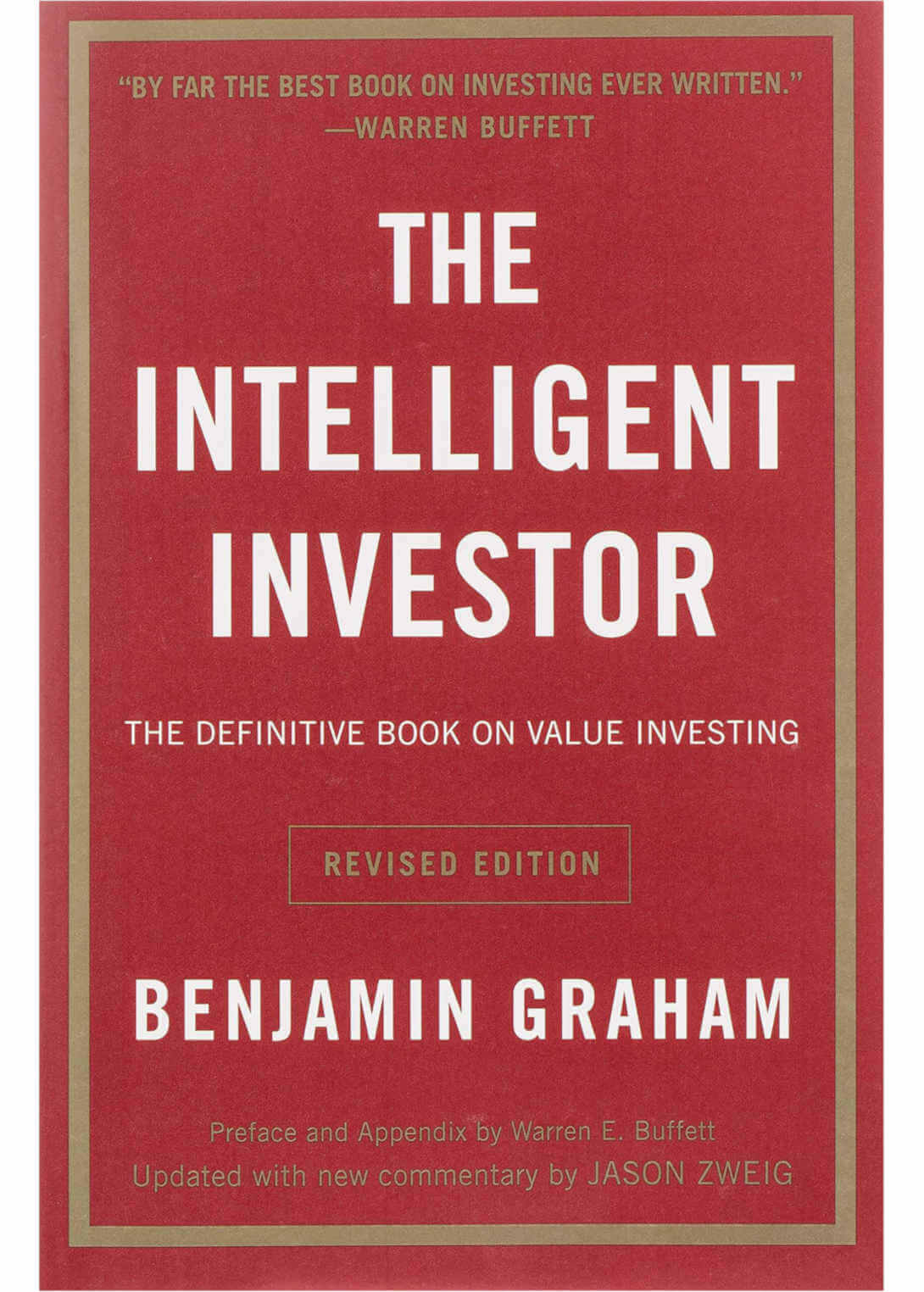
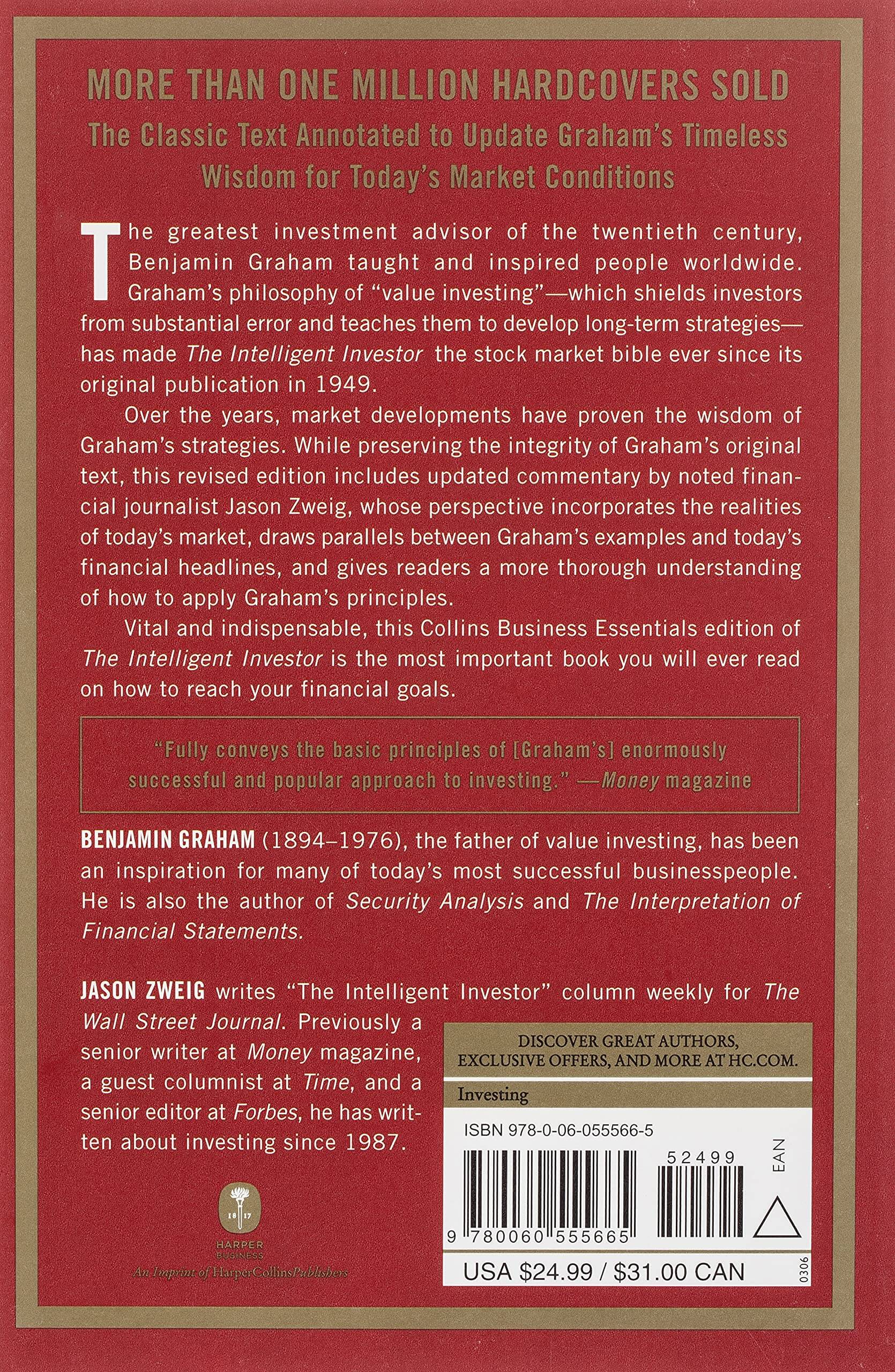
The Intelligent Investor by Benjamin Graham

Original price was: රු2,900.00.රු2,500.00Current price is: රු2,500.00.
3 X Rs. 833.33 or 8% Cashback with


or 3 X රු833.33 with


or up to 4 X රු625.00 with


The Definitive Book on Value Investing. A must Read Book Before Investing in Stock Market.
Out of stock
Email when stock available
The Intelligent Investor by Benjamin Graham is one of the most influential books ever written about investing, financial discipline, risk management, market psychology, value investing, and building wealth with a long-term mindset.
Investing can appear complicated.
Share prices move every day.
News headlines constantly predict opportunity or disaster.
People become excited when markets rise.
They become frightened when markets fall.
Some investors chase the latest popular company.
Others panic and sell after prices decline.
Benjamin Graham presents a very different approach.
Instead of trying to predict every market movement, he teaches investors to think carefully about what an investment is actually worth.
Instead of following excitement, focus on value.
Instead of depending on perfect predictions, build a margin of safety.
Instead of allowing the market to control your emotions, use market fluctuations to your advantage.
These principles make The Intelligent Investor by Benjamin Graham far more than a book about choosing stocks.
It is a guide to developing the mindset required to make rational financial decisions.
The Intelligent Investor by Benjamin Graham – Book Overview
Benjamin Graham is considered one of the pioneers of value investing.
His approach focuses on identifying investments whose market price offers reasonable value relative to the underlying business or assets.
This means investors should not simply ask:
“Is this stock going up?”
A more useful question is:
“What am I actually buying, and what is it worth?”
That distinction is central to The Intelligent Investor by Benjamin Graham.
A stock is not merely a number moving on a screen.
It represents an ownership interest in a business.
That business has:
- Assets
- Earnings
- Expenses
- Debt
- Customers
- Competition
- Management
- Risks
- Future opportunities
An intelligent investor tries to understand those factors before deciding whether the market price is reasonable.
Investing Versus Speculation
One of the most important distinctions in The Intelligent Investor by Benjamin Graham is the difference between investing and speculation.
Investing involves careful analysis.
The investor looks for reasonable protection of principal and an adequate return.
Speculation involves accepting greater uncertainty in the hope of making a profit.
Speculation itself is not necessarily forbidden.
The danger appears when someone speculates while believing they are investing safely.
Imagine buying a stock simply because:
Everyone online is talking about it.
The price increased dramatically last week.
Someone says it will double.
That may be speculation.
An investor instead examines the underlying company.
Revenue.
Profitability.
Financial strength.
Valuation.
Long-term prospects.
Risk.
Understanding which activity you are actually engaged in can prevent expensive mistakes.
The Margin of Safety
Perhaps the most famous concept in The Intelligent Investor by Benjamin Graham is the margin of safety.
Suppose you believe something is worth Rs. 10,000.
Would you rather buy it for Rs. 9,900?
Or Rs. 6,000?
The second price gives you more room to be wrong.
That difference is the margin of safety.
Investment analysis is never perfect.
Future earnings cannot be predicted with certainty.
Economic conditions change.
Management makes mistakes.
Unexpected events occur.
Therefore, Graham argues that investors should avoid paying prices that require everything to go perfectly.
A margin of safety protects against uncertainty.
Why Price Matters
A wonderful company can still become a poor investment if the price paid is far too high.
This is one of the most important lessons from The Intelligent Investor by Benjamin Graham.
Investors sometimes become so excited about a company that they ignore valuation.
They may say:
“This is an excellent business.”
That may be true.
But there is another question:
“Is it an excellent investment at this price?”
Price and value are not always the same.
A great business purchased at an unreasonable valuation can produce disappointing returns.
A carefully selected business purchased at an attractive valuation may provide better protection.
Meet Mr. Market
One of Benjamin Graham’s most famous ideas is Mr. Market.
Imagine you own a business with a partner named Mr. Market.
Every day, he offers to buy your share or sell you his.
The strange thing is that Mr. Market is extremely emotional.
One day he is optimistic.
He offers a very high price.
The next day he becomes terrified.
He offers an extremely low price.
Nothing forces you to accept his offer.
This is Graham’s metaphor for the stock market.
The Intelligent Investor by Benjamin Graham teaches readers that the market exists to serve investors—not to instruct them.
A rising stock price does not automatically mean something has become more valuable.
A falling price does not automatically mean the business has become worthless.
Market Volatility Can Create Opportunity
Many investors fear falling markets.
Benjamin Graham presents another perspective.
Price declines can create opportunities.
Suppose a strong business remains fundamentally healthy, but fearful investors sell its shares.
The market price may fall significantly.
For an intelligent investor, that can become an opportunity rather than a disaster.
But this requires emotional discipline.
The Intelligent Investor by Benjamin Graham teaches readers to separate market price from business value.
That skill becomes especially important when other investors are panicking.
Do Not Let Emotions Control Investments
Fear and greed are among the greatest enemies of investors.
Greed appears when prices rise rapidly.
People think:
“Everyone is making money. I need to buy now.”
Fear appears after prices fall.
People think:
“I need to sell before I lose everything.”
This often creates the exact opposite of good investing behaviour.
Buy high.
Sell low.
The Intelligent Investor by Benjamin Graham encourages discipline.
A good investment process should not completely change because the market had one exciting or frightening week.
The Defensive Investor
Graham describes different approaches depending on the investor’s personality, knowledge, and willingness to spend time analysing investments.
The defensive investor wants simplicity, safety, and minimum effort.
This person may prefer:
Diversification.
High-quality investments.
Regular investing.
A balanced portfolio.
Limited trading.
The goal is not finding the next spectacular winner.
The goal is achieving satisfactory long-term results without taking unnecessary risk.
This makes The Intelligent Investor by Benjamin Graham particularly useful for ordinary investors who do not want investing to become a full-time profession.
The Enterprising Investor
The enterprising investor is willing to put more time and effort into research.
This investor may search for undervalued securities and unusual opportunities.
But additional activity does not automatically guarantee better returns.
Graham emphasizes discipline.
The enterprising investor needs:
Knowledge.
Patience.
Research.
Emotional control.
A clear strategy.
Simply trading more frequently is not the same as being more intelligent.
Know What Kind of Investor You Are
This is an important practical lesson.
Some people enjoy reading financial reports.
Others do not.
Some want to analyse companies for hours.
Others want a simple long-term portfolio.
The Intelligent Investor by Benjamin Graham encourages readers to choose a strategy that matches their temperament.
A complicated strategy that you cannot follow consistently may be worse than a simple strategy you understand.
Successful investing depends partly on knowing yourself.
Diversification
Diversification helps manage risk.
Instead of putting all your money into one company, investors can spread investments across multiple assets or companies.
Why?
Because even excellent analysis can be wrong.
A business may face unexpected problems.
A product may fail.
A competitor may appear.
Regulation may change.
The Intelligent Investor by Benjamin Graham encourages avoiding unnecessary concentration.
Diversification does not eliminate risk.
But it can reduce the damage caused by one bad investment.
Risk Is More Than Price Movement
Many people define risk as volatility.
A stock moves up and down.
Therefore it is risky.
Graham’s perspective is deeper.
The real danger is often permanent loss of capital.
A price decline may be temporary.
A bad business purchased at an unreasonable price may create permanent damage.
The Intelligent Investor by Benjamin Graham encourages readers to think beyond daily fluctuations.
Ask:
Is the business financially strong?
Is the valuation reasonable?
What could permanently damage this investment?
Bonds and Stocks
Graham also discusses balancing different asset classes.
Historically, investors have used combinations of stocks and bonds depending on:
Market conditions.
Personal circumstances.
Financial goals.
Risk tolerance.
Age.
Income needs.
The exact allocation is less important than the broader lesson:
Do not build a portfolio based entirely on excitement.
The Intelligent Investor by Benjamin Graham emphasizes balance and discipline.
Inflation Matters
Holding money safely does not always mean preserving purchasing power.
Inflation reduces what money can buy over time.
A person may keep the same number of currency units while becoming poorer in real terms.
This is one reason long-term investors need assets capable of producing returns above inflation.
The Intelligent Investor by Benjamin Graham encourages readers to consider real purchasing power rather than simply looking at nominal amounts.
Long-Term Thinking
Investing becomes much harder when someone constantly watches prices.
Today the market rises.
Tomorrow it falls.
News changes every hour.
The Intelligent Investor by Benjamin Graham encourages a longer time horizon.
If you are buying part of a business, your main concern should be how that business performs over time.
Earnings.
Financial strength.
Competitive position.
Management.
Value creation.
Short-term market emotion matters less when the investment thesis is fundamentally long term.
Ignore Market Predictions
Financial media constantly provides forecasts.
“The market will rise.”
“A crash is coming.”
“Interest rates will change everything.”
“This sector will dominate.”
Some predictions will be correct.
Many will not.
The challenge is identifying them beforehand.
The Intelligent Investor by Benjamin Graham encourages investors to build strategies that do not depend on perfectly predicting the future.
Margin of safety.
Diversification.
Reasonable valuation.
Financial strength.
These create resilience when forecasts are wrong.
Understand the Business
Investing becomes dangerous when people buy things they do not understand.
A company may sound exciting.
But what does it actually do?
How does it make money?
What are its costs?
Who are its competitors?
What could damage the business?
The Intelligent Investor by Benjamin Graham encourages analytical thinking.
You do not need to understand every business in the market.
You only need to avoid investing heavily in things you cannot evaluate rationally.
Earnings Matter
Share prices can move because of excitement.
But over long periods, businesses need economic results.
Revenue.
Profit.
Cash generation.
Financial stability.
Benjamin Graham focuses heavily on analysing actual business performance rather than relying solely on stories about the future.
A company may have an exciting vision.
But investors should also ask whether its financial results support the valuation.
Management Matters
Shareholders depend partly on management.
Managers decide:
How money is invested.
Whether debt is increased.
Whether dividends are paid.
Which acquisitions are made.
How employees are treated.
Which markets are entered.
Poor capital allocation can damage even a strong company.
The Intelligent Investor by Benjamin Graham therefore encourages investors to consider how management treats shareholders and company resources.
Do Not Chase Popular Stocks
Popular investments can become dangerous because popularity often raises prices.
A company may appear in every headline.
Everyone wants to own it.
The price keeps rising.
This creates fear of missing out.
But Graham’s philosophy asks investors to remain rational.
The Intelligent Investor by Benjamin Graham teaches that popularity and investment value are not necessarily the same.
The more optimistic the market becomes, the more carefully investors should examine price.
Avoid Following the Crowd
Humans are social.
When everyone around us believes something, disagreeing becomes uncomfortable.
Markets amplify this behaviour.
During booms, optimism spreads.
During crashes, fear spreads.
The Intelligent Investor by Benjamin Graham encourages independent thinking.
Independent thinking does not mean automatically disagreeing with everyone.
It means making decisions based on analysis rather than social pressure.
Patience Is an Investing Advantage
Good opportunities do not appear every day.
Sometimes the intelligent decision is to wait.
This can be frustrating.
People want action.
Buy something.
Sell something.
Change something.
But activity and progress are not the same.
The Intelligent Investor by Benjamin Graham demonstrates why patience can become a major competitive advantage.
You do not need to participate in every market trend.
Investing Should Be Boring Sometimes
Successful investing can feel surprisingly unexciting.
Research.
Diversification.
Regular contributions.
Long-term ownership.
Occasional rebalancing.
Avoiding unnecessary trades.
This may not produce dramatic social-media stories.
But wealth building does not need to be entertaining.
The Intelligent Investor by Benjamin Graham teaches that protecting capital and earning reasonable returns can be more important than constantly searching for excitement.
Dollar-Cost Averaging and Regular Investing
One useful long-term approach associated with disciplined investing is committing money regularly instead of trying to perfectly time every market move.
Markets will sometimes be expensive.
Sometimes cheap.
A consistent plan can reduce the emotional pressure of deciding exactly when to invest everything.
The broader principle fits closely with The Intelligent Investor by Benjamin Graham:
Create a rational process.
Then follow it consistently.
The Investor’s Greatest Enemy May Be Themselves
A market crash can hurt.
A bad company can hurt.
But poor behaviour can be even more damaging.
Buying because of greed.
Selling because of fear.
Taking excessive leverage.
Ignoring valuation.
Following rumours.
Trading constantly.
The Intelligent Investor by Benjamin Graham teaches that successful investing requires controlling behaviour as much as analysing companies.
This is why the book remains relevant decades after publication.
Technology changes.
Markets change.
Human emotions change much more slowly.
Warren Buffett and Benjamin Graham
Benjamin Graham had a major influence on Warren Buffett, who studied under Graham and worked for him early in his career.
Buffett has repeatedly praised The Intelligent Investor, particularly its lessons surrounding Mr. Market and the margin of safety.
This connection helped make the book especially famous among long-term investors.
However, readers do not need to follow Buffett’s exact strategy to benefit.
The principles are broader:
Think like an owner.
Understand value.
Control emotions.
Protect against permanent loss.
Think long term.
Value Investing
Value investing is often misunderstood as simply buying cheap stocks.
That is incomplete.
A low share price does not automatically create value.
A company can be inexpensive because the business is deteriorating.
The Intelligent Investor by Benjamin Graham encourages investors to compare price with underlying value.
The question is not:
“Is this stock cheap?”
It is:
“Is this investment selling for less than a conservative assessment of its value?”
That distinction is essential.
Avoiding Permanent Loss
Protecting capital is one of Graham’s strongest priorities.
If an investment falls 50%, it must rise 100% merely to return to the starting value.
Large losses therefore create significant mathematical challenges.
This helps explain the importance of:
Diversification.
Reasonable valuations.
Financial strength.
Margin of safety.
The Intelligent Investor by Benjamin Graham emphasizes survival.
You cannot benefit from long-term compounding if one reckless decision destroys your capital.
Compound Growth
Long-term investing becomes powerful because returns can build upon previous returns.
Money earns returns.
Those returns remain invested.
They can then generate additional returns.
Over many years, this compounding effect can become significant.
The process works best when investors avoid repeatedly interrupting it with poor decisions.
Patience therefore becomes financially valuable.
7 Powerful Lessons From The Intelligent Investor
The Intelligent Investor by Benjamin Graham contains many principles, but seven stand out:
- Invest rather than speculate blindly – Understand what you own and why you own it.
- Always seek a margin of safety – Pay a price that gives room for mistakes and uncertainty.
- Treat Mr. Market as your servant – Market fluctuations should create opportunities, not control your emotions.
- Price and value are different – A rising price does not automatically mean greater value.
- Control fear and greed – Emotional discipline is one of the investor’s greatest advantages.
- Diversify intelligently – Avoid allowing one investment mistake to destroy your portfolio.
- Think long term – Sustainable wealth is more likely to come from patience and disciplined ownership than constant prediction and trading.
Why Read The Intelligent Investor by Benjamin Graham?
The Intelligent Investor by Benjamin Graham is an excellent choice for readers interested in:
- Investing
- Value investing
- Stock market
- Personal finance
- Wealth building
- Benjamin Graham
- Warren Buffett
- Financial literacy
- Risk management
- Long-term investing
- Business analysis
- Portfolio management
- Market psychology
- Financial independence
- Investment strategy
It is particularly valuable for readers who want to understand investment principles rather than simply receive stock recommendations.
Who Should Read This Book?
The Intelligent Investor by Benjamin Graham may especially appeal to:
- Beginner investors
- Long-term investors
- Finance students
- Business students
- Entrepreneurs
- Stock-market beginners
- Value investors
- Warren Buffett readers
- Personal-finance readers
- Professionals building investment portfolios
- People interested in wealth creation
- Investors who struggle with emotional decisions
- Readers who want stronger financial knowledge
Some sections reflect financial markets and regulations from earlier periods, but the central principles of valuation, discipline, risk management, and investor psychology remain highly influential.
A Timeless Guide to Rational Investing
The Intelligent Investor by Benjamin Graham is not built around predicting tomorrow’s winning stock.
Its value comes from teaching a way of thinking.
Know the difference between price and value.
Understand what you own.
Protect yourself with a margin of safety.
Diversify.
Avoid following market emotion.
Think independently.
Remain patient.
And remember that the market exists to provide prices—not instructions.
These lessons are especially important because investing technology has changed dramatically while human psychology remains familiar.
Investors still experience greed.
Fear.
FOMO.
Panic.
Overconfidence.
And the desire to become rich quickly.
Benjamin Graham offers a slower and more disciplined alternative.
For readers interested in investing, financial literacy, stock-market psychology, value investing, wealth creation, risk management, and long-term financial success, The Intelligent Investor by Benjamin Graham remains one of the most important books for developing the mindset of a rational and disciplined investor.
Learn more about The Intelligent Investor by Benjamin Graham on the official HarperCollins website.
Explore more investing and finance books at Bargain Books.
| Weight | 0.58 kg |
|---|---|
| Dimensions | 20.3 × 25.4 × 4.7 cm |
| Author | Benjamin Graham |
| Language | English |
| ISBN/ISSN | 9.78006E+12 |
| Type | Paperback Printed Book (Second Quality Copy) |
| Pages | 640 |
Be the first to review “The Intelligent Investor by Benjamin Graham”
Related products
-23%

Non-Fiction & Knowledge
Original price was: රු2,200.00.රු1,700.00Current price is: රු1,700.00.
3 X Rs. 566.67 or 8% Cashback with
or 3 X රු566.67 with
or up to 4 X රු425.00 with
රු2,000.00
3 X Rs. 666.67 or 8% Cashback with
or 3 X රු666.67 with
or up to 4 X රු500.00 with
Non-Fiction & Knowledge
රු2,250.00
3 X Rs. 750.00 or 8% Cashback with
or 3 X රු750.00 with
or up to 4 X රු562.50 with
Non-Fiction & Knowledge
රු2,450.00
3 X Rs. 816.67 or 8% Cashback with
or 3 X රු816.67 with
or up to 4 X රු612.50 with

Non-Fiction & Knowledge
රු1,950.00
3 X Rs. 650.00 or 8% Cashback with
or 3 X රු650.00 with
or up to 4 X රු487.50 with
Out of stock
Self-Help & Psychology
රු1,900.00
3 X Rs. 633.33 or 8% Cashback with
or 3 X රු633.33 with
or up to 4 X රු475.00 with
Out of stock
Non-Fiction & Knowledge
රු1,600.00
3 X Rs. 533.33 or 8% Cashback with
or 3 X රු533.33 with
or up to 4 X රු400.00 with

Non-Fiction & Knowledge
රු1,700.00
3 X Rs. 566.67 or 8% Cashback with
or 3 X රු566.67 with
or up to 4 X රු425.00 with
Reviews
There are no reviews yet.