
No products in the cart.
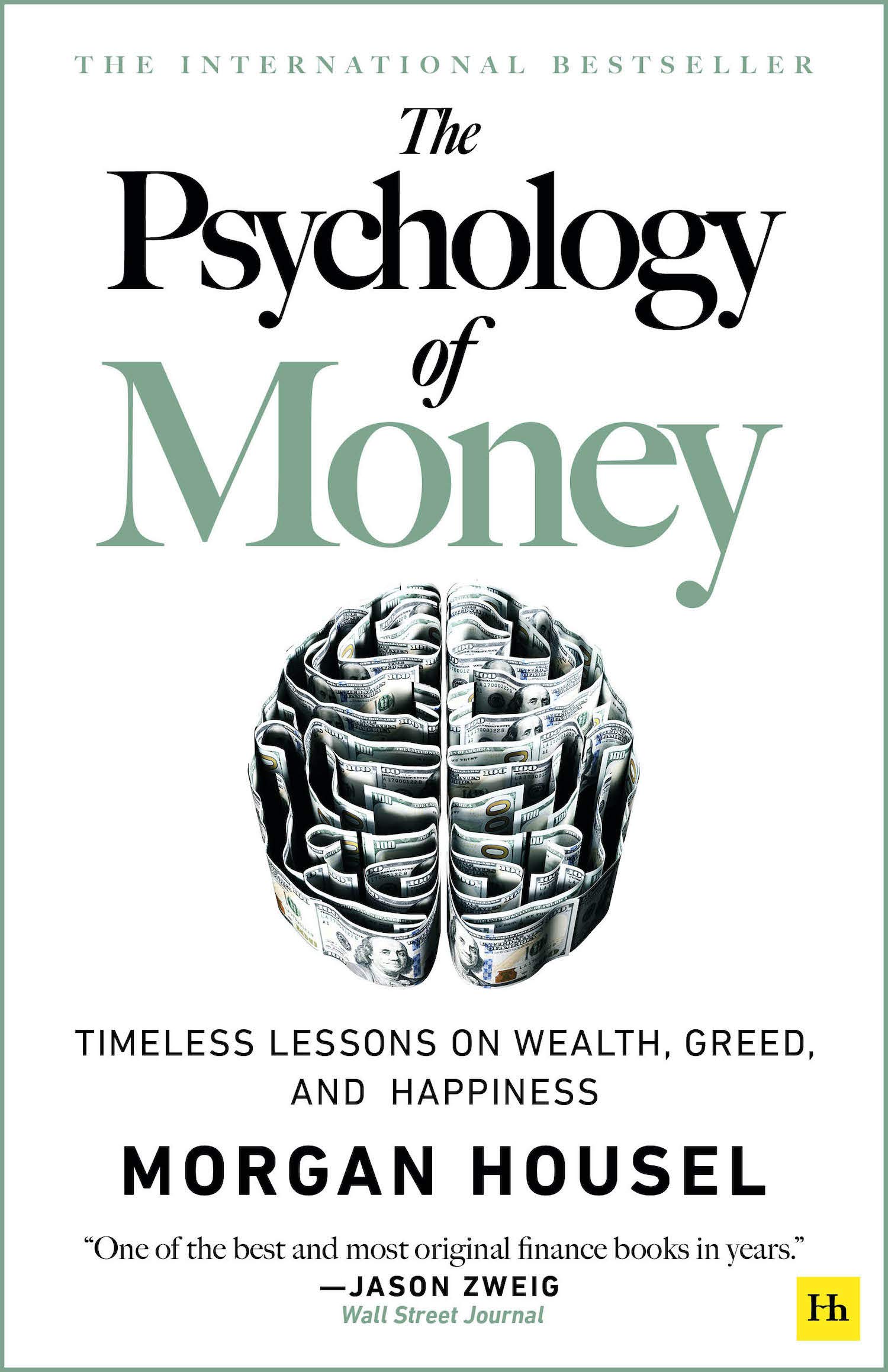
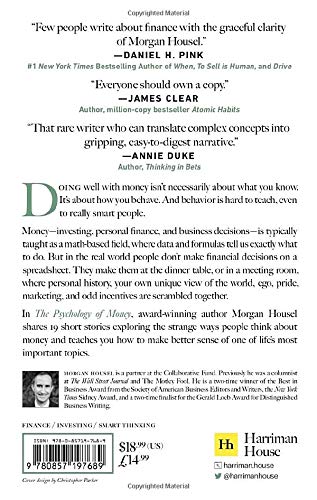
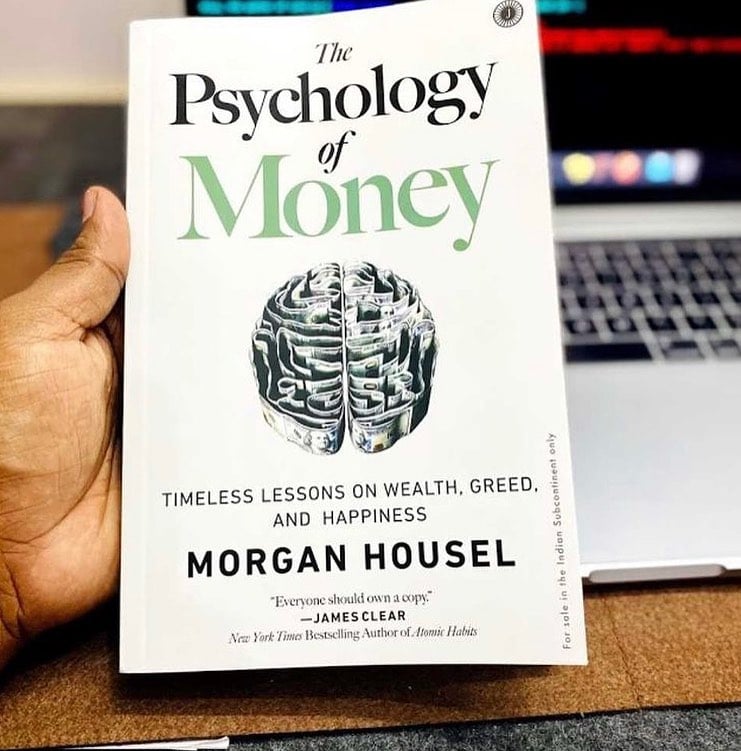
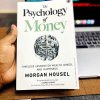
Psychology of Money by Morgan Housel
රු1,700.00
3 X Rs. 566.67 or 8% Cashback with


or 3 X රු566.67 with


or up to 4 X රු425.00 with


The Psychology of Money by Morgan Housel is a bestselling personal-finance book that explores how behavior, emotion and personal experience shape the way we save, spend and invest. Through 19 engaging stories, Housel explains timeless lessons about compounding, risk, luck, wealth, financial freedom, patience and knowing when enough is enough. Accessible even for finance beginners, it is an excellent read for students, investors, entrepreneurs and anyone who wants to make smarter long-term decisions with money.
360 in stock
The Psychology of Money by Morgan Housel is a bestselling personal-finance book that explains why becoming good with money often has less to do with complicated mathematics and more to do with behavior, patience, expectations, risk and the way we think.
People often imagine financial success is mainly about knowing the right formula.
Find the best investment.
Calculate the perfect return.
Predict the market.
Choose the right stock.
Morgan Housel argues that real life is far more complicated.
Two people can receive the same financial information and make completely different decisions.
Why?
Because every person approaches money with a different history.
Different experiences.
Different fears.
Different goals.
Different ideas about what “enough” looks like.
Through 19 short stories, Housel examines how emotions and behavior influence the way people:
Earn.
Spend.
Save.
Invest.
Take risks.
Build wealth.
Lose wealth.
And define success.
The Psychology of Money by Morgan Housel is therefore not primarily a book about stock-picking or complex investment formulas.
It is about understanding yourself.
Why do people who earn large incomes sometimes still become financially unstable?
Why can ordinary savers quietly build substantial wealth?
Why does luck matter?
Why does risk matter?
Why is keeping wealth often harder than building it?
Why is freedom one of the most valuable things money can buy?
And why does knowing when you have “enough” matter so much?
These questions make the book useful not only for investors but also for students, employees, entrepreneurs, business owners and anyone who wants a healthier relationship with money.
The Psychology of Money by Morgan Housel – Book Overview
The Psychology of Money by Morgan Housel begins with a powerful observation:
People do not make financial decisions only with spreadsheets.
They make them through emotion and personal experience.
A person who grew up during a severe recession may think about risk differently from someone who experienced decades of economic growth.
Someone who saw their parents struggle with debt may treat borrowing differently from someone who grew up financially comfortable.
Neither person is necessarily irrational.
They are reacting to different experiences.
That is why personal finance is so personal.
Money Is About Behavior
The central argument of the book is simple:
Knowing what to do with money is not the same as actually doing it.
You may know that saving is important.
But can you delay spending?
You may know that markets fluctuate.
But can you remain calm during a major decline?
You may understand compound growth.
But can you wait for decades?
Financial knowledge matters.
Behavior determines whether that knowledge survives contact with real life.
Nobody Is Crazy
One of Housel’s early lessons is that people make financial decisions based on the world they personally experienced.
What looks irrational from your perspective may make perfect sense from someone else’s.
This idea encourages humility.
Instead of immediately saying:
“That person is terrible with money,”
ask:
“What experiences shaped their decision?”
Personal Experience Is Limited
Each person experiences only a tiny slice of economic history.
You may live through:
A housing boom.
A market crash.
High inflation.
Low inflation.
Rapid growth.
Stagnation.
But no individual personally experiences every possible economic environment.
This means financial decisions based only on personal experience can be dangerous.
History broadens perspective.
Luck and Risk
One of the strongest chapters in The Psychology of Money by Morgan Housel concerns luck and risk.
Success is influenced by:
Skill.
Effort.
Discipline.
Timing.
Circumstances.
Luck.
Likewise, failure may involve poor decisions but can also involve bad timing or uncontrollable events.
That does not mean effort is irrelevant.
It means we should be careful about assuming every successful person succeeded entirely because of genius—or that every unsuccessful person failed because of stupidity.
Bill Gates and Opportunity
Housel uses stories to demonstrate how success often depends on circumstances people did not fully control.
Talent matters.
Hard work matters.
But opportunity can matter too.
The lesson is not to dismiss achievement.
It is to remain humble about how many variables shape outcomes.
Avoid Worshipping Extreme Success
When studying successful people, it is tempting to imitate every decision they made.
But extreme outcomes may depend partly on conditions that cannot be repeated.
A better approach is to look for broader patterns that have worked across many people and many periods.
Getting Wealthy Versus Staying Wealthy
These are different skills.
Getting wealthy may require:
Optimism.
Risk.
Ambition.
Boldness.
Staying wealthy may require:
Humility.
Frugality.
Patience.
Caution.
Room for error.
Someone can become rich through one great success and lose everything through one careless decision.
Survival Matters
Long-term financial success depends partly on staying in the game.
If an investment strategy is so aggressive that one bad period destroys you financially, strong returns before that moment may not matter.
Survival gives compounding time to work.
Compounding
Compounding is one of the most important ideas in The Psychology of Money by Morgan Housel.
Small gains accumulated over long periods can produce extraordinary results.
This applies to money.
It also applies to:
Skills.
Knowledge.
Relationships.
Businesses.
Reputation.
The challenge is that compounding looks unimpressive at the beginning.
Warren Buffett and Time
Housel highlights the importance of time in Warren Buffett’s wealth.
Buffett’s investment ability matters enormously.
But so does the fact that he began investing very young and continued for decades.
Long periods give compounding extraordinary power.
This teaches an important lesson:
Good returns sustained for a long time can matter more than chasing spectacular returns for a short time.
The Seduction of Fast Money
People naturally notice dramatic financial success.
Someone doubles their money quickly.
A stock rises dramatically.
A cryptocurrency explodes.
A business becomes successful overnight.
Slow wealth-building receives less attention because it is boring.
But boring can be powerful.
Wealth Is What You Don’t See
One of Housel’s most memorable ideas is that visible wealth and actual wealth are not the same thing.
A luxury car is visible.
An expensive watch is visible.
A large house is visible.
But the money used to purchase those things is no longer sitting in the owner’s bank account.
Real wealth is often invisible.
Savings.
Investments.
Financial reserves.
Assets not spent.
Rich Versus Wealthy
A person with a high income may be rich.
A person with substantial unspent assets may be wealthy.
The difference matters.
Someone can earn an enormous salary and spend almost all of it.
Another person can earn less but consistently save and invest.
Income alone does not tell the full financial story.
The Man in the Car Paradox
People often purchase status items hoping others will admire them.
But when you see someone in an expensive car, you may think:
“That car is amazing.”
You may not think:
“That driver must be amazing.”
We often want admiration but purchase things that receive the admiration themselves.
This makes status spending psychologically complicated.
Saving Money
Housel argues that saving does not always need a specific goal.
People often say:
Save for a house.
Save for a holiday.
Save for retirement.
Those are useful goals.
But saving also creates flexibility.
Savings allow you to respond to opportunities and unexpected events.
Savings Create Options
Money saved can buy:
Time.
Flexibility.
Security.
The ability to change jobs.
The ability to survive an emergency.
The ability to take a calculated opportunity.
That flexibility may be more valuable than any single material purchase.
Freedom
One of the strongest messages in The Psychology of Money by Morgan Housel is that control over your time may be one of the greatest benefits money can provide.
Being able to decide:
What you do.
When you do it.
Who you work with.
How long you work.
can create enormous happiness.
Money is valuable partly because it can increase autonomy.
Time Is a Financial Asset
People often measure wealth only in currency.
But time matters too.
A person who earns slightly less but controls their schedule may feel richer than someone earning much more while having no control over their life.
Enough
The idea of enough is central to the book.
If your definition of success constantly moves upward, satisfaction becomes impossible.
More income.
More status.
More investments.
More recognition.
More.
At some point, the pursuit of more can lead people to risk things they already have and need for things they do not need.
The Danger of Never Having Enough
Financial history contains examples of people who were already extremely wealthy but took unnecessary risks because they wanted more.
The lesson is not to stop being ambitious.
It is to recognize when additional gain is not worth risking:
Reputation.
Security.
Family.
Freedom.
Existing wealth.
Reasonable Beats Rational
Traditional economics often assumes people behave rationally.
Real people do not.
And that is not always a problem.
A mathematically perfect strategy may be useless if it causes so much anxiety that you cannot stick with it.
A slightly less optimal plan that you can follow consistently may produce better real-world outcomes.
Sleep-at-Night Investing
A good financial strategy should not only work mathematically.
It should work psychologically.
If a portfolio is so risky that you panic every time markets fall, the plan may be unsuitable even if the theoretical return is high.
Your ability to stay invested matters.
Room for Error
Another major principle in The Psychology of Money by Morgan Housel is maintaining a margin of safety.
Life rarely follows a perfect forecast.
Expenses may be higher.
Returns may be lower.
Jobs may disappear.
Businesses may slow down.
Emergencies may happen.
Good planning leaves room for things to go wrong.
Emergency Funds
An emergency fund is a simple example of room for error.
It may not generate exciting returns.
But it can protect you from having to:
Sell investments at a bad time.
Take expensive debt.
Make desperate decisions.
Sometimes the value of money lies in what problems it prevents.
Forecasting Is Difficult
People love predictions.
Where will the market be next year?
What will interest rates do?
Which industry will dominate?
Housel emphasizes how difficult prediction becomes because the biggest events are often the ones nobody expected.
Surprise Drives History
Major historical events often matter precisely because they were surprising.
If everyone already knew they would happen, people would have prepared differently.
This means the future will probably contain important events that current models do not predict.
Prepare Instead of Predict
Instead of trying to forecast every possibility perfectly, build a financial life that can survive multiple outcomes.
Diversification.
Savings.
Manageable debt.
Reasonable expectations.
Flexible plans.
These may be less exciting than predictions but more useful.
You Will Change
People underestimate how much their future preferences may change.
The career you want at 20 may not be the career you want at 40.
The house you want today may not suit you later.
Your financial plan should therefore contain flexibility.
Avoid Extreme Long-Term Commitments
When possible, avoid building a life that assumes your current preferences will never change.
Financial flexibility allows your future self to make different decisions.
Nothing Is Free
Every investment return has a price.
The price may not always be a visible fee.
It may be:
Volatility.
Uncertainty.
Fear.
Regret.
Waiting.
Market declines.
Housel encourages readers to think of volatility as the price of admission rather than necessarily a punishment.
Market Volatility
If investments offered high returns with no risk, everyone would choose them.
The discomfort of uncertainty is part of why potential rewards exist.
This does not mean taking unlimited risk.
It means understanding that some discomfort is normal.
Pessimism Sounds Smarter
Bad news often receives more attention than good news.
A market crash happens quickly.
Economic progress may happen slowly.
Destruction is dramatic.
Growth is gradual.
As a result, pessimistic stories can feel more intelligent and urgent.
Progress Often Happens Slowly
Technology.
Productivity.
Health.
Business.
Wealth.
can improve gradually over long periods.
Because improvement is slow, it may receive less attention than sudden disasters.
Maintaining perspective matters.
Optimism With Realism
Housel does not argue that everything always improves.
A useful financial mindset combines:
Long-term optimism
with
short-term caution.
Believe progress is possible.
Prepare for things to go wrong along the way.
Different People Play Different Games
A day trader and a retirement investor may buy the same stock for completely different reasons.
One cares about tomorrow.
The other cares about twenty years from now.
Problems occur when people copy the behavior of someone playing a different financial game.
Know Your Time Horizon
Before making a decision, ask:
What is my goal?
What is my timeline?
How much risk can I tolerate?
Someone else’s strategy may be perfect for them and terrible for you.
Social Comparison
Money becomes emotionally difficult because we constantly see what other people have.
Someone earns more.
Buys a better car.
Moves into a larger house.
Travels more.
Comparison creates pressure to spend and take risks that may not fit our own goals.
Your Financial Plan Should Be Yours
You do not need the same:
House.
Car.
Portfolio.
Lifestyle.
Retirement age.
Career path.
as another person.
Financial success should be aligned with your values rather than someone else’s appearance.
Lifestyle Inflation
As income rises, spending often rises with it.
A larger salary can lead to:
Larger house.
More expensive car.
More subscriptions.
More dining.
More obligations.
Without conscious saving, higher income may not create greater financial security.
Keep the Gap
The gap between what you earn and what you spend is powerful.
If income grows faster than lifestyle expenses, saving becomes easier.
That gap creates future options.
Money and Happiness
Money can improve happiness in important ways.
It can reduce certain stresses.
Provide safety.
Increase choice.
Create time.
But beyond a point, additional spending may produce less happiness than expected.
Understanding what genuinely improves your life matters.
Spending With Purpose
The goal is not necessarily extreme frugality.
A healthier question is:
Which spending genuinely improves my life?
Spend on what matters.
Save on what does not.
Financial Independence
Financial independence does not need to mean never working again.
It can mean having enough flexibility to make decisions without immediate financial panic.
Maybe you can:
Leave a toxic job.
Take a career break.
Start a business.
Study again.
Work fewer hours.
Money creates choices.
Risk Cannot Be Eliminated
Every financial decision contains risk.
Cash has inflation risk.
Stocks have market risk.
Property has liquidity and concentration risk.
Businesses can fail.
The goal is not zero risk.
It is understanding which risks you are taking and whether you can survive them.
Wealth Requires Patience
Much of The Psychology of Money by Morgan Housel points back to patience.
Wealth-building often involves:
Saving.
Waiting.
Compounding.
Avoiding unnecessary mistakes.
Repeating.
None of these activities creates exciting headlines.
But financial success often comes from avoiding catastrophic errors rather than making one brilliant move.
Avoid Ruin
A strategy that works 99 times but destroys you completely on attempt 100 is not sustainable.
Protect against outcomes that permanently remove you from the game.
This principle applies to:
Investing.
Business.
Debt.
Career decisions.
Money and Ego
Money frequently becomes tied to identity.
People use financial success to prove:
Intelligence.
Status.
Worth.
Importance.
But when money becomes a measure of personal value, decisions become emotionally dangerous.
A financial loss can then feel like a personal failure.
Separate Net Worth From Self-Worth
Your bank balance does not measure your human value.
Financial mistakes are real.
They may require correction.
But they do not define your entire identity.
This distinction can help people make calmer decisions.
Entrepreneurship
The ideas in The Psychology of Money by Morgan Housel also apply to business owners.
Businesses need:
Cash reserves.
Room for error.
Reasonable growth.
Long-term thinking.
Risk management.
A company that grows rapidly but has no financial buffer may be fragile.
Cash Flow Matters
Business owners sometimes focus heavily on:
Revenue.
Sales.
Growth.
But survival depends on having enough cash to continue operating when conditions change.
Again, staying in the game matters.
Investing
The book is useful for investors, but it does not give a specific list of stocks to buy.
Instead, Housel focuses on investor behavior.
Can you:
Stay patient?
Avoid panic?
Understand risk?
Accept volatility?
Avoid copying others?
Think long term?
Those psychological skills may matter more than constant market predictions.
Does The Psychology of Money Tell You Where to Invest?
No.
It is not primarily a step-by-step investment manual.
It does not provide a guaranteed formula for:
Stock selection.
Crypto investing.
Property investing.
Getting rich quickly.
Instead, it explains principles that can help readers make more thoughtful financial decisions.
Is It a Get-Rich-Quick Book?
No.
In fact, much of the book argues against behaviors associated with chasing fast wealth.
Its strongest themes include:
Patience.
Compounding.
Saving.
Survival.
Reasonable expectations.
Long-term thinking.
Is The Psychology of Money Good for Beginners?
Yes.
One reason the book became so popular is that it explains financial ideas through stories rather than complicated equations.
Readers do not need:
Finance degrees.
Accounting knowledge.
Advanced mathematics.
Investment experience.
The concepts are accessible to beginners.
Is It Useful for Students?
Yes.
Students can benefit from learning these ideas before major financial responsibilities begin.
Understanding:
Saving.
Compounding.
Lifestyle inflation.
Debt.
Risk.
Financial independence.
early can create better long-term habits.
Is It Useful for Entrepreneurs?
Yes.
Entrepreneurs may especially appreciate chapters dealing with:
Risk.
Luck.
Room for error.
Long-term survival.
Uncertainty.
Enough.
These concepts apply directly to business decision-making.
Is It Only About Investing?
No.
The Psychology of Money by Morgan Housel is broader than investing.
It deals with:
Saving.
Spending.
Status.
Happiness.
Freedom.
Behavior.
Wealth.
Risk.
Financial planning.
Does It Replace Professional Financial Advice?
No.
The book provides general financial and behavioral principles rather than individualized financial, tax, legal or investment advice.
Readers making major financial decisions should consider their own circumstances and, where appropriate, seek qualified professional advice.
Morgan Housel
Morgan Housel is a partner at Collaborative Fund and previously wrote for The Motley Fool and The Wall Street Journal. Harriman House identifies him as the bestselling author of The Psychology of Money, Same As Ever and The Art of Spending Money.
His writing style is known for combining financial principles with history, psychology and memorable stories.
Official Edition Details
For the Harriman House paperback in your inventory:
Title: The Psychology of Money
Subtitle: Timeless Lessons on Wealth, Greed, and Happiness
Author: Morgan Housel
Publisher: Harriman House
Publication Date: September 8, 2020
Pages: 256
ISBN-13: 9780857197689
Format: Paperback
Your inventory uses the same ISBN, so the product record is consistent with the official edition.
Important Themes
The Psychology of Money by Morgan Housel explores:
- Personal finance
- Money psychology
- Saving
- Investing
- Wealth
- Risk
- Luck
- Compounding
- Financial independence
- Behavior
- Lifestyle inflation
- Freedom
- Patience
- Long-term thinking
- Margin of safety
- Financial decisions
- Status
- Happiness
- Uncertainty
- Financial resilience
7 Powerful Lessons From The Psychology of Money by Morgan Housel
- Financial success is more about behavior than intelligence. Knowing financial theory does not help if emotion causes you to abandon sensible decisions during difficult moments.
- Compounding needs time. Extraordinary long-term results can emerge from reasonable returns sustained for many years, making patience one of the most valuable financial skills.
- Getting wealthy and staying wealthy require different mindsets. Building wealth may require risk and optimism, while preserving it requires humility, caution and room for error.
- Real wealth is often invisible. Expensive possessions show spending, not necessarily financial security. Wealth often exists in the assets and savings that have not been spent.
- Money’s greatest value may be freedom. The ability to control your time, choose your work and respond to life without immediate financial pressure can be more valuable than status.
- Always leave room for error. Forecasts will sometimes be wrong. Savings, diversification and reasonable expectations can help you survive events you did not predict.
- Know what “enough” means. Endless comparison and ambition can encourage people to risk what they already have for gains that may add very little to their happiness.
Why Read The Psychology of Money by Morgan Housel?
The Psychology of Money by Morgan Housel is an excellent choice for anyone interested in personal finance, investing, money management, financial independence, business, psychology and better decision-making.
It is especially valuable because it does not pretend money is only mathematics.
People make decisions emotionally.
They become afraid.
Greedy.
Optimistic.
Jealous.
Impatient.
Overconfident.
Understanding those emotions can be as important as understanding numbers.
The book encourages readers to build financial habits they can maintain rather than chase strategies that look impressive but feel impossible to follow.
Who Should Read This Book?
The Psychology of Money by Morgan Housel may especially appeal to:
- Personal-finance beginners
- Investors
- Students
- Entrepreneurs
- Business owners
- Young professionals
- People learning to save
- Readers interested in financial independence
- Fans of behavioral psychology
- Readers of The Intelligent Investor
- Readers of Rich Dad Poor Dad
- Readers of Same As Ever
- Anyone wanting a healthier relationship with money
The Psychology of Money by Morgan Housel – Wealth Is More Than Money
The Psychology of Money by Morgan Housel succeeds because it changes the question.
Instead of asking only:
How do I make more money?
it asks:
How do I make better decisions about money?
That difference matters.
Someone can know every investment formula and still panic during a market decline.
Someone can earn an enormous salary and still spend everything.
Someone can build wealth and then destroy it through unnecessary risk.
Someone else can quietly save, invest patiently and gain something more valuable than an expensive lifestyle:
Freedom.
Financial success is therefore not simply about maximizing returns.
It is about creating a system you can survive.
A system that allows mistakes.
A system aligned with your goals.
A system that does not depend on predicting every future event correctly.
And perhaps most importantly, a system that helps you recognize when you already have enough.
Housel’s message is not that money is unimportant.
Money matters enormously.
It can provide:
Security.
Choice.
Comfort.
Opportunity.
Time.
But money works best as a tool rather than a scoreboard.
If your financial goal is only to appear richer than the next person, there will always be someone with:
A bigger house.
A better car.
A larger portfolio.
A higher salary.
The comparison never ends.
But if money is used to create independence, flexibility and peace of mind, financial success can become much more personal.
That is why The Psychology of Money by Morgan Housel remains such an accessible and practical introduction to financial thinking.
It does not promise a shortcut to wealth.
It offers something more useful:
A framework for understanding why people make financial decisions—and how patience, humility, saving and long-term thinking can help us make better ones.
Learn more about The Psychology of Money by Morgan Housel on the official Harriman House website.
Explore more finance and personal development books at Bargain Books.
| Weight | 0.224 kg |
|---|---|
| Dimensions | 14.2 × 0.9 × 21.7 cm |
| Author | Morgan Housel |
| Language | English |
| Type | Paperback Printed Book (Second Quality Copy) |
| ISBN/ISSN | 9390166268 |
| Pages | 252 |
Be the first to review “Psychology of Money by Morgan Housel”
Related products
-21%
Non-Fiction & Knowledge
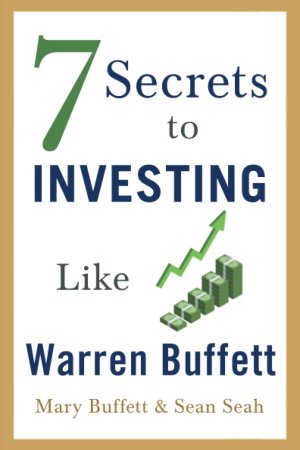
7 Secrets to Investing Like Warren Buffett by Mary Buffett & Sean Seah
Original price was: රු1,900.00.රු1,500.00Current price is: රු1,500.00.
3 X Rs. 500.00 or 8% Cashback with
or 3 X රු500.00 with
or up to 4 X රු375.00 with
-33%
Non-Fiction & Knowledge
Original price was: රු2,850.00.රු1,900.00Current price is: රු1,900.00.
3 X Rs. 633.33 or 8% Cashback with
or 3 X රු633.33 with
or up to 4 X රු475.00 with
Damaged & Imperfect Books
රු1,700.00
3 X Rs. 566.67 or 8% Cashback with
or 3 X රු566.67 with
or up to 4 X රු425.00 with
![Stories of bible [hardcover]](https://bargainbooks.lk/wp-content/uploads/Stories-of-bible-hardcover-4-1-300x450.jpeg)
Damaged & Imperfect Books
රු1,750.00
3 X Rs. 583.33 or 8% Cashback with
or 3 X රු583.33 with
or up to 4 X රු437.50 with
-22%

Out of stock
Business, Finance & Economics
Original price was: රු2,250.00.රු1,750.00Current price is: රු1,750.00.
3 X Rs. 583.33 or 8% Cashback with
or 3 X රු583.33 with
or up to 4 X රු437.50 with
![Stories of bible [hardcover]](https://bargainbooks.lk/wp-content/uploads/Stories-of-bible-hardcover-2-300x450.jpeg)
Damaged & Imperfect Books
රු1,750.00
3 X Rs. 583.33 or 8% Cashback with
or 3 X රු583.33 with
or up to 4 X රු437.50 with
-31%
Business, Finance & Economics
Original price was: රු1,600.00.රු1,100.00Current price is: රු1,100.00.
3 X Rs. 366.67 or 8% Cashback with
or 3 X රු366.67 with
or up to 4 X රු275.00 with
-17%
Business, Finance & Economics
Original price was: රු1,800.00.රු1,500.00Current price is: රු1,500.00.
3 X Rs. 500.00 or 8% Cashback with
or 3 X රු500.00 with
or up to 4 X රු375.00 with
Reviews
There are no reviews yet.