No products in the cart.
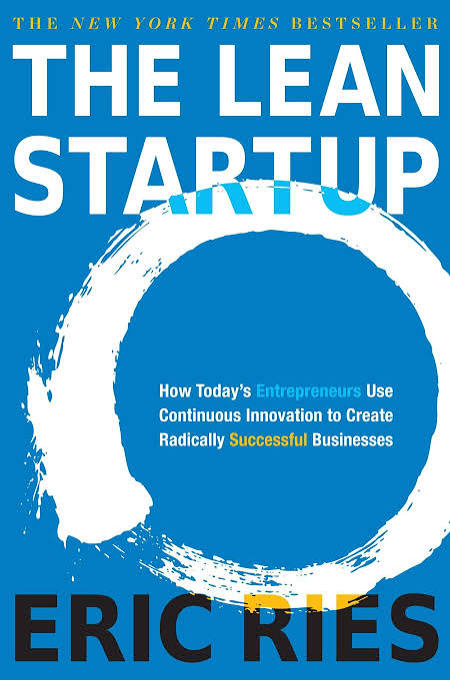



The Lean Startup [Hardcover] by Eric Ries
The Lean Startup by Eric Ries is one of the most influential modern business books about startups, innovation, product development, and entrepreneurship.
The book introduces a practical method for building businesses under conditions of uncertainty.
Instead of spending years perfecting an idea before launch, Ries encourages entrepreneurs to test assumptions early.
Learn quickly.
Measure honestly.
And improve continuously.
About The Lean Startup
The Lean Startup presents a scientific approach to building and managing new businesses.
Eric Ries argues that startups should not rely only on detailed business plans and predictions.
Startups operate in uncertainty.
That means they need systems that help them learn what customers actually want.
Penguin Random House describes the method as one built around validated learning, rapid experimentation, shorter development cycles, and continuous adaptation. PenguinRandomhouse.com
7 Powerful Lessons from The Lean Startup
1. Build, Measure, Learn
The Build-Measure-Learn loop is one of the central ideas in The Lean Startup.
First, build something customers can actually use.
Then measure how they respond.
Finally, learn from the results.
That learning should guide the next version.
The faster this cycle moves, the faster a startup can discover what works.
2. Start With a Minimum Viable Product
An MVP is a Minimum Viable Product.
It is not necessarily a bad or unfinished product.
It is the smallest version that can test an important business assumption.
The goal is learning.
If a startup spends too much time building features nobody wants, that effort becomes waste.
3. Use Validated Learning
Validated learning means learning from real customer behavior.
Opinions are useful.
But behavior is stronger evidence.
Do customers sign up?
Do they use the product?
Do they return?
Do they pay?
These answers help founders decide whether their assumptions are correct.
4. Avoid Vanity Metrics
Large numbers can look impressive.
Website visitors.
Downloads.
Followers.
Registrations.
But these numbers do not always prove that a business is improving.
Ries encourages startups to focus on actionable metrics.
These should help teams make decisions.
5. Know When to Pivot
Sometimes an idea is not working.
That does not always mean the company should close.
It may mean the strategy needs to change.
Ries calls this a pivot.
The vision may remain.
But the path changes.
6. Persevere When the Evidence Supports It
Not every difficult period requires a pivot.
Sometimes the data shows that the business is progressing.
In that situation, the team may need to persevere.
The challenge is knowing the difference between patience and stubbornness.
That is why measurement matters.
7. Reduce Waste
The Lean Startup method is influenced by lean manufacturing.
The idea is to reduce activities that do not create useful learning or customer value.
Building unwanted features is waste.
Long meetings without decisions are waste.
Testing assumptions earlier can save time and money.
What Is a Startup?
Ries defines startups more broadly than many people expect.
A startup is not only a small technology company.
It can exist inside a large corporation.
It can be a new team.
A new product.
Or a new business model.
The important feature is uncertainty.
Build-Measure-Learn Explained
The process begins with an idea.
The team identifies the assumptions behind that idea.
Then it builds an experiment.
The product reaches real customers.
Their behavior creates data.
The team studies the results.
Then it learns what to do next.
This cycle repeats.
Minimum Viable Product
One of the most famous concepts in The Lean Startup is the MVP.
The MVP should test the most important assumptions as quickly as possible.
It may have only a small number of features.
That is intentional.
The goal is not to impress everyone immediately.
The goal is to learn.
Customer Feedback
Customers are central to the Lean Startup method.
But feedback should be interpreted carefully.
People may say they like an idea.
That does not mean they will pay for it.
Actual behavior provides stronger evidence.
That is why experiments matter.
Innovation Accounting
Traditional accounting tells a company how much money it made or lost.
Innovation accounting asks different questions.
Are customers becoming more engaged?
Are conversion rates improving?
Is retention getting better?
Is the business moving toward a sustainable model?
These metrics help startups judge progress before they become large.
Pivot or Persevere
Every startup eventually faces an important decision.
Keep going?
Or change direction?
The Lean Startup method encourages teams to make this decision using evidence.
A pivot can involve changing the customer segment.
Pricing.
Distribution.
Technology.
Product features.
Or the business model.https://bargainbooks.lk/store/the-lean-startup-by-eric-ries/?srsltid=AU7gw4UrriVC2TJvpBmG-AWBuhvl2bj0qGUdapEEgnbvK3RSaQU9qQni
Be the first to review “Lean startup (Hard Cover) by Eric Ries”
Related products

Out of stock
Needs Category Review
රු950.00
3 X Rs. 316.67 or 8% Cashback with


or 3 X රු316.67 with


or up to 4 X රු237.50 with


Needs Category Review
Naruto Manga Book Set of 28 – 48 Volumes by Masashi Kishimoto witout box
රු16,900.00
3 X Rs. 5,633.33 or 8% Cashback with
or 3 X රු5,633.33 with
or up to 4 X රු4,225.00 with

Needs Category Review
රු17,500.00
3 X Rs. 5,833.33 or 8% Cashback with
or 3 X රු5,833.33 with
or up to 4 X රු4,375.00 with
Needs Category Review
රු1,950.00
3 X Rs. 650.00 or 8% Cashback with
or 3 X රු650.00 with
or up to 4 X රු487.50 with
Children & Young Adult
රු2,600.00
3 X Rs. 866.67 or 8% Cashback with
or 3 X රු866.67 with
or up to 4 X රු650.00 with
Needs Category Review
රු1,650.00
3 X Rs. 550.00 or 8% Cashback with
or 3 X රු550.00 with
or up to 4 X රු412.50 with

Out of stock
Needs Category Review
රු1,700.00
3 X Rs. 566.67 or 8% Cashback with
or 3 X රු566.67 with
or up to 4 X රු425.00 with

Needs Category Review
රු1,750.00
3 X Rs. 583.33 or 8% Cashback with
or 3 X රු583.33 with
or up to 4 X රු437.50 with
Reviews
There are no reviews yet.