
No products in the cart.
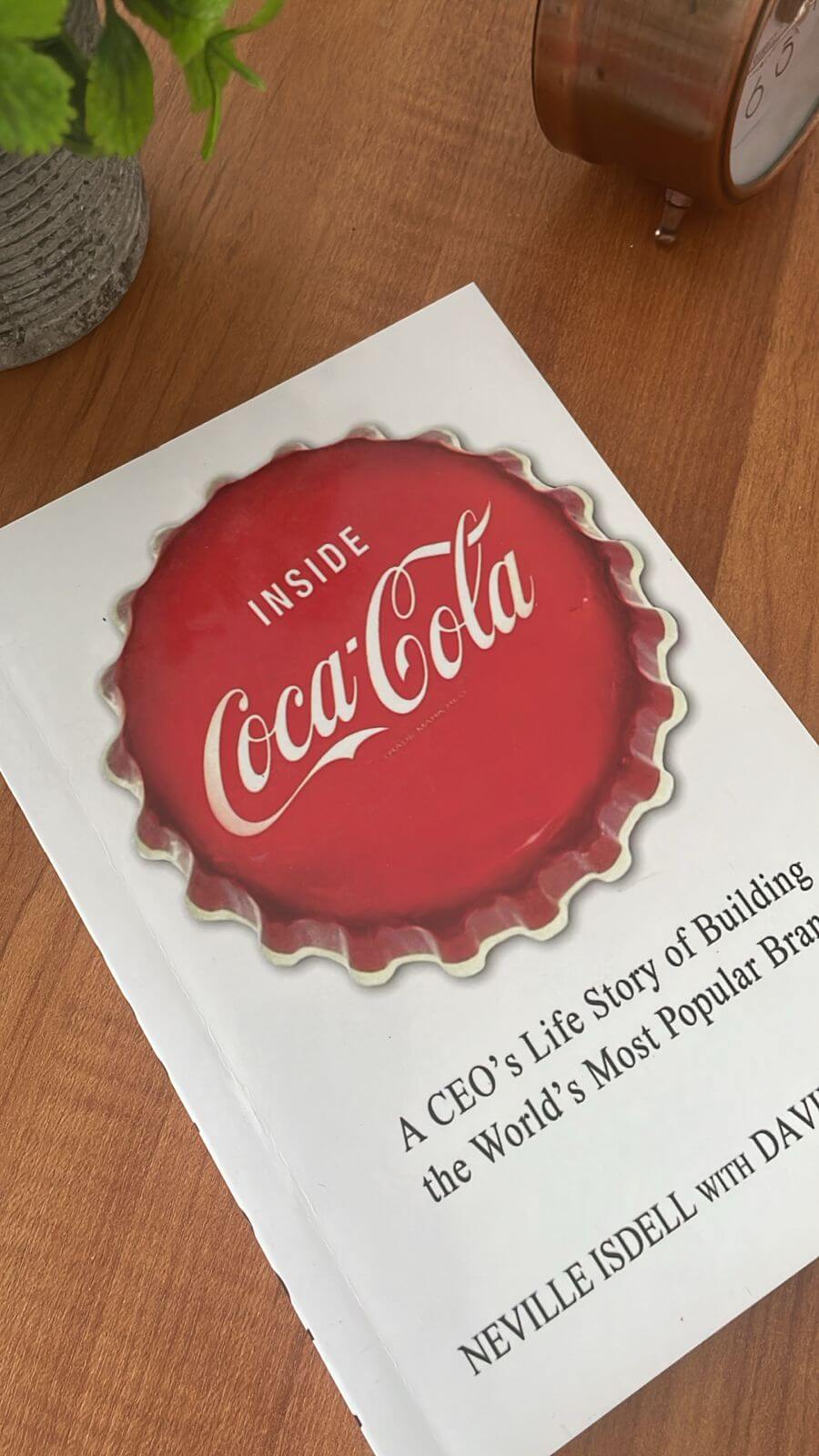







Inside Coca Cola by Neville Isdell and David Beasley

රු1,750.00
3 X Rs. 583.33 or 8% Cashback with


or 3 X රු583.33 with


or up to 4 X රු437.50 with


Inside Coca-Cola by Neville Isdell is an engaging business memoir from the former Chairman and CEO of Coca-Cola, revealing lessons from more than three decades inside one of the world’s most famous companies. Through stories of global expansion, brand building, crisis management, leadership, competition, corporate responsibility, and business transformation, Isdell provides a rare look at what it takes to manage and revive a truly global brand.
6 in stock
Inside Coca-Cola by Neville Isdell is a fascinating business memoir about leadership, branding, global expansion, corporate culture, crisis management, marketing, competition, and the challenge of leading one of the most recognizable companies in the world.
Coca-Cola is more than a beverage.
It is one of the most recognizable brands on the planet.
Its logo appears across countries, cultures, languages, restaurants, supermarkets, sporting events, and advertising campaigns.
But building and maintaining a global brand of that scale is far more complicated than simply selling a popular drink.
Behind the famous red-and-white identity is a massive international business involving bottlers, distributors, employees, governments, retailers, customers, marketing teams, investors, and communities.
Inside Coca-Cola by Neville Isdell gives readers a rare look at this world from someone who spent decades inside the company and eventually rose to its highest leadership levels.
Neville Isdell worked across multiple international markets before becoming Chairman and CEO of Coca-Cola.
His career took him through Africa, Asia, Europe, and other major markets, giving him firsthand experience of how a global company must adapt to different cultures, economic conditions, political environments, and customer expectations.
The book combines personal memoir with practical lessons about running a global corporation.
Inside Coca-Cola by Neville Isdell – Book Overview
Inside Coca-Cola by Neville Isdell follows Isdell’s personal and professional journey from his early life to senior leadership at The Coca-Cola Company.
His story takes readers across countries including:
- South Africa
- Zambia
- Australia
- The Philippines
- Russia
- Germany
- India
- Turkey
- Other major global markets
Rather than presenting Coca-Cola only as a marketing success story, Isdell shows the complexity of managing a brand that operates across very different parts of the world.
Every market creates different challenges.
Consumer preferences differ.
Regulations differ.
Politics differ.
Distribution differs.
Culture differs.
Economic conditions differ.
A strategy that works brilliantly in one country may fail somewhere else.
This is one of the most valuable lessons in Inside Coca-Cola by Neville Isdell.
Global business requires consistency and adaptability at the same time.
The Power of the Coca-Cola Brand
Coca-Cola’s brand is one of its greatest assets.
People recognize the name.
The bottle.
The colours.
The advertising.
The taste.
But maintaining a powerful brand requires constant attention.
Inside Coca-Cola by Neville Isdell shows that brand value does not survive automatically.
A company can be famous and still lose customer trust.
It can be profitable and still make strategic mistakes.
It can dominate one generation and become less relevant to the next.
Strong brands therefore need continuous investment.
Marketing.
Product quality.
Customer relationships.
Distribution.
Innovation.
Corporate reputation.
A famous name is an advantage.
It is not a guarantee.
Brand Reputation Matters
One of the strongest business lessons in Inside Coca-Cola by Neville Isdell is the importance of reputation.
Large companies operate under constant public attention.
One mistake can become international news.
A local controversy can quickly become a global reputation problem.
Isdell discusses major public-relations challenges Coca-Cola faced in markets such as India and Turkey.
These situations demonstrate why corporate communication matters.
A company must understand:
What happened?
What customers believe happened?
What employees believe?
What regulators believe?
What the media is reporting?
What facts can be verified?
Managing reputation requires more than advertising.
It requires credibility.
Crisis Management
Every major company eventually experiences problems.
Product concerns.
Political controversy.
Employee issues.
Competition.
Regulatory pressure.
Public criticism.
Inside Coca-Cola by Neville Isdell demonstrates that the real test of leadership is often how the organization responds when things go wrong.
Ignoring criticism can make problems worse.
Responding too aggressively can also create damage.
Good crisis management requires:
Listening.
Gathering facts.
Communicating clearly.
Taking responsibility when appropriate.
Correcting genuine problems.
Protecting long-term trust.
Crisis management is therefore not only a public-relations responsibility.
It is a leadership responsibility.
Global Business Requires Local Understanding
A brand can be global.
Customers are still local.
This distinction becomes clear throughout Inside Coca-Cola by Neville Isdell.
A company operating internationally must understand local markets.
What do customers drink?
How do they shop?
What price can they afford?
Which retailers dominate?
What cultural expectations exist?
Which regulations matter?
How important are local relationships?
Global companies can make serious mistakes when headquarters assumes every country behaves the same.
International growth therefore requires local knowledge.
Think Globally, Operate Locally
Coca-Cola must preserve recognizable brand identity while adapting its operations to each market.
That requires balance.
Too much central control can reduce flexibility.
Too little control can weaken consistency.
Inside Coca-Cola by Neville Isdell provides useful insight into how global companies manage this tension.
The company may have one global brand.
But execution may involve thousands of local decisions.
Distribution.
Pricing.
Marketing.
Partnerships.
Packaging.
Retail relationships.
Each market requires understanding.
Distribution Is a Competitive Advantage
Customers cannot buy a product that is unavailable.
This sounds obvious.
But distribution is one of the most important factors in consumer business.
Coca-Cola’s global reach depends on an enormous system of bottlers, retailers, distributors, and partners.
Inside Coca-Cola by Neville Isdell helps readers understand that brand success is not created only by advertising.
Operational execution matters.
A brilliant advertisement is useless if customers cannot easily find the product.
Distribution therefore becomes a competitive advantage.
Availability builds habit.
Habit builds familiarity.
Familiarity strengthens the brand.
The Bottling System
The Coca-Cola business model has long depended heavily on relationships with bottling partners.
The Coca-Cola Company creates concentrates, develops brands, provides marketing, and coordinates strategy, while bottling partners often manufacture, package, distribute, and sell finished beverages in local markets.
That means relationships become extremely important.
Inside Coca-Cola by Neville Isdell shows how large organizations often depend on networks rather than operating everything directly.
A company can become more powerful when partners succeed alongside it.
Leadership Across Cultures
Leading employees in one country can already be difficult.
Leading across dozens of cultures is even more complex.
Communication styles differ.
Management expectations differ.
Ideas about hierarchy differ.
Negotiation styles differ.
Inside Coca-Cola by Neville Isdell demonstrates why international leaders need cultural awareness.
A leadership style that works in one environment may not work in another.
Strong global leaders therefore need to listen before assuming.
Building Strong Teams
No CEO can personally manage every part of a global corporation.
Leadership requires building teams.
Hiring capable people.
Giving responsibility.
Creating accountability.
Developing future leaders.
Inside Coca-Cola by Neville Isdell highlights the importance of surrounding senior leadership with people who bring different expertise and perspectives.
A strong leader does not need to be the smartest person in every room.
They need to create an organization where smart people can work effectively together.
Developing Future Leaders
One important responsibility of leadership is succession.
Who leads after you leave?
A company becomes vulnerable if everything depends on one individual.
Isdell’s support for future leaders, including Muhtar Kent, demonstrates the importance of leadership development.
Inside Coca-Cola by Neville Isdell encourages readers to think about leadership as stewardship.
A CEO’s responsibility is not simply improving today’s results.
It is preparing the organization for tomorrow.
Turnaround Leadership
When Isdell returned to lead Coca-Cola, the company faced significant strategic and reputational challenges.
Turning around a large company is extremely difficult.
Organizations develop habits.
Departments protect existing processes.
People may resist change.
Inside Coca-Cola by Neville Isdell shows that turnaround leadership requires both urgency and patience.
Leaders must identify what needs to change.
But they also need employees to believe in the new direction.
Strategy without people rarely succeeds.
Listen Before Changing Everything
New leaders often feel pressure to make dramatic changes immediately.
But acting without understanding can create additional problems.
A strong turnaround begins with diagnosis.
What is actually wrong?
Where is the organization strong?
Which problems are temporary?
Which are structural?
Inside Coca-Cola by Neville Isdell demonstrates why leaders need to understand the company before trying to redesign it.
Good decisions begin with accurate information.
Customer Trust Is More Valuable Than Short-Term Sales
A company may increase sales temporarily through aggressive tactics.
But damaging customer trust can create long-term problems.
Inside Coca-Cola by Neville Isdell reinforces the importance of thinking beyond immediate revenue.
Customers remember how companies behave.
Retailers remember.
Employees remember.
Communities remember.
Trust takes years to build.
It can disappear quickly.
Corporate Responsibility
Another important theme in Inside Coca-Cola by Neville Isdell is corporate responsibility.
Modern companies are judged not only by financial performance.
People also ask:
How does the company treat employees?
What impact does it have on communities?
How does it respond to environmental challenges?
Does it operate ethically?
Does it behave responsibly in developing markets?
Isdell discusses the idea of combining business success with broader social responsibility.
This is particularly important for companies operating at global scale.
Large companies influence millions of people.
That influence creates responsibility.
Connected Capitalism
Isdell became associated with the idea of Connected Capitalism.
The basic concept is that business success and social responsibility do not always need to oppose each other.
Companies can create partnerships with governments, nonprofit organizations, communities, and other groups to address shared problems.
This approach recognizes that many modern challenges are too large for one organization to solve alone.
Inside Coca-Cola by Neville Isdell therefore encourages business leaders to think beyond traditional corporate boundaries.
Marketing Is More Than Advertising
Coca-Cola is famous for marketing.
But strong marketing involves much more than advertisements.
It includes:
Brand positioning.
Packaging.
Customer experience.
Retail visibility.
Distribution.
Pricing.
Sponsorship.
Emotional connection.
Cultural relevance.
Inside Coca-Cola by Neville Isdell helps readers see why Coca-Cola became powerful partly because the brand was integrated into everyday life.
The product is associated with:
Celebration.
Meals.
Sport.
Friendship.
Holidays.
Entertainment.
This emotional branding goes beyond simply describing the product.
Emotional Branding
People do not always buy products only because of technical features.
They buy feelings.
Identity.
Familiarity.
Experience.
A beverage can become associated with memories.
A song can remind someone of a campaign.
A bottle design can create nostalgia.
Inside Coca-Cola by Neville Isdell demonstrates why emotional connection can become a valuable competitive advantage.
Competitors can copy ingredients.
Copying decades of brand meaning is much harder.
Innovation Is Still Necessary
Even famous companies need innovation.
Customer preferences change.
New competitors appear.
Health concerns influence purchasing decisions.
New beverage categories grow.
Inside Coca-Cola by Neville Isdell shows that established companies cannot depend forever on past success.
They need to continue experimenting.
New products.
New markets.
New packaging.
New partnerships.
Innovation becomes necessary for survival.
Competition Makes Companies Better
Coca-Cola has faced major competition throughout its history, especially from Pepsi and other global beverage companies.
Competition creates pressure.
Improve marketing.
Improve distribution.
Improve pricing.
Improve products.
Inside Coca-Cola by Neville Isdell shows that strong competitors can force organizations to become more disciplined.
Being number one does not mean you can stop improving.
In fact, market leadership can create greater danger because organizations may become complacent.
Never Become Comfortable With Success
One of the greatest risks for a successful company is believing success will continue automatically.
Past performance creates confidence.
Too much confidence creates complacency.
Inside Coca-Cola by Neville Isdell demonstrates why leaders need to remain alert even when the company appears strong.
Markets change constantly.
Success today does not guarantee relevance tomorrow.
Leadership Requires Difficult Decisions
Senior leadership often involves choosing between imperfect options.
Protect short-term profit?
Invest for long-term growth?
Close an operation?
Enter a risky market?
Respond publicly to controversy?
Change management?
Inside Coca-Cola by Neville Isdell shows that leadership decisions become more difficult as the organization grows.
Thousands of employees may be affected.
Millions of customers may notice.
Investors react.
Media reacts.
Leadership therefore requires judgment, not simply formulas.
Experience Across Markets Matters
Isdell’s international career gave him a perspective many executives do not have.
He worked in multiple regions and experienced business under very different conditions.
That experience helped him understand that one solution does not fit every problem.
Inside Coca-Cola by Neville Isdell makes a strong case for leaders gaining broad experience.
Working across markets can build:
Adaptability.
Cultural awareness.
Strategic thinking.
Empathy.
Decision-making ability.
7 Powerful Lessons From Inside Coca-Cola
Inside Coca-Cola by Neville Isdell contains many lessons for business readers, but seven stand out:
- A famous brand must still earn trust – Brand recognition is powerful, but reputation must be protected continuously.
- Global companies need local understanding – International success requires adapting to different markets, cultures, customers, and regulations.
- Distribution matters as much as marketing – Customers must be able to find and purchase the product easily.
- Crisis management is a leadership responsibility – Problems must be confronted honestly and strategically.
- Strong leaders develop other leaders – Sustainable organizations cannot depend on one individual.
- Corporate responsibility supports long-term success – Businesses increasingly need to consider employees, communities, partners, and society alongside financial performance.
- Never depend only on past success – Even iconic companies must continue innovating, learning, and adapting.
Why Read Inside Coca-Cola by Neville Isdell?
Inside Coca-Cola by Neville Isdell is an excellent choice for readers interested in:
- Business
- Leadership
- Marketing
- Branding
- Coca-Cola
- Global business
- Corporate strategy
- Crisis management
- International expansion
- Management
- Corporate culture
- Business history
- Consumer brands
- Entrepreneurship
- Corporate responsibility
The book combines business lessons with the personal experiences of someone who spent decades inside one of the world’s most recognized corporations.
Who Should Read This Book?
Inside Coca-Cola by Neville Isdell may especially appeal to:
- Entrepreneurs
- Business owners
- Marketing professionals
- Brand managers
- Business students
- MBA students
- Managers
- Corporate executives
- Leadership readers
- Sales professionals
- International business students
- Strategy professionals
- Readers interested in Coca-Cola
- Readers interested in global brands
- Anyone studying how large corporations operate
It is particularly useful for readers who want practical insight into how global brands manage growth, competition, reputation, partnerships, and leadership.
An Inside Look at One of the World’s Most Famous Brands
Inside Coca-Cola by Neville Isdell gives readers more than a corporate history.
It shows what it feels like to work inside a global company across different markets, economic conditions, cultures, and leadership challenges.
Neville Isdell’s career took him from regional operations to the highest levels of Coca-Cola.
Along the way, he experienced international expansion, intense competition, public-relations problems, corporate transformation, leadership succession, and the challenge of protecting one of the world’s most valuable brands.
His story demonstrates that even an iconic company must continue working for its success.
Brand recognition is not enough.
Companies need good people.
Strong distribution.
Trust.
Adaptability.
Responsible leadership.
Local understanding.
Innovation.
And the courage to confront problems before they become larger.
For entrepreneurs, managers, marketing professionals, students, brand strategists, and anyone curious about how a global corporation operates behind the scenes, Inside Coca-Cola by Neville Isdell offers an engaging combination of business history, leadership experience, brand strategy, global management, and practical lessons from inside one of the world’s most recognizable companies.
Learn more about The Innovation Stack by Jim McKelvey on the official Penguin Random House website.
Explore more business and entrepreneurship books at Bargain Books.
Be the first to review “Inside Coca Cola by Neville Isdell and David Beasley”
Related products

Out of stock
Needs Category Review
රු1,550.00
3 X Rs. 516.67 or 8% Cashback with
or 3 X රු516.67 with
or up to 4 X රු387.50 with

Needs Category Review
රු1,800.00
3 X Rs. 600.00 or 8% Cashback with
or 3 X රු600.00 with
or up to 4 X රු450.00 with
-17%

Needs Category Review
Original price was: රු30.00.රු25.00Current price is: රු25.00.
3 X Rs. 8.33 or 8% Cashback with
or 3 X රු8.33 with
or up to 4 X රු6.25 with

Out of stock
Needs Category Review
රු18,700.00
3 X Rs. 6,233.33 or 8% Cashback with
or 3 X රු6,233.33 with
or up to 4 X රු4,675.00 with

Needs Category Review
රු1,750.00
3 X Rs. 583.33 or 8% Cashback with
or 3 X රු583.33 with
or up to 4 X රු437.50 with

Out of stock
Needs Category Review
රු10,500.00
3 X Rs. 3,500.00 or 8% Cashback with
or 3 X රු3,500.00 with
or up to 4 X රු2,625.00 with

Needs Category Review
රු2,750.00
3 X Rs. 916.67 or 8% Cashback with
or 3 X රු916.67 with
or up to 4 X රු687.50 with
-17%

Needs Category Review
Original price was: රු30.00.රු25.00Current price is: රු25.00.
3 X Rs. 8.33 or 8% Cashback with
or 3 X රු8.33 with
or up to 4 X රු6.25 with
Reviews
There are no reviews yet.