
No products in the cart.
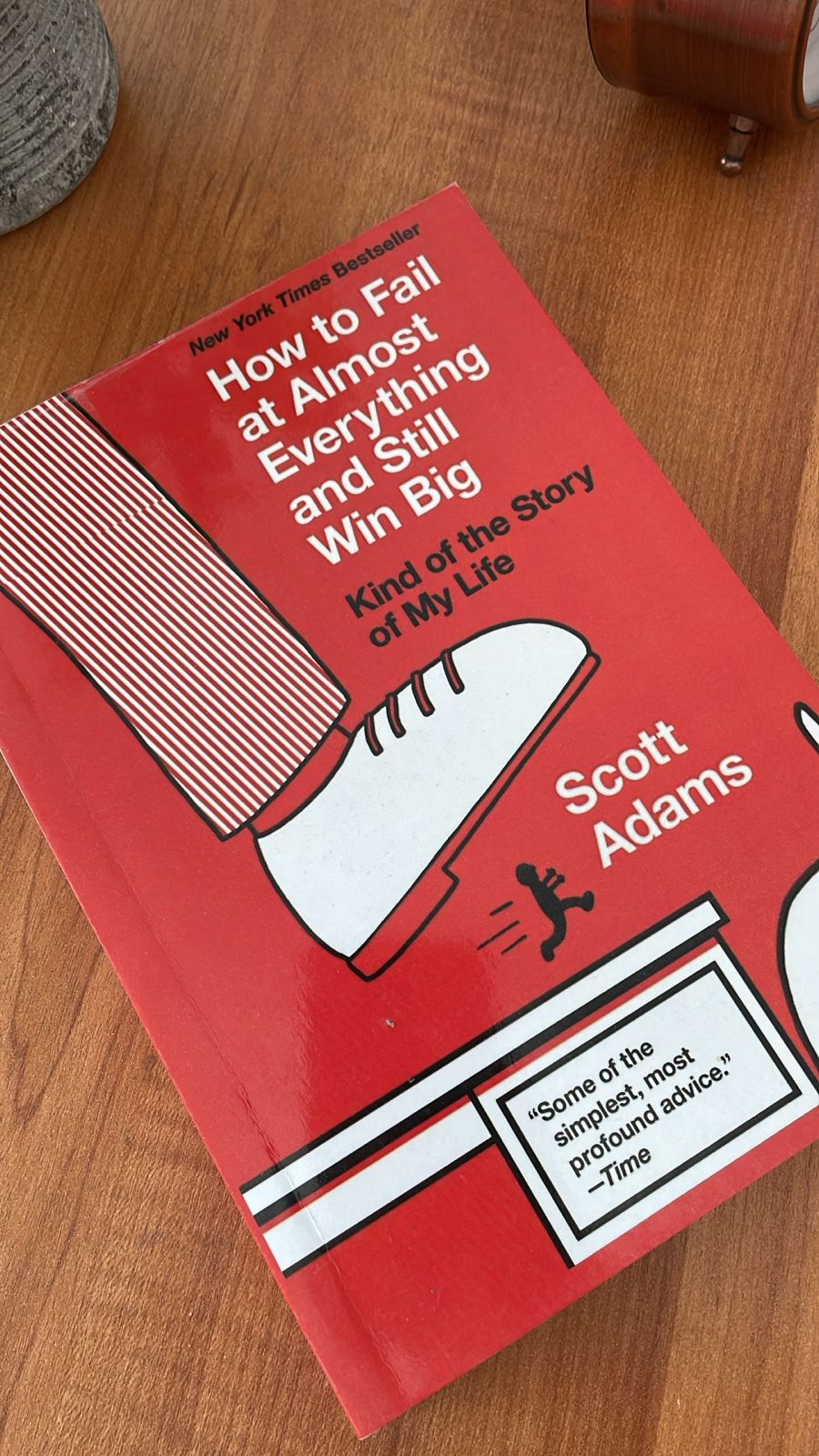
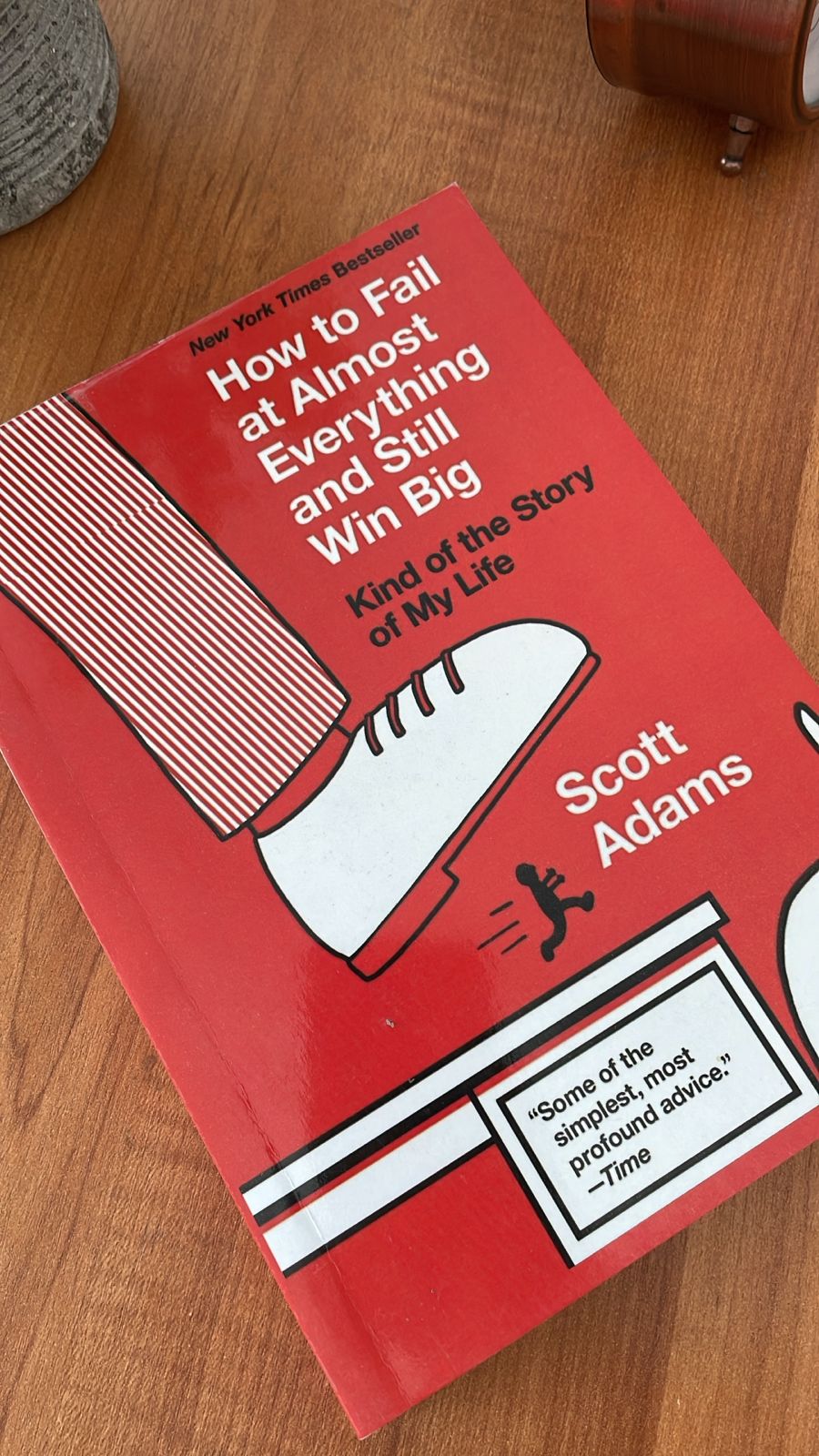
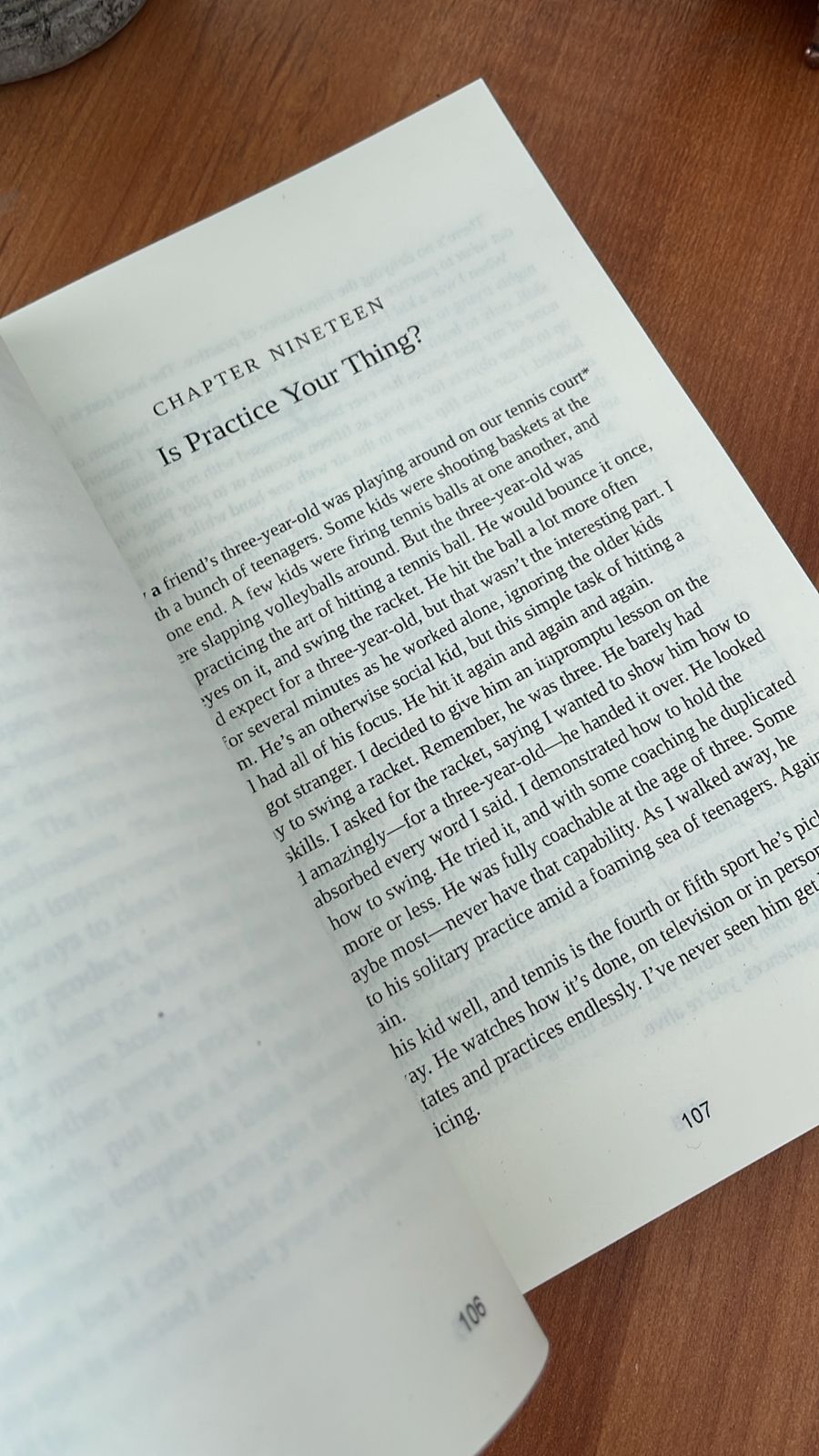
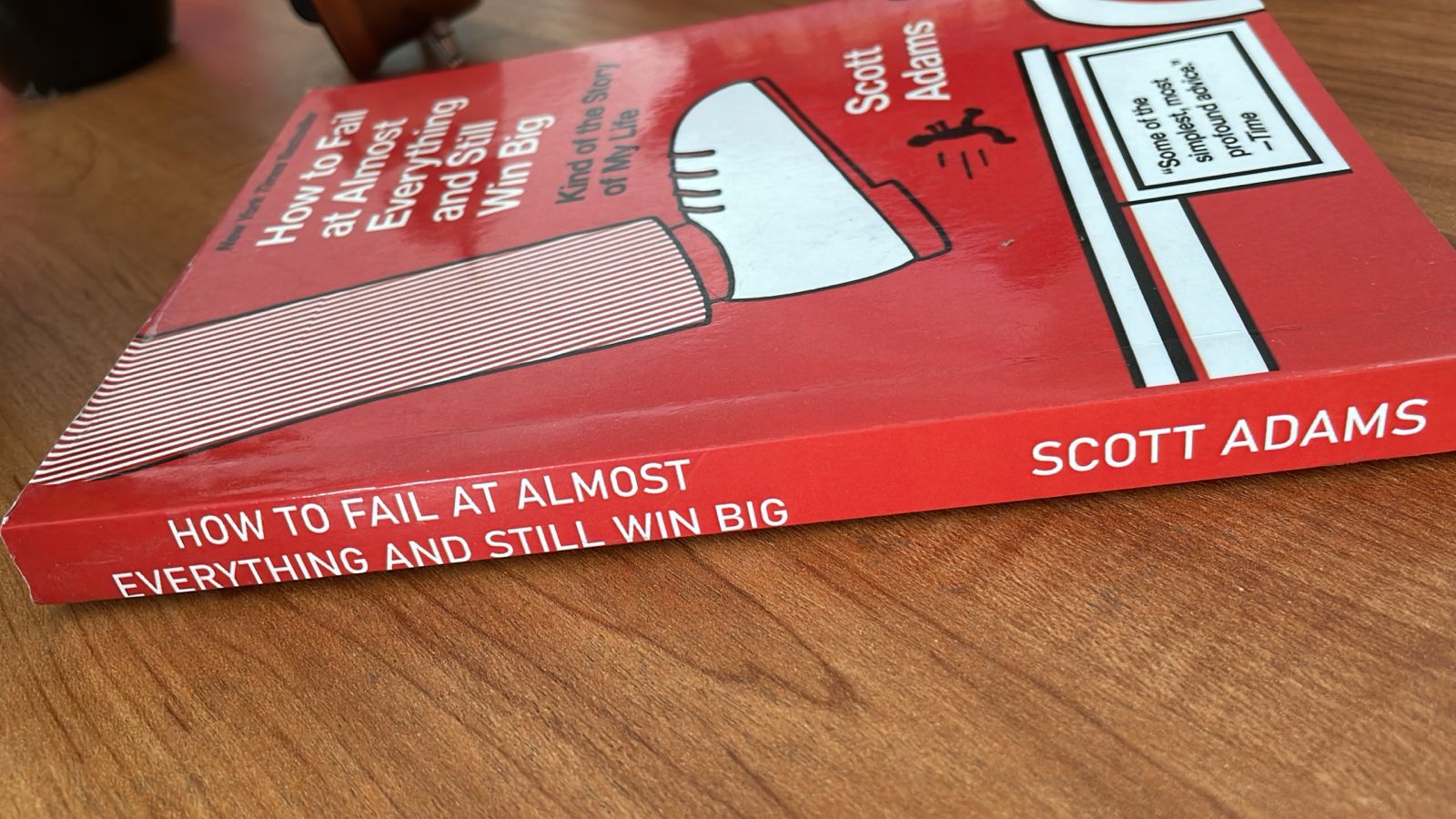
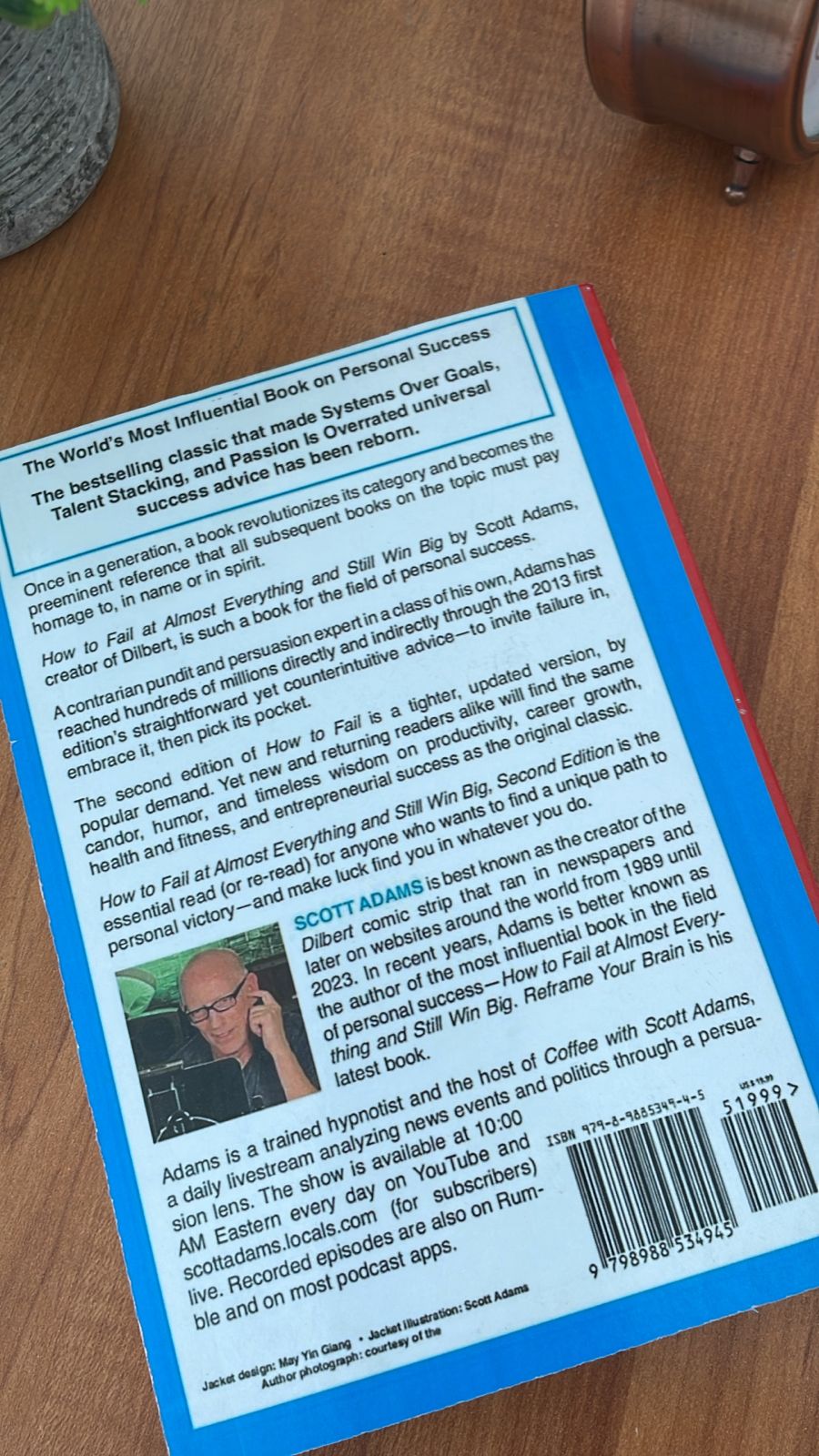







How to Fail and Still Win Big by Scott Adams is an unconventional personal-development and career book about failure, success, productivity, skill building, energy, luck, and creating systems that increase your chances of making progress.
Scott Adams, creator of the Dilbert comic strip, uses stories from his own career to explain how repeated failures eventually contributed to his success.
Before becoming a successful cartoonist, Adams tried many different projects.
Some worked.
Many did not.
His failures included business ideas, inventions, investments, restaurants, and different career efforts.
Instead of treating those experiences as wasted time, he argues that each one provided information, skills, connections, or lessons that could become useful later.
The central message of How to Fail and Still Win Big by Scott Adams is that success does not always require avoiding failure.
Sometimes the better strategy is to make failures survivable, learn something from them, and keep improving your odds.
How to Fail and Still Win Big by Scott Adams – Book Overview
How to Fail and Still Win Big by Scott Adams challenges many traditional ideas about success.
People are often told to set ambitious goals, follow their passion, work harder than everyone else, and never give up.
Adams questions some of this advice.
He argues that goals can sometimes create a cycle in which people feel unsuccessful until a specific future result is achieved.
Systems work differently.
A system is something you repeatedly do that moves you in a useful direction.
Instead of saying, “I want to lose 10 kilograms,” a person might build a system around eating better and exercising consistently.
Instead of saying, “I want to become rich,” someone might develop a system of saving, investing, learning valuable skills, and improving income over time.
This difference between goals and systems is one of the best-known ideas in the book.
Systems Over Goals
One of the strongest lessons in How to Fail and Still Win Big by Scott Adams is the idea of using systems instead of depending only on goals.
A goal has a finish line.
A system is a repeated process.
Goals can be useful for direction, but they can also make people feel as if they are constantly failing until they finally reach the result.
A system creates opportunities for daily success.
For example:
A writer may have a goal of publishing a book.
A system would be writing every morning.
A student may have a goal of receiving high grades.
A system would be studying consistently each day.
An entrepreneur may have a goal of building a successful company.
A system would involve regularly contacting customers, improving products, measuring results, and learning new skills.
The advantage of systems is that progress can continue even when one specific outcome does not happen.
Failure as Useful Information
Failure is at the centre of How to Fail and Still Win Big by Scott Adams.
Most people naturally try to avoid failure.
Failure can be embarrassing.
It can cost money.
It can damage confidence.
But Adams argues that failure can become useful when it provides something valuable.
A failed business may teach sales.
A failed project may teach time management.
A rejected idea may reveal weaknesses.
A bad investment may teach someone how to evaluate risk more carefully.
The important question becomes:
What can you take from the failure?
If failure leaves behind knowledge, skills, experience, or a better strategy, then it may still contribute to future success.
Build a Talent Stack
Another important idea in How to Fail and Still Win Big by Scott Adams is the concept of combining several useful skills.
You may not need to become the best person in the world at one thing.
Instead, becoming reasonably good at several complementary skills can create a powerful advantage.
For example, someone who understands:
- Writing
- Public speaking
- Business
- Technology
- Marketing
- Psychology
may become much more valuable because those skills work together.
Adams’s own career illustrates this idea.
His success as a cartoonist did not depend only on drawing ability.
Writing, business knowledge, humour, communication, observation, and understanding office culture all contributed.
This is the idea of a talent stack.
Passion Is Not Enough
How to Fail and Still Win Big by Scott Adams also challenges common advice about following your passion.
Passion can be useful.
It can create energy.
But Adams argues that passion alone does not guarantee success.
People can become passionate about projects that have little chance of working.
Sometimes passion grows after someone becomes good at something.
Competence creates confidence.
Progress creates motivation.
Success can increase enthusiasm.
This means a better question may be:
What opportunities have good potential, and what skills can I develop to take advantage of them?
Rather than waiting for one perfect passion to appear, people can build abilities and explore opportunities.
Manage Your Personal Energy
Energy is one of the most practical themes in How to Fail and Still Win Big by Scott Adams.
Time management receives enormous attention in productivity advice.
But Adams suggests that personal energy may be equally important.
A person can have free time and still accomplish almost nothing if they are exhausted.
Different activities require different types of energy.
Creative work may be easier at one time of day.
Administrative tasks may be possible when concentration is lower.
Exercise can influence mood.
Food can influence energy.
Sleep can affect decision-making.
Understanding your own patterns can help you schedule important work when you are most capable of doing it well.
Health Supports Success
Health is closely connected to energy.
How to Fail and Still Win Big by Scott Adams argues that success becomes harder when physical and mental energy are constantly low.
Exercise, sleep, diet, and daily routines can influence productivity.
This does not mean everyone needs to become a professional athlete.
The principle is that your body affects how well your mind performs.
Someone who feels energetic may find it easier to work, learn, communicate, and solve problems.
This makes personal health part of a broader success system rather than something completely separate from career goals.
Luck Matters
One of the more realistic ideas in How to Fail and Still Win Big by Scott Adams is that luck matters.
Successful people sometimes describe their achievements entirely through hard work.
Hard work matters.
Skill matters.
Persistence matters.
But timing and opportunity also matter.
You cannot completely control luck.
What you can do is increase the number of opportunities for luck to help you.
Learn more skills.
Meet more people.
Try more useful projects.
Create more things.
Apply for more opportunities.
Experiment.
The more useful situations you enter, the more chances you create for something unexpected to work in your favour.
Increase Your Odds
Adams often treats success as a probability problem.
How to Fail and Still Win Big by Scott Adams encourages readers to think about improving their odds rather than searching for certainty.
No strategy guarantees success.
But certain behaviours can make success more likely.
For example:
- Learning communication improves career opportunities
- Building technical skills increases employability
- Saving money creates financial flexibility
- Exercising improves health odds
- Meeting new people increases networking opportunities
- Starting projects increases the chance that one succeeds
- Learning from failure reduces repeated mistakes
These actions do not guarantee a particular result.
They simply improve probability.
That can be a more realistic approach than expecting one perfect plan.
Developing Useful Skills
Skill development is one of the strongest practical themes in How to Fail and Still Win Big by Scott Adams.
Certain skills can be valuable across many different careers.
Communication is useful almost everywhere.
Basic business knowledge is useful for entrepreneurs and employees.
Public speaking can help managers, salespeople, teachers, and professionals.
Technology skills can create opportunities across industries.
Persuasion can improve negotiation and leadership.
Instead of trying to predict one exact future career, people can develop skills that remain useful across many possible futures.
Psychology and Persuasion
Understanding human behaviour is another useful part of How to Fail and Still Win Big by Scott Adams.
People rarely make decisions through pure logic.
Emotion matters.
Presentation matters.
Confidence matters.
Social proof matters.
Timing matters.
The way an idea is communicated can influence how people respond.
This has obvious value in sales and marketing, but persuasion also matters in everyday life.
Managers persuade teams.
Employees persuade managers.
Entrepreneurs persuade investors.
Job candidates persuade employers.
Learning how people think can therefore become an important career advantage.
Simplify Your Decisions
Decision fatigue can reduce productivity.
How to Fail and Still Win Big by Scott Adams encourages readers to build routines that make useful behaviours easier.
A system reduces the number of decisions you need to make repeatedly.
If exercise is always scheduled at the same time, you do not need to debate whether to exercise every day.
If savings happen automatically, you do not need to reconsider the decision each month.
Good systems remove unnecessary friction.
This allows more mental energy to be used for decisions that actually require careful thinking.
Persistence With Flexibility
Persistence is valuable, but How to Fail and Still Win Big by Scott Adams does not suggest blindly continuing every failing project forever.
There is an important difference between persistence and stubbornness.
If a project repeatedly shows no potential, changing direction may be the smarter decision.
The real objective is not to prove that one specific idea must succeed.
The objective is to keep moving toward better opportunities.
This makes flexibility important.
A failed project can become a signal.
Perhaps the market is wrong.
Perhaps the timing is wrong.
Perhaps the strategy needs improvement.
Or perhaps it is time to move on.
Success Is Not a Straight Line
Many successful careers look simple when viewed from the outside.
But How to Fail and Still Win Big by Scott Adams shows that progress can be messy.
A person may work in several jobs.
They may start unsuccessful businesses.
They may develop skills that appear unrelated.
They may make poor decisions.
Then years later, those experiences may combine unexpectedly.
This is one reason career paths should not always be judged too quickly.
A skill that seems useless today may become valuable later.
A failure may create a new connection.
An abandoned project may teach a lesson that becomes essential to the next one.
Why Read How to Fail and Still Win Big by Scott Adams?
How to Fail and Still Win Big by Scott Adams is a strong choice for readers interested in:
- Personal development
- Career growth
- Productivity
- Systems and habits
- Learning from failure
- Skill stacking
- Entrepreneurship
- Motivation
- Personal energy
- Decision-making
- Psychology
- Persuasion
- Business
- Increasing opportunities
- Long-term success
The book offers a more unconventional approach than many traditional motivational books.
Instead of promising a perfect roadmap, it focuses on creating conditions that make success more likely.
Who Should Read This Book?
How to Fail and Still Win Big by Scott Adams may especially appeal to:
- Entrepreneurs
- Students
- Young professionals
- Business owners
- Career changers
- Startup founders
- Creative professionals
- People recovering from failure
- Productivity readers
- Self-help readers
- People building new skills
- Readers who dislike traditional motivational advice
- Anyone trying to improve their odds of long-term success
It can be particularly useful for people who feel discouraged because several earlier attempts have failed.
Failure does not necessarily mean the process has produced nothing useful.
A Powerful Guide to Turning Failure Into Progress
How to Fail and Still Win Big by Scott Adams presents success as something that can emerge from a long series of experiments, mistakes, useful skills, good systems, and occasional luck.
You do not need every project to succeed.
You need to survive failures and take something useful from them.
You do not need to predict exactly where your career will end.
You can build skills that create more options.
You do not need constant motivation.
You can build systems that continue working even when motivation disappears.
And you cannot control luck, but you can place yourself in more situations where luck has an opportunity to help.
Through stories from his own failures and eventual success, Scott Adams offers an unusual perspective on productivity and career development.
For readers interested in systems, failure, skill building, energy management, entrepreneurship, productivity, and increasing the probability of success, How to Fail and Still Win Big by Scott Adams provides a humorous and thought-provoking approach to building a better career and life.
Learn more about How to Fail at Almost Everything and Still Win Big by Scott Adams on Google Books.
Explore more personal development and success books at Bargain Books.
Be the first to review “How To Fail At Almost Everything And Still Win Big by Scott Adams”
Related products

Out of stock
Needs Category Review
රු11,550.00
3 X Rs. 3,850.00 or 8% Cashback with


or 3 X රු3,850.00 with


or up to 4 X රු2,887.50 with


Needs Category Review
රු1,700.00
3 X Rs. 566.67 or 8% Cashback with
or 3 X රු566.67 with
or up to 4 X රු425.00 with
Needs Category Review
රු1,950.00
3 X Rs. 650.00 or 8% Cashback with
or 3 X රු650.00 with
or up to 4 X රු487.50 with
Out of stock
Needs Category Review
රු1,700.00
3 X Rs. 566.67 or 8% Cashback with
or 3 X රු566.67 with
or up to 4 X රු425.00 with
Needs Category Review
රු2,750.00
3 X Rs. 916.67 or 8% Cashback with
or 3 X රු916.67 with
or up to 4 X රු687.50 with
-17%

Needs Category Review
Original price was: රු30.00.රු25.00Current price is: රු25.00.
3 X Rs. 8.33 or 8% Cashback with
or 3 X රු8.33 with
or up to 4 X රු6.25 with

Out of stock
Needs Category Review
රු10,500.00
3 X Rs. 3,500.00 or 8% Cashback with
or 3 X රු3,500.00 with
or up to 4 X රු2,625.00 with
Out of stock
Needs Category Review
රු1,550.00
3 X Rs. 516.67 or 8% Cashback with
or 3 X රු516.67 with
or up to 4 X රු387.50 with
Reviews
There are no reviews yet.