
No products in the cart.
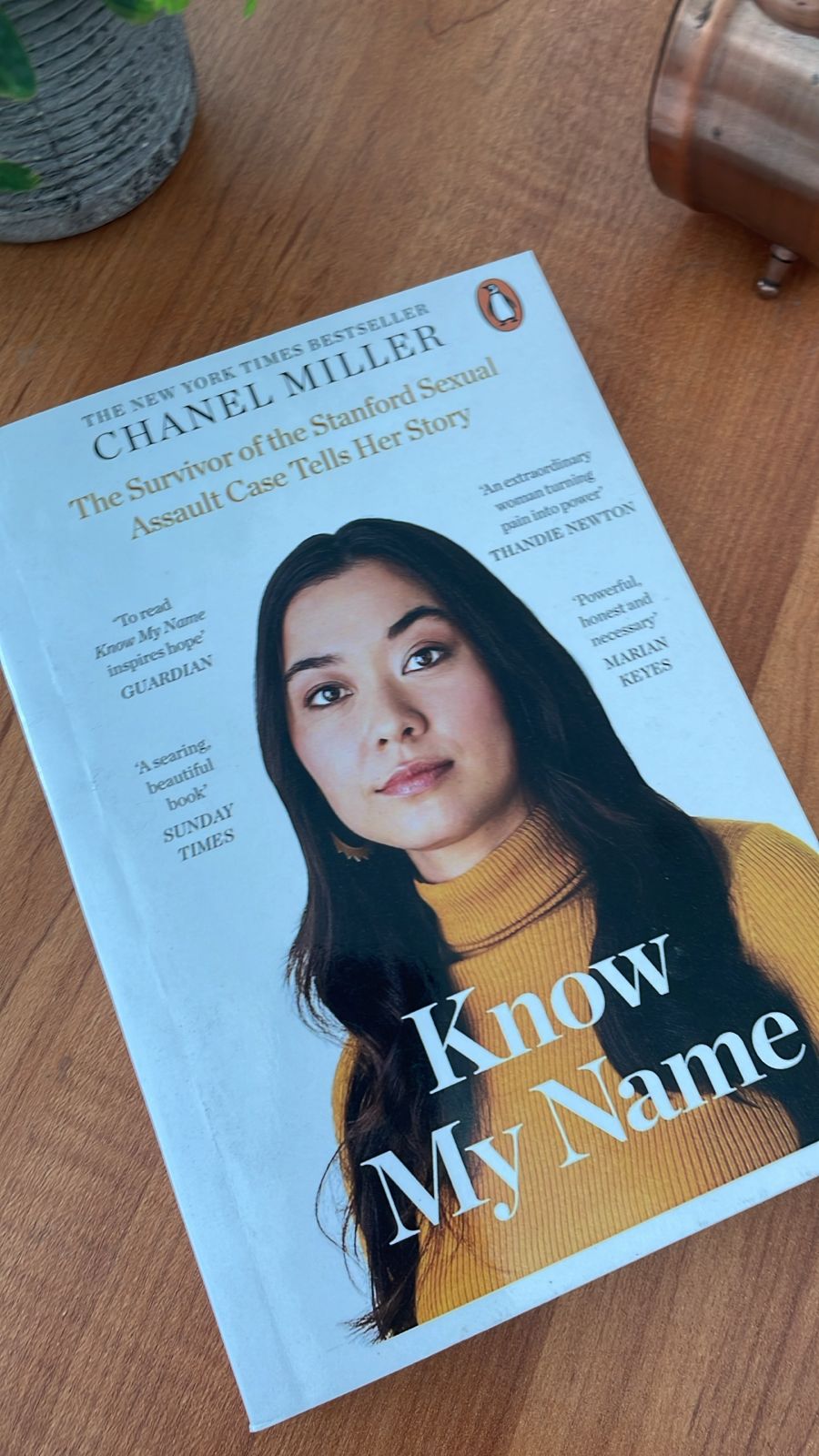
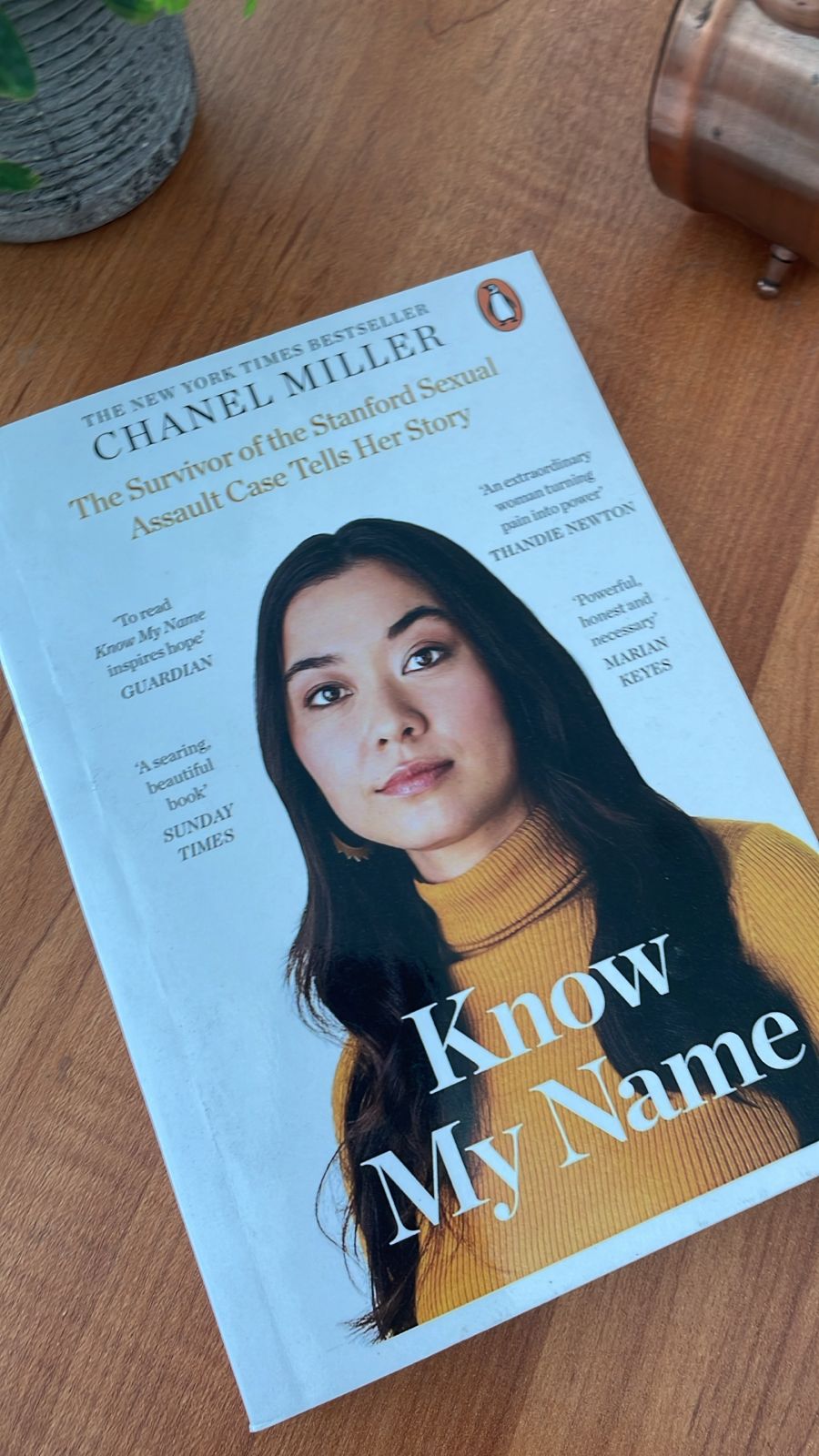

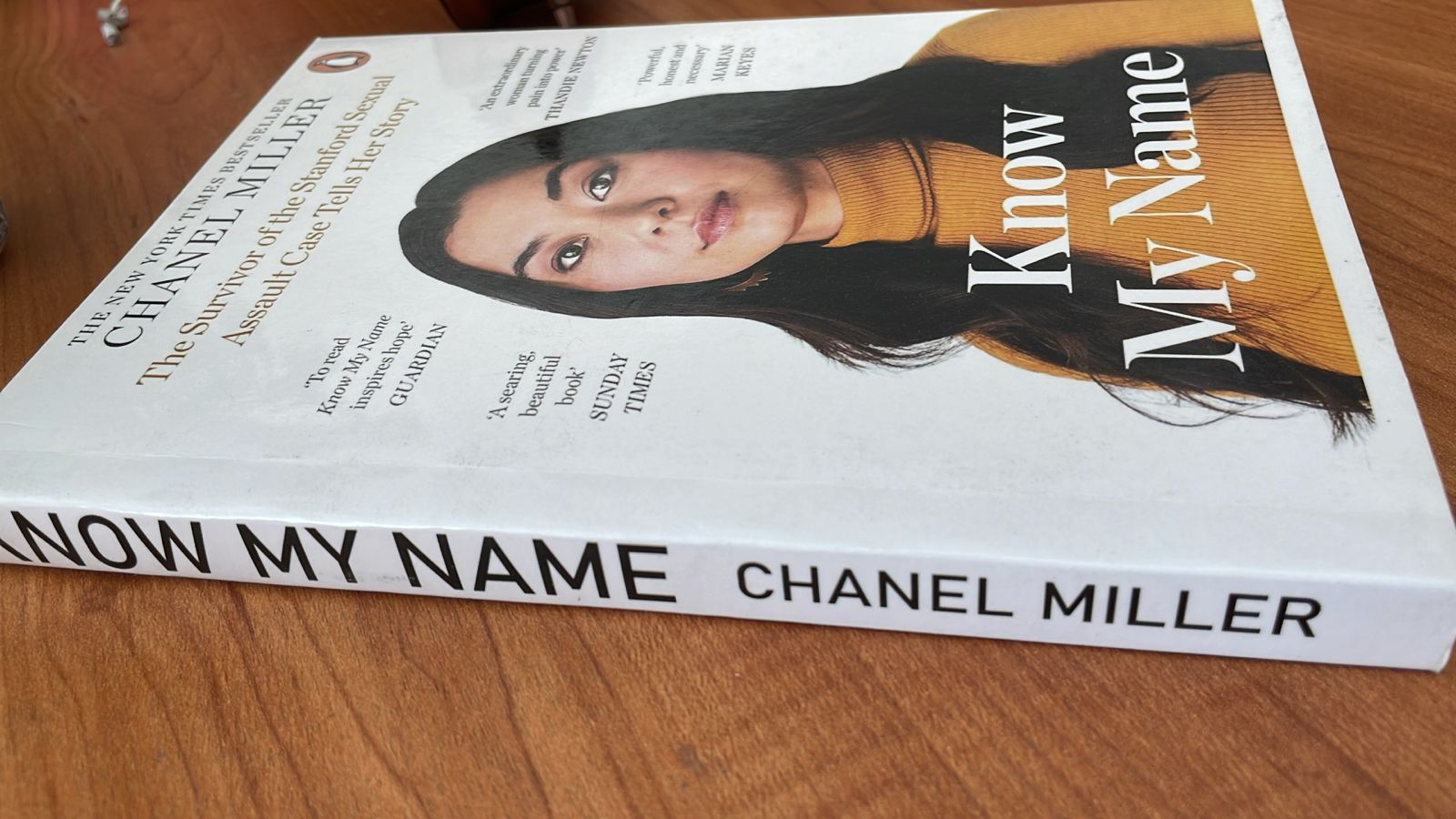
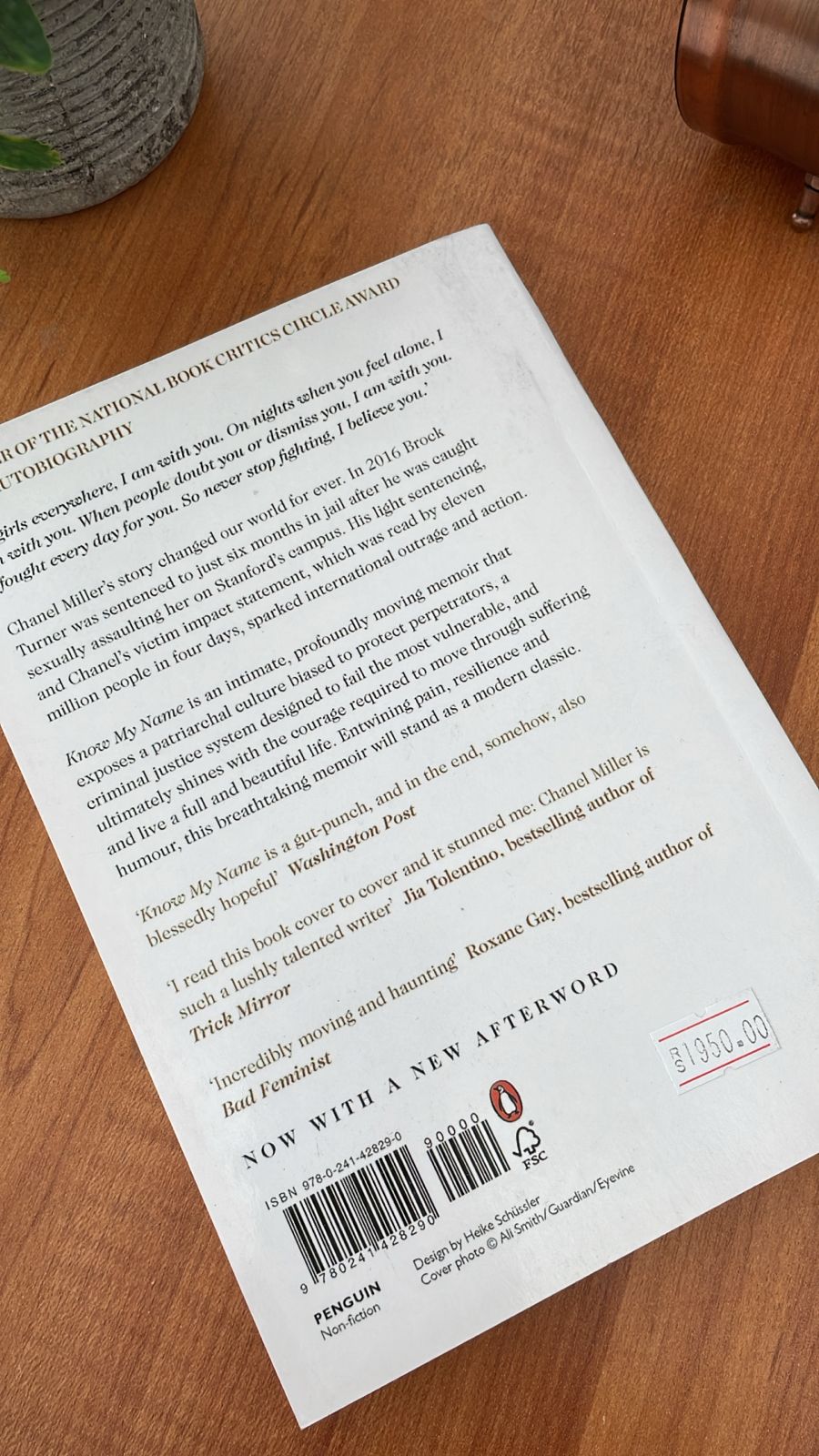





Know My Name by Chanel Miller


3 X Rs. 0.00 or 8% Cashback with


or 3 X රු0.00 with


or up to 4 X රු0.00 with


Know My Name by Chanel Miller is an award-winning memoir in which the woman previously known publicly as “Emily Doe” reclaims her identity and tells her story in her own words. Moving beyond headlines surrounding the Stanford sexual-assault case, Miller explores trauma, the criminal justice system, victim-blaming, family, anger, resilience, healing and the power of reclaiming one’s voice. Beautifully written and deeply personal, it is a powerful memoir about being seen as a complete person rather than being defined by what happened to you.
Know My Name by Chanel Miller is a powerful and deeply personal memoir about identity, sexual assault, trauma, justice, healing, family, resilience and reclaiming the right to be known as a complete human being rather than only as a victim.
For years, millions of people knew Chanel Miller by another name:
Emily Doe.
It was the anonymous name used to protect her identity after she was sexually assaulted while unconscious on Stanford University’s campus.
The criminal case attracted enormous public attention.
People discussed:
The assault.
The trial.
The sentence.
The perpetrator.
The judge.
The legal system.
But for much of that conversation, the woman at the centre of the case remained anonymous.
Then Chanel Miller chose to tell her own story.
Know My Name by Chanel Miller is that story.
It is not simply a book about one night.
It is about everything that came afterward.
The confusion.
The investigation.
The legal process.
The loss of privacy.
The shame society can place on survivors.
The exhaustion of being questioned repeatedly.
The effect on family.
The struggle to return to ordinary life.
The anger.
The loneliness.
The gradual work of healing.
And eventually, the decision to reclaim her identity.
This makes the memoir both painfully personal and socially important.
Know My Name by Chanel Miller – Book Overview
Know My Name by Chanel Miller begins with a young woman whose identity has temporarily been reduced to the facts of a crime.
She wakes to discover that something terrible has happened.
She has incomplete memories of the night.
Other people know details about what happened to her before she does.
Medical workers.
Police.
Investigators.
Eventually lawyers.
The experience creates an immediate loss of control.
Her body has been violated.
Her memory contains gaps.
Her private life becomes evidence.
Her behaviour becomes something strangers discuss.
And the legal process begins moving forward.
The memoir follows Miller as she tries to understand what happened while continuing to live a life beyond the case.
Chanel Miller
One of the greatest strengths of Know My Name by Chanel Miller is that readers meet Chanel as a complete person.
She is not introduced only as:
A victim.
A court case.
A headline.
A statement.
She is also:
A daughter.
A sister.
A friend.
A writer.
An artist.
A young woman trying to understand adulthood.
She has humour.
Relationships.
Creative interests.
Ordinary frustrations.
Plans.
Dreams.
That fullness matters because one of the book’s central ideas is that sexual violence can cause society to flatten a person’s identity.
Suddenly, one event can become the only thing people know about them.
Miller refuses to allow that to remain true.
Reclaiming Her Name
The title itself is extremely important.
Know My Name.
For years, the public knew the case.
But they did not know Chanel.
She was referred to anonymously.
That anonymity initially protected her privacy.
But eventually it also became something she wanted to move beyond.
Revealing her identity allowed her to say:
I am here.
This happened to me.
But what happened to me is not everything that I am.
That act of naming becomes a form of reclamation.
Emily Doe
“Emily Doe” was the name used publicly while Miller remained anonymous.
The name protected her identity during an extremely public legal case.
But it also created distance between the public story and the actual human being living through it.
People could discuss Emily Doe without knowing:
What she liked.
What she feared.
Who she loved.
How she spent ordinary days.
What the legal process was doing to her emotionally.
Know My Name by Chanel Miller closes that distance.
The Stanford Sexual Assault Case
The assault that became central to Miller’s life occurred at Stanford University.
Miller was unconscious when she was sexually assaulted.
Two graduate students noticed what was happening and intervened.
The case later went through the criminal justice system.
The perpetrator, Brock Turner, was convicted.
But the sentence became a major public controversy because many people believed it was far too lenient considering the seriousness of the crime.
The case became part of a much larger conversation about:
Sexual violence.
Consent.
Privilege.
Accountability.
Sentencing.
Victim treatment.
Campus culture.
The Victim Impact Statement
One of the most significant moments connected with the case came when Miller’s victim impact statement became public.
Her words were read by millions.
For many survivors, the statement articulated experiences they had struggled to express themselves.
The statement described not only the assault but the aftermath.
How a victim’s life can become:
Questioned.
Analyzed.
Dissected.
Doubted.
Publicly discussed.
The response demonstrated the enormous power of language.
Before people knew Chanel Miller’s name, they knew her voice.
The Power of Words
Writing is central to Know My Name by Chanel Miller.
Words allow Miller to regain control over a narrative that had often been controlled by:
Police reports.
Court documents.
Lawyers.
Journalists.
Public opinion.
Other people.
By writing the memoir herself, she determines:
What matters.
What deserves attention.
How events are remembered.
How her identity is presented.
That makes writing an act of power.
Trauma
The memoir gives readers a detailed understanding of trauma.
Trauma does not always appear in obvious ways.
A person may continue:
Working.
Talking.
Laughing.
Seeing friends.
Going outside.
while still experiencing deep psychological pain.
Miller shows that recovery is not a straight line.
There can be:
Good days.
Bad days.
Anger.
Numbness.
Fear.
Humour.
Hope.
Grief.
All existing together.
Healing Is Not Linear
One of the most important ideas in Know My Name by Chanel Miller is that healing does not happen according to a perfect schedule.
There is no simple sequence:
Trauma.
Sadness.
Acceptance.
Recovery.
Done.
Real healing can be messy.
Something may feel manageable one week and overwhelming the next.
A memory may suddenly return.
A news article may trigger emotion.
A legal update may reopen pain.
Miller’s experience reflects the reality that healing often means learning to live through complicated emotional movement.
The Criminal Justice System
A major part of the memoir deals with the legal system.
From the outside, people may imagine that once someone reports an assault, the process becomes simple:
Evidence.
Trial.
Verdict.
Justice.
But Know My Name by Chanel Miller reveals how exhausting the process can become for the survivor.
There are:
Interviews.
Questions.
Waiting.
Court appearances.
Cross-examination.
Preparation.
Uncertainty.
Public scrutiny.
The person who experienced the crime may repeatedly have to explain and defend their own experience.
Victim-Blaming
Victim-blaming is one of the most disturbing themes in the memoir.
Instead of focusing only on the person responsible for an assault, society sometimes asks survivors questions such as:
What were you wearing?
How much did you drink?
Why were you there?
Why didn’t you leave?
Why didn’t you remember?
Why didn’t you report immediately?
These questions can subtly transfer responsibility away from the perpetrator.
Miller challenges that logic.
The responsibility for assault belongs with the person who commits it.
Consent
Consent is central to understanding the events and themes of the memoir.
A person who is unconscious cannot consent.
This is not complicated.
Yet sexual-assault cases can become surrounded by arguments designed to create confusion.
Know My Name by Chanel Miller reinforces the importance of clear responsibility and respect for bodily autonomy.
Shame
One of the most damaging effects of sexual violence can be shame.
Survivors may begin feeling ashamed even though they did nothing wrong.
Why?
Because society often creates messages that encourage victims to question themselves.
Miller writes about the burden of carrying shame that never belonged to her.
Part of healing means learning to place responsibility where it belongs.
Identity
The memoir’s central struggle is about identity.
Who is Chanel Miller after what happened?
Is she permanently defined by:
The assault?
The trial?
The headlines?
The victim impact statement?
The answer becomes increasingly clear.
No.
These experiences are part of her life.
But they are not the entirety of her life.
That distinction makes Know My Name by Chanel Miller a powerful book about reclaiming personhood.
Family
Family plays a major role in Miller’s recovery.
Trauma rarely affects only one person.
Parents worry.
Siblings hurt.
Relationships change.
People may feel helpless because they cannot undo what happened.
Miller shows both the pain and strength that can exist within family relationships during crisis.
Sisterhood
Her relationship with her sister is particularly important.
They share history.
Love.
Memories.
The case affects them both in different ways.
The memoir demonstrates how siblings can become sources of:
Comfort.
Protection.
Understanding.
Strength.
Family is not presented as magically able to fix everything.
But connection helps make survival less lonely.
Friendship
Friends also matter.
Trauma can make ordinary social situations feel difficult.
A survivor may struggle with:
Trust.
Energy.
Conversation.
Being present.
Friends who remain patient can provide emotional stability.
Know My Name by Chanel Miller shows how small acts of care can become extraordinarily meaningful.
Isolation
Miller also experiences isolation.
Privacy can become complicated when a major legal case is happening.
She cannot always tell people what she is dealing with.
She may appear outwardly normal while carrying something enormous internally.
This creates a painful split between public appearance and private experience.
Public Versus Private Self
The memoir repeatedly explores the difference between what the world sees and what someone is actually experiencing.
Publicly, Chanel may appear:
Functional.
Calm.
Anonymous.
Privately, she may be:
Angry.
Exhausted.
Afraid.
Confused.
Recovering.
The contrast helps readers understand why assumptions about survivors can be misleading.
Anger
Anger is an important part of Know My Name by Chanel Miller.
Society sometimes expects survivors to be:
Quiet.
Graceful.
Forgiving.
Composed.
But anger can be an entirely reasonable response to injustice.
Miller does not hide it.
Her anger becomes part of understanding what happened and recognizing how the system treated her.
Justice
What does justice mean?
A conviction?
A long sentence?
Public accountability?
Recognition?
Legal reform?
Personal healing?
Know My Name by Chanel Miller does not offer an easy answer.
A court decision cannot automatically repair trauma.
At the same time, accountability matters.
The memoir asks readers to think more deeply about what society owes survivors.
Sentencing
The sentencing in the case became nationally controversial.
Many people believed the punishment was far too lenient.
The controversy expanded beyond one courtroom.
People began asking:
Whose future does the justice system protect?
How does privilege influence perceptions?
Why are perpetrators sometimes discussed primarily in terms of lost potential while survivors are left carrying the consequences?
These questions remain central to discussions of sexual violence.
Privilege
Privilege becomes another important theme.
The way society describes a person can influence public sympathy.
A successful student.
An athlete.
Someone with a promising future.
These descriptions may encourage people to focus on what a convicted person might lose.
But Know My Name by Chanel Miller redirects attention toward what the survivor has already lost.
Safety.
Privacy.
Time.
Trust.
Emotional stability.
A sense of control.
Media Coverage
Media coverage can shape how a case is understood.
Which details receive attention?
Whose accomplishments are highlighted?
Whose pain becomes summarized?
Miller experienced what happens when a deeply personal trauma becomes public news.
The memoir gives her the opportunity to expand beyond headlines.
The Problem With Reducing Someone to a Case
A court case contains:
Evidence.
Dates.
Testimony.
Legal arguments.
But a person’s life contains much more.
The legal system needs facts.
A memoir can reveal experience.
That difference is one reason Know My Name by Chanel Miller is so powerful.
Readers see what exists between official events.
The waiting.
The exhaustion.
The ordinary days.
The private conversations.
The effort required simply to continue living.
Resilience
Miller demonstrates remarkable resilience.
But the book does not turn resilience into an unrealistic expectation.
Survivors should not have to be inspirational to deserve support.
They should not need to transform trauma into something beautiful.
Miller’s resilience matters because it belongs to her individual journey.
She gradually rebuilds parts of herself that had been disrupted.
Strength
Strength is often misunderstood.
People may imagine strength means:
Never crying.
Never struggling.
Never feeling fear.
Never needing help.
But Miller’s memoir presents a different version.
Strength can mean:
Continuing.
Speaking.
Resting.
Accepting help.
Feeling anger.
Telling the truth.
Surviving another day.
Humour
Despite its painful subject matter, Know My Name by Chanel Miller also contains humour.
This is important.
A survivor’s life does not become permanently serious.
People can experience:
Pain and laughter.
Trauma and creativity.
Anger and joy.
all within the same life.
Humour helps restore the full humanity that victim narratives sometimes erase.
Art
Miller is also an artist.
Creativity becomes another way of expressing herself beyond the identity forced upon her by the case.
Art creates space for:
Imagination.
Personal expression.
Play.
Identity.
Healing.
The existence of creativity alongside trauma reinforces one of the memoir’s strongest messages:
A person is always larger than the worst thing that happened to them.
Reclaiming the Narrative
The legal case created a narrative around Miller.
Others described what happened.
Journalists described her.
Attorneys described her.
Public commentators interpreted events.
Writing Know My Name by Chanel Miller allows her to reclaim authorship.
She becomes the person deciding how the story is told.
Being Seen
To be known is different from being looked at.
During the trial, many people examined Miller.
Her actions.
Her body.
Her memory.
Her behaviour.
But being examined is not the same as being understood.
The memoir asks readers to actually see her.
Not simply the crime.
Not simply the survivor.
The person.
Empathy
One of the strongest effects of the book is that it encourages empathy.
Statistics about sexual assault can feel abstract.
Court records can feel distant.
A memoir makes the consequences personal.
Readers see how one act can influence:
Work.
Relationships.
Sleep.
Confidence.
Family.
Identity.
Daily routines.
This can change the way people think about survivors.
The Broader Culture Around Sexual Violence
Miller’s story also becomes part of a much larger cultural discussion.
Sexual violence does not occur in isolation.
There are broader issues involving:
Consent education.
Campus culture.
Victim-blaming.
Gender expectations.
Power.
Legal systems.
Public attitudes.
The memoir encourages readers to examine those structures rather than treating the assault as only an individual event.
Speaking Out
Speaking publicly is not easy.
A survivor may face:
Judgment.
Disbelief.
Online criticism.
Loss of privacy.
Unwanted attention.
Miller’s decision to identify herself therefore carries enormous significance.
She chooses visibility on her own terms.
Silence
Silence can sometimes protect privacy.
But silence can also feel imposed.
One of the most powerful transformations in Know My Name by Chanel Miller is the shift from anonymity to authorship.
Miller decides when and how she will speak.
That choice itself becomes important.
Reclaiming Power
Much of trauma involves power being taken away.
Healing can involve gradually reclaiming:
Choice.
Voice.
Boundaries.
Identity.
Narrative.
Miller cannot undo the assault.
But she can determine what happens to her story afterward.
The Importance of Believing Survivors
The memoir also demonstrates why listening matters.
A survivor describing an experience should not immediately become an object of suspicion.
Questions have legal roles.
But culturally, endless skepticism can create another form of harm.
The book encourages readers to approach survivors with empathy rather than automatic judgment.
Institutional Responsibility
Institutions also have responsibilities.
Universities.
Courts.
Police departments.
Media organizations.
Communities.
All influence how survivors experience the aftermath of assault.
Know My Name by Chanel Miller encourages readers to examine whether these institutions make reporting and recovery easier or harder.
Ordinary Life After Trauma
One of the book’s strongest qualities is how it shows that life continues.
There are still:
Meals.
Jobs.
Family conversations.
Birthdays.
Errands.
Friends.
Art.
Laughter.
Trauma exists beside ordinary life.
This makes Miller’s story more human and less like a simplified courtroom narrative.
Recovery
Recovery does not mean returning to exactly who you were before.
Sometimes that is impossible.
Experience changes people.
Recovery may instead mean learning how to live fully again while carrying what happened.
This is a more realistic and compassionate understanding of healing.
Hope
Despite everything described in the memoir, Know My Name by Chanel Miller contains hope.
Not easy optimism.
Not the idea that everything happens for a reason.
Instead, hope appears through:
Connection.
Art.
Family.
Language.
Survival.
Reclaiming identity.
Choosing to continue.
That form of hope feels earned.
A Memoir About More Than Survival
It would be easy to describe this simply as a survivor memoir.
But it is broader than that.
It is also about:
Growing up.
Family.
The justice system.
Public identity.
Writing.
Art.
Female anger.
Community.
Culture.
Power.
The right to exist beyond trauma.
That range is one reason the book has had such a strong impact.
Award-Winning Memoir
Know My Name by Chanel Miller received major critical recognition and won the National Book Critics Circle Award for autobiography.
It was also widely selected as one of the notable books of 2019.
The recognition reflects not only the importance of Miller’s story but the quality of her writing.
Writing Style
Miller writes with a combination of:
Clarity.
Emotion.
Observation.
Anger.
Humour.
Reflection.
Her writing allows painful events to remain serious without reducing the memoir to constant despair.
This balance makes the book both difficult and deeply readable.
A Modern Memoir
Know My Name by Chanel Miller has become an important contemporary memoir because it connects one individual’s story with larger cultural questions.
How do we talk about sexual assault?
How do courts treat survivors?
What does accountability mean?
Who gets sympathy?
Who gets believed?
Who gets remembered?
These questions extend far beyond the specific case.
Content Warning
Know My Name by Chanel Miller contains difficult and potentially triggering material.
Readers should be aware of discussions involving:
- Sexual assault
- Trauma
- Alcohol
- Court proceedings
- Victim-blaming
- Medical examinations
- Depression and emotional distress
- Public scrutiny
- Harassment
- Discussion of violence
Readers affected by these subjects may wish to approach the memoir with care.
7 Powerful Reasons to Read Know My Name
There are many reasons readers may find Know My Name by Chanel Miller important, but seven stand out:
- Chanel Miller reclaims her own identity – The memoir allows readers to know the woman who had previously been known publicly only as “Emily Doe.”
- It shows what happens after sexual assault – Miller explains not only the crime but the long emotional, legal and personal aftermath.
- It exposes problems within the justice system – Readers see how exhausting and retraumatizing legal proceedings can become for survivors.
- The writing is exceptionally powerful – Miller combines vulnerability, insight, humour, anger and reflection in a deeply memorable voice.
- It challenges victim-blaming – The memoir redirects responsibility toward perpetrators and questions cultural assumptions about survivors.
- It is ultimately a story of reclamation – Miller’s journey is about recovering voice, identity, creativity and control over her own narrative.
- It can change how readers think about sexual violence – By showing the human experience behind a widely reported case, the memoir encourages greater empathy and understanding.
Why Read Know My Name by Chanel Miller?
Know My Name by Chanel Miller is an important choice for readers interested in:
- Memoirs
- Chanel Miller
- Women’s memoirs
- Survivor stories
- Social justice
- Sexual assault awareness
- Criminal justice
- Women’s rights
- Identity
- Healing
- Resilience
- Trauma recovery
- Feminism
- Personal essays
- Contemporary nonfiction
- Powerful true stories
- Award-winning memoirs
It is especially suitable for readers who appreciate nonfiction that combines personal experience with wider questions about culture, justice and institutional responsibility.
Who Should Read This Book?
Know My Name by Chanel Miller may especially appeal to:
- Memoir readers
- Contemporary nonfiction readers
- Readers interested in women’s experiences
- Readers interested in justice reform
- Students of law or criminal justice
- Readers interested in gender studies
- Feminist literature readers
- Readers interested in trauma and recovery
- Book-club readers
- Readers who appreciate emotionally powerful writing
- Readers interested in social issues
- Readers seeking survivor perspectives
- Readers who value reflective and courageous memoirs
A Powerful Story About Reclaiming a Life and a Name
Know My Name by Chanel Miller begins with a woman whose identity is hidden from the world.
The public knows the case.
The court knows the evidence.
Millions eventually know her words.
But they do not know her name.
Chanel Miller changes that.
She steps beyond “Emily Doe.”
She tells readers about:
Her family.
Her fears.
Her anger.
Her humour.
Her creativity.
Her pain.
Her recovery.
Her identity.
By doing so, she refuses to allow the worst thing that happened to her to become the only thing people know about her.
That is what gives the memoir its lasting power.
It is a story about sexual violence and justice.
But it is also a story about voice.
About being seen.
About surviving without allowing survival to become your entire identity.
About realizing that healing can contain anger and joy at the same time.
And above all, it is about reclaiming ownership of your own story.
For readers who appreciate courageous memoirs, powerful nonfiction, women’s stories, discussions of justice, identity, resilience and healing, Know My Name by Chanel Miller is an unforgettable and deeply important book.
Learn more about Know My Name by Chanel Miller on the official Penguin Random House website.
Explore more memoir and biography books at Bargain Books.
Be the first to review “Know My Name by Chanel Miller”
Related products

Needs Category Review
Hobbit & The Lord of the Rings Book Set by J. R. R. Tolkiens
රු8,000.00
3 X Rs. 2,666.67 or 8% Cashback with
or 3 X රු2,666.67 with
or up to 4 X රු2,000.00 with

Needs Category Review
රු9,590.00
3 X Rs. 3,196.67 or 8% Cashback with
or 3 X රු3,196.67 with
or up to 4 X රු2,397.50 with

Needs Category Review
How To Fail At Almost Everything And Still Win Big by Scott Adams
රු1,900.00
3 X Rs. 633.33 or 8% Cashback with
or 3 X රු633.33 with
or up to 4 X රු475.00 with

Out of stock
Needs Category Review
රු18,700.00
3 X Rs. 6,233.33 or 8% Cashback with
or 3 X රු6,233.33 with
or up to 4 X රු4,675.00 with

Out of stock
Needs Category Review
රු11,550.00
3 X Rs. 3,850.00 or 8% Cashback with
or 3 X රු3,850.00 with
or up to 4 X රු2,887.50 with
-17%

Needs Category Review
Original price was: රු30.00.රු25.00Current price is: රු25.00.
3 X Rs. 8.33 or 8% Cashback with
or 3 X රු8.33 with
or up to 4 X රු6.25 with
-17%

Needs Category Review
Original price was: රු30.00.රු25.00Current price is: රු25.00.
3 X Rs. 8.33 or 8% Cashback with
or 3 X රු8.33 with
or up to 4 X රු6.25 with

Needs Category Review
රු1,750.00
3 X Rs. 583.33 or 8% Cashback with
or 3 X රු583.33 with
or up to 4 X රු437.50 with
Reviews
There are no reviews yet.