
No products in the cart.
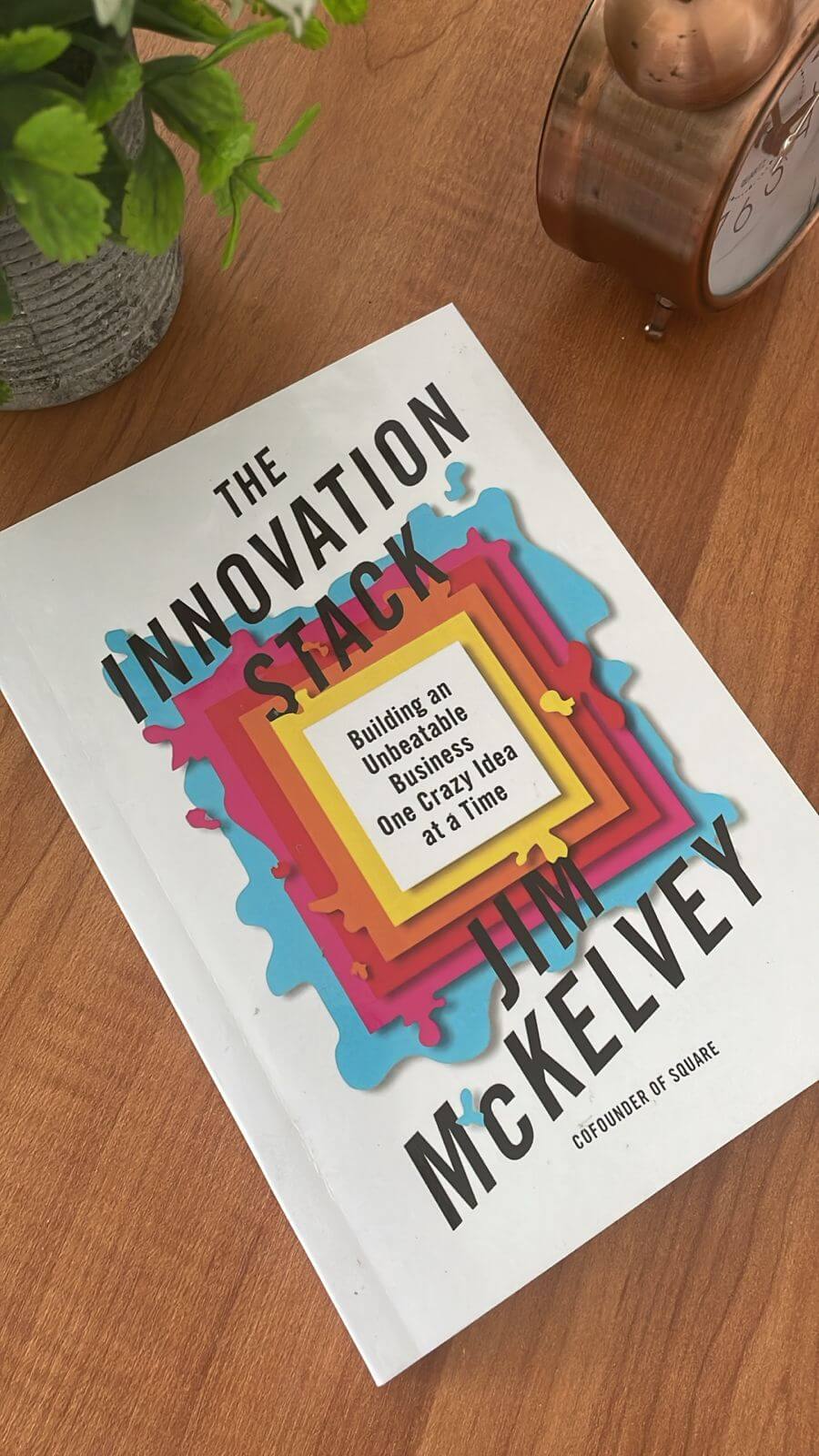

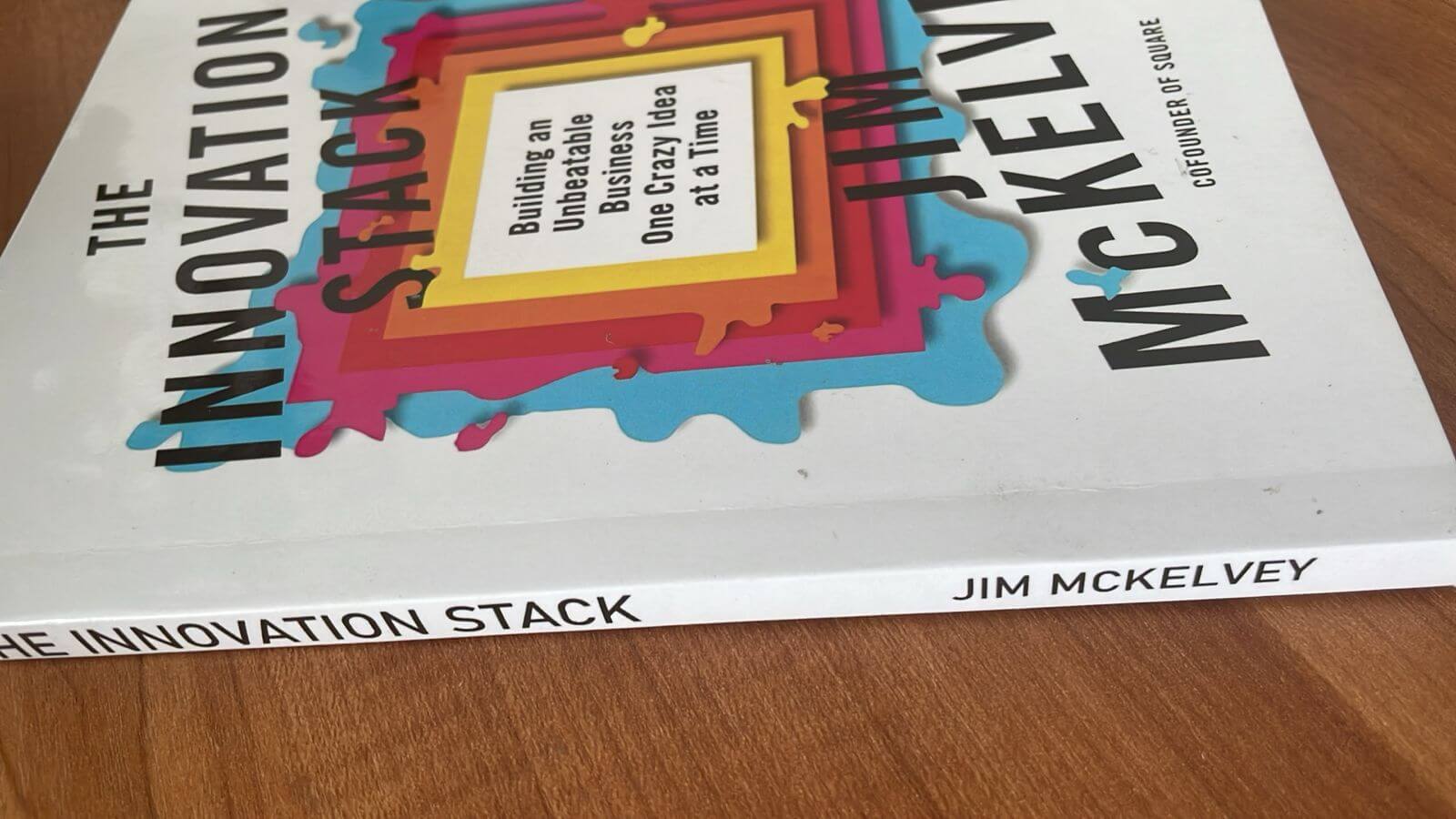





Innovation Stack by Jim McKelvey


රු1,650.00
3 X Rs. 550.00 or 8% Cashback with


or 3 X රු550.00 with


or up to 4 X රු412.50 with


The Innovation Stack by Jim McKelvey is an engaging entrepreneurship and business guide from the cofounder of Square. Through Square’s creation, its competition with Amazon, and historical business examples, McKelvey explains how solving one unsolved problem after another can create a powerful stack of connected innovations that competitors find difficult to copy.
9 in stock
The Innovation Stack by Jim McKelvey is a practical and engaging business book about entrepreneurship, innovation, problem-solving, competition, resilience, and creating companies that become difficult for competitors to copy.
Jim McKelvey is best known as the cofounder of Square, the payments company he created with Jack Dorsey.
But Square did not begin with a grand plan to transform the financial industry.
It began with a simple problem.
McKelvey was working as a glassblower when he lost a sale because he could not accept his customer’s credit card.
Instead of simply accepting the problem, he started asking questions.
Why was accepting credit cards so difficult for small businesses?
Why did merchants need complicated equipment?
Why were fees difficult to understand?
Why were some small sellers unable to access the system at all?
Trying to solve those questions led McKelvey and Dorsey to build Square.
But solving one problem created another.
And then another.
Each new challenge required a new solution.
Eventually, the company had built a collection of interconnected innovations.
McKelvey calls this an Innovation Stack.
The Innovation Stack by Jim McKelvey explains why the strongest businesses are often not built around one brilliant idea but around many connected ideas that reinforce each other.
The Innovation Stack by Jim McKelvey – Book Overview
The central idea in The Innovation Stack by Jim McKelvey is that innovation rarely appears as one isolated breakthrough.
People often imagine entrepreneurship like this:
Someone has one amazing idea.
They build a product.
Customers love it.
The company becomes successful.
Real entrepreneurship is usually much messier.
You find a problem.
You create a solution.
That solution creates another challenge.
You solve that too.
Then another problem appears.
Over time, the company develops multiple connected innovations.
Together, those innovations become much stronger than any single one.
That interconnected structure is the Innovation Stack.
What Is an Innovation Stack?
An Innovation Stack is a collection of innovations that work together.
Imagine a company changes only its price.
A competitor can copy the price.
Another company improves only its packaging.
That can also be copied.
But imagine a business develops:
- A unique pricing model
- Different technology
- Simpler customer onboarding
- New distribution
- Better customer experience
- A different risk system
- New hardware
- New software
- Different operating processes
Now a competitor cannot simply copy one idea.
They must reproduce the whole system.
That is the power of the Innovation Stack.
The Story of Square
Much of The Innovation Stack by Jim McKelvey focuses on how Square was created.
Small businesses traditionally faced many barriers when trying to accept card payments.
They might need:
- Special merchant accounts
- Complicated applications
- Credit checks
- Expensive hardware
- Contracts
- Confusing fees
- Long approval processes
Square challenged these assumptions.
The company asked whether card payments could become much simpler.
Could someone use a smartphone?
Could signup become easier?
Could pricing become clearer?
Could very small merchants participate?
Each question created a new problem to solve.
The company therefore had to innovate across multiple areas rather than simply creating one device.
Start With a Real Problem
One of the strongest lessons in The Innovation Stack by Jim McKelvey is that entrepreneurship often begins with a real problem rather than a clever idea.
Many people ask:
“What business should I start?”
“What app should I build?”
“What startup idea could make money?”
McKelvey’s story suggests another approach.
Ask:
What problem should not still exist?
Look for frustration.
Look for inconvenience.
Look for customers being ignored.
Look for processes people accept only because nobody has challenged them.
A strong business idea may already be hiding inside one of those problems.
Solve Problems Nobody Else Has Solved
Traditional businesses often operate inside proven models.
You can open a restaurant.
A bookstore.
A clothing shop.
A consulting company.
The industry already exists.
Pricing models exist.
Processes exist.
Competitors show you what works.
Entrepreneurship becomes different when you are trying to solve something that has no established answer.
The Innovation Stack by Jim McKelvey shows that this is where genuine innovation becomes necessary.
There may be no guide.
No case study.
No perfect template.
You have to experiment.
Innovation Happens Because It Has To
Entrepreneurs are sometimes described as people who constantly invent revolutionary ideas.
McKelvey gives a more practical view.
Sometimes innovation happens because the normal solution does not work.
You try something.
It fails.
You adjust.
That creates another challenge.
You solve that.
The Innovation Stack by Jim McKelvey presents innovation as a chain reaction.
One problem creates one solution.
That solution creates another problem.
Over time, all of the solutions become connected.
Square Versus Amazon
One of the most interesting stories in The Innovation Stack by Jim McKelvey is Square’s competition with Amazon.
Amazon entered the mobile payments market with its own competing product.
For Square, this should have been terrifying.
Amazon had:
- More capital
- More engineers
- A huge customer base
- Massive infrastructure
- Strong brand recognition
- Powerful distribution
A smaller company like Square appeared vulnerable.
But Amazon eventually exited the market.
McKelvey began investigating why Square had survived.
The answer led him toward the Innovation Stack idea.
Amazon could copy individual features.
But copying the entire interconnected business system was far more difficult.
Big Companies Do Not Always Win
This is an important lesson for entrepreneurs.
Large competitors may have enormous advantages.
Money.
People.
Technology.
Data.
Brand recognition.
But size does not solve every problem.
Large companies can also have:
Legacy systems.
Bureaucracy.
Existing assumptions.
Slow decision-making.
Complex structures.
The Innovation Stack by Jim McKelvey shows that smaller businesses may compete successfully when they are solving a problem in a fundamentally different way.
Question Industry Assumptions
Every industry develops accepted rules.
“This is how customers buy.”
“This is how pricing works.”
“This process always takes three days.”
“You need this equipment.”
“This customer group is too risky.”
The Innovation Stack by Jim McKelvey encourages entrepreneurs to ask:
Why?
Why does the customer need to do this?
Why does this process exist?
Why is the service expensive?
Why does everyone use this model?
Some industry practices exist for good reasons.
Others exist simply because everyone copied what came before.
Questioning those assumptions can reveal opportunities.
Do Not Copy Competitors Automatically
Studying competitors is useful.
You should understand:
Their prices.
Products.
Marketing.
Strengths.
Weaknesses.
But excessive copying creates another problem.
You may inherit all of their assumptions.
The Innovation Stack by Jim McKelvey encourages entrepreneurs to focus first on the customer’s problem.
Sometimes the best solution will look completely different from what competitors are doing.
Innovation Creates More Innovation
One new idea often creates additional challenges.
Suppose you simplify customer registration.
Now you need another way to manage fraud.
You solve that.
Then the new fraud system creates another technical problem.
You solve that too.
This pattern continues.
Eventually, the company develops a unique operating model.
This is one reason innovation stacks can become difficult to copy.
The pieces evolved together.
Connected Innovation Creates Competitive Advantage
A single feature is easy to copy.
A complete system is harder.
Imagine a bookstore offering:
- Personalized book recommendations
- Same-day delivery
- Corporate gifting
- Loyalty points
- WhatsApp ordering
- Reading events
- Curated bundles
- Free bookmarks
- Online ordering
- Special packaging
A competitor can copy any one feature.
But reproducing the entire customer experience requires more effort.
This is exactly the kind of thinking encouraged by The Innovation Stack by Jim McKelvey.
Competitive advantage can come from a system of connected improvements.
Serve Customers Others Ignore
Square grew partly because it helped smaller merchants who were poorly served by traditional payment providers.
That highlights another important entrepreneurial lesson.
Look for people the industry overlooks.
Who cannot access the current product?
Who thinks the existing service is too expensive?
Who finds it too complicated?
Who is ignored because the customer group seems too small?
The Innovation Stack by Jim McKelvey shows that underserved customers can become enormous markets when someone finally designs a better solution for them.
Simplicity for Customers Can Require Complexity Behind the Scenes
Customers usually want simple experiences.
Tap.
Pay.
Receive.
Done.
But making something simple for customers can require enormous effort internally.
Square’s card reader appeared simple.
The systems behind it were much more complex.
The Innovation Stack by Jim McKelvey demonstrates that excellent businesses often absorb complexity so the customer does not have to experience it.
This is a valuable lesson for product design.
Innovation Is Not Always Invention
Innovation does not always mean inventing something that has never existed.
Sometimes innovation means combining existing ideas differently.
A company might innovate through:
- Pricing
- Packaging
- Distribution
- Customer service
- Technology
- Marketing
- Operations
- Risk management
The result may be powerful even though no single component is revolutionary.
The Innovation Stack by Jim McKelvey shows why the combination matters more than any one element.
Expertise Can Sometimes Become a Limitation
Experts know how industries operate.
That knowledge is valuable.
But it can also create assumptions.
“That cannot be done.”
“Customers will never accept that.”
“The industry doesn’t work that way.”
Square’s founders were not traditional payment-industry insiders.
That allowed them to question things experts may have accepted.
The Innovation Stack by Jim McKelvey shows how outsiders can sometimes see possibilities that insiders miss.
Experimentation Is Essential
If you are solving a problem nobody has solved before, research can only take you so far.
Eventually, you need to experiment.
Build something.
Test it.
Observe what happens.
Improve it.
Try again.
Entrepreneurship often requires operating with incomplete information.
The Innovation Stack by Jim McKelvey shows why experimentation is not a sign of poor planning.
Sometimes it is the only way to discover the answer.
Failure Provides Information
Failure can feel painful.
A product fails.
Customers reject an idea.
A price does not work.
A technical system breaks.
But failure also provides information.
That design confused users.
That process costs too much.
That marketing message is unclear.
The Innovation Stack by Jim McKelvey encourages entrepreneurs to use failure as data.
Each failed experiment can eliminate one wrong answer.
That brings the business closer to something that works.
Resilience Matters
No business plan predicts everything.
Markets change.
Technology changes.
Competitors enter.
Customers behave differently than expected.
Economic conditions shift.
The Innovation Stack by Jim McKelvey emphasizes resilience and adaptability.
A company that has already solved many difficult problems may become better prepared for new ones.
Problem-solving itself becomes a capability.
Entrepreneurship Requires Comfort With Uncertainty
In school, students are often rewarded for finding the correct answer.
Entrepreneurship can be the opposite.
Sometimes no one knows the answer.
Will customers buy this?
Maybe.
Will the technology work?
We need to test it.
Can this business model scale?
We will discover that later.
The Innovation Stack by Jim McKelvey shows why entrepreneurs need to become comfortable making progress without complete certainty.
Build Something Customers Actually Need
Innovation can become useless if it solves no meaningful problem.
A technology may be impressive.
But if nobody needs it, the business may still fail.
Square succeeded because merchants genuinely wanted easier access to card payments.
The customer problem came first.
That leads to an important lesson:
Do not ask only:
“Is this innovative?”
Ask:
“Is this useful?”
Entrepreneurship and Fear
Entrepreneurs face constant uncertainty.
What if customers reject the idea?
What if competitors copy it?
What if the business runs out of money?
What if the product fails?
The Innovation Stack by Jim McKelvey does not suggest successful founders eliminate fear.
Instead, they continue solving problems despite uncertainty.
Confidence may come after surviving difficult challenges.
Innovation Can Protect a Business
Companies use different methods to protect competitive advantage.
Patents.
Brand recognition.
Scale.
Capital.
Distribution.
But an innovation stack creates another kind of protection.
Interdependence.
A competitor may understand every individual idea.
Yet copying the complete system may require changing how their own company operates.
That can be extremely difficult.
Learn From A. P. Giannini
McKelvey also explores historical entrepreneurs.
One important example is A. P. Giannini, founder of the Bank of Italy, which later became Bank of America.
Giannini challenged assumptions about who banks should serve.
Traditional banks often focused on wealthy clients.
Giannini expanded access to ordinary people and small businesses.
This historical example supports one of the central messages in The Innovation Stack by Jim McKelvey:
Large opportunities can appear when entrepreneurs serve customers established companies ignore.
Entrepreneurship Can Create Access
Square made card payments more accessible to small merchants.
Giannini made banking more accessible to ordinary customers.
These examples follow a similar pattern.
A system has barriers.
A group of customers is excluded.
An entrepreneur removes those barriers.
That creates a new market.
Entrepreneurs can therefore ask:
Who currently cannot access this service?
Why?
Can I remove the barrier?
Think Beyond Price Competition
Many businesses compete primarily on price.
Competitor reduces price.
You reduce price.
They reduce it again.
Margins disappear.
The Innovation Stack by Jim McKelvey suggests competing through innovation instead.
Improve:
Convenience.
Speed.
Customer service.
Accessibility.
Experience.
Reliability.
Technology.
Customers do not always choose the cheapest provider.
They may choose the easiest or most trustworthy.
Building a Resilient Business
A strong business should not depend on only one advantage.
If your only advantage is low price, another company can reduce its price.
If your only advantage is one product feature, they may copy it.
But a connected set of advantages creates stronger protection.
The Innovation Stack by Jim McKelvey shows how multiple innovations can support one another and create greater resilience.
Do Something That Has Never Been Done
Perhaps the most inspiring lesson in the book is that entrepreneurs should not always wait for proof that something will work.
If something truly new is being created, proof may not exist yet.
Square began with a frustrating everyday problem.
The founders continued solving what stood in their way.
Eventually, the combination of solutions created something much larger.
This shows why apparently small problems can lead to major businesses.
7 Powerful Lessons From The Innovation Stack
The Innovation Stack by Jim McKelvey contains many useful lessons, but seven stand out:
- Start with a genuine problem – Strong businesses often begin by solving something customers already struggle with.
- Innovation usually happens in layers – One solution leads to another until an interconnected system develops.
- Connected innovations are harder to copy – Competitors may copy a feature but struggle to reproduce the entire business model.
- Question accepted industry rules – Just because everyone operates one way does not mean that way is best.
- Serve overlooked customers – Some of the largest opportunities exist among people current companies do not serve well.
- Treat failure as information – Experimentation and mistakes are necessary when no proven solution exists.
- Do not automatically fear larger competitors – Innovation and flexibility can allow smaller companies to compete with businesses possessing far greater resources.
Why Read The Innovation Stack by Jim McKelvey?
The Innovation Stack by Jim McKelvey is an excellent choice for readers interested in:
- Entrepreneurship
- Innovation
- Startups
- Business strategy
- Competitive advantage
- Product development
- Problem-solving
- Square
- Fintech
- Jack Dorsey
- Business growth
- Creative thinking
- Small business
- Disruption
- Leadership
The book combines theory with real entrepreneurial experiences, making its lessons easier to understand and apply.
Who Should Read This Book?
The Innovation Stack by Jim McKelvey may especially appeal to:
- Entrepreneurs
- Startup founders
- Small-business owners
- Business students
- MBA students
- Product managers
- Innovation teams
- Technology professionals
- Marketers
- Consultants
- Investors
- Business strategists
- People developing new products
- Readers interested in Square
- Anyone solving a problem with no obvious existing solution
Build Something Competitors Cannot Easily Copy
The Innovation Stack by Jim McKelvey challenges the idea that successful entrepreneurship depends on one genius idea.
Square was not built around one breakthrough.
It was built by solving one problem.
Then another.
Then another.
Each solution became connected to previous ones.
Eventually, Square operated very differently from traditional payment companies.
That difference became difficult for competitors to reproduce.
The larger lesson is valuable for almost any entrepreneur.
Do not wait for one perfect revolutionary idea.
Find a meaningful problem.
Solve it.
Notice the next problem.
Solve that too.
Continue improving.
Keep questioning assumptions.
Keep experimenting.
Over time, those individual solutions may become a complete system.
And that system may become your strongest competitive advantage.
For entrepreneurs, founders, business owners, managers, students, and anyone interested in innovation and problem-solving, The Innovation Stack by Jim McKelvey offers a powerful framework for understanding how companies create new markets and build businesses that even much larger competitors may struggle to copy.
Learn more about The Inmate by Freida McFadden on Freida McFadden’s official website.
Explore more thriller and mystery books at Bargain Books.
Be the first to review “Innovation Stack by Jim McKelvey”
Related products
-17%

Needs Category Review
Original price was: රු30.00.රු25.00Current price is: රු25.00.
3 X Rs. 8.33 or 8% Cashback with
or 3 X රු8.33 with
or up to 4 X රු6.25 with

Needs Category Review
රු1,700.00
3 X Rs. 566.67 or 8% Cashback with
or 3 X රු566.67 with
or up to 4 X රු425.00 with

Out of stock
Needs Category Review
රු18,700.00
3 X Rs. 6,233.33 or 8% Cashback with
or 3 X රු6,233.33 with
or up to 4 X රු4,675.00 with

Needs Category Review
How To Fail At Almost Everything And Still Win Big by Scott Adams
රු1,900.00
3 X Rs. 633.33 or 8% Cashback with
or 3 X රු633.33 with
or up to 4 X රු475.00 with

Needs Category Review
3 X Rs. 0.00 or 8% Cashback with
or 3 X රු0.00 with
or up to 4 X රු0.00 with

Needs Category Review
රු9,590.00
3 X Rs. 3,196.67 or 8% Cashback with
or 3 X රු3,196.67 with
or up to 4 X රු2,397.50 with
-17%

Needs Category Review
Original price was: රු30.00.රු25.00Current price is: රු25.00.
3 X Rs. 8.33 or 8% Cashback with
or 3 X රු8.33 with
or up to 4 X රු6.25 with

Needs Category Review
රු1,900.00
3 X Rs. 633.33 or 8% Cashback with
or 3 X රු633.33 with
or up to 4 X රු475.00 with
Reviews
There are no reviews yet.