
No products in the cart.
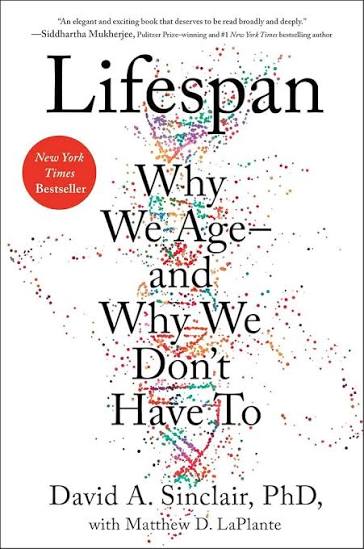
Lifespan by David A. Sinclair

රු2,200.00
3 X Rs. 733.33 or 8% Cashback with


or 3 X රු733.33 with


or up to 4 X රු550.00 with


Lifespan: Why We Age – and Why We Don’t Have To by David A. Sinclair, with Matthew D. LaPlante, is an internationally bestselling popular science book exploring the biology of ageing and the future of human longevity.
Why do we age? Can scientists discover ways to slow certain aspects of biological ageing? And could future medical breakthroughs help people remain healthier for longer?
Drawing on genetics, epigenetics and experimental research, Harvard Medical School scientist David Sinclair explores these fascinating questions and challenges conventional assumptions about growing older.
The book introduces readers to cellular ageing, sirtuins, NAD+, biotechnology and research into potential age-related interventions.
It also considers the roles of exercise, nutrition and lifestyle while exploring the scientific, ethical and social implications of longer human lives.
Product Highlights:
- Written by David A. Sinclair with Matthew D. LaPlante
- Explores the science of ageing and longevity
- Introduces genetics, epigenetics and cellular biology
- Discusses sirtuins, NAD+ and emerging biotechnology
- Examines research into healthy ageing and preventive medicine
- Covers lifestyle topics including exercise and nutrition
- Explores the future of medical research and human lifespan
- Suitable for science enthusiasts and nonfiction readers
- An engaging introduction to the developing field of longevity research
Buy Lifespan by David A. Sinclair online in Sri Lanka from BargainBooks and explore the science behind why we age.
Note: The book discusses emerging scientific research. Experimental interventions described in the book should not be treated as proven anti-ageing treatments or individual medical advice.
2 in stock
Lifespan by David A. Sinclair – Why We Age and Why We Don’t Have To
Discover the Revolutionary Science of Ageing and Longevity
Lifespan by David A. Sinclair is a fascinating and thought-provoking exploration of human ageing, genetics, longevity and the emerging science of living healthier for longer.
Written by renowned ageing researcher Dr. David A. Sinclair with science writer Matthew D. LaPlante, this internationally bestselling book challenges conventional assumptions about ageing and introduces readers to scientific research investigating why our bodies change as we grow older.
For centuries, ageing has been accepted as an unavoidable part of human existence.
As people grow older, their bodies become increasingly vulnerable to illness, physical decline and age-related health conditions.
But what if scientists could understand the biological mechanisms behind these changes?
Could future discoveries help people remain healthier for longer?
And how might breakthroughs in genetics, cellular biology and medicine transform our understanding of human lifespan?
In Lifespan: Why We Age – and Why We Don’t Have To, Sinclair explores these questions through scientific research, personal experiences and discussions of emerging biotechnology.
Drawing upon work in genetics, epigenetics and cellular ageing, he presents a provocative argument that ageing may be more biologically flexible than previously believed.
The book introduces readers to the mechanisms that influence how cells function, why these processes change over time and how researchers are exploring potential ways to influence them.
Lifespan offers an engaging introduction to one of the most important areas of modern biological research: the science of ageing and the possibility of extending healthy human life.
Why Do We Age?
Ageing is a complex biological process involving changes in cells, tissues and organ systems.
Over time, damage can accumulate, cellular functions may become less efficient and the body’s ability to maintain itself can decline.
Scientists have developed numerous explanations for these processes.
In Lifespan, Sinclair explores how genetic and epigenetic mechanisms may contribute to ageing.
He presents research investigating why cells lose aspects of their normal functioning and whether some age-related changes might eventually be influenced through new technologies.
The book encourages readers to consider ageing as a subject for scientific investigation rather than an entirely fixed biological destiny.
However, it is important to distinguish the author’s hypotheses and experimental findings from treatments already proven to extend human life.
The Science of Longevity
Longevity research examines the biological and environmental factors that influence lifespan.
Scientists investigate genetics, cellular health, metabolism, nutrition and the relationship between ageing and disease.
Lifespan introduces readers to several of these research areas.
Sinclair explains how laboratory studies have helped researchers identify mechanisms involved in cellular ageing.
He also discusses the possibility that understanding these mechanisms could eventually support new approaches to maintaining health in older age.
The book combines scientific explanations with an optimistic discussion of future discoveries.
Readers interested in biology, medicine and technological innovation will appreciate its exploration of an evolving field.
Understanding the Epigenome
One of the central topics in Lifespan is the epigenome.
The epigenome refers to chemical modifications and regulatory processes that influence how genes are expressed without necessarily changing the underlying DNA sequence.
These processes help cells maintain their specialised functions.
For example, muscle cells and nerve cells contain largely the same genetic instructions, yet they behave differently because different genes are activated or suppressed.
Sinclair discusses the possibility that age-related changes in epigenetic regulation contribute to declining cellular function.
His research explores whether restoring aspects of this regulation could influence certain markers of biological ageing.
This is an important area of investigation, although translating experimental discoveries into safe, effective human treatments remains a major scientific challenge.
DNA, Genes and Cellular Ageing
DNA carries the genetic instructions required for normal cellular function.
Cells contain mechanisms that detect and respond to different forms of damage.
Over time, numerous biological stresses can influence these systems.
In Lifespan, Sinclair explains how genetic stability, cellular repair and the regulation of gene activity may contribute to the ageing process.
He presents the interactions between genes and their surrounding cellular environment as important components of longevity research.
Rather than treating ageing as a single simple event, the book encourages readers to understand it as an interconnected biological process.
Sirtuins and Cellular Regulation
Sirtuins are proteins involved in regulating various cellular processes.
They have attracted scientific interest because of their relationships with metabolism, cellular stress responses and other biological functions.
Sinclair discusses the role of sirtuins within his broader theory of ageing.
He explores laboratory research involving these proteins and their potential relevance to healthy ageing.
The book also examines how researchers investigate pathways associated with cellular maintenance.
Although these findings are scientifically interesting, manipulating such pathways has not established a reliable method of reversing human ageing.
NAD+ and Ageing Research
Nicotinamide adenine dinucleotide, commonly called NAD+, is a molecule that plays an important role in cellular metabolism.
It participates in processes involved in energy production and cellular regulation.
Scientists have investigated how NAD+ levels and related metabolic pathways change with age.
Lifespan discusses this research as part of a broader exploration of the mechanisms involved in ageing.
Readers will encounter ideas about NAD+ and experimental approaches intended to influence these pathways.
It is important to understand that research into NAD+ metabolism does not mean that commercial NAD+ boosters have been proven to increase human lifespan.
The book is a discussion of scientific concepts and emerging possibilities, not evidence that a particular supplement will prevent ageing.
Could Ageing Be Treated?
One of Sinclair’s most provocative arguments is that ageing should be approached as a medical problem that researchers can attempt to understand and address.
He challenges the assumption that age-related decline must always remain beyond the reach of scientific intervention.
The book describes experimental findings that have inspired researchers to explore new approaches to cellular rejuvenation.
It also considers how medicine might change if ageing-related mechanisms could be targeted effectively.
This remains an ambitious research goal rather than an established clinical achievement.
The distinction is important for readers who want a balanced understanding of the book’s scientific claims.
Healthspan Versus Lifespan
A major idea in longevity research is the difference between lifespan and healthspan.
Lifespan refers to the length of time an individual lives.
Healthspan describes the period of life spent in relatively good health and without major limitations from disease or disability.
Living longer is not necessarily the same as living better.
For this reason, scientists and healthcare professionals are increasingly interested in the quality of additional years of life.
Lifespan encourages readers to consider how advances in medicine might help people maintain independence, physical function and wellbeing as they age.
The book’s vision extends beyond simply increasing the number of years people survive.
Exercise and Healthy Ageing
Physical activity is one of the lifestyle topics discussed in the book.
Exercise influences numerous aspects of health, including cardiovascular fitness, muscular strength and metabolic function.
Sinclair explores the relationship between physical activity and biological pathways associated with ageing.
He also discusses research investigating how different forms of physical stress influence cellular responses.
Readers interested in healthy living will find these discussions engaging.
However, exercise should be understood as a widely supported component of general health rather than a guaranteed way to reverse biological ageing.
Nutrition and Longevity
Nutrition is another major subject.
The book explores scientific research examining how dietary patterns, energy intake and metabolism may influence ageing-related pathways.
Sinclair discusses ideas involving calorie restriction, intermittent fasting and other approaches studied in laboratory and human research.
These subjects have attracted considerable public interest.
However, evidence differs depending on the intervention, population and outcome being measured.
A dietary strategy that produces promising results in laboratory animals does not automatically have the same effect in humans.
Readers should interpret these sections as an introduction to ongoing research rather than universal dietary instructions.
Intermittent Fasting and Metabolic Research
Intermittent fasting refers to eating patterns that alternate periods of food intake with periods of fasting.
Scientists have investigated these patterns for their potential effects on metabolism and various health indicators.
In Lifespan, Sinclair discusses fasting in connection with cellular stress-response mechanisms.
The book presents research exploring whether dietary timing and nutrient availability influence pathways associated with longevity.
However, long-term effects on human lifespan remain uncertain.
Fasting is not appropriate for everyone, and anyone considering significant dietary changes should take their individual health circumstances into account.
The Possibility of Cellular Reprogramming
Cellular reprogramming is among the most ambitious scientific topics in the book.
Researchers have investigated ways to change the biological state of cells using molecular techniques.
Some experimental approaches have produced intriguing results in laboratory studies.
Sinclair discusses their potential implications for understanding ageing.
The possibility of restoring certain aspects of cellular function is an exciting area of research.
However, substantial safety, effectiveness and delivery challenges must be addressed before such approaches could become established treatments for age-related decline in humans.
Biotechnology and the Future of Medicine
Modern biotechnology has created new opportunities for investigating human biology.
Advances in genetics, molecular analysis and experimental therapeutics have expanded scientists’ understanding of disease and cellular function.
Lifespan explores how these developments may influence future approaches to ageing.
Sinclair discusses a world in which preventive and regenerative medicine could play a larger role in healthcare.
The book asks readers to imagine how medical systems might evolve if researchers developed reliable methods of addressing important mechanisms of biological ageing.
These ideas are presented as potential futures rather than guaranteed outcomes.
The Economic and Social Consequences of Longer Lives
If future medical breakthroughs substantially increased healthy human lifespan, the effects would extend beyond individual health.
Societies might need to reconsider retirement systems, employment patterns, education and the organisation of healthcare.
Longer lives could influence family relationships and economic planning.
The book explores how governments and communities might respond to these changes.
It also raises questions about access.
Would new longevity treatments be affordable?
How could societies prevent medical progress from increasing inequality?
Sinclair argues that breakthroughs in ageing research would require serious social and ethical consideration.
Ethics and the Pursuit of Longevity
The possibility of significantly extending human life creates important ethical questions.
Medical innovation may offer substantial benefits, but its availability and consequences must be considered.
The book explores concerns involving population growth, healthcare costs, environmental sustainability and fairness.
It encourages readers to think beyond the scientific challenge of extending life.
A meaningful discussion must also include the ways societies would manage longer lifespans.
These questions make Lifespan relevant not only to scientists but also to readers interested in technology, economics and the future of humanity.
Science, Optimism and Critical Thinking
Sinclair writes with considerable optimism about the future of longevity research.
His enthusiasm makes complicated scientific topics engaging.
However, the book includes bold claims and predictions that have been debated within the scientific community.
Readers should distinguish between established biology, experimental results, preliminary hypotheses and speculative future treatments.
This does not diminish the book’s value as an introduction to longevity research.
Instead, it encourages a scientifically informed reading experience.
The ideas explored in Lifespan are most useful when considered alongside the evolving evidence in ageing biology.
An Accessible Introduction to Ageing Biology
Although the book discusses sophisticated scientific concepts, Sinclair and LaPlante use storytelling and explanations intended for general readers.
Readers do not need advanced training in genetics to follow the main ideas.
Scientific discoveries are introduced through research narratives and examples.
The book combines technical information with broader discussions of lifestyle, health and society.
This makes it suitable for readers who want to understand the science behind ageing without beginning with an academic textbook.
Why Read Lifespan?
Lifespan offers a different perspective on ageing.
Rather than treating age-related biological change as a subject beyond scientific investigation, it explores the possibilities created by contemporary research.
Readers will encounter discussions of genetics, the epigenome, cellular metabolism, medical innovation and the future of healthy longevity.
The book also encourages reflection on the social consequences of longer lives.
Its combination of science, personal narrative and future-oriented thinking makes it a compelling introduction to the field.
Who Should Read This Book?
Lifespan by David A. Sinclair is recommended for readers interested in:
- Ageing biology and longevity research
- Genetics, epigenetics and cellular science
- Popular science and biotechnology
- Healthy ageing and preventive medicine
- Medical innovation and scientific discovery
- The relationship between lifestyle and health
- The social and ethical implications of longer lifespans
- Books exploring the future of human health
It may appeal to readers who enjoy Outlive by Peter Attia, Why We Sleep by Matthew Walker, The Gene by Siddhartha Mukherjee and other science-focused nonfiction.
About the Authors
David A. Sinclair is an Australian biologist and professor of genetics at Harvard Medical School, known for his research into the biological mechanisms of ageing.
His work has involved genetics, epigenetic regulation and molecular pathways associated with cellular ageing.
He has published scientific research and participated in biotechnology ventures concerned with ageing-related biology.
Matthew D. LaPlante is an American journalist, author and academic known for his writing on science and technology.
Together, they present the complex world of longevity research in an accessible narrative.
Buy Lifespan in Sri Lanka
Lifespan: Why We Age – and Why We Don’t Have To by David A. Sinclair, with Matthew D. LaPlante, is a thought-provoking addition to any collection of science, health or personal development books.
It introduces readers to research on the biological mechanisms of ageing while exploring the possibility of healthier and longer human lives.
From genetics and epigenetics to medical innovation and the future of society, Lifespan provides a wide-ranging discussion of one of science’s most fascinating challenges.
Buy Lifespan by David A. Sinclair online in Sri Lanka from BargainBooks and discover the science behind ageing and the future of longevity research.
Shop online at https://bargainbooks.lk/.
Be the first to review “Lifespan by David A. Sinclair”
Related products
-24%
Non-Fiction & Knowledge
Original price was: රු2,300.00.රු1,750.00Current price is: රු1,750.00.
3 X Rs. 583.33 or 8% Cashback with
or 3 X රු583.33 with
or up to 4 X රු437.50 with
-11%

Non-Fiction & Knowledge
Original price was: රු2,200.00.රු1,950.00Current price is: රු1,950.00.
3 X Rs. 650.00 or 8% Cashback with
or 3 X රු650.00 with
or up to 4 X රු487.50 with

Non-Fiction & Knowledge
රු2,450.00
3 X Rs. 816.67 or 8% Cashback with
or 3 X රු816.67 with
or up to 4 X රු612.50 with
Non-Fiction & Knowledge
The 7 Habits of Highly Effective People by Stephen R. Covey – Blue Cover
රු1,900.00
3 X Rs. 633.33 or 8% Cashback with
or 3 X රු633.33 with
or up to 4 X රු475.00 with
-34%
Out of stock
Non-Fiction & Knowledge
Original price was: රු2,650.00.රු1,750.00Current price is: රු1,750.00.
3 X Rs. 583.33 or 8% Cashback with
or 3 X රු583.33 with
or up to 4 X රු437.50 with
Non-Fiction & Knowledge
රු1,750.00
3 X Rs. 583.33 or 8% Cashback with
or 3 X රු583.33 with
or up to 4 X රු437.50 with
Non-Fiction & Knowledge
රු1,550.00
3 X Rs. 516.67 or 8% Cashback with
or 3 X රු516.67 with
or up to 4 X රු387.50 with
-13%
Out of stock
Non-Fiction & Knowledge
Original price was: රු3,900.00.රු3,400.00Current price is: රු3,400.00.
3 X Rs. 1,133.33 or 8% Cashback with
or 3 X රු1,133.33 with
or up to 4 X රු850.00 with
Reviews
There are no reviews yet.