
No products in the cart.
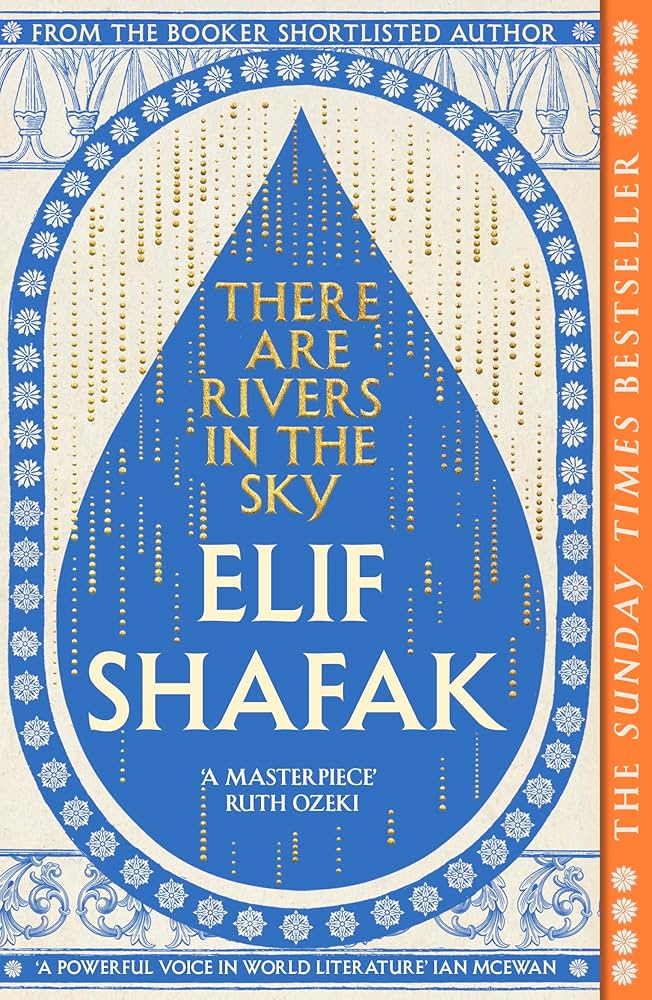
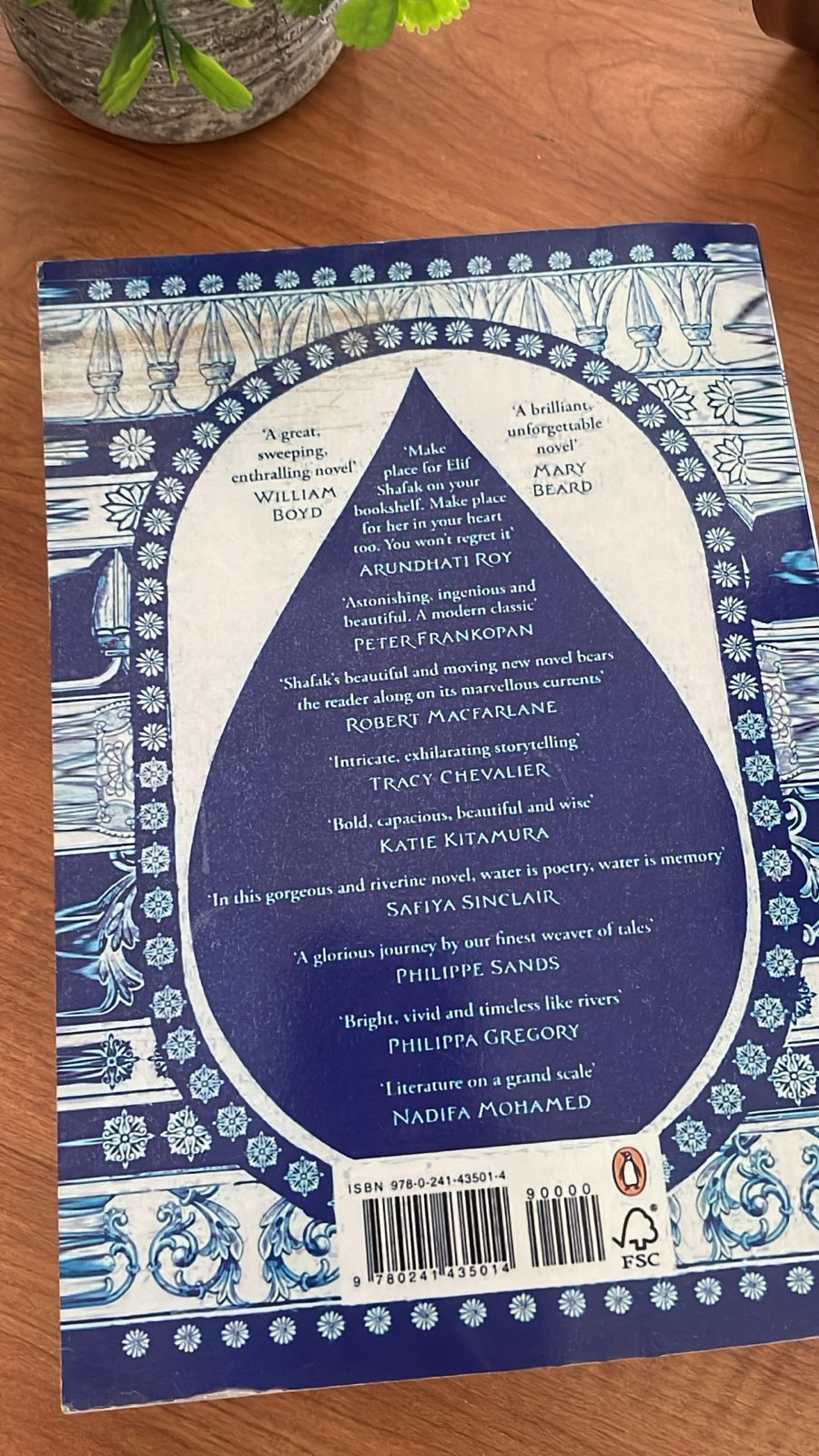
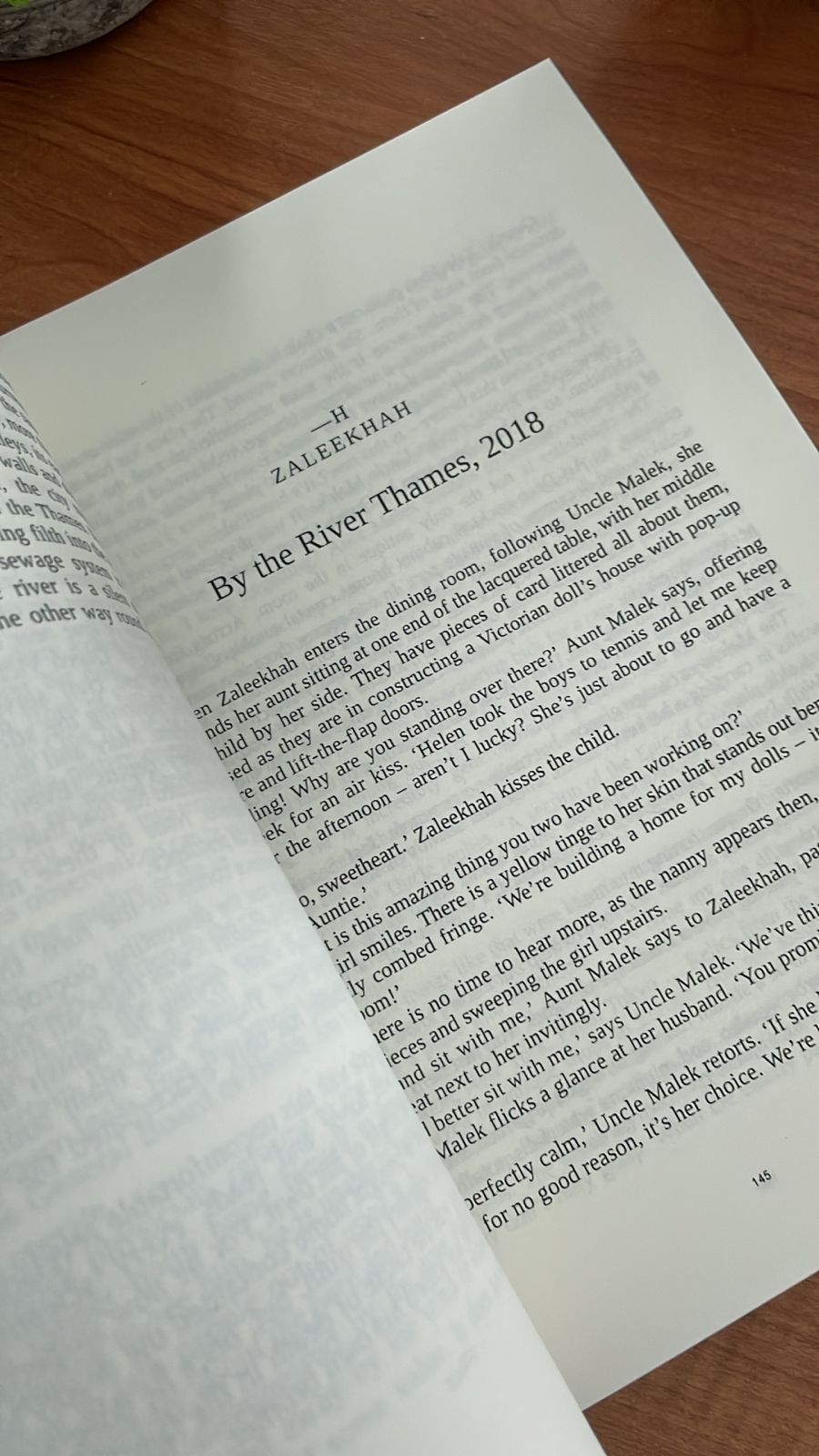

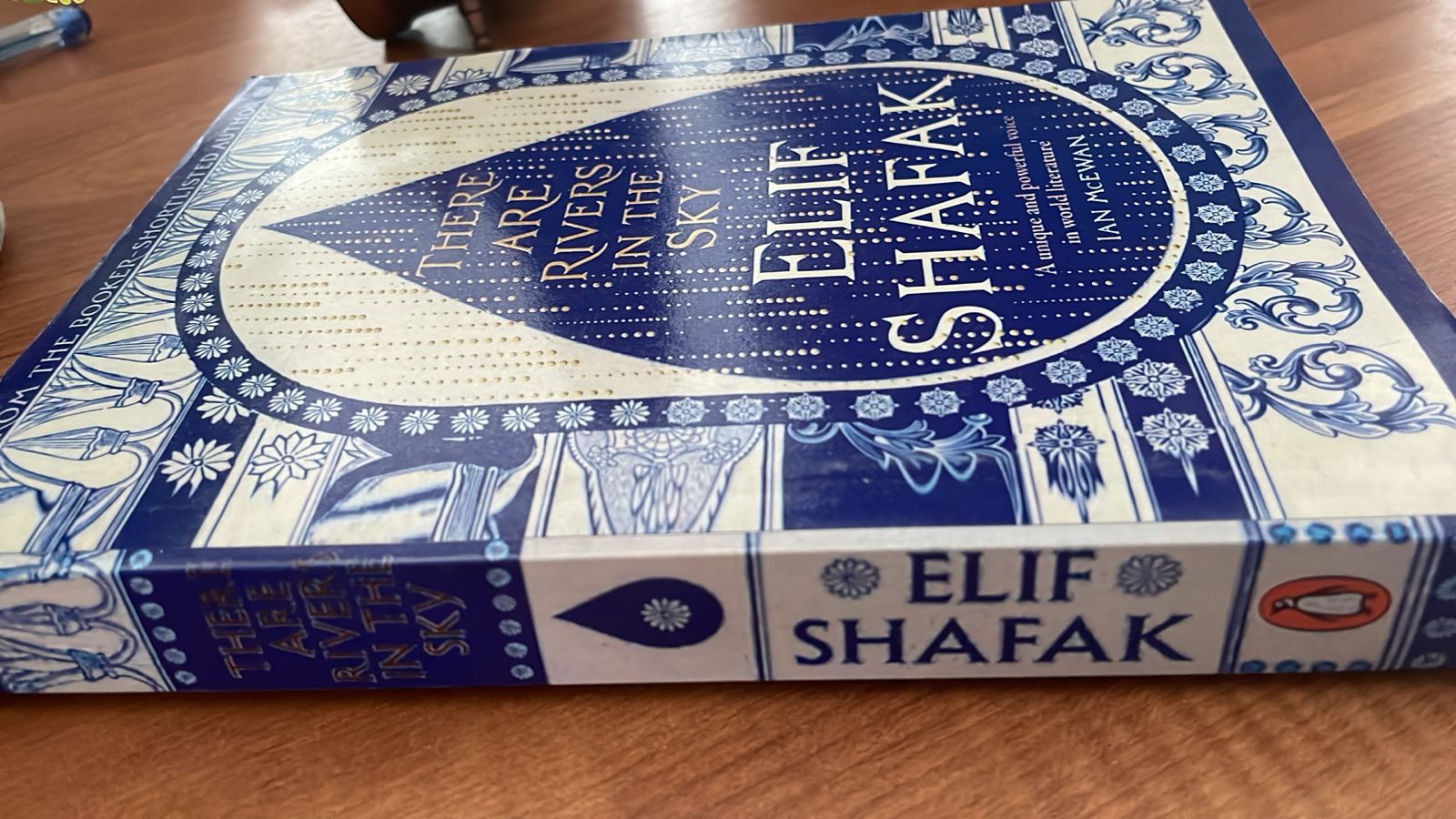
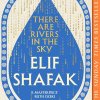



There are Rivers in the Sky by Elif Shafak


රු2,700.00
3 X Rs. 900.00 or 8% Cashback with


or 3 X රු900.00 with


or up to 4 X රු675.00 with


• Lyrical literary novel exploring memory, identity, and human connection
• Rich storytelling across time, place, and culture
• Ideal for readers of thoughtful contemporary fiction
Out of stock
Email when stock available
There Are Rivers in the Sky by Elif Shafak
There Are Rivers in the Sky by Elif Shafak is an ambitious literary novel about memory, water, history, migration, identity, loss, and the unexpected connections between people separated by centuries.
The story moves across different places and periods.
Ancient Mesopotamia, Victorian London, modern Turkey, Iraq, and contemporary London become connected through rivers, stories, and one of humanity’s oldest surviving works of literature.
At the center of the novel are three unforgettable lives.
Arthur.
Narin.
And Zaleekah.
Their experiences are separated by time, yet water gradually reveals how closely their stories are connected.
About There Are Rivers in the Sky
There Are Rivers in the Sky begins with the ancient city of Nineveh beside the River Tigris.
King Ashurbanipal creates a great library filled with tablets and knowledge.
Although the empire eventually falls, fragments of the Epic of Gilgamesh survive.
That ancient poem becomes an important connection between the characters who appear centuries later.
The novel then travels through time.
Each storyline explores a different form of displacement, memory, and belonging.
Meet Arthur
Arthur is born in London in 1840.
His childhood is marked by poverty and a difficult family life.
But he possesses an extraordinary memory.
That ability eventually creates opportunities that would otherwise have been impossible for someone from his background.
Books open a new world to him.
His fascination with ancient Mesopotamia gradually draws him toward Nineveh and the lost stories of the past.
Arthur’s journey connects Victorian London with the rediscovery of ancient civilizations.
Meet Narin
Narin is a young Yazidi girl living in Turkey in 2014.
She has been diagnosed with a rare condition that will eventually cause her to lose her hearing.
Her grandmother wants to take her to a sacred Yazidi site in Iraq before that happens.
But their journey takes place during an increasingly dangerous period.
ISIS is expanding through the region.
Ancient communities and cultural sites are under threat.
Narin’s storyline explores identity, heritage, family, faith, memory, and the devastating consequences of displacement.
Meet Zaleekah
Zaleekah is a hydrologist living in London in 2018.
After the breakdown of her marriage, she moves onto a houseboat on the River Thames.
Her professional life revolves around water.
Her personal life, however, has reached a point of crisis.
A mysterious book connected to her homeland begins changing the direction of her life.
Through Zaleekah, the novel explores loneliness, science, belonging, and the possibility of beginning again.
7 Powerful Reasons to Read There Are Rivers in the Sky
1. Three Lives Across Centuries
One of the greatest strengths of There Are Rivers in the Sky is its structure.
Arthur, Narin, and Zaleekah live in completely different worlds.
Yet their stories gradually begin to echo one another.
A book discovered in one century can influence a life in another.
A river can carry memories far beyond a single generation.
This interconnected structure rewards attentive reading.
2. Water Becomes a Character
Water is everywhere in the novel.
The River Thames.
The River Tigris.
Rain.
Tears.
Floods.
Water can preserve life.
It can also destroy.
Shafak uses water as a symbol of memory and connection.
Human beings forget.
Water continues moving.
That idea gives the novel much of its poetic power.
3. The Epic of Gilgamesh Connects the Story
The Epic of Gilgamesh is one of the oldest surviving works of literature.
Its rediscovery becomes important to the historical storyline.
The ancient poem also contains themes that echo through the modern characters.
Mortality.
Friendship.
Loss.
Nature.
And humanity’s desire to leave something behind.
This creates a bridge between the ancient and modern worlds.
4. History Feels Personal
Historical events can sometimes feel distant.
There Are Rivers in the Sky makes history personal by showing how large events affect individual lives.
Empire affects Arthur.
Conflict affects Narin.
Migration and family history affect Zaleekah.
History is therefore not presented as a collection of dates.
It becomes something carried by families, communities, landscapes, and memory.
5. It Explores Migration and Belonging
Several characters live between places.
Some leave because they have no choice.
Others search for a place that feels like home.
The novel asks difficult questions.
Where do we belong?
Can a homeland survive only through memory?
What happens when people are separated from the places their families have known for generations?
These questions give the story emotional depth.
6. Science and Storytelling Come Together
Zaleekah approaches water as a scientist.
Other characters understand it through memory, religion, myth, or tradition.
The novel does not treat these perspectives as completely separate.
Science explains how water moves.
Stories explain what water means to people.
Together, they create a richer picture of the world.
7. It Is a Story About Human Connection
The characters may be separated by centuries.
But their lives are connected by objects, places, stories, rivers, and decisions.
A person may never know how their actions will affect someone in the future.
This idea appears repeatedly throughout the novel.
Small events can travel surprisingly far.
Water and Memory
One of the central ideas in There Are Rivers in the Sky is that water remembers.
Water moves through landscapes.
It crosses borders.
It changes form.
It evaporates.
It falls again as rain.
The novel uses this natural cycle as a way of thinking about human history.
Stories can disappear.
Cities can collapse.
People die.
Yet something may continue.
Memory can survive in books.
It can survive in traditions.
It can survive in landscapes.
The Tigris and the Thames
Two great rivers dominate the novel.
The Tigris connects the story to Mesopotamia and ancient civilizations.
The Thames connects Arthur and Zaleekah to London.
These rivers exist in very different environments.
But both have carried human stories for centuries.
Shafak uses them to collapse the distance between past and present.
Ancient Nineveh
Nineveh was once one of the great cities of the ancient world.
Its libraries preserved knowledge on clay tablets.
The novel explores the destruction of civilizations but also the surprising survival of stories.
The Epic of Gilgamesh becomes especially important.
A civilization may disappear.
Its stories can continue speaking thousands of years later.
The Yazidi Story
Narin’s storyline introduces readers to Yazidi culture and history.
Her connection to family and tradition is central to her identity.
But violence threatens the communities and landscapes connected to that heritage.
This gives her journey urgency.
The destruction of a place is not only physical.
It can also threaten memory, culture, language, and identity.
Environmental Themes
There Are Rivers in the Sky is also concerned with the natural world.
Rivers can be polluted.
Water can be controlled.
Land can be damaged.
Human history and environmental history are closely connected.
The novel reminds readers that rivers existed before modern borders.
What happens upstream can affect people far away.
Water does not respect political boundaries.
Books and Knowledge
Books play an important role throughout the story.
For Arthur, books create opportunities.
Ancient tablets preserve stories that would otherwise disappear.
For other characters, a book can reconnect them with history.
Knowledge becomes another kind of river.
It flows from one generation to another.
Sometimes it is interrupted.
Sometimes it survives against extraordinary odds.
Loss and Survival
Each central character experiences loss differently.
Arthur’s childhood leaves deep marks.
Narin faces the possible loss of hearing and homeland.
Zaleekah struggles with personal loss and emotional isolation.
Yet the novel is not only about suffering.
It is also about survival.
People continue.
Stories continue.
And sometimes unexpected connections create another path forward.
Identity and Heritage
Identity is rarely simple in this novel.
A person may belong to several places.
Family history may stretch across countries.
Migration can create distance from an ancestral homeland.
But that distance does not necessarily erase connection.
There Are Rivers in the Sky explores how identity can be shaped by both where we live and where our stories began.
Who Should Read This Book?
There Are Rivers in the Sky is ideal for readers who enjoy literary fiction, historical fiction, interconnected timelines, mythology, and family stories.
It may particularly appeal to readers interested in Mesopotamian history and the Epic of Gilgamesh.
Readers interested in migration, environmental themes, cultural memory, and identity may also find the novel especially meaningful.
Fans of Elif Shafak’s The Island of Missing Trees and The Forty Rules of Love will recognize her interest in connecting personal lives with larger histories.
About Elif Shafak
Elif Shafak is an award-winning British-Turkish novelist and storyteller.
Her books include The Forty Rules of Love, The Island of Missing Trees, 10 Minutes 38 Seconds in This Strange World, The Architect’s Apprentice, and There Are Rivers in the Sky.
Her writing frequently explores identity, migration, belonging, history, culture, memory, and relationships.
Readers can learn more through the official Penguin Random House page for There Are Rivers in the Sky.
Product Details
Title: There Are Rivers in the Sky
Author: Elif Shafak
Genre: Literary Fiction / Historical Fiction
Language: English
Original Publication: 2024
Main Settings: Ancient Nineveh, Victorian London, Turkey, Iraq, and modern London
Themes: Memory, Water, Migration, Identity, History, Nature, Loss, Belonging
The Vintage U.S. paperback edition carries ISBN 9780593687567.
It contains 464 pages and was published on July 1, 2025.
Other international and hardcover editions have different ISBNs, formats, and dimensions.
Always check the ISBN printed on your physical copy before entering final WooCommerce specifications.
Explore More Fiction Books
There Are Rivers in the Sky is ultimately a novel about connections that survive distance and time.
A forgotten story can be rediscovered.
A river can connect civilizations.
A book can transform a life.
And the past can continue flowing into the present in unexpected ways.
Readers interested in beautifully written literary and historical fiction can explore more Fiction & Literature Books at Bargain Books.
For readers who enjoy interconnected timelines, historical mysteries, mythology, migration, and deeply human stories, There Are Rivers in the Sky offers an ambitious and memorable journey across centuries.
Be the first to review “There are Rivers in the Sky by Elif Shafak”
Related products

Out of stock
Adventure Fiction
Death on the Nile – Film Tie-In Edition | Agatha Christie Paperback
රු2,400.00
3 X Rs. 800.00 or 8% Cashback with
or 3 X රු800.00 with
or up to 4 X රු600.00 with
-48%

Out of stock
Classics & Literary Fiction
Original price was: රු3,000.00.රු1,550.00Current price is: රු1,550.00.
3 X Rs. 516.67 or 8% Cashback with
or 3 X රු516.67 with
or up to 4 X රු387.50 with
-17%

Out of stock
Classics & Literary Fiction
Original price was: රු2,900.00.රු2,400.00Current price is: රු2,400.00.
3 X Rs. 800.00 or 8% Cashback with
or 3 X රු800.00 with
or up to 4 X රු600.00 with

Out of stock
Classics & Literary Fiction
රු1,600.00
3 X Rs. 533.33 or 8% Cashback with
or 3 X රු533.33 with
or up to 4 X රු400.00 with
-16%

Classics & Literary Fiction
Original price was: රු3,100.00.රු2,600.00Current price is: රු2,600.00.
3 X Rs. 866.67 or 8% Cashback with
or 3 X රු866.67 with
or up to 4 X රු650.00 with
Out of stock
Classics & Literary Fiction
රු1,950.00
3 X Rs. 650.00 or 8% Cashback with
or 3 X රු650.00 with
or up to 4 X රු487.50 with
-37%
Out of stock
Classics & Literary Fiction
Original price was: රු3,000.00.රු1,900.00Current price is: රු1,900.00.
3 X Rs. 633.33 or 8% Cashback with
or 3 X රු633.33 with
or up to 4 X රු475.00 with
-17%

Classics & Literary Fiction
Original price was: රු2,400.00.රු1,990.00Current price is: රු1,990.00.
3 X Rs. 663.33 or 8% Cashback with
or 3 X රු663.33 with
or up to 4 X රු497.50 with
Reviews
There are no reviews yet.