
No products in the cart.
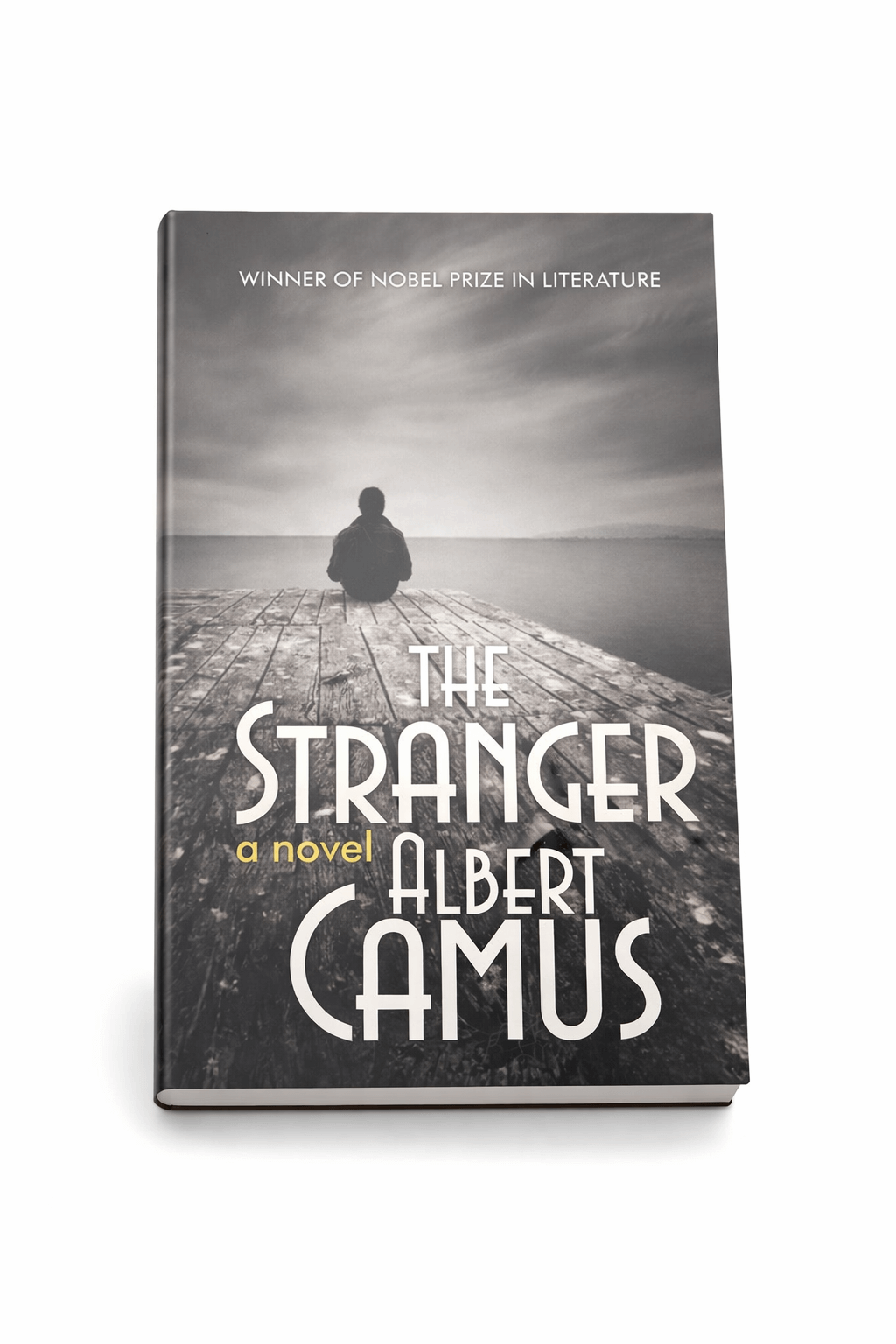








Stranger by Albert Camus Matthew Ward


රු1,600.00
3 X Rs. 533.33 or 8% Cashback with


or 3 X රු533.33 with


or up to 4 X රු400.00 with


• Classic literary novel exploring absurdity and human existence
• Thought-provoking story with philosophical depth
• Ideal for readers of timeless world literature
1 in stock
The Stranger by Albert Camus
The Stranger by Albert Camus is a short but powerful philosophical novel about alienation, morality, death, freedom, and the absurdity of human existence.
The story follows Meursault, a French Algerian man whose emotionally detached attitude separates him from the people around him.
His life changes dramatically after a violent incident on an Algerian beach.
What follows is not only a legal story.
It becomes an examination of society, judgment, meaning, and what people expect from one another.
About The Stranger
The Stranger begins when Meursault learns that his mother has died.
He attends her funeral.
But his reaction does not match what society expects.
He does not openly display intense grief.
He observes the heat, people, surroundings, and physical discomfort more than his own emotions.
This emotional distance becomes important later.
Meursault continues living much as he did before.
He spends time with Marie.
He becomes involved with his neighbour Raymond.
Then a series of events leads to a fatal encounter on a beach.
Meursault as a Main Character
Meursault is one of the most unusual protagonists in modern literature.
He does not behave like a traditional hero.
He often seems detached from emotions, social expectations, and future plans.
He rarely pretends to feel something simply because other people expect it.
This honesty makes him difficult for others to understand.
It also makes readers question how society decides what is normal.
7 Powerful Reasons to Read The Stranger
1. It Is Short but Deep
The novel is relatively brief.
Yet it raises enormous questions.
What gives life meaning?
How should people respond to death?
What does society expect from individuals?
Can someone be judged for emotions as much as for actions?
These questions give the book lasting power.
2. Meursault Is Unforgettable
Meursault does not react to life in familiar ways.
He often notices physical details more than emotional ones.
This makes his narration unusual.
Readers may dislike him, sympathize with him, or simply struggle to understand him.
That uncertainty is part of the novel’s impact.
3. It Explores the Absurd
The Stranger is closely associated with Camus’s philosophy of the absurd.
The absurd comes from the conflict between people’s desire for meaning and a universe that does not provide simple answers.
Meursault’s experiences force him to confront this directly.
The novel does not offer an easy solution.
Instead, it asks readers to think.
4. Society Becomes Part of the Trial
After the central crime, Meursault’s character becomes almost as important as what he actually did.
People examine his behaviour at his mother’s funeral.
They judge his emotions.
They question his relationships.
This shows how society often evaluates people according to expected behaviour.
5. The Writing Is Direct
Camus uses clear, controlled prose.
The style reflects Meursault’s emotional distance.
Sentences often focus on actions, physical sensations, light, heat, and immediate experiences.
This simplicity makes the novel easy to read on the surface.
Its meaning becomes much more complex underneath.
6. It Raises Questions About Morality
The book does not give readers a comfortable moral framework.
Meursault’s actions are serious.
But the legal and social reactions around him also raise difficult questions.
What exactly is he being judged for?
His crime?
His personality?
His lack of expected emotion?
These questions make the story unsettling.
7. It Remains Relevant
Although first published in 1942, the novel still feels modern.
People continue debating conformity, meaning, morality, emotional expectations, and alienation.
That is one reason the book remains widely read.
The Role of the Sun and Heat
Physical sensation is extremely important in The Stranger.
Heat, sunlight, exhaustion, and discomfort appear repeatedly.
Camus uses these details to shape mood.
They also influence how Meursault experiences the world.
Instead of interpreting everything emotionally, he often focuses on physical sensations.
This makes the narration feel immediate and unusual.
Meursault and Marie
Marie is one of the people closest to Meursault.
She cares about him.
But Meursault does not express love in a conventional way.
When asked about marriage, he responds with emotional distance.
This relationship reveals how differently he understands attachment.
It also shows how other people struggle to interpret him.
Society and Judgment
One of the strongest themes in The Stranger is judgment.
Meursault is judged not only for what he does.
He is judged for how he feels.
Or, more accurately, for how he appears to feel.
Society expects grief at a funeral.
It expects love in relationships.
It expects certain forms of remorse.
Meursault does not perform these emotions in the expected way.
That difference becomes extremely important.
Death and Meaning
Death is present from the opening pages.
Meursault’s mother has died.
Later, Meursault must confront mortality more directly.
These experiences lead him toward a different understanding of life.
Camus explores whether life needs a larger purpose to have value.
The novel’s final sections bring these ideas together.
Absurdism and Philosophy
Albert Camus rejected being simply labelled an existentialist.
His work is more closely associated with absurdism.
The absurd begins with a simple problem.
Humans want the world to make sense.
But reality does not always provide meaning, fairness, or explanation.
The challenge is deciding how to live anyway.
The Stranger turns that philosophical problem into a story.
Who Should Read This Book?
This novel is ideal for readers interested in classics and philosophical fiction.
It may also appeal to readers interested in psychology, morality, existential questions, and literary fiction.
Students frequently encounter the book because its short length makes it accessible.
However, the ideas inside it can support much deeper discussion.
Readers who enjoy books such as Siddhartha, Notes from Underground, or The Metamorphosis may also appreciate it.
About Albert Camus
Albert Camus was a French-Algerian writer, journalist, and philosopher.
He was born in Algeria in 1913.
His major works include The Stranger, The Plague, The Myth of Sisyphus, and The Fall.
Camus received the Nobel Prize in Literature in 1957.
His work frequently explores absurdity, morality, freedom, death, and human responsibility.
Readers can learn more about the novel on the official Penguin Random House page for The Stranger.
Product Details
Title: The Stranger
Original Title: L’Étranger
Author: Albert Camus
Genre: Philosophical Fiction / Literary Fiction / Classic
Original Publication: 1942
Language: English translation
Original Language: French
A common Vintage International paperback translated by Matthew Ward carries ISBN 9780679720201 and contains 144 pages.
A Modern Library hardcover edition carries ISBN 9780679420262 and contains 152 pages.
Always check the ISBN and page count printed on your physical copy before entering final WooCommerce specifications.
Explore More Classic Fiction
The Stranger remains powerful because it refuses to give readers simple answers.
Meursault is difficult to understand.
His actions are disturbing.
The society judging him is also uncomfortable.
That tension forces readers to think about morality, emotion, meaning, death, and conformity.
Readers can explore more Fiction & Literature Books at Bargain Books.
For readers looking for a short classic with deep philosophical questions, The Stranger is one of the most influential novels of the twentieth century.
Be the first to review “Stranger by Albert Camus Matthew Ward”
Related products
-14%

Classics & Literary Fiction
Original price was: රු1,800.00.රු1,550.00Current price is: රු1,550.00.
3 X Rs. 516.67 or 8% Cashback with
or 3 X රු516.67 with
or up to 4 X රු387.50 with
-20%

Classics & Literary Fiction
Original price was: රු2,450.00.රු1,950.00Current price is: රු1,950.00.
3 X Rs. 650.00 or 8% Cashback with
or 3 X රු650.00 with
or up to 4 X රු487.50 with

Out of stock
Classics & Literary Fiction
රු1,800.00
3 X Rs. 600.00 or 8% Cashback with
or 3 X රු600.00 with
or up to 4 X රු450.00 with

Out of stock
Classics & Literary Fiction
රු1,600.00
3 X Rs. 533.33 or 8% Cashback with
or 3 X රු533.33 with
or up to 4 X රු400.00 with
-37%

Out of stock
Classics & Literary Fiction
Original price was: රු3,000.00.රු1,900.00Current price is: රු1,900.00.
3 X Rs. 633.33 or 8% Cashback with
or 3 X රු633.33 with
or up to 4 X රු475.00 with
-11%

Out of stock
Classics & Literary Fiction
Original price was: රු1,800.00.රු1,600.00Current price is: රු1,600.00.
3 X Rs. 533.33 or 8% Cashback with
or 3 X රු533.33 with
or up to 4 X රු400.00 with

Out of stock
Classics & Literary Fiction
රු1,600.00
3 X Rs. 533.33 or 8% Cashback with
or 3 X රු533.33 with
or up to 4 X රු400.00 with

Out of stock
Classics & Literary Fiction
රු2,590.00
3 X Rs. 863.33 or 8% Cashback with
or 3 X රු863.33 with
or up to 4 X රු647.50 with
Reviews
There are no reviews yet.