
No products in the cart.
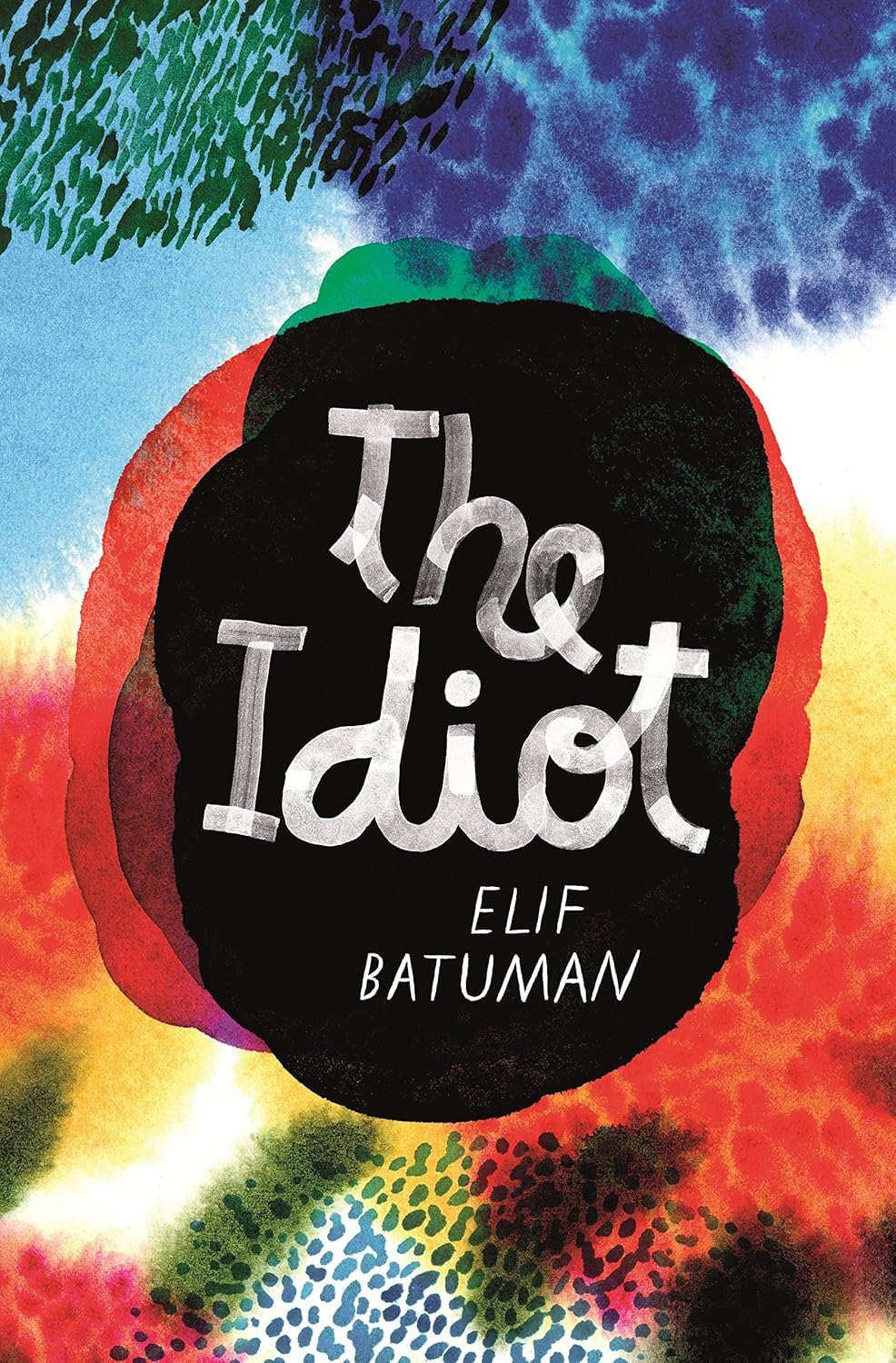
Idiot by Elif Batuman


රු1,950.00
3 X Rs. 650.00 or 8% Cashback with


or 3 X රු650.00 with


or up to 4 X රු487.50 with


The Idiot by Elif Batuman is a witty coming-of-age novel following Selin, a Turkish-American freshman at Harvard in 1995, as she navigates university life, friendship, language, email, first love, travel, and the confusing process of becoming an adult.
Out of stock
Email when stock available
The Idiot by Elif Batuman is a witty, intelligent, and unusual coming-of-age novel about first love, friendship, language, identity, education, awkwardness, and the strange experience of becoming an adult without really knowing what adulthood is supposed to look like.
The story begins in 1995, when email is still relatively new.
Selin, the daughter of Turkish immigrants, arrives at Harvard for her freshman year.
Like many students starting university, she expects education to help her understand the world.
Instead, she discovers that the world seems to become more confusing.
She takes unfamiliar classes.
She meets people from completely different backgrounds.
She begins thinking deeply about language.
She tries to understand friendship.
She tries to understand romance.
And, almost accidentally, she begins exchanging emails with Ivan, an older Hungarian mathematics student.
What begins as written communication gradually becomes one of the most important relationships in Selin’s life.
Yet the more she tries to understand what the relationship means, the less certain everything becomes.
The Idiot by Elif Batuman captures the awkward, funny, intellectual, and emotionally confusing experience of being young and discovering that books, language, love, and real life do not always follow the rules you expect.
The Idiot by Elif Batuman – Book Overview
The Idiot by Elif Batuman follows Selin during her first year at Harvard and the summer that follows.
Selin is highly intelligent but does not always understand the social rules everyone else seems to know instinctively.
She is interested in literature and language.
She thinks carefully about words.
She notices strange details.
She often asks questions other people would simply ignore.
At Harvard, she meets Svetlana, a confident and worldly Serbian student who becomes one of her closest friends.
Selin also encounters Ivan.
Their relationship begins largely through email.
This is important because written communication allows them to build a strange emotional connection that does not always translate easily into real life.
As Selin becomes increasingly fascinated with Ivan, she struggles to understand what exactly exists between them.
Are they friends?
Are they in love?
Is there a relationship?
Or are they creating a story through language that may not exist in the same way outside their messages?
These questions become central to the novel.
Meet Selin
Selin is the unforgettable narrator of The Idiot by Elif Batuman.
She is observant.
Funny.
Awkward.
Curious.
Intellectual.
And constantly trying to understand what everything means.
Selin does not automatically accept social conventions.
Things that other people consider normal can seem mysterious to her.
Why do people behave in certain ways?
Why do romantic relationships follow particular patterns?
Why does language sometimes communicate clearly and sometimes create even more confusion?
Why does university education seem simultaneously meaningful and absurd?
Selin’s constant questioning gives the novel its distinctive voice.
She is not presented as someone who already understands herself.
The novel is about the process of becoming someone.
Freshman Year at Harvard
Harvard provides the primary setting for much of The Idiot by Elif Batuman.
For Selin, university represents independence.
But freedom also creates uncertainty.
For the first time, she can choose classes.
Choose friends.
Choose how to spend her time.
Choose who she wants to become.
That sounds exciting.
But having many choices does not automatically make decisions easier.
Selin enters classes in subjects she barely understands.
She meets students from different countries and backgrounds.
She is surrounded by intelligent people who appear to have different ideas about how university life should work.
The experience becomes both educational and disorienting.
Rather than giving Selin a clear identity, Harvard gives her even more possibilities to consider.
Email and the Beginning of a Relationship
One of the most distinctive features of The Idiot by Elif Batuman is its treatment of email.
The story takes place during a period when email still feels new.
For Selin and Ivan, email becomes much more than a simple communication tool.
Their messages create a private world.
The relationship develops through words.
A sentence can be analysed.
A reply can be anticipated.
Silence can become meaningful.
An unusual phrase can occupy Selin’s thoughts for hours.
Anyone who has ever experienced a relationship largely through texting, messaging, or online communication may recognize this pattern.
Digital communication can make people feel extremely close.
Yet it can also create ambiguity.
Words may feel intimate while real-life interactions remain uncertain.
The Idiot by Elif Batuman explores this contradiction with unusual sensitivity.
Meet Ivan
Ivan is an older Hungarian mathematics student who becomes increasingly important to Selin.
He is intelligent and difficult for her to interpret.
Their email correspondence creates intimacy, but Selin remains uncertain about what Ivan actually wants.
This uncertainty drives much of The Idiot by Elif Batuman.
Selin frequently analyses his words.
She wonders what he means.
She tries to interpret his behaviour.
She struggles to understand whether their emotional connection is mutual or whether she is imagining more than exists.
The relationship captures something extremely familiar about first love.
The other person can become enormous in your imagination.
Every message matters.
Every silence matters.
Every small interaction seems capable of changing everything.
First Love and Confusion
First love is one of the central themes in The Idiot by Elif Batuman.
But the novel does not present first love as a straightforward romantic fantasy.
Selin’s feelings are complicated.
She wants closeness.
But she does not always understand what kind of closeness she wants.
She wants Ivan to communicate clearly.
But she is also fascinated by the mystery surrounding him.
The relationship becomes part reality and part imagination.
Selin creates expectations from words, possibilities, and incomplete signals.
This makes the story especially relatable for readers who remember how confusing early relationships can be.
Sometimes the uncertainty itself becomes part of the attraction.
Friendship With Svetlana
Svetlana is another important character in The Idiot by Elif Batuman.
She is Serbian, charismatic, confident, and often appears more socially experienced than Selin.
Their friendship gives Selin another way of understanding the world.
Svetlana and Selin think differently.
They interpret people differently.
They have different experiences.
That difference makes their friendship interesting.
University friendships can become especially intense because people are discovering themselves at the same time.
Friends become witnesses to transformation.
They hear about relationships.
They discuss ideas.
They analyse mistakes.
They help each other understand unfamiliar situations.
Svetlana plays that role throughout Selin’s first year.
Language Is Everywhere
Language may be the most important intellectual theme in The Idiot by Elif Batuman.
Selin studies languages.
She thinks about words.
She notices translation problems.
She wonders how language creates meaning.
This connects directly with her relationship with Ivan.
Their relationship exists largely through written language.
But words can be unreliable.
A sentence can mean different things depending on context.
A joke may not translate.
A phrase may sound romantic to one person and casual to another.
Language brings people together while also creating distance.
Selin becomes increasingly aware that understanding words does not necessarily mean understanding people.
Literature Versus Real Life
Selin loves books and literature.
But The Idiot by Elif Batuman explores what happens when someone accustomed to understanding life through stories discovers that real life has no clear narrative structure.
Books usually have beginnings.
Developments.
Important events.
Endings.
Relationships in books often have recognizable meanings.
Real relationships are messier.
Someone may disappear without explanation.
Feelings may remain undefined.
Important moments may seem ordinary while they are happening.
Selin repeatedly tries to understand her life as if it were a story.
But reality refuses to behave like literature.
This tension between books and lived experience becomes one of the novel’s most fascinating ideas.
Growing Up Without Instructions
One of the most relatable themes in The Idiot by Elif Batuman is the feeling that everyone else received instructions for adulthood that you somehow missed.
Selin arrives at university and encounters many social expectations.
Dating.
Friendship.
Classes.
Travel.
Career decisions.
Independence.
People seem to know what they are doing.
Selin often does not.
But gradually readers realize that almost nobody understands everything.
Many people are simply better at appearing confident.
Growing up involves making decisions without complete information.
It involves awkwardness.
Mistakes.
Misunderstandings.
Unexpected experiences.
Selin’s confusion becomes part of the truth of becoming an adult.
Humor and Awkwardness
Despite its intellectual themes, The Idiot by Elif Batuman is frequently very funny.
Much of the humour comes from Selin’s observations.
She notices absurdities other people ignore.
University life contains strange rules.
Academic language can sound ridiculous.
Social situations can become uncomfortable.
Romantic communication can be unintentionally hilarious.
Selin often describes these moments with a dry, understated style.
This humour prevents the novel from becoming overly serious even when it explores complicated questions.
Readers who enjoy intelligent, observational humour may especially appreciate Batuman’s style.
Identity and Belonging
Selin is the daughter of Turkish immigrants, and questions of identity appear throughout The Idiot by Elif Batuman.
University exposes her to people from many countries and cultures.
She thinks about where she belongs.
Language becomes connected to identity.
Nationality becomes connected to identity.
Family history becomes connected to identity.
But none of these completely define her.
Selin is still developing a sense of who she is.
The novel suggests that identity is not something people simply discover fully formed.
Sometimes they invent themselves gradually through choices, relationships, experiences, and mistakes.
Paris and Europe
Toward the end of the academic year, the story expands beyond Harvard.
Selin travels through Europe.
She spends time in Paris with Svetlana before continuing toward Hungary.
Travel creates another opportunity for Selin to compare expectation with reality.
Cities have literary reputations.
Countries have cultural reputations.
But actual experience rarely matches the imagined version perfectly.
Travel becomes another part of Selin’s education.
Not the official education provided by Harvard.
The messier education provided by being young, uncertain, and away from home.
Teaching English in Hungary
Selin eventually travels to the Hungarian countryside to teach English through a summer program connected to one of Ivan’s friends.
This decision is partly influenced by Ivan.
She hopes physical proximity may make their complicated relationship clearer.
But once again, reality refuses to follow the expected story.
Teaching English creates new challenges.
Language becomes practical rather than theoretical.
Communication must work across cultural differences.
Selin finds herself far from Harvard, navigating unfamiliar places and unfamiliar people.
The experience becomes another stage in her transition toward adulthood.
Coming-of-Age Without a Perfect Transformation
Many coming-of-age stories present a character who begins confused and ends completely transformed.
The Idiot by Elif Batuman is more realistic.
Selin grows.
She learns.
She experiences friendship and first love.
She travels.
She becomes more aware of herself.
But she does not suddenly understand everything.
Adulthood does not arrive as one dramatic revelation.
Instead, Selin accumulates experiences.
Some meaningful.
Some disappointing.
Some embarrassing.
Some beautiful.
Together, they gradually change her.
That slow transformation gives the novel authenticity.
The Relationship Between Art and Life
Another important theme in The Idiot by Elif Batuman is the relationship between art and lived experience.
Selin is interested in becoming a writer.
But what exactly should writers write about?
Does life need to happen first before it can become literature?
Does reading prepare someone for living?
Or can reading sometimes create expectations reality cannot satisfy?
These questions appear throughout the novel.
Selin’s experiences become material for understanding herself.
Her confusion becomes part of her creative development.
The line between living and writing becomes increasingly difficult to separate.
Why Is It Called The Idiot?
The title naturally invites comparison with Dostoevsky’s famous novel The Idiot.
But The Idiot by Elif Batuman is its own contemporary work.
The title reflects themes of innocence, misunderstanding, social confusion, and the feeling of entering adulthood without knowing the rules.
Selin sometimes feels foolish because she cannot interpret situations everyone else seems to understand.
But her so-called foolishness is also connected to honesty.
She questions assumptions instead of automatically accepting them.
That gives the title both humour and deeper meaning.
A Novel About Becoming Yourself
One of the strongest ideas in The Idiot by Elif Batuman is that growing up is not simply about discovering a hidden true self.
Sometimes you have to create yourself.
You make choices.
You try things.
You love people who may not love you in exactly the same way.
You become friends with unexpected people.
You travel.
You make mistakes.
You change your mind.
Gradually, those experiences shape identity.
Selin does not receive a simple answer to the question of who she is.
She begins constructing the answer through living.
Either/Or – The Sequel
Readers who enjoy The Idiot by Elif Batuman can continue Selin’s story in Either/Or.
Either/Or follows Selin during her sophomore year at Harvard and continues exploring literature, relationships, identity, experience, and becoming a writer.
The reading order is:
1. The Idiot
Selin’s freshman year at Harvard, her friendship with Svetlana, correspondence with Ivan, and summer in Europe.
2. Either/Or
Selin continues through university while trying to understand how literature and experience should shape her life.
Reading The Idiot first provides the necessary background for Selin’s relationships and emotional development.
7 Powerful Reasons to Read The Idiot
There are many reasons to read The Idiot by Elif Batuman:
- Selin is an unforgettable narrator – Intelligent, awkward, observant, and extremely funny.
- It captures first love realistically – The confusion and uncertainty feel more authentic than a conventional romance.
- Language becomes part of the story – Translation, email, literature, and communication all shape the characters.
- It perfectly captures university uncertainty – Harvard becomes a setting for intellectual and personal confusion.
- The humour is intelligent and distinctive – Batuman finds comedy in academic life, relationships, and everyday awkwardness.
- It explores identity deeply – Selin is not simply finding herself; she is gradually inventing who she will become.
- It was a Pulitzer Prize finalist – The novel received major literary recognition and established Batuman as an important contemporary novelist.
Why Read The Idiot by Elif Batuman?
The Idiot by Elif Batuman is an excellent choice for readers interested in:
- Literary fiction
- Coming-of-age novels
- Campus novels
- Harvard stories
- First love
- Friendship
- Language
- Literature
- Identity
- Young adulthood
- University life
- Intellectual humour
- Travel
- Contemporary classics
- Elif Batuman books
It is particularly appealing to readers who prefer character-driven fiction where observations, conversations, ideas, and emotional uncertainty matter as much as traditional plot.
Who Should Read This Book?
The Idiot by Elif Batuman may especially appeal to:
- University students
- Young adults
- Literary-fiction readers
- Coming-of-age readers
- Writers
- Literature students
- Language enthusiasts
- Readers interested in campus fiction
- Fans of intelligent humour
- Readers who enjoy unconventional romances
- Readers interested in identity and belonging
- Fans of character-driven novels
- Readers who enjoyed Either/Or
- Anyone who remembers the confusion of first love
It is particularly relatable for readers who have ever felt that everyone else understands adulthood more easily than they do.
A Funny and Thoughtful Story About Becoming a Person
The Idiot by Elif Batuman is ultimately a novel about becoming yourself while still having almost no idea what that is supposed to mean.
Selin begins university surrounded by possibilities.
New classes.
New friends.
New languages.
New technology.
New countries.
And one confusing new relationship.
Her correspondence with Ivan becomes emotionally important, but it never develops according to an easy romantic formula.
Her friendship with Svetlana gives her another perspective on life.
Her travels expose her to experiences that cannot be understood simply through books.
And gradually, Selin begins learning that life does not arrive with a clear narrative.
Sometimes things happen without explanation.
Sometimes people remain impossible to understand.
Sometimes experiences only become meaningful later.
For readers who enjoy literary fiction, coming-of-age stories, campus novels, first love, friendship, travel, language, humour, and thoughtful observations about young adulthood, The Idiot by Elif Batuman offers a distinctive, funny, and deeply intelligent portrait of a young woman learning how to live before she has learned how to explain her life.
Learn more about The Idiot by Fyodor Dostoevsky on the official Penguin Random House website.
Explore more classic literature books at Bargain Books.
| Author | Fyodor Dostoevsky |
|---|---|
| Type | Paperback Brand new Printed (Indian Locally published) |
| ISBN/ISSN | 9352766741 |
| Language | English |
| Pages | 624 |
Be the first to review “Idiot by Elif Batuman”
Related products

Out of stock
Fiction & Literature
රු1,750.00
3 X Rs. 583.33 or 8% Cashback with
or 3 X රු583.33 with
or up to 4 X රු437.50 with
-22%

Out of stock
Classics & Literary Fiction
Original price was: රු2,250.00.රු1,750.00Current price is: රු1,750.00.
3 X Rs. 583.33 or 8% Cashback with
or 3 X රු583.33 with
or up to 4 X රු437.50 with
-22%
Out of stock
Fiction & Literature
Original price was: රු2,300.00.රු1,800.00Current price is: රු1,800.00.
3 X Rs. 600.00 or 8% Cashback with
or 3 X රු600.00 with
or up to 4 X රු450.00 with
-18%

Out of stock
Fiction & Literature
Original price was: රු2,750.00.රු2,250.00Current price is: රු2,250.00.
3 X Rs. 750.00 or 8% Cashback with
or 3 X රු750.00 with
or up to 4 X රු562.50 with
-22%

Out of stock
Fiction & Literature
Original price was: රු2,250.00.රු1,750.00Current price is: රු1,750.00.
3 X Rs. 583.33 or 8% Cashback with
or 3 X රු583.33 with
or up to 4 X රු437.50 with
Classics & Literary Fiction
රු950.00
3 X Rs. 316.67 or 8% Cashback with
or 3 X රු316.67 with
or up to 4 X රු237.50 with
-28%

Out of stock
Classics & Literary Fiction
Original price was: රු1,800.00.රු1,300.00Current price is: රු1,300.00.
3 X Rs. 433.33 or 8% Cashback with
or 3 X රු433.33 with
or up to 4 X රු325.00 with
Classics & Literary Fiction
රු1,850.00
3 X Rs. 616.67 or 8% Cashback with
or 3 X රු616.67 with
or up to 4 X රු462.50 with
Reviews
There are no reviews yet.