
No products in the cart.
-25%
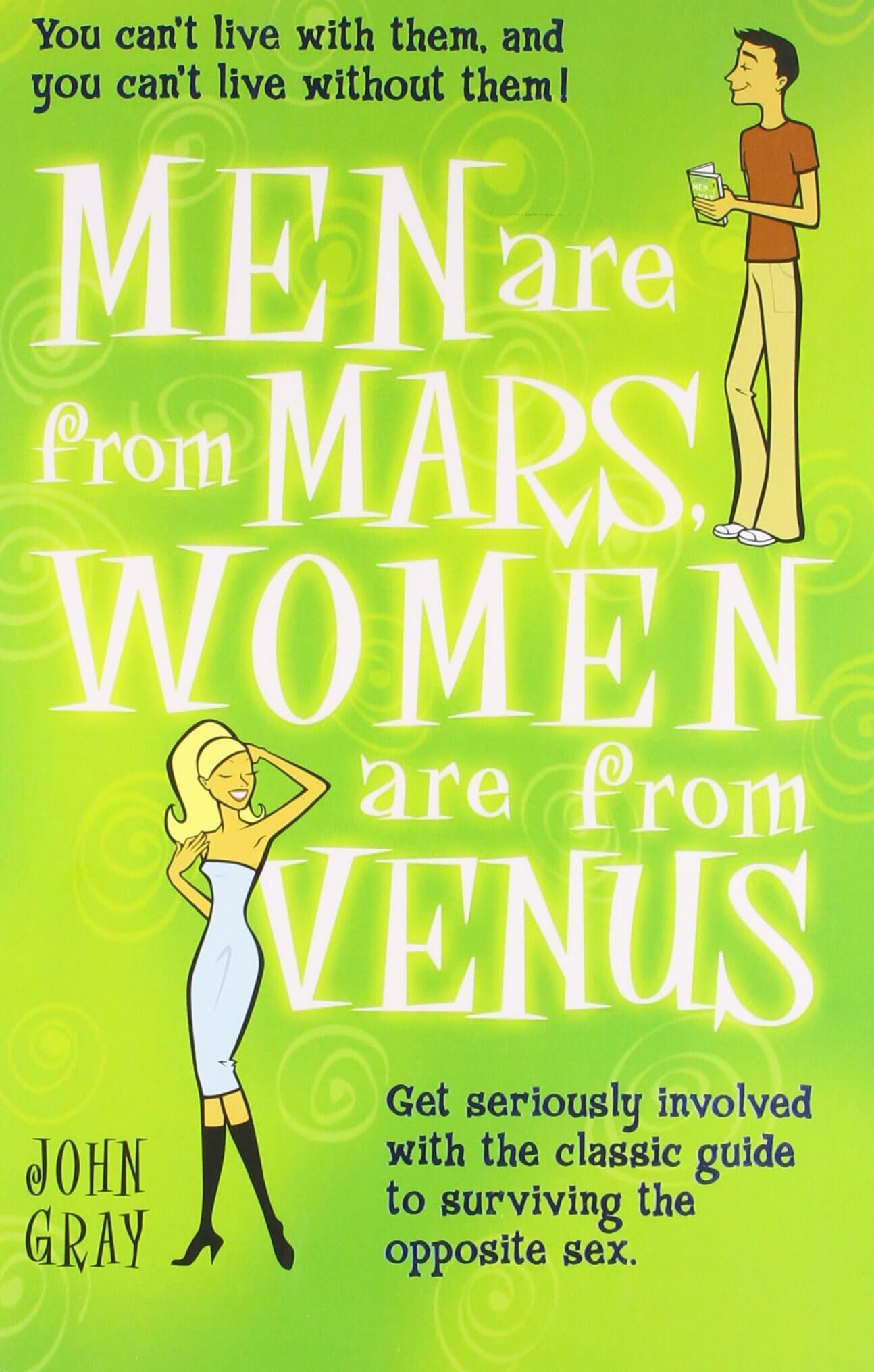


Men Are from Mars, Women Are from Venus by John Gray


Original price was: රු2,000.00.රු1,500.00Current price is: රු1,500.00.
3 X Rs. 500.00 or 8% Cashback with


or 3 X රු500.00 with


or up to 4 X රු375.00 with


Men Are from Mars Women Are from Venus by John Gray is one of the world’s best-known relationship books, offering practical ideas about communication, emotional needs, misunderstandings, intimacy and how couples can respond to differences more constructively.
Why can two people love each other deeply and still misunderstand each other?
Why does one partner want to talk about a problem while the other wants space?
Why can advice that seems helpful to one person feel dismissive to another?
Why do small disagreements sometimes grow into much larger conflicts?
John Gray uses the famous metaphor that men are from Mars and women are from Venus to explain patterns he observed in romantic relationships.
The central idea is simple:
Partners may sometimes communicate differently, react to stress differently and look for different kinds of emotional support.
If those differences are misunderstood, both people may feel:
Ignored.
Unappreciated.
Criticized.
Rejected.
Unloved.
But if couples become more aware of each other’s needs, they may communicate with greater patience and empathy.
Men Are from Mars Women Are from Venus by John Gray discusses topics including:
Communication.
Listening.
Stress.
Emotional support.
Intimacy.
Conflict.
Appreciation.
Love.
Romantic relationships.
Giving and receiving support.
It is important to read the book with some modern perspective.
Gray often describes men and women in broad categories, and not every person will fit those patterns.
Personality, culture, upbringing, attachment, individual experience and relationship dynamics can matter more than gender.
The book is therefore best approached as a collection of relationship metaphors and communication ideas rather than as a scientific rulebook defining how every man or woman behaves.
Men Are from Mars Women Are from Venus by John Gray – Book Overview
Men Are from Mars Women Are from Venus by John Gray uses an imaginative metaphor.
Imagine men originally came from Mars.
Women came from Venus.
At first, they understood that they were different.
They expected different habits.
Different communication styles.
Different emotional reactions.
Then they came to Earth and forgot that they were different.
Now each person expects the other to think and respond exactly as they do.
That, Gray argues, creates unnecessary frustration.
The book attempts to help couples replace:
“Why can’t you behave like me?”
with:
“How does my partner experience this situation?”
That change in perspective can improve communication.
The Mars and Venus Metaphor
The title should not be taken literally.
Mars and Venus are metaphors for perceived differences in communication and emotional behavior.
Gray’s argument is that couples often make a common mistake:
They give their partner what they themselves would want.
But the partner may want something different.
For example:
One person wants advice.
Another wants listening.
One wants space.
Another wants reassurance.
Neither response is automatically wrong.
The problem appears when each person assumes their own preference is universal.
Understanding Before Judging
One useful lesson from Men Are from Mars Women Are from Venus by John Gray is to become curious before becoming angry.
Instead of immediately thinking:
“They don’t care about me.”
ask:
“Could they be responding differently from what I expected?”
Understanding does not excuse disrespectful behavior.
But it can prevent harmless differences from becoming unnecessary conflict.
Communication
Communication is the heart of the book.
Couples do not struggle only because they disagree.
They often struggle because they interpret the same conversation differently.
One person thinks:
“I am helping.”
The other thinks:
“You are not listening.”
One thinks:
“I need space.”
The other thinks:
“You are abandoning me.”
Words carry emotional meaning.
Listening
Listening is different from waiting for your turn to speak.
Good listening involves trying to understand:
What happened?
How does my partner feel?
What do they need from me right now?
Sometimes the answer is not advice.
Sometimes it is simply:
Attention.
Understanding.
Validation.
Advice Versus Empathy
Imagine someone says:
“I had such a terrible day at work.”
A partner may immediately respond:
“You should speak to your manager.”
“Why don’t you change jobs?”
“You need to stop worrying about it.”
These suggestions may be practical.
But perhaps the person first wants:
“I understand.”
“That sounds exhausting.”
“Tell me what happened.”
Problem-solving is useful.
Timing matters.
The Need to Feel Heard
Many disagreements become worse because people do not feel heard.
They repeat themselves.
Speak louder.
Become emotional.
Not because the original message was complicated.
But because they feel the other person has not understood its importance.
A useful habit is to reflect back what you heard before defending yourself.
Responding to Stress
Gray describes different patterns people may show under stress.
One person may withdraw.
Another may seek conversation and closeness.
These opposite responses can create tension.
The person seeking space feels pressured.
The person seeking connection feels rejected.
Understanding the pattern can reduce panic.
The Cave Metaphor
One of the book’s best-known concepts is the cave.
Gray describes how some men may withdraw when stressed in order to think privately and solve problems.
This withdrawal may not necessarily mean:
Loss of love.
Rejection.
Anger.
Sometimes it simply means:
“I need time to process.”
The metaphor can also apply to anyone who tends to process stress privately, regardless of gender.
Give Space Without Disappearing
Healthy space requires communication.
Instead of silently disappearing, a partner can say:
“I am stressed and need an hour to think. I care about you, and we can talk afterward.”
That provides both:
Space.
And reassurance.
Talking Through Problems
Other people process emotions by talking.
Speaking helps them:
Organize thoughts.
Release stress.
Understand feelings.
Feel connected.
A quiet partner may mistakenly believe every problem mentioned requires an immediate solution.
Sometimes the conversation itself is part of the solution.
Emotional Support
Men Are from Mars Women Are from Venus by John Gray emphasizes that emotional support should be adapted to the person receiving it.
Ask:
“What would help you right now?”
This simple question can prevent many misunderstandings.
The answer may be:
Advice.
Listening.
A hug.
Space.
Practical help.
Reassurance.
Appreciation
People often notice what is missing more quickly than what is present.
The dishes were not done.
A message came late.
Something was forgotten.
But relationships also depend on noticing effort.
Thank you.
I appreciate that.
That helped me.
I noticed what you did.
Small acknowledgments can strengthen connection.
Do Not Assume Your Partner Knows
You may think:
“They already know I appreciate them.”
Perhaps.
But hearing appreciation still matters.
Unspoken gratitude cannot always create the same emotional effect as expressed gratitude.
Small Acts of Love
One of Gray’s recurring ideas is that small gestures can matter greatly.
A thoughtful message.
Helping with something.
Remembering an important detail.
Listening carefully.
Making time.
Expressing affection.
Relationships are often built through repeated small actions rather than rare dramatic gestures.
Love Is Not a One-Time Achievement
Getting into a relationship does not guarantee that connection will remain strong automatically.
Relationships require maintenance.
People change.
Circumstances change.
Stress changes.
Responsibilities change.
Couples need to keep learning about one another.
Expectations
Many conflicts begin with unspoken expectations.
One partner expects:
You should know what I need.
The other has no idea.
Then disappointment appears.
Clear communication is usually more effective than expecting mind-reading.
Ask Clearly for What You Need
Instead of:
“You never help.”
try:
“Could you handle dinner tonight?”
Instead of:
“You don’t care.”
try:
“I’ve been feeling disconnected. Can we spend some time together tonight?”
Specific requests give the other person something they can respond to.
Criticism
Constant criticism damages relationships.
When every conversation becomes:
You always…
You never…
Why can’t you…
people become defensive.
Defensiveness makes listening harder.
Complain About Behavior, Not Character
There is a difference between:
“You forgot to call.”
and:
“You are selfish.”
The first describes an event.
The second attacks identity.
Discussing specific behavior usually creates a better chance of solving the problem.
Conflict
Conflict itself does not automatically mean a relationship is unhealthy.
Two people will eventually disagree.
The important question is how they handle disagreement.
Healthy conflict can involve:
Listening.
Respect.
Boundaries.
Honesty.
Compromise.
Unhealthy conflict may involve:
Humiliation.
Threats.
Manipulation.
Contempt.
Violence.
Do Not Try to Win Every Argument
A relationship is not a courtroom where one person must defeat the other.
You can win an argument and damage the relationship.
Ask:
What is the real goal?
To prove I am right?
Or to understand each other and solve the problem?
Timing Matters
A serious conversation may fail simply because the timing is bad.
Someone is:
Exhausted.
Hungry.
Late for work.
Overwhelmed.
Angry.
Sometimes the mature decision is:
“This matters. Let’s talk when we can both focus.”
Emotional Escalation
Once emotions become extremely intense, people may say things they later regret.
A short break can help.
But the break should include a commitment to return to the discussion.
Otherwise, space can feel like avoidance.
Love and Differences
A central idea in Men Are from Mars Women Are from Venus by John Gray is that loving someone does not mean they will become exactly like you.
They may have different:
Interests.
Emotional responses.
Communication habits.
Needs for social interaction.
Ways of showing affection.
Healthy relationships make room for difference.
Acceptance
Acceptance does not mean tolerating harmful behavior.
It means recognizing that your partner is a separate person.
They are not a project you must completely redesign.
Stop Trying to Fix Everything
People sometimes approach relationships like engineering problems.
Partner unhappy?
Fix it.
Partner worried?
Solve it.
But human emotions are not always problems requiring immediate repair.
Sometimes being present is enough.
Validation
Validation means recognizing another person’s emotional experience.
You can validate feelings without agreeing with every interpretation.
For example:
“I understand why that upset you.”
does not necessarily mean:
“You are completely right about everything.”
It means:
Your emotional experience matters to me.
Romantic Needs
Gray describes different emotional needs that partners may prioritize.
Although his categories are gendered, modern readers can use a more flexible approach.
Different people may strongly value:
Trust.
Care.
Respect.
Understanding.
Appreciation.
Devotion.
Reassurance.
Encouragement.
Acceptance.
The useful question is not:
“What should a man or woman need?”
It is:
“What does my partner need?”
Learn Your Partner
Relationships improve when people study each other with kindness.
What makes them feel appreciated?
What causes stress?
How do they react when overwhelmed?
How do they prefer affection?
What helps them feel safe?
There is no universal formula.
Love Languages and Individual Differences
Although Men Are from Mars, Women Are from Venus predates many later popular relationship frameworks, readers may recognize a similar principle:
People experience care differently.
One person values words.
Another values time.
Another values practical help.
Another values physical affection.
Pay attention to the individual.
Emotional Cycles
The book discusses how feelings of closeness can fluctuate.
Sometimes people feel deeply connected.
Other times they may want more independence.
This does not automatically mean the relationship is ending.
Long-term intimacy naturally contains rhythms.
Do Not Panic at Every Change
One difficult day does not define the relationship.
One argument does not mean everything is broken.
Look for patterns rather than interpreting every emotional change as permanent.
Resentment
Resentment grows when small frustrations accumulate without communication.
One person keeps giving.
They say nothing.
Eventually they explode.
Healthy communication addresses issues earlier.
Keeping Score
Relationships can become unhealthy when every act becomes a transaction.
“I did this, so you owe me that.”
Fairness matters.
But constant scorekeeping can reduce generosity.
Reciprocity
Healthy relationships still require mutual effort.
One person cannot indefinitely carry all the:
Communication.
Household work.
Emotional support.
Financial responsibility.
Parenting.
Relationship maintenance.
Mutuality matters.
Responsibility
Each partner should take responsibility for their own behavior.
Relationship books should not become tools for blaming:
“All men are like this.”
“All women do that.”
Generalizations cannot replace personal accountability.
Apologies
A good apology can repair connection.
It should not be:
“Sorry you were offended.”
A stronger apology acknowledges:
What happened.
Why it caused harm.
What you will do differently.
Forgiveness
Long-term relationships involve mistakes.
Forgiveness can be important.
But forgiveness is different from repeatedly accepting the same harmful pattern without change.
Real repair requires:
Acknowledgment.
Responsibility.
Improvement.
Trust
Trust grows through consistency.
Do what you say.
Keep promises.
Communicate honestly.
Respect boundaries.
One grand gesture cannot always compensate for repeated unreliability.
Intimacy
Emotional intimacy develops when partners feel safe enough to be:
Honest.
Vulnerable.
Imperfect.
Afraid.
Hopeful.
They do not need to perform perfection around each other.
Vulnerability
Vulnerability carries risk.
When you tell someone what hurts, you give them information that could be used against you.
Healthy relationships protect vulnerability rather than punish it.
Romance
The book also encourages couples not to stop expressing affection once a relationship becomes established.
Romance can become lost inside:
Work.
Bills.
Children.
Responsibilities.
Routine.
Connection often needs intentional time.
Quality Time
You do not necessarily need expensive experiences.
A meaningful conversation.
A walk.
A meal without phones.
Shared laughter.
These can strengthen relationships.
Long-Term Relationships
The challenges of long-term relationships change over time.
Early attraction may be easy.
Later couples must navigate:
Careers.
Money.
Children.
Family.
Health.
Stress.
Aging.
Relationships need flexibility.
Communication During Change
What worked five years ago may not work today.
Ask regularly:
How are we doing?
What do you need?
What has changed?
What should we improve?
Strong relationships keep updating.
Men and Women Are Individuals
A modern reading of Men Are from Mars Women Are from Venus by John Gray should emphasize individual differences.
Not every man:
Withdraws.
Avoids emotional discussion.
Prefers problem-solving.
Not every woman:
Processes emotions verbally.
Needs the same forms of reassurance.
Human personality is more complex than binary categories.
Gender Stereotypes
Some readers may find parts of the book dated because it often describes men and women using broad stereotypes.
This is an important limitation.
Research on relationships generally suggests substantial individual overlap between genders.
Culture, personality, attachment style, upbringing and circumstances all influence communication.
How to Read the Book Today
Instead of treating every statement as:
“Men always do this.”
or:
“Women always need that.”
translate the lesson into:
“Some people respond this way. Does my partner?”
That makes the material more practical and less restrictive.
Attachment and Relationship Patterns
Modern relationship psychology also examines attachment patterns.
Some people seek closeness when stressed.
Others withdraw.
These differences can occur in people of any gender.
This provides another useful lens for ideas discussed in the book.
Relationships Require Curiosity
One of the strongest principles readers can take from Men Are from Mars Women Are from Venus by John Gray is curiosity.
Instead of assuming:
“I know exactly why you did that.”
ask:
“What was happening for you?”
Assumptions create stories.
Questions create information.
Emotional Intelligence
The book overlaps with emotional intelligence.
Emotional intelligence involves:
Recognizing your emotions.
Understanding your reactions.
Reading other people’s emotions.
Communicating effectively.
Regulating impulsive behavior.
These skills improve relationships.
Self-Awareness
Before demanding that a partner change, examine yourself.
What triggers you?
What are you afraid of?
What expectations are you bringing?
Are you communicating clearly?
Relationships reveal our own emotional patterns.
Personal Responsibility
Your partner can influence how you feel.
But they cannot be responsible for managing your entire emotional life.
Healthy relationships involve two people taking responsibility for themselves while also caring about each other.
Boundaries
Understanding does not mean unlimited tolerance.
Healthy boundaries are necessary.
A relationship book should never be used to justify:
Abuse.
Coercive control.
Threats.
Violence.
Repeated humiliation.
Manipulation.
Safety comes first.
Relationship Abuse Is Not a Communication Difference
If a relationship includes abuse, the issue is not simply that one person is from “Mars” and another from “Venus.”
Abuse requires a different response involving safety, boundaries and professional support where appropriate.
John Gray
John Gray is an American relationship counselor and author best known for Men Are from Mars, Women Are from Venus.
The enormous popularity of the book led to additional Mars and Venus titles exploring:
Relationships.
Dating.
Communication.
Family.
Emotional needs.
Its central metaphor became part of popular culture.
Why the Book Became So Popular
The title itself captures a common relationship experience:
Sometimes your partner seems to come from another planet.
People recognized their own frustrations in the examples.
The book gave readers language for discussing differences that previously felt confusing.
Cultural Influence
Men Are from Mars, Women Are from Venus became one of the most famous relationship books of its era.
Its title became shorthand for communication differences between men and women.
Even people who have never read the book often recognize the phrase.
Is Men Are from Mars Women Are from Venus a Psychology Book?
It is best categorized as:
Relationships.
Self-help.
Personal development.
Communication.
It draws on Gray’s counseling experience and relationship framework but should not be treated as a modern academic psychology textbook.
Is It a Marriage Book?
Yes, it is highly relevant to marriage.
But the communication ideas can also apply to:
Dating.
Long-term partnerships.
Couples considering marriage.
Is It Only for Married Couples?
No.
People in newer relationships can use the book to recognize communication patterns before they become larger conflicts.
Single readers may also find it useful for understanding past relationships and their own needs.
Is It Easy to Read?
Yes.
The book is written in accessible language and uses memorable metaphors rather than highly technical psychological terminology.
This contributed strongly to its international popularity.
Is It Still Worth Reading?
It can still be useful, especially for readers interested in classic relationship literature.
However, it is best read critically.
Some communication insights remain practical.
Some gender generalizations may feel dated or overly broad.
Readers can keep the useful ideas while rejecting assumptions that do not fit their own relationships.
Is the Book Scientifically Proven?
The Mars-and-Venus framework should not be treated as a scientifically established model proving that all men and women communicate in fundamentally opposite ways.
The book is popular relationship advice, not a comprehensive scientific theory of gender psychology.
Its practical value depends on whether particular ideas help individuals communicate more effectively.
Important Themes
Men Are from Mars Women Are from Venus by John Gray explores themes including:
- Communication
- Romantic relationships
- Marriage
- Listening
- Emotional support
- Stress
- Conflict
- Appreciation
- Trust
- Intimacy
- Relationship differences
- Expectations
- Understanding
- Empathy
- Giving space
- Expressing needs
- Love
- Forgiveness
- Emotional intelligence
- Long-term relationships
Content Considerations
Readers should be aware that the book:
- Uses broad gender generalizations
- Was written within an earlier cultural context
- Often presents heterosexual relationship examples
- May not reflect every modern understanding of gender or relationships
- Should not be used to justify harmful behavior
- Is a relationship self-help book rather than an academic psychology textbook
Readers may find the book most useful when treating its categories as flexible metaphors rather than rigid truths about every man and woman.
7 Powerful Relationship Lessons From Men Are from Mars Women Are from Venus by John Gray
There are many ideas in Men Are from Mars Women Are from Venus by John Gray, but seven stand out:
- Do not assume your partner thinks exactly like you – Different people may need different forms of support, communication and reassurance.
- Listen before immediately trying to solve the problem – Sometimes a partner needs understanding and empathy before advice.
- Communicate your needs clearly – Expecting someone to read your mind creates unnecessary disappointment.
- Respect different ways of processing stress – One person may want conversation while another may temporarily need space.
- Express appreciation regularly – Small acknowledgments of effort can help partners feel valued and connected.
- Focus on understanding instead of winning arguments – A successful relationship requires cooperation, not constantly proving who is right.
- Treat the individual as more important than the stereotype – The most useful modern lesson is learning how your actual partner communicates rather than assuming every man or woman fits the same pattern.
Why Read Men Are from Mars Women Are from Venus by John Gray?
Men Are from Mars Women Are from Venus by John Gray is an excellent choice for readers interested in:
- Relationship books
- Marriage advice
- Couples communication
- John Gray
- Love and relationships
- Emotional intelligence
- Conflict resolution
- Listening skills
- Understanding your partner
- Romantic relationships
- Relationship psychology
- Communication differences
- Marriage communication
- Intimacy
- Self-help
- Personal development
- Dating advice
- Building trust
- Long-term relationships
- Classic relationship books
It is especially suitable for readers who want an accessible introduction to understanding why partners sometimes react differently to the same situation.
Who Should Read This Book?
Men Are from Mars Women Are from Venus by John Gray may especially appeal to:
- Married couples
- People in long-term relationships
- Dating couples
- Readers interested in relationship communication
- Couples experiencing repeated misunderstandings
- Personal-development readers
- Readers interested in emotional intelligence
- People trying to communicate more clearly
- Readers exploring differences in emotional needs
- Couples wanting to strengthen intimacy
- Fans of classic self-help books
- Anyone curious about one of the world’s best-known relationship books
Men Are from Mars Women Are from Venus by John Gray – Learn Your Partner Instead of Assuming
Men Are from Mars Women Are from Venus by John Gray became famous because its central metaphor is instantly understandable.
Sometimes the person you love seems to speak a completely different language.
You say something supportive.
They hear criticism.
You give space.
They feel abandoned.
You offer advice.
They wanted empathy.
They begin talking.
You think they are asking for a solution.
Neither person necessarily intends harm.
The problem may simply be that each person is giving the kind of response they themselves would prefer.
That is where curiosity becomes powerful.
Instead of asking:
“Why are you not more like me?”
ask:
“What helps you feel understood?”
The answer may surprise you.
Some people need conversation.
Some need quiet.
Some need reassurance.
Some want practical solutions.
Some need affection.
Some value independence.
And those patterns cannot always be predicted from gender alone.
That is why the most useful modern reading of the book is not:
“All men come from Mars and all women come from Venus.”
It is:
Two people can experience the same relationship differently. Learn the person you love.
Listen.
Ask questions.
Express your needs.
Show appreciation.
Give space when appropriate.
Return to difficult conversations.
Avoid turning disagreement into personal attack.
And remember that the goal is not to eliminate every difference.
The goal is to understand each other well enough that those differences do not automatically become distance.
For readers interested in relationship communication, marriage, emotional intelligence and better understanding between partners, Men Are from Mars Women Are from Venus by John Gray remains an influential and accessible relationship classic—especially when its memorable ideas are combined with a flexible, individual-centered understanding of modern relationships.
Out of stock
Email when stock available
Men Are from Mars Women Are from Venus by John Gray is one of the world’s best-known relationship books, offering practical ideas about communication, emotional needs, misunderstandings, intimacy and how couples can respond to differences more constructively.
Why can two people love each other deeply and still misunderstand each other?
Why does one partner want to talk about a problem while the other wants space?
Why can advice that seems helpful to one person feel dismissive to another?
Why do small disagreements sometimes grow into much larger conflicts?
John Gray uses the famous metaphor that men are from Mars and women are from Venus to explain patterns he observed in romantic relationships.
The central idea is simple:
Partners may sometimes communicate differently, react to stress differently and look for different kinds of emotional support.
If those differences are misunderstood, both people may feel:
Ignored.
Unappreciated.
Criticized.
Rejected.
Unloved.
But if couples become more aware of each other’s needs, they may communicate with greater patience and empathy.
Men Are from Mars Women Are from Venus by John Gray discusses topics including:
Communication.
Listening.
Stress.
Emotional support.
Intimacy.
Conflict.
Appreciation.
Love.
Romantic relationships.
Giving and receiving support.
It is important to read the book with some modern perspective.
Gray often describes men and women in broad categories, and not every person will fit those patterns.
Personality, culture, upbringing, attachment, individual experience and relationship dynamics can matter more than gender.
The book is therefore best approached as a collection of relationship metaphors and communication ideas rather than as a scientific rulebook defining how every man or woman behaves.
Men Are from Mars Women Are from Venus by John Gray – Book Overview
Men Are from Mars Women Are from Venus by John Gray uses an imaginative metaphor.
Imagine men originally came from Mars.
Women came from Venus.
At first, they understood that they were different.
They expected different habits.
Different communication styles.
Different emotional reactions.
Then they came to Earth and forgot that they were different.
Now each person expects the other to think and respond exactly as they do.
That, Gray argues, creates unnecessary frustration.
The book attempts to help couples replace:
“Why can’t you behave like me?”
with:
“How does my partner experience this situation?”
That change in perspective can improve communication.
The Mars and Venus Metaphor
The title should not be taken literally.
Mars and Venus are metaphors for perceived differences in communication and emotional behavior.
Gray’s argument is that couples often make a common mistake:
They give their partner what they themselves would want.
But the partner may want something different.
For example:
One person wants advice.
Another wants listening.
One wants space.
Another wants reassurance.
Neither response is automatically wrong.
The problem appears when each person assumes their own preference is universal.
Understanding Before Judging
One useful lesson from Men Are from Mars Women Are from Venus by John Gray is to become curious before becoming angry.
Instead of immediately thinking:
“They don’t care about me.”
ask:
“Could they be responding differently from what I expected?”
Understanding does not excuse disrespectful behavior.
But it can prevent harmless differences from becoming unnecessary conflict.
Communication
Communication is the heart of the book.
Couples do not struggle only because they disagree.
They often struggle because they interpret the same conversation differently.
One person thinks:
“I am helping.”
The other thinks:
“You are not listening.”
One thinks:
“I need space.”
The other thinks:
“You are abandoning me.”
Words carry emotional meaning.
Listening
Listening is different from waiting for your turn to speak.
Good listening involves trying to understand:
What happened?
How does my partner feel?
What do they need from me right now?
Sometimes the answer is not advice.
Sometimes it is simply:
Attention.
Understanding.
Validation.
Advice Versus Empathy
Imagine someone says:
“I had such a terrible day at work.”
A partner may immediately respond:
“You should speak to your manager.”
“Why don’t you change jobs?”
“You need to stop worrying about it.”
These suggestions may be practical.
But perhaps the person first wants:
“I understand.”
“That sounds exhausting.”
“Tell me what happened.”
Problem-solving is useful.
Timing matters.
The Need to Feel Heard
Many disagreements become worse because people do not feel heard.
They repeat themselves.
Speak louder.
Become emotional.
Not because the original message was complicated.
But because they feel the other person has not understood its importance.
A useful habit is to reflect back what you heard before defending yourself.
Responding to Stress
Gray describes different patterns people may show under stress.
One person may withdraw.
Another may seek conversation and closeness.
These opposite responses can create tension.
The person seeking space feels pressured.
The person seeking connection feels rejected.
Understanding the pattern can reduce panic.
The Cave Metaphor
One of the book’s best-known concepts is the cave.
Gray describes how some men may withdraw when stressed in order to think privately and solve problems.
This withdrawal may not necessarily mean:
Loss of love.
Rejection.
Anger.
Sometimes it simply means:
“I need time to process.”
The metaphor can also apply to anyone who tends to process stress privately, regardless of gender.
Give Space Without Disappearing
Healthy space requires communication.
Instead of silently disappearing, a partner can say:
“I am stressed and need an hour to think. I care about you, and we can talk afterward.”
That provides both:
Space.
And reassurance.
Talking Through Problems
Other people process emotions by talking.
Speaking helps them:
Organize thoughts.
Release stress.
Understand feelings.
Feel connected.
A quiet partner may mistakenly believe every problem mentioned requires an immediate solution.
Sometimes the conversation itself is part of the solution.
Emotional Support
Men Are from Mars Women Are from Venus by John Gray emphasizes that emotional support should be adapted to the person receiving it.
Ask:
“What would help you right now?”
This simple question can prevent many misunderstandings.
The answer may be:
Advice.
Listening.
A hug.
Space.
Practical help.
Reassurance.
Appreciation
People often notice what is missing more quickly than what is present.
The dishes were not done.
A message came late.
Something was forgotten.
But relationships also depend on noticing effort.
Thank you.
I appreciate that.
That helped me.
I noticed what you did.
Small acknowledgments can strengthen connection.
Do Not Assume Your Partner Knows
You may think:
“They already know I appreciate them.”
Perhaps.
But hearing appreciation still matters.
Unspoken gratitude cannot always create the same emotional effect as expressed gratitude.
Small Acts of Love
One of Gray’s recurring ideas is that small gestures can matter greatly.
A thoughtful message.
Helping with something.
Remembering an important detail.
Listening carefully.
Making time.
Expressing affection.
Relationships are often built through repeated small actions rather than rare dramatic gestures.
Love Is Not a One-Time Achievement
Getting into a relationship does not guarantee that connection will remain strong automatically.
Relationships require maintenance.
People change.
Circumstances change.
Stress changes.
Responsibilities change.
Couples need to keep learning about one another.
Expectations
Many conflicts begin with unspoken expectations.
One partner expects:
You should know what I need.
The other has no idea.
Then disappointment appears.
Clear communication is usually more effective than expecting mind-reading.
Ask Clearly for What You Need
Instead of:
“You never help.”
try:
“Could you handle dinner tonight?”
Instead of:
“You don’t care.”
try:
“I’ve been feeling disconnected. Can we spend some time together tonight?”
Specific requests give the other person something they can respond to.
Criticism
Constant criticism damages relationships.
When every conversation becomes:
You always…
You never…
Why can’t you…
people become defensive.
Defensiveness makes listening harder.
Complain About Behavior, Not Character
There is a difference between:
“You forgot to call.”
and:
“You are selfish.”
The first describes an event.
The second attacks identity.
Discussing specific behavior usually creates a better chance of solving the problem.
Conflict
Conflict itself does not automatically mean a relationship is unhealthy.
Two people will eventually disagree.
The important question is how they handle disagreement.
Healthy conflict can involve:
Listening.
Respect.
Boundaries.
Honesty.
Compromise.
Unhealthy conflict may involve:
Humiliation.
Threats.
Manipulation.
Contempt.
Violence.
Do Not Try to Win Every Argument
A relationship is not a courtroom where one person must defeat the other.
You can win an argument and damage the relationship.
Ask:
What is the real goal?
To prove I am right?
Or to understand each other and solve the problem?
Timing Matters
A serious conversation may fail simply because the timing is bad.
Someone is:
Exhausted.
Hungry.
Late for work.
Overwhelmed.
Angry.
Sometimes the mature decision is:
“This matters. Let’s talk when we can both focus.”
Emotional Escalation
Once emotions become extremely intense, people may say things they later regret.
A short break can help.
But the break should include a commitment to return to the discussion.
Otherwise, space can feel like avoidance.
Love and Differences
A central idea in Men Are from Mars Women Are from Venus by John Gray is that loving someone does not mean they will become exactly like you.
They may have different:
Interests.
Emotional responses.
Communication habits.
Needs for social interaction.
Ways of showing affection.
Healthy relationships make room for difference.
Acceptance
Acceptance does not mean tolerating harmful behavior.
It means recognizing that your partner is a separate person.
They are not a project you must completely redesign.
Stop Trying to Fix Everything
People sometimes approach relationships like engineering problems.
Partner unhappy?
Fix it.
Partner worried?
Solve it.
But human emotions are not always problems requiring immediate repair.
Sometimes being present is enough.
Validation
Validation means recognizing another person’s emotional experience.
You can validate feelings without agreeing with every interpretation.
For example:
“I understand why that upset you.”
does not necessarily mean:
“You are completely right about everything.”
It means:
Your emotional experience matters to me.
Romantic Needs
Gray describes different emotional needs that partners may prioritize.
Although his categories are gendered, modern readers can use a more flexible approach.
Different people may strongly value:
Trust.
Care.
Respect.
Understanding.
Appreciation.
Devotion.
Reassurance.
Encouragement.
Acceptance.
The useful question is not:
“What should a man or woman need?”
It is:
“What does my partner need?”
Learn Your Partner
Relationships improve when people study each other with kindness.
What makes them feel appreciated?
What causes stress?
How do they react when overwhelmed?
How do they prefer affection?
What helps them feel safe?
There is no universal formula.
Love Languages and Individual Differences
Although Men Are from Mars, Women Are from Venus predates many later popular relationship frameworks, readers may recognize a similar principle:
People experience care differently.
One person values words.
Another values time.
Another values practical help.
Another values physical affection.
Pay attention to the individual.
Emotional Cycles
The book discusses how feelings of closeness can fluctuate.
Sometimes people feel deeply connected.
Other times they may want more independence.
This does not automatically mean the relationship is ending.
Long-term intimacy naturally contains rhythms.
Do Not Panic at Every Change
One difficult day does not define the relationship.
One argument does not mean everything is broken.
Look for patterns rather than interpreting every emotional change as permanent.
Resentment
Resentment grows when small frustrations accumulate without communication.
One person keeps giving.
They say nothing.
Eventually they explode.
Healthy communication addresses issues earlier.
Keeping Score
Relationships can become unhealthy when every act becomes a transaction.
“I did this, so you owe me that.”
Fairness matters.
But constant scorekeeping can reduce generosity.
Reciprocity
Healthy relationships still require mutual effort.
One person cannot indefinitely carry all the:
Communication.
Household work.
Emotional support.
Financial responsibility.
Parenting.
Relationship maintenance.
Mutuality matters.
Responsibility
Each partner should take responsibility for their own behavior.
Relationship books should not become tools for blaming:
“All men are like this.”
“All women do that.”
Generalizations cannot replace personal accountability.
Apologies
A good apology can repair connection.
It should not be:
“Sorry you were offended.”
A stronger apology acknowledges:
What happened.
Why it caused harm.
What you will do differently.
Forgiveness
Long-term relationships involve mistakes.
Forgiveness can be important.
But forgiveness is different from repeatedly accepting the same harmful pattern without change.
Real repair requires:
Acknowledgment.
Responsibility.
Improvement.
Trust
Trust grows through consistency.
Do what you say.
Keep promises.
Communicate honestly.
Respect boundaries.
One grand gesture cannot always compensate for repeated unreliability.
Intimacy
Emotional intimacy develops when partners feel safe enough to be:
Honest.
Vulnerable.
Imperfect.
Afraid.
Hopeful.
They do not need to perform perfection around each other.
Vulnerability
Vulnerability carries risk.
When you tell someone what hurts, you give them information that could be used against you.
Healthy relationships protect vulnerability rather than punish it.
Romance
The book also encourages couples not to stop expressing affection once a relationship becomes established.
Romance can become lost inside:
Work.
Bills.
Children.
Responsibilities.
Routine.
Connection often needs intentional time.
Quality Time
You do not necessarily need expensive experiences.
A meaningful conversation.
A walk.
A meal without phones.
Shared laughter.
These can strengthen relationships.
Long-Term Relationships
The challenges of long-term relationships change over time.
Early attraction may be easy.
Later couples must navigate:
Careers.
Money.
Children.
Family.
Health.
Stress.
Aging.
Relationships need flexibility.
Communication During Change
What worked five years ago may not work today.
Ask regularly:
How are we doing?
What do you need?
What has changed?
What should we improve?
Strong relationships keep updating.
Men and Women Are Individuals
A modern reading of Men Are from Mars Women Are from Venus by John Gray should emphasize individual differences.
Not every man:
Withdraws.
Avoids emotional discussion.
Prefers problem-solving.
Not every woman:
Processes emotions verbally.
Needs the same forms of reassurance.
Human personality is more complex than binary categories.
Gender Stereotypes
Some readers may find parts of the book dated because it often describes men and women using broad stereotypes.
This is an important limitation.
Research on relationships generally suggests substantial individual overlap between genders.
Culture, personality, attachment style, upbringing and circumstances all influence communication.
Learn more about Men Are from Mars, Women Are from Venus by John Gray on John Gray’s official Mars Venus website.
Explore more relationship and personal development books at Bargain Books.
How to Read the Book Today
Instead of treating every statement as:
“Men always do this.”
or:
“Women always need that.”
translate the lesson into:
“Some people respond this way. Does my partner?”
That makes the material more practical and less restrictive.
Attachment and Relationship Patterns
Modern relationship psychology also examines attachment patterns.
Some people seek closeness when stressed.
Others withdraw.
These differences can occur in people of any gender.
This provides another useful lens for ideas discussed in the book.
Relationships Require Curiosity
One of the strongest principles readers can take from Men Are from Mars Women Are from Venus by John Gray is curiosity.
Instead of assuming:
“I know exactly why you did that.”
ask:
“What was happening for you?”
Assumptions create stories.
Questions create information.
Emotional Intelligence
The book overlaps with emotional intelligence.
Emotional intelligence involves:
Recognizing your emotions.
Understanding your reactions.
Reading other people’s emotions.
Communicating effectively.
Regulating impulsive behavior.
These skills improve relationships.
Self-Awareness
Before demanding that a partner change, examine yourself.
What triggers you?
What are you afraid of?
What expectations are you bringing?
Are you communicating clearly?
Relationships reveal our own emotional patterns.
Personal Responsibility
Your partner can influence how you feel.
But they cannot be responsible for managing your entire emotional life.
Healthy relationships involve two people taking responsibility for themselves while also caring about each other.
Boundaries
Understanding does not mean unlimited tolerance.
Healthy boundaries are necessary.
A relationship book should never be used to justify:
Abuse.
Coercive control.
Threats.
Violence.
Repeated humiliation.
Manipulation.
Safety comes first.
Relationship Abuse Is Not a Communication Difference
If a relationship includes abuse, the issue is not simply that one person is from “Mars” and another from “Venus.”
Abuse requires a different response involving safety, boundaries and professional support where appropriate.
John Gray
John Gray is an American relationship counselor and author best known for Men Are from Mars, Women Are from Venus.
The enormous popularity of the book led to additional Mars and Venus titles exploring:
Relationships.
Dating.
Communication.
Family.
Emotional needs.
Its central metaphor became part of popular culture.
Why the Book Became So Popular
The title itself captures a common relationship experience:
Sometimes your partner seems to come from another planet.
People recognized their own frustrations in the examples.
The book gave readers language for discussing differences that previously felt confusing.
Cultural Influence
Men Are from Mars, Women Are from Venus became one of the most famous relationship books of its era.
Its title became shorthand for communication differences between men and women.
Even people who have never read the book often recognize the phrase.
Is Men Are from Mars Women Are from Venus a Psychology Book?
It is best categorized as:
Relationships.
Self-help.
Personal development.
Communication.
It draws on Gray’s counseling experience and relationship framework but should not be treated as a modern academic psychology textbook.
Is It a Marriage Book?
Yes, it is highly relevant to marriage.
But the communication ideas can also apply to:
Dating.
Long-term partnerships.
Couples considering marriage.
Is It Only for Married Couples?
No.
People in newer relationships can use the book to recognize communication patterns before they become larger conflicts.
Single readers may also find it useful for understanding past relationships and their own needs.
Is It Easy to Read?
Yes.
The book is written in accessible language and uses memorable metaphors rather than highly technical psychological terminology.
This contributed strongly to its international popularity.
Is It Still Worth Reading?
It can still be useful, especially for readers interested in classic relationship literature.
However, it is best read critically.
Some communication insights remain practical.
Some gender generalizations may feel dated or overly broad.
Readers can keep the useful ideas while rejecting assumptions that do not fit their own relationships.
Is the Book Scientifically Proven?
The Mars-and-Venus framework should not be treated as a scientifically established model proving that all men and women communicate in fundamentally opposite ways.
The book is popular relationship advice, not a comprehensive scientific theory of gender psychology.
Its practical value depends on whether particular ideas help individuals communicate more effectively.
Important Themes
Men Are from Mars Women Are from Venus by John Gray explores themes including:
- Communication
- Romantic relationships
- Marriage
- Listening
- Emotional support
- Stress
- Conflict
- Appreciation
- Trust
- Intimacy
- Relationship differences
- Expectations
- Understanding
- Empathy
- Giving space
- Expressing needs
- Love
- Forgiveness
- Emotional intelligence
- Long-term relationships
Content Considerations
Readers should be aware that the book:
- Uses broad gender generalizations
- Was written within an earlier cultural context
- Often presents heterosexual relationship examples
- May not reflect every modern understanding of gender or relationships
- Should not be used to justify harmful behavior
- Is a relationship self-help book rather than an academic psychology textbook
Readers may find the book most useful when treating its categories as flexible metaphors rather than rigid truths about every man and woman.
7 Powerful Relationship Lessons From Men Are from Mars Women Are from Venus by John Gray
There are many ideas in Men Are from Mars Women Are from Venus by John Gray, but seven stand out:
- Do not assume your partner thinks exactly like you – Different people may need different forms of support, communication and reassurance.
- Listen before immediately trying to solve the problem – Sometimes a partner needs understanding and empathy before advice.
- Communicate your needs clearly – Expecting someone to read your mind creates unnecessary disappointment.
- Respect different ways of processing stress – One person may want conversation while another may temporarily need space.
- Express appreciation regularly – Small acknowledgments of effort can help partners feel valued and connected.
- Focus on understanding instead of winning arguments – A successful relationship requires cooperation, not constantly proving who is right.
- Treat the individual as more important than the stereotype – The most useful modern lesson is learning how your actual partner communicates rather than assuming every man or woman fits the same pattern.
Why Read Men Are from Mars Women Are from Venus by John Gray?
Men Are from Mars Women Are from Venus by John Gray is an excellent choice for readers interested in:
- Relationship books
- Marriage advice
- Couples communication
- John Gray
- Love and relationships
- Emotional intelligence
- Conflict resolution
- Listening skills
- Understanding your partner
- Romantic relationships
- Relationship psychology
- Communication differences
- Marriage communication
- Intimacy
- Self-help
- Personal development
- Dating advice
- Building trust
- Long-term relationships
- Classic relationship books
It is especially suitable for readers who want an accessible introduction to understanding why partners sometimes react differently to the same situation.
Who Should Read This Book?
Men Are from Mars Women Are from Venus by John Gray may especially appeal to:
- Married couples
- People in long-term relationships
- Dating couples
- Readers interested in relationship communication
- Couples experiencing repeated misunderstandings
- Personal-development readers
- Readers interested in emotional intelligence
- People trying to communicate more clearly
- Readers exploring differences in emotional needs
- Couples wanting to strengthen intimacy
- Fans of classic self-help books
- Anyone curious about one of the world’s best-known relationship books
Men Are from Mars Women Are from Venus by John Gray – Learn Your Partner Instead of Assuming
Men Are from Mars Women Are from Venus by John Gray became famous because its central metaphor is instantly understandable.
Sometimes the person you love seems to speak a completely different language.
You say something supportive.
They hear criticism.
You give space.
They feel abandoned.
You offer advice.
They wanted empathy.
They begin talking.
You think they are asking for a solution.
Neither person necessarily intends harm.
The problem may simply be that each person is giving the kind of response they themselves would prefer.
That is where curiosity becomes powerful.
Instead of asking:
“Why are you not more like me?”
ask:
“What helps you feel understood?”
The answer may surprise you.
Some people need conversation.
Some need quiet.
Some need reassurance.
Some want practical solutions.
Some need affection.
Some value independence.
And those patterns cannot always be predicted from gender alone.
That is why the most useful modern reading of the book is not:
“All men come from Mars and all women come from Venus.”
It is:
Two people can experience the same relationship differently. Learn the person you love.
Listen.
Ask questions.
Express your needs.
Show appreciation.
Give space when appropriate.
Return to difficult conversations.
Avoid turning disagreement into personal attack.
And remember that the goal is not to eliminate every difference.
The goal is to understand each other well enough that those differences do not automatically become distance.
For readers interested in relationship communication, marriage, emotional intelligence and better understanding between partners, Men Are from Mars Women Are from Venus by John Gray remains an influential and accessible relationship classic—especially when its memorable ideas are combined with a flexible, individual-centered understanding of modern relationships.
Learn more about Men Are from Mars, Women Are from Venus by John Gray on John Gray’s official Mars Venus website.
Explore more relationship and personal development books at Bargain Books.
| Author | John Gray |
|---|---|
| Language | English |
| Type | Paperback Printed Book (Second Quality Copy) |
Be the first to review “Men Are from Mars, Women Are from Venus by John Gray”
Related products

Non-Fiction & Knowledge
රු1,950.00
3 X Rs. 650.00 or 8% Cashback with
or 3 X රු650.00 with
or up to 4 X රු487.50 with
-19%

Out of stock
Biography
Original price was: රු2,400.00.රු1,950.00Current price is: රු1,950.00.
3 X Rs. 650.00 or 8% Cashback with
or 3 X රු650.00 with
or up to 4 X රු487.50 with
Out of stock
Self-Help & Psychology
රු2,200.00
3 X Rs. 733.33 or 8% Cashback with
or 3 X රු733.33 with
or up to 4 X රු550.00 with
-34%

Self-Help & Psychology
Original price was: රු2,350.00.රු1,550.00Current price is: රු1,550.00.
3 X Rs. 516.67 or 8% Cashback with
or 3 X රු516.67 with
or up to 4 X රු387.50 with
Out of stock
Self-Help & Psychology
රු1,900.00
3 X Rs. 633.33 or 8% Cashback with
or 3 X රු633.33 with
or up to 4 X රු475.00 with
-28%

Self-Help & Psychology
Original price was: රු1,800.00.රු1,300.00Current price is: රු1,300.00.
3 X Rs. 433.33 or 8% Cashback with
or 3 X රු433.33 with
or up to 4 X රු325.00 with
-13%
Out of stock
Non-Fiction & Knowledge
Original price was: රු3,900.00.රු3,400.00Current price is: රු3,400.00.
3 X Rs. 1,133.33 or 8% Cashback with
or 3 X රු1,133.33 with
or up to 4 X රු850.00 with
-24%

Out of stock
Non-Fiction & Knowledge
Original price was: රු2,500.00.රු1,900.00Current price is: රු1,900.00.
3 X Rs. 633.33 or 8% Cashback with
or 3 X රු633.33 with
or up to 4 X රු475.00 with
Reviews
There are no reviews yet.