
No products in the cart.
-21%
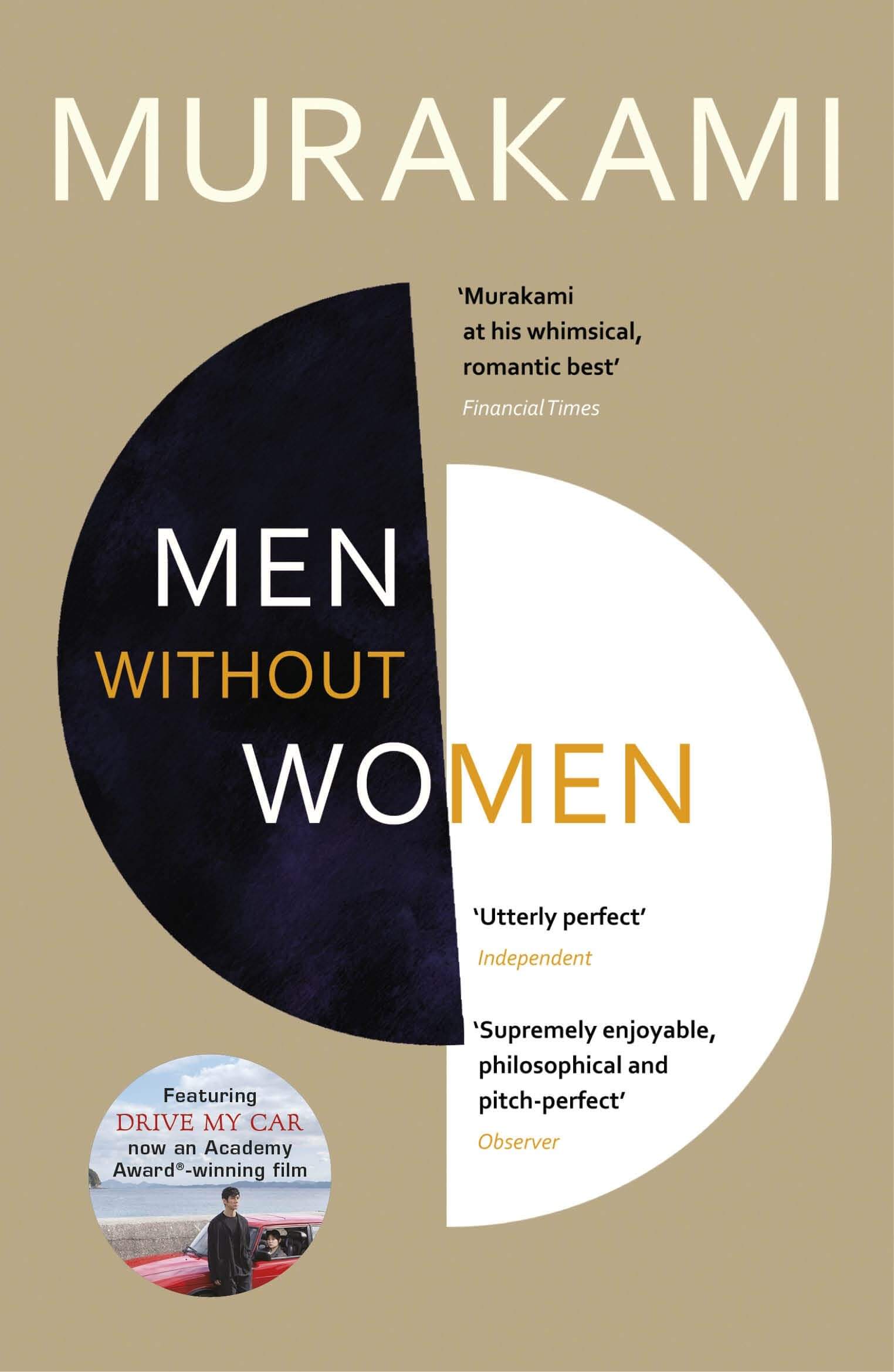
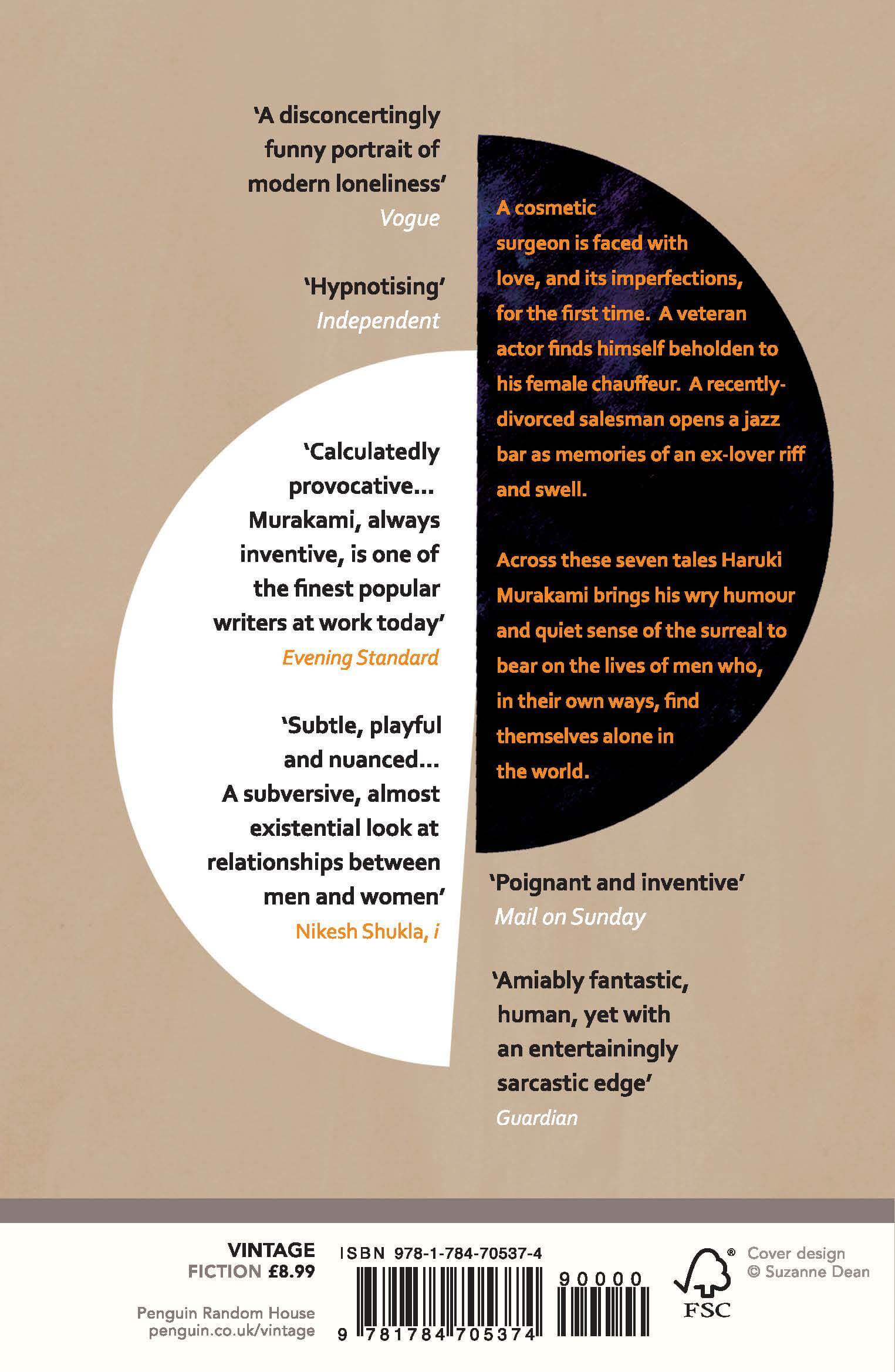


Men without women by Haruki Murakami


Original price was: රු2,400.00.රු1,900.00Current price is: රු1,900.00.
3 X Rs. 633.33 or 8% Cashback with


or 3 X රු633.33 with


or up to 4 X රු475.00 with


Men Without Women by Haruki Murakami is a haunting collection of seven short stories exploring loneliness, love, grief, memory, marriage, betrayal and emotional isolation. Featuring acclaimed stories including Drive My Car, Yesterday, Scheherazade, Kino and the title story, the collection blends intimate relationships with Murakami’s characteristic atmosphere of music, mystery and surrealism. Ideal for readers of Japanese literature, literary fiction and emotionally complex short stories, as well as fans of the award-winning Drive My Car film.
1 in stock
Men Without Women by Haruki Murakami is a haunting collection of seven short stories exploring loneliness, love, memory, grief, desire and the strange emotional spaces left behind when relationships end.
What happens to a person after someone they love disappears from their life?
Sometimes the separation comes through:
Death.
Divorce.
Betrayal.
Distance.
Unrequited love.
Or simply the gradual realization that two people no longer truly know each other.
Haruki Murakami approaches these experiences through seven very different stories.
The men at the center of the collection are not identical.
Some are married.
Some are alone.
Some have loved deeply.
Some have been betrayed.
Some are uncertain whether they ever truly understood the women closest to them.
Yet they share a sense of emotional absence.
The collection includes:
Drive My Car
Yesterday
An Independent Organ
Scheherazade
Kino
Samsa in Love
Men Without Women
Across these stories, Murakami blends ordinary modern life with his characteristic atmosphere of:
Mystery.
Dreamlike moments.
Jazz and music.
Memory.
Silence.
Unexpected conversations.
Emotional distance.
Surreal possibility.
Men Without Women by Haruki Murakami is not simply a book about men who are literally single.
It is about what it means to lose connection.
What remains after love?
How well can we ever know another person?
And what happens when the emotional world we built around someone suddenly disappears?
Men Without Women by Haruki Murakami – Book Overview
Men Without Women by Haruki Murakami brings together seven stories connected by the broad theme of men dealing with emotional separation from women.
The collection is deeply interested in what is missing.
A wife.
A girlfriend.
A former lover.
A woman who cannot be fully understood.
A relationship that has changed beyond repair.
Murakami does not always explain everything.
Instead, he often leaves readers inside uncertainty.
Characters remember.
Wonder.
Drive.
Listen.
Talk.
Wait.
And gradually discover that loneliness is rarely simple.
Seven Stories About Love and Absence
The stories are independent.
You do not need to read them as one continuous narrative.
Each introduces different characters and circumstances.
But taken together, they create a larger emotional portrait.
Love can change someone.
Loss can change someone too.
The collection asks what happens when the person who once occupied the center of your emotional life is no longer there.
Drive My Car
Drive My Car is one of the most famous stories in the collection.
It follows Kafuku, an actor who hires a young woman named Misaki Watari to drive him.
Kafuku is carrying complicated feelings about his late wife.
He knew she had been unfaithful.
But he never completely understood why.
Now she is gone.
There can be no final confrontation.
No complete explanation.
That unresolved uncertainty becomes a major emotional burden.
Kafuku
Kafuku is fascinated by questions he can no longer ask.
Did his wife love him?
Why did she have affairs?
How much of her inner life did he never understand?
His grief is mixed with:
Love.
Jealousy.
Confusion.
Curiosity.
Resentment.
That complexity makes his story deeply human.
Misaki Watari
Misaki becomes Kafuku’s driver.
She is quiet and emotionally guarded.
Their relationship develops gradually through:
Driving.
Silence.
Conversation.
Shared loneliness.
They are not the same person.
They have different histories.
Yet each carries pain that has been difficult to express.
Grief and Conversation
One of the important ideas in Men Without Women by Haruki Murakami is that people sometimes reveal themselves more honestly to strangers than to those closest to them.
There may be less pressure.
Less history.
Less expectation.
A simple conversation can become unexpectedly intimate.
The Drive My Car Film
The story Drive My Car later became the primary inspiration for the acclaimed Japanese film directed by Ryusuke Hamaguchi.
The film also incorporates elements associated with other Murakami stories.
Readers who discovered Murakami through the film may find the original story particularly interesting because it presents the emotional foundations in a much shorter form.
Yesterday
Yesterday explores youth, friendship, identity and romantic uncertainty.
The story centers on unusual relationships between young people who are still discovering:
Who they are.
Who they love.
Who they may become.
The title itself references the famous Beatles song, reinforcing Murakami’s recurring use of music as emotional memory.
Youth and Memory
Young adulthood often feels permanent while it is happening.
Friendships seem permanent.
Relationships seem enormous.
Choices feel final.
Years later, those experiences may survive only as memory.
Murakami is fascinated by the way memory transforms the past.
Becoming Someone Else
People change.
The person you knew at twenty may become almost unrecognizable at forty.
Sometimes relationships end not because anyone committed a terrible wrong but because two people grew in different directions.
That quieter kind of loss can be just as powerful.
An Independent Organ
An Independent Organ follows a successful doctor who has built a life around romantic relationships without wanting deeper emotional commitment.
He believes he understands the rules.
Then he falls deeply in love.
Suddenly the emotional system that once seemed manageable begins to collapse.
Love and Control
People often believe they can control love.
They create rules.
Do not become too attached.
Do not become vulnerable.
Keep emotional distance.
Then someone arrives who makes those rules irrelevant.
This story examines what happens when a person who thought himself emotionally independent discovers dependence.
Identity and Desire
Love can challenge identity.
If you have always believed:
“I am not the kind of person who becomes attached,”
what happens when you do?
The emotional crisis may involve not only another person but your entire understanding of yourself.
Scheherazade
Scheherazade is one of the more mysterious stories in Men Without Women by Haruki Murakami.
A man named Habara lives in unusual isolation.
A woman he calls Scheherazade visits him and tells him stories.
Their relationship combines:
Physical intimacy.
Storytelling.
Memory.
Mystery.
The circumstances of Habara’s isolation remain deliberately unclear.
Storytelling
The name Scheherazade recalls the legendary storyteller of One Thousand and One Nights.
Stories themselves become a form of connection.
Why do humans tell stories?
To entertain?
To survive?
To understand ourselves?
To keep another person close?
Murakami uses storytelling as a bridge between isolation and intimacy.
The Power of an Unfinished Story
An unfinished story creates desire.
You want to know:
What happened next?
This same principle applies to relationships.
Sometimes what remains unresolved stays emotionally powerful precisely because there was never a final answer.
Kino
Kino follows a man whose marriage collapses after he discovers betrayal.
He opens a quiet bar.
The bar becomes an almost suspended world filled with:
Music.
Drinks.
Strangers.
Silence.
Cats.
And increasingly strange events.
Betrayal
Betrayal changes more than trust in another person.
It can change trust in your own judgment.
You may ask:
How did I not know?
What else did I misunderstand?
Was the relationship ever what I thought it was?
These questions appear throughout the collection.
Emotional Numbness
Sometimes people respond to pain not by crying or shouting but by becoming emotionally numb.
They continue:
Working.
Eating.
Sleeping.
Moving.
From outside, they look fine.
Inside, something remains unresolved.
Murakami is especially interested in this quiet form of suffering.
The Surreal
In Kino, ordinary life gradually begins to feel strange.
This is a classic Murakami technique.
Reality remains recognizable.
Then something shifts.
The surreal elements often function like emotional symbols.
What cannot be expressed directly begins appearing indirectly.
Samsa in Love
Samsa in Love is one of the collection’s strangest stories.
Its title and protagonist connect with Franz Kafka’s The Metamorphosis.
Kafka famously begins with Gregor Samsa waking to discover he has transformed into a monstrous insect.
Murakami plays with that literary legacy in an unexpected direction.
Literary Transformation
Murakami frequently engages with other writers, music and cultural references.
Here, Kafka’s fictional world becomes material for a new story.
Readers familiar with The Metamorphosis may especially enjoy the strange reversal and literary playfulness.
Love as Discovery
The story also explores attraction as something mysterious.
Why are we drawn to certain people?
Why can one encounter suddenly make the world feel different?
Love sometimes appears before understanding.
Men Without Women
The title story gives the entire collection its name.
It explores what happens when a man receives unexpected news about a woman from his past.
The event opens memories and creates reflections about what it means to become one of the metaphorical “men without women.”
What Does Men Without Women Mean?
The phrase does not mean only men who are unmarried.
It describes a deeper emotional state.
A person may be surrounded by people and still feel alone.
They may have friends.
Work.
Money.
Routine.
Yet someone important is missing.
The absence changes the shape of the world.
Loneliness
Loneliness is perhaps the strongest theme in Men Without Women by Haruki Murakami.
But Murakami’s loneliness is rarely simply:
“I have nobody.”
It is often:
“There are things inside me that nobody can completely reach.”
That kind of loneliness can exist even inside relationships.
Can We Ever Completely Know Another Person?
This question appears again and again.
A husband discovers there were parts of his wife’s life he never understood.
A lover realizes the other person had emotions or plans they could not see.
People share their lives while still maintaining private inner worlds.
Secrets
Relationships contain secrets.
Some are small.
Some are devastating.
Some exist not because someone deliberately lies, but because no person can express every part of themselves.
Murakami is fascinated by that distance.
Memory
Memory shapes nearly every story.
Characters revisit:
Old conversations.
Relationships.
Music.
Places.
Choices.
But memory is not a perfect recording.
Time changes interpretation.
A moment that seemed ordinary may later become deeply important.
The Past Changes Meaning
You cannot change what happened.
But the meaning of what happened can change.
At twenty, an event feels one way.
At forty, you understand it differently.
This makes memory a living part of identity.
Love
Men Without Women by Haruki Murakami is deeply concerned with love.
But it rarely presents love as simple happiness.
Love can create:
Connection.
Meaning.
Joy.
But also:
Jealousy.
Fear.
Dependence.
Grief.
Confusion.
The deeper someone matters, the greater their absence may eventually feel.
Loss
Loss is not limited to death.
You can lose someone because they:
Leave.
Change.
Choose someone else.
Disappear emotionally.
Become a stranger.
Sometimes the person remains alive while the relationship dies.
Grief
Grief appears in different forms.
Some characters grieve openly.
Others barely understand that they are grieving.
Murakami often avoids dramatic emotional explanations.
Instead, grief appears through:
Routine.
Silence.
Driving.
Music.
Memory.
Empty rooms.
Marriage
Marriage appears repeatedly, often as something more mysterious than outsiders assume.
Two people may live together for years while still containing private worlds.
Marriage creates intimacy.
It does not necessarily create total knowledge.
Infidelity
Several stories involve infidelity or romantic betrayal.
These events are less interesting to Murakami as simple scandals than as psychological questions.
Why did it happen?
What did the betrayed person fail to see?
Does knowing every detail actually bring peace?
Jealousy
Jealousy can create a desire for complete knowledge.
Who?
Why?
When?
Was that person better than me?
But sometimes answers only create more questions.
Acceptance Without Complete Answers
A difficult lesson throughout Men Without Women by Haruki Murakami is that some questions may never be answered.
The other person may be:
Gone.
Unwilling to explain.
Unable to explain.
Sometimes healing means learning to live without complete understanding.
Silence
Silence is extremely important in Murakami’s writing.
Characters often sit quietly.
Drive quietly.
Listen.
Wait.
The absence of speech can communicate as much as dialogue.
Music
Music appears throughout Murakami’s fiction and is also important in this collection.
Jazz.
Classical music.
Pop songs.
Music can become connected with:
Memory.
Mood.
Identity.
A particular song can return someone to another period of life instantly.
Cars and Movement
Driving appears prominently, especially in Drive My Car.
A car becomes an unusual space.
Two people are physically close.
They look forward rather than directly at each other.
Conversation can become easier.
Movement outside contrasts with emotional stillness inside.
Bars
Bars are another recurring Murakami environment.
They are temporary spaces between:
Home.
Work.
Public life.
Private thought.
Strangers meet.
Music plays.
People reveal things.
Then leave.
Cats
Readers familiar with Murakami will not be surprised to encounter cats.
Cats frequently appear throughout his fiction and often contribute to the mysterious boundary between ordinary and strange experience.
Dreams and Reality
Murakami often allows the border between reality and dream to become uncertain.
Readers may ask:
Did this literally happen?
Was it symbolic?
Was it imagined?
Sometimes the story refuses to answer.
That ambiguity is part of the experience.
The Unexplained
Some readers love Murakami because he does not explain everything.
Other readers may find this frustrating.
If you prefer every mystery to receive a clear answer, some stories may feel unresolved.
If you enjoy atmosphere, ambiguity and interpretation, that same quality can be fascinating.
Haruki Murakami
Haruki Murakami is one of Japan’s most internationally recognized contemporary authors.
His fiction often combines:
Ordinary modern life.
Loneliness.
Music.
Dreams.
Relationships.
Surreal events.
Western and Japanese cultural references.
His major books include:
Norwegian Wood
Kafka on the Shore
1Q84
The Wind-Up Bird Chronicle
Sputnik Sweetheart
South of the Border, West of the Sun
Colorless Tsukuru Tazaki and His Years of Pilgrimage
Is Men Without Women a Novel?
No.
Men Without Women by Haruki Murakami is a short-story collection containing seven stories.
The stories feature different central characters and are not one continuous narrative.
However, their shared themes make the collection feel emotionally connected.
Is It a Romance Book?
Not in the conventional sense.
Relationships and love are central.
But the stories focus more on:
Loss.
Loneliness.
Infidelity.
Memory.
Separation.
Emotional complexity.
It is closer to literary fiction than traditional romance.
Is Men Without Women Sad?
Many of the stories are melancholic.
They deal with:
Death.
Separation.
Betrayal.
Loneliness.
Unfulfilled love.
However, the tone is often reflective rather than dramatically tragic.
There are also moments of:
Humor.
Tenderness.
Mystery.
Warmth.
Is It Good for New Murakami Readers?
Yes.
A short-story collection can be an excellent introduction to Murakami.
Readers encounter many of his signature elements without committing immediately to a very long novel.
These include:
Loneliness.
Music.
Surrealism.
Memory.
Relationships.
Quiet mystery.
What Should I Read After Men Without Women?
Readers who enjoy the more realistic relationship-focused stories may like:
Norwegian Wood
South of the Border, West of the Sun
Sputnik Sweetheart
Readers who enjoy the stranger, dreamlike elements may prefer:
Kafka on the Shore
The Wind-Up Bird Chronicle
1Q84
Is This Related to Ernest Hemingway’s Men Without Women?
No.
This is important for cataloging.
Men Without Women by Haruki Murakami is a different book from Men Without Women by Ernest Hemingway, the 1927 short-story collection.
The shared English title can cause confusion, so including Haruki Murakami in the product title, SEO keyword and URL is especially useful.
Film Adaptation
The most notable screen connection is Drive My Car, directed by Ryusuke Hamaguchi.
The acclaimed film takes its main inspiration from Murakami’s story Drive My Car while expanding the material significantly.
The film became internationally celebrated and won the Academy Award for Best International Feature Film.
Book Versus Film
The original story is much shorter than the film.
The movie expands:
Characters.
Theatre elements.
Relationships.
Themes.
It also draws inspiration from other Murakami material.
Readers who loved the film should therefore not expect an exact scene-by-scene novelization.
Instead, they can discover the literary core from which the film grew.
Mature Themes
The collection is written primarily for adult readers.
It includes themes involving:
Sex.
Affairs.
Death.
Betrayal.
Marriage.
Emotional isolation.
Relationships.
These elements are handled primarily through literary and psychological exploration.
Content Considerations
Men Without Women by Haruki Murakami contains potentially sensitive or mature material including:
- Death and grief
- Suicide-related themes
- Infidelity
- Romantic betrayal
- Sexual relationships and references
- Loneliness and emotional isolation
- Relationship breakdown
- Alcohol
- Difficult marriages
- Depression and emotional distress
- Loss
- Surreal or unsettling situations
The tone is generally reflective rather than graphically violent.
Important Themes
Men Without Women by Haruki Murakami explores:
- Loneliness
- Love
- Loss
- Memory
- Grief
- Marriage
- Infidelity
- Emotional isolation
- Desire
- Identity
- Relationships
- Betrayal
- Storytelling
- Music
- Dreams
- Human connection
- The unconscious
- Acceptance
- Mystery
- The inability to fully know another person
7 Powerful Reasons to Read Men Without Women by Haruki Murakami
There are many reasons to read Men Without Women by Haruki Murakami, but seven stand out:
- Seven distinctive stories explore one powerful emotional theme – Each story approaches love, loneliness and absence from a different angle while remaining connected to the collection’s larger idea.
- Drive My Car is a remarkable story of grief and understanding – Kafuku and Misaki’s quiet conversations explore marriage, betrayal and the difficulty of truly knowing another person.
- Murakami combines realism with mystery – Ordinary settings gradually become strange, dreamlike or psychologically unsettling without losing their emotional authenticity.
- The stories examine relationships without providing easy answers – Love, marriage, infidelity and separation are treated as complicated human experiences rather than simple moral puzzles.
- Music and storytelling create an unforgettable atmosphere – Jazz, pop culture, driving, bars and personal stories give the collection Murakami’s recognizable style.
- It is an accessible introduction to Haruki Murakami – Readers can experience his themes and storytelling style through shorter works before exploring his longer novels.
- The collection asks a haunting universal question – How much do we ever truly know the people we love, and what happens when they disappear while important questions remain unanswered?
Why Read Men Without Women by Haruki Murakami?
Men Without Women by Haruki Murakami is an excellent choice for readers interested in:
- Haruki Murakami
- Japanese fiction
- Short stories
- Literary fiction
- Drive My Car
- Relationship fiction
- Loneliness
- Love and loss
- Marriage
- Memory
- Grief
- Surreal fiction
- Psychological fiction
- Emotional stories
- Modern Japanese literature
- Books about relationships
- Dreamlike fiction
- Character-driven stories
- Books adapted into movies
- Contemporary literary fiction
It is especially suitable for readers who enjoy quiet, atmospheric stories where emotional questions remain long after the final page.
Who Should Read This Book?
Men Without Women by Haruki Murakami may especially appeal to:
- Haruki Murakami fans
- Readers of Japanese literature
- Short-story readers
- Literary-fiction readers
- Fans of Drive My Car
- Readers interested in loneliness and relationships
- Readers who enjoy psychological fiction
- Fans of surreal and dreamlike storytelling
- Readers who enjoy emotionally complicated characters
- People interested in stories about grief
- Readers who enjoy ambiguous endings
- Fans of character-driven fiction
- Adult fiction readers
- Readers looking for an introduction to Murakami
Men Without Women by Haruki Murakami – What Remains After Someone Leaves?
Men Without Women by Haruki Murakami is ultimately a collection about absence.
Someone leaves.
Someone dies.
Someone betrays another person.
Someone becomes emotionally unreachable.
And the person remaining behind has to live with what is left.
Sometimes what remains is anger.
Sometimes memory.
Sometimes jealousy.
Sometimes an unanswered question.
The men in these stories often want explanations.
Why did she do that?
Did I truly know her?
Was she happy?
Did she love me?
Could I have changed what happened?
But life does not always provide complete answers.
That is what gives the collection its emotional power.
There may be no final conversation.
No perfect explanation.
No moment where everything suddenly becomes clear.
People still have to continue.
They:
Drive.
Work.
Listen to music.
Open bars.
Talk to strangers.
Remember.
And slowly learn how to exist inside a world that feels different because someone important is missing.
Murakami’s writing understands something uncomfortable about human relationships:
Intimacy does not necessarily mean total knowledge.
You can sleep beside someone.
Share years with them.
Love them.
Know their habits.
And still discover that parts of their inner life were completely inaccessible to you.
That realization can be frightening.
But it can also encourage humility.
Perhaps loving another person means accepting that they remain, in some ways, mysterious.
For readers interested in love, loneliness, memory, grief, surrealism and the quiet mysteries hidden inside ordinary relationships, Men Without Women by Haruki Murakami is a haunting and memorable collection from one of contemporary literature’s most distinctive writers.
Learn more about Men Without Women by Haruki Murakami on the official Penguin Random House website.
Explore more literary fiction books at Bargain Books.
| Author | Haruki Murakami |
|---|---|
| Language | English |
| Type | Paperback Printed Book (Second Quality Copy) |
Be the first to review “Men without women by Haruki Murakami”
Related products
-28%

Self-Help & Psychology
Original price was: රු1,800.00.රු1,300.00Current price is: රු1,300.00.
3 X Rs. 433.33 or 8% Cashback with
or 3 X රු433.33 with
or up to 4 X රු325.00 with

Non-Fiction & Knowledge
රු1,550.00
3 X Rs. 516.67 or 8% Cashback with
or 3 X රු516.67 with
or up to 4 X රු387.50 with

Out of stock
Autobiography
රු2,750.00
3 X Rs. 916.67 or 8% Cashback with
or 3 X රු916.67 with
or up to 4 X රු687.50 with
Non-Fiction & Knowledge
රු2,250.00
3 X Rs. 750.00 or 8% Cashback with
or 3 X රු750.00 with
or up to 4 X රු562.50 with
-19%

Out of stock
Biography
Original price was: රු2,400.00.රු1,950.00Current price is: රු1,950.00.
3 X Rs. 650.00 or 8% Cashback with
or 3 X රු650.00 with
or up to 4 X රු487.50 with

Out of stock
Non-Fiction & Knowledge
රු1,600.00
3 X Rs. 533.33 or 8% Cashback with
or 3 X රු533.33 with
or up to 4 X රු400.00 with
-33%

Self-Help & Psychology
Original price was: රු2,300.00.රු1,550.00Current price is: රු1,550.00.
3 X Rs. 516.67 or 8% Cashback with
or 3 X රු516.67 with
or up to 4 X රු387.50 with
-26%

Out of stock
Non-Fiction & Knowledge
Original price was: රු2,000.00.රු1,490.00Current price is: රු1,490.00.
3 X Rs. 496.67 or 8% Cashback with
or 3 X රු496.67 with
or up to 4 X රු372.50 with
Reviews
There are no reviews yet.