
No products in the cart.
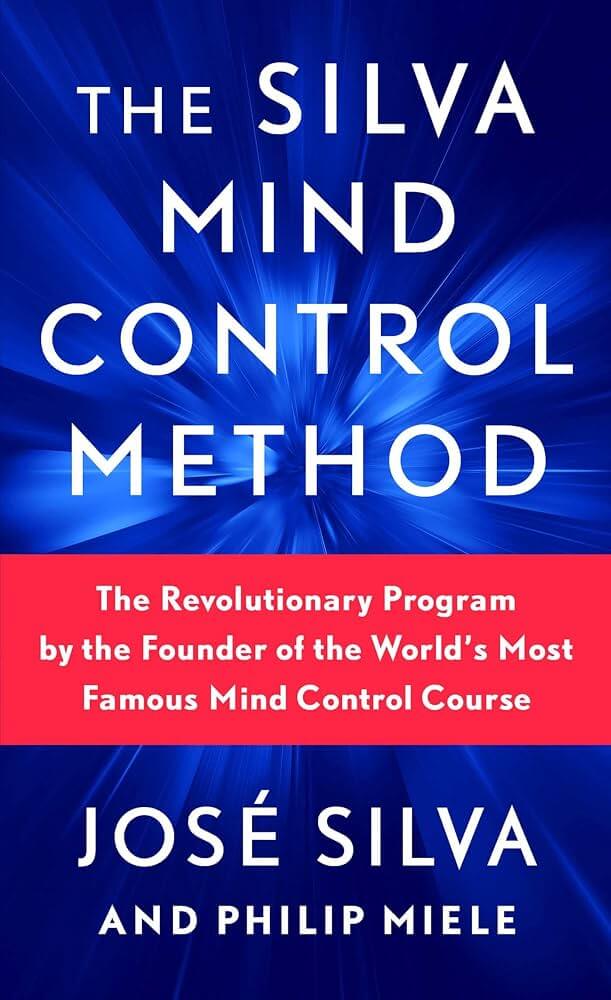
The Silva Mind Control Method: The Revolutionary Program by the Founder of the World’s Most Famous Mind Control Course by José Silva & Philip Miele


රු1,500.00
3 X Rs. 500.00 or 8% Cashback with


or 3 X රු500.00 with


or up to 4 X රු375.00 with


The Silva Mind Control Method by José Silva & Philip Miele is a classic self-development guide covering meditation, visualization, concentration, memory, relaxation and mental rehearsal.
This current Gallery Books edition presents the well-known Silva system for readers interested in personal development and mental training.
Format: Trade Paperback
Pages: 240
Publisher: Gallery Books / Simon & Schuster
ISBN: 9781982185602
15 in stock
The Silva Mind Control Method by José Silva & Philip Miele
The Silva Mind Control Method is a classic self-development book based on techniques developed by José Silva and presented with Philip Miele.
The book introduces a structured system built around:
- Meditation
- Relaxation
- Visualization
- Concentration
- Memory exercises
- Mental rehearsal
- Goal setting
- Habit change
Simon & Schuster describes the book as a program designed to help readers use meditation and visualization to reduce stress, strengthen concentration, develop creativity, overcome unwanted habits and improve aspects of daily life.
The Silva Method
José Silva developed what became known as the Silva Method after experimenting with relaxation, mental training and attention exercises.
The basic idea is that people can deliberately enter a deeply relaxed state and then use that state for structured mental exercises.
The book teaches readers to practise techniques involving:
- Relaxed awareness
- Mental imagery
- Memory
- Positive mental rehearsal
- Creative thinking
The approach became widely known through Silva training courses and seminars.
Meditation
Meditation is one of the central tools in the book.
The exercises encourage readers to:
- Relax the body
- Slow down mental activity
- Focus attention
- Use deliberate visualization
- Practise mental exercises in a calm state
The book presents these practices as a way of improving mental control and clarity.
Visualization
Visualization is another major theme.
Readers are encouraged to form detailed mental images of:
- Goals
- Desired outcomes
- Tasks
- Future actions
- Situations they want to handle more effectively
The aim is to rehearse behaviour mentally before acting in real life.
This type of mental rehearsal also appears in modern performance psychology, although not all of the broader claims made in older Silva materials are supported equally by current scientific evidence.
Improving Memory
The book contains exercises designed to improve memory and recall.
These techniques involve:
- Focused attention
- Association
- Mental imagery
- Repetition
- Relaxed concentration
The goal is to make information easier to remember by increasing attention and creating stronger mental connections.
Speed Learning
Another topic is what Silva called speed learning.
The book encourages readers to combine relaxation with concentrated study.
The theory is that reducing mental tension and increasing focus may make learning more efficient.
Readers should treat this as a self-development technique rather than a guaranteed scientifically validated method for dramatically accelerating learning.
Creative Sleep
The book also discusses using sleep and dreams as part of problem-solving.
Readers are encouraged to think about a problem before sleeping and pay attention to ideas that arise afterward.
This can be viewed as a structured reflection exercise.
People sometimes gain useful insights after stepping away from a problem, but the book’s more extraordinary claims about dream-based information should not automatically be treated as established science.
The Power of Imagination
Imagination plays a central role throughout the Silva system.
Silva encourages readers to deliberately imagine situations in order to prepare for them mentally.
For example, readers might visualize themselves:
- Speaking confidently
- Handling stressful situations
- Completing a task successfully
- Remembering important information
- Reaching a personal goal
The practical value lies in rehearsal and focus rather than assuming imagination alone guarantees an outcome.
The Three Fingers Technique
One of the Silva Method’s better-known exercises is the Three Fingers Technique.
The basic concept is to create an association between touching three fingers together and entering a focused mental state.
Through repetition, the physical gesture is intended to become a cue for:
- Concentration
- Recall
- Relaxation
This resembles the broader psychological idea of creating learned cues or associations.
Habit Change
The book also applies visualization and mental rehearsal to unwanted habits.
Readers are encouraged to picture themselves behaving differently and reinforce an alternative response.
This can support motivation, but habits are influenced by many factors, including:
- Environment
- Repetition
- Reward
- Stress
- Social context
For persistent or serious behavioural problems, professional support may be more appropriate than relying only on self-help exercises.
Stress and Relaxation
Relaxation is one of the most practically useful areas of the book.
The Silva exercises include methods intended to help readers:
- Reduce tension
- Slow breathing
- Focus attention
- Step away from racing thoughts
- Approach problems more calmly
Relaxation techniques can be useful as general wellness practices.
Creativity
The book encourages readers to use relaxed concentration for creative problem-solving.
Instead of forcing an answer immediately, readers may mentally explore:
- Alternatives
- Images
- Possible solutions
- New ideas
This part of the method may appeal to:
- Writers
- Students
- Entrepreneurs
- Professionals
- Creative workers
Self-Confidence
The Silva Method also uses positive mental rehearsal to strengthen confidence.
A reader may mentally practise a challenging situation before experiencing it in real life.
Examples include:
- Interviews
- Presentations
- Exams
- Meetings
- Difficult conversations
Mental preparation can help reduce uncertainty and make a situation feel more familiar.
Relationships
The book also discusses applying mental training to interpersonal relationships.
Readers are encouraged to become more deliberate about:
- Communication
- Emotional responses
- Empathy
- Expectations
The goal is not to control other people, despite the phrase “mind control” in the title.
The book is primarily about controlling and directing one’s own attention and mental habits.
Important Evidence Note
The Silva Mind Control Method mixes practical techniques such as relaxation, visualization and mental rehearsal with broader claims involving areas such as ESP, psychic perception and unusual mental abilities.
Some practices—such as relaxation, focused attention and mental rehearsal—overlap with methods used in modern psychology and performance training.
However, claims involving:
- ESP
- Telepathy
- Psychic perception
- Extraordinary mind powers
are not established scientific facts.
Readers should treat these sections as part of the Silva system’s historical and philosophical framework rather than verified modern neuroscience.
The book should also not be used as a substitute for professional medical or mental-health care.
Original Publication and Modern Edition
The Silva Method originated in the 1960s, and the book first appeared in the 1970s.
Google Books records earlier editions from 1977 and 1978, while the current Gallery Books edition was issued in 2022.
The 2022 edition preserves the core program for modern readers.
Who May Enjoy This Book?
The Silva Mind Control Method may appeal to readers interested in:
- Meditation
- Visualization
- Self-help
- Personal development
- Memory
- Concentration
- Relaxation
- Mental rehearsal
- Mindfulness
- Habit change
It may especially interest readers of classic personal-development books.
About José Silva
José Silva was an American self-help author and the creator of the Silva Method.
He developed his system through decades of experimentation with:
- Relaxation
- Mental training
- Visualization
- Attention exercises
Google Books notes that Silva began exploring brain-wave activity and psychic claims in the 1940s and later developed the Silva Mind Control Method and related training courses.
About Philip Miele
Philip Miele co-authored The Silva Mind Control Method and helped present Silva’s ideas in book form.
The current publisher credits both José Silva and Philip Miele as authors.
For readers looking to buy The Silva Mind Control Method in Sri Lanka, ISBN 9781982185602 is the current Gallery Books paperback edition used for this listing.
Be the first to review “The Silva Mind Control Method: The Revolutionary Program by the Founder of the World’s Most Famous Mind Control Course by José Silva & Philip Miele”
Related products
-11%

Non-Fiction & Knowledge
Original price was: රු2,200.00.රු1,950.00Current price is: රු1,950.00.
3 X Rs. 650.00 or 8% Cashback with
or 3 X රු650.00 with
or up to 4 X රු487.50 with
-21%

Non-Fiction & Knowledge
7 Secrets to Investing Like Warren Buffett by Mary Buffett & Sean Seah
Original price was: රු1,900.00.රු1,500.00Current price is: රු1,500.00.
3 X Rs. 500.00 or 8% Cashback with
or 3 X රු500.00 with
or up to 4 X රු375.00 with

Non-Fiction & Knowledge
රු1,550.00
3 X Rs. 516.67 or 8% Cashback with
or 3 X රු516.67 with
or up to 4 X රු387.50 with
Non-Fiction & Knowledge
රු1,750.00
3 X Rs. 583.33 or 8% Cashback with
or 3 X රු583.33 with
or up to 4 X රු437.50 with
-24%

Out of stock
Non-Fiction & Knowledge
Original price was: රු2,500.00.රු1,900.00Current price is: රු1,900.00.
3 X Rs. 633.33 or 8% Cashback with
or 3 X රු633.33 with
or up to 4 X රු475.00 with

Non-Fiction & Knowledge
රු1,950.00
3 X Rs. 650.00 or 8% Cashback with
or 3 X රු650.00 with
or up to 4 X රු487.50 with
-33%

Non-Fiction & Knowledge
Original price was: රු2,850.00.රු1,900.00Current price is: රු1,900.00.
3 X Rs. 633.33 or 8% Cashback with
or 3 X රු633.33 with
or up to 4 X රු475.00 with
-34%

Non-Fiction & Knowledge
Original price was: රු2,250.00.රු1,490.00Current price is: රු1,490.00.
3 X Rs. 496.67 or 8% Cashback with
or 3 X රු496.67 with
or up to 4 X රු372.50 with
Reviews
There are no reviews yet.