
No products in the cart.
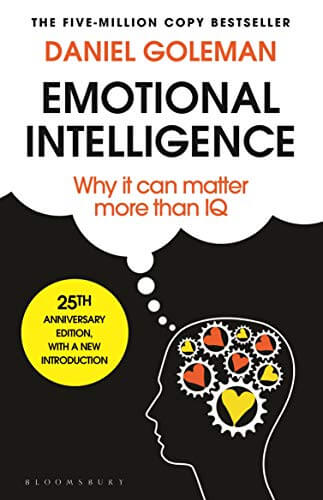
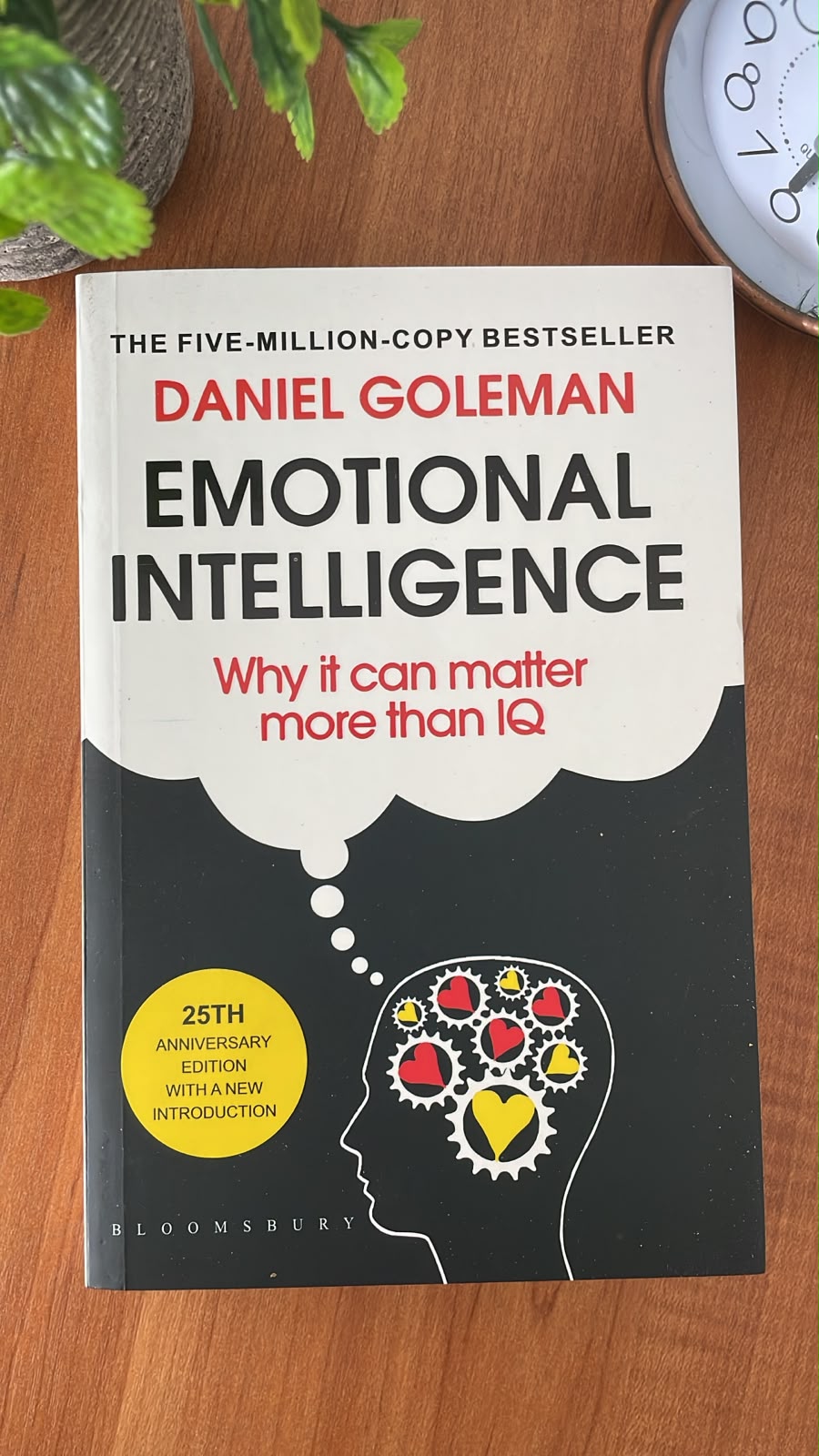
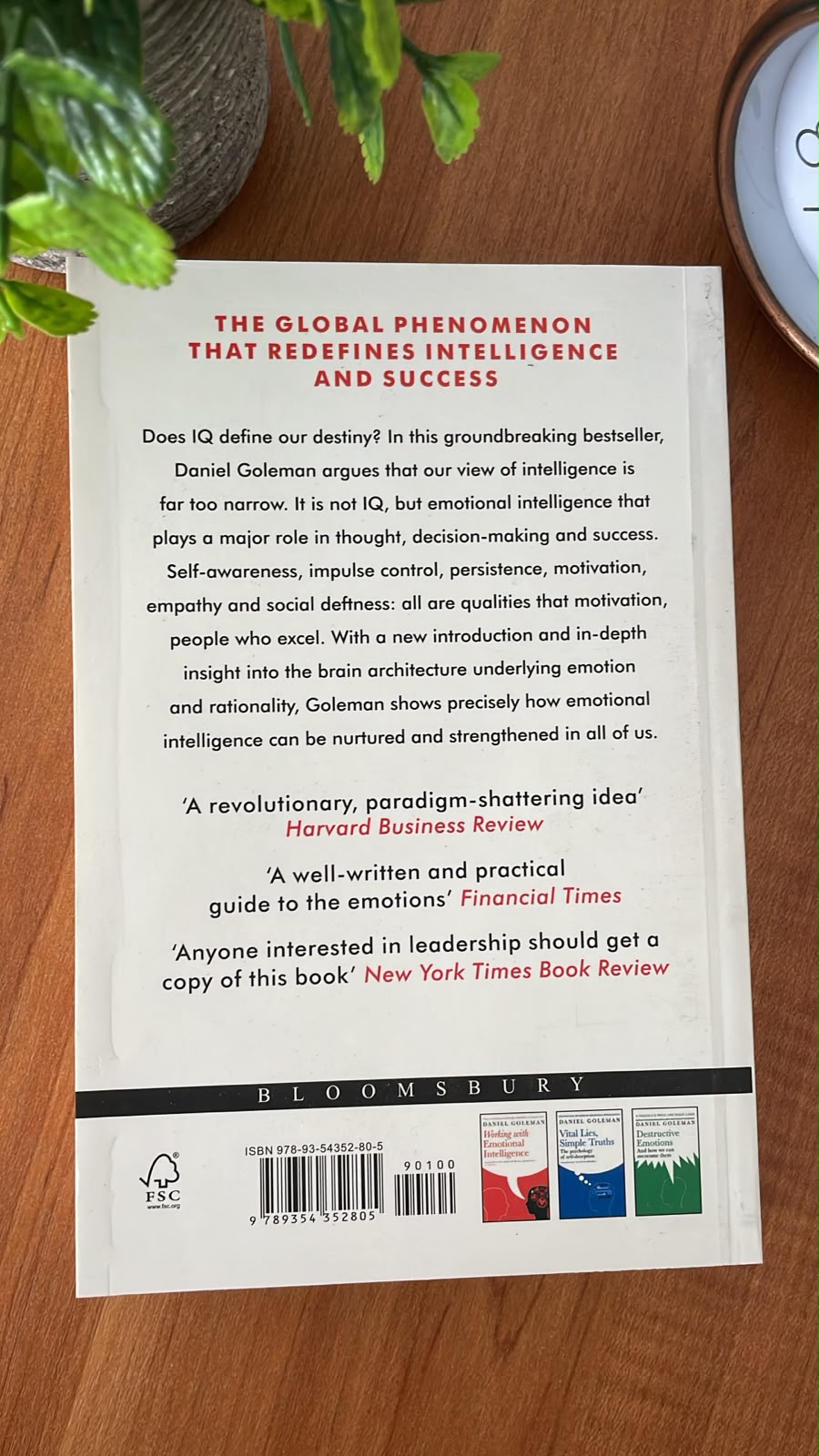

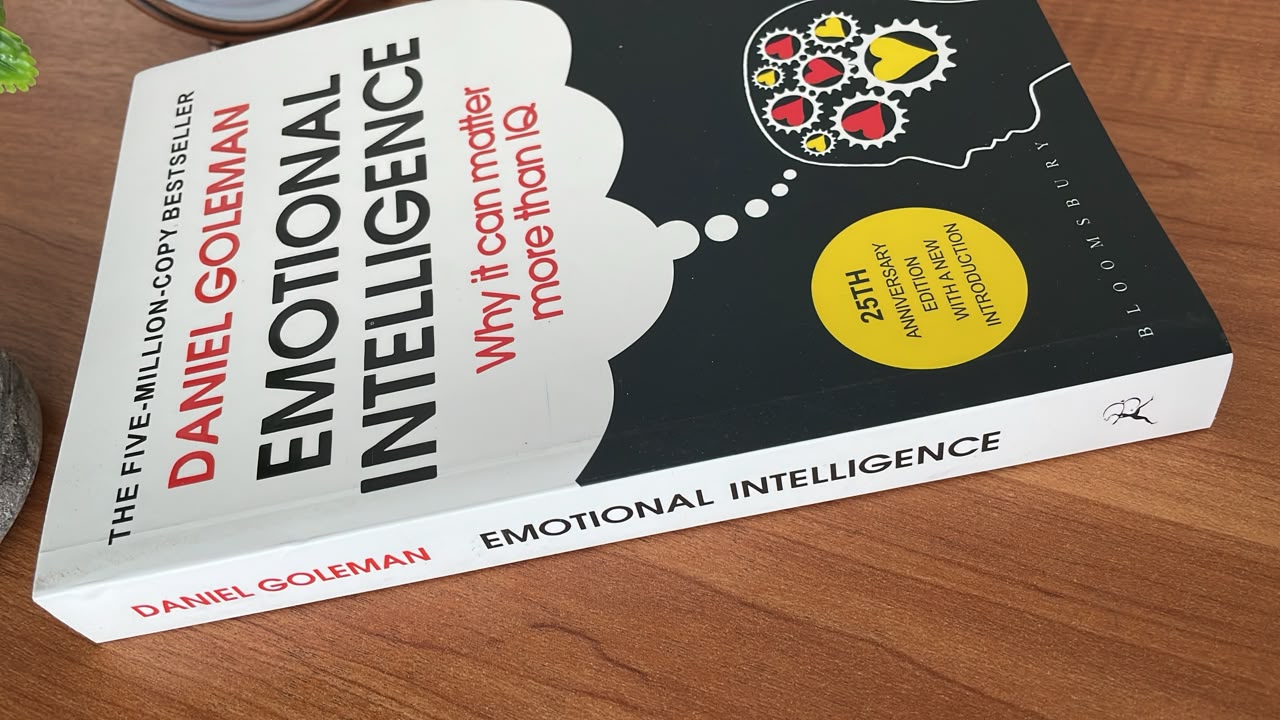
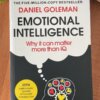





Emotional Intelligence by Daniel Goleman is a groundbreaking book about understanding emotions, managing reactions, developing empathy, improving relationships and becoming more effective in both personal and professional life.
For many years, intelligence was commonly associated mainly with IQ, academic ability and logical thinking.
Daniel Goleman challenges that narrow picture.
In Emotional Intelligence, he explores how the rational and emotional sides of the mind interact and argues that abilities such as self-awareness, self-discipline and empathy can have an important influence on how people navigate work, relationships and everyday life.
The result is a book that connects psychology, behavioural research and practical personal development.
Why Read Emotional Intelligence?
Emotional Intelligence is valuable because emotions affect almost everything we do.
They influence how we communicate.
How we respond to criticism.
How we handle pressure.
How we make decisions.
How we manage disagreements.
And how we build relationships.
A person can be academically intelligent but still struggle with anger, communication or understanding other people.
Goleman’s central argument is that being smart involves more than intellectual ability alone.
Emotional Intelligence and Self-Awareness
Self-awareness is one of the most important ideas in Emotional Intelligence.
Before you can manage an emotion, you first need to notice it.
Maybe you are angry.
Frustrated.
Jealous.
Anxious.
Excited.
Embarrassed.
Or disappointed.
If you do not recognize what you are feeling, that emotion may influence your behaviour without you fully understanding why.
Self-awareness creates a small but important gap between feeling something and acting on it.
That gap can lead to better decisions.
Goleman identifies self-awareness among the important abilities that contribute to emotional intelligence.
Understand Your Emotional Reactions
Imagine receiving criticism at work.
Your immediate response may be defensive.
You might want to argue.
You may assume the other person is attacking you.
But emotional awareness allows another response.
You can recognize:
“I feel defensive right now.”
That awareness gives you more control.
Instead of reacting immediately, you can evaluate whether the criticism contains something useful.
This is one practical way the principles of Emotional Intelligence can improve everyday behaviour.
Emotional Intelligence and Self-Control
Recognizing emotions is only the beginning.
You also need to manage them.
Self-control does not mean eliminating emotion.
Anger can provide information.
Fear can alert you to danger.
Excitement can create energy.
The goal is not to become emotionless.
The goal is to prevent temporary emotions from controlling important decisions.
Penguin Random House describes Goleman’s approach as including self-discipline and explaining how emotional abilities can be strengthened over time.
Pause Before You React
One of the simplest emotional skills is learning to pause.
Someone sends an irritating message.
You immediately want to respond.
But responding while angry may make the situation worse.
Pause.
Think.
Then decide what response is actually useful.
That small habit can improve:
- Workplace communication
- Customer service
- Friendships
- Romantic relationships
- Family relationships
- Leadership
- Conflict resolution
Emotional control can prevent a temporary feeling from creating a permanent problem.
Emotional Intelligence and Empathy
Empathy is another central idea in Emotional Intelligence.
Empathy involves recognizing and understanding what another person may be feeling.
That does not mean agreeing with everything they say.
It means trying to understand their perspective.
Goleman explicitly includes empathy among the abilities that contribute to emotional intelligence.
This skill is extremely useful in relationships.
Sometimes people do not need an immediate solution.
They need to feel understood.
Listen Before You Answer
Many people listen only while preparing their next response.
Real listening requires more attention.
What is the person actually saying?
What emotion is behind the words?
Are they asking for advice?
Or do they simply want someone to understand?
These questions can transform conversations.
Emotional Intelligence encourages readers to recognize that social effectiveness depends partly on understanding emotions—both our own and those of others.
Emotional Intelligence and Relationships
Relationships involve emotions constantly.
Trust.
Jealousy.
Affection.
Fear.
Disappointment.
Anger.
Gratitude.
Love.
The ability to communicate those emotions constructively can make relationships stronger.
Poor emotional control can do the opposite.
A small disagreement becomes a major argument.
One misunderstanding becomes resentment.
One angry response creates damage that lasts far longer than the original problem.
Developing stronger emotional awareness can help people communicate more deliberately.
Emotional Intelligence at Work
Emotional skills also matter professionally.
Technical ability may help someone get a job.
But professional success often requires working with other people.
Employees need to communicate.
Managers need to give feedback.
Leaders need to handle pressure.
Salespeople need to understand customers.
Teams need to resolve disagreement.
Goleman’s work helped popularize the idea that emotional abilities are relevant to workplace performance and leadership, and his later book Working with Emotional Intelligence specifically applies these ideas to professional life.
Emotional Intelligence and Leadership
Leadership is not only about giving instructions.
Leaders influence emotions inside teams.
A manager who panics under pressure may spread anxiety.
A leader who responds calmly can create stability.
A manager who refuses to listen can discourage honest feedback.
An empathetic leader may understand what motivates different people.
Goleman has continued applying emotional-intelligence concepts to leadership throughout his work, including in writings focused specifically on what makes leaders effective.
Managing Conflict Better
Conflict is unavoidable.
Two people can interpret the same situation differently.
Emotional intelligence can help prevent disagreement from immediately becoming personal.
Instead of saying:
“You never listen.”
You might explain the specific behaviour that caused frustration.
Instead of immediately attacking another person’s motives, ask what they intended.
Better emotional awareness does not remove conflict.
It can help people manage it more constructively.
Emotional Intelligence and Motivation
Emotions can influence motivation.
When people feel discouraged, they may stop.
When they feel confident, they may persist.
But strong emotional skills can help people continue even when motivation changes.
You may not always feel excited about studying.
Working.
Exercising.
Saving money.
Or completing a difficult project.
The ability to manage short-term feelings can help support longer-term goals.
Emotional Intelligence Can Be Developed
One of the most encouraging ideas in Emotional Intelligence is that emotional abilities are not necessarily fixed.
Penguin Random House summarizes Goleman’s argument by saying that although emotional intelligence is influenced by childhood experience, it can be nurtured and strengthened during adulthood.
That means improvement is possible.
You can become more self-aware.
You can learn better communication.
You can improve your ability to manage frustration.
You can become more empathetic.
Like many skills, improvement requires practice.
Emotional Intelligence and Decision-Making
People often believe good decisions are purely logical.
In reality, emotions can influence choices.
Fear may make someone overly cautious.
Excitement can cause unnecessary risk.
Anger can encourage impulsive decisions.
Embarrassment may prevent someone from admitting a mistake.
Understanding those emotions can improve judgment.
The goal is not to remove emotion from decisions.
It is to understand how emotion is influencing them.
Think Before Making Important Decisions
When emotions are intense, consider delaying major decisions.
Ask:
What am I feeling?
Why am I feeling it?
Is this emotion temporary?
Would I make the same decision tomorrow?
What information am I ignoring?
These questions can help separate immediate emotional reactions from longer-term priorities.
Emotional Intelligence and Personal Growth
Personal development requires self-observation.
You need to recognize patterns.
What situations repeatedly make you angry?
What type of criticism makes you defensive?
When do you become impatient?
Which people make you feel insecure?
What situations cause you to avoid difficult conversations?
These patterns contain useful information.
Once they become visible, you can begin changing them.
That is one reason Emotional Intelligence remains relevant to readers interested in self-improvement.
Emotional Intelligence for Students
Students can apply emotional intelligence to education.
Academic performance involves more than understanding information.
Students also face:
- Exam stress
- Procrastination
- Competition
- Disappointment
- Group projects
- Teacher feedback
- Social pressure
- Motivation problems
Understanding emotional responses can make these experiences easier to manage.
A poor result does not need to become:
“I am a failure.”
It can become:
“What went wrong, and what can I improve?”
Emotional Intelligence for Entrepreneurs
Entrepreneurs experience uncertainty constantly.
Sales fluctuate.
Customers complain.
Employees make mistakes.
Cash flow creates pressure.
Projects fail.
Competitors appear.
Strong emotional regulation can help business owners respond to these situations more deliberately.
An entrepreneur who reacts emotionally to every problem may create instability.
One who can remain aware, calm and analytical has a better chance of responding constructively.
Emotional Intelligence for Managers
Managers work through people.
That makes emotional skills especially useful.
A manager needs to know when an employee is confused.
When someone feels ignored.
When conflict is developing inside a team.
When motivation is dropping.
And when feedback needs to be delivered carefully.
Technical knowledge still matters.
But people management requires understanding human behaviour.
7 Powerful Lessons From Emotional Intelligence
- Know Your Emotions – Self-awareness helps you understand what you are feeling before you act.
- Manage Your Reactions – A strong emotion does not need to control your behaviour.
- Develop Empathy – Understanding another person’s feelings can improve communication and relationships.
- Listen Carefully – Good communication starts with understanding rather than simply waiting to speak.
- Use Emotions Wisely – Emotions contain useful information, but they should not automatically control decisions.
- Improve Your Relationships – Emotional awareness can support healthier communication and conflict management.
- Keep Developing – Goleman argues that emotional abilities can be strengthened rather than being permanently fixed.
What You Can Learn From Emotional Intelligence
Readers can explore:
- Self-awareness
- Self-control
- Empathy
- Emotional regulation
- Communication
- Relationships
- Leadership
- Motivation
- Psychology
- Personal growth
- Social skills
- Decision-making
- Conflict management
- Workplace behaviour
- Self-discipline
- Personal development
Who Should Read Emotional Intelligence?
Emotional Intelligence is suitable for readers interested in psychology and personal development.
Managers may find its ideas useful for leadership and communication.
Entrepreneurs can apply its concepts while working with customers and employees.
Students may benefit from understanding stress, motivation and emotional reactions.
Couples and families may find the ideas useful when thinking about communication and empathy.
Professionals who work extensively with other people may particularly appreciate the emphasis on social and emotional abilities.
A Powerful Book About Understanding Yourself and Others
Emotional Intelligence challenges the assumption that traditional intellectual ability is the only kind of intelligence that matters.
Daniel Goleman examines the interaction between rational thought and emotion and emphasizes qualities including self-awareness, self-discipline and empathy.
The book’s message is practical.
Understand yourself.
Notice your emotions.
Manage your reactions.
Listen to other people.
Develop empathy.
Improve how you communicate.
And continue strengthening those abilities throughout life.
For readers interested in psychology, leadership, relationships, communication and self-development, Emotional Intelligence by Daniel Goleman is an important addition to any personal-growth bookshelf.
Book Details
Title: Emotional Intelligence
Author: Daniel Goleman
Category: Psychology / Personal Development / Self-Improvement
Core Topics: Self-awareness, self-discipline, empathy, relationships, emotions and behaviour.
Penguin Random House currently lists a Bantam hardcover edition with:
ISBN-13: 9780553804911
Format: Hardcover
Publisher: Bantam
Publication Date: September 26, 2006
Pages: 352
Dimensions: 6⅛ × 9¼ inches.
It also lists a 352-page paperback published September 27, 2005.
Edition Note
Emotional Intelligence exists in multiple international editions, including anniversary editions, so ISBN, page count and dimensions vary.
Bloomsbury also publishes a 25th-anniversary edition with a new introduction from Daniel Goleman.
Use the ISBN printed on your physical copy rather than automatically using the edition details above.
https://yourwebsite.com/emotional-intelligence/
| Author | Daniel Goleman |
|---|---|
| Language | English |
| Type | Paperback Printed Book (Second Quality Copy) |
Be the first to review “Emotional Intelligence by Daniel Goleman”
Related products
-17%
Out of stock
Non-Fiction & Knowledge
Original price was: රු2,900.00.රු2,400.00Current price is: රු2,400.00.
3 X Rs. 800.00 or 8% Cashback with


or 3 X රු800.00 with


or up to 4 X රු600.00 with

-26%
Out of stock
Non-Fiction & Knowledge
Original price was: රු2,000.00.රු1,490.00Current price is: රු1,490.00.
3 X Rs. 496.67 or 8% Cashback with
or 3 X රු496.67 with
or up to 4 X රු372.50 with
-28%

Self-Help & Psychology
Original price was: රු1,800.00.රු1,300.00Current price is: රු1,300.00.
3 X Rs. 433.33 or 8% Cashback with
or 3 X රු433.33 with
or up to 4 X රු325.00 with
Out of stock
Non-Fiction & Knowledge
රු1,500.00
3 X Rs. 500.00 or 8% Cashback with
or 3 X රු500.00 with
or up to 4 X රු375.00 with

Non-Fiction & Knowledge
රු1,950.00
3 X Rs. 650.00 or 8% Cashback with
or 3 X රු650.00 with
or up to 4 X රු487.50 with
-26%
Non-Fiction & Knowledge
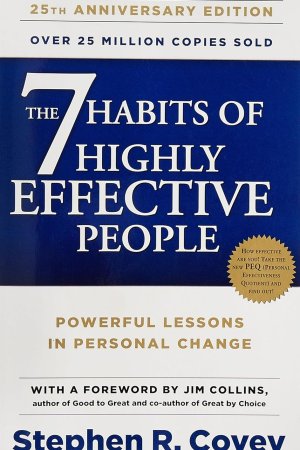
The 7 Habits of Highly Effective People by Stephen R. Covey – Blue Cover
Original price was: රු2,300.00.රු1,700.00Current price is: රු1,700.00.
3 X Rs. 566.67 or 8% Cashback with
or 3 X රු566.67 with
or up to 4 X රු425.00 with
-13%

Out of stock
Non-Fiction & Knowledge
Original price was: රු3,850.00.රු3,350.00Current price is: රු3,350.00.
3 X Rs. 1,116.67 or 8% Cashback with
or 3 X රු1,116.67 with
or up to 4 X රු837.50 with

Out of stock
Autobiography
රු2,750.00
3 X Rs. 916.67 or 8% Cashback with
or 3 X රු916.67 with
or up to 4 X රු687.50 with
Reviews
There are no reviews yet.