
No products in the cart.
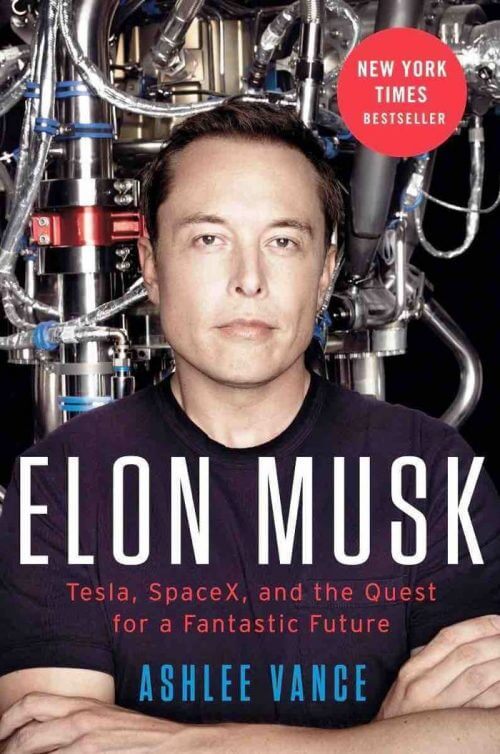
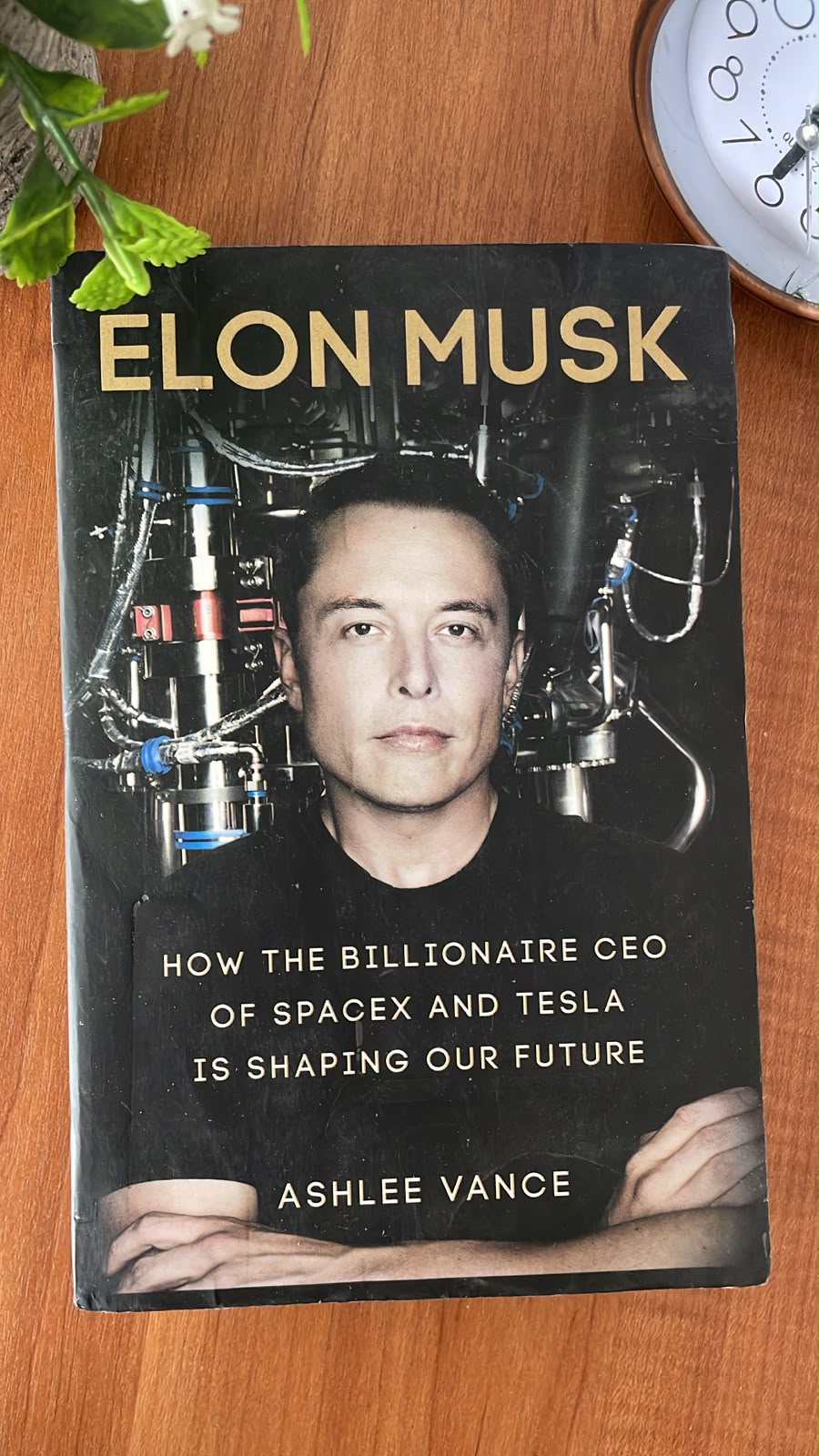
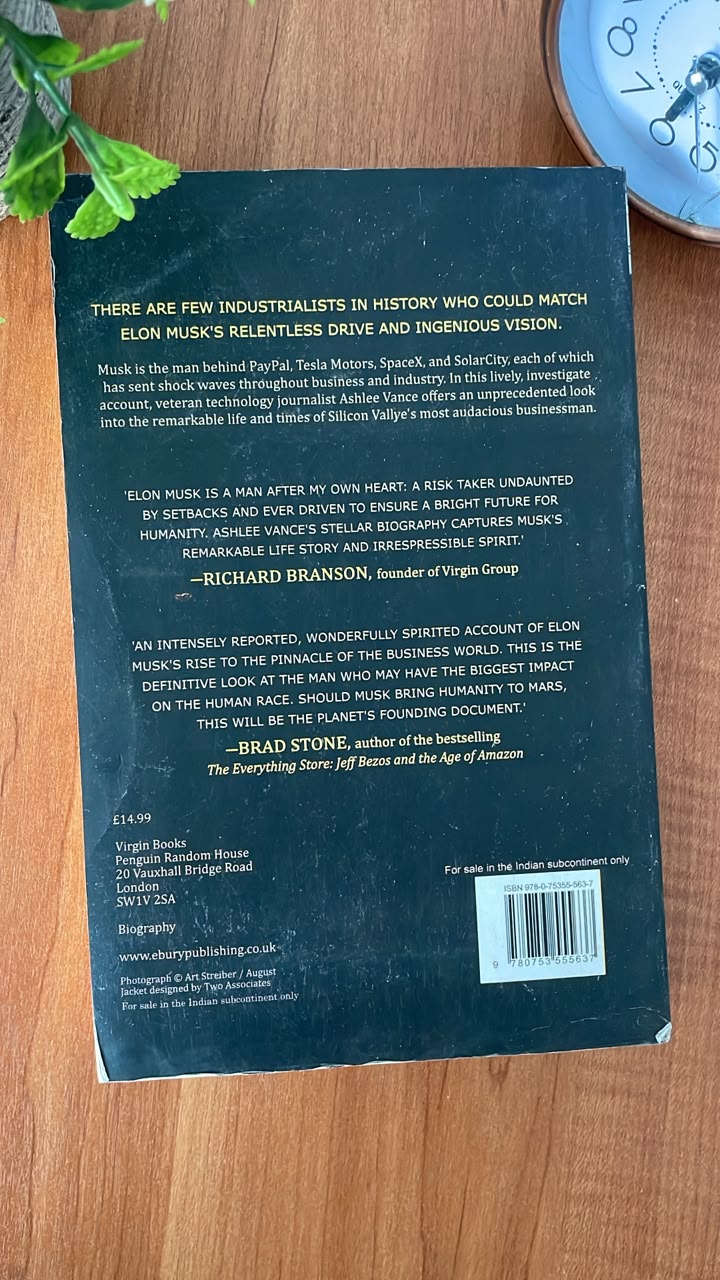
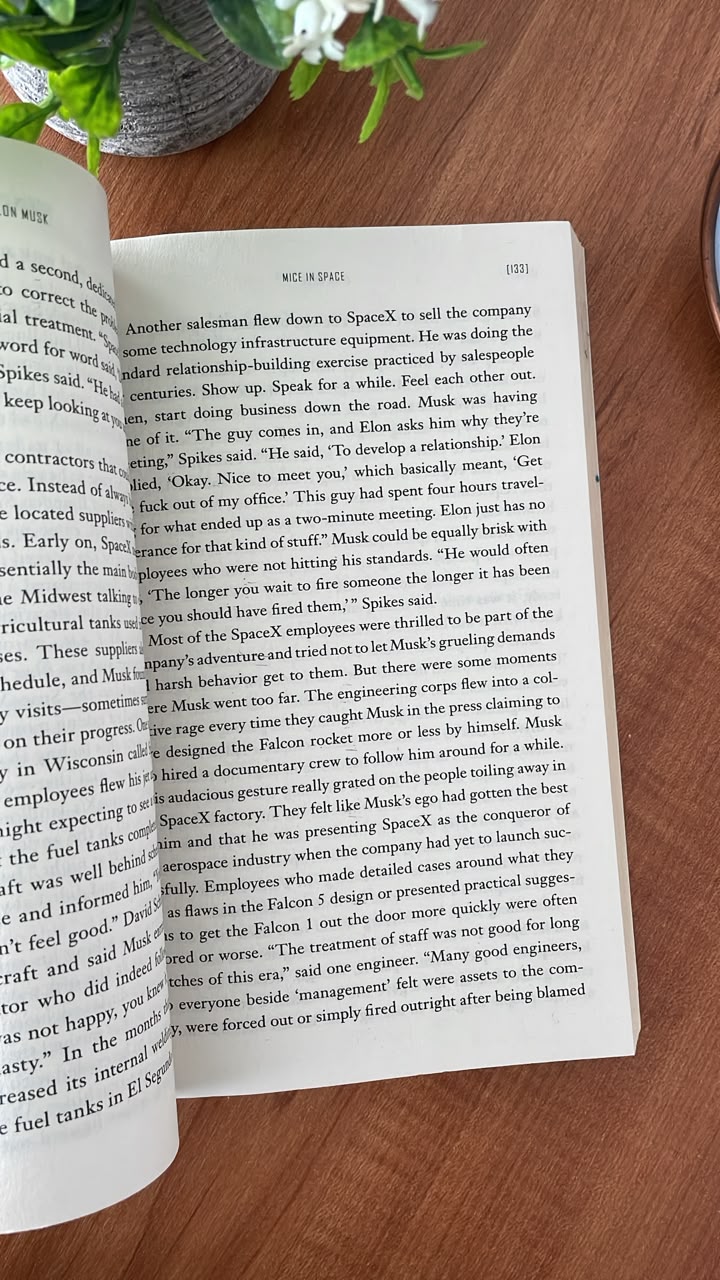
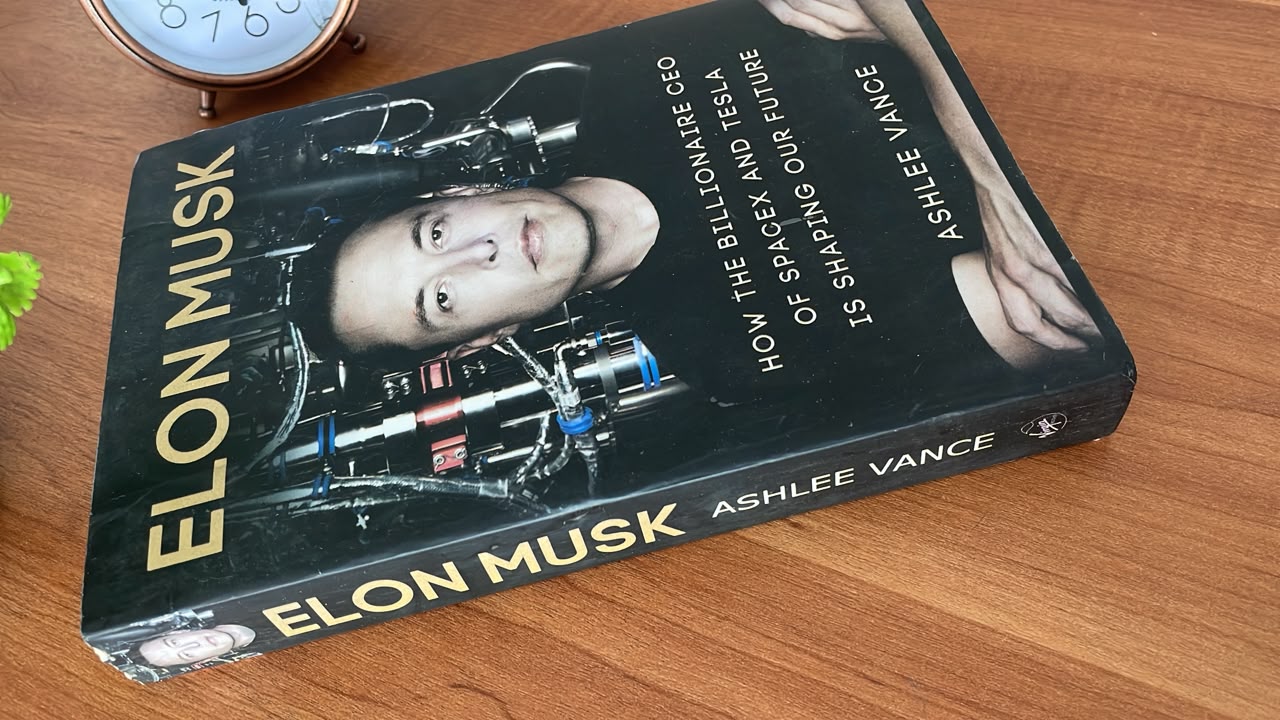
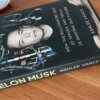


Elon Musk by Walter Isaacson is a detailed biography of one of the most influential and controversial technology entrepreneurs of the modern era.
The book explores Musk’s life from his childhood in South Africa through the creation and growth of businesses connected with electric vehicles, private spaceflight, artificial intelligence and social media.
Walter Isaacson was given extraordinary access.
For around two years, he followed Musk closely, attended meetings, visited factories and interviewed people from different parts of Musk’s personal and professional life.
The result is not simply a celebration of entrepreneurial success.
Elon Musk examines ambition, innovation, risk-taking, difficult relationships, intense leadership and the personality traits that have helped Musk build companies while also creating conflict around him.
Why Read Elon Musk?
Elon Musk is ideal for readers interested in entrepreneurship, technology, business and biography.
Musk’s career spans several industries.
Electric vehicles.
Rockets.
Artificial intelligence.
Social media.
Each field presents very different technical and commercial challenges.
Isaacson uses these businesses to explore how Musk thinks, makes decisions and responds when projects appear close to failure.
Elon Musk and Walter Isaacson
Walter Isaacson is known for writing biographies of influential innovators and thinkers.
His previous subjects include Steve Jobs, Albert Einstein, Leonardo da Vinci, Jennifer Doudna and Benjamin Franklin.
For Elon Musk, Isaacson received unusually close access to his subject.
He spent time inside meetings.
He observed factories.
He interviewed Musk directly.
He also spoke with family members, friends, coworkers and adversaries.
This gives the biography an inside perspective on both major business decisions and Musk’s personality.
Elon Musk and His Childhood
The biography begins well before Tesla and SpaceX.
Musk grew up in South Africa.
Isaacson describes a difficult childhood that included serious bullying and a complicated relationship with his father.
These experiences become important because Isaacson connects aspects of Musk’s childhood with traits visible later in his life.
A high tolerance for risk.
A tendency toward crisis.
Intense competitiveness.
A constant attraction to difficult problems.
The book asks whether the same qualities that create personal conflict can also contribute to extreme entrepreneurial drive.
Elon Musk and the Power of Ambition
One of the strongest themes in Elon Musk is ambition.
Musk rarely chooses small objectives.
His companies have pursued goals such as making electric vehicles mainstream and reducing the cost of spaceflight.
Isaacson examines what happens when someone organizes businesses around missions that initially appear unrealistic.
Ambition can create momentum.
It can attract talented people.
It can push teams beyond expectations.
But extreme ambition can also create enormous pressure.
That tension appears repeatedly throughout the biography.
Elon Musk and Tesla
Tesla forms a major part of Elon Musk.
Isaacson follows Musk’s involvement in pushing electric vehicles toward wider commercial adoption and scaling manufacturing under enormous pressure.
Building cars is extremely difficult.
Design matters.
Software matters.
Battery technology matters.
Manufacturing matters.
Supply chains matter.
And customers expect reliability.
The Tesla sections show how innovation requires more than inventing an exciting product.
A company also needs to manufacture that product repeatedly and at scale.
Elon Musk and SpaceX
SpaceX is another major focus.
Isaacson follows Musk as he pursues private space exploration and rocket development.
Spaceflight involves enormous technical risk.
A small failure can destroy years of work.
Projects are expensive.
Testing can fail publicly.
Yet failure can also produce information.
The SpaceX story makes Elon Musk particularly interesting for readers fascinated by engineering, experimentation and high-risk entrepreneurship.
Elon Musk and Risk
Risk-taking appears throughout the biography.
Musk has repeatedly invested time, money and reputation into projects with uncertain outcomes.
Most people try to avoid extreme uncertainty.
Entrepreneurs sometimes have to operate inside it.
The important question is not simply whether risk is good.
It is whether the potential result justifies the possibility of failure.
Isaacson portrays Musk as having an exceptionally high tolerance for risk, a trait that has influenced both his achievements and his conflicts.
Innovation Requires Experimentation
Innovation rarely follows a perfectly predictable plan.
An idea is designed.
Then tested.
Something fails.
The failure reveals a weakness.
The design changes.
Then the process begins again.
Elon Musk repeatedly shows this cycle inside technology companies.
Testing creates information.
Information creates improvement.
Improvement creates another test.
This approach can move projects forward quickly, but it also requires accepting that failure will occur.
Elon Musk and First-Principles Thinking
Musk is widely associated with questioning assumptions rather than accepting industry practices simply because they are traditional.
The business stories in Elon Musk repeatedly show teams being pushed to reconsider cost, design and manufacturing assumptions.
Instead of asking only:
“How is this normally done?”
A more useful question may be:
“Why is it done this way?”
That question can expose unnecessary complexity.
It can also reveal opportunities for innovation.
Question Conventional Wisdom
Industries develop habits.
“This is how cars are manufactured.”
“This is how rockets are built.”
“This is what customers expect.”
But established practices are not automatically optimal.
Elon Musk demonstrates how challenging assumptions can create opportunities.
However, challenging convention also carries risk.
Sometimes conventional practices exist for good reasons.
The real skill is distinguishing outdated assumptions from valuable experience.
Elon Musk and Leadership
Leadership is one of the most complicated topics in the biography.
Musk is portrayed as an extremely demanding leader.
His intensity can drive teams toward ambitious achievements.
But that same intensity can also create conflict and personal strain.
Isaacson does not present this simply as either good or bad.
Instead, Elon Musk asks readers to confront the uncomfortable connection between extraordinary expectations and the human cost of working under relentless pressure.
High Standards Can Create Results
High standards can push people beyond what they thought possible.
A difficult deadline may force teams to simplify.
A demanding target may reveal inefficiencies.
But standards become dangerous when pressure stops being sustainable.
Elon Musk provides numerous situations that encourage readers to think about where the line exists between productive intensity and destructive management.
Elon Musk and Crisis Mode
One interesting theme in Isaacson’s biography is Musk’s attraction to crisis.
The publisher describes him as having lived for years in what he himself characterized as “crisis mode.”
Some leaders perform especially well when everything is at risk.
Problems become clear.
Decisions happen quickly.
Teams focus.
But constantly creating or seeking crises can have consequences.
This makes crisis management one of the more fascinating psychological themes in Elon Musk.
Learn From Failure
Failure is unavoidable in ambitious projects.
A rocket fails.
A manufacturing system does not work.
A deadline is missed.
A product has problems.
The important question becomes what happens next.
Strong organizations examine failure.
What happened?
Why?
Which assumption was wrong?
What should change?
Elon Musk shows how technical organizations can use failure as information rather than treating every unsuccessful experiment as the end of a project.
Elon Musk and Manufacturing
Ideas receive attention.
Manufacturing often receives less.
But making thousands or millions of products consistently is a completely different challenge from creating one prototype.
Elon Musk spends significant time inside factories because manufacturing became central to Musk’s businesses. Isaacson specifically notes that he walked factories with Musk during the two years he spent reporting the biography.
Designing the product is only part of innovation.
Designing the system that produces the product can be equally important.
Remove Unnecessary Complexity
Complex systems can accumulate unnecessary steps.
One person creates a process.
Another adds approval.
Someone adds another report.
Eventually nobody remembers why every step exists.
A useful question is:
Does this step actually need to exist?
The businesses covered in Elon Musk frequently confront this problem while attempting to accelerate engineering and production.
Simplification can sometimes create greater improvements than adding another technology.
Elon Musk and Artificial Intelligence
Artificial intelligence also forms part of Isaacson’s portrait of Musk.
The official publisher description identifies AI as one of the major technological areas covered during the period when Isaacson shadowed him.
This broadens the biography beyond cars and rockets.
Readers see Musk operating across industries that may influence transportation, communication, computing and the future of technology.
Elon Musk and Twitter
The biography also covers Musk’s acquisition of Twitter and its transformation into X.
This episode differs significantly from Tesla and SpaceX.
Twitter was already a global platform when Musk acquired it.
That created challenges involving employees, product decisions, business strategy, moderation and public scrutiny.
Isaacson was observing Musk during this period, making it an important part of the book’s later sections.
Business Decisions Under Pressure
Major business decisions rarely happen with perfect information.
Markets change.
Competitors react.
Technology fails.
Employees disagree.
Money becomes limited.
Leaders therefore need to make decisions while uncertainty remains.
Elon Musk provides many examples of this environment.
Some decisions succeed.
Others create new problems.
That makes the biography useful as a business case study rather than simply an inspirational success story.
Mission-Driven Companies
Tesla and SpaceX are closely associated with ambitious missions.
Mission can be powerful.
Employees may work harder when they believe the work matters.
Investors may tolerate long development periods.
Customers can become emotionally connected to the company.
But mission can also be used to justify extreme expectations.
Elon Musk gives readers an opportunity to examine both sides.
Elon Musk and Persistence
Persistence appears repeatedly throughout Musk’s career.
Ambitious projects rarely work immediately.
Technology development can take years.
Companies can come close to failure.
Criticism can become intense.
Continuing requires conviction.
But persistence also needs judgment.
Continuing a bad idea forever is not courage.
The challenge is deciding when to continue, when to change direction and when to stop.
Build Teams Around Difficult Problems
No major company is built by one person alone.
Engineers.
Designers.
Manufacturing teams.
Software developers.
Managers.
Investors.
Operations staff.
All contribute.
Although the biography focuses on Musk, Isaacson also draws on interviews with coworkers and others around him, making the people behind his businesses an important part of the story.
Elon Musk and Controversy
Elon Musk does not present its subject as a flawless hero.
The publisher describes him as both fascinating and controversial, and Isaacson’s reporting includes the perspectives of admirers and adversaries.
That balance matters.
Readers can admire technological achievements while still examining leadership decisions critically.
Biography becomes more useful when it shows both strengths and weaknesses.
Success Can Have a Cost
Public success can hide personal cost.
Long hours.
Pressure.
Damaged relationships.
Constant conflict.
Isaacson explores the psychological and personal dimensions behind Musk’s achievements as well as the companies themselves.
That makes Elon Musk more than a business biography.
It becomes a study of what extreme ambition can demand from both an individual and the people around them.
7 Powerful Lessons From Elon Musk
- Think Bigger – Ambitious goals can force people to search for solutions that smaller targets never require.
- Question Assumptions – Established industry practices should be understood rather than followed automatically.
- Experiment Rapidly – Testing and failure can produce valuable information.
- Understand Manufacturing – A brilliant product matters little if it cannot be produced effectively at scale.
- Accept Calculated Risk – Major innovation often requires operating under uncertainty.
- Stay Focused on the Mission – Clear goals can help teams navigate extremely difficult projects.
- Examine the Cost of Ambition – Elon Musk also shows that intense drive and demanding leadership can create serious personal and organizational consequences.
What You Can Learn From Elon Musk
Readers can explore:
- Elon Musk
- Walter Isaacson
- Entrepreneurship
- Tesla
- SpaceX
- Twitter and X
- Artificial intelligence
- Engineering
- Innovation
- Leadership
- Risk-taking
- Manufacturing
- Technology
- Business strategy
- Startups
- Problem-solving
- Ambition
- Failure
- Persistence
- Company culture
Who Should Read Elon Musk?
Elon Musk is ideal for readers interested in business biographies.
Entrepreneurs may appreciate the stories of risk, product development and company building.
Engineers and technology enthusiasts may enjoy the sections involving Tesla and SpaceX.
Business students can examine leadership, manufacturing, strategy and decision-making.
Readers of Walter Isaacson’s Steve Jobs or Einstein may also appreciate his detailed biographical approach here.
The biography was also shortlisted for the Financial Times and Schroders Business Book of the Year.
A Powerful Biography of Innovation and Ambition
Elon Musk explores what happens when extreme ambition, engineering, risk and personality come together.
Walter Isaacson spent two years observing Musk closely and interviewing the people surrounding him.
The biography follows his difficult childhood and later work involving Tesla, SpaceX, artificial intelligence and Twitter/X.
But the book does not simply ask how Musk achieved extraordinary business results.
It asks a harder question.
Are the difficult personality traits that drive someone toward extreme achievement inseparable from the damage those same traits can create?
That question gives the biography much of its depth.
For readers interested in entrepreneurship, technology, leadership, engineering and the complicated personality behind some of the world’s most ambitious companies, Elon Musk by Walter Isaacson is a fascinating addition to any business or biography bookshelf.
Book Details
Title: Elon Musk
Author: Walter Isaacson
Subject: Elon Musk
Category: Biography / Business / Technology / Entrepreneurship
Publisher: Simon & Schuster
Original Publication Date: September 12, 2023.
For the Simon & Schuster hardcover edition:
ISBN-13: 9781982181284
Pages: 688
Format: Hardcover.
Edition note: Elon Musk is available in multiple formats and regional editions. Use the ISBN printed on your physical copy if it differs from the hardcover above. https://yourwebsite.com/elon-musk/
| Author | Ashlee Vance |
|---|---|
| Language | English |
| Type | Paperback Printed Book (Second Quality Copy) |
Be the first to review “Elon Musk by Ashlee Vance”
Related products
-24%
Non-Fiction & Knowledge
Original price was: රු2,300.00.රු1,750.00Current price is: රු1,750.00.
3 X Rs. 583.33 or 8% Cashback with


or 3 X රු583.33 with


or up to 4 X රු437.50 with

-14%
Out of stock
Self-Help & Psychology
Original price was: රු2,900.00.රු2,500.00Current price is: රු2,500.00.
3 X Rs. 833.33 or 8% Cashback with
or 3 X රු833.33 with
or up to 4 X රු625.00 with
Non-Fiction & Knowledge
රු2,450.00
3 X Rs. 816.67 or 8% Cashback with
or 3 X රු816.67 with
or up to 4 X රු612.50 with
Out of stock
Self-Help & Psychology
රු2,200.00
3 X Rs. 733.33 or 8% Cashback with
or 3 X රු733.33 with
or up to 4 X රු550.00 with
Out of stock
Non-Fiction & Knowledge
රු1,500.00
3 X Rs. 500.00 or 8% Cashback with
or 3 X රු500.00 with
or up to 4 X රු375.00 with
-26%
Out of stock
Non-Fiction & Knowledge
Original price was: රු2,000.00.රු1,490.00Current price is: රු1,490.00.
3 X Rs. 496.67 or 8% Cashback with
or 3 X රු496.67 with
or up to 4 X රු372.50 with
Out of stock
Self-Help & Psychology
රු1,900.00
3 X Rs. 633.33 or 8% Cashback with
or 3 X රු633.33 with
or up to 4 X රු475.00 with
Non-Fiction & Knowledge
රු2,250.00
3 X Rs. 750.00 or 8% Cashback with
or 3 X රු750.00 with
or up to 4 X රු562.50 with
Reviews
There are no reviews yet.