
No products in the cart.
-26%
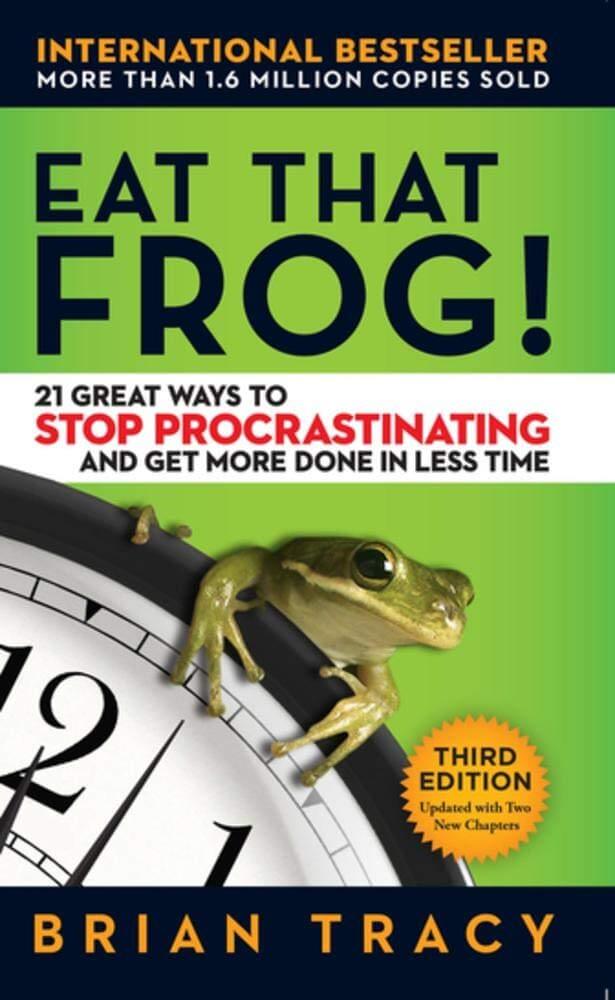





Eat That Frog! by Brian Tracy


Original price was: රු2,000.00.රු1,490.00Current price is: රු1,490.00.
3 X Rs. 496.67 or 8% Cashback with


or 3 X රු496.67 with


or up to 4 X රු372.50 with


Boost your productivity and conquer procrastination with ‘Eat That Frog!’ by Brian Tracy. This bestselling book offers 21 practical strategies to maximize efficiency and achieve more in less time. Ideal for anyone looking to overcome procrastination and enhance time management skills.
Out of stock
Email when stock available
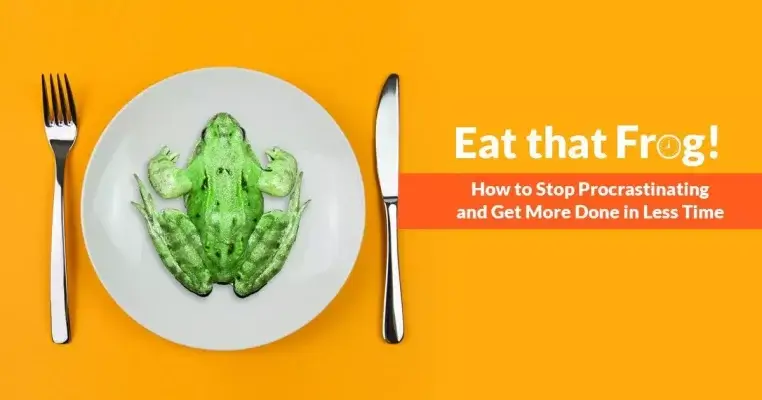
Eat That Frog by Brian Tracy is a practical productivity and time-management book designed for people who struggle with procrastination, distractions and overwhelming to-do lists.
Most people have more tasks than they can realistically complete.
Emails arrive.
Meetings appear.
Messages interrupt.
Small jobs keep multiplying.
Yet some tasks matter far more than others.
The central message of Eat That Frog is to identify the task that can create the greatest positive impact and tackle it before wasting energy on less important work.
Brian Tracy calls that task your frog.
The current publisher description defines your frog as your most important and challenging task and encourages tackling it first so that momentum can build throughout the day.
Why Read Eat That Frog?
Eat That Frog is especially useful for anyone who knows what needs to be done but repeatedly postpones doing it.
Maybe you have an important assignment.
You clean your desk instead.
Maybe you need to prepare a report.
You check your emails first.
Maybe you want to start a major project.
You spend the morning completing tiny tasks that feel easier.
At the end of the day, you were busy.
But the most important task is still unfinished.
Eat That Frog teaches readers to reverse this pattern.
Instead of beginning with what is easiest, start with what matters most.
Eat That Frog and Procrastination
Procrastination is not always about laziness.
Sometimes people procrastinate because a task feels too large.
Sometimes it feels difficult.
Sometimes there is no clear starting point.
Sometimes easier activities simply provide faster satisfaction.
Eat That Frog offers practical techniques for reducing those barriers.
The current publisher description highlights approaches such as breaking intimidating projects into smaller actions, identifying constraints and planning ahead.
The objective is to make action easier.
What Does “Eat That Frog” Mean?
The title Eat That Frog is a metaphor.
Your frog is the task you are most tempted to avoid even though completing it would create significant value.
Brian Tracy recommends tackling that task early rather than allowing it to remain in the background all day.
Once the most difficult important task is completed, everything else can feel easier.
That simple idea forms the foundation of the book.
Eat Your Biggest Frog First
Sometimes you have several important tasks.
Which one should you choose first?
The basic principle is to identify the task with the greatest potential impact.
Not necessarily the longest task.
Not necessarily the task someone mentioned most recently.
The most valuable one.
That might be:
- Preparing for an important exam
- Finishing a major client proposal
- Making an important sales call
- Completing a difficult report
- Working on a business strategy
- Writing an assignment
- Applying for a job
- Starting a delayed project
Eat That Frog encourages readers to prioritize based on importance rather than comfort.
Eat That Frog and Time Management
Time management is not simply about doing more things.
It is about doing the right things.
Everyone has the same number of hours in a day.
The difference often comes from how those hours are allocated.
Someone may complete twenty minor tasks.
Another person may complete three major tasks.
The second person may have created far more value.
Eat That Frog helps readers distinguish activity from productivity.
Being busy does not necessarily mean making progress.
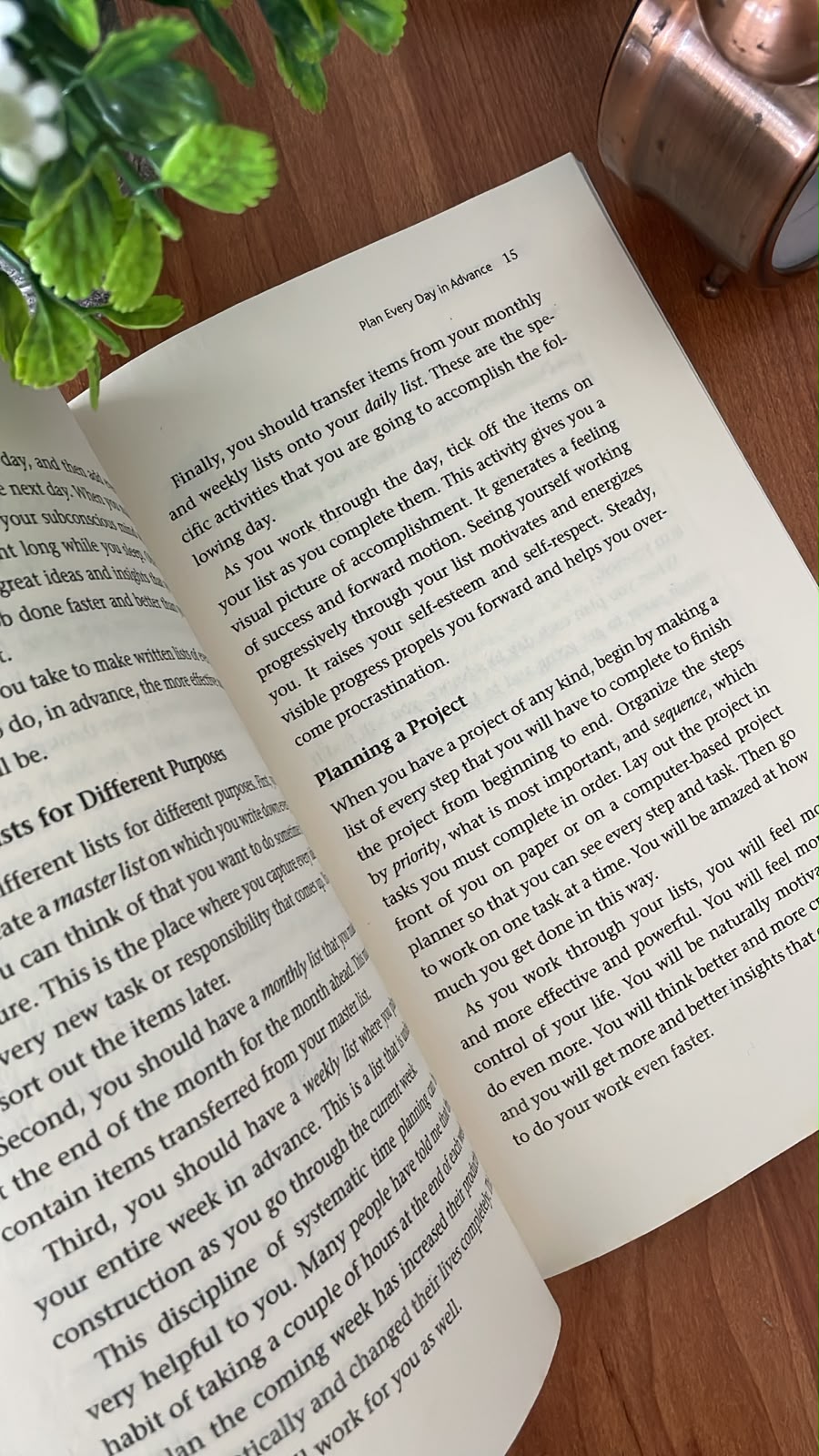
Plan Your Day in Advance
One of the recurring principles in Eat That Frog is planning before action.
The current fourth-edition description specifically highlights planning each day in advance as part of Tracy’s system.
Planning reduces unnecessary decision-making.
Instead of beginning each morning wondering what to do, you already have direction.
Write your tasks down.
Identify what matters most.
Choose your frog.
Then begin.
A few minutes of planning can prevent hours of unfocused activity.
Prioritize Important Tasks
Not every task deserves equal attention.
Some activities create major results.
Others barely matter.
This means productivity requires prioritization.
Ask:
Which task would create the greatest result?
What problem would become easier if I completed one major task today?
Which unfinished responsibility is creating the most pressure?
What activity moves me closer to my largest goal?
These questions help identify your frog.
Break Large Tasks Into Smaller Pieces
Large projects can feel intimidating.
“Write a book” sounds enormous.
“Write 500 words today” feels manageable.
“Create a new website” can feel overwhelming.
“Design the homepage structure” feels more specific.
The current edition of Eat That Frog explicitly emphasizes breaking overwhelming projects into manageable actions.
Smaller steps reduce resistance.
Progress becomes visible.
And visible progress creates momentum.
Eat That Frog and Self-Discipline
Knowing what to do is easier than doing it.
That is where discipline becomes important.
Brian Tracy emphasizes decision, discipline and determination as key elements of his productivity approach.
You decide what matters.
You discipline yourself to begin.
You remain determined until the work is complete.
This is especially valuable when motivation disappears.
Motivation changes.
Discipline creates consistency.
Stop Waiting for Motivation
People often tell themselves:
“I’ll do it when I feel motivated.”
That can be dangerous.
You may never feel perfectly ready.
Important work can be uncomfortable.
Starting is usually the hardest part.
Eat That Frog encourages action rather than endless preparation.
Begin before you feel ready.
Complete one small part.
Then another.
Momentum often follows action.
Eat That Frog and Goal Setting
Productivity becomes easier when you know what you are working toward.
Without goals, everything can appear equally important.
One message feels urgent.
One meeting appears important.
Another notification demands attention.
Clear goals help create filters.
Does this task move me closer to an important objective?
If yes, prioritize it.
If not, reconsider how much time it deserves.
Eat That Frog connects daily productivity with larger goals so that everyday actions become more purposeful.
Focus on High-Value Activities
Some activities produce much greater results than others.
For a salesperson, a high-value activity may be speaking with qualified customers.
For a student, it may be studying the most difficult subject.
For an entrepreneur, it may be developing a new product or securing an important client.
For a manager, it may be resolving a problem blocking the entire team.
The challenge is identifying those activities and protecting time for them.
That is one of the central purposes behind Eat That Frog.
Learn to Say No
Every new commitment consumes time.
If you say yes to everything, your calendar will eventually become controlled by other people’s priorities.
Productivity therefore requires boundaries.
Some tasks can be declined.
Others can be delegated.
Some meetings may be unnecessary.
Certain low-value activities can simply be removed.
Protecting your most important work often requires saying no to less important work.
Avoid Constant Distractions
Modern technology creates endless interruptions.
Email.
Messaging apps.
Social media.
Notifications.
News.
Videos.
Each interruption may seem small.
But frequent task switching can destroy concentrated work.
The newer editions of Eat That Frog specifically include guidance related to technology and protecting important work from low-value distractions.
Turn off unnecessary alerts.
Close unrelated tabs.
Move the phone away.
Create periods of uninterrupted work.
Eat That Frog Before Checking Everything Else
Many people begin the morning by checking notifications.
One email creates another task.
Then a message needs a response.
Then another issue appears.
Suddenly, someone else’s priorities control the day.
Eat That Frog encourages beginning with your most important work instead.
Complete meaningful progress before the day becomes crowded with interruptions.
This can create a powerful sense of momentum.
Identify the Bottleneck
Progress is sometimes slowed by one specific problem.
That problem becomes a constraint.
Maybe you lack information.
Maybe you need approval.
Maybe a particular skill is missing.
Maybe another task must be completed first.
The current publisher description highlights identifying and eliminating constraints as part of Tracy’s system.
Find the bottleneck.
Work on it.
Removing one obstacle can unlock progress across an entire project.
Improve Important Skills
Sometimes procrastination happens because a task feels difficult.
A lack of skill can increase resistance.
Someone may avoid making presentations because they lack confidence.
Another person may delay spreadsheets because they are unfamiliar with formulas.
Improving relevant skills can make important work easier.
The fourth-edition description explicitly includes upgrading key skills as one of the productivity principles.
Learning is therefore part of productivity.
Eat That Frog and the 80/20 Mindset
Productivity often depends on identifying the small number of activities that create the majority of meaningful results.
Your biggest customers may produce much of your revenue.
A few study topics may represent most of an upcoming exam.
A small number of projects may determine most of your yearly progress.
The lesson is simple:
Do not give every activity equal time.
Prioritize based on impact.
Create Artificial Deadlines
Work can expand when there is no urgency.
A task that could take two hours may consume an entire day.
Setting your own deadline can create focus.
For example:
“Finish this presentation before 11:00 a.m.”
That feels clearer than:
“Work on the presentation today.”
Specific deadlines make progress easier to measure.
Work in Focused Blocks
Large periods of uninterrupted concentration can produce far more than fragmented work.
Choose your frog.
Remove distractions.
Create a clear work period.
Then focus only on that activity.
Avoid checking messages every few minutes.
Avoid switching projects.
Protect your attention.
Eat That Frog encourages readers to develop momentum by concentrating on high-priority work rather than scattering energy across many tasks.
Complete One Task Before Jumping to Another
Starting ten tasks may feel productive.
Finishing none of them is not.
Completion creates value.
A half-written report cannot be submitted.
A half-completed proposal cannot win a client.
An unfinished assignment earns nothing.
Train yourself to follow important tasks through to completion whenever possible.
This builds confidence and creates visible progress.
Eat That Frog for Students
Eat That Frog can be particularly useful for students.
Assignments often have deadlines.
Exams require preparation.
Large projects can be delayed until the final week.
The frog principle can help students decide what deserves immediate attention.
For example:
Your hardest exam may be the frog.
The assignment due soonest may be the frog.
The topic you understand least may become the frog.
Complete difficult academic work before using time for easier activities.
Eat That Frog for Entrepreneurs
Entrepreneurs constantly face competing priorities.
Customers.
Marketing.
Finance.
Operations.
Inventory.
Employees.
Emails.
Strategy.
There is always more work available.
The challenge is identifying which activity will produce the greatest business result.
Eat That Frog gives business owners a simple framework:
Choose the activity that matters most.
Then protect time for it.
Eat That Frog for Professionals
Professionals can also use the system.
Your frog may be preparing an important presentation.
It might be solving a difficult client issue.
It could be completing a proposal.
It could be developing an important skill.
Instead of allowing urgent but low-value activities to consume the entire day, complete meaningful work first.
Build Momentum
Progress creates motivation.
Completing one important task can make the rest of the day feel easier.
You feel capable.
The project moves forward.
Stress decreases.
That creates momentum.
The current edition of Eat That Frog repeatedly emphasizes building momentum by tackling major tasks instead of allowing procrastination to control the day.
Eat That Frog and Better Habits
Productivity should not depend on one unusually disciplined day.
The real goal is creating habits.
Choose important work regularly.
Plan regularly.
Prioritize regularly.
Reduce distractions regularly.
Over time, these behaviours become easier.
The newest fourth edition even adds material specifically focused on forming stronger habits and making productivity more automatic.
21 Ways to Stop Procrastinating
The full subtitle of Eat That Frog promises 21 Great Ways to Stop Procrastinating and Get More Done in Less Time.
Brian Tracy’s official third-edition page confirms this 21-principle structure.
The methods collectively focus on areas such as:
- Goal setting
- Prioritization
- Planning
- Self-discipline
- Focus
- Time management
- Skill development
- Breaking down large tasks
- Eliminating constraints
- Reducing distractions
- Completing important work
This makes the book easy to apply gradually.
You do not need to master everything immediately.
Start with one principle.
Apply it.
Then add another.
7 Powerful Lessons From Eat That Frog
- Do Your Most Important Task First – Identify your biggest frog and tackle it before lower-value work.
- Plan Before You Start – Decide your priorities before distractions begin controlling your day.
- Break Big Projects Into Smaller Steps – Smaller tasks make intimidating work easier to begin.
- Focus on Results, Not Busyness – Completing many low-value tasks is not necessarily productive.
- Build Self-Discipline – Important work often requires action even when motivation is low.
- Eliminate Constraints – Find the bottleneck slowing progress and address it.
- Create Momentum – Completing meaningful work makes continued progress easier.
What You Can Learn From Eat That Frog
Readers can explore:
- Time management
- Productivity
- Procrastination
- Self-discipline
- Goal setting
- Prioritization
- Focus
- Planning
- Personal development
- Work habits
- Decision-making
- Task management
- Motivation
- Performance
- Concentration
- Goal achievement
- Personal effectiveness
Who Should Read Eat That Frog?
Eat That Frog is ideal for people struggling with procrastination.
Students can use the ideas to improve study routines.
Professionals can apply them to important projects.
Entrepreneurs can use the framework to identify high-value business activities.
Managers may find it useful for prioritizing responsibilities.
Freelancers can apply it when managing multiple clients and deadlines.
It can also help anyone who finishes the day feeling busy but unsure what they actually accomplished.
A Powerful Guide to Beating Procrastination
Eat That Frog presents a simple but useful productivity philosophy.
You cannot do everything.
But you can decide what matters most.
Identify your frog.
Plan how to complete it.
Remove distractions.
Then begin.
Brian Tracy organizes the book around 21 principles intended to help readers stop procrastinating, prioritize more effectively and complete meaningful work.
The goal is not filling every minute with work.
It is directing your best time and attention toward the activities that create the greatest results.
For students, entrepreneurs, professionals and anyone who wants to manage time more effectively, Eat That Frog is a practical addition to any productivity and personal-development bookshelf.
Book Details
Title: Eat That Frog!
Full Subtitle: 21 Great Ways to Stop Procrastinating and Get More Done in Less Time
Author: Brian Tracy
Category: Productivity / Time Management / Personal Development / Self-Help
Core Structure: 21 productivity principles.
Edition Note
There are several editions of Eat That Frog, so check your physical book before entering ISBN or page information.
The current Fourth Edition is newer than the common third edition. Penguin Random House lists the U.S. fourth-edition paperback at 144 pages, published July 29, 2025, while Penguin India lists a 2026 paperback with ISBN 9798890572264.
If your copy says simply “21 Great Ways to Stop Procrastinating and Get More Done in Less Time” and is an older edition, do not copy the fourth-edition ISBN automatically. https://yourwebsite.com/eat-that-frog/
| Author | Brian Tracy |
|---|---|
| Language | English |
| Type | Paperback Printed Book |
| ISBN/ISSN | 152309513X, 978-1523095131 |
| Pages | 119 |
Be the first to review “Eat That Frog! by Brian Tracy”
Related products
Non-Fiction & Knowledge
රු1,550.00
3 X Rs. 516.67 or 8% Cashback with
or 3 X රු516.67 with
or up to 4 X රු387.50 with
Non-Fiction & Knowledge
රු2,250.00
3 X Rs. 750.00 or 8% Cashback with
or 3 X රු750.00 with
or up to 4 X රු562.50 with
-13%
Out of stock
Non-Fiction & Knowledge
Original price was: රු3,900.00.රු3,400.00Current price is: රු3,400.00.
3 X Rs. 1,133.33 or 8% Cashback with
or 3 X රු1,133.33 with
or up to 4 X රු850.00 with
-19%

Out of stock
Biography
Original price was: රු2,400.00.රු1,950.00Current price is: රු1,950.00.
3 X Rs. 650.00 or 8% Cashback with
or 3 X රු650.00 with
or up to 4 X රු487.50 with
Non-Fiction & Knowledge
රු1,800.00
3 X Rs. 600.00 or 8% Cashback with
or 3 X රු600.00 with
or up to 4 X රු450.00 with
Out of stock
Non-Fiction & Knowledge
රු1,500.00
3 X Rs. 500.00 or 8% Cashback with
or 3 X රු500.00 with
or up to 4 X රු375.00 with
-28%
Self-Help & Psychology
Original price was: රු1,800.00.රු1,300.00Current price is: රු1,300.00.
3 X Rs. 433.33 or 8% Cashback with
or 3 X රු433.33 with
or up to 4 X රු325.00 with
රු2,000.00
3 X Rs. 666.67 or 8% Cashback with
or 3 X රු666.67 with
or up to 4 X රු500.00 with
Reviews
There are no reviews yet.