
No products in the cart.
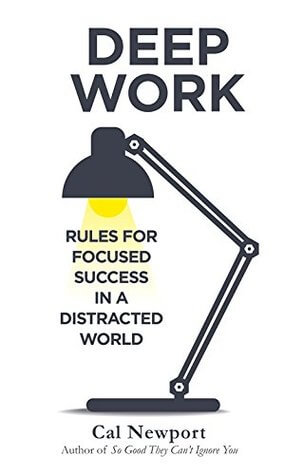
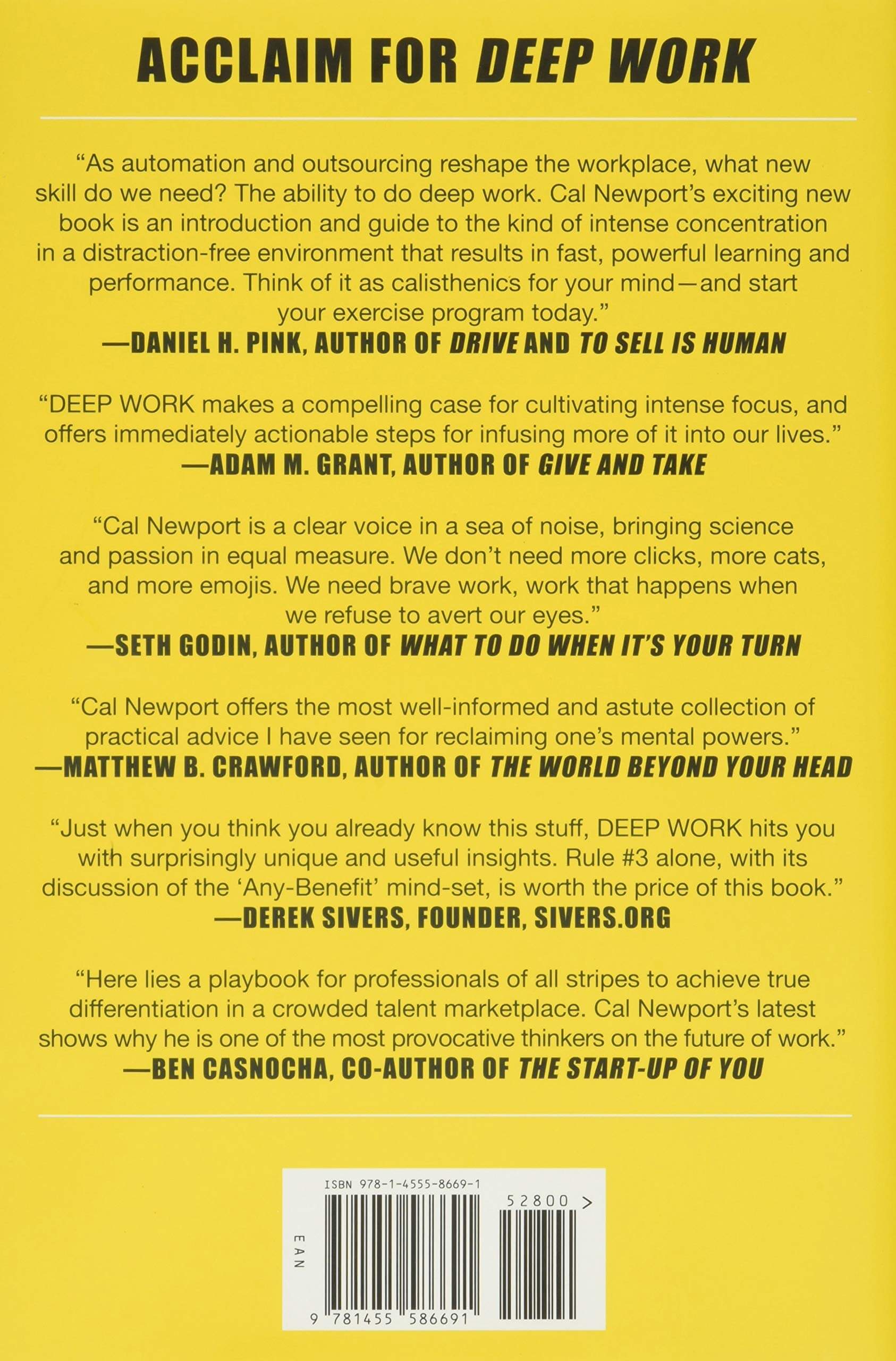



Deep Work by Cal Newport is a powerful productivity book about improving concentration, eliminating distractions and producing higher-quality work.
In a world filled with emails, notifications, social media and constant interruptions, the ability to concentrate for extended periods has become increasingly valuable.
Cal Newport describes Deep Work as focusing without distraction on a mentally demanding task. He argues that this type of concentration helps people learn complicated skills faster and create high-value results.
The book is ideal for students, entrepreneurs, professionals, writers, developers and anyone who wants to improve focus and use their time more effectively.
Why Read Deep Work?
Deep Work explains why being busy is not necessarily the same as being productive.
A person can spend an entire day answering emails, attending meetings and checking notifications.
They may feel busy.
But they may finish the day without completing anything truly important.
Cal Newport encourages readers to protect time for demanding work that requires full concentration.
This can help improve both the quality and quantity of meaningful output.
What Is Deep Work?
Deep Work means giving complete attention to a difficult task without allowing distractions to interrupt your concentration.
Examples may include:
- Writing an important report
- Studying a difficult subject
- Programming
- Designing
- Researching
- Developing a business strategy
- Learning a complicated skill
- Creating important professional work
The goal is not simply to work longer.
The goal is to work with greater concentration.
Deep Work vs Shallow Work
One of the most useful ideas in Deep Work is the difference between deep and shallow activities.
Deep activities require concentration and create meaningful value.
Shallow activities usually require less mental effort.
Emails, routine administrative work and unnecessary meetings can easily consume large parts of the day.
These tasks may still be necessary.
However, allowing them to dominate your schedule can leave little time for important work.
The book encourages readers to recognise this difference and protect more time for high-value activities.
Deep Work and Distractions
Distraction is one of the biggest enemies of concentration.
A notification appears.
You check your phone.
An email arrives.
You immediately respond.
Someone sends a message.
You switch tasks again.
Each interruption breaks concentration.
Deep Work encourages readers to create periods where these distractions are deliberately removed.
Even relatively short blocks of uninterrupted concentration can become highly productive when used consistently.
Train Your Ability to Focus
Concentration is not simply something you either have or do not have.
It can be trained.
If you constantly switch between apps, messages and tasks, sustained concentration may become difficult.
Deep Work encourages readers to practise focusing for longer periods.
Start with a clearly defined task.
Remove unnecessary distractions.
Work on that task without constantly switching.
Over time, sustained concentration can become easier.
Schedule Deep Work
One practical approach Cal Newport has discussed is scheduling deep-work blocks in advance and protecting them from other commitments.
Instead of waiting until you suddenly “feel focused,” create dedicated periods for important work.
For example:
9:00 AM – 11:00 AM: Deep Work
During this period, avoid unnecessary email, social media and unrelated tasks.
Treat the block like an important appointment.
This makes focused work intentional rather than accidental.
Deep Work Helps You Learn Faster
Modern careers frequently require people to learn new skills.
Technology changes.
Industries change.
New tools appear.
The ability to learn difficult subjects quickly can therefore become extremely valuable.
Cal Newport argues that deep concentration supports deliberate learning of complicated skills.
When attention is divided between learning and constant interruptions, progress can become slower.
Focused study gives the brain a better opportunity to engage fully with difficult material.
Produce Higher-Value Work
Deep Work is not only about getting more tasks completed.
It is about producing work that matters.
A programmer may use focused time to solve a difficult technical problem.
A writer may complete an important chapter.
A student may understand a challenging concept.
An entrepreneur may develop a strategy that changes the direction of a business.
These activities generally require more concentration than answering routine messages.
Stop Multitasking
Multitasking often feels productive.
You answer a message while working on a presentation.
Then you check an email.
Then you return to the presentation.
But constant switching can make focused thinking more difficult.
Deep Work encourages readers to give important tasks their full attention.
Complete one demanding activity with concentration before moving to something else whenever possible.
This can improve both speed and quality.
Create a Distraction-Free Environment
Environment has a major influence on concentration.
A workspace filled with interruptions makes deep focus more difficult.
You can create better conditions by:
- Putting your phone away
- Turning off unnecessary notifications
- Closing unrelated browser tabs
- Choosing a quiet workspace
- Setting a clear objective
- Blocking specific focus time
The goal is to make distraction slightly harder and concentration easier.
Deep Work and Social Media
Social media can be useful.
However, it can also consume attention without people realising how much time has passed.
Deep Work encourages a more deliberate relationship with distracting technologies.
Instead of automatically using every platform, consider whether it genuinely provides enough value to justify the attention it consumes.
This approach is about intentional technology use rather than simply rejecting technology.
Learn to Embrace Boredom
Constant stimulation can make quiet concentration uncomfortable.
People often reach for their phones immediately when they have a free moment.
Waiting in a queue?
Check the phone.
Sitting alone?
Check social media.
A few seconds of boredom?
Open another app.
But always seeking stimulation can make sustained concentration harder.
Deep Work encourages readers to become more comfortable without constant entertainment.
That can strengthen the ability to remain focused when work becomes difficult.
Set Clear Goals
Focused work becomes easier when you know exactly what you are trying to accomplish.
“Work on my project” is vague.
“Finish the first 1,000 words of the report” is specific.
Clear goals give a deep-work session direction.
At the beginning of each session, decide what success should look like.
Then focus on completing that objective.
Measure Meaningful Progress
People often measure productivity by hours worked.
But hours alone do not reveal much.
Someone can spend eight hours at a desk while constantly being distracted.
Another person may accomplish important work in three highly focused hours.
Deep Work encourages readers to think more carefully about valuable output.
Ask:
What important work did I actually complete?
That question can be more useful than simply asking how long you worked.
Rest Is Important Too
Focused concentration is demanding.
Nobody can perform mentally difficult work continuously throughout the entire day.
Periods of rest help maintain sustainable productivity.
Cal Newport has also written about using deliberate breaks during long deep-work sessions to recharge without completely losing concentration.
Productivity therefore does not mean working every minute.
It means using your best concentration intelligently.
7 Powerful Lessons From Deep Work
- Protect Your Focus – Important work deserves uninterrupted time.
- Reduce Distractions – Notifications and unnecessary task switching can damage concentration.
- Schedule Important Work – Put focused sessions on your calendar instead of waiting for free time.
- Train Concentration – Focus can improve through regular practice.
- Avoid Constant Multitasking – Give demanding tasks your full attention.
- Prioritise High-Value Work – Being busy does not automatically mean being productive.
- Work Deeply, Then Rest – Intense concentration should be balanced with recovery.
What You Can Learn From Deep Work
Readers can explore:
- Productivity
- Focus and concentration
- Time management
- Distraction management
- Digital habits
- Better study techniques
- Professional performance
- Learning difficult skills
- Time blocking
- Goal setting
- Meaningful productivity
- Avoiding multitasking
- Building better work habits
- Managing technology
- Creating valuable work
Who Should Read Deep Work?
Deep Work is ideal for professionals who need uninterrupted concentration to produce their best work.
Students can apply its ideas to studying.
Software developers may benefit from protecting blocks of time for complex technical problems.
Writers and designers can use deep-work sessions for creative projects.
Entrepreneurs and managers can apply the principles to strategy and decision-making.
Anyone who feels constantly busy but struggles to complete important work may find the ideas especially useful.
A Powerful Guide to Focused Success
Deep Work provides a practical philosophy for succeeding in an environment filled with distraction.
Cal Newport argues that the ability to concentrate deeply is increasingly valuable and can help people master complicated skills and produce better work.
The central lesson is simple.
Protect your attention.
Reduce unnecessary distractions.
Create time for work that genuinely matters.
Practise concentration instead of constantly switching tasks.
For readers looking to improve productivity, concentration, learning and professional performance, Deep Work by Cal Newport is an excellent addition to any business or personal-development bookshelf.
Book Details
Title: Deep Work: Rules for Focused Success in a Distracted World
Author: Cal Newport
Category: Productivity / Business / Personal Development
Language: English
Original Publication: 2016. Newport noted in March 2026 that the book had reached its tenth anniversary.
| Author | Cal Newport |
|---|---|
| Language | English |
| Type | Paperback Printed Book (Second Quality Copy) |
Be the first to review “Deep Work by Cal Newport”
Related products

Out of stock
Non-Fiction & Knowledge
රු1,500.00
3 X Rs. 500.00 or 8% Cashback with


or 3 X රු500.00 with


or up to 4 X රු375.00 with

-13%

Out of stock
Non-Fiction & Knowledge
Original price was: රු3,900.00.රු3,400.00Current price is: රු3,400.00.
3 X Rs. 1,133.33 or 8% Cashback with
or 3 X රු1,133.33 with
or up to 4 X රු850.00 with
-34%

Non-Fiction & Knowledge
Original price was: රු2,250.00.රු1,490.00Current price is: රු1,490.00.
3 X Rs. 496.67 or 8% Cashback with
or 3 X රු496.67 with
or up to 4 X රු372.50 with
-17%
Out of stock
Non-Fiction & Knowledge
Original price was: රු2,900.00.රු2,400.00Current price is: රු2,400.00.
3 X Rs. 800.00 or 8% Cashback with
or 3 X රු800.00 with
or up to 4 X රු600.00 with

රු2,000.00
3 X Rs. 666.67 or 8% Cashback with
or 3 X රු666.67 with
or up to 4 X රු500.00 with
-19%

Out of stock
Biography
Original price was: රු2,400.00.රු1,950.00Current price is: රු1,950.00.
3 X Rs. 650.00 or 8% Cashback with
or 3 X රු650.00 with
or up to 4 X රු487.50 with

Non-Fiction & Knowledge
රු2,250.00
3 X Rs. 750.00 or 8% Cashback with
or 3 X රු750.00 with
or up to 4 X රු562.50 with
-13%

Out of stock
Non-Fiction & Knowledge
Original price was: රු3,850.00.රු3,350.00Current price is: රු3,350.00.
3 X Rs. 1,116.67 or 8% Cashback with
or 3 X රු1,116.67 with
or up to 4 X රු837.50 with
Reviews
There are no reviews yet.