
No products in the cart.
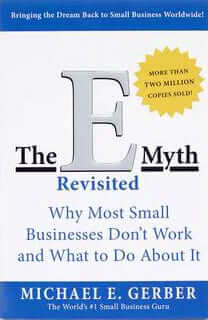
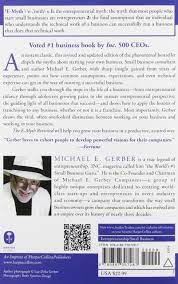




E-Myth Revisited by Michael E. Gerber is a powerful business book about why many small businesses struggle and what entrepreneurs can do differently.
Starting a business can look simple.
You are good at baking, so you open a bakery.
You understand computers, so you start an IT company.
You know photography, so you create a photography business.
You are an excellent mechanic, so you open a workshop.
But being good at the technical work does not automatically mean you know how to run the business itself.
That mistaken assumption is at the heart of E-Myth Revisited.
Gerber defines the “E-Myth” as the entrepreneurial myth—the belief that most people who start businesses are entrepreneurs, combined with the dangerous assumption that understanding the technical work of a business means you understand how to operate that business successfully.
Why Read E-Myth Revisited?
E-Myth Revisited is especially useful for small-business owners who feel trapped inside their own companies.
You started the business hoping for greater freedom.
Instead, you work longer hours.
Customers need you.
Employees need you.
Suppliers contact you.
Problems wait for you.
Nothing seems to happen unless you are personally involved.
Eventually, you may discover that you did not create a business.
You created a job for yourself.
And possibly a very demanding one.
Gerber’s solution is to start thinking differently about what a business should become.
E-Myth Revisited and the Entrepreneurial Myth
The central problem in E-Myth Revisited begins when a technician experiences what Gerber describes as the entrepreneurial assumption.
Imagine an excellent baker.
She knows how to make wonderful cakes.
Eventually she thinks:
“Why should I work for someone else? I can open my own bakery.”
So she does.
Then everything changes.
She still needs to bake.
But now she also needs to:
- Manage employees
- Handle accounting
- Market the business
- Manage inventory
- Deal with customers
- Negotiate with suppliers
- Set prices
- Control costs
- Create procedures
- Solve staffing problems
The technical skill is only one part of running the company.
This is why E-Myth Revisited separates doing the work from building the organization that delivers the work consistently.
Work On Your Business, Not Only In It
One of the most famous concepts in E-Myth Revisited is the distinction between working in your business and working on your business.
Working in the business means doing everyday operational tasks.
Serving customers.
Packing orders.
Answering emails.
Creating invoices.
Managing deliveries.
Fixing immediate problems.
Working on the business means building the systems that allow those activities to happen consistently without requiring your personal involvement every time.
Gerber’s revised book specifically emphasizes this distinction between working on the business and working in it.
Both kinds of work may be necessary.
But if the owner spends every hour inside operations, there is little time left to build the company.
E-Myth Revisited and Business Systems
Systems are one of the most important ideas in E-Myth Revisited.
A strong business should not depend entirely on individual memory.
Imagine one employee knows exactly how to process an order.
Nobody else knows.
Then that employee leaves.
Suddenly the process disappears with them.
A system solves this problem.
Document the process.
Define the steps.
Set standards.
Train employees.
Measure results.
Improve the system.
Then the knowledge belongs to the business rather than only to one employee.
Build a Business That Can Operate Without You
Many business owners become the centre of every decision.
A customer complains?
Call the owner.
A supplier has a problem?
Call the owner.
Someone needs a discount?
Ask the owner.
An employee makes a mistake?
Call the owner.
This creates dependence.
And dependence limits growth.
E-Myth Revisited encourages owners to build a company where processes, responsibilities and standards are clear enough that routine work does not always require the founder.
That does not mean the owner becomes unnecessary.
It means the owner can spend more time on strategy and growth instead of constant firefighting.
E-Myth Revisited and the Three Business Personalities
A useful idea associated with Gerber’s framework is that business owners often operate through three different roles:
The Entrepreneur
The Entrepreneur thinks about possibilities.
Vision.
Growth.
New ideas.
Future opportunities.
The Manager
The Manager wants organization.
Processes.
Planning.
Structure.
Predictability.
The Technician
The Technician wants to do the actual work.
Make the product.
Serve the customer.
Fix the problem.
Deliver the service.
A successful business needs all three perspectives.
Problems arise when the Technician dominates everything.
Why Technicians Get Trapped
Most people start companies based on a skill.
That naturally makes the Technician strong.
The chef starts a restaurant.
The programmer starts a software company.
The accountant starts an accounting firm.
The designer starts a design agency.
Initially, doing the technical work seems sensible.
But as the company grows, management becomes necessary.
Systems become necessary.
Strategy becomes necessary.
Hiring becomes necessary.
The founder eventually needs to develop beyond the role that originally created the company.
That transition is one of the central lessons of E-Myth Revisited.
E-Myth Revisited and Business Growth
Gerber also discusses different stages in the life of a business.
The revised edition walks readers through entrepreneurial infancy, adolescent growing pains, and eventually the mature entrepreneurial perspective.
Each stage requires different thinking.
A tiny company can sometimes survive through the founder’s personal effort.
A larger company cannot.
More customers create more complexity.
More employees require coordination.
More products require systems.
Growth without structure can create chaos.
Business Infancy
During the early stage, the owner often does almost everything.
Sales.
Operations.
Customer service.
Administration.
Purchasing.
This can work when the company is very small.
But the owner eventually reaches a limit.
There are only so many hours in the day.
Hiring becomes necessary.
That begins the next challenge.
Business Adolescence
As employees join, the owner begins delegating.
But delegation without systems can create another problem.
Employees perform tasks differently.
Quality becomes inconsistent.
The owner becomes frustrated.
Then the owner begins taking responsibilities back.
Soon they are overloaded again.
E-Myth Revisited explains why growing businesses need more than people.
They need processes that help those people succeed.
Create Repeatable Processes
A repeatable process produces predictable results.
Imagine your business receives an online order.
A documented process might define:
- How the order is received
- How payment is confirmed
- How inventory is allocated
- How the product is packed
- How the shipment is created
- How the customer is notified
- How returns are handled
Now employees do not have to invent the process every time.
That creates consistency.
Consistency improves scalability.
E-Myth Revisited and the Franchise Prototype
Gerber uses franchising as an important model for business thinking.
The idea is not that every company must literally become a franchise.
Instead, the owner should imagine building the business as though it eventually needed to operate in thousands of locations.
The revised edition specifically discusses applying lessons from franchising even to businesses that are not franchises.
That mindset changes how you design operations.
Processes need to be understandable.
Results need to be measurable.
Training needs to be repeatable.
Quality needs to remain consistent.
Document What Works
If a process works well, document it.
How should employees greet customers?
How should orders be packed?
How should complaints be managed?
How should inventory be counted?
How should invoices be created?
How should new staff members be trained?
Documentation reduces confusion.
It also makes training easier when the business grows.
E-Myth Revisited and Consistency
Customers value consistency.
If someone buys from you today and receives excellent service, they expect the same experience tomorrow.
A business should not produce excellent service only when the owner is personally present.
Strong systems help maintain quality across different employees and situations.
Consistency builds trust.
Trust supports repeat business.
Measure What Matters
You cannot improve what you never examine.
Useful measurements might include:
- Sales
- Gross profit
- Conversion rate
- Customer complaints
- Repeat purchases
- Order processing time
- Inventory errors
- Delivery delays
- Employee productivity
- Return rates
Numbers help reveal problems before they become large.
Gerber’s broader system emphasizes innovation, quantification and orchestration as components of developing predictable business processes.
Do Not Build Everything Around Yourself
The founder can become a company’s biggest strength.
But also its biggest limitation.
If customers insist on speaking only with you, growth becomes difficult.
If only you know how to buy inventory, the company depends on you.
If every employee needs your approval, decisions become slow.
E-Myth Revisited encourages founders to transfer knowledge from themselves into the organization.
Processes.
Training.
Responsibilities.
Standards.
Systems.
That is how a company becomes larger than its founder.
E-Myth Revisited and Delegation
Delegation does not simply mean:
“Someone else can handle it.”
Effective delegation needs clarity.
What needs to be done?
Who is responsible?
What does success look like?
What authority does that person have?
How will results be measured?
Without clear expectations, delegation often becomes confusion.
Systems make delegation more reliable.
Build Roles, Not Just Jobs
A growing business needs clear responsibilities.
Who owns sales?
Who manages purchasing?
Who handles customer service?
Who monitors inventory?
Who manages accounting?
Who approves discounts?
Employees should know what they are responsible for and what decisions they can make.
This reduces unnecessary dependence on the owner.
E-Myth Revisited and Customer Experience
Systems are not only about internal efficiency.
They also influence customers.
A repeatable customer experience can become one of the strongest parts of a business.
Customers should know what to expect.
Reliable communication.
Consistent service.
Clear processes.
Predictable quality.
Good problem resolution.
A professional business experience is usually designed rather than accidental.
Create Standards
Employees need standards.
“Give good customer service” is vague.
A stronger system might define:
Reply to customer messages within a particular period.
Confirm every online order.
Check every package before dispatch.
Record every customer complaint.
Follow up when a delivery is delayed.
Specific expectations are easier to manage than general instructions.
E-Myth Revisited for Entrepreneurs
Entrepreneurs may find this book especially valuable when they are transitioning from startup mode into growth.
At first, doing everything yourself may be necessary.
But eventually that approach becomes a bottleneck.
The founder needs to move from:
doing everything
toward:
designing how everything gets done.
That change is one of the most powerful ideas in E-Myth Revisited.
E-Myth Revisited for Small Business Owners
Small-business owners can apply the book directly.
You do not need hundreds of employees.
Even a business with three or four employees can benefit from systems.
Start small.
Document one process.
Improve it.
Train someone.
Measure the result.
Then move to another process.
Over time, the entire company becomes easier to manage.
7 Powerful Lessons From E-Myth Revisited
- Technical Skill Is Not Enough – Knowing how to perform the work does not automatically mean you know how to build a successful company.
- Work On the Business – Owners need time for strategy, systems and improvement, not only daily operations.
- Build Repeatable Systems – Consistent processes help a business deliver predictable results.
- Do Not Make Yourself Irreplaceable – A company that completely depends on its owner is difficult to scale.
- Think Like a Franchise – Design operations so another trained person could reproduce the experience consistently.
- Measure Performance – Use data to understand what is working and what needs improvement.
- Build the Business Intentionally – A successful company should be designed, documented and continuously improved.
What You Can Learn From E-Myth Revisited
Readers can explore:
- Entrepreneurship
- Small business management
- Business systems
- Business growth
- Leadership
- Delegation
- Standard operating procedures
- Business processes
- Entrepreneurship myths
- Productivity
- Team management
- Scaling a business
- Franchising principles
- Customer experience
- Business strategy
- Management
- Business operations
Who Should Read E-Myth Revisited?
E-Myth Revisited is particularly useful for small-business owners.
It is also valuable for entrepreneurs preparing to launch a business.
Managers can use its ideas when building procedures and teams.
Freelancers may find it useful when trying to transition from selling their own time toward building a larger company.
Family-business owners can use the principles to clarify roles and reduce dependence on one individual.
The book is especially relevant if you frequently think:
“Nothing gets done unless I do it myself.”
That is exactly the kind of problem Gerber’s approach is designed to address.
A Powerful Guide to Building a Business That Works
E-Myth Revisited changes the way many entrepreneurs think about business ownership.
Owning a business should eventually mean more than performing the technical work personally.
The goal is to create something that can operate consistently.
Something with systems.
Processes.
Standards.
Trained people.
Clear responsibilities.
Reliable results.
Gerber walks readers through the stages of business development and encourages them to build a company using system-focused principles similar to those that allow franchises to operate predictably.
The most important shift is simple:
Stop spending every available hour working in the business.
Create enough space to begin working on the business.
For entrepreneurs, managers and small-business owners who want to build a company that can grow beyond the founder’s individual effort, E-Myth Revisited by Michael E. Gerber is an essential business read.
Book Details
Full Title: The E-Myth Revisited: Why Most Small Businesses Don’t Work and What to Do About It
Author: Michael E. Gerber
Category: Business / Entrepreneurship / Small Business / Management
Core Topics: Business systems, entrepreneurship, scaling, delegation and management.
A commonly listed revised HarperCollins edition has:
ISBN-13: 9780060766610
Pages: 288
Publisher: HarperCollins.
Another widely circulated HarperBusiness edition uses ISBN 9780887307287, so check the ISBN on your physical copy before entering edition-specific details on the website.
https://yourwebsite.com/the-e-myth-revisited/
| Author | Michael E. Gerber |
|---|---|
| Language | English |
| Type | Paperback Printed Book (Second Quality Copy) |
Be the first to review “E-Myth Revisited by Michael E. Gerber”
Related products
-28%

Self-Help & Psychology
Original price was: රු1,800.00.රු1,300.00Current price is: රු1,300.00.
3 X Rs. 433.33 or 8% Cashback with


or 3 X රු433.33 with


or up to 4 X රු325.00 with

-14%

Out of stock
Self-Help & Psychology
Original price was: රු2,900.00.රු2,500.00Current price is: රු2,500.00.
3 X Rs. 833.33 or 8% Cashback with
or 3 X රු833.33 with
or up to 4 X රු625.00 with
-24%

Out of stock
Non-Fiction & Knowledge
Original price was: රු2,100.00.රු1,600.00Current price is: රු1,600.00.
3 X Rs. 533.33 or 8% Cashback with
or 3 X රු533.33 with
or up to 4 X රු400.00 with
-23%

Non-Fiction & Knowledge
Original price was: රු2,200.00.රු1,700.00Current price is: රු1,700.00.
3 X Rs. 566.67 or 8% Cashback with
or 3 X රු566.67 with
or up to 4 X රු425.00 with

රු2,000.00
3 X Rs. 666.67 or 8% Cashback with
or 3 X රු666.67 with
or up to 4 X රු500.00 with
-24%

Out of stock
Non-Fiction & Knowledge
Original price was: රු2,500.00.රු1,900.00Current price is: රු1,900.00.
3 X Rs. 633.33 or 8% Cashback with
or 3 X රු633.33 with
or up to 4 X රු475.00 with

Out of stock
Self-Help & Psychology
රු2,200.00
3 X Rs. 733.33 or 8% Cashback with
or 3 X රු733.33 with
or up to 4 X රු550.00 with
-19%

Out of stock
Non-Fiction & Knowledge
Original price was: රු2,650.00.රු2,150.00Current price is: රු2,150.00.
3 X Rs. 716.67 or 8% Cashback with
or 3 X රු716.67 with
or up to 4 X රු537.50 with
Reviews
There are no reviews yet.