
No products in the cart.
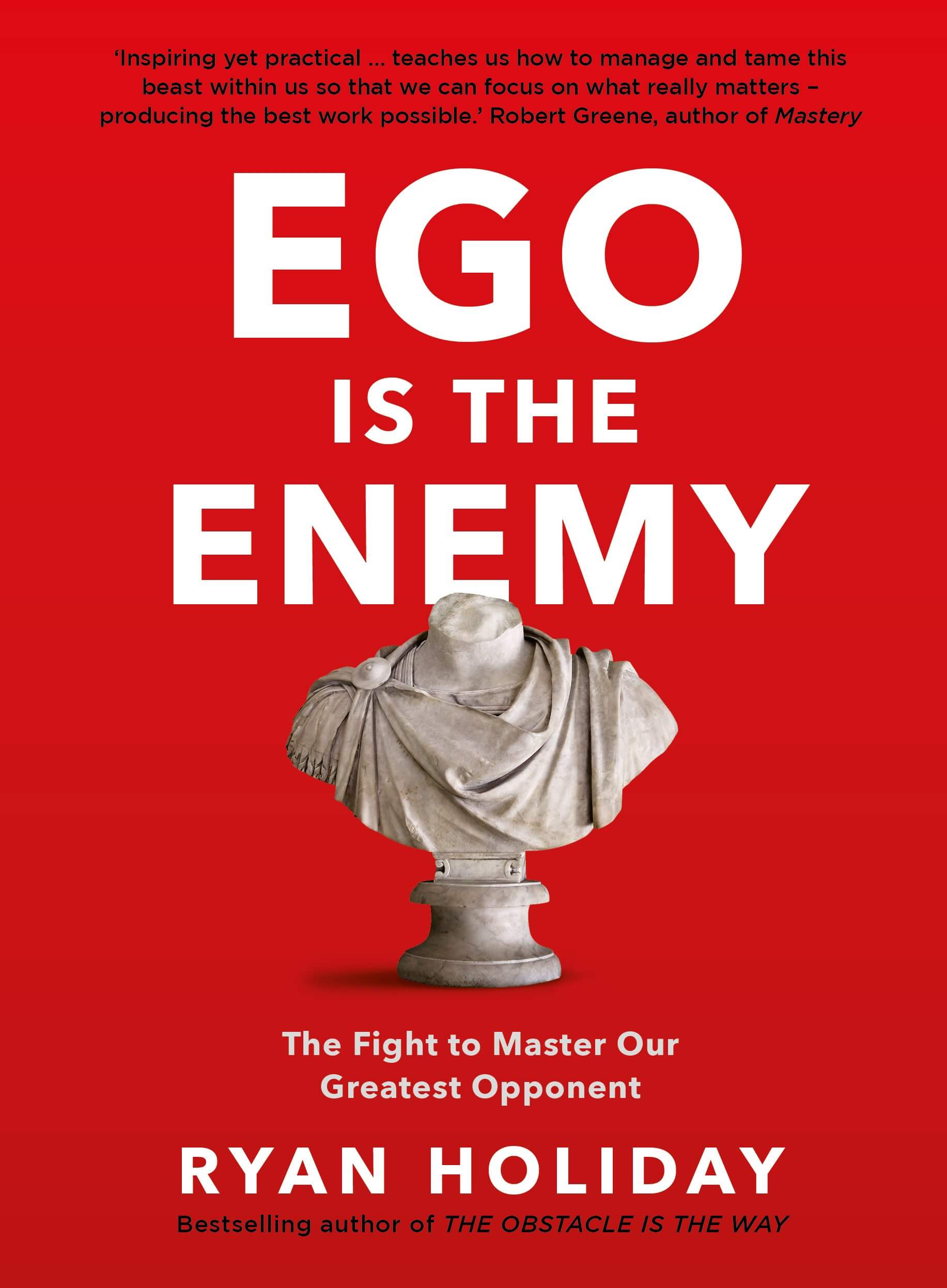
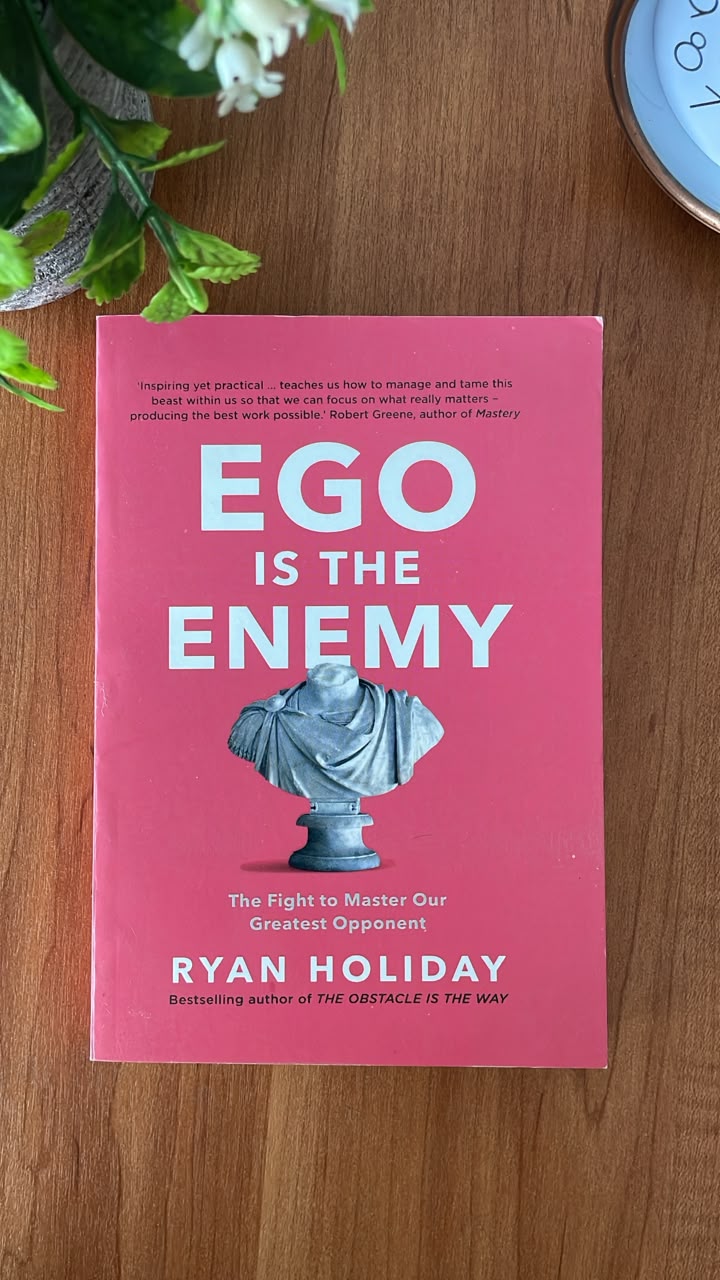
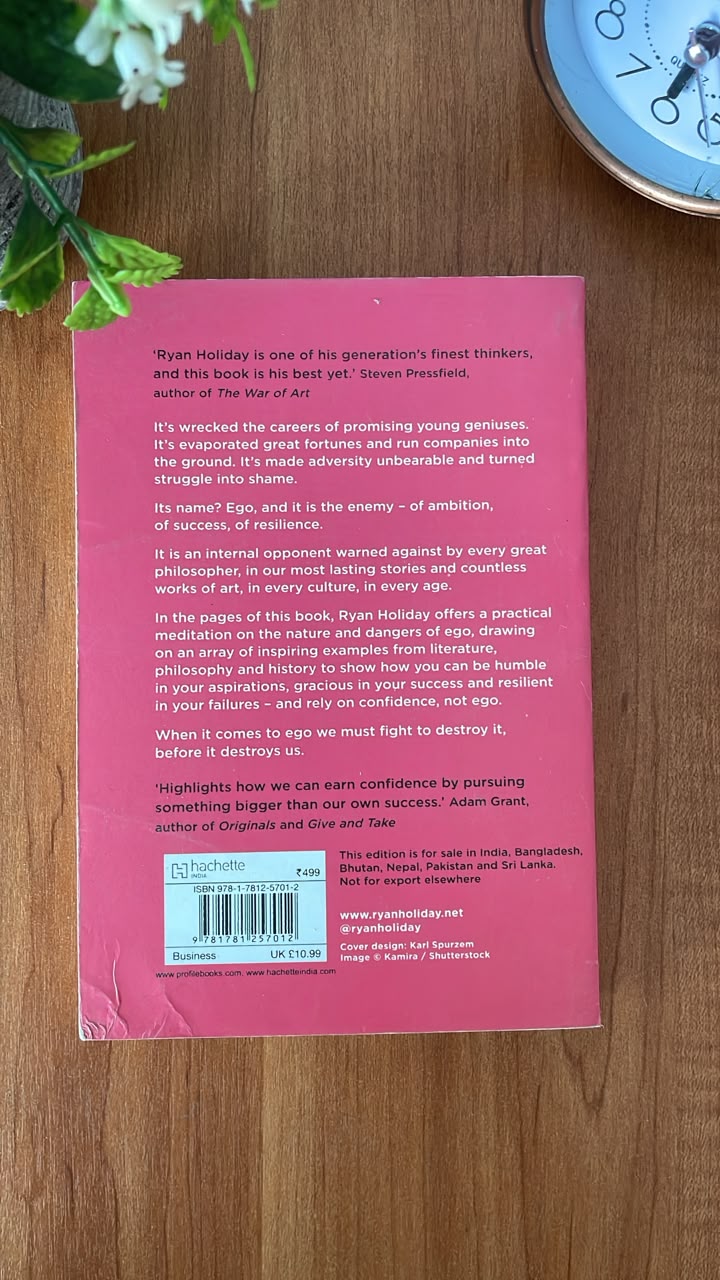

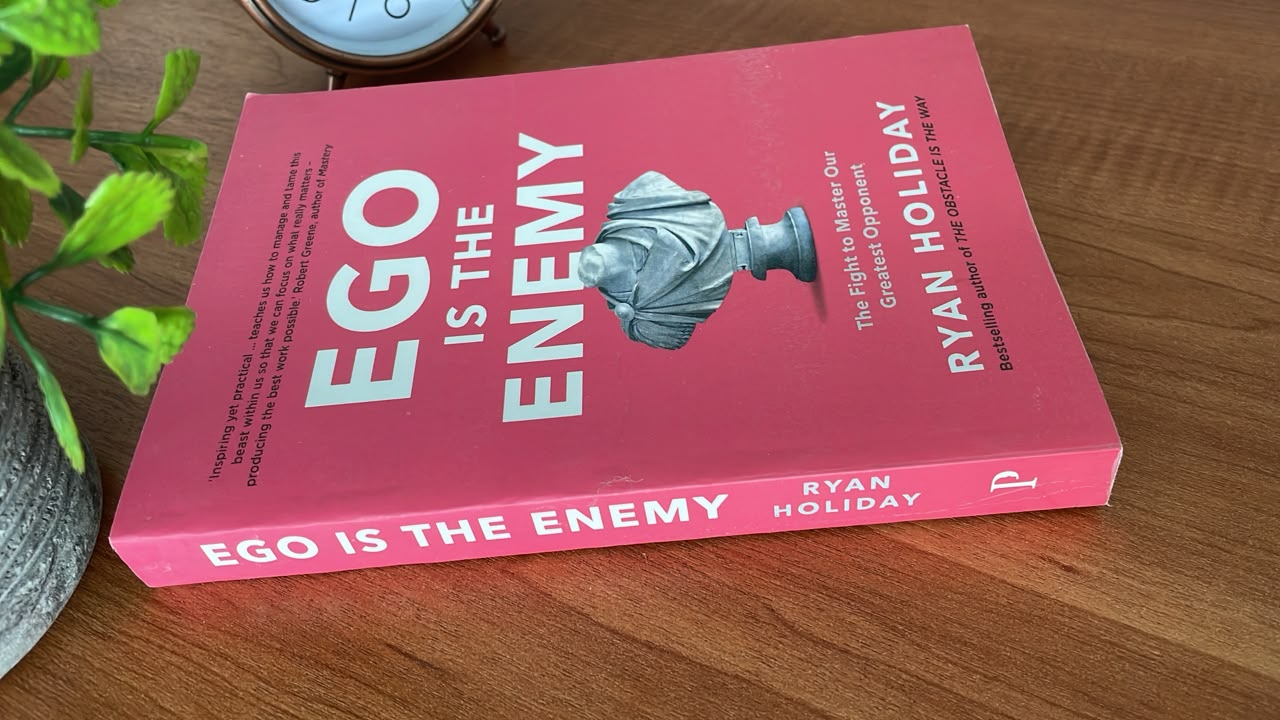





Ego Is the Enemy by Ryan Holiday is a powerful personal-development book about humility, discipline, self-awareness and overcoming the inner obstacle that can prevent us from reaching our potential.
People often assume that success is mainly threatened by external problems.
Competition.
Bad luck.
Lack of opportunity.
Other people.
But Ryan Holiday argues that another major obstacle can exist inside us:
ego.
In Ego Is the Enemy, Holiday examines how an exaggerated sense of self-importance can interfere with learning, collaboration, decision-making and long-term achievement.
The book draws on historical and modern examples to show how humility and discipline can help people remain effective whether they are aspiring, succeeding or experiencing failure.
Why Read Ego Is the Enemy?
Ego Is the Enemy is especially useful for ambitious people.
Ambition itself is not necessarily the problem.
The danger appears when confidence turns into entitlement.
Someone may begin believing they already know enough.
They stop listening.
They stop learning.
They assume normal rules no longer apply to them.
Holiday distinguishes healthy confidence from ego, describing ego as an unhealthy belief in one’s own importance rather than an accurate understanding of one’s abilities.
That difference is important.
Confidence can help you act.
Ego can prevent you from improving.
Ego Is the Enemy and the Desire for Success
Most ambitious people want to achieve something.
Build a business.
Become successful.
Write a book.
Lead a team.
Develop a skill.
Create something important.
But Ego Is the Enemy argues that ambition can become dangerous when people become more interested in appearing successful than doing the work required to become successful.
Talking about the goal can feel productive.
Receiving attention can feel rewarding.
But neither replaces execution.
Real achievement usually requires patience and consistent effort.
Stay a Student
One of the strongest lessons in Ego Is the Enemy is the importance of remaining a student.
Beginners often understand that they need to learn.
Success can change that.
Once someone gains experience, money, recognition or authority, they may begin believing there is nothing left to learn.
That is dangerous.
Every field changes.
New problems appear.
Other people know things you do not.
The willingness to remain teachable can therefore become a competitive advantage.
Ego Is the Enemy encourages readers to maintain curiosity even after they become successful.
Ego Is the Enemy and Humility
Humility does not mean believing you are incapable.
It means seeing yourself accurately.
You can recognise your strengths without assuming you are superior to everyone else.
You can achieve something impressive without believing the achievement makes you infallible.
Ryan Holiday uses examples from history and public life to show how people who restrained their egos were often better able to continue learning and performing effectively.
Humility keeps the door open to improvement.
Focus on the Work
It is easy to become obsessed with recognition.
Titles.
Followers.
Awards.
Attention.
Praise.
But recognition is not the same as achievement.
Ego Is the Enemy encourages readers to concentrate more on the quality of their work than on the attention surrounding it.
Ask:
Am I actually getting better?
Is the work useful?
Am I solving the problem?
Am I creating value?
These questions move attention away from appearance and back toward results.
Stop Needing Constant Validation
External validation can become addictive.
Someone praises your work.
You feel good.
A post receives attention.
You feel successful.
Then the attention disappears.
Suddenly, motivation disappears too.
Ego Is the Enemy encourages readers to develop a stronger internal standard.
Do the work because it matters.
Improve because improvement matters.
Do not allow every decision to depend on whether other people notice.
Ego Is the Enemy During Success
Success creates unique psychological risks.
Before success, people often work hard because they have something to prove.
After success, they may become comfortable.
They may believe previous victories guarantee future results.
They may stop doing the habits that produced success in the first place.
Holiday’s book specifically examines ego across different stages, including ambition, achievement and failure.
Success therefore needs management.
The more successful you become, the more important humility may become.
Do Not Let Success Become Entitlement
Success can create the belief:
“I deserve special treatment.”
That is where problems begin.
A successful manager may stop listening to employees.
A successful entrepreneur may ignore customers.
A talented employee may believe teamwork is beneath them.
A creator may assume every new project will automatically succeed.
Ego Is the Enemy warns against confusing past achievement with permanent superiority.
Previous success is evidence of what worked before.
It is not a guarantee of what will work next.
Ego Is the Enemy During Failure
Failure creates another challenge.
Ego may tell you that failure is unacceptable.
You may blame everyone else.
You may refuse to admit mistakes.
You may become defensive.
That response prevents learning.
A better question is:
What can this teach me?
Failure can contain valuable information.
Perhaps the strategy was wrong.
Maybe your assumptions were inaccurate.
Maybe execution was poor.
Maybe someone else understood the problem better.
Ego makes these lessons harder to accept.
Humility makes them easier to use.
Learn From Criticism
Criticism can hurt.
The first reaction may be defensive.
“They don’t understand.”
“They’re wrong.”
“They’re jealous.”
Sometimes criticism really is inaccurate.
But automatically rejecting every criticism can prevent improvement.
Ego Is the Enemy encourages a more disciplined response.
Examine the feedback.
Is there something useful inside it?
Even imperfect criticism can reveal blind spots.
Ego Is the Enemy and Self-Awareness
Self-awareness allows people to recognise what is actually motivating them.
Why do you want this promotion?
Why do you want recognition?
Why does criticism make you angry?
Why do you need to be seen as the smartest person in the room?
These questions can be uncomfortable.
But they can also be useful.
The more clearly you understand your motivations, the easier it becomes to recognise when ego is influencing a decision.
Confidence vs Ego
Confidence and ego are not the same thing.
Confidence is grounded.
You understand your abilities.
You also understand your limitations.
Ego exaggerates.
It tells you that your abilities are greater than they really are.
It may convince you that your needs matter more or that ordinary standards should not apply to you. Holiday himself makes this distinction when explaining the book’s central idea.
Confidence helps performance.
Ego can distort judgment.
Let Results Speak
People often want to announce what they are going to achieve.
They discuss plans.
They describe future success.
They create an identity around goals that have not yet been completed.
But talking can sometimes replace doing.
Ego Is the Enemy encourages readers to allow actual work to become the evidence.
Instead of telling everyone how ambitious you are, produce something.
Instead of announcing that you will become excellent, practice.
Let results speak.
Ego Is the Enemy and Leadership
Ego can be particularly dangerous for leaders.
A leader influences more than themselves.
Their decisions affect teams.
Employees may become afraid to disagree with an egotistical manager.
Bad news may be hidden.
Feedback may disappear.
Poor decisions can continue because nobody feels safe challenging them.
Humility creates a different environment.
A strong leader can say:
“I don’t know.”
“I was wrong.”
“What do you think?”
Those statements do not necessarily weaken authority.
They can strengthen trust.
Listen More Than You Speak
Listening provides information.
Speaking provides information to others.
If you dominate every conversation, you reduce your opportunity to learn.
This is especially important when working with people who have expertise you do not possess.
An effective executive does not need to know everything.
They need to recognise where useful knowledge exists.
Ego Is the Enemy encourages readers to remain open to learning from others.
Do the Work Nobody Sees
Important progress often happens privately.
Practice.
Research.
Training.
Preparation.
Revision.
Studying.
Nobody applauds these activities.
But they create the foundation for visible performance.
Ego wants attention quickly.
Mastery usually requires patience.
That tension is central to the book.
Stop Comparing Yourself Constantly
Comparison can feed ego in two directions.
You compare yourself with someone doing worse.
You feel superior.
You compare yourself with someone doing better.
You feel inadequate.
Neither reaction necessarily helps you improve.
A more useful comparison is with your previous performance.
Are you learning?
Are you improving?
Are you producing better work?
Are your decisions becoming stronger?
Focus on progress rather than status.
Ego Is the Enemy and Discipline
Discipline keeps attention on what needs to be done.
Ego wants shortcuts.
Recognition without preparation.
Success without repetition.
Authority without responsibility.
Discipline accepts that meaningful achievement takes time.
You show up.
You practice.
You learn.
You repeat.
This process may not feel glamorous.
But it produces real capability.
Purpose Over Recognition
A strong sense of purpose can protect against ego.
When the mission is larger than your identity, personal recognition becomes less important.
A leader can focus on the organization.
A teacher can focus on students.
An entrepreneur can focus on customers.
A writer can focus on creating useful work.
Purpose redirects attention.
Instead of asking:
“How does this make me look?”
You begin asking:
“Does this serve the goal?”
That shift can completely change decisions.
Ego Is the Enemy Uses Real Examples
Ryan Holiday supports his ideas with examples drawn from literature, philosophy and history.
The publisher highlights figures including George Marshall, Jackie Robinson, Katharine Graham, Bill Belichick and Eleanor Roosevelt as examples used in the book.
These stories make the book more than a collection of motivational statements.
Readers can see how ego, humility, discipline and resilience affect people facing real pressure.
Learn From Other People’s Mistakes
You do not need to personally experience every mistake.
History provides examples.
Business provides examples.
Sports provide examples.
Other people’s failures can become lessons.
That is one of the advantages of reading books such as Ego Is the Enemy.
You can examine patterns without paying the full cost of learning them personally.
7 Powerful Lessons From Ego Is the Enemy
- Stay a Student – Never allow success or experience to convince you that you have nothing left to learn.
- Focus on the Work – Real achievement matters more than appearing successful.
- Choose Humility – Understand your strengths without exaggerating your importance.
- Handle Success Carefully – Past victories do not guarantee future results.
- Learn From Failure – Mistakes contain valuable information when ego does not prevent you from seeing it.
- Listen to Feedback – Criticism can reveal blind spots and opportunities for improvement.
- Put Purpose Above Recognition – Focus on the mission rather than constantly seeking attention.
What You Can Learn From Ego Is the Enemy
Readers can explore:
- Ego
- Humility
- Stoicism
- Self-awareness
- Discipline
- Leadership
- Success
- Failure
- Personal development
- Ambition
- Resilience
- Confidence
- Decision-making
- Self-control
- Learning
- Personal growth
- Purpose
- Professional development
Who Should Read Ego Is the Enemy?
Ego Is the Enemy is ideal for ambitious professionals.
Entrepreneurs may appreciate its lessons on maintaining discipline while building a business.
Managers and leaders can use the ideas to improve self-awareness and decision-making.
Athletes may connect with its emphasis on practice, resilience and humility.
Students can apply its lessons while developing skills and beginning their careers.
Creators can use the book as a reminder to focus on the work rather than attention.
Ryan Holiday’s work has attracted readers across business, sports, politics and technology, and Penguin Random House describes his Stoicism-related books as widely influential among leaders in these fields.
A Powerful Guide to Mastering Your Ego
Ego Is the Enemy argues that some of the biggest obstacles to achievement do not always come from outside us.
Sometimes the obstacle is our own inflated sense of importance.
Ego can make us stop learning.
It can make us reject feedback.
It can make success turn into entitlement.
And it can prevent us from learning from failure.
Ryan Holiday uses philosophy, history and real-life examples to show how humility, discipline and self-awareness can create a stronger path.
The goal is not to eliminate confidence.
It is to prevent confidence from becoming arrogance.
Stay a student.
Focus on meaningful work.
Listen.
Learn.
Remain disciplined during success and resilient during failure.
For readers interested in Stoicism, leadership, personal development and building lasting success without allowing ego to take control, Ego Is the Enemy by Ryan Holiday is an excellent addition to any bookshelf.
Book Details
Title: Ego Is the Enemy
Author: Ryan Holiday
Category: Personal Development / Philosophy / Stoicism / Leadership
Original Publication: 2016
Publisher: Portfolio / Penguin
Penguin Random House lists the U.S. hardcover edition with:
ISBN-13: 9781591847816
Pages: 256
Format: Hardcover
Publisher: Portfolio.
Edition note: Ego Is the Enemy is available in multiple editions and formats. Check the ISBN printed on your physical copy before adding edition-specific details to your website. https://yourwebsite.com/ego-is-the-enemy/
| Author | Ryan Holiday |
|---|---|
| Language | English |
| Type | Paperback Printed Book (Second Quality Copy) |
Be the first to review “Ego is the Enemy by Ryan Holiday”
Related products
Non-Fiction & Knowledge
රු2,250.00
3 X Rs. 750.00 or 8% Cashback with


or 3 X රු750.00 with


or up to 4 X රු562.50 with

Non-Fiction & Knowledge
රු1,800.00
3 X Rs. 600.00 or 8% Cashback with
or 3 X රු600.00 with
or up to 4 X රු450.00 with
-24%
Out of stock
Non-Fiction & Knowledge
Original price was: රු2,100.00.රු1,600.00Current price is: රු1,600.00.
3 X Rs. 533.33 or 8% Cashback with
or 3 X රු533.33 with
or up to 4 X රු400.00 with
-28%
Self-Help & Psychology
Original price was: රු1,800.00.රු1,300.00Current price is: රු1,300.00.
3 X Rs. 433.33 or 8% Cashback with
or 3 X රු433.33 with
or up to 4 X රු325.00 with
රු2,000.00
3 X Rs. 666.67 or 8% Cashback with
or 3 X රු666.67 with
or up to 4 X රු500.00 with
-24%
Out of stock
Non-Fiction & Knowledge
Original price was: රු2,100.00.රු1,600.00Current price is: රු1,600.00.
3 X Rs. 533.33 or 8% Cashback with
or 3 X රු533.33 with
or up to 4 X රු400.00 with
Out of stock
Self-Help & Psychology
රු1,900.00
3 X Rs. 633.33 or 8% Cashback with
or 3 X රු633.33 with
or up to 4 X රු475.00 with
-13%
Out of stock
Non-Fiction & Knowledge
Original price was: රු3,900.00.රු3,400.00Current price is: රු3,400.00.
3 X Rs. 1,133.33 or 8% Cashback with
or 3 X රු1,133.33 with
or up to 4 X රු850.00 with
Reviews
There are no reviews yet.