
No products in the cart.
-13%
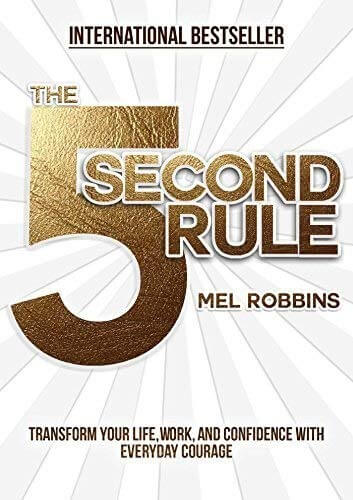
The 5 Second Rule by Mel Robbins


Original price was: රු3,900.00.රු3,400.00Current price is: රු3,400.00.
3 X Rs. 1,133.33 or 8% Cashback with


or 3 X රු1,133.33 with


or up to 4 X රු850.00 with


5 Second Rule by Mel Robbins is a practical personal-development book built around one simple idea: when you know you should take action, count backwards 5-4-3-2-1 and move before hesitation takes over.
Mel Robbins developed the method during a difficult period in her own life and later turned it into a practical tool for interrupting self-doubt, procrastination and negative thinking. Her official book page describes the Rule as a way to push yourself into action when motivation alone is not enough.
The book explores how the countdown technique can be applied to work, confidence, habits, goals and everyday decisions.
It is particularly suitable for readers who often know what they should do but struggle to make themselves start.
Product details:
- Title: The 5 Second Rule
- Author: Mel Robbins
- Publisher: Savio Republic
- Format: Hardcover
- Pages: 248
- Language: English
- ISBN-13: 9781682612385
- ISBN-10: 1682612384
- Publication date: 28 February 2017
- Dimensions: Approximately 21.6 × 15.2 × 2.3 cm
- Weight: Approximately 0.504 kg
- Categories: Self-Help, Motivation and Personal Development
- Key themes: Action, confidence, procrastination, courage, habits and motivation
Out of stock
Email when stock available
The 5 Second Rule by Mel Robbins
5 Second Rule by Mel Robbins is a practical personal-development book about closing the gap between knowing what you should do and actually doing it.
The central technique is remarkably simple.
When you feel yourself hesitating before taking a useful action, count backwards from five and physically begin before your mind creates another excuse.
5 Second Rule
5 Second Rule is built around the countdown:
5-4-3-2-1 — Go.
Mel Robbins explains that the method can help interrupt hesitation and create a moment in which you choose action instead of remaining stuck.
The concept does not depend on waiting until you feel motivated.
Instead, it encourages movement first.
Motivation may follow after action has already begun.
Why Five Seconds Matter
People often know what they need to do.
The difficulty is starting.
You may know that you should:
- Get out of bed
- Make an important phone call
- Begin a difficult task
- Exercise
- Speak during a meeting
- Apply for an opportunity
- Stop procrastinating
- Have an uncomfortable conversation
Yet a few seconds of hesitation can become enough time for doubt to appear.
Thoughts such as “I’ll do it later,” “I’m not ready,” or “What if this goes badly?” can prevent action.
The countdown creates a simple interruption.
5-4-3-2-1 and Take Action
The process is intentionally uncomplicated.
When you recognise a useful action you should take:
- Notice the hesitation.
- Count backwards: 5-4-3-2-1.
- Move physically toward the action.
- Begin before you start debating with yourself.
This might mean standing up.
It might mean opening the document.
It could mean making the call.
The important part is creating movement.
Stop Waiting for Motivation
One of the strongest ideas in 5 Second Rule is that motivation is unreliable.
Some mornings you may feel energetic.
Other days you may not.
If action always depends on feeling motivated, consistency becomes difficult.
Robbins encourages readers to separate action from mood.
You may not feel like beginning.
You can still begin.
That distinction can be useful in work, study, exercise and personal goals.
Overcoming Procrastination
Procrastination often begins with a small delay.
A person thinks:
“I’ll start in ten minutes.”
Ten minutes becomes thirty.
Thirty minutes becomes tomorrow.
5 Second Rule gives readers a simple method for interrupting that pattern.
Instead of negotiating with yourself, count down and begin.
The task may still be difficult.
The Rule simply helps overcome the first barrier: starting.
Break Large Tasks into Small Actions
Big projects can feel intimidating.
A better approach may be to identify the smallest useful next step.
For example:
Instead of “finish the entire report,” begin with “open the report and write the first heading.”
Instead of “get fit,” begin with “put on my walking shoes.”
Instead of “build a business,” begin with “contact one potential customer.”
The smaller the first action, the easier it becomes to move.
Build Confidence Through Action
Confidence is another major theme in 5 Second Rule.
People often assume confidence should come before action.
In reality, confidence can develop after repeatedly taking action.
A person who avoids public speaking may continue believing they cannot speak confidently.
Someone who begins contributing during small meetings creates evidence that they can improve.
Action becomes practice.
Practice creates experience.
Experience can build confidence.
Courage Before Confidence
Courage means acting even when uncertainty remains.
You do not need complete confidence before trying something new.
The countdown can become a cue for taking a small courageous action.
This could include:
- Asking a question
- Introducing yourself
- Sharing an idea
- Applying for a position
- Saying no
- Asking for help
- Starting a project
Small acts of courage can gradually change behaviour.
Interrupt Negative Self-Talk
People can become trapped in repetitive internal conversations.
“What if I fail?”
“What will people think?”
“I’m probably not ready.”
These thoughts can appear automatically.
The 5 Second Rule does not require winning a long argument with every negative thought.
Instead, the technique shifts attention toward action.
The thought may still exist.
You simply choose not to let it make the decision.
Use the Rule in the Morning
Mel Robbins originally developed the technique partly to help herself get out of bed during a particularly difficult period.
Her official account describes being unemployed, dealing with financial pressure and struggling to get herself moving before she began using the Rule.
The morning remains an easy place to understand the method.
Alarm sounds.
Your mind says:
“Stay in bed.”
Instead of continuing the debate:
5-4-3-2-1.
Move.
The physical action breaks the hesitation cycle.
Use It at Work
The technique can also be applied professionally.
You may hesitate before:
- Calling a customer
- Sending a proposal
- Asking your manager a question
- Presenting an idea
- Starting an important assignment
- Giving feedback
- Introducing yourself at an event
The countdown becomes a behavioural trigger.
Rather than spending several minutes thinking about whether you should act, you begin.
Speak Up More Often
Meetings provide a good example.
Someone may have a useful idea but hesitate.
Another person speaks first.
The moment disappears.
The 5 Second Rule encourages quicker action when you know you have something worth contributing.
Count backwards.
Raise your hand.
Begin speaking.
Confidence may develop after repeatedly practising this behaviour.
Make Decisions More Deliberately
Not every decision should be made in five seconds.
Major financial, legal, career or health decisions may require research and careful consideration.
The Rule is most useful when the decision has effectively already been made and hesitation is preventing execution.
You already decided to exercise.
Now you need to start.
You already decided to contact someone.
Now you need to make the call.
That distinction is important.
Change Everyday Habits
Habits often begin with triggers.
The countdown can become a trigger for useful behaviour.
For example:
Trigger: Alarm rings.
Response: 5-4-3-2-1, get up.
Trigger: Notice yourself scrolling instead of working.
Response: 5-4-3-2-1, put the phone away.
Trigger: Think about exercising.
Response: 5-4-3-2-1, change into exercise clothes.
Repeating these actions may make starting easier over time.
Action Creates Momentum
Starting is often the hardest part.
Once action begins, continuing may become easier.
Writing the first sentence can lead to the second.
Walking for five minutes may lead to twenty.
Making one sales call may make the next call easier.
The Rule therefore focuses heavily on creating momentum.
You do not need to complete everything within five seconds.
You only need to begin.
Stop Overthinking Small Decisions
Overthinking can turn simple actions into complicated debates.
Should I send the email?
Should I ask the question?
Should I start now?
Should I introduce myself?
When the action is reasonable and already aligned with your goals, excessive analysis may create delay without improving the decision.
The countdown helps end unnecessary debate.
Take Responsibility for Your Actions
Another broader lesson in 5 Second Rule is personal responsibility.
People cannot control everything that happens.
They can often control the next useful action.
Ask:
- What can I do now?
- What is the next step?
- Which part is within my control?
- What have I been avoiding?
These questions shift attention away from helplessness and toward behaviour.
Create Better Morning Habits
The Rule can be incorporated into a morning routine.
A simple sequence might be:
- Alarm rings.
- Count 5-4-3-2-1.
- Get out of bed.
- Avoid unnecessary phone scrolling.
- Begin the first useful morning activity.
The exact routine can vary.
The larger goal is to reduce the amount of negotiation required to begin the day.
Use It for Exercise
Exercise provides another practical application.
People often wait until they feel energetic enough to work out.
That feeling may never arrive.
Instead, identify the first physical step.
Put on your shoes.
Stand up.
Walk outside.
Begin the warm-up.
The countdown helps connect intention with movement.
Use It for Difficult Conversations
Some conversations are delayed because people anticipate discomfort.
You may need to:
- Set a boundary
- Admit a mistake
- Ask for clarification
- Give feedback
- Apologise
- Discuss a problem
The Rule can help begin the conversation.
However, the conversation itself still requires thoughtfulness, listening and good judgement.
Productivity Starts with Beginning
Productivity systems can become complicated.
People may spend more time organising tasks than completing them.
5 Second Rule offers a very simple productivity lesson.
Start.
Once the important task is clear, begin before unnecessary resistance grows.
This is particularly helpful for tasks that require concentration.
Use the Rule with Planning
The 5 Second Rule works better when you already know what matters.
Planning gives the countdown direction.
For example, identify your three most important tasks for tomorrow.
When it is time to begin the first task, use the countdown.
Planning answers:
What should I do?
The 5 Second Rule helps answer:
How do I make myself start?
Small Actions Can Accumulate
One action may feel insignificant.
Repeated actions can create substantial change.
One workout does not build long-term fitness.
One sales call does not build a business.
One study session does not complete a degree.
But consistent action adds up.
The Rule is designed to make the first step easier to repeat.
A Practical Tool Rather Than a Complex System
One reason the book became popular is the simplicity of its central idea.
There is no complicated worksheet required before using it.
You can understand the basic technique quickly.
That makes the book accessible to people who dislike complicated productivity systems.
The deeper value comes from applying the tool consistently.
About Mel Robbins
Mel Robbins is an author, podcast host and personal-development educator known for practical tools focused on behaviour change, confidence and motivation.
Her books include The 5 Second Rule, The High 5 Habit and The Let Them Theory.
Her official site describes The 5 Second Rule as a simple research-backed tool that has been used by millions of people around the world.
Who Should Read This Book?
5 Second Rule may appeal to:
- Students
- Entrepreneurs
- Professionals
- Managers
- Personal-development readers
- People struggling with procrastination
- Readers wanting greater confidence
- People who frequently overthink decisions
- Productivity enthusiasts
- Mel Robbins readers
It is particularly suitable for people who understand what they need to do but struggle to start.
Product Details
Product title: The 5 Second Rule
Author: Mel Robbins
Publisher: Savio Republic
Format: Hardcover
Language: English
Page count: 248 pages
ISBN-13: 9781682612385
ISBN-10: 1682612384
Publication date: 28 February 2017
Dimensions: Approximately 216 × 152 × 23 mm
Weight: Approximately 504 grams
Categories: Self-Help, Motivation and Personal Development
Key themes: Action, courage, confidence, procrastination, habits and motivation
Why Choose 5 Second Rule?
5 Second Rule gives readers a simple technique for one of the most common personal-development problems: knowing what needs to be done but hesitating to do it.
Mel Robbins turns the countdown 5-4-3-2-1 into a cue for movement.
The technique can be applied to procrastination, work, exercise, confidence and difficult everyday actions.
Its simplicity makes it easy to remember.
The real challenge is using it consistently.
For readers interested in motivation, confidence, productivity and behaviour change, 5 Second Rule is a practical addition to a personal-development bookshelf.
Explore our complete self-help and personal development books collection to discover more titles about habits, confidence, productivity and personal growth.
Learn more about
The 5 Second Rule by Mel Robbins
.
| Author | Mel Robbins |
|---|---|
| Language | English |
| Type | Paperback Printed Book |
Be the first to review “The 5 Second Rule by Mel Robbins”
Related products
රු2,000.00
3 X Rs. 666.67 or 8% Cashback with
or 3 X රු666.67 with
or up to 4 X රු500.00 with

Non-Fiction & Knowledge
රු1,500.00
3 X Rs. 500.00 or 8% Cashback with
or 3 X රු500.00 with
or up to 4 X රු375.00 with
Self-Help & Psychology
රු2,200.00
3 X Rs. 733.33 or 8% Cashback with
or 3 X රු733.33 with
or up to 4 X රු550.00 with
-34%

Non-Fiction & Knowledge
Original price was: රු2,250.00.රු1,490.00Current price is: රු1,490.00.
3 X Rs. 496.67 or 8% Cashback with
or 3 X රු496.67 with
or up to 4 X රු372.50 with
Self-Help & Psychology
රු1,900.00
3 X Rs. 633.33 or 8% Cashback with
or 3 X රු633.33 with
or up to 4 X රු475.00 with
-24%
Non-Fiction & Knowledge
Original price was: රු2,300.00.රු1,750.00Current price is: රු1,750.00.
3 X Rs. 583.33 or 8% Cashback with
or 3 X රු583.33 with
or up to 4 X රු437.50 with
Non-Fiction & Knowledge
රු2,250.00
3 X Rs. 750.00 or 8% Cashback with
or 3 X රු750.00 with
or up to 4 X රු562.50 with
Non-Fiction & Knowledge
රු1,600.00
3 X Rs. 533.33 or 8% Cashback with
or 3 X රු533.33 with
or up to 4 X රු400.00 with
Reviews
There are no reviews yet.