
No products in the cart.
-26%
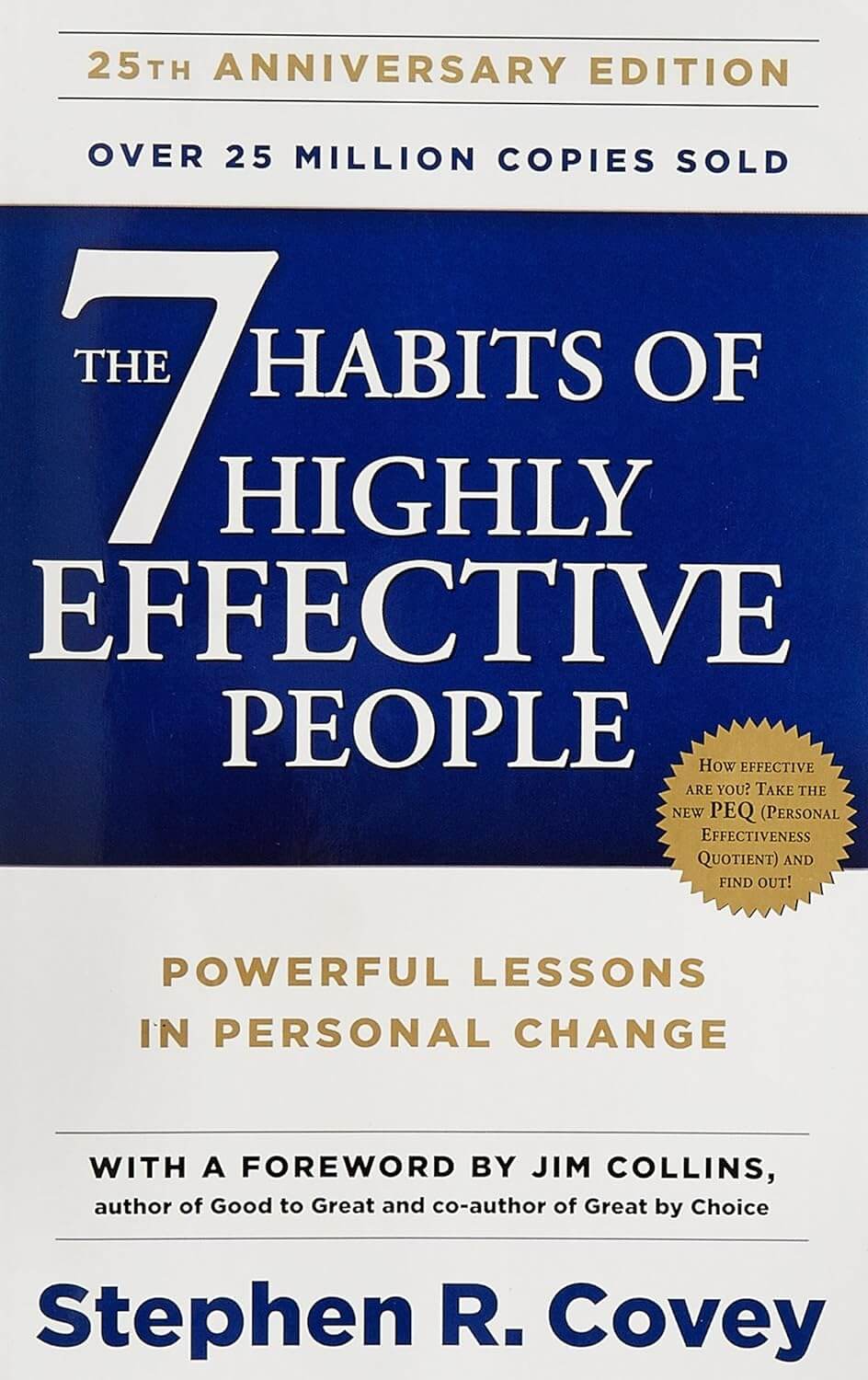
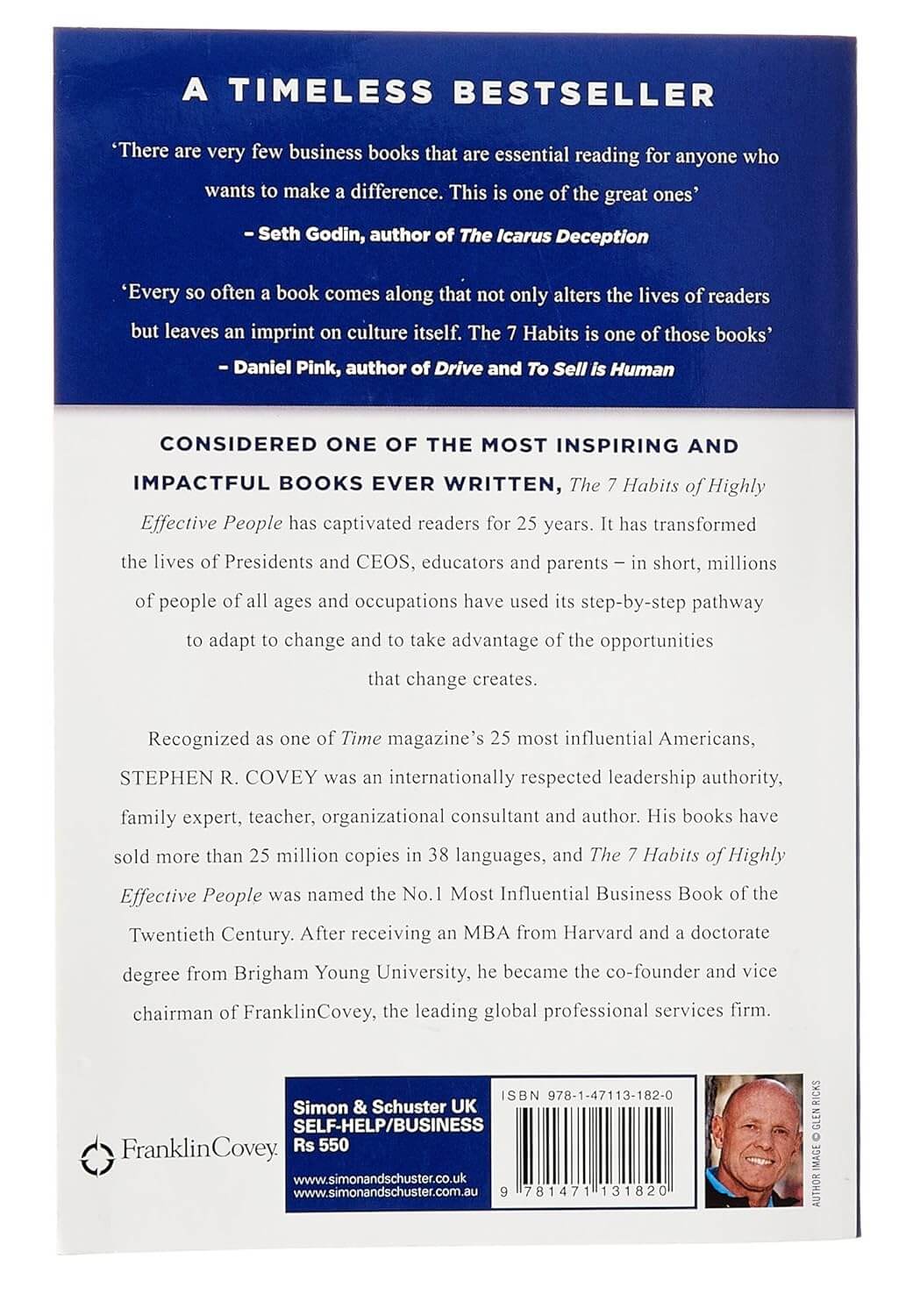
The 7 Habits of Highly Effective People by Stephen R. Covey – Blue Cover


Original price was: රු2,300.00.රු1,700.00Current price is: රු1,700.00.
3 X Rs. 566.67 or 8% Cashback with


or 3 X රු566.67 with


or up to 4 X රු425.00 with


7 Habits of Highly Effective People by Stephen R. Covey is one of the most influential personal-development and leadership books, offering a principle-centred framework for becoming more effective in both personal and professional life.
Covey introduces seven habits that move from personal responsibility and clear priorities to stronger relationships, collaboration and continuous renewal.
The seven habits are Be Proactive, Begin with the End in Mind, Put First Things First, Think Win-Win, Seek First to Understand Then to Be Understood, Synergize, and Sharpen the Saw.
This Blue Cover 25th Anniversary Edition includes a foreword by Jim Collins and presents Covey’s timeless lessons on integrity, responsibility, leadership, communication and meaningful personal change.
Product details:
- Title: The 7 Habits of Highly Effective People
- Subtitle: Powerful Lessons in Personal Change
- Author: Stephen R. Covey
- Foreword: Jim Collins
- Edition: 25th Anniversary Edition
- Publisher: Simon & Schuster
- Format: Paperback
- Language: English
- ISBN-13: 9781471129391
- ISBN-10: 147112939X
- Publication year: 2013
- Pages: 432
- Dimensions: Approximately 23.4 × 15.3 × 2.7 cm
- Weight: Approximately 0.45–0.47 kg
- Categories: Personal Development, Leadership and Self-Help
- Key themes: Responsibility, priorities, communication, leadership, teamwork and continuous improvement
10 in stock
The 7 Habits of Highly Effective People by Stephen R. Covey – Blue Cover
7 Habits of Highly Effective People by Stephen R. Covey is a landmark personal-development and leadership book built around timeless principles for becoming more effective in work, relationships and everyday life.
Rather than focusing on temporary motivation or quick productivity tricks, Covey encourages readers to develop habits based on responsibility, integrity, priorities, cooperation and continuous growth.
This Blue Cover 25th Anniversary Edition celebrates the lasting influence of Covey’s framework and includes a foreword by Jim Collins.
7 Habits of Highly Effective People
7 Habits of Highly Effective People presents a principle-centred approach to personal and professional effectiveness.
Covey’s framework moves gradually from personal responsibility to relationships and, finally, continuous renewal.
The seven habits are:
- Be Proactive
- Begin with the End in Mind
- Put First Things First
- Think Win-Win
- Seek First to Understand, Then to Be Understood
- Synergize
- Sharpen the Saw
Together, they provide a structured approach to improving decisions, priorities, communication and relationships.
Habit 1 – Be Proactive
The first habit focuses on personal responsibility.
People cannot control every circumstance around them.
They can often control how they respond.
Covey encourages readers to pay greater attention to what they can influence rather than spending all their energy on circumstances outside their control.
Useful questions include:
- What can I do about this situation?
- Which part is within my control?
- Am I reacting emotionally?
- What response would produce a better result?
Being proactive means choosing a response deliberately.
It does not mean pretending that difficult circumstances do not exist.
Focus on Your Circle of Influence
A practical way to understand proactivity is to separate concerns from influence.
You may be concerned about the economy, competitors, other people’s opinions or unexpected problems.
Your influence may be smaller.
You can influence your preparation, behaviour, skills, communication and next action.
Spending more energy inside this area can create greater effectiveness.
Habit 2 – Begin with the End in Mind
The second habit is about direction.
Before working harder, determine where you are trying to go.
Someone can be extremely busy while moving toward a destination they do not actually value.
Covey encourages readers to think about values, priorities and long-term outcomes.
Questions may include:
- What kind of person do I want to become?
- What matters most to me?
- What does success mean personally?
- Which relationships deserve greater attention?
- What do I want my work to contribute?
A clear destination makes everyday decisions easier.
Create Goals Around Values
Goals are more meaningful when connected to values.
A career goal may matter because it creates independence.
A financial goal may matter because it creates security for a family.
A health goal may matter because it allows someone to remain active.
Understanding why a goal matters can improve commitment.
Habit 3 – Put First Things First
Knowing what matters is not enough.
Important priorities need time.
The third habit focuses on organizing life around what is important instead of allowing every urgent interruption to take control.
Many people spend large amounts of time responding to:
- Emails
- Notifications
- Minor emergencies
- Meetings
- Other people’s requests
- Low-value tasks
These activities may feel urgent without contributing significantly to long-term goals.
Important Versus Urgent
Covey’s time-management ideas distinguish between urgency and importance.
Some important activities do not demand immediate attention.
Exercise is important.
Planning is important.
Building relationships is important.
Learning is important.
Because these activities may not create immediate pressure, they are easy to postpone.
Effective people deliberately protect time for them.
Habit 4 – Think Win-Win
The fourth habit moves from personal effectiveness toward relationships.
Win-win thinking asks whether a solution can create value for everyone involved.
This approach can be useful in:
- Business negotiations
- Partnerships
- Team decisions
- Customer relationships
- Family discussions
- Workplace disagreements
A win-win approach does not require accepting every demand.
It means searching for outcomes built around mutual respect and benefit.
Move Beyond Win-Lose Thinking
Some situations are genuinely competitive.
Many are not.
People sometimes create unnecessary competition because they assume someone else must lose for them to succeed.
Strong relationships often work better when people look for shared interests.
This is particularly important in long-term partnerships.
Winning one argument can become expensive if it destroys trust.
Habit 5 – Seek First to Understand
Communication often fails because people listen mainly so they can respond.
Covey encourages a different approach.
Understand first.
Before explaining your own position, make a genuine effort to understand what the other person is saying.
This involves more than remaining silent while waiting to speak.
It requires attention.
Useful questions include:
- What is this person actually concerned about?
- Why does this matter to them?
- Have I understood correctly?
- What information might I be missing?
Better understanding can reduce unnecessary conflict.
Empathetic Listening
Empathetic listening means trying to understand another person’s perspective before judging it.
You do not have to agree.
The goal is accurate understanding.
This approach can improve:
- Management
- Customer service
- Friendships
- Family relationships
- Negotiations
- Team communication
People are often more willing to listen after they feel genuinely heard.
Habit 6 – Synergize
Synergy is about combining differences productively.
Two people with different experiences may create a stronger solution than either could create alone.
Diversity of thought can therefore become an advantage.
A team does not need everyone to think identically.
It needs enough trust to use those differences constructively.
Build Better Teams
Strong collaboration involves recognising what different people contribute.
One team member may be highly analytical.
Another may communicate exceptionally well.
Another may understand customers.
Another may be strong in operations.
Effective leadership combines these strengths.
The goal is not simply cooperation.
It is creating a result that becomes stronger because different capabilities were combined.
Habit 7 – Sharpen the Saw
The final habit focuses on renewal.
People cannot continue performing effectively without maintaining themselves.
Covey discusses renewal across physical, mental, emotional/social and spiritual dimensions.
Examples might include:
- Exercise
- Rest
- Reading
- Learning
- Reflection
- Relationships
- Personal values
- Meaningful recreation
Renewal supports the other six habits.
Continuous Improvement
Personal development does not end after reaching one goal.
Circumstances continue changing.
Skills need updating.
Relationships require attention.
Health needs maintenance.
Sharpening the Saw encourages readers to continue investing in themselves.
The principle is similar to maintaining a tool.
Ignoring maintenance may work temporarily, but performance eventually suffers.
Move from Dependence to Independence
The first three habits primarily develop personal effectiveness.
Be Proactive develops responsibility.
Begin with the End in Mind develops direction.
Put First Things First develops execution.
Together, these habits help move a person toward greater independence.
The individual becomes more capable of managing choices, priorities and behaviour.
Move from Independence to Interdependence
The next three habits focus on working effectively with other people.
Think Win-Win encourages mutual benefit.
Seek First to Understand improves communication.
Synergize encourages creative cooperation.
Covey’s framework therefore does not treat independence as the final goal.
Many meaningful achievements require other people.
Strong individuals who cooperate effectively can create greater results.
Character Before Technique
One of the most important ideas in 7 Habits of Highly Effective People is that effectiveness should be based on character and principles rather than superficial techniques.
Communication tricks may produce temporary results.
Trust requires consistency.
Leadership techniques may create compliance.
Integrity creates credibility.
Covey therefore encourages development from the inside out.
Apply the Habits Gradually
Readers do not need to transform all seven habits immediately.
A practical approach is to choose one area at a time.
For example:
Habit: Be Proactive
Action: Stop complaining about one recurring problem and identify one action within your control.
Habit: Put First Things First
Action: Schedule one important task before checking unnecessary messages.
Habit: Seek First to Understand
Action: Ask two clarifying questions before giving your opinion.
Small applications make the framework more practical.
Useful for Leadership
7 Habits of Highly Effective People is widely associated with leadership because many of its principles influence how people manage teams.
Leaders need to:
- Take responsibility
- Set direction
- Establish priorities
- Build trust
- Listen carefully
- Develop cooperation
- Continue learning
These principles apply whether someone manages a large organisation or a small team.
Useful for Personal Life
The framework is not limited to business.
The same habits can be applied to family relationships, personal goals and everyday decisions.
Being proactive can improve responses during disagreements.
Beginning with the End in Mind can clarify life priorities.
Win-win thinking can improve family decisions.
Listening can strengthen relationships.
The framework therefore connects professional effectiveness with personal behaviour.
About Stephen R. Covey
Stephen R. Covey was an author, educator and leadership expert whose work focused on personal and organisational effectiveness.
He co-founded the organisation that became FranklinCovey and wrote several influential books on leadership, priorities and relationships.
His works include The 7 Habits of Highly Effective People, First Things First, Principle-Centered Leadership and The 8th Habit.
FranklinCovey’s official 25th Anniversary announcement describes The 7 Habits as Covey’s enduring contribution to principle-centred leadership and personal effectiveness.
Who Should Read This Book?
7 Habits of Highly Effective People may appeal to:
- Professionals
- Entrepreneurs
- Managers
- Team leaders
- Students
- Business owners
- Personal-development readers
- Productivity enthusiasts
- People interested in relationships
- Readers developing leadership skills
Its principles can be applied across many stages of life and career.
Product Details
Product title: The 7 Habits of Highly Effective People
Subtitle: Powerful Lessons in Personal Change
Author: Stephen R. Covey
Foreword: Jim Collins
Edition: 25th Anniversary Edition – Blue Cover
Publisher: Simon & Schuster
Format: Paperback
Language: English
ISBN-13: 9781471129391
ISBN-10: 147112939X
Publication year: 2013
Page count: 432 pages
Dimensions: Approximately 234 × 153 × 27 mm
Weight: Approximately 450–472 grams
Categories: Personal Development, Self-Help and Leadership
Key themes: Responsibility, goals, priorities, communication, cooperation and continuous renewal
Why Choose 7 Habits of Highly Effective People?
7 Habits of Highly Effective People provides a structured framework for improving both personal effectiveness and relationships.
Stephen R. Covey takes readers from personal responsibility and goal setting through priorities, communication and cooperation before concluding with continuous renewal.
The seven-habit framework is easy to remember while offering enough depth to revisit at different stages of life.
For readers interested in personal development, productivity and leadership, 7 Habits of Highly Effective People remains an important addition to a nonfiction bookshelf.
Explore our complete self-help and personal development books collection to discover more titles about habits, leadership, communication and personal growth.

Learn more about
The 7 Habits of Highly Effective People by Stephen R. Covey
.
| Author | Stephen R. Covey |
|---|---|
| Language | English |
| Type | Paperback Printed Book |
Be the first to review “The 7 Habits of Highly Effective People by Stephen R. Covey – Blue Cover”
Related products

Non-Fiction & Knowledge
රු1,500.00
3 X Rs. 500.00 or 8% Cashback with
or 3 X රු500.00 with
or up to 4 X රු375.00 with

Non-Fiction & Knowledge
රු1,800.00
3 X Rs. 600.00 or 8% Cashback with
or 3 X රු600.00 with
or up to 4 X රු450.00 with
-19%

Out of stock
Non-Fiction & Knowledge
Original price was: රු2,650.00.රු2,150.00Current price is: රු2,150.00.
3 X Rs. 716.67 or 8% Cashback with
or 3 X රු716.67 with
or up to 4 X රු537.50 with

Non-Fiction & Knowledge
රු1,550.00
3 X Rs. 516.67 or 8% Cashback with
or 3 X රු516.67 with
or up to 4 X රු387.50 with
-24%

Non-Fiction & Knowledge
Original price was: රු2,300.00.රු1,750.00Current price is: රු1,750.00.
3 X Rs. 583.33 or 8% Cashback with
or 3 X රු583.33 with
or up to 4 X රු437.50 with

Non-Fiction & Knowledge
රු1,950.00
3 X Rs. 650.00 or 8% Cashback with
or 3 X රු650.00 with
or up to 4 X රු487.50 with
-24%

Out of stock
Non-Fiction & Knowledge
Original price was: රු2,500.00.රු1,900.00Current price is: රු1,900.00.
3 X Rs. 633.33 or 8% Cashback with
or 3 X රු633.33 with
or up to 4 X රු475.00 with
-28%
Self-Help & Psychology
Original price was: රු1,800.00.රු1,300.00Current price is: රු1,300.00.
3 X Rs. 433.33 or 8% Cashback with
or 3 X රු433.33 with
or up to 4 X රු325.00 with
Reviews
There are no reviews yet.