
No products in the cart.
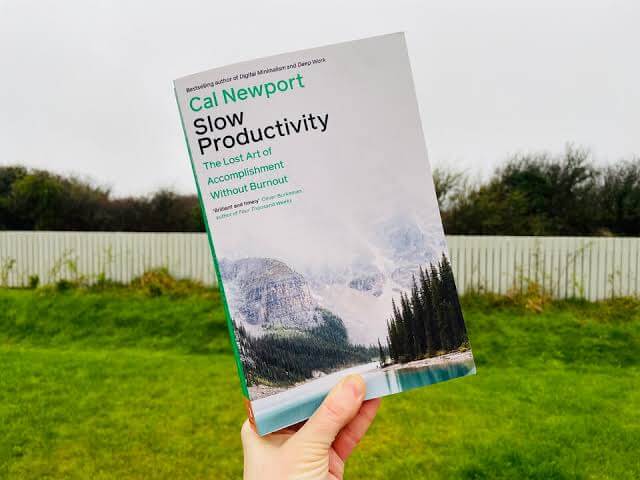
Slow Productivity: The Lost Art of Accomplishment Without Burnout by Cal Newport
රු2,300.00
3 X Rs. 766.67 or 8% Cashback with


or 3 X රු766.67 with


or up to 4 X රු575.00 with


Slow Productivity: The Lost Art of Accomplishment Without Burnout by Cal Newport presents a sustainable alternative to constant busyness.
Built around three principles—do fewer things, work at a natural pace, and obsess over quality—the book shows how knowledge workers can accomplish meaningful work without chronic overload.
Format: Hardcover
Pages: 256
Publisher: Portfolio / Penguin Random House
ISBN: 9780593544853
2 in stock
Slow Productivity by Cal Newport
Slow Productivity: The Lost Art of Accomplishment Without Burnout by Cal Newport is a practical nonfiction book that challenges the modern idea that being constantly busy is the same thing as being productive.
Newport argues that knowledge workers have become trapped in what he calls pseudo-productivity—a culture where visible activity becomes a substitute for meaningful results.
This can include:
- Constant email
- Endless meetings
- Slack messages
- Overloaded task lists
- Frequent context switching
- Pressure to always appear available
The problem is that these activities can make people look busy while leaving less time for the work that actually matters.
In Slow Productivity, Newport offers a different approach.
His philosophy is built around three principles:
- Do fewer things
- Work at a natural pace
- Obsess over quality
These three ideas form the foundation of the book.
Do Fewer Things
The first principle sounds simple, but it challenges how many workplaces operate.
People often take on too many:
- Projects
- Meetings
- Commitments
- Responsibilities
- Administrative tasks
When everything is considered important, attention becomes fragmented.
Newport argues that reducing the number of active commitments can improve both quality and focus.
Doing fewer things does not mean becoming lazy.
It means concentrating effort on a smaller number of meaningful tasks.
This can reduce the mental cost of constantly switching between unrelated activities.
Work at a Natural Pace
The second principle is to work at a natural pace.
Modern knowledge work often expects continuous intensity.
But many great writers, scientists, artists and thinkers throughout history worked in cycles.
Periods of concentrated effort were often followed by:
- Rest
- Reflection
- Walking
- Travel
- Recovery
- Less demanding work
Newport argues that important work does not always need to happen at maximum speed.
A more sustainable rhythm can sometimes produce better results over the long term.
Obsess Over Quality
The third principle is obsess over quality.
Newport argues that high-quality work can create leverage.
When someone becomes very good at producing something valuable, they may gain more freedom to control how and when they work.
Quality can matter more than raw quantity.
This applies to:
- Writing
- Research
- Software development
- Design
- Business
- Creative work
- Professional projects
Instead of measuring success by how many tasks were completed, Newport encourages readers to ask whether they are producing something genuinely valuable.
The Problem with Pseudo-Productivity
One of the book’s most important concepts is pseudo-productivity.
This refers to the tendency to use visible activity as a measure of productive effort.
For example:
A person might spend an entire day answering emails and attending meetings.
They were busy.
But did they actually make progress on their most important work?
Newport argues that modern offices often lack good ways to measure knowledge work.
Because output can be difficult to quantify, organizations may use activity as a substitute.
This creates pressure to:
- Reply quickly
- Stay online
- Attend everything
- Show constant responsiveness
The result can be exhaustion without meaningful accomplishment.
Burnout
Burnout is a major theme of the book.
Newport does not present burnout simply as an individual failure to manage time.
Instead, he connects it to broader work systems that reward excessive activity.
When people are continually overloaded, they may experience:
- Reduced concentration
- Stress
- Lower-quality work
- Exhaustion
- Loss of motivation
Slow Productivity proposes changing the structure of work rather than simply adding more productivity tricks.
Knowledge Work
The book is especially relevant to knowledge workers.
This includes people whose jobs depend heavily on:
- Thinking
- Writing
- Designing
- Programming
- Analysing
- Researching
- Planning
- Creating
Knowledge work is different from factory work.
More hours do not always produce proportionally more useful output.
An exhausted programmer or writer can spend many hours working without producing much valuable work.
Quality of attention matters.
Historical Examples
Newport supports his ideas with examples from writers, artists, scientists and other notable figures.
The book explores how important achievements often developed over long periods rather than through constant high-intensity work.
Google Books’ table of contents shows the book moving from the rise of pseudo-productivity into the three principles of slow productivity, including “Work at a Natural Pace” and “Obsess over Quality.”
Sustainable Productivity
One of the book’s central messages is that productivity should be sustainable.
A system that produces excellent results for three months but leaves someone exhausted may not be a good long-term system.
Newport encourages readers to think in terms of:
- Years
- Careers
- Long-term contribution
- Sustainable effort
This is very different from trying to maximize output every single day.
Quality Over Activity
Many productivity systems focus on completing more tasks.
Newport shifts the emphasis toward better work.
That means asking questions such as:
- What work really matters?
- What deserves my best attention?
- What can I eliminate?
- What should I slow down?
- Where will quality create the greatest value?
This approach may be especially useful for professionals who feel overwhelmed by constant administrative work.
Slow Does Not Mean Unproductive
The word “slow” can be misunderstood.
Newport is not arguing that people should work inefficiently.
He is arguing against needless urgency.
A slower pace can still involve:
- Deep focus
- Ambition
- High standards
- Significant output
The difference is that the work is organized around meaningful accomplishment rather than constant visible busyness.
Connection with Deep Work
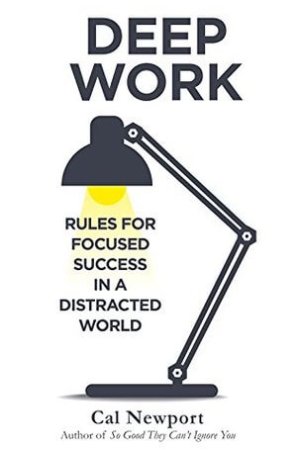
Readers familiar with Newport’s earlier book Deep Work will recognize related ideas.
Deep Work focuses on intense concentration without distraction.
Slow Productivity expands the conversation.
It asks how an entire professional life can be designed to support valuable work without chronic overload.
The two books therefore complement each other well.
Practical Applications
Readers may apply the ideas in areas such as:
- Office work
- Software development
- Research
- University study
- Entrepreneurship
- Freelancing
- Writing
- Design
- Management
Possible practical changes include:
- Reducing active projects
- Protecting focus time
- Scheduling fewer meetings
- Allowing realistic project timelines
- Measuring output rather than activity
- Building recovery into demanding periods
Who May Enjoy This Book?
Slow Productivity may appeal to readers interested in:
- Productivity
- Time management
- Deep work
- Career development
- Burnout prevention
- Focus
- Work-life balance
- Professional effectiveness
- Personal development
- Knowledge work
It may particularly appeal to readers who enjoyed:
- Deep Work
- Digital Minimalism
- Essentialism
- Four Thousand Weeks
- Atomic Habits
- The One Thing
About Cal Newport
Cal Newport is a professor of computer science at Georgetown University and a bestselling author who writes about technology, work and culture.
Penguin Random House identifies him as the author of books including Deep Work and Digital Minimalism and notes his academic work in distributed systems.
His books include:
- Deep Work
- Digital Minimalism
- A World Without Email
- So Good They Can’t Ignore You
- Slow Productivity
For readers looking to buy Slow Productivity by Cal Newport in Sri Lanka, ISBN 9780593544853 is the Portfolio hardcover edition used for this listing.
Be the first to review “Slow Productivity: The Lost Art of Accomplishment Without Burnout by Cal Newport”
Related products
-34%
Non-Fiction & Knowledge
Original price was: රු2,250.00.රු1,490.00Current price is: රු1,490.00.
3 X Rs. 496.67 or 8% Cashback with
or 3 X රු496.67 with
or up to 4 X රු372.50 with
-33%
Non-Fiction & Knowledge
Original price was: රු2,850.00.රු1,900.00Current price is: රු1,900.00.
3 X Rs. 633.33 or 8% Cashback with
or 3 X රු633.33 with
or up to 4 X රු475.00 with
Out of stock
Autobiography
රු2,750.00
3 X Rs. 916.67 or 8% Cashback with
or 3 X රු916.67 with
or up to 4 X රු687.50 with
-26%
Non-Fiction & Knowledge
Original price was: රු2,000.00.රු1,490.00Current price is: රු1,490.00.
3 X Rs. 496.67 or 8% Cashback with
or 3 X රු496.67 with
or up to 4 X රු372.50 with
-21%
Non-Fiction & Knowledge
7 Secrets to Investing Like Warren Buffett by Mary Buffett & Sean Seah
Original price was: රු1,900.00.රු1,500.00Current price is: රු1,500.00.
3 X Rs. 500.00 or 8% Cashback with
or 3 X රු500.00 with
or up to 4 X රු375.00 with
Non-Fiction & Knowledge
රු2,250.00
3 X Rs. 750.00 or 8% Cashback with
or 3 X රු750.00 with
or up to 4 X රු562.50 with
Non-Fiction & Knowledge
රු1,650.00
3 X Rs. 550.00 or 8% Cashback with
or 3 X රු550.00 with
or up to 4 X රු412.50 with
-34%
Out of stock
Non-Fiction & Knowledge
Original price was: රු2,650.00.රු1,750.00Current price is: රු1,750.00.
3 X Rs. 583.33 or 8% Cashback with
or 3 X රු583.33 with
or up to 4 X රු437.50 with
Reviews
There are no reviews yet.