
No products in the cart.
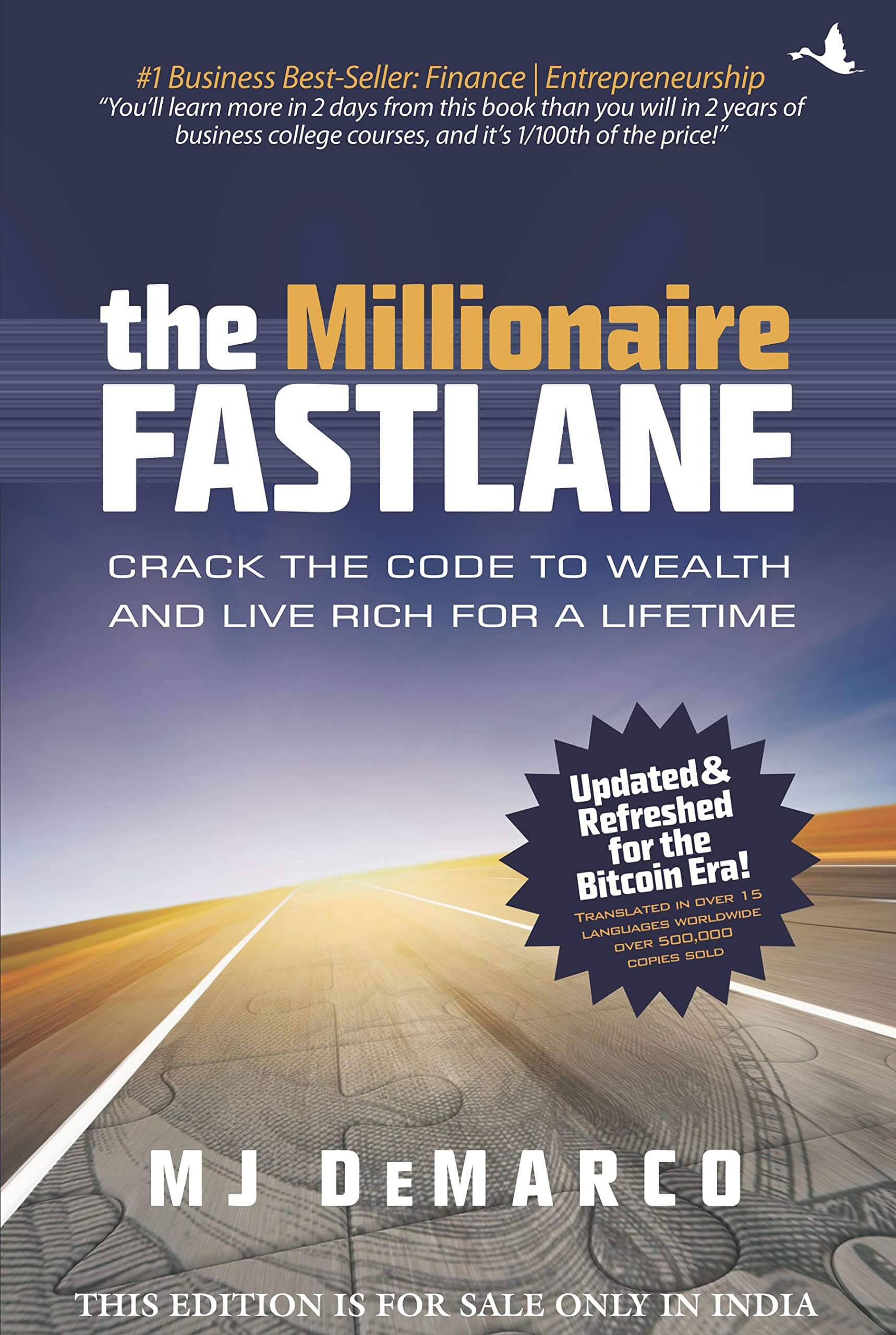
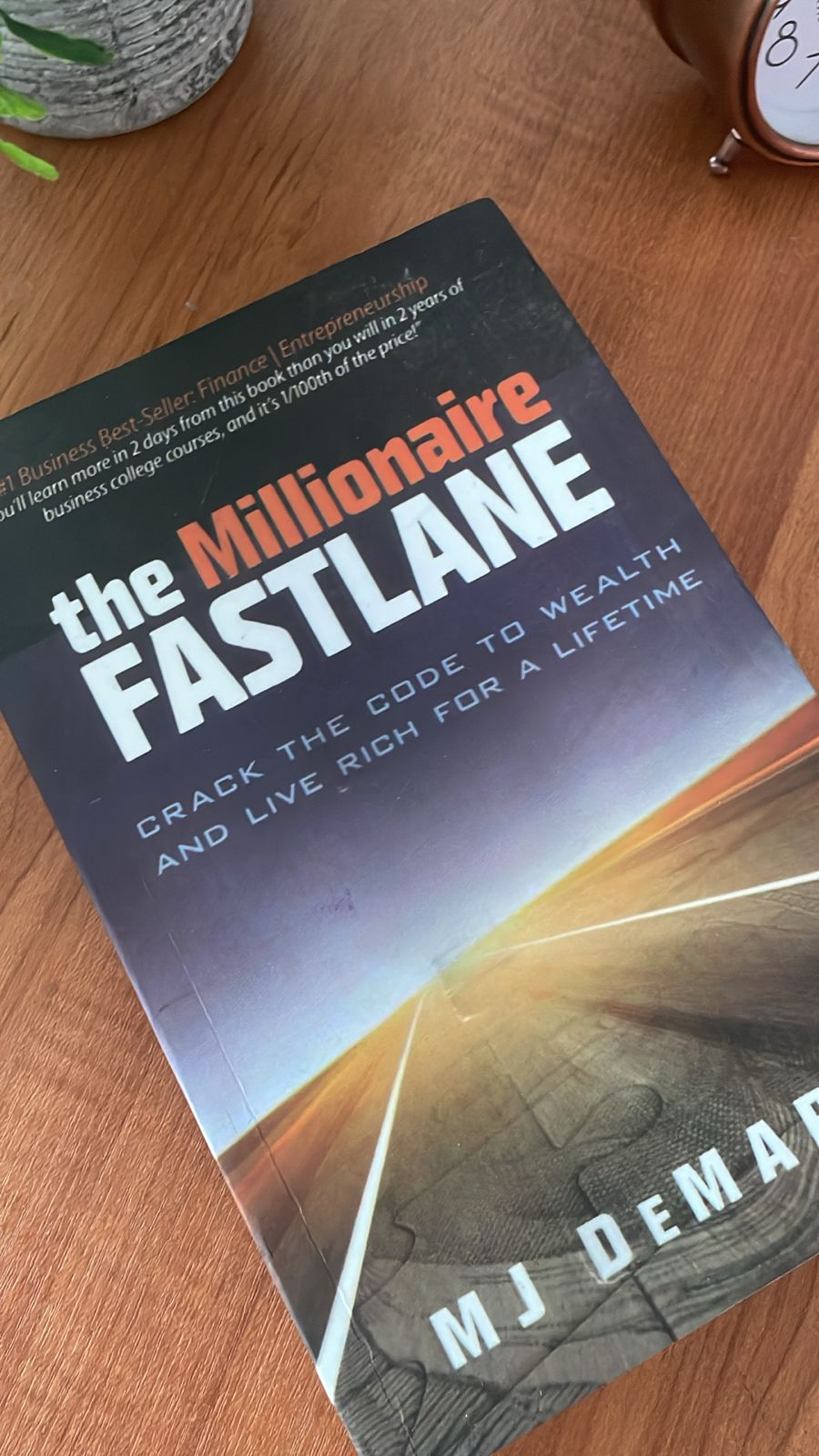
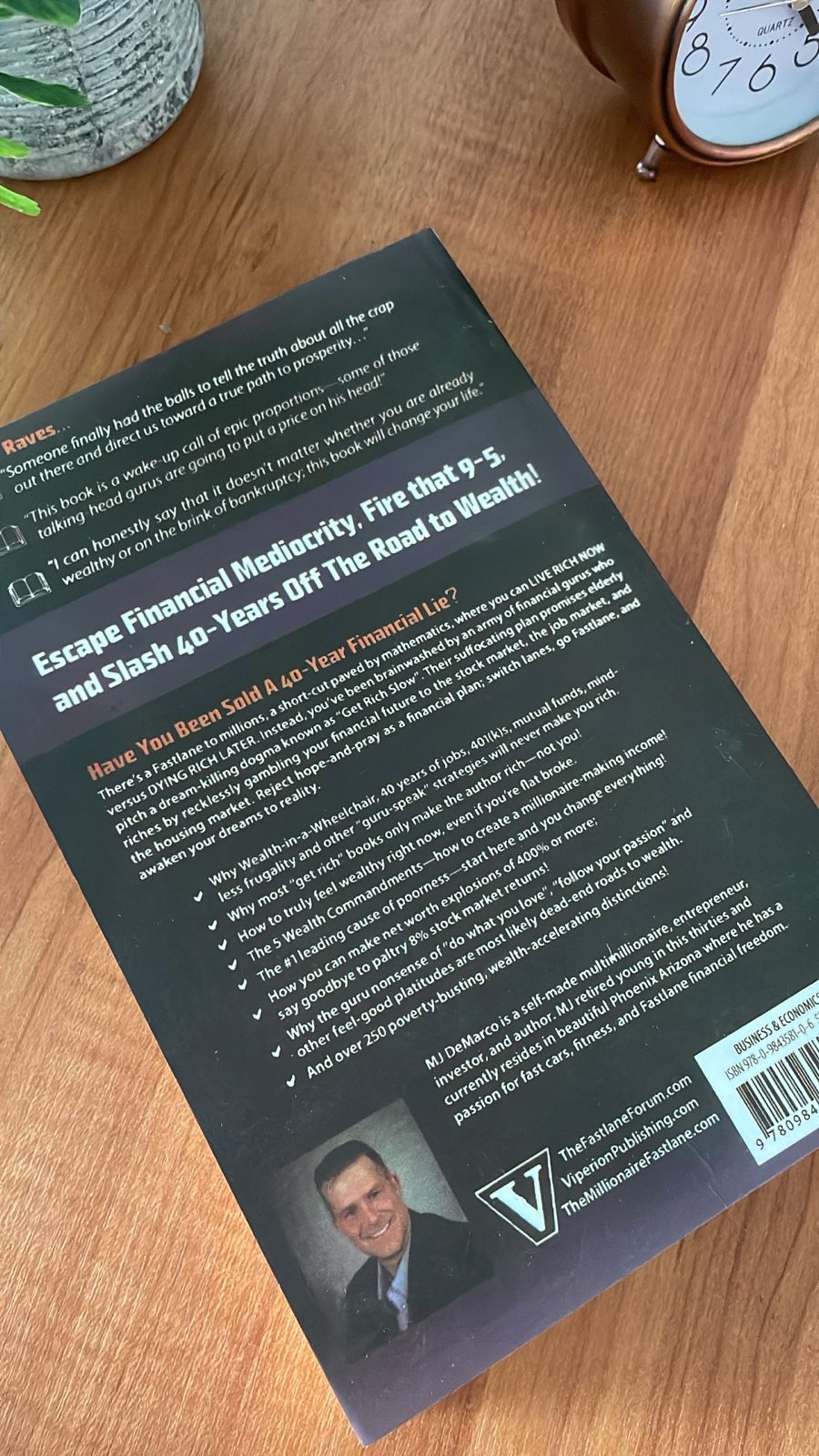

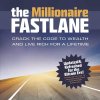

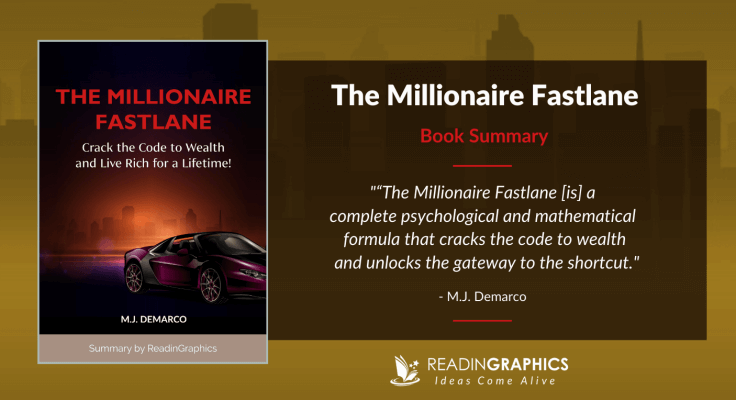
Millionaire Fastlane by M. J. DeMarco
රු1,900.00
3 X Rs. 633.33 or 8% Cashback with


or 3 X රු633.33 with


or up to 4 X රු475.00 with


The Millionaire Fastlane by MJ DeMarco is a provocative personal-finance and entrepreneurship book that challenges the traditional work-save-retire approach to wealth. Through concepts such as the Sidewalk, Slowlane, Fastlane and the CENTS framework—Control, Entry, Need, Time and Scale—M. J. DeMarco explains how value creation, business ownership, systems and scalability can potentially accelerate financial independence. Ideal for entrepreneurs, aspiring business owners and readers interested in wealth creation, financial freedom and building income beyond personal working hours.
Out of stock
Email when stock available
The Millionaire Fastlane by MJ DeMarco is a bold personal-finance and entrepreneurship book that challenges the traditional belief that financial freedom must require decades of employment, extreme saving and waiting until retirement to enjoy wealth.
M. J. DeMarco argues that many people are taught a familiar financial formula:
Study hard.
Get a job.
Save part of every salary.
Invest steadily.
Wait decades.
Retire wealthy.
He calls this slow approach the Slowlane.
The problem, according to DeMarco, is not that saving and investing are useless.
The problem is that this strategy often depends heavily on:
Time.
Salary.
Market returns.
Long-term employment.
And delaying freedom until much later in life.
Instead, DeMarco introduces what he calls the Fastlane.
The Fastlane is not about:
Gambling.
Getting rich overnight.
Buying lottery tickets.
Following internet scams.
It is about building or owning systems that create substantial value for many people and are not permanently limited by the owner’s personal working hours.
This can involve:
Entrepreneurship.
Business ownership.
Technology.
Products.
Distribution.
Scalable services.
Intellectual property.
Systems.
The core message of The Millionaire Fastlane by MJ DeMarco is that wealth tends to grow faster when people control an asset or business system that can serve many customers rather than relying entirely on exchanging personal time for a salary.
The Millionaire Fastlane by MJ DeMarco – Book Overview
The Millionaire Fastlane by MJ DeMarco presents three broad financial roadmaps:
The Sidewalk
The Slowlane
The Fastlane
Each represents a different relationship with:
Money.
Time.
Work.
Responsibility.
Wealth.
The book asks readers to examine which roadmap their current financial behavior is following.
The Sidewalk
The Sidewalk represents a lifestyle with little financial planning or control.
Income may come in.
But money quickly disappears.
Common patterns can include:
Living beyond your means.
Heavy consumer debt.
No emergency savings.
Impulse spending.
Depending entirely on the next paycheck.
The Sidewalk mindset often focuses heavily on immediate consumption.
Consumption Without Ownership
A person may earn more money and simply increase spending.
New income creates:
A more expensive car.
More subscriptions.
More debt.
More luxury purchases.
Income rises.
But financial freedom does not.
DeMarco encourages readers to distinguish between looking wealthy and actually owning wealth-producing assets.
The Slowlane
The Slowlane is the conventional financial path.
Get a stable job.
Earn a salary.
Spend less than you earn.
Invest the difference.
Continue for decades.
This can absolutely create wealth over time.
DeMarco’s criticism is mainly about:
Speed.
Control.
Dependence on employment.
And postponing freedom for decades.
Trading Time for Money
In most jobs, income is closely connected with time.
You work.
You get paid.
Stop working for long enough and income may stop.
That creates a fundamental limitation.
A day has only 24 hours.
You cannot continuously multiply your personal working hours.
The Fastlane
The Fastlane focuses on creating scalable systems.
Instead of asking:
“How much can I earn per hour?”
the Fastlane entrepreneur asks:
“How much value can this system deliver?”
A successful system may serve:
Hundreds.
Thousands.
Millions.
of customers.
That creates a different relationship between time and income.
Entrepreneurship
Entrepreneurship is central to The Millionaire Fastlane by MJ DeMarco.
But entrepreneurship does not simply mean:
Registering a company.
Calling yourself a CEO.
Opening a social-media page.
Real entrepreneurship requires solving meaningful problems.
Customers must receive value.
Solve Problems
A profitable business usually exists because it solves something.
People want:
Convenience.
Entertainment.
Education.
Transportation.
Better products.
Faster service.
Lower cost.
More choice.
Higher quality.
The bigger and more valuable the problem solved, the greater the potential opportunity.
Value Comes Before Money
Many aspiring entrepreneurs begin with:
“How can I make a million dollars?”
DeMarco encourages a different question:
“How can I create enormous value?”
Money is often the consequence of value creation.
The Law of Effection
One of the book’s central concepts is sometimes described as the Law of Effection.
The idea is that greater wealth potential comes from affecting more people or creating greater impact per person.
For example:
Selling a product to 10 customers creates one scale.
Serving 100,000 customers creates another.
Scale matters.
Scale
A business that can serve only one customer at a time may have strong income potential.
But a system capable of serving thousands of people without proportionally increasing the owner’s hours has greater scalability.
Examples can include:
Software.
Digital platforms.
Books.
Licensing.
Manufacturing.
Distribution systems.
Large service businesses.
Scalable retail operations.
The CENTS Framework
One of the best-known frameworks in The Millionaire Fastlane by MJ DeMarco is CENTS.
It represents five characteristics DeMarco believes strengthen a business opportunity:
Control
Entry
Need
Time
Scale
Control
A strong business should give you meaningful control.
If your entire income depends on:
One platform.
One employer.
One supplier.
One customer.
you may have less control than you think.
Businesses become vulnerable when another company can suddenly change:
Rules.
Fees.
Algorithms.
Access.
Terms.
Own the System
Fastlane thinking emphasizes ownership.
Control the:
Brand.
Customer relationship.
Product.
Platform where possible.
Processes.
Intellectual property.
Distribution.
The more critical elements you control, the more resilient your business can become.
Entry
If a business is extremely easy for anyone to enter, competition can become intense.
Imagine a business requiring:
No skill.
No capital.
No knowledge.
No system.
No differentiation.
Thousands of people may copy it immediately.
Barriers to Entry
Useful barriers may include:
Expertise.
Technology.
Brand reputation.
Capital.
Distribution.
Licensing.
Systems.
Customer relationships.
Experience.
The goal is not preventing all competition.
It is creating something more difficult to duplicate.
Need
The Need commandment may be the most important.
Businesses exist to serve customers.
Not the founder’s ego.
A founder may love an idea.
But customers determine whether the idea creates value.
Stop Chasing Only Passion
“Follow your passion” can become misleading when interpreted as:
Do anything you enjoy and customers will automatically pay you.
DeMarco encourages stronger market thinking.
Ask:
What do people need?
What problems are painful?
What are people already spending money to solve?
Customer-Centered Thinking
A business owner may think:
“This feature is amazing.”
The customer asks:
“Why should I care?”
That difference matters.
Good businesses translate features into benefits.
Time
The Time principle asks whether income remains permanently tied to the owner’s personal hours.
If every sale requires the owner to personally perform another hour of work, scalability can be limited.
Separate Income From Hours
This does not mean entrepreneurs never work hard.
In fact, entrepreneurship often requires enormous effort initially.
The difference is what that effort builds.
An employee may work 1,000 hours and receive 1,000 hours of wages.
An entrepreneur may spend 1,000 hours creating a system that continues generating value afterward.
Build Systems
Systems can include:
Employees.
Software.
Automation.
Processes.
Distribution.
Technology.
Procedures.
A business becomes more powerful when results do not depend entirely on one person’s constant presence.
Scale
The final CENTS principle is Scale.
How many customers can the business serve?
Can it expand geographically?
Can technology increase reach?
Can employees multiply capacity?
Can the product be distributed widely?
Scale creates leverage.
Leverage
Leverage means using something that multiplies output.
Examples include:
Technology.
Media.
Capital.
Employees.
Distribution.
Code.
Systems.
A programmer can create software once and distribute it repeatedly.
An author can write one book and sell many copies.
A company can build systems that allow hundreds of employees to serve customers.
Producer Versus Consumer
Another major distinction in The Millionaire Fastlane by MJ DeMarco is between being a producer and a consumer.
Consumers ask:
What can I buy?
Producers ask:
What can I create?
Consumers use products.
Producers create products.
Consumers watch content.
Producers build media businesses.
Consumers buy convenience.
Producers build systems that deliver convenience.
Shift to the Producer Side
DeMarco argues that wealthy people often spend more time on the producer side of the economy.
Instead of only buying:
Apps.
Books.
Courses.
Cars.
Services.
they may own or build businesses supplying them.
Money Trees
The book uses the idea of money trees to describe systems capable of generating income beyond direct hourly labor.
These may involve:
Rental systems.
Computer/software systems.
Content systems.
Distribution systems.
Human-resource systems.
The exact model can vary.
The principle is ownership of something productive.
Assets Versus Appearance
A luxury car can make someone appear wealthy.
But it may also produce:
Payments.
Insurance.
Depreciation.
Maintenance.
A productive asset may look less impressive while increasing financial strength.
Net Worth
Real wealth should be evaluated through:
Assets.
Liabilities.
Cash flow.
Ownership.
Not simply lifestyle appearance.
A person driving an inexpensive vehicle may have substantial assets.
Someone driving an exotic car may have enormous debt.
Appearance tells very little.
Wealth
DeMarco argues that wealth is broader than money alone.
True wealth involves three broad areas:
Relationships.
Health.
Freedom.
Money matters because it can help create greater control over time and choices.
Freedom
Financial freedom can mean having more control over:
Where you live.
How you work.
What projects you pursue.
Who you work with.
How much time you spend with family.
The goal is not simply owning expensive things.
It is having options.
Time Is More Valuable Than Money
Money can sometimes be recovered.
Time cannot.
This is one of the deeper messages in The Millionaire Fastlane by MJ DeMarco.
A strategy that creates money but consumes your entire life may not create genuine freedom.
The Problem With Deferred Life
People sometimes tell themselves:
I will enjoy life after retirement.
After I earn enough.
After I get promoted.
After another ten years.
DeMarco challenges excessive postponement.
The goal should be building financial freedom while enough life remains to enjoy it.
Process Over Events
People see a successful entrepreneur and think:
They became rich suddenly.
But the visible success may have been preceded by:
Years of work.
Failed ideas.
Learning.
Long hours.
Experiments.
Risk.
What looks like an event is often the result of a long process.
There Is No Magic Shortcut
Despite the word Fastlane, the book does not mean effortless riches.
Fast does not mean instant.
Entrepreneurship may require:
Years.
Discipline.
Risk.
Learning.
Capital.
Failure.
The distinction is that a scalable business can potentially compress decades of wealth creation into a shorter period if it succeeds.
Responsibility
DeMarco strongly emphasizes personal responsibility.
Blaming:
The economy.
Your employer.
Your parents.
The government.
Bad luck.
may sometimes identify real obstacles.
But it does not necessarily improve your situation.
The useful question is:
What can I control next?
Financial Education
Understanding money matters.
People should know concepts such as:
Income.
Expenses.
Assets.
Liabilities.
Debt.
Cash flow.
Taxes.
Business margins.
Investment risk.
Financial ignorance creates vulnerability.
Income Versus Wealth
A high salary does not automatically equal wealth.
Someone earning a large salary may still have:
Large debts.
High expenses.
No assets.
No savings.
Wealth depends partly on what happens after income arrives.
Lifestyle Inflation
As people earn more, they often spend more.
Salary increases.
Car improves.
House becomes larger.
Monthly expenses increase.
The person remains financially dependent.
Lifestyle inflation can trap even high-income earners.
Entrepreneurship and Risk
Business ownership involves risk.
Companies can:
Fail.
Lose money.
Face lawsuits.
Lose customers.
Encounter competitors.
Experience economic shocks.
The Millionaire Fastlane by MJ DeMarco should therefore not be interpreted as guaranteeing entrepreneurship will make someone wealthy.
Risk Management
Smart entrepreneurship means understanding risk rather than pretending it does not exist.
Test assumptions.
Understand costs.
Maintain financial records.
Study demand.
Protect cash flow.
Avoid unnecessary debt.
Start With Demand
Many entrepreneurs build something first and ask about customers later.
A better approach is finding evidence of demand.
Ask:
Who needs this?
Why?
How much is the problem worth solving?
What alternatives already exist?
Competition
Competition can indicate that a market contains demand.
The existence of competitors does not automatically mean:
Do not enter.
Instead, ask:
Can we provide something:
Better?
Faster?
Cheaper?
More convenient?
More specialized?
Differentiation
If customers cannot explain why they should choose you, the business may struggle.
Differentiation can come from:
Brand.
Quality.
Service.
Price.
Experience.
Convenience.
Technology.
Specialization.
Distribution.
Customer Experience
A product is not the entire business.
The experience matters.
Ordering.
Delivery.
Support.
Returns.
Communication.
Packaging.
Trust.
These can become competitive advantages.
Execution
Ideas are common.
Execution is rare.
Many people say:
“I had that idea years ago.”
The question is:
Did you build it?
Did customers use it?
Did you improve it?
Execution converts ideas into assets.
Speed of Implementation
DeMarco encourages action.
Not reckless action.
But avoiding endless preparation.
You can study entrepreneurship for years without starting anything.
At some point:
Test.
Launch.
Measure.
Learn.
Failure
Failure is information.
A product fails.
Ask why.
Pricing?
Demand?
Marketing?
Timing?
Distribution?
Wrong audience?
Every failure can teach something.
Persistence
Entrepreneurship often requires persistence.
But persistence should not mean blindly repeating the same mistake.
Stay committed to the goal.
Adapt the method.
Entrepreneurship Is Problem Solving
A business owner spends much of life solving problems.
Customer complains.
Supplier delays.
Website fails.
Costs rise.
Employee leaves.
A good entrepreneur becomes increasingly capable of responding without panic.
Systems Thinking
Successful businesses are systems.
Marketing feeds sales.
Sales affect inventory.
Inventory affects cash flow.
Customer service affects retention.
Everything connects.
A business owner needs to understand the whole system.
Automation
Automation can increase scalability.
Tasks such as:
Emails.
Invoices.
Inventory updates.
Reporting.
Scheduling.
Customer follow-up.
may sometimes be partially automated.
The goal is not eliminating people.
It is using human attention where it creates greater value.
Employees and Teams
People can provide leverage too.
A founder who tries to personally handle every:
Sale.
Support request.
Delivery.
Marketing task.
Accounting task.
will eventually reach a limit.
Teams multiply capacity.
Delegation
Delegation allows the company to grow beyond the founder’s personal hours.
Good delegation requires:
Clear roles.
Processes.
Training.
Accountability.
Business Ownership Versus Self-Employment
Not every business automatically creates freedom.
A person can leave a job and create a business that requires even more hours.
That may be self-employment rather than a scalable system.
The key question is:
Can this business eventually operate without every task depending on me?
Build a Business That Can Function Without You
This is one of the strongest practical ideas in The Millionaire Fastlane by MJ DeMarco.
Document processes.
Train people.
Automate repetitive work.
Create systems.
The more independently the business operates, the more valuable it may become.
Exit Value
A scalable business can sometimes be sold.
That creates another major difference from a job.
You generally cannot sell your employment position.
But a business with:
Customers.
Revenue.
Brand.
Systems.
Assets.
may have transferable value.
Compound Business Value
Investing can compound money.
Entrepreneurship can also compound:
Customers.
Brand recognition.
Systems.
Data.
Experience.
Distribution.
Relationships.
Over time these can create substantial enterprise value.
The Fastlane Equation
The book presents wealth as strongly connected with:
Net profit.
And asset value.
Increasing either can increase net worth.
A business therefore needs to think beyond revenue alone.
Revenue Is Not Profit
A company can sell millions and still lose money.
Profit requires understanding:
Revenue.
Cost of goods.
Operating expenses.
Taxes.
Marketing costs.
Payment fees.
Logistics.
Net income matters.
Margins
Margins determine how much value remains after costs.
A business growing revenue while destroying margin may be moving backward.
Financial literacy is essential.
Cash Flow
Profit on paper and cash in the bank are not always the same.
Businesses can fail while appearing profitable if cash is tied up in:
Inventory.
Receivables.
Expansion.
Understanding cash flow matters enormously.
Fastlane Thinking for Small Businesses
A small business can apply the book’s ideas without becoming a global technology company.
Ask:
Can this process be standardized?
Can we sell online?
Can we serve more customers?
Can employees handle repetitive tasks?
Can software improve operations?
Can one product be sold repeatedly?
These questions move the business toward scalability.
Fastlane Thinking for Retail
A retailer may begin with one physical location.
Scale can come through:
E-commerce.
Multiple outlets.
Wholesale.
Corporate sales.
Distribution.
Private-label products.
Technology.
The principle remains the same:
Serve more customers through systems.
Fastlane Thinking for Software
Software is naturally attractive within the Fastlane framework because it can have strong scalability.
A software product may serve thousands of users without requiring one new developer per customer.
However, software businesses still need:
Demand.
Distribution.
Support.
Security.
Reliable infrastructure.
A scalable product without customers has little value.
Fastlane Thinking for Content Creators
Content can also create leverage.
One:
Book.
Course.
Video.
Newsletter.
can potentially reach large audiences.
But creators still need to solve a meaningful problem or deliver genuine entertainment or education.
Ownership Matters
Using someone else’s platform can be useful.
But complete dependence creates risk.
Build assets you control when possible:
Email lists.
Customer databases.
Websites.
Brands.
Products.
Intellectual property.
Financial Freedom Versus Luxury
The book makes an important distinction between being rich and looking rich.
Real financial freedom may involve:
No high-interest debt.
Strong cash flow.
Assets.
Control over time.
Options.
It does not require displaying wealth constantly.
Money and Happiness
Money cannot guarantee:
Love.
Health.
Meaning.
Good relationships.
But financial stress can create significant problems.
The goal is using wealth to create freedom rather than allowing money to become the only purpose of life.
Is The Millionaire Fastlane a Get-Rich-Quick Book?
No.
The Millionaire Fastlane by MJ DeMarco argues against many traditional wealth strategies, but it does not provide a guaranteed overnight-rich formula.
The Fastlane still requires:
Value creation.
Business building.
Risk.
Execution.
Learning.
Time.
There is no guaranteed outcome.
Is It an Investing Book?
Not primarily.
Investing is discussed in the context of wealth creation, but the book focuses much more heavily on:
Entrepreneurship.
Ownership.
Scalability.
Business systems.
Financial freedom.
Readers looking only for stock-selection strategies should choose a different book.
Is It Good for Entrepreneurs?
Yes.
Entrepreneurs are probably the book’s core audience.
The principles are especially relevant to people considering:
Starting a business.
Scaling a business.
Building online products.
Creating systems.
Moving from self-employment toward business ownership.
Is It Good for Beginners?
Yes.
The language is direct and accessible.
However, DeMarco’s tone is intentionally provocative.
Some readers may strongly agree with his criticism of conventional career paths.
Others may find parts overly broad.
It is useful to evaluate the ideas critically rather than treating every principle as universal.
Does Everyone Need to Quit Their Job?
No.
Employment can provide:
Income.
Skills.
Experience.
Stability.
Networking.
Capital.
A job can also help someone prepare for entrepreneurship.
The practical lesson is not necessarily:
Quit tomorrow.
It is:
Understand the financial path you are currently following.
The Slowlane Can Still Work
Traditional saving and diversified long-term investing have created wealth for many people.
The book’s argument is about accelerating financial independence through ownership and scale.
Readers should not interpret it as proof that conventional investing is useless.
Different strategies suit different:
Risk tolerances.
Skills.
Life situations.
Financial Risk Considerations
The Millionaire Fastlane by MJ DeMarco discusses entrepreneurship and wealth creation, but readers should remember:
Business success is not guaranteed.
Investments can lose value.
Debt increases risk.
Income can fluctuate.
Past success does not guarantee future results.
This book should be treated as educational and motivational material rather than personalized financial advice.
MJ DeMarco
M. J. DeMarco is an entrepreneur and author known for writing about entrepreneurship, business ownership and financial independence.
His books include:
The Millionaire Fastlane
Unscripted
and other works focused on escaping conventional financial limitations through entrepreneurship and ownership.
The Millionaire Fastlane and Unscripted
Readers who enjoy The Millionaire Fastlane by MJ DeMarco may also be interested in Unscripted.
The Millionaire Fastlane introduces many of DeMarco’s central wealth-building ideas.
Unscripted expands his critique of conventional life and financial expectations.
Important Themes
The Millionaire Fastlane by MJ DeMarco explores:
- Entrepreneurship
- Financial freedom
- Wealth creation
- Business ownership
- Scalability
- Value creation
- Financial independence
- Producer mindset
- Consumer mindset
- The Sidewalk
- The Slowlane
- The Fastlane
- CENTS framework
- Control
- Need
- Time
- Scale
- Business systems
- Cash flow
- Personal responsibility
7 Powerful Wealth Lessons From The Millionaire Fastlane by MJ DeMarco
There are many ideas in The Millionaire Fastlane by MJ DeMarco, but seven stand out:
- Wealth grows faster when you own systems rather than depend entirely on wages – A scalable business can potentially create value for many customers without income remaining permanently tied to personal working hours.
- Solve real problems before chasing money – Businesses become valuable when they satisfy genuine customer needs rather than simply fulfilling the founder’s desire to become rich.
- Scale matters – Serving more customers through technology, distribution, systems or teams can dramatically increase wealth potential.
- Control your important business assets – Excessive dependence on one employer, platform, supplier or customer creates vulnerability.
- Move from consumer thinking toward producer thinking – Instead of only asking what to buy, begin asking what products, services or systems you can create.
- Build businesses that can eventually operate beyond your own hours – Processes, automation, employees and technology can turn self-employment into a scalable enterprise.
- Financial freedom is ultimately about time and choice – Wealth is most powerful when it gives you greater control over how you spend your life rather than merely allowing you to display expensive possessions.
Why Read The Millionaire Fastlane by MJ DeMarco?
The Millionaire Fastlane by MJ DeMarco is an excellent choice for readers interested in:
- Entrepreneurship
- Personal finance
- Financial freedom
- Wealth creation
- Business ownership
- Side hustles
- Startups
- Financial independence
- Scalable businesses
- Online business
- Business systems
- Passive-income concepts
- Money mindset
- Value creation
- Business growth
- MJ DeMarco
- Entrepreneur mindset
- Escaping the 9-to-5
- Building assets
- Becoming financially independent
It is particularly relevant to people who want to understand why ownership, value creation and scalability can create a different path to wealth from relying only on salary and long-term savings.
Who Should Read This Book?
The Millionaire Fastlane by MJ DeMarco may especially appeal to:
- Entrepreneurs
- Aspiring entrepreneurs
- Business owners
- Young professionals
- Students interested in business
- Startup founders
- Side-hustle builders
- Online-business owners
- Software entrepreneurs
- Retail business owners
- People interested in financial independence
- Readers of personal-finance books
- People who want to build scalable income
- Readers questioning traditional career paths
- Anyone interested in creating wealth through ownership and entrepreneurship
The Millionaire Fastlane by MJ DeMarco – Build Value, Own the System and Buy Back Your Time
The Millionaire Fastlane by MJ DeMarco challenges readers to reconsider what wealth actually means.
Is wealth:
A luxury car?
A large house?
An expensive watch?
Or is wealth the ability to control your time?
DeMarco argues that genuine financial freedom requires more than appearing successful.
It requires:
Ownership.
Assets.
Cash flow.
Control.
And options.
A traditional job can provide stability.
Saving can create security.
Investing can build wealth.
But if your goal is significantly accelerating financial independence, DeMarco argues that you need leverage.
You need something capable of serving more people than your individual working hours allow.
That may be:
A company.
A product.
Software.
A distribution network.
A brand.
A scalable service.
The exact form is less important than the underlying principle.
Create meaningful value for many people.
Build systems capable of delivering that value.
Maintain control where possible.
Separate income gradually from your personal hours.
And turn the system itself into an asset.
None of this is easy.
Entrepreneurship contains:
Failure.
Competition.
Uncertainty.
Long hours.
Financial risk.
The Fastlane is not a magic road without obstacles.
It is simply a different wealth equation.
Instead of relying mainly on decades of time and salary growth, it focuses on:
Value.
Scale.
Ownership.
Execution.
The deeper lesson is that money should serve life.
Not the other way around.
If wealth allows you to choose:
Where you live.
What you work on.
Who you spend time with.
How you use your days.
then financial freedom becomes more meaningful than simply accumulating expensive possessions.
For readers interested in entrepreneurship, business systems, financial independence and alternative approaches to creating wealth, The Millionaire Fastlane by MJ DeMarco is a provocative and highly motivating guide to moving from consumer thinking toward ownership, value creation and scalable business.
Learn more about The Millionaire Fastlane by MJ DeMarco on the official Viperion Publishing website.
Explore more business and personal finance books at Bargain Books.
| Author | M. J. DeMarco |
|---|---|
| Language | English |
| Type | Paperback Printed Book |
| ISBN/ISSN | 9390085497, 978-9390085491 |
| Pages | 338 |
Be the first to review “Millionaire Fastlane by M. J. DeMarco”
Related products
-16%
Business, Finance & Economics
Original price was: රු3,150.00.රු2,650.00Current price is: රු2,650.00.
3 X Rs. 883.33 or 8% Cashback with
or 3 X රු883.33 with
or up to 4 X රු662.50 with
Out of stock
Damaged & Imperfect Books
රු1,700.00
3 X Rs. 566.67 or 8% Cashback with
or 3 X රු566.67 with
or up to 4 X රු425.00 with
Damaged & Imperfect Books
රු1,700.00
3 X Rs. 566.67 or 8% Cashback with
or 3 X රු566.67 with
or up to 4 X රු425.00 with
Out of stock
Business, Finance & Economics
රු1,700.00
3 X Rs. 566.67 or 8% Cashback with
or 3 X රු566.67 with
or up to 4 X රු425.00 with
Out of stock
Business, Finance & Economics
රු1,900.00
3 X Rs. 633.33 or 8% Cashback with
or 3 X රු633.33 with
or up to 4 X රු475.00 with
-21%
Non-Fiction & Knowledge
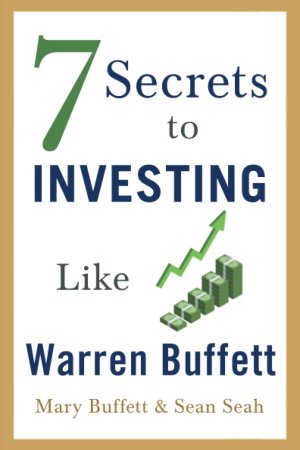
7 Secrets to Investing Like Warren Buffett by Mary Buffett & Sean Seah
Original price was: රු1,900.00.රු1,500.00Current price is: රු1,500.00.
3 X Rs. 500.00 or 8% Cashback with
or 3 X රු500.00 with
or up to 4 X රු375.00 with
-16%
Out of stock
Business, Finance & Economics
Original price was: රු1,900.00.රු1,600.00Current price is: රු1,600.00.
3 X Rs. 533.33 or 8% Cashback with
or 3 X රු533.33 with
or up to 4 X රු400.00 with

Out of stock
Damaged & Imperfect Books
රු1,700.00
3 X Rs. 566.67 or 8% Cashback with
or 3 X රු566.67 with
or up to 4 X රු425.00 with
Reviews
There are no reviews yet.