
No products in the cart.





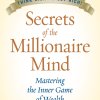




Secrets of the Millionaire Mind by T. Harv Eker


රු1,500.00
3 X Rs. 500.00 or 8% Cashback with


or 3 X රු500.00 with


or up to 4 X රු375.00 with


“Secrets of the Millionaire Mind” by T. Harv Eker reveals the key mindsets and financial habits that distinguish wealthy individuals from those who struggle with money. Eker explores how subconscious beliefs and attitudes about money shape our financial outcomes and offers practical strategies for reprogramming your mindset to achieve lasting financial success.
Out of stock
Email when stock available
Secrets of the Millionaire Mind by T Harv Eker is a popular personal-finance and self-development book about the beliefs, habits and attitudes that influence how people earn, manage and think about money.
Why do some people seem able to build wealth while others repeatedly struggle financially?
Why can two people earn similar amounts yet end up in completely different financial situations?
Why does one person see opportunity where another sees only risk?
T. Harv Eker argues that part of the answer lies in what he calls your money blueprint.
According to Eker, every person develops beliefs about money through childhood experiences, family attitudes, cultural messages and personal events.
Those beliefs may influence decisions later in life.
You might have learned ideas such as:
Money is difficult to earn.
Rich people are greedy.
You must work extremely hard for every rupee.
Investing is dangerous.
Wanting wealth is selfish.
Or:
Money creates freedom.
Business creates opportunity.
Skills can increase income.
Investing can build long-term wealth.
Eker’s central argument is that financial results can be influenced not only by external circumstances but also by the beliefs and habits that guide everyday decisions.
Secrets of the Millionaire Mind by T Harv Eker combines motivational ideas with practical principles around earning, saving, investing, business, personal responsibility and financial behavior.
It is designed for readers who want to examine how they think about money and whether some of those beliefs are helping or limiting them.
Secrets of the Millionaire Mind by T Harv Eker – Book Overview
Secrets of the Millionaire Mind by T Harv Eker is divided around one major idea:
Your financial life is partly influenced by your internal programming.
Eker calls this a financial blueprint or money blueprint.
Just as a building is created from a plan, he argues that financial behavior is often guided by mental patterns developed long before adulthood.
These patterns can influence:
How much you believe you can earn.
How comfortable you are taking calculated risks.
Whether you save or spend.
Whether you invest.
How you respond to financial setbacks.
Whether you seek opportunities.
Whether you believe wealth is possible for you.
The book therefore begins with mindset before moving toward financial habits.
What Is a Money Blueprint?
A money blueprint is Eker’s term for the beliefs and expectations someone has about money.
These beliefs may come from:
Parents.
Teachers.
Culture.
Religion.
Friends.
Past financial experiences.
Comments heard during childhood.
For example, imagine repeatedly hearing:
“Money doesn’t grow on trees.”
“Rich people only care about themselves.”
“We can never afford that.”
“Business is too risky.”
Those phrases may become part of a person’s financial thinking.
The person may later avoid opportunities not because the opportunity is objectively bad, but because money has become emotionally associated with fear or guilt.
Childhood Conditioning
One major theme in Secrets of the Millionaire Mind by T Harv Eker is conditioning.
Children observe how adults talk about money.
Did your parents:
Argue about bills?
Avoid discussing finances?
Spend everything immediately?
Save carefully?
Invest?
Run a business?
Fear debt?
Use debt irresponsibly?
Those experiences can influence behavior long after childhood.
Awareness Before Change
Eker’s first practical lesson is that you cannot change a pattern you do not recognize.
Awareness therefore comes before improvement.
Ask:
What did my family say about money?
How did adults around me behave financially?
What do I automatically believe about rich people?
How do I react emotionally when I think about investing?
What do I believe I deserve to earn?
These questions can reveal hidden assumptions.
Thoughts Influence Actions
The book uses a simple chain:
Thoughts influence feelings.
Feelings influence actions.
Actions influence results.
That does not mean thoughts magically create wealth.
But beliefs can influence real behavior.
If someone believes investing is always dangerous, they may never learn how investing actually works.
If someone believes higher income is impossible, they may never negotiate, build skills or pursue better opportunities.
Mindset Is Not Magic
This distinction is important.
Secrets of the Millionaire Mind by T Harv Eker is motivational, but readers should not interpret it as proof that positive thinking alone creates wealth.
Real financial outcomes also depend on:
Income.
Education.
Skills.
Opportunity.
Economic conditions.
Family responsibilities.
Health.
Luck.
Access to capital.
Debt.
Business performance.
Investment risk.
Mindset can influence decisions, but it does not remove external realities.
The Wealth Files
A major part of the book presents what Eker calls Wealth Files.
These compare patterns that he associates with wealth-building behavior against habits he believes can limit financial progress.
The goal is not to insult people with less money.
Instead, the useful approach is to ask:
Which behaviors help long-term financial stability?
Which habits make financial progress harder?
Taking Responsibility
One of the strongest lessons is personal responsibility.
Eker encourages readers to focus on what they can influence.
It is easy to blame:
The economy.
Customers.
Employers.
Family.
Government.
Competition.
Some external factors genuinely do matter.
But focusing only on factors outside your control can prevent action.
A more useful question is:
What can I improve from here?
Victim Thinking
Eker warns against developing a permanent victim mentality around money.
This does not mean pretending unfair circumstances do not exist.
Financial inequality, opportunity gaps and economic hardship are real.
The lesson is narrower:
Even when circumstances are difficult, ask what actions remain available.
Learn a skill.
Create a budget.
Reduce unnecessary costs.
Increase income.
Build a side business.
Seek better information.
Rich People Play to Win
One of Eker’s better-known comparisons is that wealthy people tend to play the money game to win, while others may focus mainly on avoiding loss.
The underlying idea is about goals.
If your only financial goal is:
“I just don’t want to run out of money,”
your behavior may become extremely defensive.
A stronger goal might be:
Build emergency savings.
Increase income.
Invest consistently.
Create financial independence.
Specific positive goals can create clearer action.
Commitment
Wanting wealth and being committed to building wealth are different.
Wanting requires no action.
Commitment requires:
Learning.
Planning.
Saving.
Investing.
Working.
Experimenting.
Accepting mistakes.
Improving.
The book repeatedly emphasizes the difference between wishing and doing.
Think Bigger
Another recurring lesson is to think beyond extremely small goals.
If you create value for:
One customer,
you can earn from one customer.
If you create something valuable for:
One thousand customers,
the scale changes.
This principle can apply to:
Business.
Software.
Education.
Content.
Products.
Services.
Value Creation
One of the healthiest ways to interpret the book is through value creation.
Instead of asking only:
“How can I make more money?”
ask:
“How can I solve a problem for more people?”
Businesses earn revenue by creating something customers consider valuable.
That may be:
Convenience.
Entertainment.
Knowledge.
Technology.
Food.
Books.
Transport.
Design.
Service.
Income and Value
Higher income often becomes easier when a person develops valuable skills.
Examples include:
Programming.
Sales.
Management.
Design.
Finance.
Marketing.
Engineering.
Communication.
Negotiation.
The more valuable and scarce the skill, the stronger the income potential may become.
Skills Can Be Financial Assets
People often think only of:
Property.
Stocks.
Cash.
Businesses.
as assets.
But skills can also create long-term economic value.
A person who becomes excellent at:
Sales.
Software development.
Leadership.
Copywriting.
Accounting.
can potentially generate income repeatedly.
Focus on Opportunities
Eker encourages readers to notice opportunities instead of automatically focusing on obstacles.
Every opportunity has risks.
But every opportunity also has potential.
An entrepreneur might look at a problem and think:
Someone should solve this.
A stronger entrepreneurial response is:
Can I solve it?
Calculated Risk
Opportunity thinking should not mean reckless risk-taking.
Good financial risk involves understanding:
Possible upside.
Possible downside.
Probability.
Cash flow.
Emergency reserves.
Debt obligations.
Time horizon.
Do not confuse optimism with financial analysis.
Learn From Successful People
Eker recommends studying people who have already achieved results you want.
This can be useful.
If someone has:
Built a profitable company.
Managed money well.
Created a strong career.
investigate how they did it.
But avoid blindly copying every action.
Their:
Timing.
Resources.
Market.
Risk tolerance.
may differ from yours.
Use successful people as information, not as guaranteed formulas.
Stop Resenting Wealth
Another theme in Secrets of the Millionaire Mind by T Harv Eker is resentment toward successful people.
If you automatically believe:
Rich people are bad,
then becoming financially successful may create internal conflict.
A healthier view is to judge behavior separately from wealth.
Some wealthy people behave ethically.
Some do not.
The same is true at every income level.
Money itself is a tool.
What matters is how people earn and use it.
Choose Role Models Carefully
Do not admire someone simply because they are rich.
Consider:
How did they earn the money?
How do they treat employees?
Did they create value?
Did they take excessive risks with other people’s money?
Financial success alone does not prove good character.
Promote Your Value
Eker argues that many people feel uncomfortable promoting themselves.
Yet businesses and professionals must communicate value.
A great product nobody knows exists may fail.
A talented freelancer nobody can find may remain unemployed.
Promotion is not automatically arrogance.
It can simply mean clearly explaining:
What you do.
Who you help.
Why your work matters.
Sales
Sales is important in almost every business.
A customer must understand why a product or service is worth buying.
Good sales is not manipulation.
It is identifying a need and showing how your solution may help.
Become Bigger Than Your Problems
One memorable principle is that people often need to grow their abilities rather than wait for problems to become smaller.
A larger business creates larger problems.
More customers create more support demands.
More employees create more management complexity.
Higher income creates new tax and investment decisions.
Growth creates challenges.
Problem-Solving Capacity
Instead of asking:
“How do I avoid every problem?”
ask:
“How do I become better at solving problems?”
Develop:
Knowledge.
Systems.
Communication.
Emotional control.
Financial reserves.
Strong teams.
These increase capacity.
Money Management
Eker emphasizes that earning more is not enough.
You must also learn to manage what you earn.
A person can earn a large income and still remain financially unstable if spending rises at the same pace.
Income and wealth are different.
Income Versus Wealth
Income is money coming in.
Wealth generally refers to assets and net worth accumulated over time.
Someone earning a high salary may have:
Large debt.
No savings.
No investments.
Someone earning less may slowly build stronger financial security through disciplined saving and investing.
Pay Yourself First
A common personal-finance idea is to allocate money toward savings and investment before spending everything else.
The principle is powerful because waiting to save “whatever is left” often results in nothing being left.
Automating savings can make the habit easier.
Emergency Fund
Before taking aggressive investment risk, many people benefit from having emergency savings.
Unexpected events happen.
Medical expenses.
Job loss.
Repairs.
Family needs.
An emergency fund reduces the need to borrow under pressure.
Spending
The book encourages readers to examine spending habits.
The goal is not necessarily extreme deprivation.
A healthy financial plan should be sustainable.
The question is whether spending supports long-term priorities.
Lifestyle Inflation
When income rises, spending often rises automatically.
New car.
More expensive restaurants.
Better phone.
Larger house.
More subscriptions.
If every income increase becomes an expense increase, wealth may never grow.
Assets and Liabilities
While definitions vary between accounting and personal-finance books, the broader lesson is useful:
Pay attention to where your money goes.
Does a purchase help create future value?
Or does it create ongoing costs?
Financial awareness improves decision-making.
Passive Income
Hachette’s official description notes Eker’s emphasis on building passive-income streams.
Examples can include:
Investments.
Rental property.
Royalties.
Businesses that do not require constant direct labor.
Digital products.
But “passive” does not mean:
No work.
No risk.
Guaranteed profit.
Most income-producing assets require initial capital, management, expertise or ongoing oversight.
Investing
Investing can help money grow over time.
Common investment concepts include:
Diversification.
Compound growth.
Risk tolerance.
Time horizon.
Fees.
Inflation.
But readers should remember that investments can lose value.
No book can guarantee returns.
Compound Growth
Compound growth occurs when returns themselves begin generating returns.
Over long periods, this can become powerful.
That is why time is often one of the greatest advantages available to young investors.
Starting small early can sometimes matter more than waiting for a large amount later.
Learn Before Investing
Do not buy an investment simply because:
A friend recommended it.
A social-media influencer mentioned it.
The price is rising.
Someone promised huge returns.
Understand:
What you are buying.
How it generates value.
What risks exist.
How easily you can exit.
Financial Education
One of the strongest practical takeaways from Secrets of the Millionaire Mind by T Harv Eker is that financial knowledge matters.
Many people spend years in school without learning much about:
Budgeting.
Investing.
Interest.
Debt.
Taxes.
Insurance.
Business cash flow.
Personal financial education can close some of that gap.
Continuous Learning
Markets change.
Technology changes.
Careers change.
Businesses change.
Skills can become outdated.
Financial progress therefore requires continuous learning.
Work Versus Results
Hard work matters.
But working hard on low-value activities can produce limited results.
The book encourages readers to think about leverage.
Ask:
What activity produces the greatest value?
What can be automated?
What can be delegated?
What skill would increase income most?
Leverage
Leverage allows effort to reach more people.
Examples:
Software.
Employees.
Capital.
Media.
Distribution.
Technology.
A single hour of effort can sometimes produce value for many customers if the system scales.
Entrepreneurship
Entrepreneurs may find several of the book’s ideas useful because the author frequently emphasizes:
Opportunity.
Value creation.
Promotion.
Risk.
Income growth.
Self-responsibility.
However, entrepreneurship is not a guaranteed path to wealth.
Businesses fail.
Markets change.
Cash flow matters.
Entrepreneurship requires careful planning.
Employment Can Also Build Wealth
You do not need to become an entrepreneur to benefit from the book.
Employees can build wealth through:
Career growth.
Skill development.
Negotiation.
Saving.
Investing.
Avoiding high-interest debt.
Multiple approaches can work.
Negotiating Income
Some people accept the first salary offered forever.
Others regularly develop skills and negotiate responsibly.
Higher income can accelerate wealth-building if lifestyle spending does not rise at the same speed.
Multiple Income Streams
Diversifying income may improve resilience.
Possible sources could include:
Salary.
Freelancing.
Business.
Investments.
Royalties.
But building too many streams at once can create distraction.
Start with one strong foundation.
Focus
A common mistake is chasing every opportunity.
Crypto.
Property.
Dropshipping.
Trading.
Affiliate marketing.
AI.
Franchising.
The result can be:
No real expertise anywhere.
Focus long enough to build competence.
Money Habits
Wealth is often built through boring behaviors.
Save.
Invest.
Track spending.
Avoid unnecessary debt.
Increase income.
Repeat.
The habits are rarely exciting.
The results can become significant.
Financial Discipline
Motivation changes.
Discipline continues when motivation disappears.
A strong financial system should work even when you are not feeling inspired.
Automate.
Budget.
Review.
Invest consistently.
Financial Goals
“Become rich” is vague.
A better goal might be:
Build six months of emergency savings.
Invest 15% of income.
Pay off high-interest debt.
Reach a specific net-worth target.
Start a profitable side business.
Specific goals are easier to measure.
Net Worth
Tracking net worth can give a clearer picture than salary alone.
A simple equation is:
Assets – Liabilities = Net Worth
Over time, the goal is generally to increase productive assets and reduce harmful liabilities.
Freedom
For many readers, the real purpose of wealth is not luxury.
It is freedom.
Freedom to:
Leave a bad job.
Handle an emergency.
Take time off.
Support family.
Start a company.
Choose where to live.
Money can create options.
Wealth and Happiness
Money can solve many practical problems.
But it cannot guarantee:
Love.
Purpose.
Health.
Meaning.
Good relationships.
Financial success is only one area of life.
A balanced interpretation of Secrets of the Millionaire Mind by T Harv Eker should remember this.
Declarations
Eker encourages readers to use verbal declarations to reinforce new beliefs.
The idea is that intentionally repeating constructive ideas may help keep goals and habits mentally visible.
Readers should treat this as a motivational exercise rather than a scientifically guaranteed method for creating wealth.
Saying:
“I am good with money”
does not replace:
Budgeting.
Learning.
Investing.
Increasing income.
Taking action.
Positive Thinking Needs Action
A useful formula is:
Better thinking + better behavior + time = better probability of results.
Not:
Positive thought = automatic wealth.
This makes the book more practical and less magical.
Wealth Is Not Guaranteed
No financial book can guarantee someone will become a millionaire.
Outcomes depend on many variables.
The useful value of the book lies in examining:
Mindset.
Habits.
Financial awareness.
Income strategy.
Behavior.
Is Secrets of the Millionaire Mind a Finance Book?
Yes, but it is more financial mindset and personal development than technical investment analysis.
It does not primarily teach:
Stock valuation.
Portfolio theory.
Advanced accounting.
It focuses more on beliefs and behavior around money.
Is It a Self-Help Book?
Yes.
The book combines personal finance, motivation and self-development.
Readers who enjoy books such as:
Rich Dad Poor Dad
The Millionaire Fastlane
Think and Grow Rich
may find some overlapping themes.
Is It Suitable for Beginners?
Yes.
The ideas are generally accessible and do not require advanced financial knowledge.
It is especially useful as a starting point for readers who want to think more intentionally about their relationship with money.
Is It a Get-Rich-Quick Book?
It should not be treated as one.
Although the title and marketing are strongly wealth-focused, sustainable wealth normally requires:
Time.
Skill.
Discipline.
Capital.
Risk management.
Opportunity.
There is no guaranteed millionaire formula.
Is Every Claim Scientifically Proven?
No.
Some of Eker’s ideas are motivational frameworks rather than conclusions established through rigorous financial or psychological research.
Readers should separate:
Useful behavioral ideas
from
claims that sound universal.
The book can be valuable without assuming every statement applies to every person.
T. Harv Eker
T. Harv Eker is an author and speaker best known for teaching financial mindset and personal-development concepts.
His best-known book is Secrets of the Millionaire Mind, which centers on the idea that financial habits are strongly influenced by personal beliefs about money.
Your Inventory Edition
Your recent procurement file identifies:
Title: Secrets of the Millionaire Mind
Author: T. Harv Eker
ISBN: 9780749927899
Quantity: 10 in the order record
Hachette also confirms 9780749927899 for its paperback edition of Secrets of the Millionaire Mind.
Another older inventory file shows ISBN 9788478085293, which appears to be a different edition, so use the ISBN printed on the physical copy you are actually selling.
Important Themes
Secrets of the Millionaire Mind by T Harv Eker explores:
- Money mindset
- Financial habits
- Wealth
- Money beliefs
- Financial education
- Personal responsibility
- Income growth
- Saving
- Investing
- Entrepreneurship
- Passive income
- Opportunity
- Value creation
- Discipline
- Goal setting
- Self-belief
- Financial freedom
- Money management
- Personal development
- Long-term wealth building
7 Powerful Wealth Lessons From Secrets of the Millionaire Mind by T Harv Eker
- Examine your money blueprint. Your beliefs about wealth may influence financial behavior more than you realize. Identify which beliefs came from your family, culture or past experiences and decide whether they still serve you.
- Take responsibility for what you can control. Economic conditions matter, but progress becomes more likely when you focus on skills, income, spending, saving and decisions you can actually influence.
- Think in terms of value creation. Wealth is easier to understand when you ask how much useful value you create for other people rather than focusing only on getting money.
- Learn to manage money before expecting more of it. Higher income does not automatically create wealth. Saving, investing, budgeting and avoiding uncontrolled lifestyle inflation matter too.
- Look for opportunities without ignoring risk. Successful financial decision-making requires optimism and analysis together. Opportunity matters, but so do downside protection and risk management.
- Develop skills that increase your earning ability. Better financial results often begin with becoming more valuable in the marketplace through learning, experience, communication and problem-solving.
- Turn motivation into consistent action. Declarations and positive beliefs may help with focus, but real financial progress comes from repeated behavior—earning, saving, investing, learning and adapting over time.
Why Read Secrets of the Millionaire Mind by T Harv Eker?
Secrets of the Millionaire Mind by T Harv Eker is a strong choice for readers interested in:
- Personal finance
- Financial mindset
- Wealth-building
- Money psychology
- Entrepreneurship
- Career growth
- Passive income
- Investing
- Personal development
- Financial freedom
- Success habits
- Money management
- Business
- Self-improvement
- Motivation
The book is especially useful for someone who already knows the basic financial advice:
Save money.
Spend carefully.
Increase income.
Invest.
but still struggles to consistently follow those principles.
Eker’s approach asks the reader to look underneath the behavior.
What beliefs are driving the behavior?
That is where the book becomes different from a standard budgeting guide.
Who Should Read This Book?
Secrets of the Millionaire Mind by T Harv Eker may especially appeal to:
- Entrepreneurs
- Business owners
- University students
- Young professionals
- Salespeople
- Freelancers
- People beginning their financial journey
- Readers interested in financial freedom
- Fans of motivational business books
- Readers of Rich Dad Poor Dad
- Readers of The Millionaire Fastlane
- Anyone trying to improve their relationship with money
It is best read as a book about financial behavior and mindset, not as personalized investment advice.
Secrets of the Millionaire Mind by T Harv Eker – Change the Way You Think About Money
Secrets of the Millionaire Mind by T Harv Eker begins with a simple idea:
Before changing your financial results, it may help to understand the beliefs behind your financial decisions.
Most people think about money only when money becomes a problem.
A bill arrives.
Debt increases.
Savings disappear.
Income feels too small.
Then they try to fix the immediate situation.
Eker asks readers to go deeper.
Why do you spend the way you do?
Why do you feel uncomfortable asking for higher pay?
Why do you avoid investing?
Why do you believe certain financial goals are realistic and others are impossible?
Some answers may be practical.
Others may come from beliefs absorbed many years ago.
Once those beliefs become visible, they can be questioned.
That is where the book’s central idea becomes useful.
You do not have to accept every financial lesson you inherited.
You can learn new ones.
You can become better at:
Managing money.
Creating value.
Increasing income.
Understanding investments.
Recognizing opportunity.
Controlling spending.
Building financial discipline.
But mindset alone is not enough.
Thinking differently must eventually become:
Different behavior.
Different habits.
Different decisions.
That is the practical lesson behind Secrets of the Millionaire Mind by T Harv Eker.
Wealth does not appear because someone declares they are wealthy.
Financial progress comes when awareness is followed by action.
For readers who want a motivational introduction to money psychology, financial habits and wealth-building behavior, this book offers an accessible framework for examining the thoughts and patterns that may influence their financial life.
Learn more about Secrets of the Millionaire Mind by T. Harv Eker on the official book website.
Explore more business and personal finance books at Bargain Books.
+
| Weight | 0.162 kg |
|---|---|
| Dimensions | 20 × 1.5 × 13.1 cm |
| Author | T. Harv Eker |
| Type | Paperback Printed Book |
| ISBN/ISSN | 0600633292, 978-0600633297 |
| Language | English |
| Pages | 224 |
Be the first to review “Secrets of the Millionaire Mind by T. Harv Eker”
Related products
-16%
Business, Finance & Economics
Original price was: රු3,150.00.රු2,650.00Current price is: රු2,650.00.
3 X Rs. 883.33 or 8% Cashback with
or 3 X රු883.33 with
or up to 4 X රු662.50 with

Out of stock
Damaged & Imperfect Books
රු1,700.00
3 X Rs. 566.67 or 8% Cashback with
or 3 X රු566.67 with
or up to 4 X රු425.00 with

Damaged & Imperfect Books
7 Secrets to Investing Like Warren Buffett by Mary Buffett and Sean Seah (837)
රු750.00
3 X Rs. 250.00 or 8% Cashback with
or 3 X රු250.00 with
or up to 4 X රු187.50 with

Out of stock
Business, Finance & Economics
රු1,900.00
3 X Rs. 633.33 or 8% Cashback with
or 3 X රු633.33 with
or up to 4 X රු475.00 with

Damaged & Imperfect Books
රු1,700.00
3 X Rs. 566.67 or 8% Cashback with
or 3 X රු566.67 with
or up to 4 X රු425.00 with

Damaged & Imperfect Books
7 Secrets to Investing Like Warren Buffett by Mary Buffett and Sean Seah (838)
රු750.00
3 X Rs. 250.00 or 8% Cashback with
or 3 X රු250.00 with
or up to 4 X රු187.50 with
-21%
Non-Fiction & Knowledge
7 Secrets to Investing Like Warren Buffett by Mary Buffett & Sean Seah
Original price was: රු1,900.00.රු1,500.00Current price is: රු1,500.00.
3 X Rs. 500.00 or 8% Cashback with
or 3 X රු500.00 with
or up to 4 X රු375.00 with
![Stories of bible [hardcover]](https://bargainbooks.lk/wp-content/uploads/Stories-of-bible-hardcover-3-3-300x450.jpeg)
Damaged & Imperfect Books
රු1,750.00
3 X Rs. 583.33 or 8% Cashback with
or 3 X රු583.33 with
or up to 4 X රු437.50 with
Reviews
There are no reviews yet.