
No products in the cart.
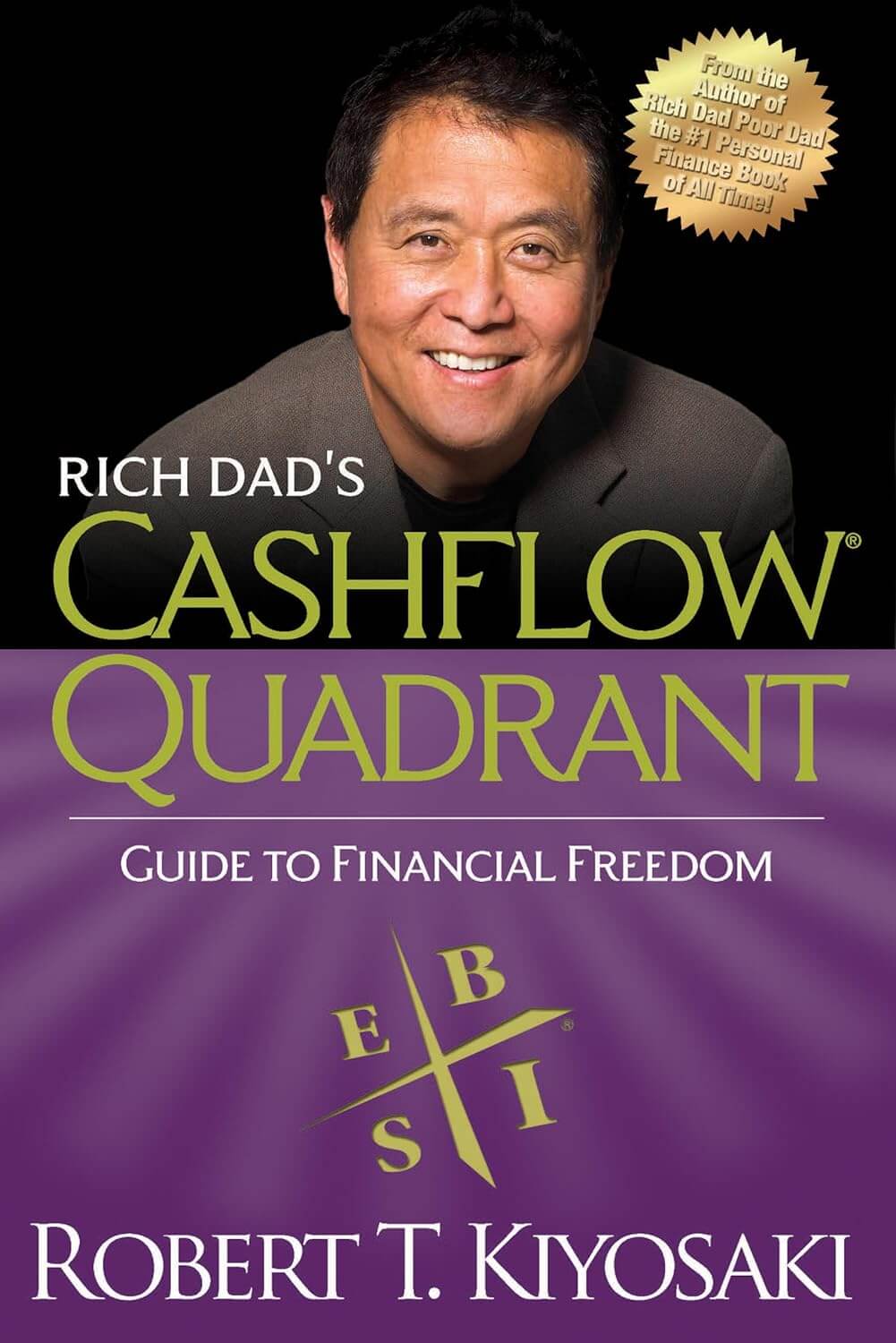
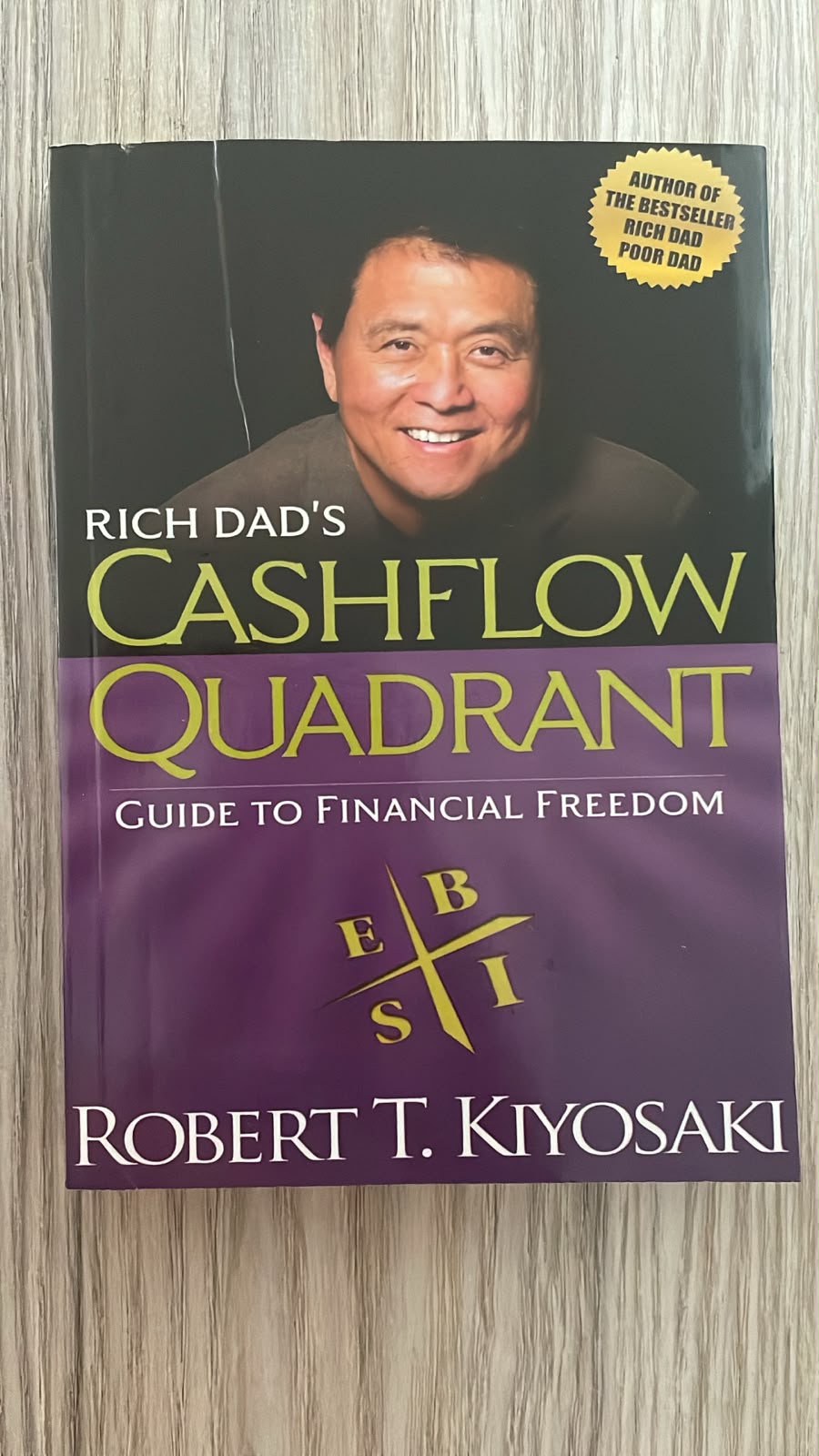
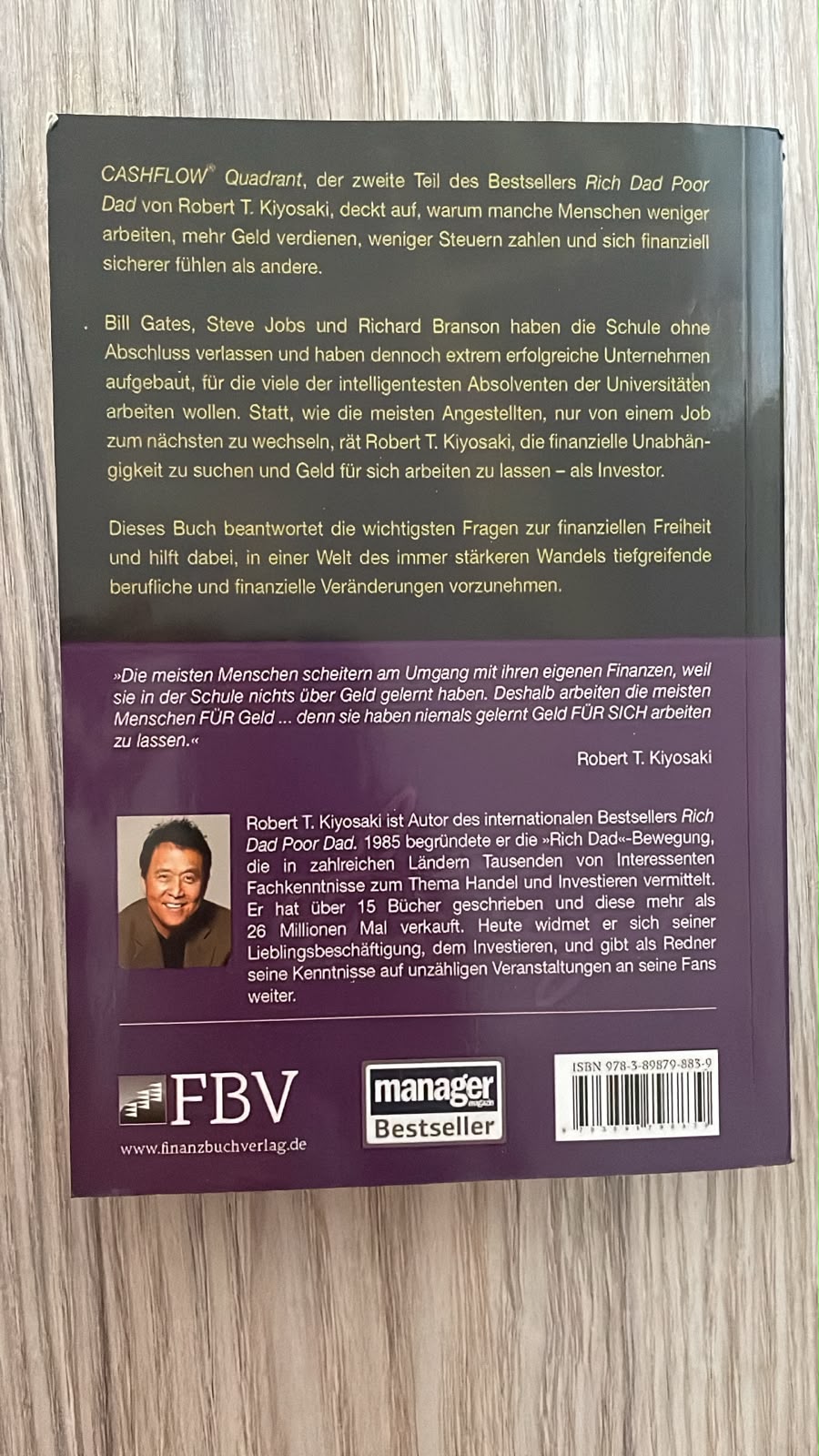
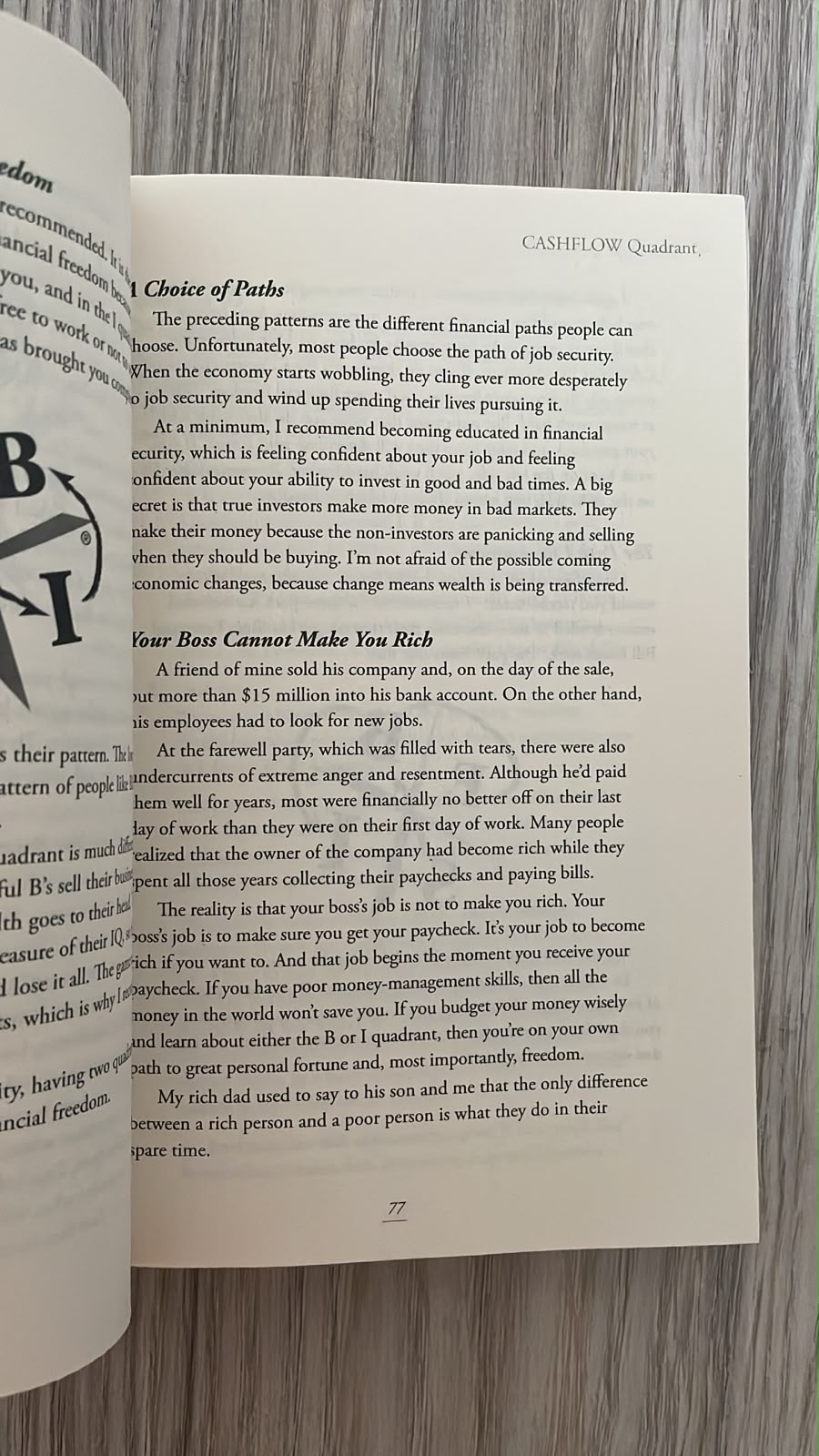
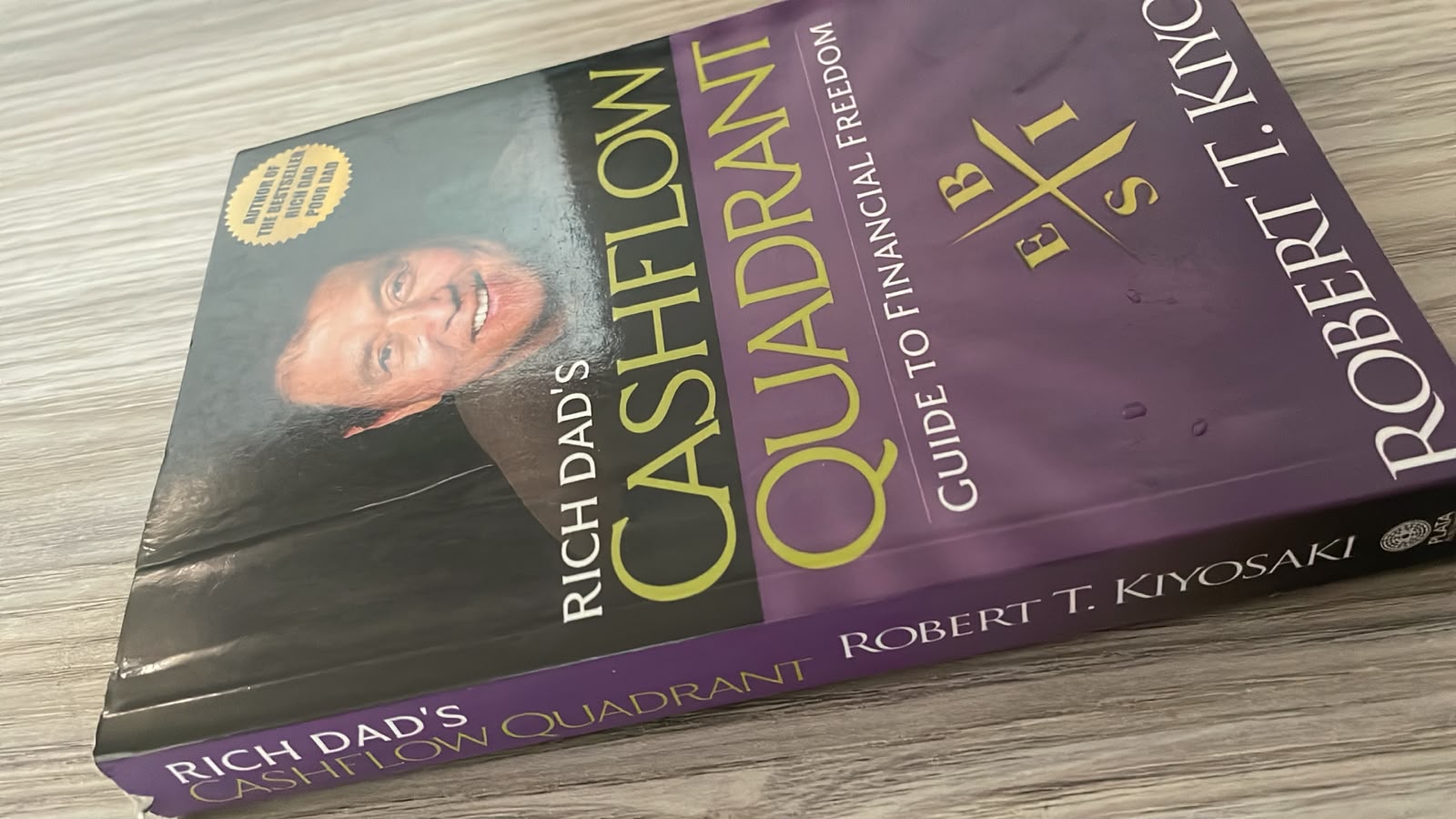

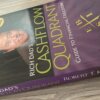


Rich Dad’s Cashflow Quadrant by Robert T. Kiyosaki
Rich Dad’s Cashflow Quadrant by Robert T. Kiyosaki is a popular personal finance and business book that explores the different ways people earn money and how those choices can influence their financial lives. As part of the bestselling Rich Dad series, the book expands on many of the ideas introduced in Rich Dad Poor Dad and focuses on four different approaches to generating income.
At the heart of the book is the CASHFLOW Quadrant, a simple framework divided into four sections: Employee, Self-Employed, Business Owner, and Investor.
Kiyosaki uses this model to explain why people with similar incomes can have very different attitudes toward work, money, risk, business, and investing. Rather than simply focusing on earning a higher salary, the book encourages readers to improve their financial education and think carefully about how their income is generated.
About Rich Dad’s Cashflow Quadrant
Rich Dad’s Cashflow Quadrant divides income earners into four main categories:
E – Employee: A person who works for an employer and receives a salary or wage.
S – Self-Employed: Someone who works for themselves, such as a freelancer, consultant, professional, or small-business operator whose income often depends heavily on their own work.
B – Business Owner: Someone who develops or owns a business system that can operate with the help of other people and established processes.
I – Investor: Someone who aims to generate income or returns through investments and assets.
Kiyosaki argues that each quadrant requires a different mindset, skill set, and relationship with money. The book particularly focuses on the differences between earning income primarily through personal labour and creating systems or investments that may generate income differently.
7 Powerful Lessons from Rich Dad’s Cashflow Quadrant
1. Understand How You Earn Money
One of the key lessons in Rich Dad’s Cashflow Quadrant is that the amount of money you earn is only one part of your financial picture.
The book asks readers to consider where their income comes from and how dependent that income is on their personal time and effort.
Understanding your current position in the quadrant can help you think more carefully about your career, business, and financial goals.
2. Financial Education Matters
Kiyosaki repeatedly emphasizes the importance of financial education.
Knowing how income, expenses, assets, liabilities, businesses, taxes, and investments work can help people make more informed financial decisions.
The book encourages readers to continue learning about money instead of relying entirely on traditional employment or education to determine their financial future.
3. Different Quadrants Require Different Mindsets
An employee may value stability and a predictable salary, while a self-employed person may value independence and control over their work.
A business owner, meanwhile, may focus on building systems and teams, while an investor may concentrate on evaluating opportunities, risk, and potential returns.
The book’s framework helps readers understand why different people can approach money and work in very different ways.
4. Owning a Job Is Different from Owning a Business
Being self-employed and owning a business are not necessarily the same thing.
If a business depends completely on its owner being present every day, the owner may effectively have created another job for themselves.
Kiyosaki uses the CASHFLOW Quadrant to highlight the difference between personally doing most of the work and creating a business system that can function through processes, teams, and management.
5. Learn to Build Systems
Systems are a major theme in the book.
Successful businesses often depend on repeatable processes rather than one person’s constant involvement. Learning how to delegate, create procedures, develop teams, and solve problems can therefore become important skills for entrepreneurs.
This is one reason Kiyosaki distinguishes the Business Owner quadrant from the Self-Employed quadrant.
6. Understand Assets and Investing
Investing forms the fourth section of the CASHFLOW Quadrant.
Kiyosaki encourages readers to increase their knowledge of assets and understand how money can potentially be used to generate additional income or returns.
The book is not simply about choosing an investment. Instead, much of its message focuses on developing the knowledge, mindset, and financial literacy needed to evaluate opportunities and risks.
7. Financial Freedom Requires a Different Perspective
The broader theme of Rich Dad’s Cashflow Quadrant is financial independence.
Kiyosaki challenges the traditional idea that the only financial path is to study, find secure employment, work for decades, and eventually retire.
Instead, he asks readers to explore different approaches to business, investing, and income generation.
His framework is intended to help readers think about which quadrant they currently occupy and where they may want to move in the future.
Why Read Rich Dad’s Cashflow Quadrant?
This book is especially interesting for readers who enjoyed Rich Dad Poor Dad and want to explore Robert Kiyosaki’s ideas in greater depth.
The CASHFLOW Quadrant provides a straightforward visual framework for understanding four different ways people generate income. This makes complicated financial and business concepts easier for beginners to discuss and understand.
Rather than functioning as a technical investing manual, the book primarily focuses on financial mindset, entrepreneurship, business ownership, financial education, and the way people think about work and money.
Readers should still independently evaluate specific financial, tax, business, or investment decisions, but the book can provide useful concepts to explore further.
Who Should Read Rich Dad’s Cashflow Quadrant?
The book may appeal to:
- Entrepreneurs and aspiring business owners
- Employees interested in financial education
- Freelancers and self-employed professionals
- Readers interested in investing
- Small-business owners
- Students interested in business and finance
- Fans of Rich Dad Poor Dad
- Anyone interested in understanding different income models
Its accessible style makes many of the concepts suitable even for readers who are relatively new to personal finance and entrepreneurship.
About Robert T. Kiyosaki
Robert T. Kiyosaki is an entrepreneur and author best known for the Rich Dad Poor Dad series. His books focus on financial education, entrepreneurship, investing, assets, and the differences between working for money and developing other sources of income.
Readers who would like to learn more about the CASHFLOW Quadrant framework can visit the official Rich Dad CASHFLOW Quadrant resource.
Explore More Finance and Business Books
If you enjoy books about money, entrepreneurship, investing, business, and financial education, explore more Finance Books at Bargain Books.
Rich Dad’s Cashflow Quadrant offers a simple but thought-provoking framework for examining how people earn money. By comparing employees, self-employed professionals, business owners, and investors, Robert T. Kiyosaki encourages readers to reconsider their relationship with work, income, financial education, and long-term financial goals.
For readers looking to expand their understanding of money and entrepreneurship after Rich Dad Poor Dad, this book is a natural next step.
Learn more about Rich Dad’s CASHFLOW Quadrant by Robert T. Kiyosaki on the official Rich Dad website.
Explore more business, finance, and investing books at Bargain Books.
Pumpkin Spice Café
Rich Dads Cashflow Quadrant
| Author | Robert T. Kiyosaki |
|---|---|
| Language | English |
| Type | Paperback Printed Book (Second Quality Copy) |
Be the first to review “Rich Dad’s Cashflow Quadrant by Robert T. Kiyosaki”
Related products
Business, Finance & Economics
රු1,950.00
3 X Rs. 650.00 or 8% Cashback with


or 3 X රු650.00 with


or up to 4 X රු487.50 with


Damaged & Imperfect Books
රු1,200.00
3 X Rs. 400.00 or 8% Cashback with
or 3 X රු400.00 with
or up to 4 X රු300.00 with
Damaged & Imperfect Books
7 Secrets to Investing Like Warren Buffett by Mary Buffett and Sean Seah (838)
රු750.00
3 X Rs. 250.00 or 8% Cashback with
or 3 X රු250.00 with
or up to 4 X රු187.50 with
-14%
Out of stock
Non-Fiction & Knowledge
Original price was: රු3,500.00.රු3,000.00Current price is: රු3,000.00.
3 X Rs. 1,000.00 or 8% Cashback with
or 3 X රු1,000.00 with
or up to 4 X රු750.00 with
Business, Finance & Economics
රු1,900.00
3 X Rs. 633.33 or 8% Cashback with
or 3 X රු633.33 with
or up to 4 X රු475.00 with
![Stories of bible [hardcover]](https://bargainbooks.lk/wp-content/uploads/Stories-of-bible-hardcover-4-1-300x450.jpeg)
Damaged & Imperfect Books
රු1,750.00
3 X Rs. 583.33 or 8% Cashback with
or 3 X රු583.33 with
or up to 4 X රු437.50 with
-17%
Business, Finance & Economics
Original price was: රු1,800.00.රු1,500.00Current price is: රු1,500.00.
3 X Rs. 500.00 or 8% Cashback with
or 3 X රු500.00 with
or up to 4 X රු375.00 with
-22%

Out of stock
Business, Finance & Economics
Original price was: රු2,250.00.රු1,750.00Current price is: රු1,750.00.
3 X Rs. 583.33 or 8% Cashback with
or 3 X රු583.33 with
or up to 4 X රු437.50 with
Reviews
There are no reviews yet.