
No products in the cart.
-22%
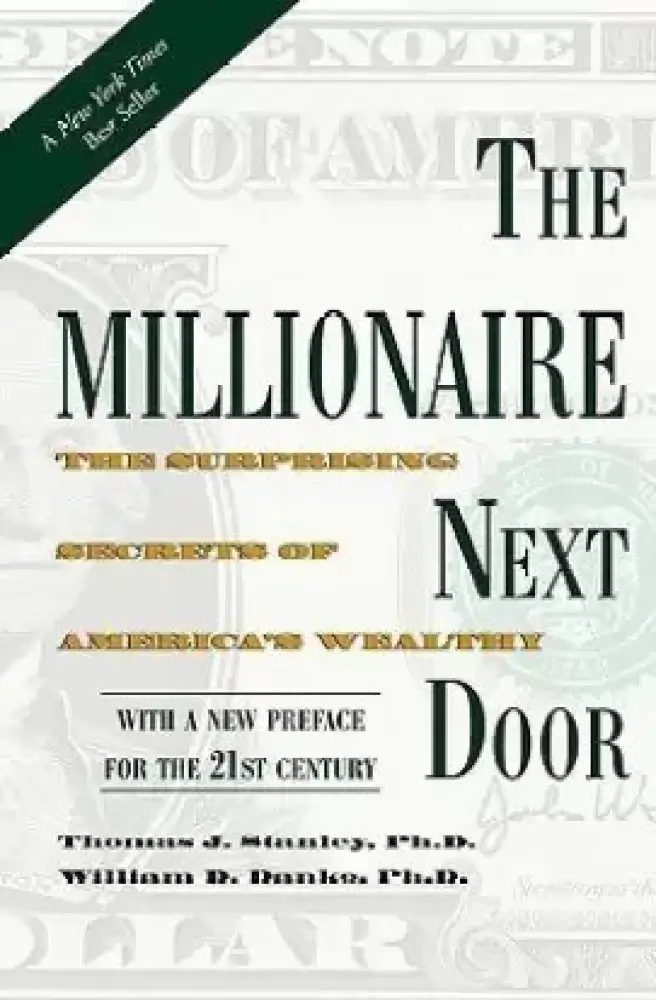
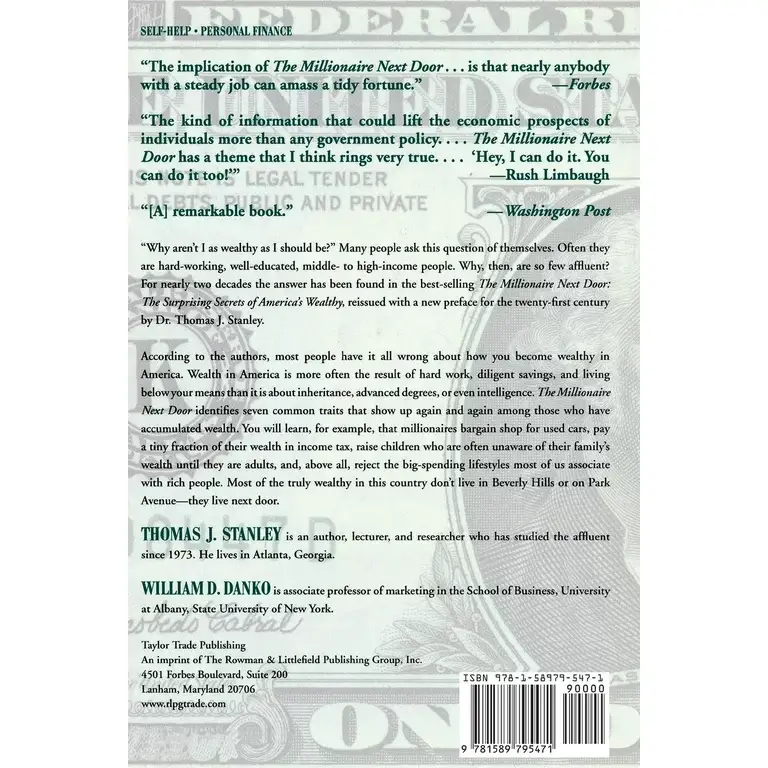
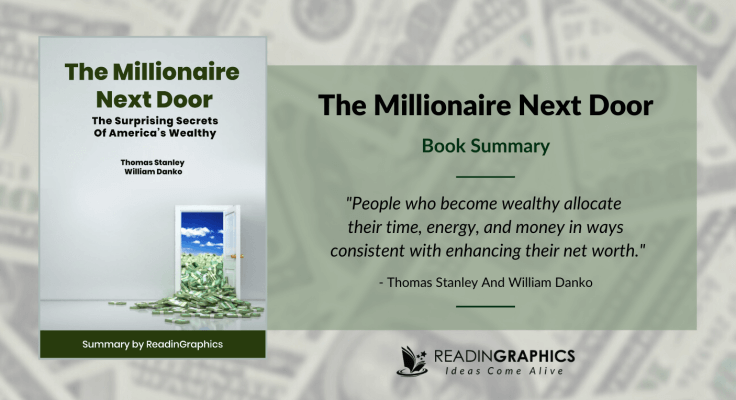
Millionaire Next Door by Thomas J. Stanley
Original price was: රු2,250.00.රු1,750.00Current price is: රු1,750.00.
3 X Rs. 583.33 or 8% Cashback with


or 3 X රු583.33 with


or up to 4 X රු437.50 with


The Millionaire Next Door by Thomas Stanley and William Danko is a classic personal-finance book based on research into affluent American households. It reveals how many millionaires quietly build wealth through frugality, budgeting, investing, business ownership, living below their means and avoiding unnecessary status spending. Exploring the difference between income and net worth, PAWs and UAWs, lifestyle inflation and financial independence, it is ideal for readers interested in money management, investing and long-term wealth creation.
Out of stock
Email when stock available
The Millionaire Next Door by Thomas Stanley and William Danko is a classic personal-finance book that challenges popular ideas about what wealthy people look like and explains the habits that helped many ordinary Americans quietly build substantial net worth.
When people imagine a millionaire, they may picture:
Luxury cars.
Designer clothes.
Huge houses.
Expensive watches.
Private clubs.
Constant travel.
But Thomas J. Stanley and William D. Danko discovered something very different.
Many genuinely wealthy people do not look wealthy at all.
They may:
Live in ordinary neighborhoods.
Drive practical cars.
Own businesses.
Budget carefully.
Invest consistently.
Avoid unnecessary debt.
Spend far less than they earn.
The authors spent years studying affluent households and examining how people accumulated wealth.
Their central conclusion is simple:
Looking rich and being rich are not the same thing.
A person can earn a very high income and still have little wealth if nearly all of that income is spent.
Another person can earn a more moderate income, maintain reasonable expenses, invest consistently and gradually build significant assets.
The Millionaire Next Door by Thomas Stanley and William Danko explores the behaviors that separate high consumers from successful wealth accumulators.
It focuses on:
Frugality.
Financial planning.
Net worth.
Business ownership.
Investing.
Career choices.
Family money habits.
Economic independence.
The book is especially valuable because it shifts the financial question from:
“How much money do you earn?”
to:
“How much of what you earn do you keep and convert into assets?”
The Millionaire Next Door by Thomas Stanley and William Danko – Book Overview
The Millionaire Next Door by Thomas Stanley and William Danko is based on research into affluent American households.
The authors discovered that many millionaires did not fit the stereotype of conspicuous luxury.
Instead, they often displayed habits such as:
Living below their means.
Planning finances carefully.
Avoiding unnecessary status spending.
Choosing occupations with strong economic opportunities.
Investing regularly.
Prioritizing financial independence.
Many were business owners or self-employed professionals.
The book uses these observations to explain how wealth is accumulated over long periods.
Income Is Not Wealth
One of the most important ideas in the book is the difference between income and wealth.
Income is money you earn.
Wealth is what you own after subtracting what you owe.
For example:
Person A earns a very high salary but spends almost everything.
Person B earns less but consistently saves and invests.
After many years, Person B may have a much higher net worth.
A large salary can create wealth.
But only if some of the income is retained.
Net Worth
A simple measure of financial wealth is:
Assets – Liabilities = Net Worth
Assets may include:
Cash.
Savings.
Investments.
Business ownership.
Property equity.
Other valuable financial assets.
Liabilities may include:
Mortgages.
Loans.
Credit-card debt.
Other obligations.
Someone may own expensive possessions while also carrying significant debt.
That is why appearances can be misleading.
The Wealthy Often Look Ordinary
Perhaps the most memorable message in The Millionaire Next Door by Thomas Stanley and William Danko is that wealth is often invisible.
A person wearing:
An expensive suit.
A luxury watch.
Designer shoes.
may appear rich.
But those purchases tell you what they spent.
They do not tell you what they own.
True wealth frequently exists in:
Investment accounts.
Business equity.
Property.
Savings.
Retirement assets.
These are much less visible.
Big Hat, No Cattle
The authors use examples of people who appear financially successful while possessing relatively little real wealth.
The broader lesson is:
Do not confuse consumption with financial strength.
A luxury lifestyle can sometimes be supported by:
Debt.
High monthly expenses.
Financial pressure.
The person may need their next paycheck desperately despite earning a large salary.
Living Below Your Means
A foundational principle of The Millionaire Next Door by Thomas Stanley and William Danko is living below your means.
This does not necessarily mean living miserably.
It means avoiding the assumption that every increase in income requires an equal increase in lifestyle.
Earn more.
But do not automatically spend more.
The difference can become:
Savings.
Investments.
Business capital.
Financial security.
Lifestyle Inflation
Lifestyle inflation occurs when spending rises with income.
First salary:
Small apartment.
Used car.
Simple lifestyle.
Income increases:
Bigger apartment.
New car.
More subscriptions.
More expensive restaurants.
Income increases again:
Luxury car.
Larger home.
Premium lifestyle.
The person earns more but may never become financially independent because expenses keep rising.
Frugality
Frugality is one of the characteristics repeatedly associated with wealth accumulation in the book.
Frugality does not mean:
Never enjoying money.
Buying only the cheapest item.
Refusing every experience.
It means spending deliberately.
A frugal person asks:
Is this worth the money?
Will this improve my life?
Am I buying this because I need it or because I want to impress someone?
Status Spending
Status consumption can become extremely expensive.
People may buy:
Cars.
Clothing.
Homes.
Accessories.
because they want other people to perceive them as successful.
But every dollar spent proving wealth is a dollar that cannot simultaneously remain invested.
Financial Independence
The goal of wealth accumulation is not necessarily extreme luxury.
For many of the people studied in the book, the more valuable goal was financial independence.
Financial independence can mean having enough assets that you are not completely dependent on your next salary.
This can create:
Security.
Freedom.
Options.
Reduced financial anxiety.
Time and Money
Financial independence also changes the relationship between time and work.
Someone with strong savings and assets may have more freedom to:
Change jobs.
Start a business.
Retire earlier.
Take career risks.
Handle emergencies.
Financial strength creates options.
Planning
The authors found that successful wealth accumulators often spent substantial time planning their financial future.
They knew:
What they earned.
What they spent.
How much they invested.
What they owned.
What they owed.
This may sound simple.
But many people have no clear picture of their finances.
Budgeting
Budgeting gives money a purpose.
Without a plan, income can disappear through dozens of small expenses.
A budget can help organize:
Housing.
Food.
Transport.
Debt payments.
Savings.
Investing.
Entertainment.
Business expenses.
The goal is awareness.
Know Where Your Money Goes
A person cannot effectively improve finances without understanding current spending.
Track expenses.
Then ask:
Which are essential?
Which are valuable?
Which are habitual?
Which could be reduced without damaging quality of life?
Small changes can become significant over years.
Saving First
Many people use this formula:
Income – Spending = Savings
Meaning:
Spend throughout the month.
Save whatever remains.
The problem is that often nothing remains.
A more disciplined approach is:
Income – Planned Saving/Investing = Available Spending
This treats wealth building as a priority.
Investing
Saving protects money.
Investing attempts to make money grow.
The book emphasizes accumulating productive financial assets rather than directing most income toward consumption.
Long-term investing can benefit from:
Compounding.
Time.
Consistency.
Compounding
Compounding means returns can begin generating additional returns.
A small amount invested consistently over many years can become substantial.
The process looks slow at first.
Then growth can accelerate.
That is why starting early matters.
Start Before You Feel Rich
Some people say:
“I’ll invest when I earn more.”
Then income rises.
Spending rises too.
They still do not invest.
A better habit is beginning with a manageable amount and increasing it over time.
Financial Discipline
The Millionaire Next Door by Thomas Stanley and William Danko repeatedly shows that financial success often looks boring.
Budget.
Save.
Invest.
Repeat.
There may be no dramatic moment.
But repeated disciplined decisions compound.
PAWs and UAWs
One of the book’s best-known concepts divides people into different wealth-accumulation categories.
A PAW is a:
Prodigious Accumulator of Wealth
A UAW is an:
Under Accumulator of Wealth
The idea is that some people accumulate much more wealth than would be expected based on their age and income, while others accumulate much less.
Prodigious Accumulator of Wealth
A PAW tends to:
Save consistently.
Invest.
Avoid unnecessary consumption.
Plan finances.
Build assets.
They may not earn the highest salary.
But they convert a significant portion of their income into wealth.
Under Accumulator of Wealth
A UAW may earn significant income but spend heavily.
The person may own impressive consumer goods while having relatively weak:
Savings.
Investments.
Net worth.
This again reinforces the book’s central distinction between:
Income.
Lifestyle.
And wealth.
Expected Net Worth Formula
The book introduces a rough benchmark for expected net worth based on:
Age.
Income.
The formula is commonly expressed as:
Age × Annual Pretax Household Income ÷ 10
This was intended as a rough comparison tool in the book’s research context, not as a universal modern financial rule.
Personal circumstances can vary greatly.
Business Ownership
A significant number of the millionaires studied were business owners.
Entrepreneurship can create wealth because successful business owners may build an asset that has value beyond their monthly salary.
A business can potentially create:
Income.
Equity.
Cash flow.
Sale value.
Entrepreneurship Is Not Guaranteed Wealth
However, owning a business does not guarantee success.
Businesses can fail.
Entrepreneurs may experience:
Income instability.
Debt.
Competition.
Long hours.
Operational problems.
The value of the book’s observation is that ownership can create wealth-building opportunities—not that every business owner becomes wealthy.
Self-Employment
Many affluent individuals in the research controlled their own businesses or professional practices.
This could provide greater influence over:
Income.
Costs.
Investment.
Business value.
But it also requires financial discipline.
A profitable business can still fail if the owner spends everything.
Choosing the Right Occupation
The authors discuss the importance of choosing careers and business opportunities intelligently.
Income alone is not enough.
Also consider:
Demand.
Competition.
Profit margins.
Ownership potential.
Long-term opportunity.
The wealthiest-looking profession is not automatically the profession that creates the greatest net worth.
Economic Opportunity
Sometimes less glamorous industries provide strong opportunities.
People may become wealthy in businesses that are:
Practical.
Specialized.
Necessary.
Unfashionable.
A successful business does not need to sound impressive.
It needs customers.
The Cost of Looking Successful
Some careers come with social pressure to display status.
For example, a professional may feel expected to own:
An expensive car.
Large home.
Premium clothing.
Luxury memberships.
These costs can reduce wealth accumulation even when income is high.
Cars and Wealth
Cars are a famous topic in The Millionaire Next Door by Thomas Stanley and William Danko.
The authors found that many wealthy people were more practical about vehicle purchases than stereotypes suggested.
The broader lesson is not:
Never buy a nice car.
It is:
Understand the opportunity cost.
Money tied up in rapidly depreciating consumer goods cannot simultaneously remain invested elsewhere.
Depreciation
Many consumer products lose value.
A new car may begin depreciating immediately.
That does not make cars bad.
Transportation is necessary.
But there is a financial difference between:
Buying transportation.
And using transportation as a status competition.
Houses
A large house can also create large ongoing expenses.
Mortgage.
Maintenance.
Insurance.
Utilities.
Taxes.
Furniture.
Repairs.
Buying too much house can restrict financial flexibility.
House Rich, Cash Poor
Someone may live in an impressive property while having:
Little savings.
Limited investments.
High monthly obligations.
The appearance of wealth can hide financial vulnerability.
Credit and Debt
Debt can dramatically affect wealth accumulation.
High-interest consumer debt is particularly damaging because money that could be invested instead goes toward interest.
Reducing expensive debt can improve financial strength.
Good Debt and Bad Debt
Not all debt has the same characteristics.
Business financing or property financing may potentially support productive assets.
Consumer debt used to maintain an unaffordable lifestyle is very different.
The key is understanding:
Cost.
Risk.
Cash flow.
Purpose.
Emergency Funds
Financially independent people are better prepared for unexpected events.
Examples include:
Job loss.
Medical costs.
Business downturns.
Repairs.
Family emergencies.
An emergency fund reduces the need to immediately rely on high-interest borrowing.
Consumption Versus Investment
Every financial decision involves trade-offs.
Spend Rs. 100,000 today.
Or invest it.
Neither choice is automatically correct.
Life should still be lived.
But understanding opportunity cost creates better decisions.
Opportunity Cost
Money spent in one place cannot simultaneously be used somewhere else.
A costly purchase does not only cost its price.
It can also cost the future investment growth that money might have produced.
Education
Education can improve earning potential.
But education itself does not guarantee wealth.
Someone can have:
Degrees.
High income.
Professional status.
and still accumulate little wealth.
Financial behavior remains important.
Financial Literacy
Schools often teach:
Mathematics.
Science.
Language.
History.
But many people receive limited formal education about:
Budgeting.
Investing.
Debt.
Taxes.
Insurance.
Net worth.
Understanding money can therefore require self-education.
Family and Money
The Millionaire Next Door by Thomas Stanley and William Danko also examines how family behavior can influence wealth.
Parents may help children financially.
But excessive financial assistance can sometimes create dependency.
The authors discuss this under the concept of economic outpatient care.
Economic Outpatient Care
This phrase describes significant financial support given by affluent parents to adult children.
Examples might include:
Housing assistance.
Regular cash gifts.
Paying expenses.
Business support.
The authors argue that too much support can sometimes weaken financial independence.
Help Versus Dependency
Helping family is not inherently wrong.
Families support one another.
The important question is whether support helps someone become:
More capable.
More independent.
Or increasingly dependent.
Teaching Children About Money
Financial education can begin early.
Children can learn:
Saving.
Budgeting.
Delayed gratification.
Earning.
Investing.
Needs versus wants.
These habits can become more valuable than simply receiving money.
Avoid Creating Entitlement
If children grow up believing money always appears when needed, they may not learn to manage it responsibly.
Teaching financial responsibility can be more valuable than financing an unlimited lifestyle.
Marriage and Wealth
Financial habits between partners matter.
One partner may save.
Another may spend.
One may want financial security.
Another may prioritize lifestyle.
Money disagreements can create major stress.
Successful household wealth building usually requires communication.
Discuss Financial Goals
Couples benefit from discussing:
Debt.
Income.
Savings.
Investments.
Major purchases.
Retirement.
Financial priorities.
Silence around money can create conflict.
Wealth and Happiness
The book focuses on money, but wealth itself does not guarantee happiness.
Financial security can reduce some forms of stress.
But it cannot automatically provide:
Health.
Meaning.
Friendship.
Love.
Purpose.
Money is a tool.
Freedom Over Display
A useful interpretation of The Millionaire Next Door by Thomas Stanley and William Danko is that financial freedom can be more valuable than financial display.
Would you rather:
Look wealthy?
Or actually have enough assets to control more of your life?
The book consistently favors the second.
Marketing and Consumer Culture
Modern advertising constantly encourages people to upgrade.
New phone.
New car.
New fashion.
New lifestyle.
The message is:
You deserve it.
But financial independence often requires asking:
Do I really need it?
Social Media and Lifestyle Comparison
The book was written before modern social media became dominant, but its ideas are extremely relevant today.
People constantly see:
Luxury holidays.
Cars.
Clothing.
Homes.
Restaurants.
They rarely see:
Debt.
Loan payments.
Savings balances.
Financial stress.
Never assume visible lifestyle equals invisible wealth.
Quiet Wealth
Real wealth is often quiet.
No announcement.
No logo.
No luxury display.
Just:
Assets.
Savings.
Investments.
Low debt.
Financial options.
That is why the metaphor of the “millionaire next door” became so powerful.
Financial Security
Security creates confidence.
A person with strong savings may be able to:
Leave a toxic job.
Handle an emergency.
Take a career break.
Start a business.
Negotiate from strength.
Money becomes freedom rather than merely consumption.
Retirement
Traditional retirement planning remains part of long-term wealth accumulation.
The earlier someone begins, the more time investments may have to grow.
But the book’s broader principle is not simply retirement.
It is economic independence.
Become Financially Independent Before You Need To
Waiting until age 65 to think about financial security is risky.
Good habits begun earlier create more options.
High Income Can Be Temporary
A high salary can disappear.
Companies close.
Industries change.
Health changes.
Economic conditions shift.
Assets can create a second layer of financial protection beyond employment income.
Diversification
Depending entirely on one source of wealth can create risk.
Diversification may include different:
Investments.
Assets.
Income sources.
The exact strategy depends on individual circumstances and risk tolerance.
Taxes
Tax planning is also relevant to wealth accumulation.
The goal is not illegal avoidance.
It is understanding how legitimate financial structures, retirement accounts, investments and business decisions affect after-tax wealth.
Qualified advice may be appropriate for complex situations.
Insurance
Protecting wealth matters as much as building it.
Insurance can help protect against significant financial shocks involving:
Health.
Property.
Vehicles.
Business risks.
Life circumstances.
Wealth Preservation
Once wealth is built, careless behavior can destroy it.
Overspending.
Bad investments.
Excessive debt.
Fraud.
Poor planning.
Financial education remains important even after success.
Becoming Wealthy Slowly
Unlike some entrepreneurship books that emphasize accelerated wealth creation, The Millionaire Next Door by Thomas Stanley and William Danko largely illustrates a quieter path.
Earn.
Save.
Invest.
Own productive assets.
Avoid lifestyle inflation.
Repeat over many years.
The strategy is less exciting than a viral success story.
It may also be more realistic for many people.
Discipline Over Motivation
Motivation changes.
Financial systems can continue.
Automatic investing.
Scheduled saving.
Budgeting.
Debt repayment.
These reduce dependence on temporary motivation.
Habits Matter More Than One Big Decision
Financial independence often comes from thousands of ordinary decisions.
Cook at home sometimes.
Avoid unnecessary debt.
Invest regularly.
Negotiate purchases.
Control recurring expenses.
The individual decision looks small.
The long-term effect can be large.
Is The Millionaire Next Door a Personal Finance Book?
Yes.
The Millionaire Next Door by Thomas Stanley and William Danko is primarily about:
Personal finance.
Wealth accumulation.
Financial habits.
Frugality.
Investing.
Business ownership.
Economic independence.
Is It an Investing Guide?
Not exactly.
The book supports investing as part of wealth accumulation, but it is not primarily a technical guide to:
Stock picking.
Trading.
Portfolio construction.
Its focus is financial behavior.
Is It a Get-Rich-Quick Book?
No.
Quite the opposite.
It emphasizes gradual wealth building through:
Discipline.
Planning.
Saving.
Ownership.
Long-term financial habits.
Is It Good for Beginners?
Yes.
The concepts are straightforward and can help beginners understand the difference between:
Income.
Consumption.
Assets.
Net worth.
The examples also make the principles easy to remember.
Is The Millionaire Next Door Still Relevant?
Many of its core principles remain useful:
Spend less than you earn.
Build assets.
Avoid excessive lifestyle inflation.
Understand net worth.
Plan finances.
However, some financial figures and examples reflect the economic environment in which the original research was conducted.
Readers should apply modern financial data and local economic conditions when making actual decisions.
Is the Book Based on Research?
Yes.
Stanley and Danko developed the book from research into affluent households and patterns of wealth accumulation.
However, readers should avoid treating every observation as a universal law applying to every millionaire or every country.
The book identifies patterns, not guarantees.
American Context
The subtitle refers specifically to America’s wealthy.
Tax systems.
Housing markets.
Income levels.
Retirement structures.
Business conditions.
vary across countries.
Sri Lankan readers can still apply broad principles such as:
Frugality.
Asset accumulation.
Debt control.
Financial planning.
But specific numbers need local adaptation.
Thomas J. Stanley
Thomas J. Stanley was an author and researcher known for studying affluent Americans and the behaviors associated with wealth accumulation.
His work focused heavily on the difference between:
High income.
High consumption.
And genuine financial wealth.
William D. Danko
William D. Danko co-authored The Millionaire Next Door and contributed to the research underlying the book.
The official book should therefore be credited to both:
Thomas J. Stanley and William D. Danko.
Related Books
Readers who enjoy The Millionaire Next Door by Thomas Stanley and William Danko may also appreciate:
The Next Millionaire Next Door by Thomas J. Stanley and Sarah Stanley Fallaw.
The Psychology of Money by Morgan Housel.
The Richest Man in Babylon by George S. Clason.
The Intelligent Investor by Benjamin Graham.
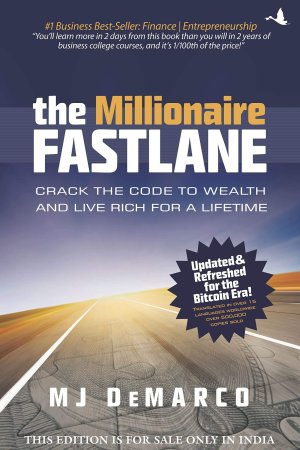
The Millionaire Fastlane by M. J. DeMarco for a very different perspective on accelerated wealth creation.
The Millionaire Next Door vs The Millionaire Fastlane
These two books approach wealth differently.
The Millionaire Next Door emphasizes:
Frugality.
Long-term accumulation.
Living below your means.
Investing.
Quiet wealth.
The Millionaire Fastlane emphasizes:
Entrepreneurship.
Scalability.
Business ownership.
Accelerating financial independence.
Readers can learn from both because they address different paths.
Important Themes
The Millionaire Next Door by Thomas Stanley and William Danko explores:
- Wealth accumulation
- Financial independence
- Frugality
- Saving
- Investing
- Net worth
- Lifestyle inflation
- Business ownership
- Entrepreneurship
- Budgeting
- Debt
- Financial planning
- Consumer behavior
- Status spending
- Family finances
- Economic independence
- Cars and wealth
- Financial discipline
- Asset building
- Long-term thinking
7 Powerful Wealth Lessons From The Millionaire Next Door by Thomas Stanley and William Danko
There are many lessons in The Millionaire Next Door by Thomas Stanley and William Danko, but seven stand out:
- Looking wealthy and being wealthy are completely different – Expensive cars, homes and clothing demonstrate spending, not necessarily net worth.
- Live below your means – Keeping expenses below income creates the surplus needed to save, invest and build assets over time.
- Measure wealth through net worth, not salary alone – A high-income professional can still be financially weak if spending and debt consume most earnings.
- Avoid automatic lifestyle inflation – Increasing income should not require increasing every part of your lifestyle at the same speed.
- Financial planning deserves time and attention – Successful wealth accumulators often understand their expenses, investments, assets and long-term goals.
- Ownership can accelerate wealth accumulation – Business ownership and productive assets can create financial value beyond salary alone, although entrepreneurship also carries risk.
- Financial independence is more valuable than appearing successful – The ultimate benefit of wealth is having greater security, freedom and choice over your life.
Why Read The Millionaire Next Door by Thomas Stanley and William Danko?
The Millionaire Next Door by Thomas Stanley and William Danko is an excellent choice for readers interested in:
- Personal finance
- Wealth creation
- Millionaire habits
- Financial independence
- Saving money
- Investing
- Frugal living
- Budgeting
- Business ownership
- Entrepreneurship
- Net worth
- Financial literacy
- Wealth mindset
- Money management
- Lifestyle inflation
- Asset building
- Financial freedom
- Long-term investing
- Family finance
- Building wealth
It is especially useful for readers who want to understand why appearing wealthy can be very different from actually becoming wealthy.
Who Should Read This Book?
The Millionaire Next Door by Thomas Stanley and William Danko may especially appeal to:
- Personal-finance beginners
- Young professionals
- Entrepreneurs
- Business owners
- Students
- Families
- People trying to reduce lifestyle inflation
- Readers building savings
- New investors
- High-income professionals
- People interested in financial independence
- Readers of wealth-building books
- People trying to understand net worth
- Anyone interested in the habits of financially successful households
The Millionaire Next Door by Thomas Stanley and William Danko – Build Wealth Quietly
The Millionaire Next Door by Thomas Stanley and William Danko changes the picture many people have of wealth.
The millionaire may not be arriving in the newest luxury car.
They may be driving something practical.
They may not be wearing designer clothes.
They may not be living in the largest house in the neighborhood.
Why?
Because they understand something important:
Money has two possible futures.
It can be consumed.
Or it can become an asset.
Spend it today and receive:
A product.
An experience.
A lifestyle.
Invest it and potentially receive:
Future growth.
Cash flow.
Financial security.
Neither choice is automatically wrong.
Life should still contain enjoyment.
But people who consistently choose consumption over ownership may discover that decades of high income produced surprisingly little financial independence.
The millionaire next door chooses differently.
Not every time.
But often enough.
They budget.
They plan.
They invest.
They control expenses.
They avoid trying to impress everyone.
They understand what they own and what they owe.
They focus less on looking successful and more on becoming financially secure.
That is why the book remains so memorable.
Its message is almost the opposite of modern consumer culture.
Modern culture says:
Show everyone you are successful.
The book says:
Build enough wealth that you no longer need to prove it.
For readers interested in personal finance, wealth accumulation, financial independence and developing healthier long-term money habits, The Millionaire Next Door by Thomas Stanley and William Danko offers a practical reminder that genuine wealth is often built quietly, patiently and far away from the luxury lifestyle people normally associate with millionaires.
Learn more about The Millionaire Next Door: The Surprising Secrets of America’s Wealthy by Thomas J. Stanley and William D. Danko on the official Simon & Schuster website.
Explore more investing and personal finance books at Bargain Books.
| Author | Thomas J. Stanley |
|---|---|
| Language | English |
| Type | Paperback Printed Book |
| ISBN/ISSN | 9387496465, 978-9387496460 |
| Pages | 272 |
Be the first to review “Millionaire Next Door by Thomas J. Stanley”
Related products
-14%
Out of stock
Non-Fiction & Knowledge
Original price was: රු3,500.00.රු3,000.00Current price is: රු3,000.00.
3 X Rs. 1,000.00 or 8% Cashback with
or 3 X රු1,000.00 with
or up to 4 X රු750.00 with
Out of stock
Business, Finance & Economics
රු1,900.00
3 X Rs. 633.33 or 8% Cashback with
or 3 X රු633.33 with
or up to 4 X රු475.00 with
Out of stock
Damaged & Imperfect Books
රු1,700.00
3 X Rs. 566.67 or 8% Cashback with
or 3 X රු566.67 with
or up to 4 X රු425.00 with
-12%
Biography
Original price was: රු3,400.00.රු3,000.00Current price is: රු3,000.00.
3 X Rs. 1,000.00 or 8% Cashback with
or 3 X රු1,000.00 with
or up to 4 X රු750.00 with
-17%
Out of stock
Business, Finance & Economics
Original price was: රු1,800.00.රු1,500.00Current price is: රු1,500.00.
3 X Rs. 500.00 or 8% Cashback with
or 3 X රු500.00 with
or up to 4 X රු375.00 with
Out of stock
Damaged & Imperfect Books
රු1,250.00
3 X Rs. 416.67 or 8% Cashback with
or 3 X රු416.67 with
or up to 4 X රු312.50 with
![Stories of bible [hardcover]](https://bargainbooks.lk/wp-content/uploads/Stories-of-bible-hardcover-3-2-300x450.jpeg)
Damaged & Imperfect Books
රු1,750.00
3 X Rs. 583.33 or 8% Cashback with
or 3 X රු583.33 with
or up to 4 X රු437.50 with
Out of stock
Business, Finance & Economics
රු1,900.00
3 X Rs. 633.33 or 8% Cashback with
or 3 X රු633.33 with
or up to 4 X රු475.00 with
Reviews
There are no reviews yet.