
No products in the cart.
-33%
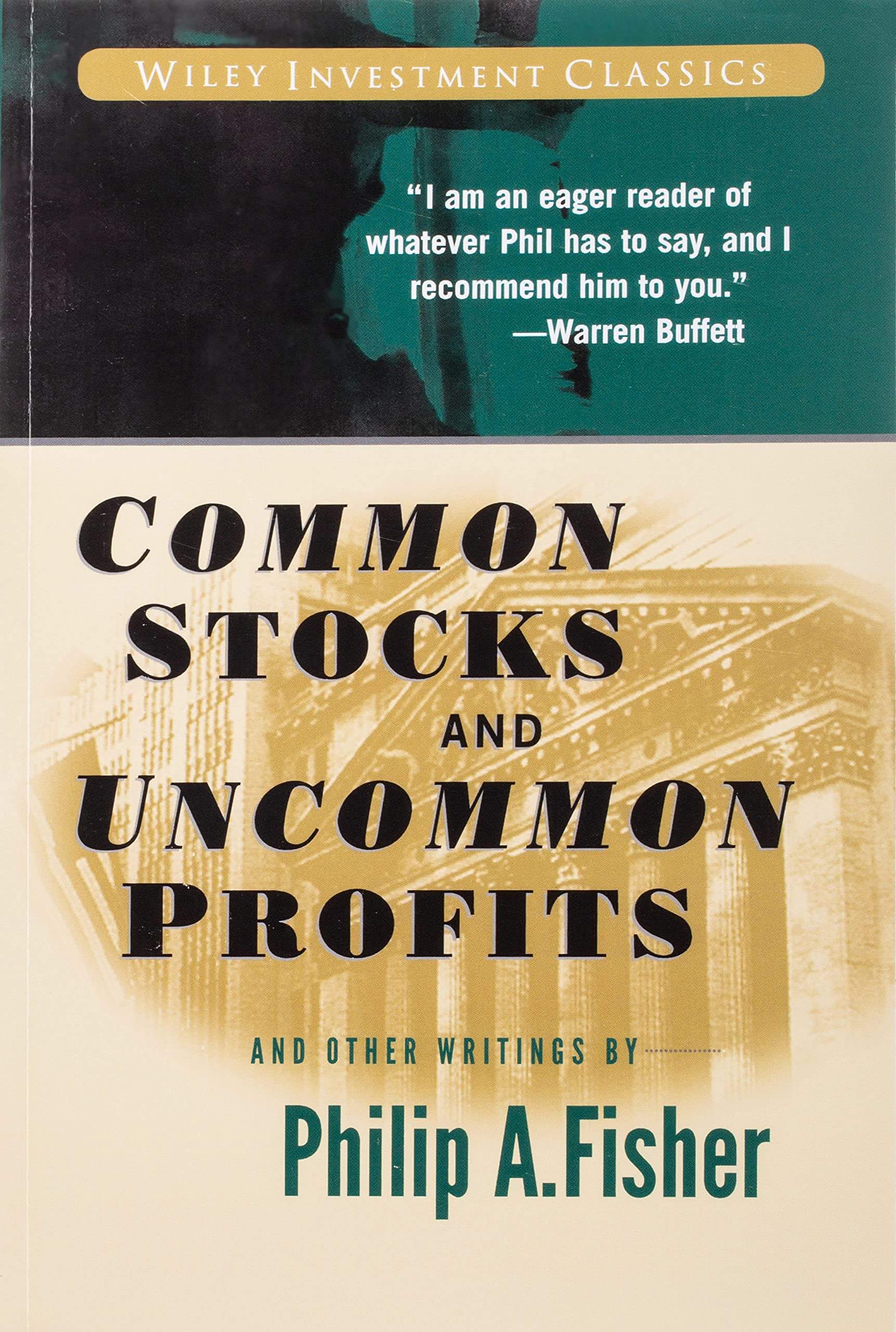
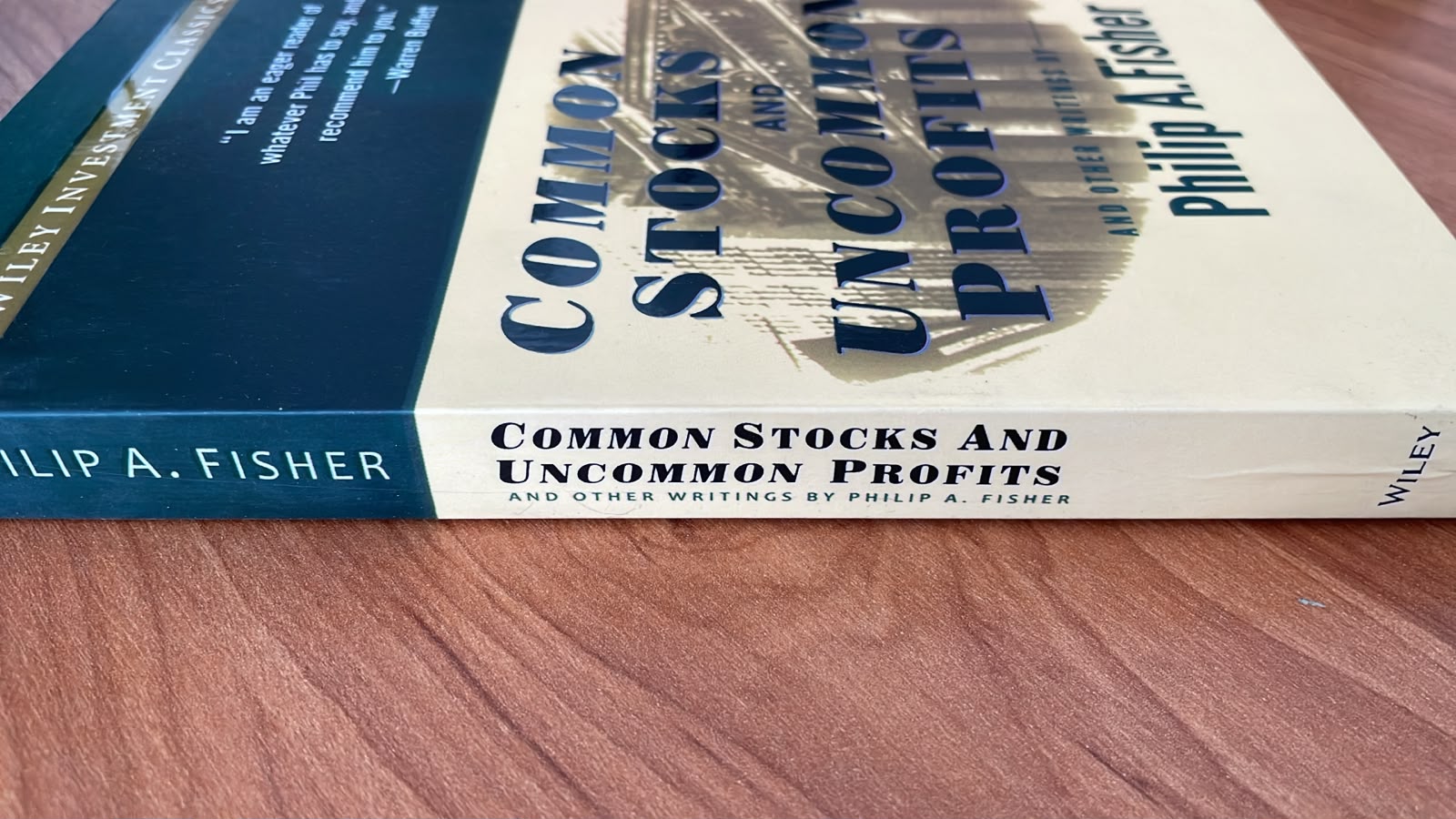
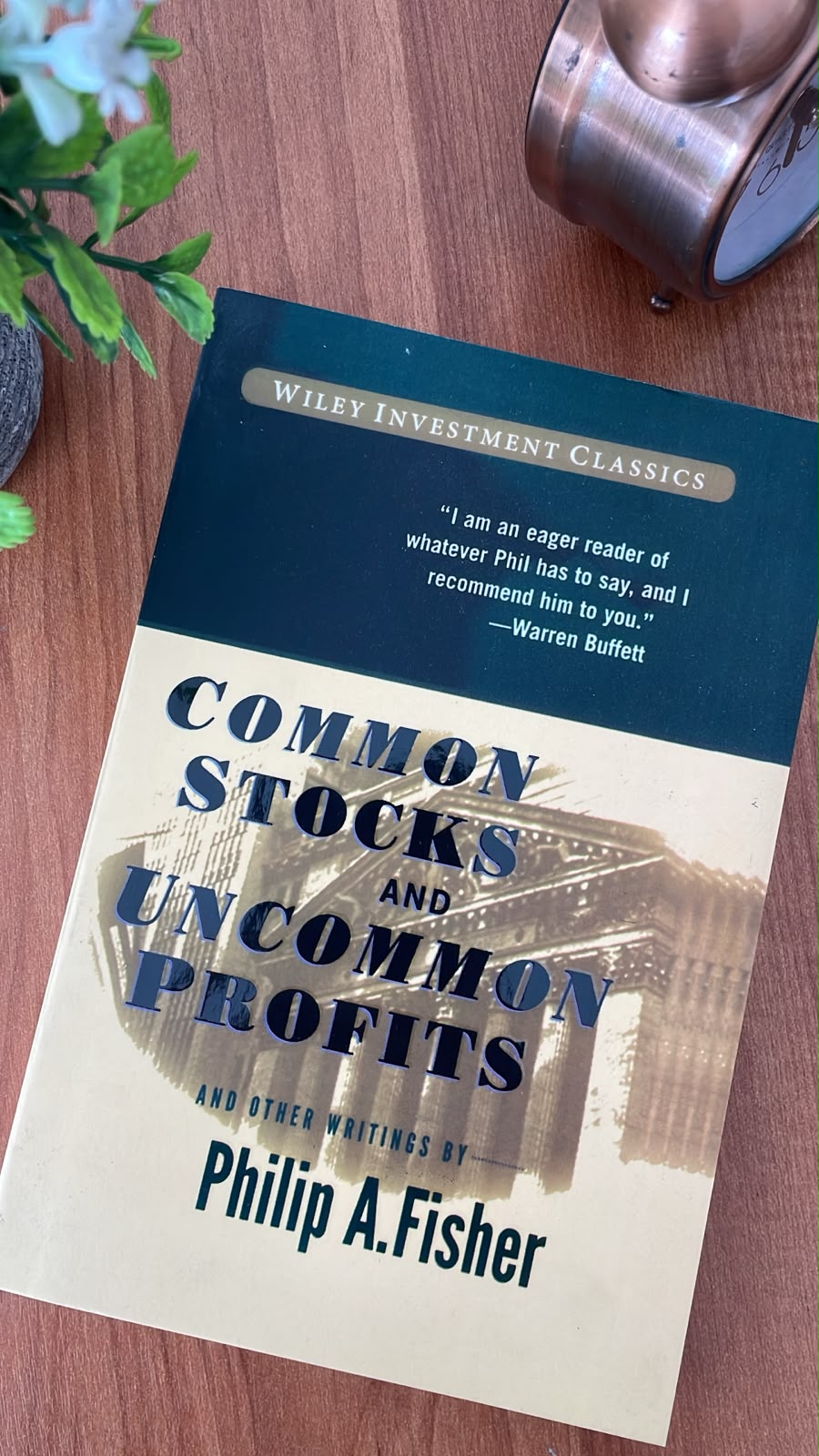


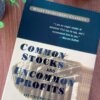

Common Stocks and Uncommon Profits by Philip Fisher


Original price was: රු2,850.00.රු1,900.00Current price is: රු1,900.00.
3 X Rs. 633.33 or 8% Cashback with


or 3 X රු633.33 with


or up to 4 X රු475.00 with


About Common Stocks Philip Fisher
Common Stocks Philip Fisher is an excellent choice for readers interested in long-term investing, business analysis, and identifying high-quality companies. Philip Fisher’s approach focuses on understanding a company’s management, growth potential, competitive position, and future opportunities before making an investment.
Readers who enjoy Common Stocks Philip Fisher may also want to explore other business and investment books available from Bargain Books.
For additional educational information about investment analysis and professional investing, visit the CFA Institute.
Common Stocks Philip Fisher provides timeless principles that can help readers develop a more disciplined approach to researching companies and making long-term investment decisions.
23 in stock
Common Stocks and Uncommon Profits by Philip Fisher is one of the most respected and influential books ever written about investing, business analysis, and long-term wealth creation. First published in the twentieth century, the book introduced investment principles that continue to influence investors around the world.
Rather than focusing only on stock prices, charts, or short-term market movements, Philip Fisher encourages readers to understand the actual businesses behind the stocks they purchase. His approach is based on finding exceptional companies with strong management, attractive growth opportunities, competitive advantages, and the ability to increase profits over many years.
For anyone interested in investing, finance, business, or the stock market, Common Stocks and Uncommon Profits provides a practical framework for making more informed investment decisions.
Why Read Common Stocks and Uncommon Profits?
One of the most important lessons in Common Stocks and Uncommon Profits is that successful investing requires more than simply finding a company whose shares appear inexpensive. Fisher explains that investors should look closely at the quality of the company itself.
A business with excellent leadership, innovative products, strong sales potential, and effective long-term planning may offer greater investment opportunities than a company that simply appears cheap based on traditional financial measures.
Fisher encourages investors to research businesses carefully before investing. This includes understanding how a company operates, how management makes decisions, how effectively it competes within its industry, and whether it has realistic opportunities for future expansion.
His philosophy is especially suitable for readers interested in long-term investing rather than frequent buying and selling.
Philip Fisher’s Investment Philosophy
Philip Fisher became famous for his detailed approach to researching companies. Instead of relying entirely on financial reports, he believed investors should gather information from a variety of sources.
This method helps investors develop a deeper understanding of a company’s strengths and weaknesses.
In Common Stocks and Uncommon Profits, Fisher explains how factors such as management ability, research and development, sales effectiveness, profit margins, employee relationships, and competitive positioning can influence the long-term success of a business.
The book encourages readers to think like business owners rather than short-term traders. When purchasing shares, investors are effectively buying ownership in a company. Therefore, Fisher believes they should carefully evaluate whether that company has the ability to grow successfully over many years.
The Famous Fifteen Points
One of the best-known sections of Common Stocks and Uncommon Profits is Fisher’s framework for evaluating potential investments.
He discusses a series of important characteristics that investors can examine before purchasing a stock. These include the company’s market potential, management quality, commitment to research and development, sales organization, profitability, competitive position, and long-term growth strategy.
Rather than selecting companies based on a single financial ratio, Fisher encourages investors to consider several different qualities together.
This approach can help readers develop a more complete picture of a company before making an investment decision.
Understanding the Scuttlebutt Method
Another important concept introduced in Common Stocks and Uncommon Profits is often known as the “scuttlebutt” method.
The idea is to gather useful information about a company by learning from people who understand its industry. This may include customers, suppliers, competitors, former employees, industry professionals, and other knowledgeable sources.
Fisher believed that careful research could reveal valuable information that might not be obvious from financial statements alone.
Although modern investors now have access to company websites, financial databases, earnings calls, reports, and online research tools, the underlying principle remains valuable: understand the business thoroughly before investing your money.
Long-Term Investing and Patience
Common Stocks and Uncommon Profits strongly emphasizes patience.
Fisher believed that finding an outstanding company could be more important than constantly searching for opportunities to trade. Once an investor identifies a high-quality business with excellent long-term prospects, holding the investment for an extended period may allow the company’s growth to create substantial value.
This philosophy encourages readers to avoid making emotional decisions based purely on temporary market fluctuations.
Instead, investors should continue evaluating whether the fundamental qualities of the business remain strong.
When Should Investors Sell?
Buying a good company is only one part of investing. Knowing when to sell can be equally important.
Philip Fisher discusses several situations where selling may be appropriate. For example, an investor may discover that their original analysis was incorrect, the company’s long-term prospects may deteriorate, or another investment opportunity may offer significantly better potential.
However, Fisher warns against selling excellent companies simply because their share prices have already increased.
His approach encourages investors to focus on business fundamentals and future potential rather than automatically taking profits after a short-term price increase.
What You Will Learn
By reading Common Stocks and Uncommon Profits, readers can explore important investment ideas such as:
- How to identify high-quality growth companies
- How to research a business before investing
- What characteristics successful companies often share
- Why strong management is important
- How competitive advantages influence long-term growth
- Why research and development can matter to investors
- How sales potential affects company performance
- When investors should consider selling a stock
- Why patience is valuable in long-term investing
- How to think like a business owner rather than a trader
- How to avoid making decisions based only on market price
- Why qualitative research is important alongside financial analysis
Who Should Read This Book?
Common Stocks and Uncommon Profits is suitable for beginners who want to develop a deeper understanding of stock market investing as well as experienced investors looking to improve their company-analysis process.
It can also be valuable for entrepreneurs, business students, finance professionals, and anyone interested in understanding what makes certain companies successful over the long term.
Readers looking for quick trading techniques may find Fisher’s philosophy different from what they expect. His approach is focused primarily on careful research, business quality, patience, and long-term ownership.
A Classic Guide to Intelligent Investing
Decades after its original publication, Common Stocks and Uncommon Profits remains an important book in investment literature because its central ideas are not limited to a particular market cycle.
Markets, industries, technologies, and companies may change, but the need to understand management quality, competitive strength, growth opportunities, and business economics remains important.
Philip Fisher’s approach teaches readers that investing should involve thoughtful analysis rather than speculation.
For anyone who wants to learn how successful investors evaluate businesses, identify promising companies, and think about long-term wealth creation, Common Stocks and Uncommon Profits is a valuable addition to a personal finance or investment library.
| Author | Philip Fisher |
|---|---|
| Language | English |
| Type | Paperback Printed Book (Second Quality Copy) |
Be the first to review “Common Stocks and Uncommon Profits by Philip Fisher”
Related products
![Stories of bible [hardcover]](https://bargainbooks.lk/wp-content/uploads/Stories-of-bible-hardcover-2-300x450.jpeg)
Damaged & Imperfect Books
රු1,750.00
3 X Rs. 583.33 or 8% Cashback with
or 3 X රු583.33 with
or up to 4 X රු437.50 with
Damaged & Imperfect Books
රු1,700.00
3 X Rs. 566.67 or 8% Cashback with
or 3 X රු566.67 with
or up to 4 X රු425.00 with
Out of stock
Damaged & Imperfect Books
රු1,700.00
3 X Rs. 566.67 or 8% Cashback with
or 3 X රු566.67 with
or up to 4 X රු425.00 with
-16%
Business, Finance & Economics
Original price was: රු3,150.00.රු2,650.00Current price is: රු2,650.00.
3 X Rs. 883.33 or 8% Cashback with
or 3 X රු883.33 with
or up to 4 X රු662.50 with

Out of stock
Business, Finance & Economics
රු1,700.00
3 X Rs. 566.67 or 8% Cashback with
or 3 X රු566.67 with
or up to 4 X රු425.00 with
-22%

Out of stock
Business, Finance & Economics
Original price was: රු2,250.00.රු1,750.00Current price is: රු1,750.00.
3 X Rs. 583.33 or 8% Cashback with
or 3 X රු583.33 with
or up to 4 X රු437.50 with

Out of stock
Business, Finance & Economics
රු1,900.00
3 X Rs. 633.33 or 8% Cashback with
or 3 X රු633.33 with
or up to 4 X රු475.00 with
-21%
Non-Fiction & Knowledge
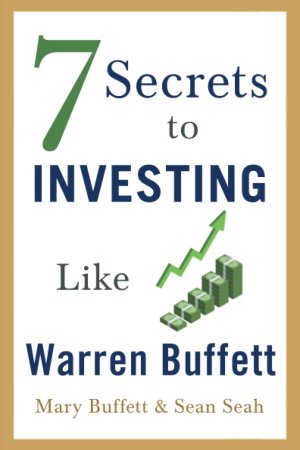
7 Secrets to Investing Like Warren Buffett by Mary Buffett & Sean Seah
Original price was: රු1,900.00.රු1,500.00Current price is: රු1,500.00.
3 X Rs. 500.00 or 8% Cashback with
or 3 X රු500.00 with
or up to 4 X රු375.00 with
Reviews
There are no reviews yet.