
No products in the cart.
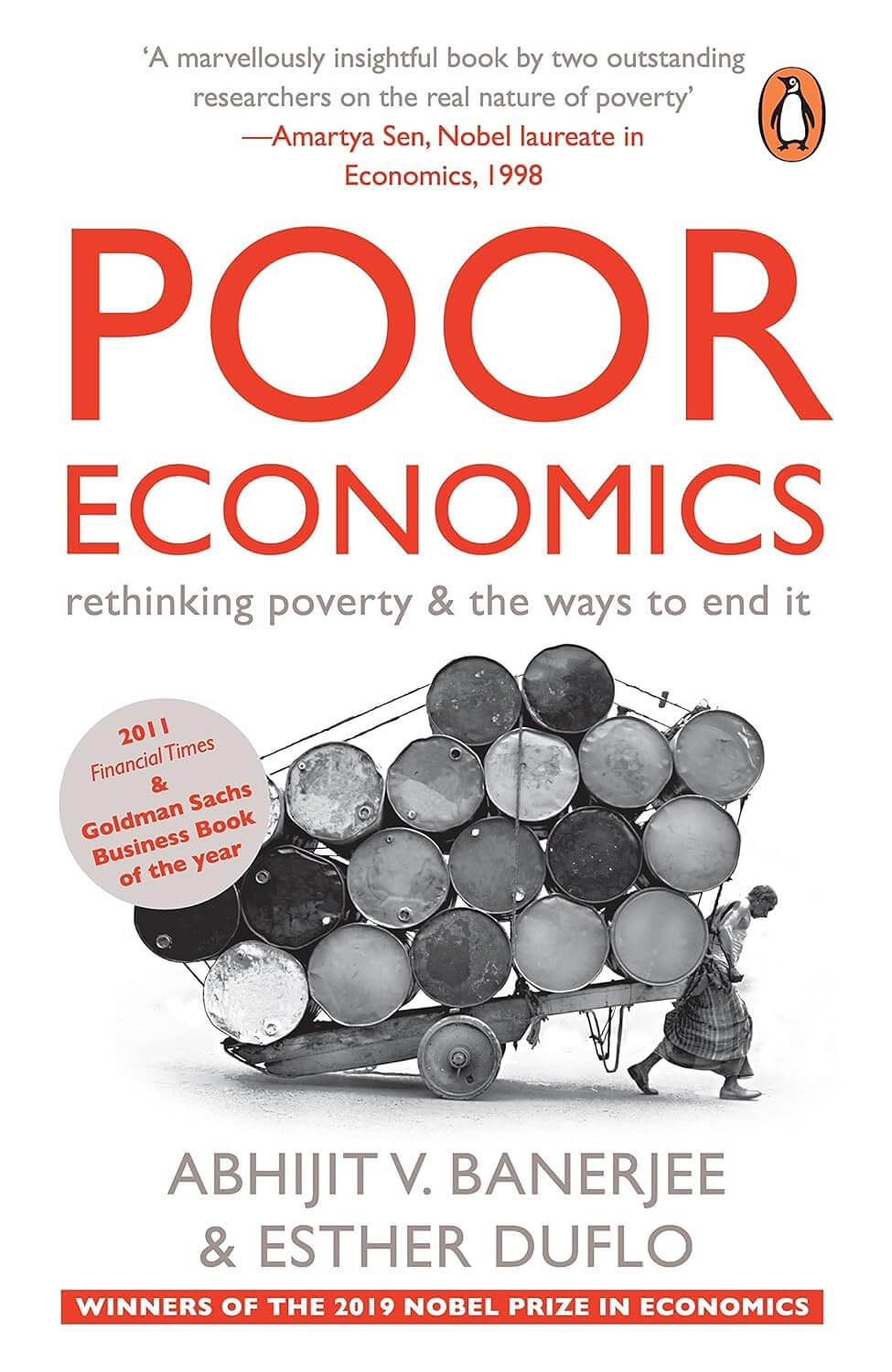
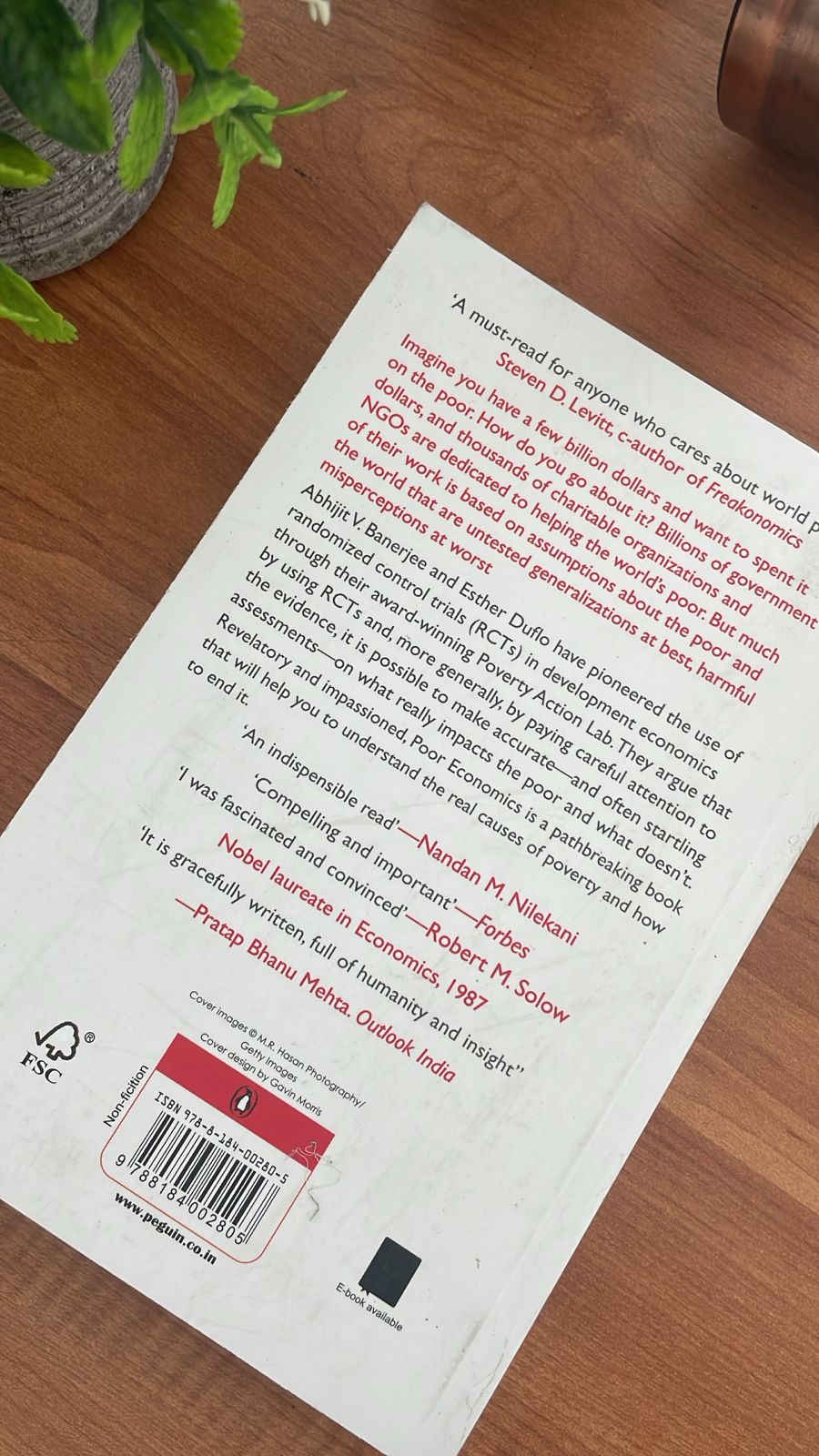
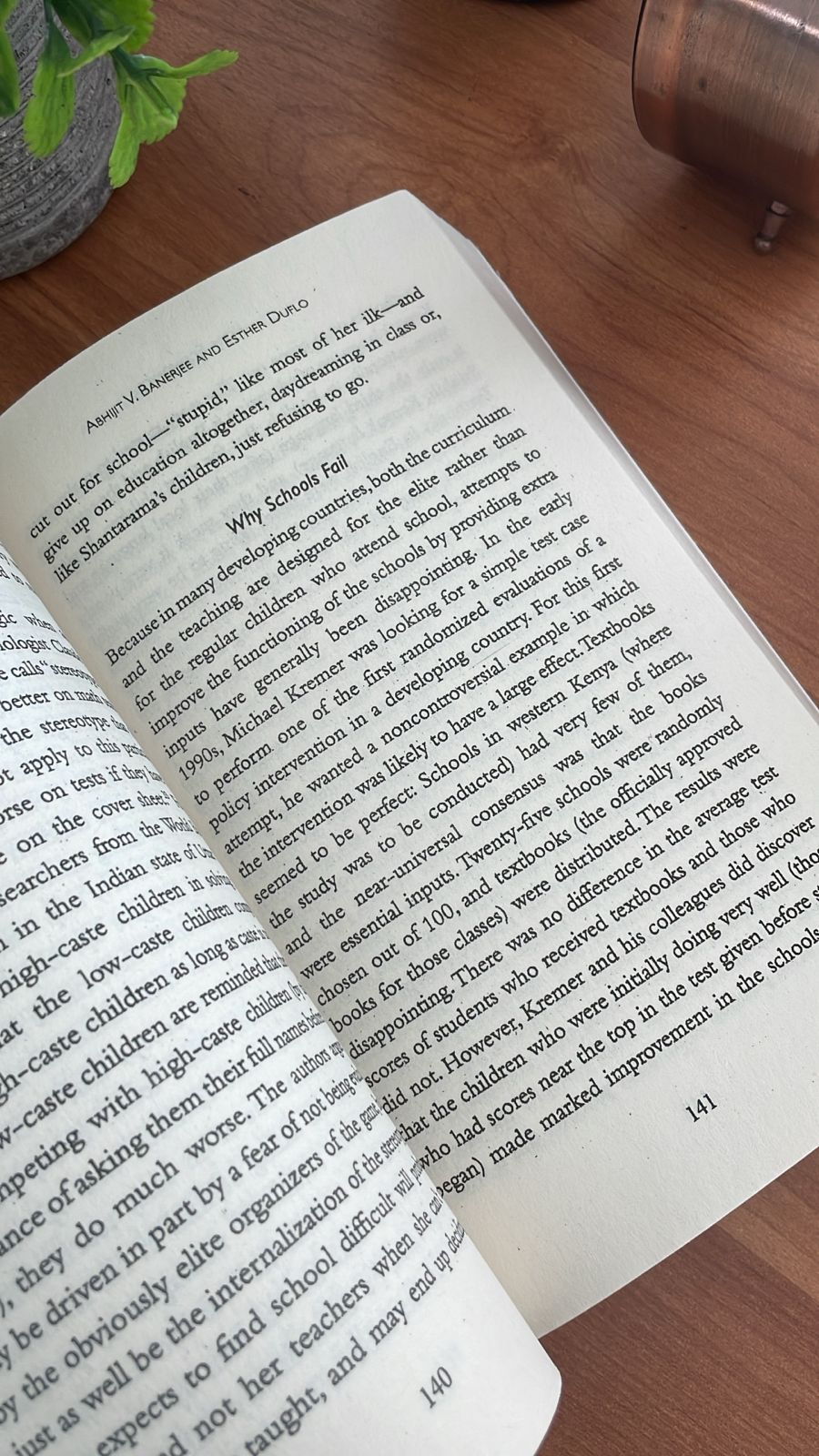

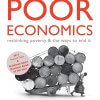

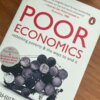


Poor Economics by Banerjee and Duflo is a groundbreaking exploration of global poverty that replaces sweeping assumptions with careful evidence about how people actually live, make decisions and respond to policies.
Why might a poor family spend money on something enjoyable while still struggling to afford enough nutritious food?
Why do people sometimes avoid free or extremely cheap health services that could protect them from serious disease?
Why can children attend school for years without learning basic skills?
Why does access to microcredit help some households but fail to create the dramatic transformation once promised by its strongest supporters?
Abhijit V. Banerjee and Esther Duflo argue that questions like these cannot be answered simply by saying:
Poor people need more money.
Markets will solve everything.
Government programs will solve everything.
Aid always works.
Aid never works.
Instead, the authors examine poverty one practical problem at a time.
Drawing on field research and randomized controlled trials conducted across developing countries, Poor Economics by Banerjee and Duflo studies how real people respond to choices involving nutrition, healthcare, education, loans, savings, insurance, entrepreneurship and public programs.
The result is a book about economics that feels surprisingly human.
Rather than treating poor households as abstract numbers, Banerjee and Duflo examine the pressures, incentives, fears, information gaps and constraints that shape everyday decisions.
Their central message is both simple and demanding:
If we genuinely want to reduce poverty, we must understand how people actually live instead of designing policies around assumptions about how we think they should behave.
Poor Economics by Banerjee and Duflo – Book Overview
Poor Economics by Banerjee and Duflo challenges one of the biggest problems in discussions about poverty:
People often begin with ideology before evidence.
One side may argue that foreign aid is essential.
Another may argue that aid creates dependency.
One group may believe poor people simply need access to markets.
Another may believe stronger government programs are the answer.
Banerjee and Duflo take a different approach.
They ask smaller questions.
What happens if parents receive better information about education?
What happens when vaccination becomes easier to access?
What happens when small incentives are offered?
What happens when households receive access to credit?
What happens when savings products are designed differently?
Instead of arguing about poverty only at the level of grand theories, they investigate specific problems that can be tested.
Poverty Is Not One Problem
One of the most important ideas in Poor Economics by Banerjee and Duflo is that poverty should not be treated as one single condition with one single solution.
A household may face several problems at once.
Low income.
Poor nutrition.
Weak schools.
Expensive healthcare.
No insurance.
Limited savings.
Unstable employment.
Debt.
Lack of information.
Each problem may require a different response.
That makes poverty reduction complicated.
But it also makes it possible to improve things step by step.
The Poverty Trap
A poverty trap occurs when being poor makes it harder to escape poverty.
For example, imagine someone earns too little to buy enough nutritious food.
Poor nutrition reduces physical energy.
Lower energy reduces productivity.
Lower productivity limits income.
Low income again limits food.
The person becomes trapped in a cycle.
But Banerjee and Duflo are careful not to assume that every poor household is trapped in exactly the same way.
Evidence matters.
Some poverty traps exist.
Others may be exaggerated.
Hunger and Nutrition
A common assumption is that poor people mainly need more calories.
The reality is more complicated.
When incomes rise slightly, families do not always spend every additional unit of income on basic food.
They may choose:
Better-tasting food.
Entertainment.
Celebrations.
Consumer goods.
Why?
Because people living in poverty are still people.
They care about:
Pleasure.
Dignity.
Social life.
Variety.
Enjoyment.
Economics becomes misleading when it assumes poor people behave like machines programmed only for survival.
Nutrition Quality Matters
The important question is not simply:
How much food?
It is also:
What kind of food?
Micronutrients.
Protein.
Iron.
Iodine.
Vitamins.
can affect:
Health.
Child development.
Energy.
Cognitive performance.
Therefore, an anti-hunger policy should consider nutritional quality rather than measuring only calories.
Health
Healthcare is another central topic in Poor Economics by Banerjee and Duflo.
The authors examine a puzzling pattern.
People may spend significant money treating illness after it appears.
Yet they may avoid very cheap or even free preventive healthcare.
Why?
The answer is not simply ignorance.
Human behavior is influenced by:
Convenience.
Trust.
Immediate costs.
Delayed benefits.
Habit.
Information.
The design of the health system itself.
Prevention Versus Treatment
Preventive health often creates benefits in the future.
Vaccination.
Mosquito nets.
Clean water.
Regular medication.
The problem is that future benefits can feel less urgent than today’s inconvenience.
Travel to a clinic today.
Wait in line today.
Pay a small cost today.
Benefit sometime later.
This is not unique to poor households.
People everywhere struggle with preventive behavior.
Small Incentives Can Matter
One famous lesson from development economics is that surprisingly small incentives can sometimes produce meaningful changes in behavior.
If a health intervention is beneficial but people are not using it, policymakers should not automatically conclude:
They do not value health.
The real problem may be:
Access.
Timing.
Information.
Trust.
Small immediate costs.
Good policy design looks for the actual obstacle.
Education
Education is often treated as one of the clearest paths out of poverty.
But simply placing children inside classrooms does not guarantee learning.
This distinction is crucial.
Enrollment may increase.
Attendance may increase.
Years of schooling may increase.
But what are children actually learning?
Schooling Is Not the Same as Learning
A school can officially function while students still fail to master:
Reading.
Writing.
Basic mathematics.
The problem may involve:
Curriculum.
Teaching level.
Teacher incentives.
Attendance.
Class size.
Student preparation.
Parent expectations.
The authors therefore encourage policymakers to measure educational outcomes, not simply school participation.
Expectations Can Shape Achievement
Teachers and parents may assume some children are incapable of succeeding.
Those expectations can influence investment.
If a family believes only one child has a realistic chance of reaching higher education, it may concentrate resources on that child.
Others receive less support.
Expectations can therefore reinforce inequality.
Teaching at the Right Level
Children inside one classroom may have very different learning levels.
If teaching follows a curriculum designed for the strongest students, weaker students may understand almost nothing.
Research associated with this evidence-based development approach has supported interventions focused on teaching children according to actual learning level rather than simply age or grade.
This illustrates a broader lesson:
A policy can fail even when its goal is correct if implementation does not match reality.
Information
Poor decisions sometimes result from missing information.
But information campaigns are not automatically effective.
Giving people facts works only when:
The information is understandable.
It is trusted.
It addresses a real knowledge gap.
And people are capable of acting on it.
This is why Poor Economics by Banerjee and Duflo avoids treating education campaigns as universal solutions.
Credit
Microcredit became one of the most celebrated ideas in development economics.
The argument sounded powerful:
Give low-income people small loans.
They start businesses.
Businesses grow.
Income rises.
Poverty disappears.
Reality turned out to be more complicated.
Microfinance
Banerjee and Duflo do not simply conclude:
Microcredit works.
or
Microcredit fails.
They show that access to credit can be valuable without being a magical solution.
Some borrowers use loans productively.
Others use them to smooth consumption or manage household needs.
Many small businesses do not suddenly become large companies.
This is an important example of the book’s evidence-first approach.
No Magic Bullets
Development debates are often attracted to one perfect solution.
Microfinance.
Education.
Aid.
Entrepreneurship.
Technology.
Cash transfers.
But Poor Economics by Banerjee and Duflo repeatedly warns against expecting one intervention to solve every form of poverty.
The world is usually more complicated.
Savings
One surprising idea is that people with very little money can still benefit from good savings mechanisms.
Saving is not merely something rich people do after all their needs are satisfied.
Small savings can help families prepare for:
Emergencies.
Business investments.
School expenses.
Medical costs.
Agricultural inputs.
The problem is often not a complete inability to save.
It may be that available savings tools are inconvenient or insecure.
Commitment Devices
Human beings struggle with self-control.
You may intend to save today.
Then another expense appears.
A commitment device helps protect long-term goals from short-term temptation.
This concept applies far beyond poverty economics.
Automatic savings plans are a familiar example.
People sometimes need systems that make the good decision easier.
Insurance
Insurance should theoretically be extremely valuable to households facing high risk.
Farmers face weather risk.
Families face health emergencies.
Workers face income shocks.
Yet low-income households may still be reluctant to buy insurance.
Why?
Because insurance is complicated.
You pay now.
You may receive nothing immediately.
You must trust the provider.
You may not fully understand the product.
Again, good economic theory needs to be connected with real human behavior.
Risk Changes Behavior
When people have no safety net, they may avoid opportunities that look profitable because failure would be catastrophic.
Imagine choosing between:
A low-return activity that is relatively safe.
and
A high-return activity that could fail completely.
A wealthy person can sometimes tolerate failure.
A poor household may not be able to.
Poverty can therefore make apparently conservative behavior rational.
Entrepreneurship
The idea that every poor person is a natural entrepreneur can also be misleading.
Many people operate tiny businesses because there are few better employment options.
Running a small stall does not automatically mean someone wants to become the next major entrepreneur.
Some people would prefer:
Stable employment.
Predictable wages.
Better working conditions.
Understanding this prevents policymakers from romanticizing informal businesses.
Markets Matter, but Markets Are Not Perfect
Markets can create enormous opportunities.
But markets may fail when there is:
Poor information.
Weak competition.
High risk.
Lack of trust.
Missing infrastructure.
Financial exclusion.
The book therefore avoids both extreme positions.
Markets are not automatically the enemy.
Markets are not automatically the solution either.
Government Matters, but Government Is Not Perfect
The same balanced reasoning applies to government.
Public institutions can provide:
Schools.
Healthcare.
Infrastructure.
Safety nets.
Regulation.
But government programs can suffer from:
Corruption.
Absenteeism.
Bad incentives.
Poor implementation.
Weak information.
The right question is not:
Government or market?
It is:
Which institutional design works best for this particular problem?
Institutions
Institutions matter because they determine how policies are implemented.
A brilliant policy on paper may fail if:
Nobody monitors it.
Workers have no incentive to perform.
Citizens cannot complain.
Money disappears.
Rules are impossible to follow.
Effective poverty reduction requires attention to implementation, not only policy announcements.
Randomized Controlled Trials
A major methodological foundation behind Poor Economics by Banerjee and Duflo is the randomized controlled trial, or RCT.
In simplified terms, researchers compare groups receiving an intervention with comparable groups that do not.
Random assignment can help isolate whether the intervention actually caused a difference.
The 2019 Nobel committee specifically recognized Banerjee, Duflo and Michael Kremer for helping transform development economics through this experimental approach.
Break Big Questions Into Smaller Questions
Instead of asking:
How do we eliminate global poverty?
an experiment might ask:
Does providing textbooks improve test scores?
Does lowering the price of mosquito nets increase use?
Does a savings account increase investment?
Does additional information change school choices?
Smaller questions can produce more reliable answers.
Evidence Before Ideology
This is perhaps the strongest philosophy in Poor Economics by Banerjee and Duflo.
Do not begin with:
This policy must work because my political philosophy says so.
Begin with:
What problem are we actually trying to solve?
What evidence do we have?
Can we test the intervention?
What happened?
Then improve the policy.
RCTs Have Limits
The book’s experimental approach is influential, but readers should not assume randomized trials can answer every economic question.
Some issues involve:
National policy.
Political institutions.
Macroeconomic crises.
Climate change.
Long-term structural transformation.
These may be difficult or impossible to study through simple randomized trials.
Evidence from one place also may not transfer perfectly to another.
Context matters.
External Validity
Suppose a program works in one village.
Will it work in:
Another village?
Another country?
A large city?
Ten years later?
Not necessarily.
Good evidence should therefore produce humility rather than overconfidence.
Human Behavior
A major strength of the book is its understanding that economic decisions are also psychological decisions.
People procrastinate.
People follow habits.
People care about status.
People avoid difficult choices.
People make mistakes.
This is true whether someone is rich or poor.
Poor People Are Not Irrational
One of the most damaging stereotypes is that poverty exists because poor people make foolish choices.
Poor Economics by Banerjee and Duflo shows why this is too simplistic.
Poor households often operate under constraints wealthy people rarely experience.
A small mistake may have a much larger cost.
A wealthy person can automate:
Savings.
Insurance.
Bill payment.
Healthcare.
A poor person may need to make these decisions manually while dealing with constant financial pressure.
The Psychology of Scarcity
When resources are scarce, attention becomes focused on immediate problems.
What will we eat?
How will we pay this bill?
What happens if someone becomes ill?
Long-term planning becomes harder when the present is constantly demanding attention.
This makes policy design important.
Good systems reduce the number of difficult decisions people must repeatedly make.
Defaults
One lesson from behavioral economics is that default options matter.
If participation requires:
Finding a form.
Travelling somewhere.
Remembering a deadline.
Making several decisions.
participation may remain low.
A better-designed system can remove friction.
Sometimes improving access matters more than giving another lecture about why people should participate.
Dignity
Development policy can become arrogant when experts assume they fully understand what poor people need.
Banerjee and Duflo’s approach is more grounded.
Listen.
Observe.
Test.
Recognize that people living in poverty still have preferences, ambitions and complex lives.
They are not simply objects of policy.
Aspirations
People act partly according to what they believe is possible.
If opportunities appear completely unreachable, investing in the future can feel pointless.
Aspirations therefore matter.
Seeing someone from a similar background succeed can sometimes change expectations.
Hope can influence economic behavior.
But hope must be connected with real opportunity.
Small Changes Can Matter
Not every effective policy needs to be revolutionary.
Sometimes modest changes produce surprisingly large effects.
Better information.
A small incentive.
Improved delivery.
A simpler process.
More reliable attendance.
This is one reason the book remains optimistic.
Poverty is difficult.
But some problems are solvable.
There Is No Single Theory of Poverty
The book rejects the search for one universal explanation.
Poverty may result from combinations of:
Poor health.
Weak education.
Low productivity.
Bad institutions.
Risk.
Credit constraints.
Poor infrastructure.
Discrimination.
Missing information.
No single variable explains everything.
Evidence-Based Policy
The core policy lesson is straightforward:
Test programs.
Measure results.
Compare alternatives.
Stop programs that do not work.
Improve those that show promise.
This sounds obvious.
In reality, governments and organizations often continue programs because they are politically attractive rather than demonstrably effective.
Humility in Economics
Economists can build elegant theories.
But real people may behave differently.
That does not always mean people are wrong.
It may mean the model is incomplete.
Poor Economics by Banerjee and Duflo therefore promotes intellectual humility.
Observe first.
Then explain.
Development Is About People
Economic development discussions often use enormous numbers.
GDP.
Poverty rates.
National income.
Aid budgets.
The authors bring the discussion back to individual lives.
A mother deciding whether to vaccinate a child.
A student sitting in a classroom but understanding nothing.
A farmer deciding whether to buy fertilizer.
A family deciding whether insurance is worth the cost.
These small decisions collectively shape development.
Abhijit Banerjee and Esther Duflo
Banerjee and Duflo are economists at MIT whose research has played a major role in modern development economics.
In 2019, they shared the Economics Prize with Michael Kremer for their experimental approach to alleviating global poverty. The Nobel committee emphasized how this approach divided large development problems into smaller, testable questions concerning areas such as education and health.
Is Poor Economics a Difficult Economics Book?
Not especially.
The book discusses serious economic research, but it is written for a broad audience.
Readers do not need advanced mathematics.
The authors rely heavily on:
Stories.
Field studies.
Practical examples.
Research findings.
This makes it approachable for students and general readers interested in development.
Is It a Self-Help Book?
No.
Poor Economics by Banerjee and Duflo is a nonfiction economics and development book.
It is not about becoming personally wealthy.
The word “poor” refers to poverty and development policy, not personal budgeting.
Is It About Personal Finance?
No.
Readers looking for advice about:
Investing.
Saving for retirement.
Stock markets.
Personal wealth.
should choose a different book.
This title is about the economics of global poverty.
Is It Political?
Poverty reduction naturally involves government and policy.
However, the authors generally emphasize empirical evidence rather than constructing the book around a simple left-versus-right political argument.
They criticize assumptions from multiple directions when evidence does not support them.
Is Poor Economics Still Relevant?
Yes.
The underlying questions remain important:
How should governments design health programs?
Why do students fail to learn?
When does credit help?
Why do households avoid insurance?
How should development programs be evaluated?
The publisher released a revised edition in 2025 with substantial new material drawing on research from the following decade, showing the continued relevance of the framework.
Edition Note
Poor Economics was originally published in 2011, but multiple editions now exist.
A revised PublicAffairs edition was released in 2025 with additional material reflecting later research. The current publisher listing gives the revised edition at 416 pages, but ISBN and page count vary by format and edition.
For your WooCommerce listing, check the ISBN, format and page count printed on the physical copy you are selling before entering those attributes.
Important Themes
Poor Economics by Banerjee and Duflo explores poverty, development economics, randomized controlled trials, education, healthcare, nutrition, microfinance, savings, insurance, entrepreneurship, incentives, behavioral economics, evidence-based policy, institutions, market failures, government programs, risk, aspirations, inequality and practical approaches to improving people’s lives.
7 Powerful Lessons From Poor Economics by Banerjee and Duflo
- Poor people are not simply irrational. Many decisions that appear strange from the outside make more sense once we understand the risks, constraints and information available to the person making them.
- More spending does not automatically create better outcomes. More schools do not guarantee learning, more clinics do not guarantee preventive care and more credit does not automatically produce thriving businesses.
- Test ideas before turning them into universal solutions. Policies should be evaluated through evidence rather than promoted simply because they sound convincing.
- Small design changes can produce meaningful results. Better defaults, small incentives, simpler access and improved delivery can sometimes achieve more than expensive programs built on incorrect assumptions.
- There is no single magic solution to poverty. Education, healthcare, finance, institutions and markets all matter, but their effects depend on the specific problem and context.
- Implementation matters as much as policy. A good idea can fail because teachers are absent, clinics are inconvenient, citizens lack information or institutions have weak incentives.
- Good economics requires humility. The most useful question is often not “What should people do?” but “What are people actually doing, why are they doing it, and what does the evidence tell us?”
Why Read Poor Economics by Banerjee and Duflo?
Poor Economics by Banerjee and Duflo is an excellent choice for readers interested in economics, global poverty, development, public policy, behavioral economics, social impact, education, healthcare, microfinance and evidence-based decision-making.
It is especially useful for university students, policymakers, NGO professionals, entrepreneurs interested in social impact and anyone who wants to understand why apparently simple solutions to poverty often produce disappointing results.
The book also teaches a broader intellectual habit:
Do not assume.
Investigate.
Test.
Measure.
Learn.
That principle is valuable far beyond development economics.
Who Should Read This Book?
Poor Economics by Banerjee and Duflo may especially appeal to economics students, business students, development professionals, policymakers, NGO workers, researchers, teachers, social entrepreneurs and general readers interested in understanding poverty through evidence rather than slogans.
It is also a strong choice for readers who enjoyed books about behavioral economics, public policy or data-driven problem-solving but want those ideas applied to some of the world’s most difficult social challenges.
Poor Economics by Banerjee and Duflo – Better Questions Can Produce Better Solutions
Poor Economics by Banerjee and Duflo begins from a position of humility.
Global poverty is enormous.
It is emotionally powerful.
And it naturally encourages people to search for enormous solutions.
More aid.
Less aid.
More government.
More markets.
More credit.
More schools.
More technology.
But the authors ask us to resist the temptation to begin with the answer.
First understand the problem.
Why is a child not learning?
Why is a family not using preventive healthcare?
Why does a farmer avoid an apparently profitable investment?
Why does a borrower use credit differently from what a development expert expected?
The answer may not be ignorance.
It may not be laziness.
It may not be culture.
It may be that the policy designer has misunderstood the decision.
This is what makes Poor Economics by Banerjee and Duflo so important.
It treats poverty not as an abstract debate between competing ideologies but as millions of real decisions made by people living under difficult constraints.
Sometimes the solution is a better incentive.
Sometimes better information.
Sometimes insurance.
Sometimes access to savings.
Sometimes improved teaching.
Sometimes the program everyone thought would work simply does not.
And when that happens, the correct response is not to defend the theory.
It is to learn.
That is the deeper meaning of evidence-based development.
Poverty may be one of humanity’s largest problems, but progress can begin by asking smaller questions carefully.
For readers interested in economics, public policy and practical approaches to reducing poverty, Poor Economics by Banerjee and Duflo offers a thoughtful, accessible and deeply human framework for understanding what actually works—and why good intentions alone are never enough.
Learn more about Poor Economics by Abhijit V. Banerjee and Esther Duflo on the official MIT Economics website.
Explore more economics and business books at Bargain Books.
| Author | Abhijit Banerjee and Esther Duflo |
|---|---|
| Language | English |
| Type | Paperback Printed Book (Second Quality Copy) |
Be the first to review “Poor Economics by Abhijit Banerjee and Esther Duflo”
Related products

Out of stock
Damaged & Imperfect Books
7 Secrets to Investing Like Warren Buffett by Mary Buffett and Sean Seah (837)
රු750.00
3 X Rs. 250.00 or 8% Cashback with


or 3 X රු250.00 with


or up to 4 X රු187.50 with


Damaged & Imperfect Books
7 Secrets to Investing Like Warren Buffett by Mary Buffett and Sean Seah (838)
රු750.00
3 X Rs. 250.00 or 8% Cashback with
or 3 X රු250.00 with
or up to 4 X රු187.50 with
Business, Finance & Economics
රු1,700.00
3 X Rs. 566.67 or 8% Cashback with
or 3 X රු566.67 with
or up to 4 X රු425.00 with
![Stories of bible [hardcover]](https://bargainbooks.lk/wp-content/uploads/Stories-of-bible-hardcover-3-2-300x450.jpeg)
Damaged & Imperfect Books
රු1,750.00
3 X Rs. 583.33 or 8% Cashback with
or 3 X රු583.33 with
or up to 4 X රු437.50 with
-16%
Out of stock
Business, Finance & Economics
Original price was: රු1,900.00.රු1,600.00Current price is: රු1,600.00.
3 X Rs. 533.33 or 8% Cashback with
or 3 X රු533.33 with
or up to 4 X රු400.00 with
Damaged & Imperfect Books
රු1,700.00
3 X Rs. 566.67 or 8% Cashback with
or 3 X රු566.67 with
or up to 4 X රු425.00 with
-39%
Self-Help & Psychology
Original price was: රු2,450.00.රු1,500.00Current price is: රු1,500.00.
3 X Rs. 500.00 or 8% Cashback with
or 3 X රු500.00 with
or up to 4 X රු375.00 with
-17%
Business, Finance & Economics
Original price was: රු1,800.00.රු1,500.00Current price is: රු1,500.00.
3 X Rs. 500.00 or 8% Cashback with
or 3 X රු500.00 with
or up to 4 X රු375.00 with
Reviews
There are no reviews yet.