
No products in the cart.
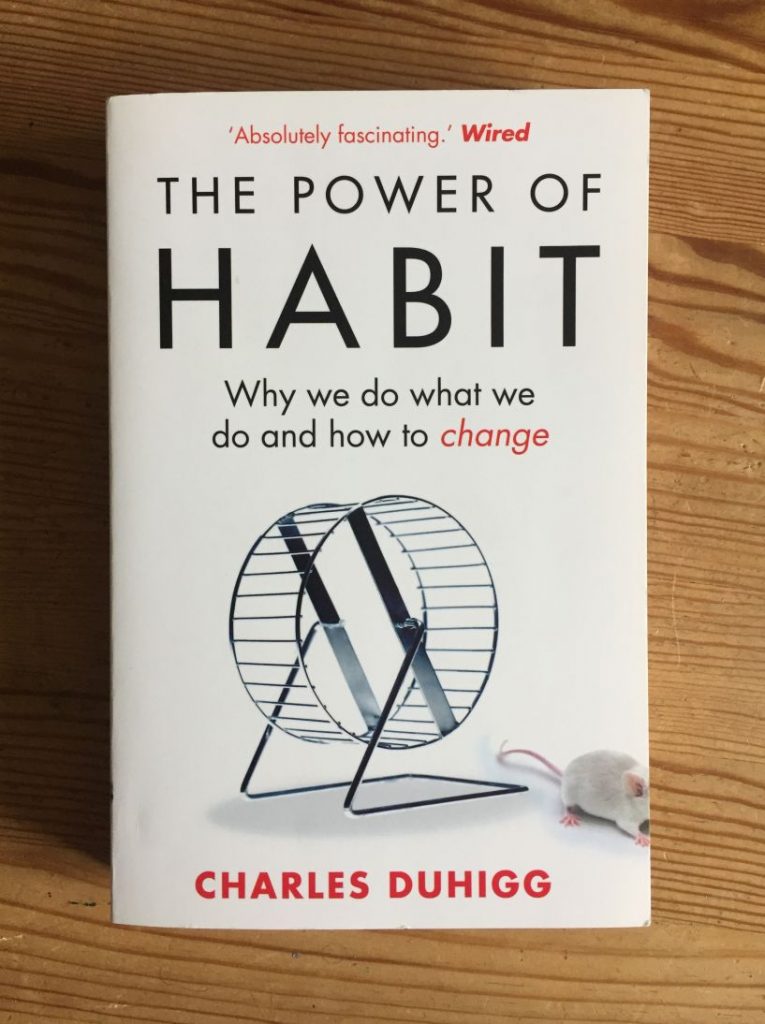
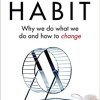
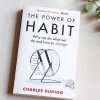

The Power of Habit by Charles Duhigg is a fascinating exploration of why people develop habits, how those habits influence everyday life, and what we can do to replace unhelpful routines with better ones.
Why do you automatically reach for your phone when you wake up?
Why is it easy to repeat some behaviors even when you know they are bad for you?
Why can one small change—such as beginning to exercise regularly—sometimes influence many other areas of life?
And why do companies, sports teams and entire organizations develop habits just like individuals do?
Charles Duhigg explores these questions through research, interviews and memorable real-world stories.
At the center of the book is one of its most famous ideas:
The habit loop.
A habit often involves three basic components:
Cue → Routine → Reward
The cue triggers the behavior.
The routine is the behavior itself.
The reward teaches the brain that the pattern may be worth remembering.
Over time, the process can become increasingly automatic.
But Duhigg’s most important message is hopeful:
Habits can change.
The solution is usually not simply shouting at yourself to “use more willpower.”
Instead, you need to understand what triggers the behavior, what reward you are actually seeking and what alternative routine could satisfy the same need.
The Power of Habit by Charles Duhigg combines psychology, neuroscience, business, sports, marketing and social history to show how habits influence individuals, companies and communities.
The Power of Habit by Charles Duhigg – Book Overview
The Power of Habit by Charles Duhigg begins with a simple observation:
A surprising amount of daily behavior happens automatically.
Think about your morning.
You may:
Turn off your alarm.
Check your phone.
Brush your teeth.
Make coffee.
Take the same route to work.
Many of these actions require little conscious deliberation.
That is useful.
If we had to make a completely new decision every time we brushed our teeth or opened a familiar application, daily life would require enormous mental effort.
Habits help the brain conserve effort.
The problem is that the brain can automate behaviors we wish it had not.
What Is a Habit?
A habit is a behavior that becomes increasingly automatic through repetition and reinforcement.
According to the framework popularized in The Power of Habit by Charles Duhigg, habitual behavior can often be understood through a loop containing:
A cue.
A routine.
A reward.
This framework gives readers a practical way to examine everyday behavior.
The Habit Loop
The habit loop is probably the book’s best-known concept.
Cue
The cue tells the brain that a particular behavioral pattern should begin.
A cue might be:
A time.
A place.
An emotion.
Another person.
A previous action.
For example:
You feel stressed.
That emotional state becomes the cue.
Routine
The routine is what you do next.
Perhaps you:
Eat something.
Open social media.
Smoke.
Take a walk.
Call someone.
Reward
The reward is the benefit your brain receives.
Maybe the routine creates:
Relaxation.
Pleasure.
Distraction.
Connection.
Energy.
A sense of accomplishment.
When the same cue repeatedly produces the same routine and reward, the behavior can become increasingly automatic.
Why Rewards Matter
People often focus entirely on the bad behavior.
“I need to stop eating snacks.”
“I need to stop checking Instagram.”
“I need to stop procrastinating.”
But Duhigg encourages readers to look deeper.
What reward is the behavior providing?
Perhaps the afternoon snack is not really about hunger.
Maybe it provides:
A break.
Social interaction.
Relief from boredom.
If you understand the real reward, finding an alternative behavior becomes easier.
Cravings
Another important part of habit formation is craving.
The brain begins anticipating the reward.
Eventually the cue itself can create desire.
You hear a notification.
Suddenly you want to check your phone.
You smell coffee.
You want a cup.
You put on running shoes.
Your brain begins expecting the feeling that follows exercise.
The anticipated reward helps power the habit loop.
Why Habits Feel Difficult to Break
A deeply established habit may continue even after you consciously decide to stop.
This can be frustrating.
You may think:
“I know this is bad. Why am I still doing it?”
Knowing is not always enough because habitual behavior can be triggered before deliberate reasoning fully intervenes.
That is why The Power of Habit by Charles Duhigg focuses on redesigning the loop rather than relying only on motivation.
The Golden Rule of Habit Change
One of Duhigg’s central strategies is sometimes described as the Golden Rule of Habit Change:
Keep the old cue.
Keep the reward.
Change the routine.
For example, imagine you feel stressed in the afternoon and eat sweets.
The cue:
Stress.
Possible reward:
A mental break.
Instead of automatically eating, you might try:
A five-minute walk.
A conversation with a coworker.
Tea.
Breathing exercises.
The replacement must satisfy the underlying need strongly enough to compete with the original routine.
Identify the Real Reward
This part requires experimentation.
Ask:
What am I really craving?
Food?
Connection?
Distraction?
Movement?
Rest?
Achievement?
Try different routines and observe what happens.
The goal is to understand the real function of the habit.
Changing Bad Habits
The Power of Habit by Charles Duhigg does not argue that changing habits is always easy.
Some behaviors involve:
Addiction.
Mental-health conditions.
Biological factors.
Environmental pressure.
Social circumstances.
These may require professional or medical support rather than a simple habit technique.
But for many everyday routines, understanding the loop can be a useful starting point.
Build Good Habits
The same principles can help create positive behaviors.
Suppose you want to read every day.
Create a clear cue.
For example:
After dinner.
Then choose the routine:
Read ten pages.
Then provide a satisfying reward:
Tea.
Music.
Checking progress.
A feeling of completion.
Repeated consistently, the routine can become easier to begin.
Start Small
One mistake people make is trying to transform everything at once.
New diet.
Daily gym.
No social media.
Wake at 5 AM.
Read for an hour.
Meditate.
Journal.
Within a few days, the entire plan collapses.
Habit change is often more sustainable when the first step is manageable.
Keystone Habits
One of the most influential ideas in The Power of Habit by Charles Duhigg is the concept of keystone habits.
A keystone habit is a behavior that can trigger changes in several other areas.
Exercise is a common example discussed around this idea.
A person who begins exercising regularly may also start:
Sleeping better.
Eating more carefully.
Organizing time.
Feeling more disciplined.
One behavior creates momentum.
Find the Habit With the Biggest Ripple Effect
Instead of asking:
“How do I fix my entire life?”
ask:
“What one behavior might make several other behaviors easier?”
Possibilities include:
A consistent bedtime.
Planning tomorrow before sleeping.
Daily exercise.
Tracking expenses.
Preparing meals.
A morning study session.
The best keystone habit varies from person to person.
Small Wins
Small wins matter because they create evidence.
You kept the habit today.
Then tomorrow.
Then again.
The result may look insignificant from the outside.
But psychologically, small wins begin changing your expectations.
You begin seeing yourself as someone capable of consistency.
Identity and Habits
Although Duhigg’s framework focuses strongly on behavioral loops, habit change can also influence identity.
You stop thinking:
“I am trying to read.”
and gradually begin thinking:
“I am a reader.”
Or:
“I am trying to exercise.”
becomes:
“I train regularly.”
Repeated actions provide evidence for how you see yourself.
Willpower
The Power of Habit by Charles Duhigg also examines willpower.
Willpower is often treated like a personality trait.
Some people have it.
Others do not.
Duhigg presents it more like something that can be strengthened through routines and preparation.
Instead of waiting until a difficult moment to decide what to do, create the response beforehand.
Plan for Difficult Moments
Suppose you want to study after work.
You already know what usually happens.
You get home tired.
Sit down.
Open TikTok or YouTube.
Suddenly an hour disappears.
A better plan might be:
“When I reach home, I will put my phone on charge in another room, make tea and study for 25 minutes before doing anything else.”
You have reduced the number of decisions required.
Make Good Behavior Easier
A major principle of behavior change is environmental design.
Want to drink more water?
Keep water visible.
Want to read?
Leave the book somewhere easy to reach.
Want to spend less time on social media?
Remove the app from your home screen or log out.
The environment can make behavior easier or harder.
Make Bad Habits Less Convenient
Small friction matters.
If unhealthy snacks are beside your desk, eating them is easy.
If you have to walk outside and buy them, the habit becomes less automatic.
If an entertainment app opens instantly, distraction is easy.
If you have to enter a long password each time, you gain a moment to reconsider.
Habits in Organizations
One of the reasons The Power of Habit by Charles Duhigg stands apart from many ordinary self-help books is that it does not stop with individual behavior.
Companies also develop habits.
Organizations create routines for:
Communication.
Safety.
Decision-making.
Customer service.
Conflict.
Meetings.
Reporting.
These routines can become so established that nobody remembers why they began.
Organizational Habits
Some routines make organizations efficient.
Others make them dysfunctional.
For example:
A team may automatically hide problems from managers.
A company may reward short-term sales even when long-term customer trust suffers.
A department may hold a meeting every Monday even though nobody knows why.
Organizational habits deserve the same scrutiny as personal habits.
Alcoa and Safety
One of the book’s best-known business examples involves Alcoa and executive Paul O’Neill.
Rather than announcing dozens of financial goals, O’Neill focused intensely on worker safety.
Safety functioned as a keystone organizational habit.
Improving it required better:
Communication.
Processes.
Accountability.
Reporting.
Those improvements influenced other aspects of organizational performance.
The lesson is not simply:
“Safety increases profits.”
The broader lesson is that focusing on one strategically important routine can sometimes force improvements across an entire system.
Habits in Business
Business owners can use habit thinking to examine processes such as:
Customer follow-up.
Inventory checks.
Sales reporting.
Expense tracking.
Staff communication.
Quality control.
Marketing.
Instead of repeatedly solving the same problem manually, ask whether a better routine can prevent it.
Habits and Productivity
Productivity often depends less on occasional heroic effort and more on recurring systems.
Someone who works intensely once every three weeks may accomplish less than someone who completes focused work every morning.
Habits reduce the need to repeatedly negotiate with yourself.
Don’t Wait for Motivation
Motivation changes.
Some mornings you feel energetic.
Others you do not.
A good routine allows action to happen even when motivation is weak.
This is why professional athletes, writers and high-performing teams rely so heavily on routines.
Michael Phelps
The book includes examples from elite sport, including swimmer Michael Phelps, to demonstrate how routines can influence performance under pressure. The official publisher also highlights examples involving Phelps and coach Bob Bowman.
Athletes rehearse patterns so thoroughly that when competition arrives, some decisions require less conscious processing.
Habits Under Pressure
When people become stressed, they often fall back on established routines.
That can be dangerous if the routines are poor.
It can be useful if the routines are strong.
This is why emergency professionals, pilots, athletes and medical teams practice procedures repeatedly.
Training creates responses that remain available when deliberate thinking becomes harder.
Consumer Habits
Companies also study habits because habits influence purchasing.
When do people buy?
What triggers them?
What reward do they expect?
Marketing often attempts to connect a product with an existing routine.
This raises ethical questions.
Understanding behavior can be used to help people.
It can also be used to manipulate them.
Target and Customer Data
Duhigg discusses how retailers can analyze customer data to identify patterns and predict purchasing behavior.
This section became one of the most talked-about parts of the book because it illustrates how much companies may infer from ordinary shopping patterns.
In today’s world of:
Apps.
Loyalty programs.
Advertising platforms.
Online purchases.
Behavioral data.
the privacy questions behind this discussion remain highly relevant.
Data Does Not Mean Understanding Everything
Businesses may possess enormous amounts of customer data.
That does not mean every prediction will be correct.
Patterns are probabilities.
People remain unpredictable.
Data should inform decisions rather than be treated as perfect knowledge.
Social Habits
The book eventually moves beyond individuals and organizations into social movements.
Large-scale change also depends on patterns of behavior.
People join communities.
Friends influence one another.
Social expectations create pressure.
Movements develop routines for:
Organizing.
Communicating.
Recruiting.
Supporting members.
Rosa Parks and the Civil Rights Movement
Duhigg uses the U.S. civil rights movement to explore how social ties and community habits can help collective action spread.
The lesson is broader than one historical event.
Social change is rarely created by one heroic person acting completely alone.
Networks matter.
Relationships matter.
Community norms matter.
Strong Ties and Weak Ties
Close relationships can motivate action because people care deeply about one another.
Weaker social relationships can help ideas move between different groups.
Together, these connections can make movements much larger than a small circle of close friends.
Habits and Culture
Culture can be understood partly through repeated behavior.
What happens when someone makes a mistake?
Do colleagues blame them or investigate the system?
Do employees speak openly?
Does leadership listen?
The answers become organizational habits.
Eventually people simply say:
“That is how things work here.”
Change the Routine, Change the Culture
Culture is difficult to change through slogans.
A poster saying:
“WE VALUE INNOVATION”
does very little if employees are punished every time an experiment fails.
Behavior matters more than slogans.
To change culture, change recurring practices.
Habit Tracking
Although the book is not primarily a habit-tracking manual, tracking can help make routines visible.
Record:
When the habit happens.
What triggered it.
What you did.
How you felt afterward.
Patterns become easier to identify once they are written down.
A Simple Habit Audit
Choose one habit you want to understand.
Write:
Cue: What happens immediately before it?
Routine: What do I actually do?
Reward: What do I get from it?
Then experiment.
Change the routine while attempting to preserve the reward.
This is one of the most practical ways to apply The Power of Habit by Charles Duhigg.
Example: Phone Checking
Imagine you repeatedly check your phone during work.
Cue:
A difficult task.
Routine:
Open social media.
Reward:
Temporary relief from discomfort.
Simply deleting social media may not solve the underlying issue.
The brain still wants relief.
Possible replacement:
Stand up.
Take a two-minute walk.
Drink water.
Then return.
The new routine needs to compete with the old reward.
Example: Exercise
Cue:
Finish work at 5:30 PM.
Routine:
Change into workout clothes immediately.
Reward:
Favorite podcast during the workout and the feeling of completion afterward.
Repeating the same pattern can make beginning easier.
Example: Studying
Cue:
Sit at desk after dinner.
Routine:
25 minutes of uninterrupted study.
Reward:
Ten-minute break.
This reduces the need to wait until you “feel like studying.”
Example: Saving Money
Cue:
Salary arrives.
Routine:
Automatically transfer a fixed amount to savings.
Reward:
Watch savings target progress.
Automation makes the good behavior happen before spending opportunities appear.
Habit Versus Addiction
This distinction is important.
Not every difficult behavior is simply a habit.
Substance-use disorders and other forms of addiction can involve complex biological, psychological and social factors.
People struggling with serious addiction should not assume they have failed because a cue-routine-reward exercise was insufficient.
Professional support may be necessary.
Habit Science Has Continued to Develop
The Power of Habit by Charles Duhigg was first published in 2012.
The field of behavioral science has continued developing since then.
The cue-routine-reward model remains a useful explanatory framework, but human behavior is more complex than any single three-part formula.
Readers should treat the book as an influential introduction to habit science rather than the final word on neuroscience or behavior change.
Is The Power of Habit a Self-Help Book?
Yes, partly.
But it also belongs comfortably under:
Psychology.
Behavioral science.
Business.
Personal development.
Organizational behavior.
Your current BookLounge category Non-Fiction > Psychology & Philosophy is therefore appropriate.
Is It Similar to Atomic Habits?
Yes, but they have different emphases.
The Power of Habit by Charles Duhigg focuses heavily on explaining why habits work, using research, journalism and extended case studies.
Atomic Habits by James Clear is generally more focused on creating an immediately actionable system for improving everyday behavior.
They complement each other well.
A simple distinction is:
The Power of Habit: Understand habit mechanisms.
Atomic Habits: Build practical systems around behavior change.
Which Should You Read First?
Either works.
If you enjoy:
Research.
Business stories.
Psychology.
Case studies.
begin with The Power of Habit by Charles Duhigg.
If you primarily want a step-by-step system for daily habit building, Atomic Habits may feel more immediately tactical.
Reading both provides useful perspectives.
Is The Power of Habit Easy to Read?
Yes.
Duhigg is an investigative journalist rather than an academic textbook writer.
He explains behavioral concepts through stories involving:
Individuals.
Businesses.
Athletes.
Organizations.
Historical events.
That storytelling style makes complex ideas accessible to general readers.
Charles Duhigg
Charles Duhigg is a Pulitzer Prize-winning investigative journalist and the author of The Power of Habit, Smarter Faster Better and Supercommunicators. Penguin Random House notes that he studied at Yale University and Harvard Business School and has written for publications including The New Yorker and The New York Times Magazine.
Edition Note
Different editions of this book use slightly different subtitles and specifications.
The official Random House U.S. paperback is listed as 416 pages, ISBN 9780812981605, while other UK and international editions may use different ISBNs and subtitles.
Your BookLounge title currently appears as Power of Habit: Why We Do What We Do, and How by Charles Duhigg.
For the cleaner WooCommerce display title, I recommend:
The Power of Habit by Charles Duhigg
Then use the exact ISBN printed on your physical copy for the product attributes.
Important Themes
The Power of Habit by Charles Duhigg explores:
- Habit formation
- Behavior change
- Cue-routine-reward
- Cravings
- Willpower
- Keystone habits
- Small wins
- Productivity
- Exercise
- Organizational habits
- Leadership
- Business culture
- Consumer behavior
- Marketing
- Social movements
- Decision-making
- Self-discipline
- Personal development
- Behavioral psychology
- Changing bad habits
7 Powerful Lessons From The Power of Habit by Charles Duhigg
- Understand the loop before trying to change the behavior. Identify the cue, routine and reward instead of attacking the visible behavior alone.
- Do not assume the obvious reward is the real reward. A snack may actually provide a break, social interaction or relief from boredom rather than simply satisfying hunger.
- Replace routines instead of relying only on suppression. Keeping a familiar cue and reward while introducing a healthier routine can make change more practical.
- Focus on keystone habits. Some behaviors create positive ripple effects across several areas of life, making them especially valuable starting points.
- Prepare for difficult moments before they happen. Willpower becomes more reliable when you already know how you will respond to predictable triggers.
- Organizations have habits too. Companies can improve by examining repeated processes, communication patterns and cultural routines rather than blaming every problem on individuals.
- Habit change is possible, but awareness must become action. Understanding why you behave a certain way is valuable only when you deliberately redesign the routine and repeat the new behavior consistently.
Why Read The Power of Habit by Charles Duhigg?
The Power of Habit by Charles Duhigg is an excellent choice for readers interested in psychology, productivity, personal development, business, leadership and behavioral science.
It can help readers understand why they repeatedly:
Procrastinate.
Check their phones.
Snack.
Skip exercise.
Spend impulsively.
Avoid difficult work.
But the book goes beyond stopping bad habits.
It also asks how we can make positive behaviors easier to repeat.
That makes it useful for:
Students.
Entrepreneurs.
Managers.
Business owners.
Athletes.
Professionals.
Anyone trying to improve daily routines.
The key insight is not that life can be completely controlled through habit.
It cannot.
The more useful idea is that many recurring behaviors become easier to change once their structure is visible.
Who Should Read This Book?
The Power of Habit by Charles Duhigg may especially appeal to readers who want to become more disciplined, understand procrastination, develop better study routines, improve productivity, build exercise habits, understand customer behavior, improve workplace systems or learn how repeated behaviors influence long-term outcomes.
It is also a strong choice for fans of books such as:
Atomic Habits
Mindset
Deep Work
The 7 Habits of Highly Effective People
and other psychology-based personal-development books.
The Power of Habit by Charles Duhigg – Change the Pattern, Change the Outcome
The Power of Habit by Charles Duhigg begins with an important truth:
Much of life is repeated.
You wake up.
Reach for something.
Follow a routine.
Receive a reward.
Then do it again tomorrow.
At first, repeated behaviors seem insignificant.
One snack.
One skipped workout.
One hour of procrastination.
One morning spent reading.
One automatic savings transfer.
But habits multiply through time.
That makes them powerful.
The encouraging part is that automatic does not necessarily mean permanent.
The first step is awareness.
What triggers the behavior?
What routine follows?
What reward is your brain seeking?
Once you can see the pattern, you can begin experimenting with it.
Maybe the solution is not:
“Become more disciplined.”
Maybe it is:
Change your environment.
Prepare the response in advance.
Replace the routine.
Choose a stronger cue.
Create a satisfying reward.
Start with one keystone behavior.
Repeat it.
That is why The Power of Habit by Charles Duhigg remains influential.
It turns something people often describe vaguely—
“I have bad habits”
—into something more specific.
A system.
A pattern.
Something that can be observed.
And when a pattern can be observed, it can sometimes be redesigned.
For readers who want to understand why behaviors become automatic and how better routines can influence health, work, productivity, business and everyday life, The Power of Habit by Charles Duhigg offers an engaging and practical introduction to the science and psychology of habit.
Learn more about The Power of Habit by Charles Duhigg on the official Charles Duhigg website.
Explore more psychology and personal development books at Bargain Books.
| Author | Charles Duhigg |
|---|---|
| Language | English |
| Type | Paperback Printed Book (Second Quality Copy) |
Be the first to review “Power of Habit by Charles Duhigg”
Related products
-24%
Out of stock
Non-Fiction & Knowledge
Original price was: රු2,500.00.රු1,900.00Current price is: රු1,900.00.
3 X Rs. 633.33 or 8% Cashback with


or 3 X රු633.33 with


or up to 4 X රු475.00 with

Self-Help & Psychology
රු2,200.00
3 X Rs. 733.33 or 8% Cashback with
or 3 X රු733.33 with
or up to 4 X රු550.00 with
Non-Fiction & Knowledge
රු1,800.00
3 X Rs. 600.00 or 8% Cashback with
or 3 X රු600.00 with
or up to 4 X රු450.00 with
-14%
Self-Help & Psychology
Original price was: රු2,900.00.රු2,500.00Current price is: රු2,500.00.
3 X Rs. 833.33 or 8% Cashback with
or 3 X රු833.33 with
or up to 4 X රු625.00 with

Out of stock
Autobiography
රු2,750.00
3 X Rs. 916.67 or 8% Cashback with
or 3 X රු916.67 with
or up to 4 X රු687.50 with
-19%

Out of stock
Non-Fiction & Knowledge
Original price was: රු2,650.00.රු2,150.00Current price is: රු2,150.00.
3 X Rs. 716.67 or 8% Cashback with
or 3 X රු716.67 with
or up to 4 X රු537.50 with
Self-Help & Psychology
රු1,900.00
3 X Rs. 633.33 or 8% Cashback with
or 3 X රු633.33 with
or up to 4 X රු475.00 with
Non-Fiction & Knowledge
රු2,450.00
3 X Rs. 816.67 or 8% Cashback with
or 3 X රු816.67 with
or up to 4 X රු612.50 with
Reviews
There are no reviews yet.