
No products in the cart.
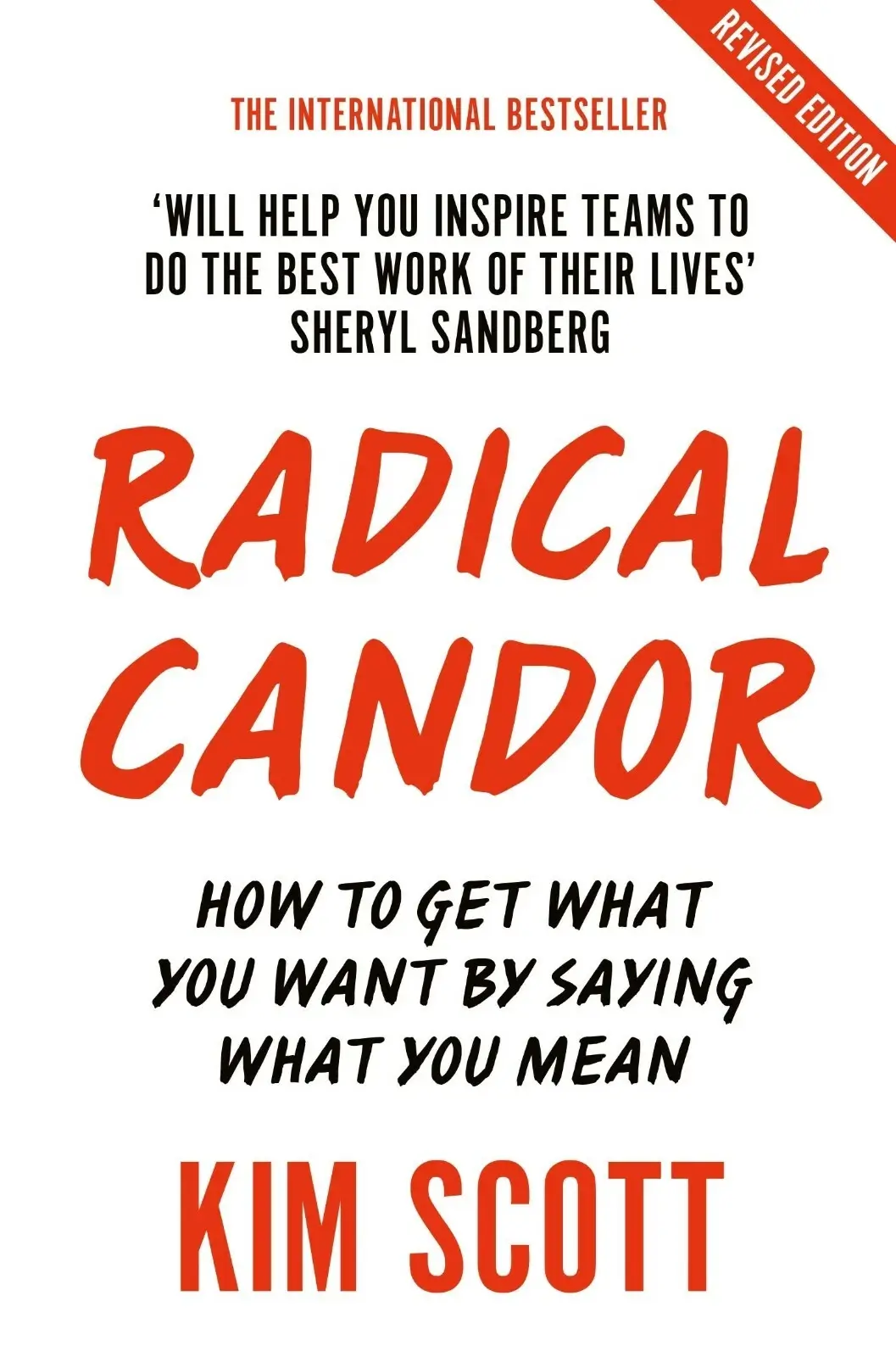
Radical Candor by Kim Scott


රු1,700.00
3 X Rs. 566.67 or 8% Cashback with


or 3 X රු566.67 with


or up to 4 X රු425.00 with


Radical Candor by Kim Scott is a practical leadership guide that teaches how to build strong teams through honest communication and genuine care. The book introduces a simple but powerful idea: great leaders challenge directly while caring personally.
It provides real-world examples and actionable advice on giving feedback, managing teams, and creating a positive work culture where people can grow and perform at their best.
Out of stock
Email when stock available
Radical Candor by Kim Scott is a practical leadership and management guide for anyone who wants to give honest feedback, build stronger workplace relationships and help people perform at their best without becoming either an aggressive boss or an ineffective people-pleaser.
Managers often feel trapped between two uncomfortable choices.
Be direct and risk sounding harsh.
Or be kind and avoid saying what really needs to be said.
Kim Scott argues that this is a false choice.
Great managers can do both.
They can Care Personally about the people they work with while also Challenging Directly when something needs to improve.
That combination is what Scott calls Radical Candor.
It means telling someone when their work is excellent.
It also means telling them when something is not working.
But the feedback should come from genuine respect rather than ego, frustration or a desire to dominate.
Radical Candor by Kim Scott uses stories from Scott’s experiences at Google, Apple and startups to explain how leaders can create cultures where people speak honestly, learn quickly, develop their careers and work together more effectively. Macmillan describes the revised edition as a guide to creating a culture of candid feedback, building cohesive teams and achieving results collaboratively.
Radical Candor by Kim Scott – Book Overview
Radical Candor by Kim Scott begins with a basic management problem.
People need feedback to improve.
But giving feedback can be uncomfortable.
A manager may notice that an employee is:
Missing deadlines.
Communicating poorly.
Producing weak work.
Interrupting teammates.
Making repeated mistakes.
The manager knows a conversation is needed.
But then fear appears.
What if the person becomes upset?
What if they think I dislike them?
What if the conversation becomes awkward?
So the manager says nothing.
That silence may feel kind.
But Scott argues that avoiding necessary feedback can actually be unfair.
If someone does not know what is going wrong, they cannot fix it.
Care Personally
The first dimension of the Radical Candor framework is Care Personally.
This means seeing employees as complete human beings rather than simply resources for producing results.
A good manager should care about:
What motivates someone.
What they want from their career.
What challenges they face.
What they are good at.
What support they need.
Care does not mean becoming everyone’s best friend.
It means treating people with genuine respect.
Challenge Directly
The second dimension is Challenge Directly.
This means being willing to tell someone what you really think when it matters.
If work is excellent, say so.
If work needs improvement, say so.
If a decision appears wrong, challenge it.
If someone disagrees with you, make it safe for them to challenge you too.
The official Radical Candor framework emphasizes that challenging directly should remain kind and clear, not brutal or humiliating.
Radical Candor Is Not Brutal Honesty
This distinction is essential.
Some people hear “candor” and think:
Say whatever you want.
Be harsh.
Tell everyone the truth whether they like it or not.
That is not the framework.
If you challenge directly without demonstrating care, Scott calls the result Obnoxious Aggression.
The goal is not cruelty.
The goal is honest communication combined with respect.
The Four Quadrants
The framework contains four communication patterns.
Radical Candor happens when you both Care Personally and Challenge Directly.
Ruinous Empathy happens when you care but avoid the difficult conversation.
Obnoxious Aggression happens when you challenge directly but fail to show care.
Manipulative Insincerity happens when you neither genuinely care nor honestly challenge.
The official Radical Candor organization describes these as behaviours people can slip into, rather than permanent personality labels.
Ruinous Empathy
Ruinous Empathy is especially interesting because it often feels nice.
Imagine an employee repeatedly makes mistakes.
Their manager likes them.
The manager does not want to hurt their feelings.
So instead of explaining the problem clearly, the manager says:
“Everything is fine.”
Months later, the employee receives a poor performance review or loses an opportunity.
From the employee’s perspective, the situation feels unfair.
Nobody warned them.
Avoiding discomfort protected the manager more than the employee.
Kindness Sometimes Requires an Uncomfortable Conversation
Radical Candor by Kim Scott challenges the idea that kindness always means making someone feel comfortable.
Sometimes caring means saying:
“This isn’t working.”
“This behaviour is hurting the team.”
“You need to improve this skill.”
“You are ready for more responsibility.”
A respectful truth may be more useful than a comfortable silence.
Obnoxious Aggression
Obnoxious Aggression is the opposite mistake.
The manager gives direct feedback but does it in a way that feels disrespectful.
They may embarrass someone publicly.
Use personal attacks.
Shout.
Humiliate.
Dismiss emotions.
The criticism may even contain useful information.
But the delivery destroys trust.
Manipulative Insincerity
Manipulative Insincerity occurs when people neither care enough to build genuine relationships nor challenge each other honestly.
This can appear as:
Fake praise.
Office politics.
Saying one thing in a meeting and another afterward.
Flattering someone because you want something.
Avoiding difficult issues while complaining privately.
This environment can become especially damaging because nobody knows which conversations are sincere.
Feedback Should Go Both Ways
A major strength of Radical Candor by Kim Scott is that Scott does not present feedback as something bosses only give to employees.
Managers also need criticism.
In fact, leaders should actively ask for it.
A boss who says:
“Give me feedback anytime”
may not receive much.
Employees naturally worry about criticizing someone who controls:
Salary.
Promotion.
Projects.
Performance ratings.
Managers therefore need to deliberately create safety for upward feedback.
Ask for Criticism First
One practical principle is to solicit criticism before giving it.
Ask employees:
What could I do better?
What am I doing that makes your work harder?
What should I stop doing?
Where am I unclear?
Then listen.
Do not immediately defend yourself.
If employees learn that giving feedback to the manager results in punishment or argument, honesty disappears.
Praise Matters Too
Radical Candor is not only about criticism.
Specific praise is equally important.
Instead of saying:
“Good job.”
explain what was good.
For example:
“The way you summarized the customer’s problem before offering the solution made the meeting much clearer.”
Now the person knows exactly what behaviour should be repeated.
The official framework describes effective praise as specific and sincere and criticism as kind and clear.
Praise Should Teach
Good praise is not simply emotional encouragement.
It is information.
It tells someone:
This worked.
This mattered.
Do more of this.
That makes praise a management tool rather than empty positivity.
Criticize the Work, Not the Person
There is a major difference between:
“This report is confusing.”
and
“You are terrible at writing reports.”
The first identifies a problem that can be improved.
The second attacks identity.
Strong feedback focuses on:
Behaviour.
Work.
Impact.
Specific examples.
Possible improvement.
Be Specific
Vague criticism is difficult to use.
“You need to communicate better.”
What does that mean?
A more useful conversation might explain:
“In yesterday’s meeting, the deadline changed but the design team wasn’t informed. Next time, please update the project channel immediately when the delivery date changes.”
Specific feedback creates a path toward action.
Give Feedback Quickly
Feedback loses value when managers wait months.
Imagine making the same mistake for six months because nobody mentioned it.
Then your annual review suddenly contains:
“You’ve been doing this wrong all year.”
That creates frustration.
Timely feedback gives people the opportunity to adjust while the situation is still fresh.
Feedback Should Not Wait for Performance Reviews
Annual reviews have a role.
But everyday coaching matters more.
If something needs correction now, discuss it now.
If someone does excellent work now, recognize it now.
Regular feedback makes formal reviews less surprising.
Management Is a Relationship
Radical Candor by Kim Scott treats management as fundamentally relational.
A manager does not produce results entirely alone.
Their job includes helping other people succeed.
That requires trust.
Without trust, employees may hide:
Problems.
Mistakes.
Disagreement.
Bad news.
Eventually the manager receives only a polished version of reality.
That is dangerous.
Psychological Safety and Candor
Teams perform better when people can speak honestly.
Someone needs to be able to say:
“I think this plan will fail.”
“I don’t understand.”
“I made a mistake.”
“I disagree.”
“We need help.”
If people fear punishment for speaking honestly, small problems can become large problems.
Leaders Need Bad News
Managers naturally enjoy hearing:
The project is on schedule.
Customers are happy.
Everything is fine.
But useful leadership often depends on hearing bad news early.
A candid culture makes it more likely that problems reach decision-makers before they become disasters.
Career Conversations
Management is not only about fixing today’s work.
Leaders should understand where employees want to go.
Someone may want:
Leadership.
Technical expertise.
Creative work.
More responsibility.
A different role.
Better work-life balance.
Understanding those motivations helps managers assign opportunities more intelligently.
Not Everyone Wants the Same Career
Scott challenges simplistic career models where everyone must constantly chase promotion.
Some people want rapid growth.
Others are excellent performers who prefer stability and mastery in their current role.
A healthy team can need both.
The manager’s responsibility is to understand individual motivations rather than assuming everybody wants the same path.
Rock Stars and Superstars
One concept in Radical Candor by Kim Scott distinguishes between people on different growth trajectories.
Some high performers are highly ambitious for rapid change and advancement.
Others are equally valuable while preferring a more stable trajectory.
The mistake is assuming stable growth means low performance.
Someone can be exceptional at their work without wanting a promotion every year.
Build a Cohesive Team
Managers need different strengths.
A team composed entirely of people fighting for the next promotion may become unstable.
A team where nobody wants additional responsibility may also struggle.
Leadership means building a balanced group where different motivations can coexist.
Meetings and Debate
A candid team should be able to debate ideas strongly without turning disagreement into personal hostility.
People should be able to say:
“I don’t think this will work.”
and still maintain respect.
Good debate can improve decisions because weaknesses appear before execution.
Debate Before Decision
Strong teams create space for disagreement before a decision is final.
Once the decision is made, however, endless debate can prevent execution.
Scott’s management approach connects candid discussion with clear decision-making.
The Get Stuff Done Wheel
The revised book discusses a seven-step process for moving teams from ideas to results.
The current Radical Candor organization summarizes the process as:
Listen, Clarify, Debate, Decide, Persuade, Implement and Learn.
This reinforces an important leadership principle:
Good communication is not the final goal.
Better results are.
Listen
Before making decisions, leaders need information.
That means employees need genuine opportunities to contribute ideas.
Listening does not mean agreeing with everything.
It means understanding before deciding.
Clarify
Ideas often fail because different people interpret them differently.
Clarification turns vague thinking into something everyone can discuss.
What exactly is the proposal?
What problem does it solve?
What assumptions does it make?
Debate
Once the idea is clear, encourage disagreement.
Good debate exposes:
Weak assumptions.
Missing information.
Risks.
Alternative solutions.
A team that never disagrees may not be aligned.
They may simply be afraid.
Decide
Eventually someone needs to make the decision.
Endless discussion creates paralysis.
Good managers clarify who has decision authority and when discussion ends.
Persuade
Even people who did not make the decision need to understand why it was made.
Persuasion helps create commitment.
“Because I said so” may produce compliance.
It rarely produces ownership.
Implement
A brilliant decision has no value if nobody executes it.
Roles.
Deadlines.
Responsibilities.
Resources.
all need clarity.
Learn
After implementation, examine the result.
What worked?
What failed?
What should change?
Learning closes the loop and makes future decisions better.
The Google Experience
Kim Scott’s management ideas were shaped partly by her time at Google.
She managed teams and observed leadership practices inside a rapidly growing technology company.
The book uses workplace stories to make abstract management principles easier to understand.
Apple
Scott later worked at Apple, where she developed and taught a management class.
Her experiences across different organizations helped refine the Radical Candor framework. Macmillan specifically notes her leadership experience at Google and her management work at Apple.
Leadership Is Not About Being Popular
Managers sometimes confuse being liked with being effective.
If your primary objective is:
Everyone must like me,
you may avoid:
Criticism.
Difficult decisions.
Performance issues.
Accountability.
Caring Personally does not mean chasing popularity.
Sometimes a good leader makes decisions people dislike.
Leadership Is Not About Dominance Either
The opposite mistake is thinking authority requires intimidation.
A manager who needs to prove power constantly may create compliance but destroy honest communication.
Real authority becomes more effective when people trust the leader’s intentions and judgment.
Radical Candor for Software Teams
The principles in Radical Candor by Kim Scott work especially well in software and technology environments.
Imagine a developer introduces code that creates technical debt.
A manager using Ruinous Empathy avoids mentioning it because the developer worked hard.
A manager using Obnoxious Aggression says:
“This code is terrible.”
A Radically Candid manager might say:
“I appreciate how quickly you solved the customer issue. I’m concerned that this implementation creates duplication in three services. Let’s refactor this section before we merge so we don’t make future changes harder.”
Care.
Challenge.
Specificity.
Action.
Radical Candor for Business Owners
Business owners can apply the same idea to:
Sales teams.
Marketing teams.
Retail staff.
Finance teams.
Operations.
Customer service.
Avoiding feedback allows small performance problems to become expensive.
Aggressive feedback creates turnover and fear.
The goal is direct communication without unnecessary disrespect.
Radical Candor for Small Teams
The framework may be even more important in small companies.
When a business has five or ten people, one unresolved conflict can affect everyone.
Small teams cannot afford months of hidden resentment.
Early, respectful conversations protect relationships.
Radical Candor With Peers
You do not need to be someone’s manager.
Colleagues also need honest conversations.
If a teammate repeatedly creates problems, talking behind their back rarely solves anything.
A respectful direct conversation may.
Radical Candor With Your Boss
Challenging upward is more difficult because of the power imbalance.
But strong organizations need employees capable of respectfully disagreeing with leaders.
Managers can encourage this by demonstrating that disagreement is safe.
Cultural Differences Matter
Directness can mean different things across cultures.
A feedback style considered normal in one workplace may feel unusually harsh in another.
Therefore, practicing Radical Candor by Kim Scott should not mean mechanically copying one American communication style.
The principles need cultural awareness.
The goal is clarity plus respect.
Personality Differences Matter Too
Some people process feedback immediately.
Others need time.
Some prefer a private conversation.
Some appreciate more direct wording.
Good managers learn how communication lands with different people.
Radical Candor is not a script.
It is a framework.
Intent Is Not Enough
You may intend to be helpful.
But if your feedback humiliates someone, the impact still matters.
Good leaders pay attention to how their communication is received.
If something lands badly, adjust.
Feedback Is a Skill
Nobody becomes excellent at candid conversations simply by reading one book.
Like any skill, it requires practice.
The first attempts may feel awkward.
That is normal.
Over time, direct conversations become easier.
Common Management Mistake: Waiting Too Long
Small issue.
Manager notices.
Says nothing.
Issue happens again.
Still says nothing.
Resentment grows.
Eventually the manager explodes.
Now the criticism is much harsher than it needed to be.
Early feedback can prevent this.
Another Mistake: The Feedback Sandwich
Some managers hide criticism between two pieces of praise.
Positive.
Negative.
Positive.
Employees eventually learn that praise means:
Something bad is coming.
Scott’s broader approach favors clear, sincere communication instead of disguising the real message.
Performance Problems
Radical Candor does not remove the responsibility to manage poor performance.
Sometimes employees need:
Clear expectations.
Coaching.
Training.
A different role.
Performance plans.
And occasionally termination.
Caring about someone does not mean keeping them indefinitely in a role where they cannot succeed.
Difficult Decisions Can Still Be Humane
How a manager handles difficult decisions matters.
Even when the outcome cannot change, leaders can communicate with:
Clarity.
Respect.
Privacy.
Fairness.
Humanity.
That is consistent with the central philosophy of the book.
Is Radical Candor a Leadership Book?
Yes.
Radical Candor by Kim Scott belongs strongly within leadership, management, workplace communication and business.
Your existing BookLounge classification under Non-Fiction > Business, Leadership & Marketing is appropriate.
Is Radical Candor Only for Managers?
No.
Managers are the primary audience, but the framework is useful for:
Employees.
Founders.
Team leads.
Project managers.
Entrepreneurs.
HR professionals.
Anyone who gives or receives workplace feedback.
Is Radical Candor About Being Rude?
No.
This is one of the most important misunderstandings to avoid.
The official framework specifically distinguishes Radical Candor from Obnoxious Aggression and describes the goal as caring personally while challenging directly.
If the communication contains directness but no respect or care, it is not Radical Candor.
Is Radical Candor a Self-Help Book?
It contains personal-development ideas, but it is primarily a business leadership and management book.
Its focus is workplace relationships, feedback, management and team performance.
Revised Edition Details
Macmillan lists the Fully Revised & Updated Edition with the subtitle Be a Kick-Ass Boss Without Losing Your Humanity.
For that U.S. St. Martin’s Press edition:
Author: Kim Scott
Publisher: St. Martin’s Press
Publication: October 1, 2019
Pages: 304
ISBN: 9781250235381
Different international editions can have different ISBNs and page counts, so use the barcode and publishing details printed on your actual physical BookLounge copy when completing WooCommerce attributes.
7 Powerful Lessons From Radical Candor by Kim Scott
- Care Personally and Challenge Directly at the same time. The best feedback combines genuine respect for the person with honesty about what needs to change.
- Do not confuse kindness with silence. Avoiding necessary criticism may feel compassionate, but it can prevent someone from improving and create bigger problems later.
- Ask for criticism before you give it. Leaders need to demonstrate that feedback moves in both directions if they want employees to speak honestly.
- Make praise specific and sincere. Useful praise identifies exactly what worked so the person understands which behaviour should be repeated.
- Criticize behaviour, not identity. Clear feedback should focus on observable work, decisions and impact rather than attacking someone’s character.
- Understand people’s individual career goals. Not every excellent employee wants the same promotion path, so managers should learn what growth means to each person.
- Create a culture where disagreement is safe. Teams make stronger decisions when employees can challenge ideas, expose problems and tell leaders difficult truths without fear.
Why Read Radical Candor by Kim Scott?
Radical Candor by Kim Scott is particularly useful for anyone who has ever thought:
I know I need to give this person feedback, but I don’t know how to say it.
It provides a language for understanding why feedback conversations go wrong.
Too soft?
Ruinous Empathy.
Direct but disrespectful?
Obnoxious Aggression.
Fake?
Manipulative Insincerity.
Clear and caring?
Radical Candor.
That framework is memorable enough to use in real workplace situations.
The book also goes beyond individual conversations.
It explores how managers can build teams, understand career motivations, create healthy debate and move groups toward results.
For new managers especially, it can help explain why simply being technically excellent is not enough.
Once you manage people, your work changes.
You are no longer responsible only for your own output.
You are responsible for creating conditions in which other people can succeed.
Who Should Read This Book?
Radical Candor by Kim Scott is especially valuable for managers, team leaders, founders, entrepreneurs, HR professionals, supervisors, project managers and professionals preparing for their first leadership role.
It can also be useful for software engineers who become team leads, small-business owners managing their first employees, sales managers trying to coach performance and anyone who finds difficult workplace conversations uncomfortable.
Radical Candor by Kim Scott – Great Leadership Requires Both Humanity and Honesty
Radical Candor by Kim Scott solves a problem almost every manager eventually faces.
You care about someone.
But something is wrong.
Their performance is slipping.
Their communication is hurting the team.
They made a poor decision.
They are ready for greater responsibility but do not realize it.
You need to say something.
Then the uncomfortable question appears:
How do I tell them without damaging the relationship?
Kim Scott’s answer is that protecting the relationship and telling the truth should not be treated as competing goals.
Done well, honest feedback can strengthen the relationship.
Imagine a manager who sees your mistake but never tells you.
You continue making it.
Months later, the mistake affects your career.
Was the silence really kind?
Probably not.
Now imagine another manager who immediately insults you publicly.
The information may be accurate.
But the delivery creates fear and resentment.
That is not effective leadership either.
The better path is:
I respect you enough to tell you the truth.
And I care enough to help you improve.
That is the essence of Radical Candor.
It requires courage because difficult conversations remain difficult.
It requires humility because the manager may also be wrong.
It requires listening because feedback should move in both directions.
And it requires consistency because trust cannot be built from one conversation.
Over time, teams that learn to communicate this way can surface problems earlier.
People can learn faster.
Managers receive more honest information.
Employees understand expectations.
Disagreements become less personal.
The goal is not a workplace where everyone constantly criticizes everyone else.
The goal is a workplace where people care enough about one another and the work to say what needs to be said.
For managers and professionals who want stronger relationships without sacrificing high standards, Radical Candor by Kim Scott offers one of the most practical and memorable frameworks in modern management
Learn more about Radical Candor by Kim Scott on the official Radical Candor website.
Explore more leadership and business books at Bargain Books.
Be the first to review “Radical Candor by Kim Scott”
Related products

Out of stock
Self-Help & Psychology
රු1,500.00
3 X Rs. 500.00 or 8% Cashback with
or 3 X රු500.00 with
or up to 4 X රු375.00 with
-34%

Self-Help & Psychology
Original price was: රු2,350.00.රු1,550.00Current price is: රු1,550.00.
3 X Rs. 516.67 or 8% Cashback with
or 3 X රු516.67 with
or up to 4 X රු387.50 with

Out of stock
Autobiography
රු2,750.00
3 X Rs. 916.67 or 8% Cashback with
or 3 X රු916.67 with
or up to 4 X රු687.50 with

Non-Fiction & Knowledge
රු1,550.00
3 X Rs. 516.67 or 8% Cashback with
or 3 X රු516.67 with
or up to 4 X රු387.50 with

Non-Fiction & Knowledge
රු1,950.00
3 X Rs. 650.00 or 8% Cashback with
or 3 X රු650.00 with
or up to 4 X රු487.50 with
-17%
Out of stock
Non-Fiction & Knowledge
Original price was: රු2,900.00.රු2,400.00Current price is: රු2,400.00.
3 X Rs. 800.00 or 8% Cashback with
or 3 X රු800.00 with
or up to 4 X රු600.00 with
-19%

Out of stock
Non-Fiction & Knowledge
Original price was: රු2,650.00.රු2,150.00Current price is: රු2,150.00.
3 X Rs. 716.67 or 8% Cashback with
or 3 X රු716.67 with
or up to 4 X රු537.50 with
-23%

Non-Fiction & Knowledge
Original price was: රු2,200.00.රු1,700.00Current price is: රු1,700.00.
3 X Rs. 566.67 or 8% Cashback with
or 3 X රු566.67 with
or up to 4 X රු425.00 with
Reviews
There are no reviews yet.