
No products in the cart.
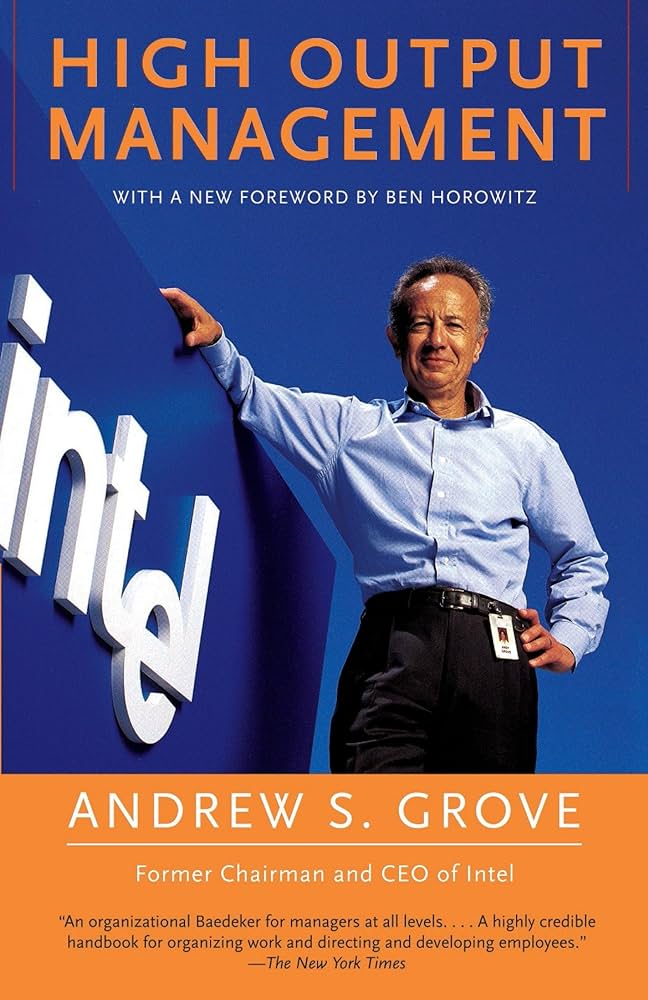
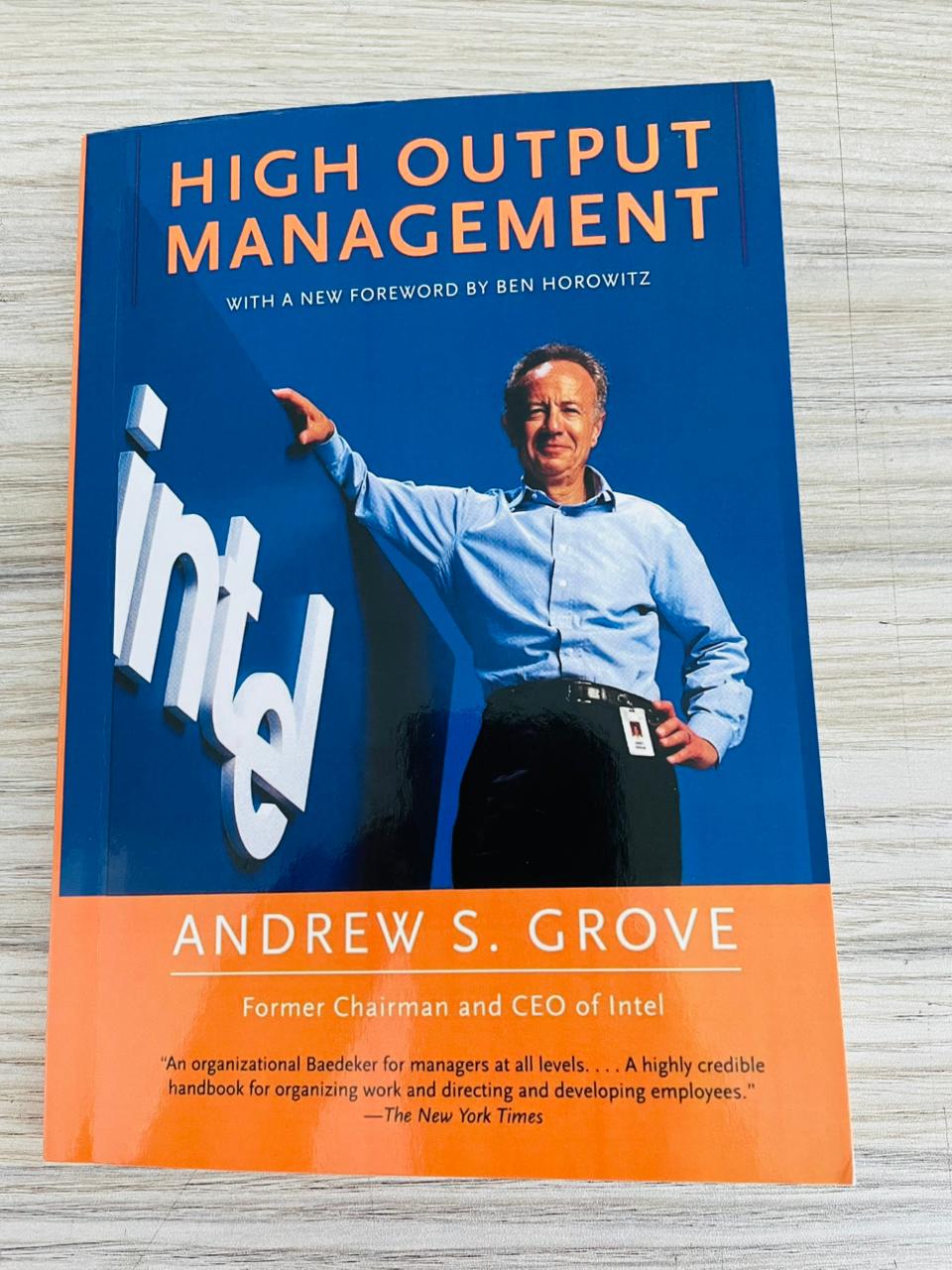




High Output Management by Andrew S. Grove


රු1,650.00
3 X Rs. 550.00 or 8% Cashback with


or 3 X රු550.00 with


or up to 4 X රු412.50 with


High Output Management is a must-read for anyone leading people or building a business. It teaches that great management isn’t about authority—it’s about creating systems that help others succeed at scale
Indian locally published copy
1 in stock
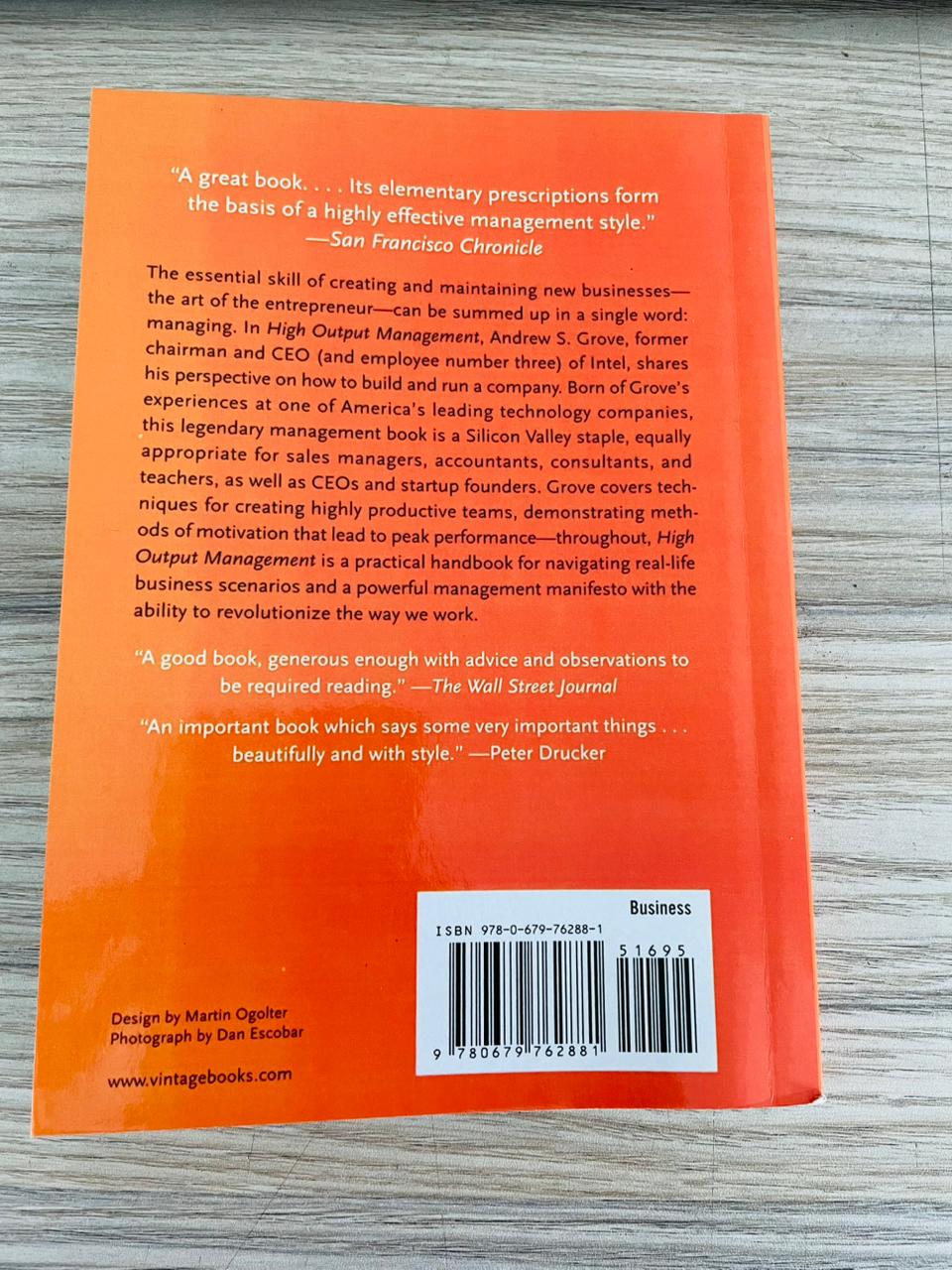
High Output Management by Andrew Grove is a practical business and leadership book designed to help managers, entrepreneurs, team leaders, and professionals improve productivity and get better results from the people and systems they manage.
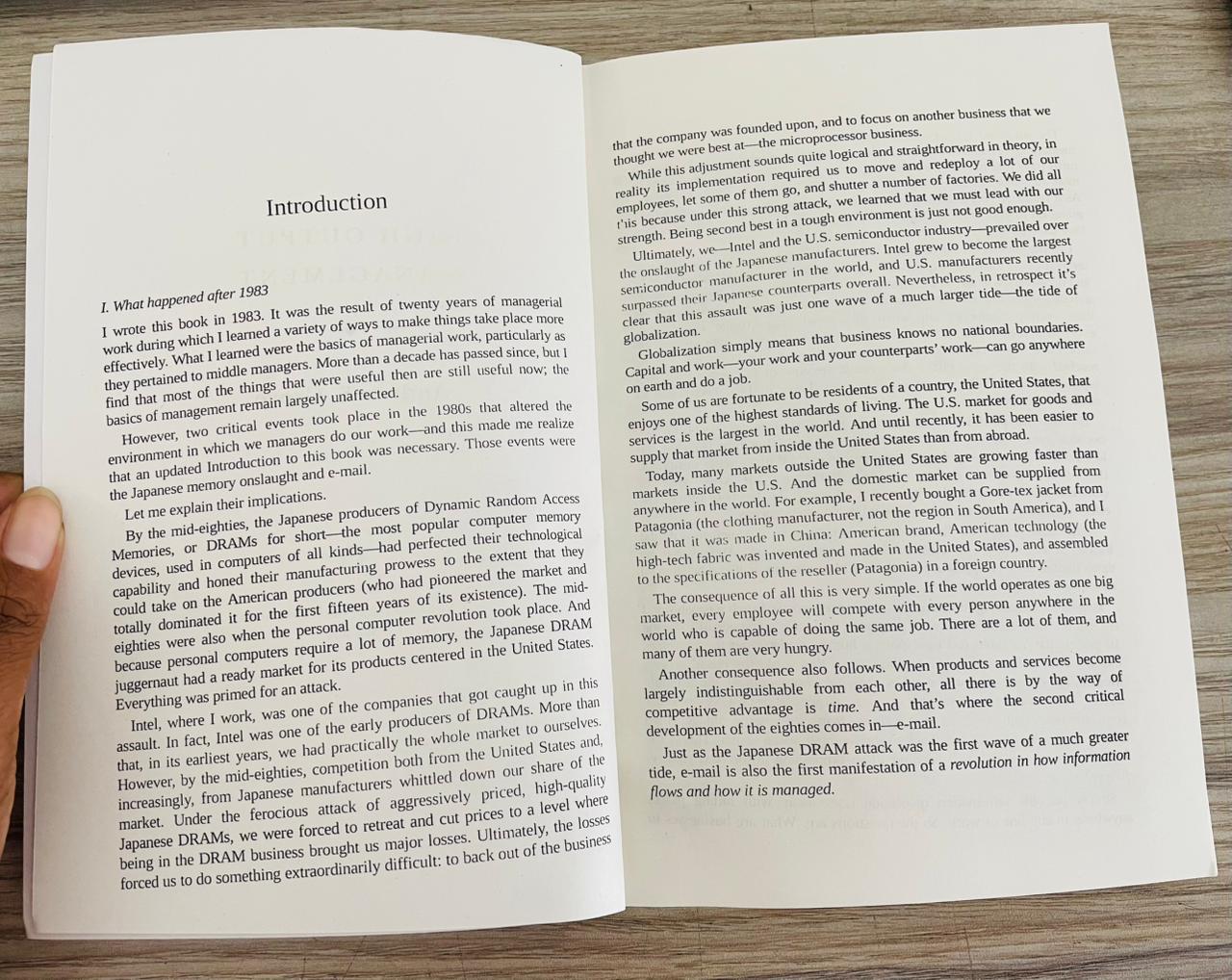
Drawing on Andrew Grove’s experience at Intel, the book explains how managers can organize work, improve team performance, motivate employees, conduct effective meetings, measure results, and make better decisions.
Rather than focusing only on management theory, Grove approaches management as a practical discipline.
He asks a simple but important question: how can a manager increase the total output of the people and processes they are responsible for?
This idea becomes the foundation of the entire book.
High Output Management by Andrew Grove – Book Overview
High Output Management by Andrew Grove presents management as a system that can be studied, measured, and improved.
A manager’s value is not determined only by how much work they personally complete.
Instead, their effectiveness depends heavily on the performance of the team or organization they influence.
This means a manager can create greater impact by improving processes, helping employees perform better, removing obstacles, making stronger decisions, and directing resources toward the most important work.
Grove explains these ideas through practical examples and management principles developed during his career in the technology industry.
Managerial Output
One of the most important ideas in High Output Management by Andrew Grove is managerial output.
A manager should not measure success only by personal activity.
Attending many meetings or working long hours does not automatically mean someone is managing effectively.
Instead, managers should look at the results produced by their teams.
If a manager helps ten employees become slightly more productive, the total impact can be much greater than simply completing more individual tasks.
This shifts management away from personal busyness and toward organizational results.
Productivity and Process Improvement
Productivity is a central theme in High Output Management by Andrew Grove.
Grove encourages managers to understand work as a process.
Every process has inputs, steps, bottlenecks, outputs, and opportunities for improvement.
A manager should identify which activities create the greatest impact and which parts of the process slow everything down.
By improving bottlenecks, eliminating unnecessary work, and creating better systems, teams can produce stronger results without simply asking everyone to work longer hours.
This approach is useful not only in manufacturing but also in sales, technology, education, consulting, administration, and many other industries.
Managerial Leverage
Another powerful concept in High Output Management by Andrew Grove is managerial leverage.
Some management activities have much greater impact than others.
For example, spending time training one employee may improve that employee’s performance for months or years.
Creating a better reporting system may help an entire department make faster decisions.
Hiring the right person into an important role may improve the performance of a whole team.
Managers therefore need to think carefully about where they invest their time.
The goal is not simply to stay busy.
The goal is to identify high-leverage activities that produce significant results.
Effective Meetings
Meetings are another major topic in High Output Management by Andrew Grove.
Meetings can be useful, but they can also consume enormous amounts of time without producing meaningful outcomes.
Grove explains that different types of meetings should serve different purposes.
Some meetings are used to share information.
Others are used to solve problems or make decisions.
Managers should understand why a meeting exists, who needs to attend, what information is required, and what outcome should be achieved.
When meetings are poorly structured, they can reduce productivity.
When they are managed effectively, they can become valuable tools for coordination and decision-making.
One-on-One Meetings
High Output Management by Andrew Grove also places strong importance on one-on-one meetings between managers and employees.
These conversations give employees an opportunity to discuss problems, ideas, priorities, career development, and concerns.
A manager can use one-on-one meetings to understand what is happening inside the team before small problems become larger ones.
These meetings can also help employees feel heard and supported.
The book suggests that managers should not treat one-on-one meetings as casual conversations without purpose.
They should be structured opportunities for communication and problem-solving.
Motivation and Employee Performance
Motivation is another key theme in High Output Management by Andrew Grove.
Managers need to understand why employees perform differently.
Sometimes poor performance is caused by lack of skill.
In other cases, the employee may know exactly what to do but lack motivation.
These two situations require different responses.
If someone lacks ability, training and coaching may help.
If the problem is motivation, the manager needs to understand what is influencing the employee’s behaviour.
This distinction can prevent managers from using the wrong solution.
Training as a Management Responsibility
Training is presented as an important management responsibility in High Output Management by Andrew Grove.
Managers should not assume that employees automatically know how to perform every task correctly.
Clear instruction can significantly improve results.
Training also creates consistency.
When people understand expectations, processes, and standards, they can perform more confidently.
A manager who invests in developing employees can create benefits far beyond the time spent teaching them.
This makes training another example of high-leverage management activity.
Performance Reviews
Performance evaluation is also discussed in High Output Management by Andrew Grove.
Managers need reliable ways to understand how employees are performing.
A good review should not simply criticize past mistakes.
It should help employees understand expectations, recognize strengths, identify areas for improvement, and make better decisions going forward.
Managers also need to provide feedback clearly.
Avoiding difficult conversations may feel easier in the short term, but unresolved performance problems can affect the whole team.
Decision-Making
Good management requires good decisions.
High Output Management by Andrew Grove explores how managers can gather information, listen to different perspectives, and make decisions efficiently.
Not every decision needs endless discussion.
At the same time, important decisions should not be made without understanding the relevant facts.
Managers must balance speed with quality.
They also need to recognize when someone else has better information or expertise.
Effective decision-making therefore requires both confidence and humility.
Managing Teams
Teams are another major focus in High Output Management by Andrew Grove.
A manager needs to understand that different employees require different levels of guidance.
A new employee may need detailed instructions.
An experienced employee may perform better with greater independence.
Using exactly the same management style with every person can therefore be ineffective.
Managers should adapt their approach based on the employee’s experience, skills, confidence, and the complexity of the task.
Leadership and Responsibility
Leadership in High Output Management by Andrew Grove is closely connected to responsibility.
Managers influence the environment in which employees work.
They shape priorities, expectations, communication, systems, and culture.
When something goes wrong repeatedly, the manager should not automatically blame individuals.
Sometimes the underlying process needs to be improved.
This encourages leaders to look at problems systematically rather than reacting only to symptoms.
Why Read High Output Management by Andrew Grove?
High Output Management by Andrew Grove is valuable because it focuses on practical management problems rather than abstract leadership slogans.
Readers can learn about:
- Managerial productivity
- Team performance
- Managerial leverage
- Effective meetings
- One-on-one meetings
- Training employees
- Performance management
- Motivation
- Decision-making
- Process improvement
- Leadership
- Organizational effectiveness
These ideas can be applied in both large companies and smaller teams.
Who Should Read This Book?
High Output Management by Andrew Grove may especially appeal to:
- Managers
- Entrepreneurs
- Startup founders
- Team leaders
- Supervisors
- Business owners
- Executives
- Project managers
- HR professionals
- Operations managers
- Students studying management
- Professionals preparing for leadership roles
It can also be useful for people who have recently been promoted into management and are trying to understand how their responsibilities differ from individual contributor work.
A Powerful Guide to Better Management
High Output Management by Andrew Grove remains influential because its principles focus on practical problems managers continue to face.
How should managers use their time?
How can teams become more productive?
How should employees be trained?
How can meetings become more effective?
How should performance problems be handled?
And how can managers increase the output of the entire organization rather than simply working harder themselves?
Grove approaches these questions with practical frameworks and lessons drawn from real management experience.
For readers interested in leadership, productivity, entrepreneurship, operations, or building high-performing teams, High Output Management by Andrew Grove offers a practical and thought-provoking guide to becoming a more effective manager.
Learn more about High Output Management by Andrew S. Grove on the official Penguin Random House website.
Explore more business and management books at Bargain Books.
Be the first to review “High Output Management by Andrew S. Grove”
Related products
Out of stock
Business
රු1,300.00
3 X Rs. 433.33 or 8% Cashback with
or 3 X රු433.33 with
or up to 4 X රු325.00 with
-13%

Out of stock
Original price was: රු4,000.00.රු3,500.00Current price is: රු3,500.00.
3 X Rs. 1,166.67 or 8% Cashback with
or 3 X රු1,166.67 with
or up to 4 X රු875.00 with
-30%
Out of stock
Original price was: රු7,000.00.රු4,900.00Current price is: රු4,900.00.
3 X Rs. 1,633.33 or 8% Cashback with
or 3 X රු1,633.33 with
or up to 4 X රු1,225.00 with
Out of stock
රු1,750.00
3 X Rs. 583.33 or 8% Cashback with
or 3 X රු583.33 with
or up to 4 X රු437.50 with

රු2,000.00
3 X Rs. 666.67 or 8% Cashback with
or 3 X රු666.67 with
or up to 4 X රු500.00 with

Out of stock
රු1,500.00
3 X Rs. 500.00 or 8% Cashback with
or 3 X රු500.00 with
or up to 4 X රු375.00 with

Business & Management
රු1,900.00
3 X Rs. 633.33 or 8% Cashback with
or 3 X රු633.33 with
or up to 4 X රු475.00 with
Business & Management
රු1,800.00
3 X Rs. 600.00 or 8% Cashback with
or 3 X රු600.00 with
or up to 4 X රු450.00 with
Reviews
There are no reviews yet.