
No products in the cart.
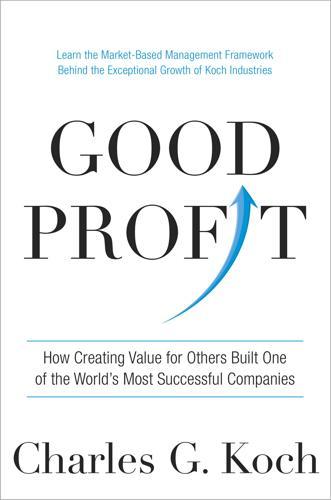
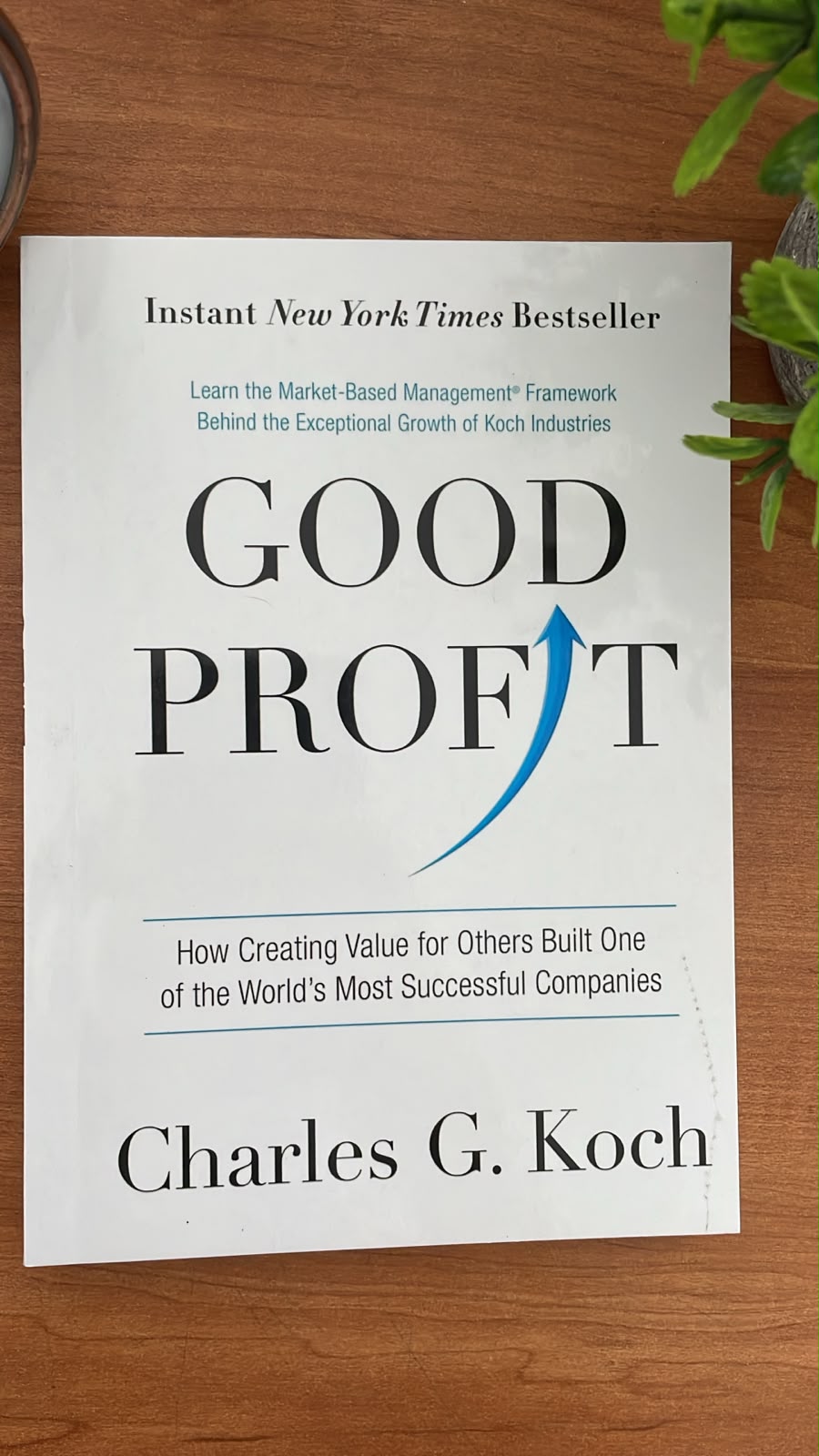


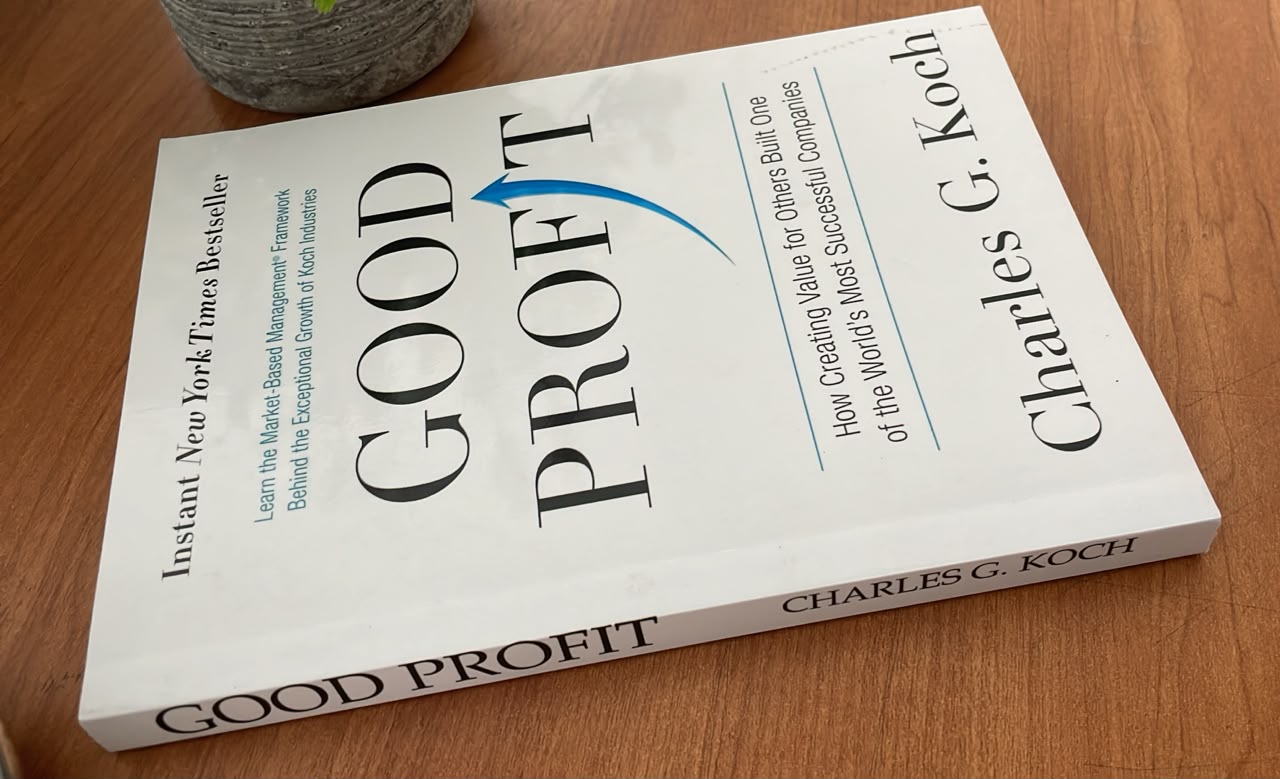




Good Profit by Charles G. Koch, Paul Michael

රු1,800.00
3 X Rs. 600.00 or 8% Cashback with


or 3 X රු600.00 with


or up to 4 X රු450.00 with


Good Profit explains the business philosophy behind Koch Industries and introduces a framework called Market-Based Management (MBM). The book argues that real, sustainable profit comes from creating value for customers rather than exploiting them.
It also highlights the difference between:
- Good Profit: Value created through innovation and customer satisfaction
- Bad Profit: Gains made by taking advantage of customers or market distortions
6 in stock
A Practical Guide to Understanding Ethical Success – Good Profit by Charles G. Koch

Good Profit by Charles Koch
Good Profit by Charles Koch is a practical business and management book about creating sustainable success by delivering genuine value to customers. Drawing on decades of experience building and managing Koch Industries, Charles G. Koch explains the principles behind the management system that helped shape one of the world’s largest private companies.
At the centre of the book is a simple but important idea: long-term business success should come from creating products and services that customers genuinely value.
Instead of focusing only on short-term profits, Koch argues that companies should build cultures where employees are encouraged to think like entrepreneurs, share knowledge, make responsible decisions and constantly search for better ways to serve customers.
The result is a book that combines business philosophy, management principles and real-world lessons for entrepreneurs, managers, business owners and students.
Why Read Good Profit by Charles Koch?
One of the biggest strengths of Good Profit by Charles Koch is that it focuses on how businesses can create sustainable value rather than chasing profit at any cost.
Koch distinguishes between profit that comes from creating value for customers and profit generated through less sustainable or less responsible methods.
His argument is that businesses succeed over the long term when customers willingly choose their products and services because those offerings improve their lives.
This makes the book especially relevant for entrepreneurs and managers who want to build businesses around customer needs rather than short-term financial targets.
The principles discussed can be applied to companies of different sizes, from start-ups and small businesses to larger organizations.
Understanding Market-Based Management
A major part of Good Profit is devoted to the management framework traditionally known as Market-Based Management, or MBM. Koch’s organization now refers to the broader philosophy as Principle Based Management.
The system applies ideas from markets and economics inside an organization.
In a healthy market, people compete, share information, discover opportunities and respond to what customers want.
Koch argues that businesses can benefit from creating similar conditions internally.
Employees should have access to useful knowledge.
They should be encouraged to question existing ideas.
Decision-making authority should be given to people who are capable of using it effectively.
And incentives should reward genuine contributions rather than simply seniority or job title.
These ideas form the foundation of the book’s management philosophy.
Create Value for Customers
One of the most important lessons in Good Profit by Charles Koch is the importance of customer value.
Businesses survive because customers choose to buy from them.
That means companies should constantly ask questions such as:
What do customers actually need?
How can we make their lives easier?
How can we offer better quality, better service or better value?
And how can we keep improving as customer expectations change?
Koch argues that good businesses do not simply try to extract as much money as possible from customers.
Instead, they focus on creating something customers willingly pay for because they believe it provides value.
This customer-focused mindset is especially useful for entrepreneurs who are developing new products or trying to differentiate their businesses from competitors.
Build a Strong Business Vision
A clear vision is another major part of the management system discussed in Good Profit.
Companies need to understand where they can create the greatest long-term value.
This means identifying opportunities, understanding customers, recognizing competitive advantages and deciding where the business should focus its resources.
A strong vision also helps employees understand why their work matters.
Instead of simply completing tasks, people can see how their decisions contribute to the larger direction of the organization.
For business owners, this can help create stronger alignment between leadership, employees and customers.
Hire for Values and Talent
Another important business lesson involves hiring.
A company is shaped by the people who work inside it.
Koch argues that businesses should look for both ability and values when selecting employees.
Technical skills matter, but integrity, responsibility, curiosity and willingness to contribute are also important.
An employee who is extremely talented but works against the organization’s values can create problems that affect the entire company.
At the same time, companies need to give talented people opportunities to use their strengths.
This means placing employees in positions where their skills can create the greatest value.
Encourage Knowledge Sharing
Successful organizations need information to move freely.
If important knowledge remains trapped within departments or management levels, employees cannot make good decisions.
Good Profit by Charles Koch emphasizes the importance of creating a culture where employees share information and respectfully challenge ideas.
People should be able to question assumptions.
Managers should be willing to listen.
And decisions should be improved through discussion and evidence rather than hierarchy alone.
This type of environment can help organizations identify problems earlier and discover better solutions.
For modern companies operating in fast-changing industries, effective knowledge sharing can become a major competitive advantage.
Give Employees Responsibility
Another key principle is decision rights.
Koch argues that authority should not automatically belong to the person with the highest title.
Instead, decisions should often be made by people who have the relevant knowledge, experience and demonstrated ability.
Giving capable employees responsibility can increase speed, accountability and innovation.
It also encourages people to think more like owners.
When employees understand that their decisions directly affect the success of the business, they may become more thoughtful about how resources are used.
This idea can be particularly valuable for growing companies where founders cannot personally manage every decision.
Reward Real Contributions
Compensation and incentives also play an important role in the book.
Employees should understand how their work creates value.
Companies should then design reward systems that recognize meaningful contributions.
The goal is not simply to reward people for being busy.
Instead, organizations should focus on the actual value created through better decisions, innovation, improved customer experiences, greater efficiency or stronger business results.
This approach can help align individual employee goals with the wider goals of the company.
Learn from Failure
Business decisions do not always succeed.
Good Profit does not present management as a process where leaders always make the correct choice.
Instead, experimentation, learning and adaptation are important.
Businesses need to be willing to identify mistakes, understand why they happened and improve future decisions.
This mindset is particularly useful for entrepreneurs.
New businesses often operate with incomplete information.
Products may fail.
Customers may behave differently from expectations.
Marketing campaigns may not work.
Successful companies learn from those experiences rather than repeating the same mistakes.
Business Lessons from Koch Industries
Charles Koch uses experiences from Koch businesses to demonstrate how the management framework can operate in practice.
The publisher describes the book as drawing on roughly six decades of interdisciplinary study, experimentation and implementation across Koch businesses.
These examples help connect theoretical management principles with real business situations.
The book discusses how organizations can respond to disruption, changing customer preferences and competitive pressure.
This makes it useful for readers who want both business ideas and examples of how those ideas have been applied.
Who Should Read Good Profit?
This book is a strong choice for readers interested in:
- Entrepreneurship
- Business strategy
- Leadership
- Management
- Customer experience
- Innovation
- Organizational culture
- Employee motivation
- Business economics
- Start-up growth
- Decision making
- Sustainable business growth
The publisher specifically positions the book for leaders, entrepreneurs, students and people interested in management.
It can also be useful for small-business owners who want to improve how they manage employees and make decisions.
Is Good Profit Worth Reading?
If you want a business book that focuses on both profit and value creation, Good Profit by Charles Koch provides an interesting management framework.
Its central lesson is that sustainable profit does not come simply from charging more or cutting costs.
Successful companies need to understand customers, build strong teams, encourage good decision making and create products or services that people genuinely want.
The book also emphasizes that employees should be treated as active contributors rather than people who simply follow instructions.
For entrepreneurs and managers, these ideas can provide useful questions for evaluating how a business operates.
Buy Good Profit by Charles Koch in Sri Lanka
If you are searching for Good Profit by Charles Koch in Sri Lanka, this New York Times bestselling management book is a valuable addition to a business or entrepreneurship collection.
Whether you are running a company, starting a new business, studying management or looking for ways to become a better leader, the book offers practical ideas about customer value, decision making, employee responsibility and long-term business success.
Good Profit by Charles Koch encourages readers to think beyond short-term financial results and focus instead on building organizations that create lasting value for customers, employees and the wider business environment.
Learn more about Good Profit by Charles G. Koch on the official Penguin Random House website.
Explore more business and management books at Bargain Books.
Be the first to review “Good Profit by Charles G. Koch, Paul Michael”
Related products
Business & Management
රු1,600.00
3 X Rs. 533.33 or 8% Cashback with
or 3 X රු533.33 with
or up to 4 X රු400.00 with
-17%

Out of stock
Original price was: රු2,900.00.රු2,400.00Current price is: රු2,400.00.
3 X Rs. 800.00 or 8% Cashback with
or 3 X රු800.00 with
or up to 4 X රු600.00 with

Out of stock
රු2,500.00
3 X Rs. 833.33 or 8% Cashback with
or 3 X රු833.33 with
or up to 4 X රු625.00 with

Business, Finance & Economics
රු1,750.00
3 X Rs. 583.33 or 8% Cashback with
or 3 X රු583.33 with
or up to 4 X රු437.50 with

Out of stock
රු1,990.00
3 X Rs. 663.33 or 8% Cashback with
or 3 X රු663.33 with
or up to 4 X රු497.50 with
-20%

Out of stock
Original price was: රු2,500.00.රු2,000.00Current price is: රු2,000.00.
3 X Rs. 666.67 or 8% Cashback with
or 3 X රු666.67 with
or up to 4 X රු500.00 with
Business & Management
රු1,500.00
3 X Rs. 500.00 or 8% Cashback with
or 3 X රු500.00 with
or up to 4 X රු375.00 with

Out of stock
Business
රු1,300.00
3 X Rs. 433.33 or 8% Cashback with
or 3 X රු433.33 with
or up to 4 X රු325.00 with
Reviews
There are no reviews yet.