
No products in the cart.
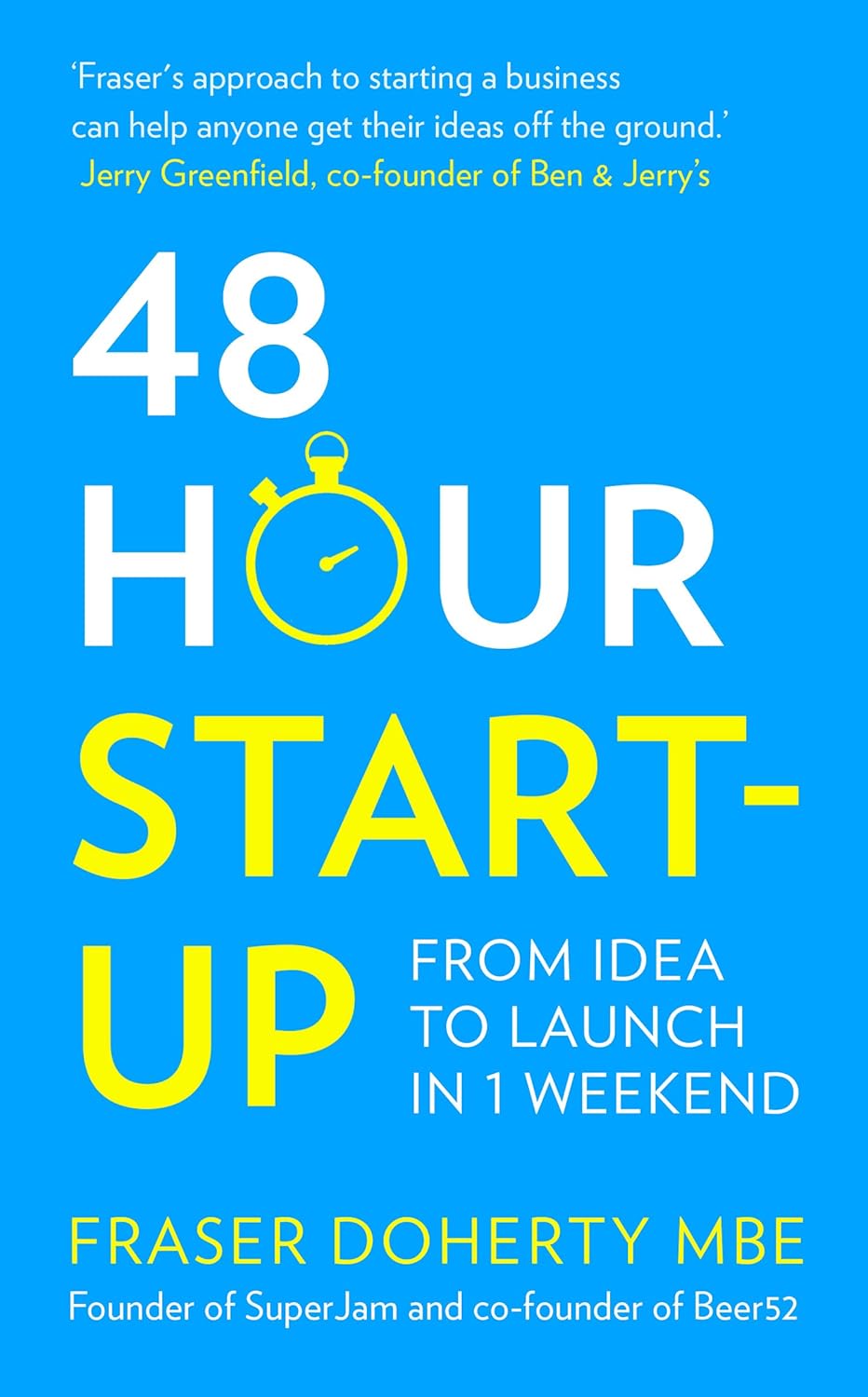
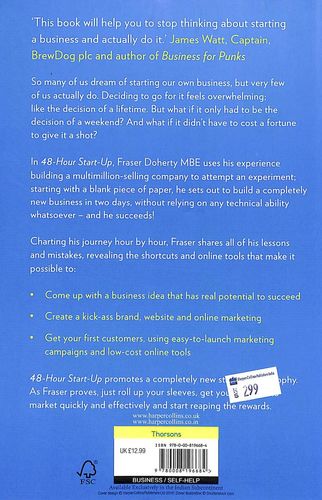
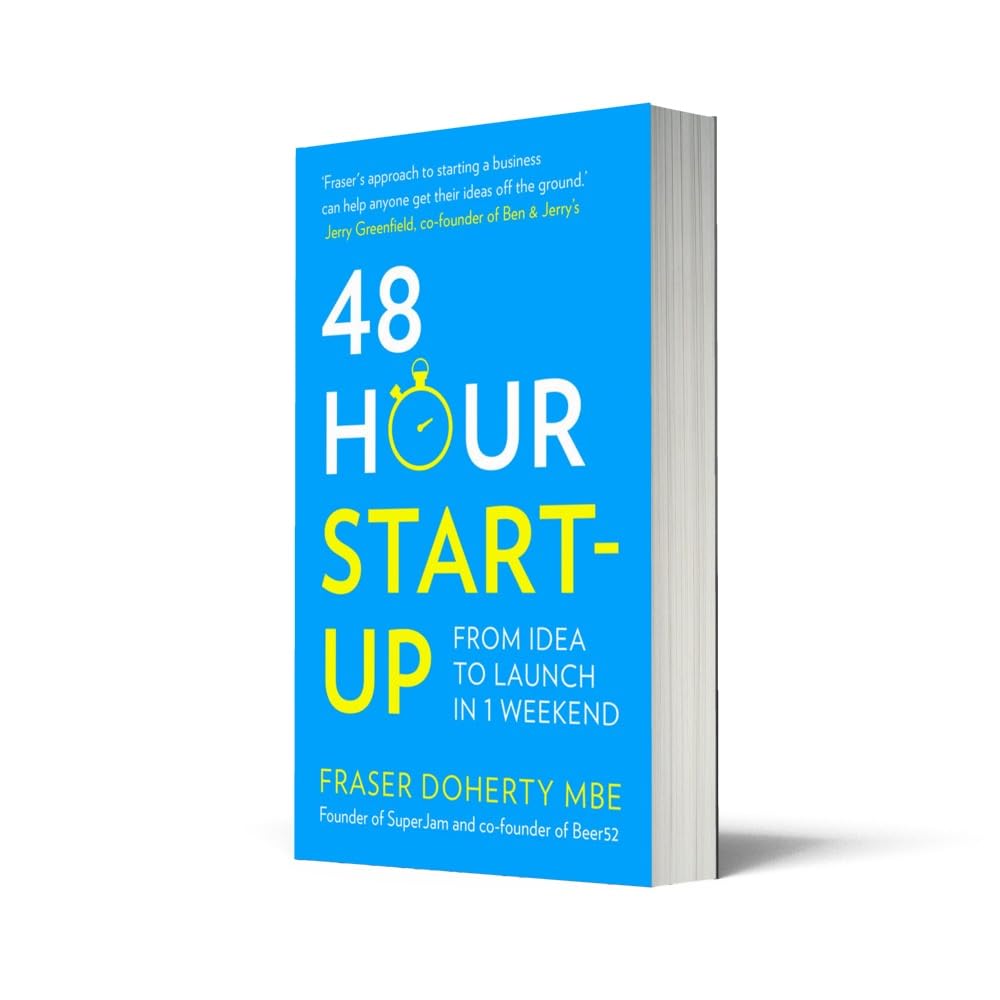


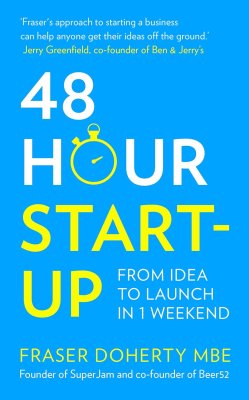
48-Hour Start-Up by Fraser Doherty


රු1,990.00
3 X Rs. 663.33 or 8% Cashback with


or 3 X රු663.33 with


or up to 4 X රු497.50 with


- 48 Hour Start Up by Fraser Doherty is a practical entrepreneurship guide built around one simple challenge: can you take a business from idea to launch in a single weekend?
Drawing on his own experience building businesses, Doherty walks readers through the essential early stages of entrepreneurship without requiring huge amounts of money, advanced technical knowledge or months of preparation.
The book covers finding a workable idea, creating a product, developing a brand, building an online presence, promoting the business and finding the first customer.
It is especially useful for students, aspiring entrepreneurs, side-hustle builders and people who have been thinking about starting a business but have not yet taken the first step.
Product details:
- Full title: 48-Hour Start-Up
- Subtitle: From Idea to Launch in 1 Weekend
- Author: Fraser Doherty MBE
- Publisher: HarperCollins Publishers
- Imprint: Harper Thorsons / Thorsons
- Format: Paperback
- Pages: 224
- Language: English
- ISBN-13: 9780008196684
- ISBN-10: 0008196680
- Publication year: 2016
- Dimensions: Approximately 21.3 × 13.2 × 1.8 cm
- Weight: Approximately 250 g
- Categories: Entrepreneurship, Business, Start-Ups and Personal Development
- Key themes: Business ideas, branding, websites, marketing, customers and microbusinesses
Out of stock
Email when stock available
48-Hour Start-Up by Fraser Doherty
48 Hour Start Up by Fraser Doherty is a practical entrepreneurship guide designed for people who have spent more time thinking about starting a business than actually starting one.
The central idea is simple: instead of spending months preparing, researching and worrying, focus intensely on creating and launching a small business over a single weekend.
Fraser Doherty uses his own entrepreneurial experience to demonstrate how an idea can move from a blank page to something real, testable and available to customers.
48 Hour Start Up
48 Hour Start Up challenges the belief that launching a business always requires a large investment, complicated technology or a lengthy business plan.
The book focuses on action.
Readers are encouraged to identify a simple opportunity, build the essential parts of the business and test whether real customers are interested.
This approach reduces one of the biggest problems faced by aspiring entrepreneurs: endless preparation.
Start with an Idea
Every business needs an idea.
However, many people become stuck because they believe the idea must be completely original.
Doherty takes a more practical approach.
A useful business idea can begin with a problem that needs solving, a product that could be improved or an existing demand that is not being served effectively.
Questions to consider include:
- What problems do people regularly complain about?
- What do customers already spend money on?
- What could be easier or more convenient?
- Which skills or interests could become useful products?
- What could realistically be tested over one weekend?
The goal is not to create the perfect idea immediately.
The goal is to identify something worth testing.
Avoid Endless Guesswork
Entrepreneurs can spend months discussing whether an idea will work.
Customer behaviour provides a stronger answer.
48 Hour Start Up encourages readers to move toward real-world testing quickly.
That could mean presenting a simple offer to potential customers or creating a basic version of the product.
The important point is to collect evidence.
If people show genuine interest, the business may have potential.
If they do not, the idea can be adjusted before too much money and time are spent.
Build a Simple Product
A first product does not need every feature imaginable.
It needs to solve the main problem well enough for customers to understand its value.
This principle helps reduce unnecessary complexity.
Aspiring founders can ask:
- What does the customer actually need?
- Which feature matters most?
- What can be removed?
- What can be tested quickly?
- What would make someone willing to pay?
A smaller first version is often easier to launch and improve.
Create a Memorable Brand
Branding is another major topic in 48 Hour Start Up.
A new business needs a way for customers to recognise and remember it.
This may include:
- Business name
- Logo
- Colour choices
- Product packaging
- Website
- Tone of communication
- Social media presence
The first version does not need to be perfect.
It needs to be clear enough to communicate what the business does.
Build an Online Presence
A modern microbusiness can often establish an online presence quickly.
The book discusses using accessible online tools rather than relying on expensive technical development.
A basic website can communicate:
- What you offer
- Who it is for
- Why it is useful
- How much it costs
- How customers can purchase or contact you
Clarity matters more than unnecessary complexity.
A simple website that helps customers understand the offer can be more useful than a beautiful site that never launches.
Find Your First Customer
One of the most important moments in any start-up is getting the first real customer.
That first sale provides evidence that someone values the product enough to pay for it.
48 Hour Start Up places strong emphasis on getting ideas in front of actual people.
A founder might:
- Speak directly with potential customers
- Use existing social networks
- Contact relevant communities
- Share the product online
- Ask for referrals
- Approach local businesses
- Test a simple advertisement
The objective is not immediately reaching thousands of customers.
It is learning whether the first few customers can be found.
Marketing Does Not Need to Be Complicated
Many new entrepreneurs assume marketing requires a large advertising budget.
In reality, early-stage marketing can begin with direct communication.
The founder often needs to explain the problem being solved and why the product is useful.
A simple marketing message should answer:
Who is this for?
What problem does it solve?
Why should someone care?
What should they do next?
Clear answers make promotion easier.
Launch Before Everything Is Perfect
Perfectionism is a major barrier to entrepreneurship.
A person may spend weeks changing the logo while never asking a customer to buy.
They may continually edit a website instead of launching.
48 Hour Start Up encourages readers to accept that the first version will not be perfect.
Launching creates information.
Customers show what they understand, what they dislike and what they are willing to pay for.
That feedback provides direction for improvement.
The Microbusiness Concept
One important idea in the book is the microbusiness.
A business does not have to begin with employees, offices and large investment.
It can start as a small income stream or creative project managed during evenings or weekends.
This makes entrepreneurship more accessible to people who cannot immediately leave their current job.
A microbusiness may allow someone to test demand before making a larger commitment.
Keep the Day Job While Testing
Not every aspiring entrepreneur needs to resign immediately.
Keeping existing income while testing an idea can reduce financial pressure.
The founder can use weekends or spare time to develop the business.
If demand grows, they can later decide whether a larger commitment makes sense.
This is often less risky than depending on an untested idea for immediate income.
Focus Intensely for One Weekend
The 48-hour challenge is partly about concentration.
When people give themselves unlimited time, tasks can expand unnecessarily.
A fixed weekend creates urgency.
Friday evening may be used for preparation.
Saturday can focus on the idea, product and brand.
Sunday can focus on launching and finding customers.
The exact sequence can vary.
What matters is committing to visible progress.
Stop Being a Wantrepreneur
Many people like the idea of entrepreneurship.
Far fewer consistently take action.
A person can read dozens of business books and attend seminars without ever asking a customer to buy something.
The 48-hour philosophy attempts to break that pattern.
Learning is valuable.
Action creates evidence.
The combination of the two creates progress.
Learn Through Doing
Entrepreneurship contains many skills that become easier through experience.
These include:
- Pricing
- Selling
- Marketing
- Negotiating
- Customer service
- Branding
- Product development
- Managing money
Reading can provide useful preparation.
Launching provides practical learning.
A founder who speaks with ten customers may learn more about an idea than someone who spends weeks making assumptions alone.
Test Before Scaling
Starting quickly does not mean spending heavily.
In fact, rapid testing can help protect money.
Before investing in large stock quantities, expensive offices or complicated systems, founders can first determine whether genuine demand exists.
This approach may reduce the cost of being wrong.
If the test succeeds, investment can increase gradually.
If it fails, the founder can adjust.
Use Customer Feedback
The first version of a business should generate questions.
Why did one person buy?
Why did someone else refuse?
Which feature did customers care about?
What caused confusion?
Feedback turns assumptions into useful information.
A founder can use this information to improve the product, pricing and marketing.
Build Momentum
Launching is only the beginning.
After the weekend, the business still needs development.
The founder may need to:
- Improve the product
- Follow up with customers
- Create better marketing
- Refine pricing
- Build systems
- Find new sales channels
- Track revenue and costs
The first 48 hours create momentum.
What happens afterward determines whether the business grows.
Useful for Students and Young Entrepreneurs
48 Hour Start Up can be particularly useful for students and first-time entrepreneurs.
It presents entrepreneurship as something practical rather than distant.
Someone does not need decades of experience before trying a small business idea.
Starting small can provide useful experience even if the first project never becomes a large company.
Skills learned during the process can support future projects.
Useful for Existing Entrepreneurs
Established business owners may also benefit from the rapid-testing mindset.
Large organisations can sometimes become slow because every new idea passes through lengthy processes.
A smaller experimental approach can help teams test new products or services before committing significant resources.
The principle is similar:
Create.
Test.
Learn.
Improve.
About Fraser Doherty
Fraser Doherty is a British entrepreneur known for starting SuperJam while still a teenager.
He later became involved in other entrepreneurial ventures and has spoken about entrepreneurship at universities and business events.
His experience building businesses provides much of the practical background for the book. Catalogue material also identifies him as the entrepreneur behind SuperJam and a co-founder of Beer52.
Who Should Read This Book?
48 Hour Start Up may appeal to:
- Aspiring entrepreneurs
- Students
- Side-hustle builders
- Small business owners
- Freelancers
- Startup founders
- Business teams
- People with an idea they keep postponing
- Readers interested in entrepreneurship
- People looking for practical business books
It is particularly useful for readers who prefer an action-oriented approach instead of a highly theoretical business textbook.
Product Details
Product title: 48-Hour Start-Up
Subtitle: From Idea to Launch in 1 Weekend
Author: Fraser Doherty MBE
Publisher: HarperCollins Publishers
Imprint: Harper Thorsons / Thorsons
Format: Paperback
Language: English
Page count: 224 pages
ISBN-13: 9780008196684
ISBN-10: 0008196680
Publication year: 2016
Dimensions: Approximately 213 × 132 × 18 mm
Weight: Approximately 250 grams
Categories: Entrepreneurship, Business, Start-Ups and Personal Development
Key themes: Idea generation, product development, branding, websites, marketing and customer acquisition
Why Choose 48 Hour Start Up?
48 Hour Start Up is designed for people who want to move from thinking about entrepreneurship to actually testing an idea.
Fraser Doherty shows how a focused weekend can be used to choose an idea, create a simple product, develop a brand, establish an online presence and start looking for customers.
The microbusiness approach makes entrepreneurship feel more accessible because readers do not necessarily need to quit their jobs or invest heavily before testing demand.
For students, aspiring founders and business readers who value action and experimentation, 48 Hour Start Up is a practical addition to an entrepreneurship bookshelf.
Explore our complete business and entrepreneurship books collection to discover more titles about start-ups, marketing, sales, productivity and building successful businesses.
Learn more about
48-Hour Start-Up by Fraser Doherty
.
Be the first to review “48-Hour Start-Up by Fraser Doherty”
Related products
-29%

Self-Help & Psychology
Original price was: රු1,750.00.රු1,250.00Current price is: රු1,250.00.
3 X Rs. 416.67 or 8% Cashback with
or 3 X රු416.67 with
or up to 4 X රු312.50 with

Out of stock
රු1,750.00
3 X Rs. 583.33 or 8% Cashback with
or 3 X රු583.33 with
or up to 4 X රු437.50 with
-30%

Out of stock
Original price was: රු7,000.00.රු4,900.00Current price is: රු4,900.00.
3 X Rs. 1,633.33 or 8% Cashback with
or 3 X රු1,633.33 with
or up to 4 X රු1,225.00 with

Business, Finance & Economics
රු1,750.00
3 X Rs. 583.33 or 8% Cashback with
or 3 X රු583.33 with
or up to 4 X රු437.50 with

Out of stock
රු1,950.00
3 X Rs. 650.00 or 8% Cashback with
or 3 X රු650.00 with
or up to 4 X රු487.50 with
-17%

Out of stock
Original price was: රු2,900.00.රු2,400.00Current price is: රු2,400.00.
3 X Rs. 800.00 or 8% Cashback with
or 3 X රු800.00 with
or up to 4 X රු600.00 with
-34%

Self-Help & Psychology
Original price was: රු2,350.00.රු1,550.00Current price is: රු1,550.00.
3 X Rs. 516.67 or 8% Cashback with
or 3 X රු516.67 with
or up to 4 X රු387.50 with
-12%

Out of stock
Biography
Original price was: රු2,600.00.රු2,300.00Current price is: රු2,300.00.
3 X Rs. 766.67 or 8% Cashback with
or 3 X රු766.67 with
or up to 4 X රු575.00 with
Reviews
There are no reviews yet.