
No products in the cart.
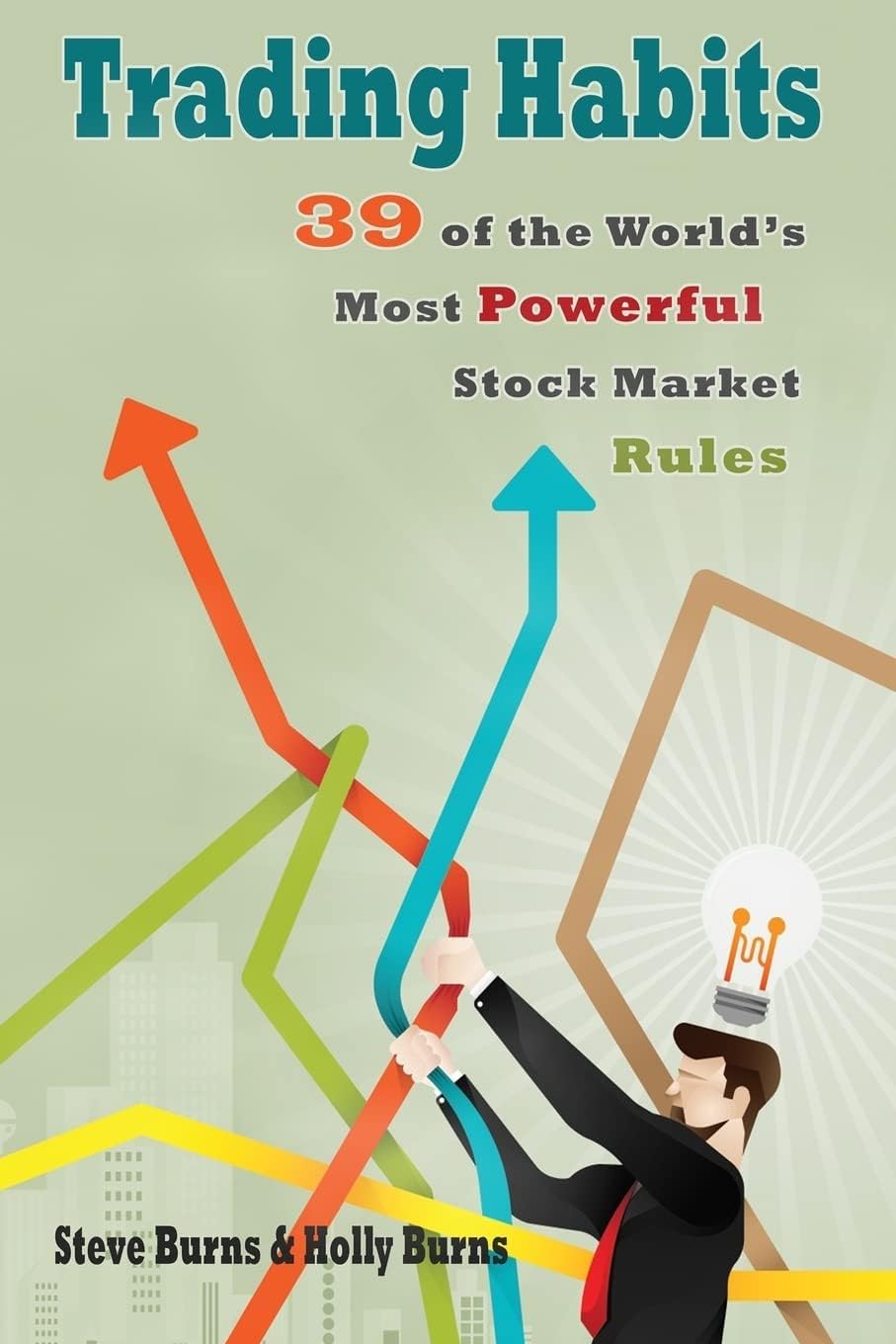
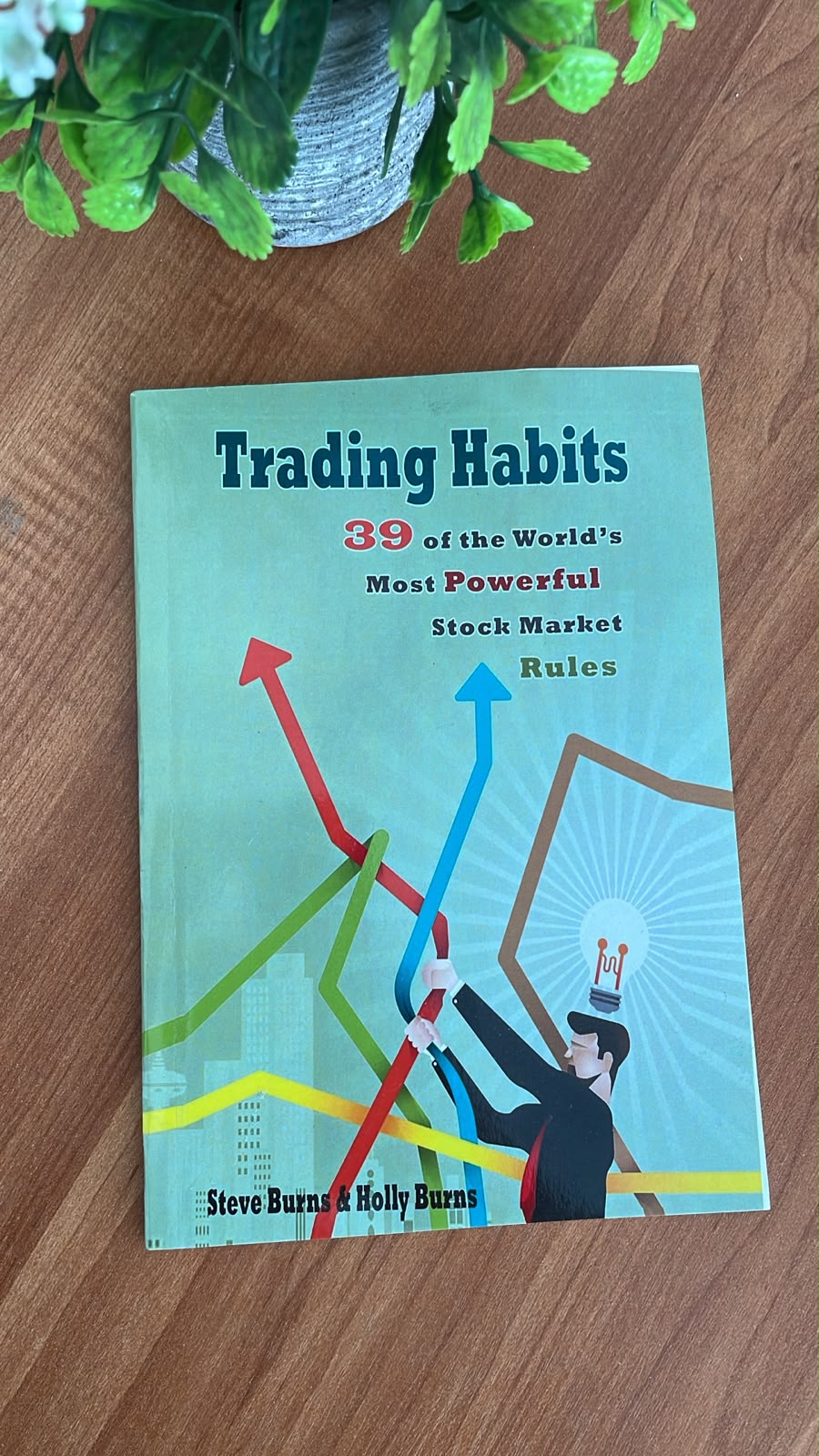






Trading Habits: 39 of the World’s Most Powerful Stock Market Rules


රු1,400.00
3 X Rs. 466.67 or 8% Cashback with


or 3 X රු466.67 with


or up to 4 X රු350.00 with


- Trading Habits by Steve Burns and Holly Burns is a concise guide built around 39 practical stock market rules designed to help traders develop stronger discipline, better risk awareness and more consistent decision-making.Rather than promoting one specific trading strategy, the book focuses on behaviours and principles that can be applied across different trading styles.Readers are introduced to ideas involving trading psychology, following a system, controlling losses, understanding market trends and avoiding emotional decisions.The book also draws inspiration from experienced market professionals and trading principles that have been tested across different market environments.
Its short, rule-based format makes it suitable for both beginners building their first trading process and experienced traders looking for a quick refresher.
Product details:
- Full title: Trading Habits: 39 of the World’s Most Powerful Stock Market Rules
- Authors: Steve Burns and Holly Burns
- Publisher: CreateSpace Independent Publishing Platform
- Format: Paperback
- Language: English
- Pages: 62
- ISBN-13: 9781516818495
- ISBN-10: 1516818490
- Publication date: 7 August 2015
- Dimensions: Approximately 22.86 × 15.24 × 0.36 cm
- Weight: Approximately 109 g
- Categories: Trading, Investing, Personal Finance and Business
- Key themes: Trading psychology, discipline, risk management, trends and consistency
Educational note: This book discusses general trading principles and should not be treated as personalised financial or investment advice.
1 in stock
Trading Habits: 39 of the World’s Most Powerful Stock Market Rules
Trading Habits by Steve Burns and Holly Burns is a concise guide to the behaviours, rules and decision-making principles that can help traders become more disciplined in financial markets.
Rather than presenting a complicated trading system, the book focuses on 39 individual rules that traders can study and gradually turn into habits.
The central idea is simple: good trading behaviour should become consistent enough that important decisions are guided by a process rather than emotion.
Trading Habits
Trading Habits presents 39 stock market rules drawn from the experience of successful traders and established trading principles.
The book is short and direct.
Each rule focuses on an idea that can influence how traders approach risk, entries, exits, trends and emotional discipline.
This makes the book suitable for quick reading and repeated review.
Trading Is More Than Finding Entries
New traders often spend most of their time searching for the perfect entry.
They may focus heavily on indicators, chart patterns or predictions.
However, a trading process involves much more than deciding when to buy.
A trader must also consider:
- Position sizing
- Risk
- Exit rules
- Stop losses
- Market conditions
- Emotional discipline
- Trade management
- Consistency
Trading Habits encourages readers to think about the entire process.
Build Rules Before Emotions Take Over
Markets can move quickly.
When real money is involved, fear and excitement can influence decisions.
A trader without clear rules may change strategy in the middle of a trade.
They may hold a losing position longer than planned.
They may exit a profitable trade too early.
They may also increase risk after becoming overconfident.
A rules-based approach creates structure before those emotions appear.
Turn Good Rules into Habits
One of the larger ideas behind Trading Habits is that useful behaviour should eventually become automatic.
At first, a trader may need to remind themselves constantly to follow a stop loss.
Over time, respecting risk can become part of the normal process.
The same applies to preparation.
Reviewing trades, planning entries and controlling position size can gradually become habits.
Consistency becomes easier when good behaviour no longer requires a fresh decision every time.
Trading Psychology Matters
Markets test psychology constantly.
Prices move against expectations.
Trades fail.
Opportunities disappear.
Profitable positions reverse.
These experiences can create frustration.
Trading Habits reminds readers that emotional control is therefore not separate from trading strategy.
It is part of trading.
A technically good strategy may still perform poorly if the trader repeatedly breaks its rules.
Avoid Trading to Prove You Are Right
A common psychological trap is becoming emotionally attached to a prediction.
A trader may decide that a stock must rise.
When the market moves in the opposite direction, they continue holding because selling would mean admitting they were wrong.
This can turn a manageable loss into a much larger one.
A stronger mindset separates ego from the trade.
The market does not need to confirm anyone’s opinion.
The objective is to manage decisions according to the trading plan.
Control Losses
Risk management is one of the most important themes for traders.
No trading method wins every time.
Losses are part of market participation.
The important question is whether individual losses remain small enough for the overall trading system to survive.
Traders should therefore think carefully about how much capital they are willing to risk on each position.
Know the Risk Before Entering
A disciplined trader should understand the potential downside before entering a trade.
Useful questions include:
- Where is my exit if this trade fails?
- How much money am I risking?
- Is the potential reward worth the risk?
- Does this trade fit my system?
- Am I taking too large a position?
Answering these questions before entering can reduce emotional decision-making later.
Position Size Matters
A good setup can still become dangerous when the position is too large.
Large positions increase emotional pressure.
Small price movements may feel much more significant.
The trader may then abandon the original plan.
Appropriate position sizing allows traders to stay within predefined risk limits.
It also helps prevent one bad trade from causing disproportionate damage.
Follow a Trading System
Trading Habits encourages readers to operate through a consistent process.
A trading system may define:
- Markets to trade
- Entry conditions
- Exit conditions
- Risk per trade
- Position size
- Trend criteria
- Timeframes
- Trade-management rules
The exact system can differ between traders.
What matters is that the rules are clear enough to be followed and evaluated.
Avoid Constant Strategy Switching
Traders sometimes abandon a strategy after a short losing period.
They switch to another system.
Then they abandon that one as well.
Constant switching makes it difficult to determine whether any approach genuinely has an edge.
A trading method should be evaluated with enough data and realistic expectations.
This does not mean following a poor system forever.
It means making changes based on evidence rather than temporary frustration.
Respect Market Trends
Trend following appears frequently in discussions of disciplined trading.
Markets may move upward, downward or sideways.
Different strategies can perform differently depending on those conditions.
Traders should understand the environment instead of assuming every setup works equally well everywhere.
Recognising market direction can help traders align strategies with broader price behaviour.
Do Not Fight the Market
A trader may strongly believe that a market is overvalued or undervalued.
That belief does not guarantee prices will reverse immediately.
Markets can continue moving much longer than expected.
Trading Habits encourages a more flexible approach.
Instead of demanding that the market agree with a prediction, traders can observe what price is actually doing.
Let Profits Develop
Many traders struggle with profitable positions because they fear losing the gain.
They may close a winning trade quickly while allowing losing trades more room.
This creates an unhealthy relationship between risk and reward.
A good trading process defines how profitable trades will be managed.
Some traders use trailing stops.
Others use targets or trend-based exits.
The specific method matters less than having a consistent approach.
Cut Losing Trades According to Plan
Accepting a loss can be emotionally difficult.
However, losses are unavoidable in trading.
A stop-loss rule provides a predefined point at which the original trade idea is considered invalid.
Following that rule prevents a trader from continually moving the exit simply because they hope the market will reverse.
Risk control becomes stronger when losses are accepted as part of the system.
Avoid Revenge Trading
A losing trade can create frustration.
The trader may feel an immediate need to make the money back.
This can lead to larger positions, lower-quality setups or impulsive trades.
Revenge trading changes the objective.
Instead of following the strategy, the trader begins trading against their own emotions.
A disciplined response may be to pause.
Review the trade.
Then wait for the next valid setup.
Avoid Overtrading
More trades do not automatically mean more profit.
Every trade involves risk and often transaction costs.
Taking low-quality setups simply because the market is open can reduce performance.
Trading Habits encourages patience.
A trader should be willing to wait when conditions do not match the system.
Sometimes doing nothing is a valid trading decision.
Keep a Trading Journal
A trading journal can help turn experience into useful information.
Useful details to record include:
- Entry
- Exit
- Position size
- Reason for the trade
- Risk
- Result
- Market condition
- Whether rules were followed
- Emotional state
Over time, patterns may become visible.
The trader may discover which setups perform best and which mistakes repeat most often.
Review Behaviour, Not Only Profit
A profitable trade is not always a good trade.
Someone can break every rule and still make money because the market happened to move in their favour.
A losing trade is not automatically a bad trade either.
A trader may follow the system perfectly and still experience a normal loss.
Performance reviews should therefore examine process as well as money.
Ask:
Did I follow my rules?
That question helps separate skill from luck.
Learn from Successful Traders
Trading Habits references lessons associated with experienced market participants.
The purpose is not to copy every successful trader.
Different traders use different approaches.
Some follow trends.
Others trade shorter-term opportunities.
The useful lesson is to study how experienced traders think about risk, discipline and consistency.
Readers can then decide which principles fit their own approach.
Develop Your Own Process
No book can create one perfect system for every trader.
Markets differ.
Timeframes differ.
Risk tolerance differs.
Available capital differs.
Personal temperament also differs.
Trading Habits is therefore most useful when readers convert the principles into rules that match their own strategy.
Consistency Over Excitement
Trading can appear exciting from the outside.
Successful trading behaviour is often much less dramatic.
It may involve waiting.
Following rules.
Taking small losses.
Reviewing data.
Repeating the same process.
That consistency can feel boring.
However, boring behaviour may be more sustainable than constant excitement.
Accept Uncertainty
Every trade contains uncertainty.
No indicator can guarantee the next price movement.
No analyst can know every future event.
A trader therefore needs a process that works despite uncertainty.
Risk management is essential because predictions can be wrong.
This mindset can reduce the need to feel certain before taking action.
Protect Trading Capital
Capital is the trader’s working resource.
Without capital, future opportunities cannot be taken.
This makes capital preservation an important priority.
The goal should not only be making money.
It should also include remaining financially capable of participating after inevitable losing periods.
Large uncontrolled losses can make recovery extremely difficult.
Discipline During Winning Periods
Discipline is important after losses.
It is equally important after success.
A series of winning trades can create overconfidence.
The trader may begin increasing position sizes or ignoring normal entry rules.
Winning does not remove risk.
The same process that protected capital before the winning streak should continue afterward.
Use Checklists
A checklist can help make trading decisions more consistent.
Before entering, ask:
- Does this setup match my system?
- What is the market trend?
- Where is my stop?
- How much am I risking?
- What is my position size?
- What is the exit plan?
- Am I trading because of a valid setup or emotion?
A short checklist can prevent avoidable mistakes.
Who Should Read Trading Habits?
Trading Habits may appeal to:
- Beginning stock traders
- Swing traders
- Trend followers
- Active market participants
- Investors learning trading psychology
- Traders struggling with discipline
- Readers building a trading system
- People interested in risk management
- Readers studying market behaviour
Its concise structure also makes it useful as a refresher.
About Steve Burns and Holly Burns
Steve Burns is known for writing and teaching about stock-market trading, trend following and trading psychology.
Holly Burns has collaborated with him on several books aimed at making trading concepts accessible to general readers.
Trading Habits brings their educational approach into a short collection of practical trading rules.
Product Details
Product title: Trading Habits: 39 of the World’s Most Powerful Stock Market Rules
Authors: Steve Burns and Holly Burns
Publisher: CreateSpace Independent Publishing Platform
Format: Paperback
Language: English
Page count: 62 pages
ISBN-13: 9781516818495
ISBN-10: 1516818490
Publication date: 7 August 2015
Dimensions: Approximately 228.6 × 152.4 × 3.6 mm
Weight: Approximately 109 grams
Categories: Trading, Investing, Personal Finance and Business
Key themes: Trading psychology, discipline, risk management, trends and consistency
Why Choose Trading Habits?
Trading Habits presents its ideas in a compact 39-rule format that makes important trading principles easy to revisit.
Rather than promising a guaranteed method for making money, the book focuses on disciplined behaviour, managing risk and building a repeatable process.
This makes it particularly useful for traders who understand technical concepts but struggle with consistency or emotional decisions.
For beginners, it provides a straightforward introduction to the habits behind structured trading.
For experienced traders, it can function as a quick reminder of the principles that are easiest to forget during volatile markets.
Explore our complete business, finance and investing books collection to discover more titles about stock markets, investing, trading psychology and risk management.
Educational note: Trading and investing involve risk, including possible loss of capital. This book and description are educational and do not provide personalised financial advice.

Learn more about
Trading Habits by Steve Burns and Holly Burns
.
Be the first to review “Trading Habits: 39 of the World’s Most Powerful Stock Market Rules”
Related products

Out of stock
රු1,500.00
3 X Rs. 500.00 or 8% Cashback with
or 3 X රු500.00 with
or up to 4 X රු375.00 with

Out of stock
Business
රු2,700.00
3 X Rs. 900.00 or 8% Cashback with
or 3 X රු900.00 with
or up to 4 X රු675.00 with

Out of stock
රු1,990.00
3 X Rs. 663.33 or 8% Cashback with
or 3 X රු663.33 with
or up to 4 X රු497.50 with

Business, Finance & Economics
රු1,750.00
3 X Rs. 583.33 or 8% Cashback with
or 3 X රු583.33 with
or up to 4 X රු437.50 with
-12%

Out of stock
Biography
Original price was: රු2,600.00.රු2,300.00Current price is: රු2,300.00.
3 X Rs. 766.67 or 8% Cashback with
or 3 X රු766.67 with
or up to 4 X රු575.00 with

Out of stock
රු2,500.00
3 X Rs. 833.33 or 8% Cashback with
or 3 X රු833.33 with
or up to 4 X රු625.00 with
Business
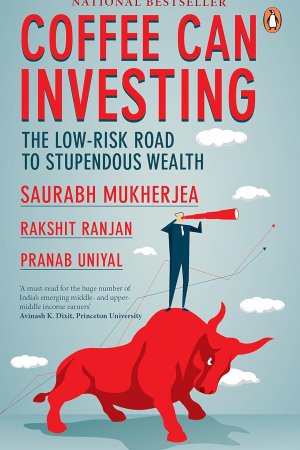
Coffee Can Investing by Sanjay Bakshi – A Simple, High-Reward Strategy for Building Long-Term Wealth
රු1,750.00
3 X Rs. 583.33 or 8% Cashback with
or 3 X රු583.33 with
or up to 4 X රු437.50 with

Out of stock
රු1,950.00
3 X Rs. 650.00 or 8% Cashback with
or 3 X රු650.00 with
or up to 4 X රු487.50 with
Reviews
There are no reviews yet.