
No products in the cart.
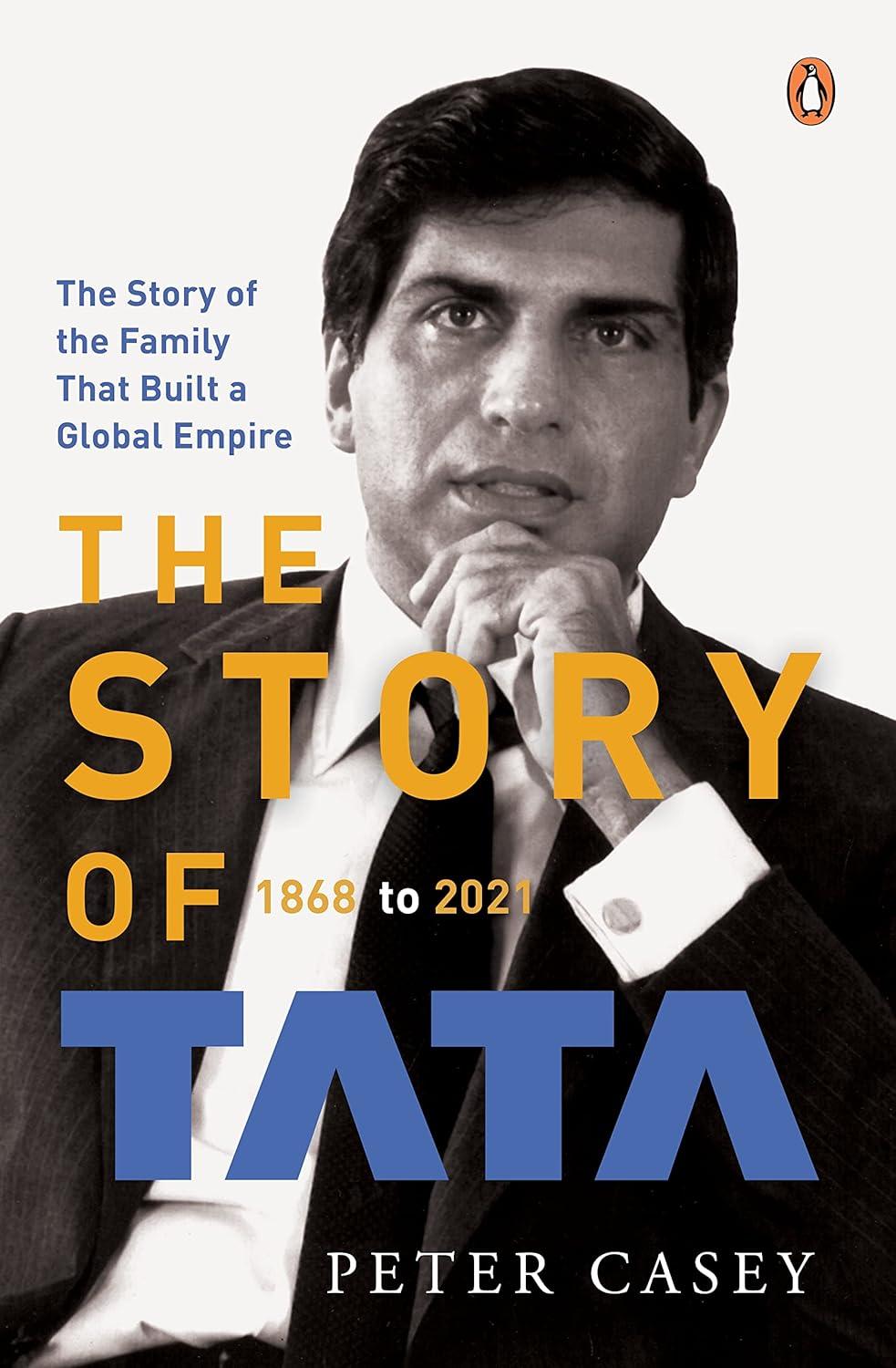
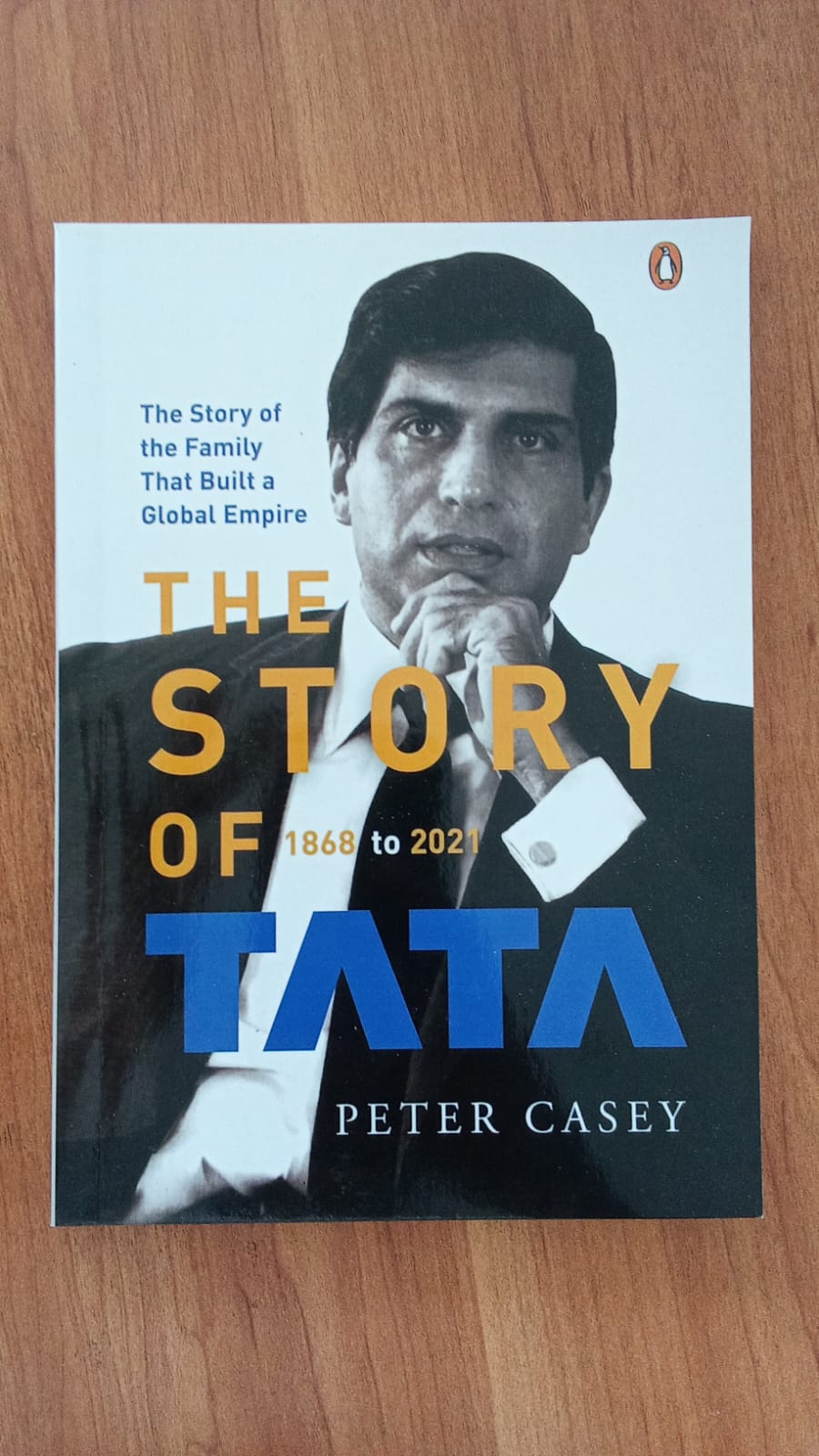
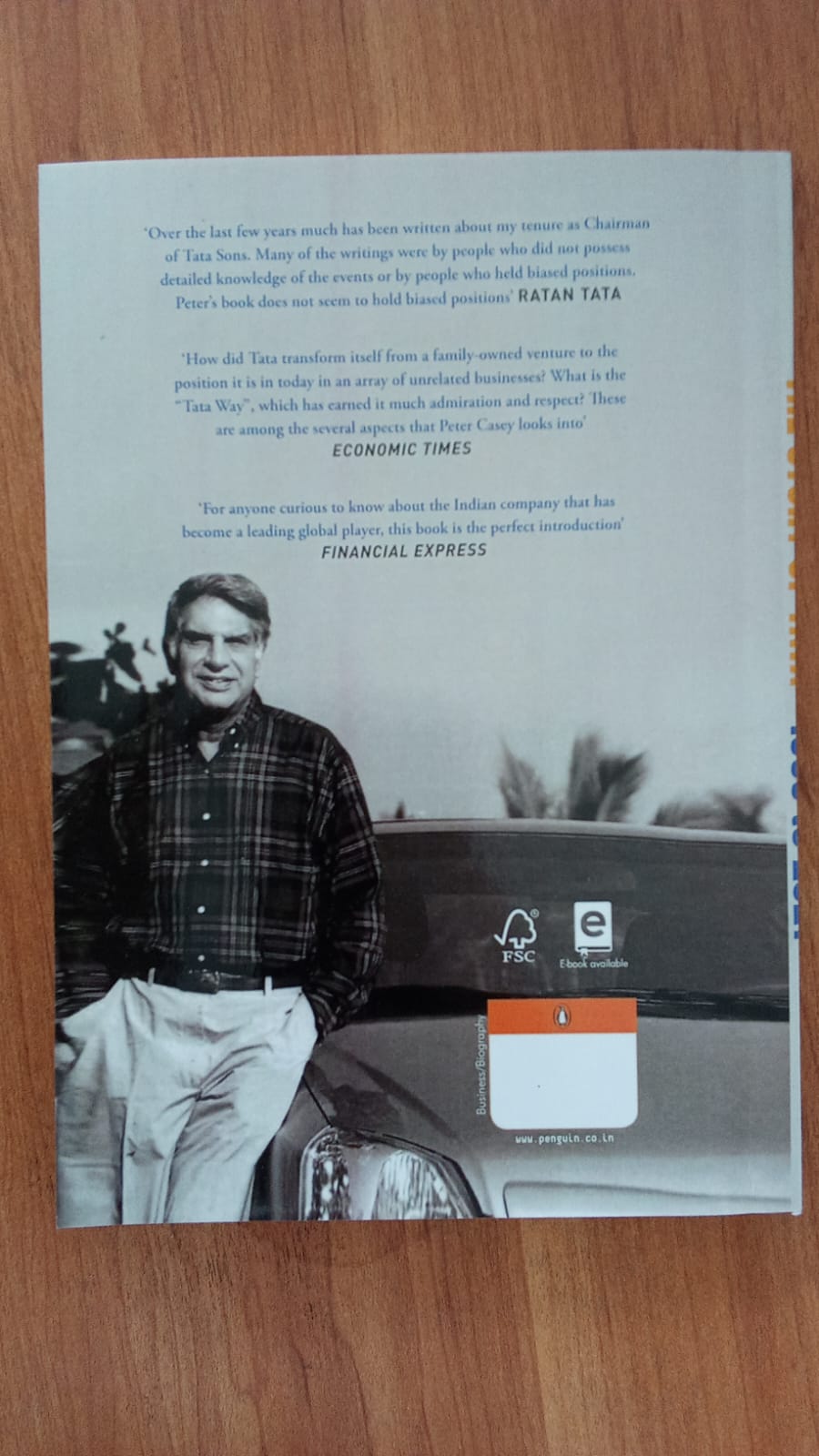


Story Of The Tata by Peter Casey


රු1,500.00
3 X Rs. 500.00 or 8% Cashback with


or 3 X රු500.00 with


or up to 4 X රු375.00 with


The Story of Tata by Peter Casey tells the inspiring journey of the Tata Group, one of India’s most respected and influential business empires. Starting with Jamsetji Tata, the book traces the company’s growth across industries such as steel, automobiles, IT, and hospitality.
It highlights how strong values, ethical leadership, and long-term thinking helped Tata become a global brand while maintaining a commitment to social responsibility.
4 in stock
The Story of Tata by Peter Casey
The Story of Tata by Peter Casey is a fascinating business biography about the rise of one of India’s most respected and influential corporate groups.
Beginning in 1868 with Jamsetji Tata, the book follows the growth of the Tata Group from a mercantile business into a global organization operating across steel, automobiles, hotels, technology, energy, and many other industries.
It also explores the values that helped make Tata different from many traditional corporations.
About The Story of Tata
The Story of Tata traces more than 150 years of business history.
The story begins with Jamsetji Tata.
His ideas went far beyond simply creating profitable companies.
He believed business could also contribute to national development.
That philosophy influenced generations of Tata leaders.
Over time, Tata expanded into industries that helped shape modern India.
Jamsetji Tata and the Beginning
Jamsetji Tata founded what would become the Tata Group in 1868.
He was ambitious.
But his ambition was not limited to personal wealth.
He wanted to build institutions and industries that could support India’s future.
His plans included steel production, hydroelectric power, world-class education, and modern hospitality.
Many of these ideas were far ahead of their time.
7 Powerful Lessons from The Story of Tata
1. Build for the Long Term
One of the strongest lessons in The Story of Tata is the value of long-term thinking.
The Tata Group often invested in industries that required patience.
Some projects took years before producing significant results.
This approach helped create businesses that lasted across generations.
2. Business Can Serve Society
Tata became known for combining business growth with philanthropy.
The group’s charitable trusts have played a major role in education, healthcare, science, and social development.
Profit was important.
But the organization also developed a reputation for contributing to society.
3. Values Can Strengthen a Brand
Trust became one of Tata’s greatest assets.
Customers, employees, and investors often connected the brand with reliability and ethical conduct.
That reputation did not appear overnight.
It developed through decades of consistent behaviour.
This demonstrates how values can become part of a company’s competitive strength.
4. Leadership Changes, Principles Remain
Different leaders shaped Tata in different ways.
Sir Dorabji Tata, J.R.D. Tata, Ratan Tata, and others each brought their own management style.
But the broader identity of the group remained connected to ideas such as trust, responsibility, and long-term growth.
Strong organizations can evolve while still protecting core principles.
5. Professional Management Matters
Tata grew from a family-owned enterprise into one of the world’s most professionally managed business groups.
That transition required systems, governance, and experienced leaders.
The book shows how organizations must change their management structures as they become larger and more complex.
6. Global Expansion Requires Courage
Tata did not remain focused only on India.
Over time, the group expanded internationally.
Acquisitions and investments brought Tata into global markets.
That expansion created opportunities.
It also introduced significant financial and management challenges.
The story shows that global growth requires both ambition and discipline.
7. Governance Can Become a Major Risk
The Tata–Mistry conflict forms an important part of the book.
Cyrus Mistry’s removal as chairman of Tata Sons created one of the biggest corporate governance disputes in Indian business.
The controversy revealed that even respected organizations can face serious internal conflicts.
Governance, leadership transitions, and board relationships matter enormously.
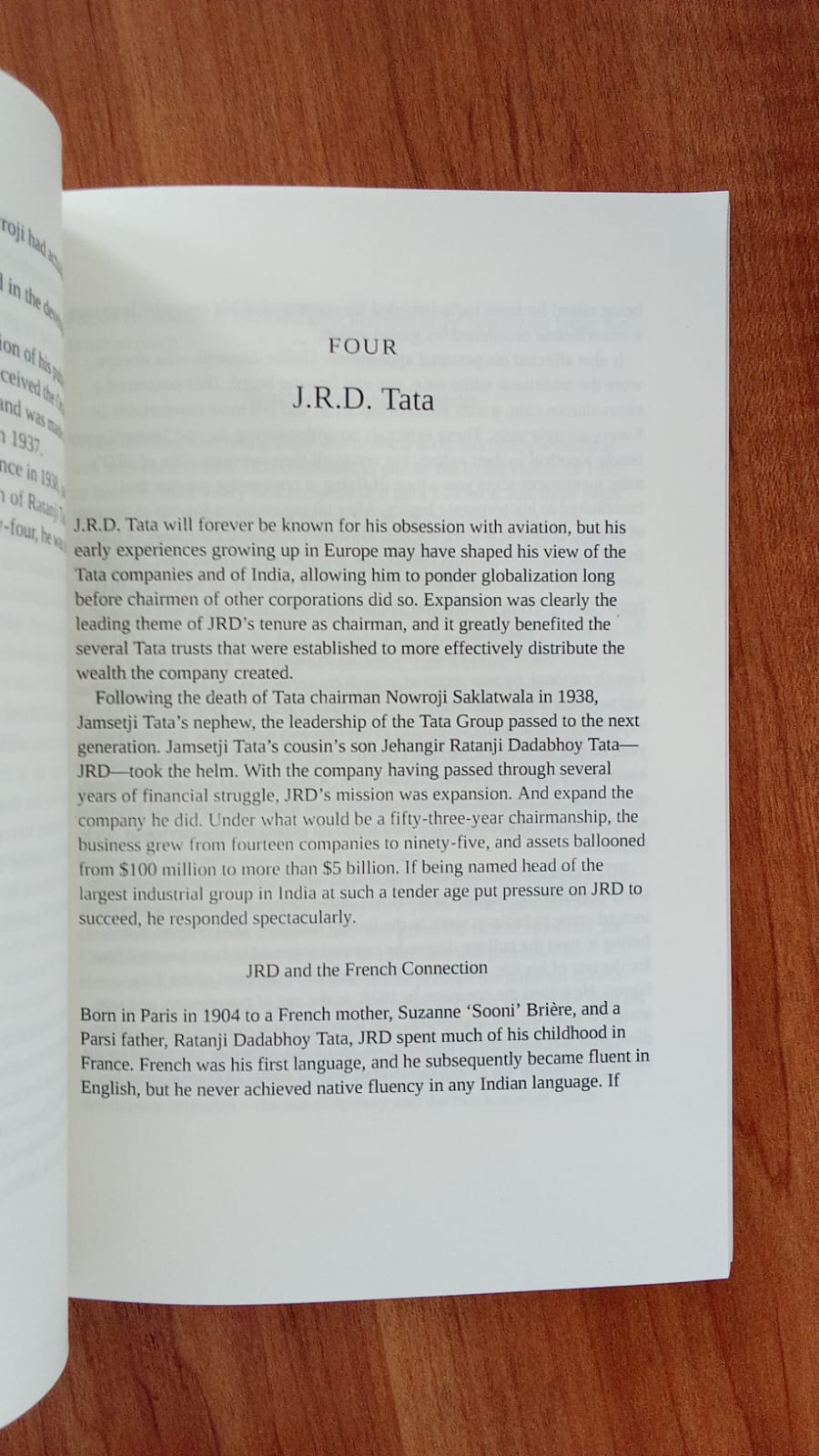
J.R.D. Tata and Modernization
J.R.D. Tata became one of the group’s most influential leaders.
Under his leadership, Tata expanded across many industries.
He became associated with professionalism, innovation, and high standards.
His leadership period also helped strengthen Tata’s reputation as a respected corporate institution.
Ratan Tata and Global Expansion
Ratan Tata led the group through another major transformation.
India’s economy was becoming more open.
Competition was increasing.
Tata responded by expanding internationally.
Major acquisitions and new business initiatives increased the group’s global presence.
Ratan Tata also became closely associated with the values and public image of the organization.
Tata and Philanthropy
One of the most distinctive features of the Tata Group is the role of charitable trusts.
A significant portion of Tata Sons is owned by philanthropic trusts.
These organizations support education, healthcare, scientific research, social development, and other causes.
This structure has influenced the way the group approaches business.
It also helps explain why Tata is often discussed as more than just a collection of companies.
The Tata Way
The Story of Tata explores what is sometimes described as the “Tata Way.”
This includes long-term thinking.
It includes ethical conduct.
It includes social responsibility.
It also includes building companies that can survive leadership changes.
These ideas have contributed to the group’s reputation across India and internationally.
Business Growth Across Industries
Tata operates across a wide range of sectors.
These include steel, automobiles, information technology, hospitality, energy, consumer products, financial services, and more.
Managing such a diverse group creates unique challenges.
Each business operates differently.
But the Tata identity connects them.
The book helps readers understand how this unusual corporate structure developed.
The Tata-Mistry Conflict
The removal of Cyrus Mistry as chairman of Tata Sons became a major corporate controversy.
It raised questions about governance, board authority, leadership expectations, and shareholder influence.
Peter Casey examines this conflict as part of the broader Tata story.
The episode provides an important reminder.
Even organizations with strong reputations can face internal disagreements.
Corporate Reputation
Reputation takes years to build.
It can also be damaged quickly.
Tata’s history demonstrates how trust can become a powerful business asset.
Employees may prefer working for a company they respect.
Customers may feel more comfortable buying from a trusted brand.
Investors may also value consistent governance.
The book shows how reputation can influence long-term business success.
Who Should Read This Book?
The Story of Tata is ideal for readers interested in business history, entrepreneurship, leadership, corporate governance, and Indian industry.
Business students may find it especially useful.
Entrepreneurs can learn from Tata’s long-term approach.
Managers can study the group’s leadership transitions and organizational culture.
Readers interested in Ratan Tata and the history of Indian business may also find the book valuable.
About Peter Casey
Peter Casey is an entrepreneur, writer, and business commentator.
He is the founder and executive chairman of Claddagh Resources, an international recruitment and executive-search company.
He has also appeared as an investor on the Irish television programme Dragons’ Den.
For this book, Casey interviewed people connected with the Tata businesses and examined the group’s history and leadership challenges.
Readers can learn more through the official Penguin Random House India page for The Story of Tata.
Product Details
Title: The Story of Tata
Subtitle: 1868 to 2021
Author: Peter Casey
Genre: Business / Corporate History / Biography
Language: English
Publisher: India Viking / Penguin Random House India
Publication: August 2021
ISBN-13: 9780670090228
Format: Hardback
Publisher-listed Length: 228 pages
Some bibliographic databases list slightly different page counts for particular printings.
Always use the ISBN and page count printed on your physical copy when entering final WooCommerce specifications.
Explore More Business Books
The Story of Tata is more than a history of one corporation.
It is a story about leadership, values, business growth, philanthropy, governance, and long-term thinking.
From Jamsetji Tata to J.R.D. Tata and Ratan Tata, different leaders helped shape one of India’s most recognizable business institutions.
The book also shows that success brings new challenges.
Growth requires professional management.
Global expansion creates risk.
Leadership transitions require strong governance.
Readers interested in similar titles can explore Business, Finance & Economics Books at Bargain Books.
For readers interested in Indian business history, corporate leadership, and the story behind one of the world’s best-known business groups, The Story of Tata is a valuable read.
Be the first to review “Story Of The Tata by Peter Casey”
Related products
Business & Management
රු1,600.00
3 X Rs. 533.33 or 8% Cashback with
or 3 X රු533.33 with
or up to 4 X රු400.00 with

Out of stock
රු1,750.00
3 X Rs. 583.33 or 8% Cashback with
or 3 X රු583.33 with
or up to 4 X රු437.50 with
Business
Coffee Can Investing by Sanjay Bakshi – A Simple, High-Reward Strategy for Building Long-Term Wealth
රු1,750.00
3 X Rs. 583.33 or 8% Cashback with
or 3 X රු583.33 with
or up to 4 X රු437.50 with
-13%

Out of stock
Original price was: රු4,000.00.රු3,500.00Current price is: රු3,500.00.
3 X Rs. 1,166.67 or 8% Cashback with
or 3 X රු1,166.67 with
or up to 4 X රු875.00 with

Out of stock
රු1,500.00
3 X Rs. 500.00 or 8% Cashback with
or 3 X රු500.00 with
or up to 4 X රු375.00 with

Out of stock
රු1,950.00
3 X Rs. 650.00 or 8% Cashback with
or 3 X රු650.00 with
or up to 4 X රු487.50 with
-20%

Out of stock
Original price was: රු2,500.00.රු2,000.00Current price is: රු2,000.00.
3 X Rs. 666.67 or 8% Cashback with
or 3 X රු666.67 with
or up to 4 X රු500.00 with

Out of stock
රු1,990.00
3 X Rs. 663.33 or 8% Cashback with
or 3 X රු663.33 with
or up to 4 X රු497.50 with
Reviews
There are no reviews yet.