
No products in the cart.
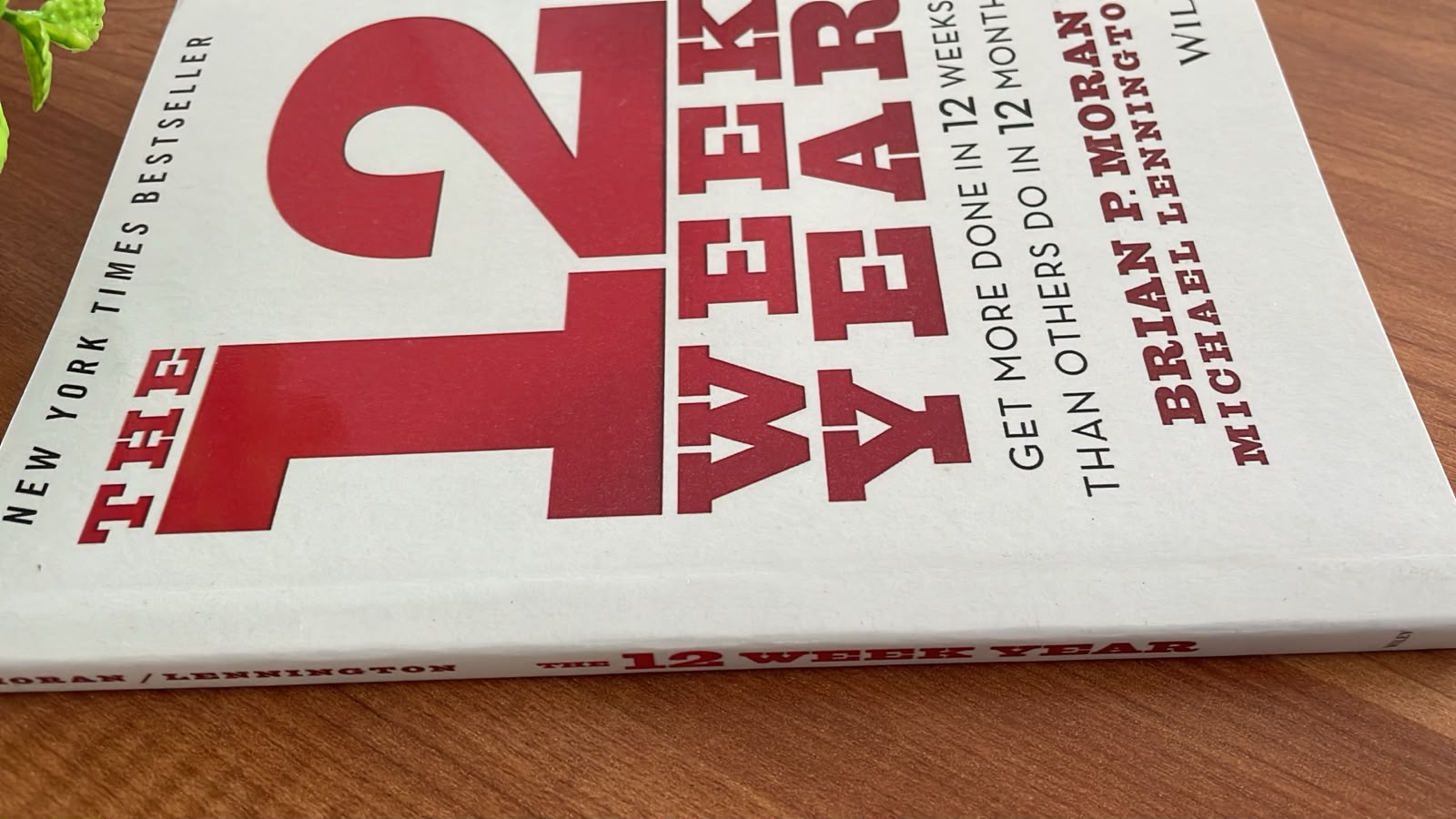



The 12 Week Year by Brian P. Moran & Michael Lennington


රු1,750.00
3 X Rs. 583.33 or 8% Cashback with


or 3 X රු583.33 with


or up to 4 X රු437.50 with


Most organizations and individuals work in the context of annual goals and plans; a 12-month execution cycle. Instead, The 12 Week Year avoids the pitfalls and low productivity of annualized thinking. This book redefines your “year” to be 12 weeks long. In 12 weeks, there just isn’t enough time to get complacent, and urgency increases and intensifies. The 12 Week Year creates focus and clarity on what matters most and a sense of urgency to do it now. In the end more of the important stuff gets done and the impact on results is profound.
- Explains how to leverage the power of a 12-week year to drive improved results in any area of your life
- Offers a how-to book for both individuals and organizations seeking to improve their execution effectiveness
- Authors are leading experts on execution and implementation
Turn your organization’s idea of a year on its head, and speed your journey to success.
1 in stock
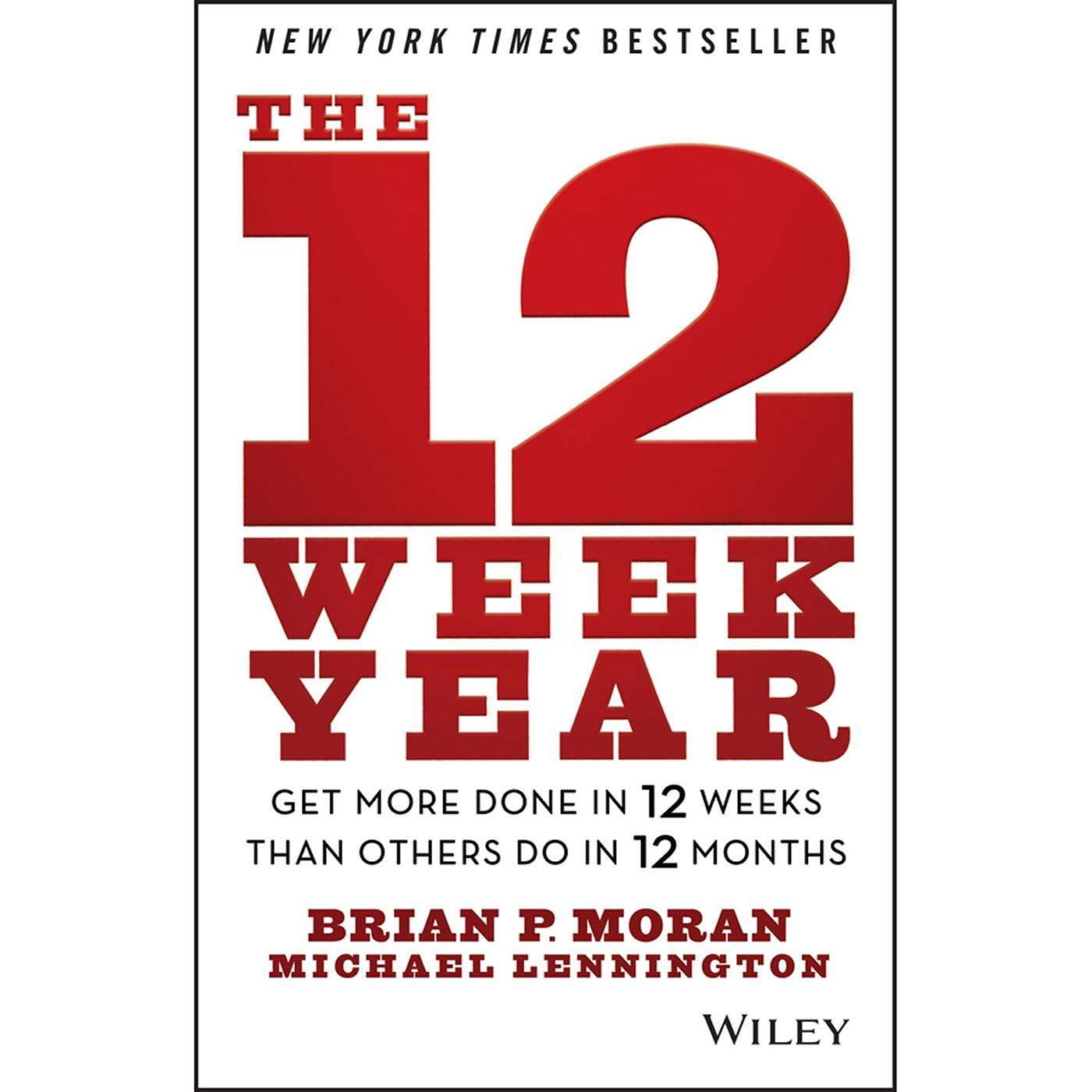
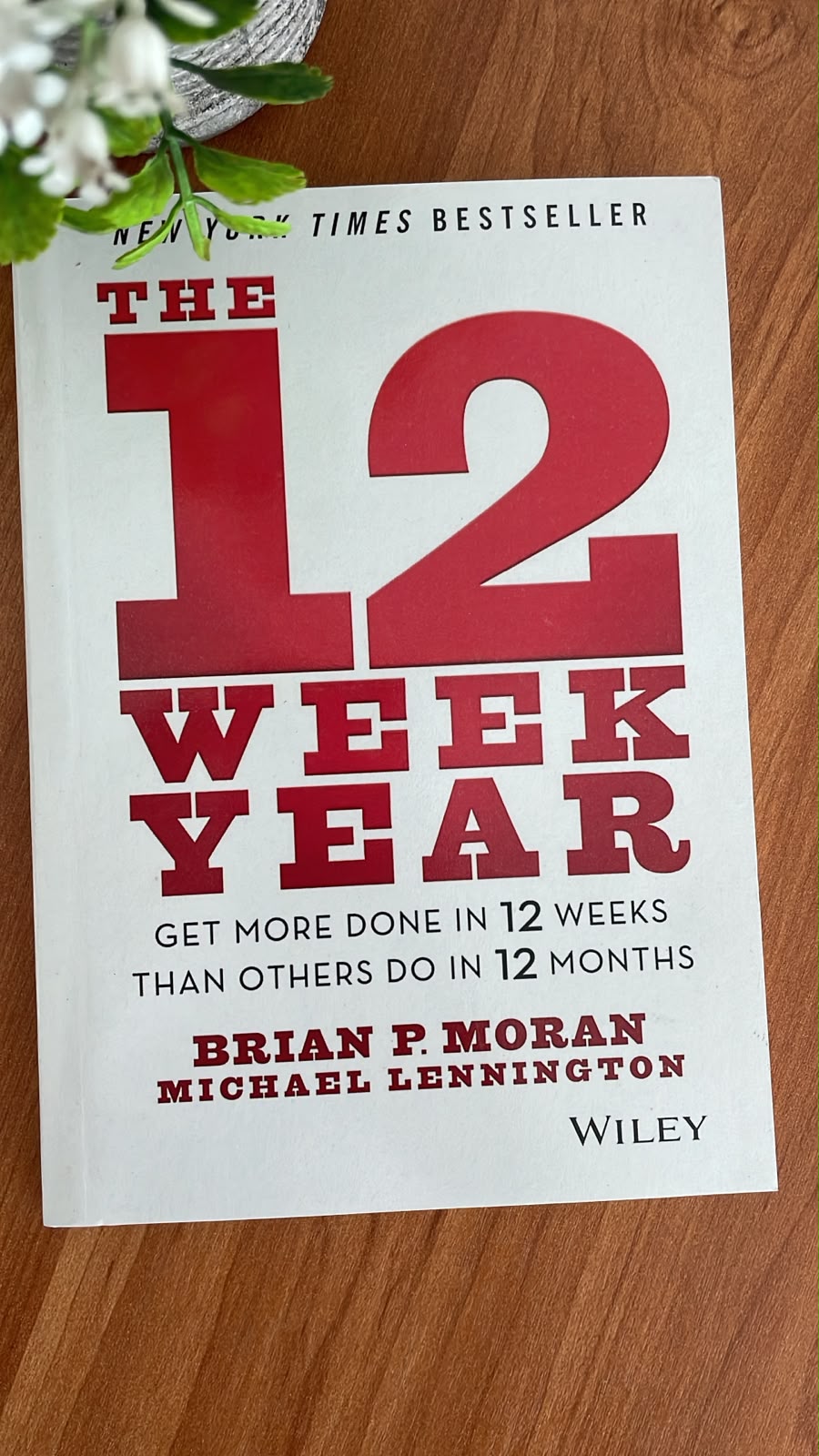
The 12 Week Year by Brian P. Moran & Michael Lennington
12 Week Year by Brian Moran and Michael Lennington is a practical productivity and goal-execution guide designed to help individuals and organisations accomplish more by dramatically shortening the traditional planning cycle.
Instead of treating a year as twelve months, the authors propose treating 12 weeks as a complete year.
The shorter timeframe creates greater urgency, clearer priorities and more frequent opportunities to review performance.
12 Week Year by Brian Moran
12 Week Year by Brian Moran challenges traditional annual planning.
Most people begin a year with ambitious goals but often feel little urgency during the first few months. December seems far away, so important actions can easily be postponed.
The 12 Week Year changes that mindset.
When the entire planning cycle lasts only twelve weeks, every week becomes more important.
There is less room for procrastination and more reason to focus on the actions that directly influence results.
Why 12 Weeks Instead of 12 Months?
Annual goals can create the illusion of having plenty of time.
A person may think:
“I have the whole year to do this.”
That mindset can lead to delays.
January becomes February.
February becomes March.
By the middle of the year, the original goal may already be behind schedule.
The 12 Week Year creates a much shorter deadline.
Twelve weeks is long enough to make meaningful progress but short enough to maintain urgency.
Create a Clear Vision
Before planning individual tasks, the system encourages readers to become clear about what they actually want.
A strong vision helps answer an important question:
Why does this goal matter?
Goals become easier to prioritise when they are connected to something meaningful.
That might include:
- Growing a business
- Increasing sales
- Improving professional performance
- Developing a new skill
- Completing an important project
- Strengthening personal finances
- Improving productivity
- Making meaningful lifestyle changes
The clearer the desired result becomes, the easier it is to decide which activities deserve attention.
Set 12-Week Goals
12 Week Year by Brian Moran encourages readers to choose a limited number of meaningful goals for each cycle.
Trying to improve everything at once can reduce focus.
A stronger approach is to decide which outcomes matter most during the next twelve weeks.
A useful goal should be:
- Clear
- Specific
- Measurable
- Important
- Realistic enough to act on
- Challenging enough to require focused effort
For example, “grow the business” is vague.
“Increase monthly website sales by 20% during the next 12 weeks” provides a clearer target.
The second version makes planning easier because progress can be measured.
Turn Goals into Weekly Actions
A goal alone does not produce results.
Execution does.
The book encourages readers to identify the specific actions that must happen each week.
For example, a business goal might require:
- Contacting new prospects
- Publishing marketing content
- Following up with customers
- Improving a website
- Reviewing advertising performance
- Training employees
- Testing new offers
The 12-week goal provides direction.
Weekly actions create progress.
Focus on What You Can Control
Results are not always completely controllable.
A salesperson cannot force a customer to buy.
A business cannot guarantee exactly how many people will visit its website tomorrow.
However, people can usually control important actions.
A salesperson can control how many qualified prospects they contact.
A business can control whether campaigns are launched, tested and reviewed.
This distinction is important.
12 Week Year by Brian Moran encourages readers to focus heavily on executing the actions most likely to create the desired result.
Measure Execution
One of the strongest ideas in the system is that performance should be measured regularly.
Waiting until the end of twelve weeks to discover that very little was completed defeats the purpose.
Readers are encouraged to track whether planned weekly actions actually happened.
For example:
- Planned customer calls: 20
- Completed customer calls: 18
- Planned sales follow-ups: 15
- Completed follow-ups: 13
- Planned training sessions: 2
- Completed sessions: 2
This provides immediate information.
If execution falls behind, adjustments can be made before the cycle ends.
Build Weekly Accountability
Accountability plays an important role in the 12 Week Year system.
Goals are easier to ignore when nobody reviews progress.
Regular accountability encourages readers to examine:
- What was planned?
- What was completed?
- What was missed?
- Why was it missed?
- What needs to happen next week?
This process should focus on improvement rather than punishment.
The objective is to identify gaps early enough to correct them.
Plan Every Week
A 12-week goal still requires weekly planning.
At the beginning of each week, readers can identify the highest-priority actions connected to their goals.
A useful weekly plan might contain:
- Key goal-related actions
- Important appointments
- Follow-up activities
- Deadlines
- Review time
- Personal priorities
This reduces the chance that urgent but low-value activities will consume the entire week.
Protect Important Time
Important work often requires dedicated time.
Without protection, calendars can quickly become filled with meetings, messages, phone calls and unexpected requests.
The 12 Week Year encourages intentional control of time.
Readers may benefit from blocking periods for:
- Strategic work
- Sales activities
- Planning
- Learning
- Creative work
- Exercise
- Important projects
- Review sessions
The exact schedule will depend on the individual.
The principle is to ensure that important goals receive real time rather than only good intentions.
Develop a Stronger Sense of Urgency
When twelve weeks represents an entire planning year, each week carries more significance.
Week 1 is already more than eight percent of the cycle.
By Week 6, half of the available execution time has passed.
This creates a very different feeling from a twelve-month goal.
Readers cannot easily assume that there will always be more time later.
Urgency encourages action now.
Avoid Procrastination
Procrastination often grows when deadlines feel distant.
A project due in ten months can seem easy to postpone.
A major task that must be completed within the next several weeks feels more immediate.
12 Week Year by Brian Moran uses shorter cycles to reduce the psychological distance between planning and execution.
Readers still need discipline.
However, the structure makes delay easier to notice.
Review the 12-Week Cycle
At the end of each cycle, readers can review their performance.
Useful questions include:
- Which goals were achieved?
- Which goals were missed?
- Which actions produced the best results?
- Where did execution break down?
- What unexpected problems occurred?
- What should continue?
- What should change?
- What did I learn?
This review creates useful information for the next cycle.
Instead of waiting an entire year to improve the planning process, readers can make adjustments every twelve weeks.
Celebrate Progress
Constantly moving from one goal to another without acknowledging progress can make achievement feel exhausting.
The system encourages recognising completed cycles.
That does not require an expensive celebration.
It may simply mean taking time to review what improved and appreciate the work completed.
Recognising progress can help maintain motivation for the next 12-week period.
Useful for Business Owners
12 Week Year by Brian Moran can be particularly useful for entrepreneurs and business owners.
A business could use twelve-week cycles for:
- Sales targets
- Website improvements
- Marketing campaigns
- Product launches
- Cost reductions
- Inventory improvements
- Employee training
- New customer acquisition
- Operational projects
Shorter planning cycles make it easier to respond to results and adjust strategies.
Useful for Teams
The framework can also be applied across teams.
A team can establish a shared 12-week goal and define individual responsibilities.
For example:
Goal: Increase online revenue during the next 12 weeks.
Marketing may handle campaigns.
Sales may handle customer follow-ups.
Operations may improve fulfilment.
IT may improve website performance.
Each function understands how its actions contribute to the shared result.
Personal Productivity
The 12 Week Year is not limited to organisations.
Individuals can apply the framework to personal goals.
Examples include:
- Completing a professional certification
- Saving money
- Learning a new skill
- Writing a book
- Building a side business
- Improving time management
- Completing an important personal project
The same principles apply.
Choose a meaningful result, define weekly actions and measure execution.
Stop Confusing Activity with Progress
Being busy is not the same as making progress.
A person can spend an entire day answering messages and attending meetings while making almost no progress on an important goal.
12 Week Year by Brian Moran encourages readers to distinguish between activity and strategic execution.
Ask:
Which actions directly contribute to the result I want?
Those activities should receive priority.
Build Better Execution Habits
The system ultimately focuses on execution.
Knowing what to do is not always the main problem.
Many people already understand what actions would improve their results.
The challenge is performing those actions consistently.
The 12 Week Year creates a structure for converting knowledge into behaviour.
This includes planning, measurement, accountability and regular review.
Who Should Read This Book?
12 Week Year by Brian Moran may appeal to:
- Entrepreneurs
- Business owners
- Managers
- Team leaders
- Sales professionals
- Students
- Freelancers
- Project managers
- Productivity enthusiasts
- Anyone working toward ambitious goals
It is particularly useful for readers who frequently create goals but struggle with consistent execution.
About Brian P. Moran and Michael Lennington
Brian P. Moran and Michael Lennington are specialists in business execution and performance.
Wiley describes the authors as experts in execution and implementation who developed the 12 Week Year system to help individuals and organisations improve performance.
Their approach focuses less on collecting additional information and more on consistently executing the actions that matter.
Product Details
Product title: The 12 Week Year
Subtitle: Get More Done in 12 Weeks than Others Do in 12 Months
SEO product title: 12 Week Year by Brian Moran
Authors: Brian P. Moran and Michael Lennington
Publisher: John Wiley & Sons
Format: Hardcover
Edition: First Edition
Language: English
Page count: 208 pages
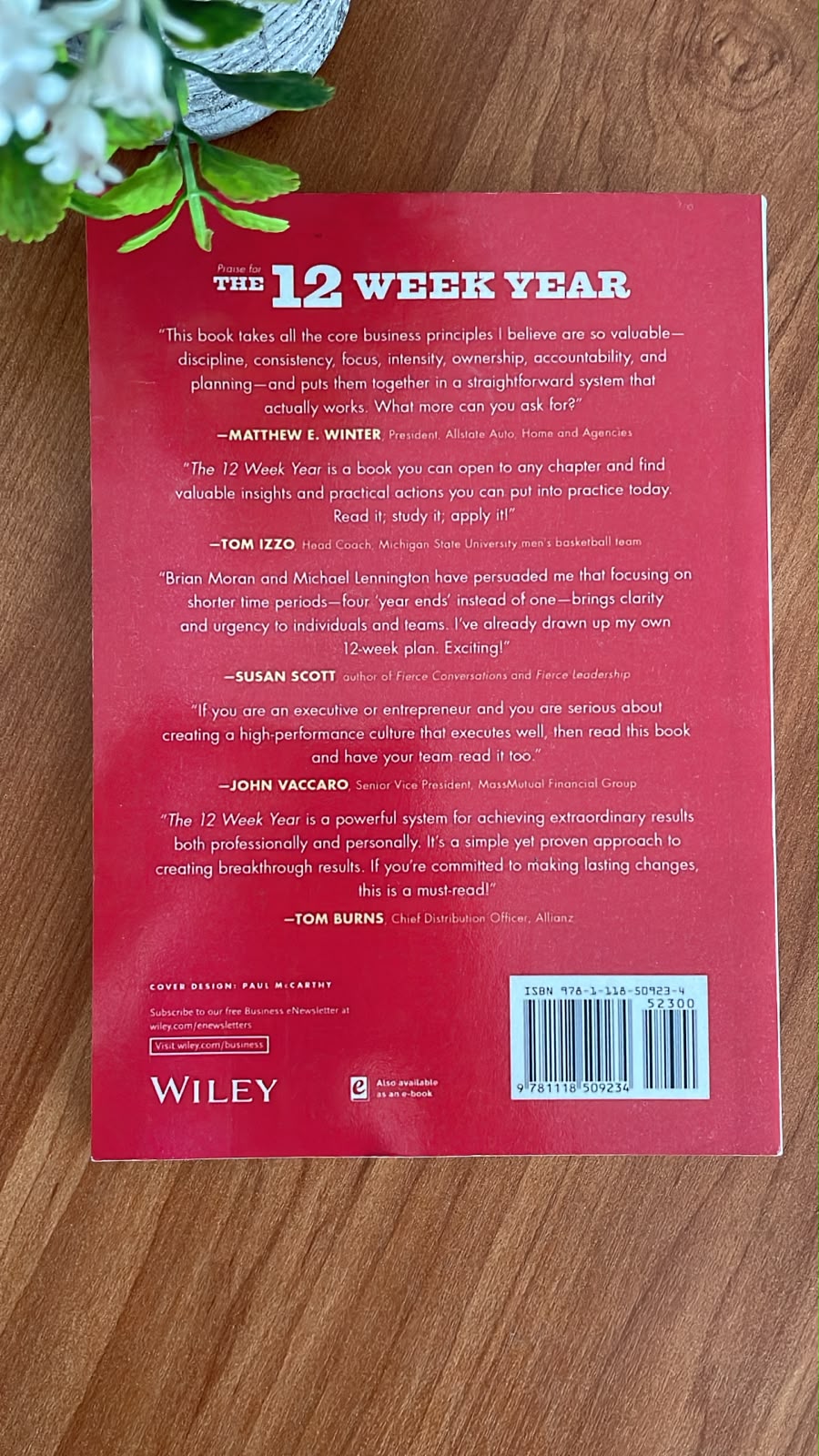
ISBN-13: 9781118509234
ISBN-10: 1118509234
Publication: May 2013
Dimensions: Approximately 218 × 145 × 23 mm
Weight: Approximately 340 grams
Categories: Productivity, Business, Goal Setting and Time Management
Key themes: Execution, focus, accountability, planning and productivity
Why Choose 12 Week Year by Brian Moran?
12 Week Year by Brian Moran offers a practical alternative to traditional annual planning.
Instead of giving yourself twelve months to achieve an important goal, the system creates focused twelve-week execution cycles that increase urgency and make progress easier to measure.
Readers learn to establish meaningful goals, translate them into weekly actions, protect important time, measure execution and regularly review performance.
For entrepreneurs, professionals, managers and anyone who struggles to turn goals into consistent action, 12 Week Year by Brian Moran is a practical addition to a productivity and business bookshelf.
Explore our complete productivity and personal development books collection to discover more titles about goal setting, habits, focus, time management and achieving meaningful results.
View the official publication details for
The 12 Week Year by Brian P. Moran and Michael Lennington on Wiley
.
Be the first to review “The 12 Week Year by Brian P. Moran & Michael Lennington”
Related products
-14%

Self-Help & Psychology
Original price was: රු2,900.00.රු2,500.00Current price is: රු2,500.00.
3 X Rs. 833.33 or 8% Cashback with
or 3 X රු833.33 with
or up to 4 X රු625.00 with

Out of stock
රු1,750.00
3 X Rs. 583.33 or 8% Cashback with
or 3 X රු583.33 with
or up to 4 X රු437.50 with

Business, Finance & Economics
රු1,750.00
3 X Rs. 583.33 or 8% Cashback with
or 3 X රු583.33 with
or up to 4 X රු437.50 with

Business
Coffee Can Investing by Sanjay Bakshi – A Simple, High-Reward Strategy for Building Long-Term Wealth
රු1,750.00
3 X Rs. 583.33 or 8% Cashback with
or 3 X රු583.33 with
or up to 4 X රු437.50 with
-17%

Out of stock
Original price was: රු2,900.00.රු2,400.00Current price is: රු2,400.00.
3 X Rs. 800.00 or 8% Cashback with
or 3 X රු800.00 with
or up to 4 X රු600.00 with
Out of stock
Self-Help & Psychology
රු1,900.00
3 X Rs. 633.33 or 8% Cashback with
or 3 X රු633.33 with
or up to 4 X රු475.00 with

Out of stock
Self-Help & Psychology
රු1,500.00
3 X Rs. 500.00 or 8% Cashback with
or 3 X රු500.00 with
or up to 4 X රු375.00 with

Out of stock
Business
රු1,300.00
3 X Rs. 433.33 or 8% Cashback with
or 3 X රු433.33 with
or up to 4 X රු325.00 with
Reviews
There are no reviews yet.