
No products in the cart.
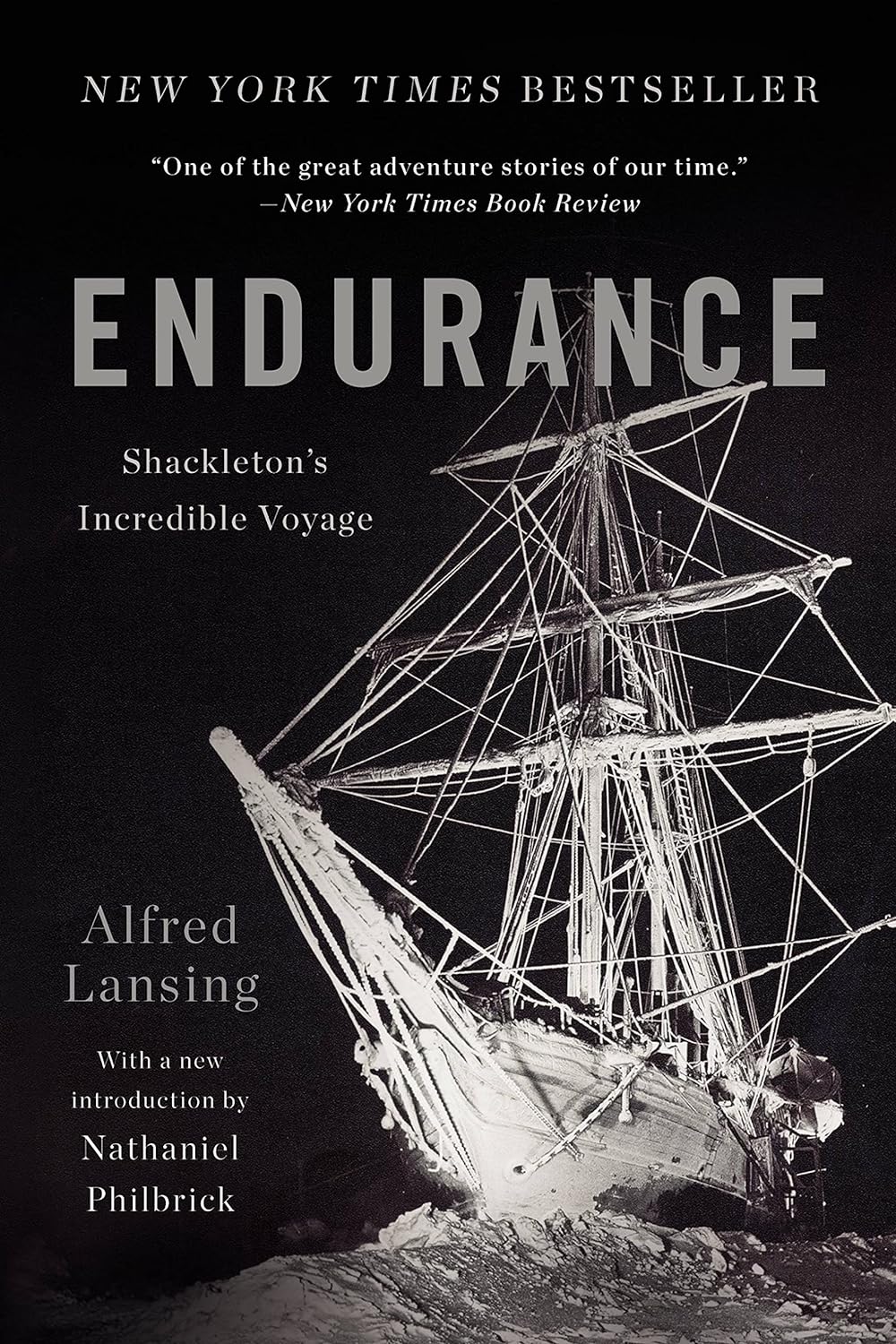
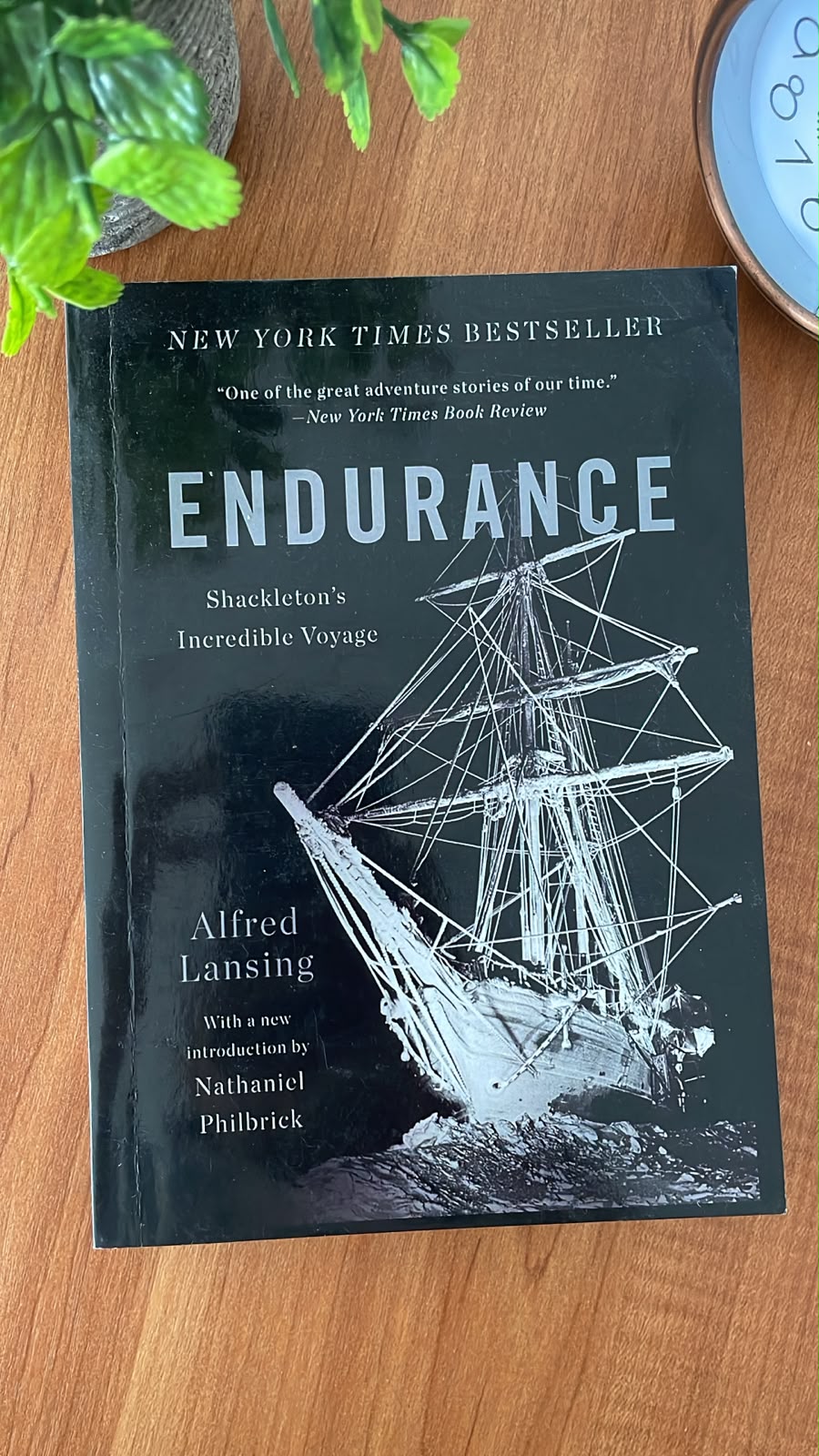






Endurance by Alfred Lansing


රු1,950.00
3 X Rs. 650.00 or 8% Cashback with


or 3 X රු650.00 with


or up to 4 X රු487.50 with


Book Details
- Title: Endurance: Shackleton’s Incredible Voyage
- Author: Alfred Lansing
- Subject: Ernest Shackleton
- Language: English
- Publisher: McGraw-Hill
- Publication Year: 1959
Physical Details
- Format: Paperback
- Pages: Approx. 320 pages
- ISBN-13: 9780465062881 (may vary by edition)
Package Details
- Dimensions: Approximately 20.3 × 13.5 × 2.3 cm
- Weight: Around 300 – 450 g
4 in stock
Endurance by Alfred Lansing is a gripping true story of survival, courage, leadership and determination in one of the most dangerous environments on Earth.
The book recounts the extraordinary Antarctic expedition led by Sir Ernest Shackleton.
In 1914, Shackleton and his crew sailed aboard a ship called the Endurance with an ambitious goal.
They planned to cross the Antarctic continent.
Instead, their expedition became one of history’s greatest survival stories.
The ship became trapped in Antarctic pack ice.
Eventually, enormous pressure from the ice destroyed it.
Shackleton and his men were left stranded in one of the coldest and most isolated places on the planet.
Why Read Endurance?
Endurance is ideal for readers who enjoy true adventure, exploration and survival stories.
It has everything a fictional adventure might contain.
Danger.
Isolation.
Extreme weather.
Leadership.
Uncertainty.
Physical exhaustion.
And an apparently impossible journey toward safety.
But these events actually happened.
That reality gives the story extraordinary tension.
Lansing’s research included interviews with surviving expedition members and access to diaries and personal accounts, helping the book achieve the immediacy of a firsthand story.
Endurance and Ernest Shackleton
At the centre of Endurance is Sir Ernest Shackleton.
Shackleton originally planned an ambitious trans-Antarctic expedition.
His objective was exploration.
But once the ship became trapped, the mission completely changed.
Scientific and geographical achievement became secondary.
Survival became everything.
Shackleton’s responsibility was no longer simply to lead an expedition.
He needed to keep his men alive.
That transformation makes Endurance an especially powerful leadership story.
The Endurance Becomes Trapped
The expedition initially battled through extremely difficult Antarctic ice.
By January 1915, the ship became locked in the pack ice of the Weddell Sea.
The crew could do little except wait.
The ship drifted with the ice.
Days became weeks.
Weeks became months.
The men were surrounded by cold, darkness and uncertainty.
They could not simply sail away.
Nature controlled the situation.
When the Ship Is Destroyed
The pressure of the ice eventually became too powerful.
The wooden ship could not survive indefinitely.
The Endurance was crushed between ice floes, leaving the expedition without the vessel that had been their home and protection.
This was a devastating moment.
The men were now stranded.
Their original mission was impossible.
The Antarctic environment had destroyed the plan.
But Shackleton immediately needed to create another one.
Survival demanded adaptation.
Endurance and Leadership
Leadership is one of the strongest themes in Endurance.
Shackleton could not control the weather.
He could not control the ice.
He could not magically create transportation.
But he could influence his crew.
Morale mattered.
Discipline mattered.
Communication mattered.
Keeping people focused mattered.
When external conditions become uncontrollable, leadership often shifts toward controlling what can still be controlled.
That is one reason Shackleton’s expedition continues to be studied as a leadership example.
Adapt When the Plan Fails
The expedition began with a clear objective.
Cross Antarctica.
That objective became impossible.
A poor leader might have remained emotionally attached to the original goal.
Shackleton changed priorities.
Now the mission was:
Get everyone home.
This is one of the most important lessons in Endurance.
Determination does not mean blindly continuing with a plan that no longer makes sense.
Sometimes determination means changing the plan while protecting the goal that now matters most.
Endurance and Survival
The crew faced extraordinary survival conditions.
Food was limited.
Temperatures were brutal.
Shelter was uncertain.
Equipment had to be carefully managed.
The men spent long periods living on shifting ice while waiting for an opportunity to move toward safety.
The survival challenge was not only physical.
It was psychological.
Imagine waking every morning without knowing when you will escape.
That uncertainty can destroy morale.
Maintaining routine and discipline became essential.
The Power of Morale
People perform differently when they believe there is hope.
A leader in a crisis therefore needs to manage more than logistics.
They must also manage morale.
Shackleton understood the importance of keeping the group functioning as a team.
Small routines mattered.
Humour mattered.
Shared responsibilities mattered.
Even ordinary activities could help maintain a sense of normal life.
Endurance shows that psychological resilience can be as important as physical strength.
The Journey Toward Safety
Eventually, the expedition could no longer remain safely on the ice.
The men had to use small boats.
They faced freezing temperatures and dangerous seas.
Their movement toward safety was slow and uncertain.
The journey became increasingly desperate.
Lansing describes an eventual voyage of roughly 850 miles through the South Atlantic as part of the effort to reach help.
That journey remains one of the most dramatic sections of the story.
Endurance and the James Caird
One of the expedition’s small boats, the James Caird, became central to the rescue effort.
Shackleton and a small group attempted a dangerous open-ocean voyage toward South Georgia.
The conditions were extraordinary.
Cold.
Waves.
Wind.
Limited navigation.
Little margin for error.
Missing the island could have meant disaster.
This section of Endurance demonstrates the combination of courage, seamanship and calculated risk that defined the expedition.
Courage Does Not Mean Lack of Fear
The men were not fearless.
Fear would have been completely understandable.
They faced real possibilities of starvation, freezing, drowning and isolation.
Courage means acting despite those fears.
That distinction makes Endurance especially powerful.
Heroism is not presented as something effortless.
It requires decisions under terrible conditions.
Endurance and Teamwork
No person could survive the expedition alone.
Everyone depended on someone else.
Sailors.
Navigators.
Doctors.
Leaders.
Crew members.
Different skills became valuable at different moments.
Teamwork meant more than cooperation.
It meant survival.
This makes the book useful beyond readers interested in exploration.
Managers and business leaders can also find lessons about coordination, trust and group resilience.
Stay Calm Under Pressure
Crises often encourage emotional decisions.
Panic can spread rapidly.
One person’s fear can influence an entire group.
Shackleton’s leadership demonstrates the importance of appearing purposeful even when circumstances are extremely uncertain.
That does not mean pretending the danger does not exist.
It means acknowledging reality while still making decisions.
Endurance repeatedly demonstrates the value of calm action.
Endurance and Problem-Solving
Every stage of the expedition created a new problem.
The ship is trapped.
What now?
The ship is destroyed.
What now?
The ice becomes unsafe.
What now?
The boats reach land.
What now?
Each solution only created the next challenge.
That is often how difficult problems work.
There may not be one perfect solution.
Progress comes through solving the next important problem.
Resources Become Precious
In normal circumstances, people waste resources without thinking.
In a survival situation, everything matters.
Food.
Fuel.
Clothing.
Tools.
Boats.
Time.
Energy.
Every resource has to be considered carefully.
Endurance shows how scarcity changes decision-making.
People must distinguish between what is useful and what is merely desirable.
Leadership Means Responsibility
Leadership can appear glamorous when things are going well.
Crisis reveals something different.
A leader becomes responsible for other people’s safety.
Shackleton had to make choices where mistakes could have fatal consequences.
That responsibility is one reason his story continues to attract readers interested in leadership.
The book shows that leadership is not simply authority.
It is accountability.
Endurance and Resilience
Resilience means continuing after circumstances become difficult.
But Endurance shows that resilience is more than simple toughness.
It involves adaptation.
Patience.
Problem-solving.
Hope.
Cooperation.
And willingness to change direction.
The crew survived because they repeatedly adapted to new conditions.
That makes the book an extraordinary study of human resilience.
Failure Can Become a Different Kind of Success
Technically, Shackleton’s original expedition failed.
He did not complete the planned crossing of Antarctica.
The Endurance was destroyed.
But the story became famous for another reason.
The mission changed from exploration to survival.
Leadership became more important than the original geographical objective.
This creates a fascinating question.
How should success be measured when circumstances completely change?
Sometimes completing the original goal is impossible.
Success may become protecting people and surviving the consequences.
Endurance for Business Leaders
Business readers can apply several lessons from the book.
Markets change.
Projects fail.
Cash becomes limited.
Technology breaks.
Plans become outdated.
Leaders may not control the crisis.
But they control how they respond.
Endurance teaches the value of:
- Maintaining morale
- Adapting quickly
- Protecting the team
- Setting clear priorities
- Managing limited resources
- Making decisions under uncertainty
- Remaining calm under pressure
Endurance for Adventure Readers
Readers who enjoy true adventure stories will find plenty here.
Antarctic exploration.
Shipwreck.
Frozen seas.
Open-ocean navigation.
Survival camps.
Dangerous weather.
Leadership.
Human endurance.
Because Lansing reconstructs the story from firsthand records and interviews, the narrative often feels immediate rather than distant.
7 Powerful Lessons From Endurance
- Adapt When Circumstances Change – A failed plan does not mean you stop moving forward.
- Protect Your Team – Leadership becomes most important when people are under pressure.
- Maintain Morale – Hope and discipline can influence survival during long crises.
- Focus on the Next Problem – Extreme challenges often need to be solved one stage at a time.
- Use Resources Carefully – Scarcity makes prioritization essential.
- Stay Calm Under Pressure – Clear thinking becomes more valuable when circumstances become dangerous.
- Redefine Success When Necessary – Shackleton’s original mission failed, but bringing his men through the ordeal became the achievement for which the expedition is remembered.
What You Can Expect From Endurance
Readers can expect:
- Ernest Shackleton
- Alfred Lansing
- Antarctic exploration
- True survival story
- Leadership
- Adventure
- Shipwreck
- Polar exploration
- Teamwork
- Courage
- Resilience
- Crisis management
- History
- Exploration
- Navigation
- Human endurance
- Nonfiction adventure
Who Should Read Endurance?
Endurance is ideal for readers who enjoy real-life adventure.
History readers may appreciate the detailed account of Antarctic exploration.
Leadership readers can learn from Shackleton’s decisions during crisis.
Entrepreneurs and managers may find lessons about adaptation and team morale.
Readers interested in survival stories will find the Antarctic environment particularly gripping.
It is also a strong choice for anyone who enjoys nonfiction that reads with the tension of an adventure novel.
A Powerful True Story of Survival
Endurance begins as an ambitious Antarctic expedition.
It becomes a fight for survival.
Shackleton and his crew face a trapped ship.
Crushing ice.
Freezing temperatures.
Isolation.
Dangerous seas.
And enormous uncertainty.
Yet they continue adapting.
Alfred Lansing reconstructed the story using interviews with surviving members and diaries and personal accounts from the expedition, creating one of the most enduring narratives of polar survival.
For readers interested in leadership, exploration, history, survival and extraordinary true stories, Endurance by Alfred Lansing is an essential addition to any bookshelf.
Book Details
Full Title: Endurance: Shackleton’s Incredible Voyage
Author: Alfred Lansing
Genre: History / Adventure / Exploration / Survival / Nonfiction
Subject: Ernest Shackleton and the Imperial Trans-Antarctic Expedition
Original Publication: 1959.
A current Basic Books trade paperback edition is listed with:
ISBN-13: 9780465062881
Format: Trade Paperback
Publisher: Basic Books
Publication Date: April 28, 2015
Pages: 416.
Edition Note
Endurance has been released in several editions with different ISBNs and page counts.
For example, an earlier Basic Books edition is listed at 288 pages, while the current trade paperback is 416 pages.
Use the ISBN printed on your physical copy before entering edition-specific specifications on your website. https://yourwebsite.com/endurance/
Be the first to review “Endurance by Alfred Lansing”
Related products
-24%

Out of stock
Non-Fiction & Knowledge
Original price was: රු2,100.00.රු1,600.00Current price is: රු1,600.00.
3 X Rs. 533.33 or 8% Cashback with
or 3 X රු533.33 with
or up to 4 X රු400.00 with

Non-Fiction & Knowledge
රු1,550.00
3 X Rs. 516.67 or 8% Cashback with
or 3 X රු516.67 with
or up to 4 X රු387.50 with

Non-Fiction & Knowledge
රු1,950.00
3 X Rs. 650.00 or 8% Cashback with
or 3 X රු650.00 with
or up to 4 X රු487.50 with

Out of stock
Non-Fiction & Knowledge
රු1,500.00
3 X Rs. 500.00 or 8% Cashback with
or 3 X රු500.00 with
or up to 4 X රු375.00 with

Out of stock
Non-Fiction & Knowledge
රු1,600.00
3 X Rs. 533.33 or 8% Cashback with
or 3 X රු533.33 with
or up to 4 X රු400.00 with
-17%
Out of stock
Non-Fiction & Knowledge
Original price was: රු2,900.00.රු2,400.00Current price is: රු2,400.00.
3 X Rs. 800.00 or 8% Cashback with
or 3 X රු800.00 with
or up to 4 X රු600.00 with

රු2,000.00
3 X Rs. 666.67 or 8% Cashback with
or 3 X රු666.67 with
or up to 4 X රු500.00 with
-26%

Non-Fiction & Knowledge
The 7 Habits of Highly Effective People by Stephen R. Covey – Blue Cover
Original price was: රු2,300.00.රු1,700.00Current price is: රු1,700.00.
3 X Rs. 566.67 or 8% Cashback with
or 3 X රු566.67 with
or up to 4 X රු425.00 with
Reviews
There are no reviews yet.