
No products in the cart.
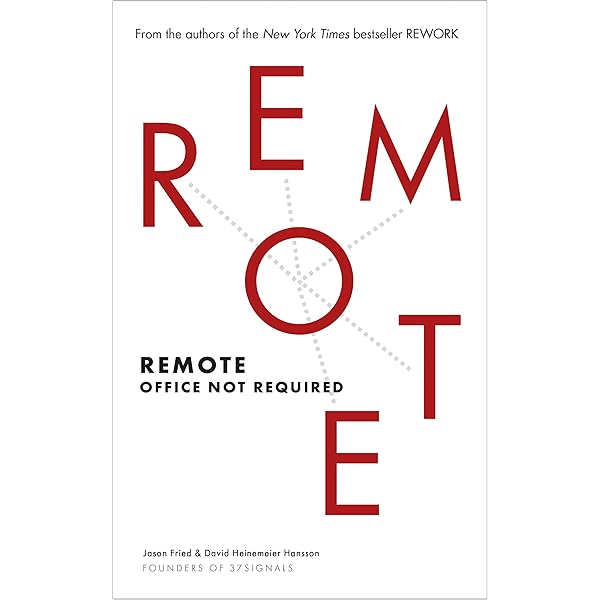
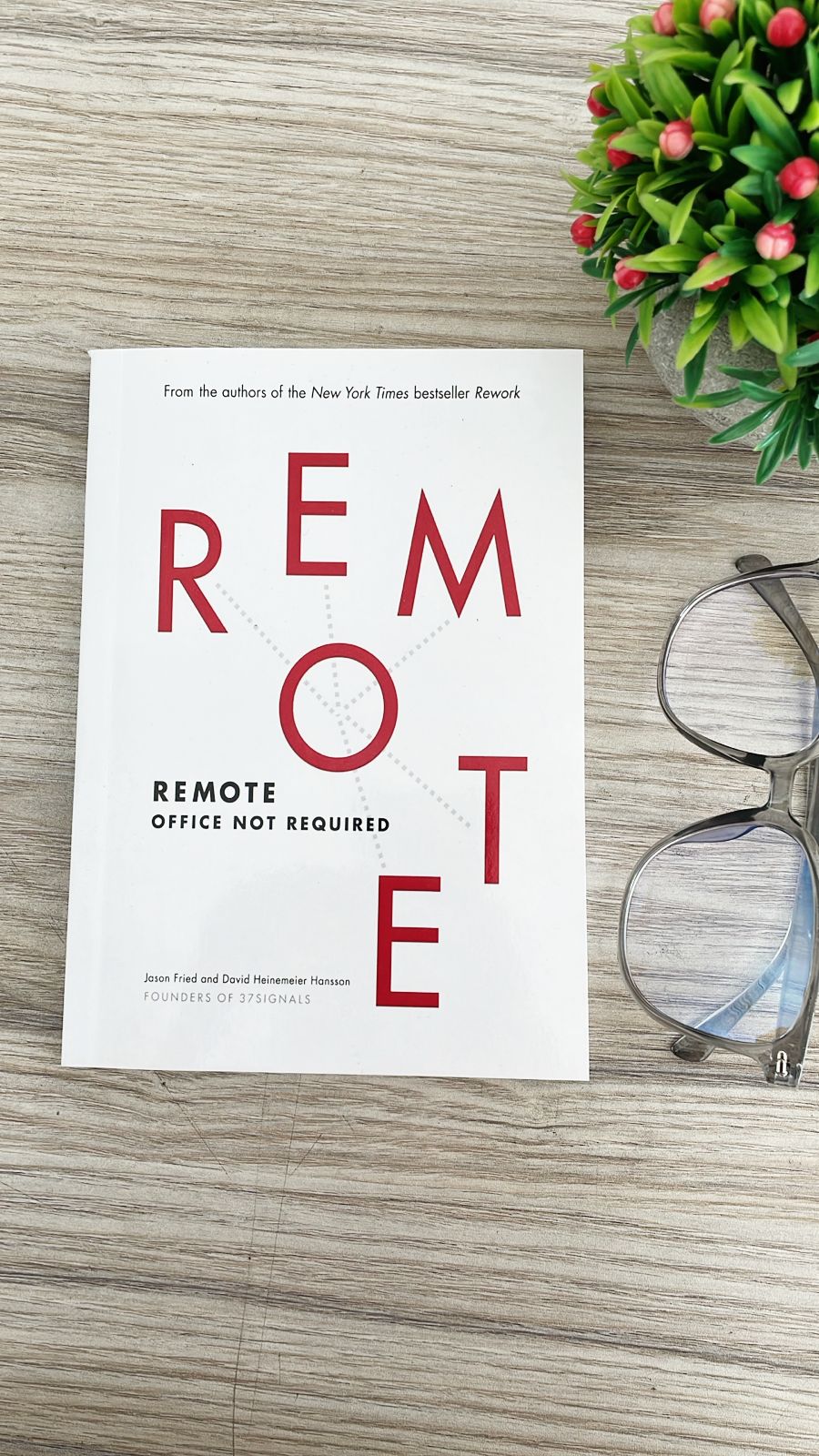
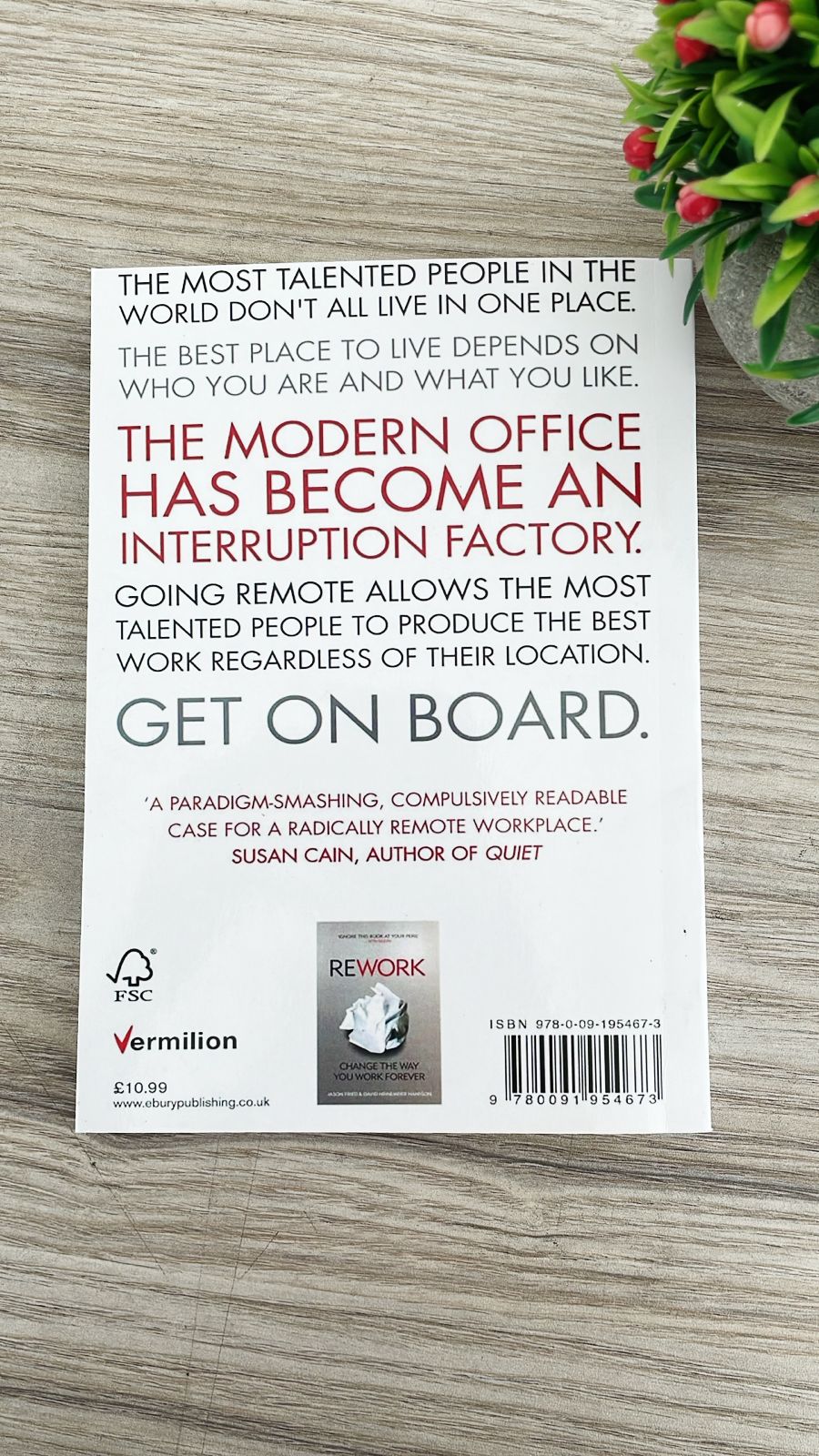
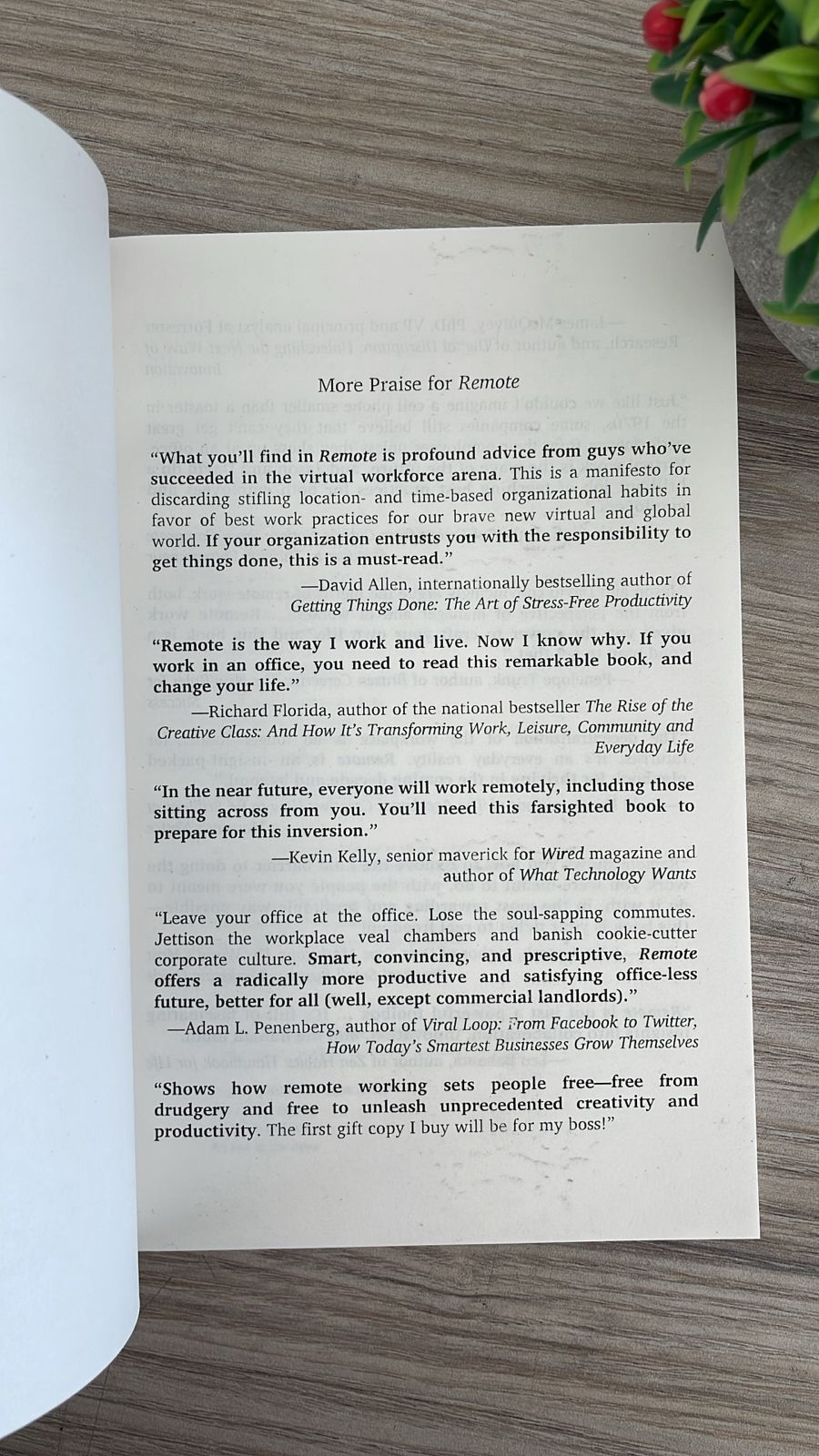

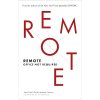




Remote -The Office Not Required by Jason Fried


රු1,600.00
3 X Rs. 533.33 or 8% Cashback with


or 3 X රු533.33 with


or up to 4 X රු400.00 with


Remote Office Not Required by Jason Fried and David Heinemeier Hansson is a practical business guide to building productive teams without requiring everyone to work from the same office. Drawing on the authors’ experience running distributed teams, the book explores remote hiring, trust, communication, productivity, management, collaboration, company culture, time zones and work-life flexibility. A useful read for business owners, managers, entrepreneurs and professionals interested in remote and hybrid work.
6 in stock
Remote Office Not Required by Jason Fried and David Heinemeier Hansson is a practical business guide that challenges the traditional belief that productive employees must work together inside the same office.
Long before remote work became a normal part of global business conversations, Fried and Hansson were arguing that modern technology had already weakened one of the biggest assumptions about work:
Work does not always need to happen where the company’s office happens to be.
The authors draw from their experience building Basecamp, formerly 37signals, around distributed work practices.
Their central argument is simple.
Instead of forcing talented people to move to where the company is located, companies can increasingly move the work to where talented people already live.
That creates opportunities for employers to hire from a much wider talent pool while giving employees greater flexibility over where they build their lives.
But Remote Office Not Required is not simply a celebration of working from home.
The book also discusses the real problems distributed teams need to solve.
Communication.
Trust.
Management.
Isolation.
Collaboration.
Time zones.
Hiring.
Performance.
Company culture.
The authors argue that remote work succeeds not because people are physically separated, but because companies deliberately redesign how work happens.
Remote Office Not Required – Book Overview
Remote Office Not Required was published in 2013, years before the COVID-19 pandemic forced millions of organizations to experiment with remote work.
That timing makes the book particularly interesting.
Fried and Hansson were not responding to an emergency.
They were describing a way of working they had already been practicing and advocating for years.
The official publisher describes the book as a guide to working from home or anywhere outside a traditional office, covering both the advantages and the challenges of remote work.
The result is less about one particular technology and more about a philosophy of work.
The Office Is Not the Work
One of the book’s most important distinctions is between:
Going to work
and
Doing work.
These are not necessarily the same thing.
A person can spend eight hours inside an office and accomplish very little.
Another person can work several focused hours from home and produce excellent results.
Physical presence is therefore a poor substitute for actual performance.
Why Offices Became the Default
Traditional organizations developed when communication required physical proximity.
Documents were stored in offices.
Meetings required everyone in one room.
Phone systems were tied to buildings.
Managers needed to observe workers directly.
Technology changed many of those limitations.
Cloud software, messaging, video calls, shared documents and project-management tools allow many types of knowledge work to happen from almost anywhere.
Work Should Move to the Workers
One of the strongest ideas behind Remote Office Not Required is that companies should reconsider forcing employees to relocate.
Traditionally, a business may say:
Our office is here.
Therefore our employees must live here.
Remote work reverses the logic.
The company asks:
Where can we find the best person for this role?
That person might live:
In another city.
In another region.
In another country.
A wider hiring area can become a major competitive advantage.
Access to Better Talent
A company hiring only within commuting distance has a limited talent pool.
A remote company can potentially recruit much more broadly.
That can benefit both sides.
Employers gain access to more candidates.
Workers gain access to jobs that would previously have required relocation.
This can be especially valuable for people who cannot easily move because of:
Family.
Housing.
Education.
A partner’s career.
Community responsibilities.
Geography Should Not Decide Your Career
One of the human advantages of remote work is that people may no longer need to choose between:
A good job
and
a good place to live.
A talented professional should not always need to move hundreds or thousands of kilometres simply because the company’s office happens to be somewhere else.
That idea became far more familiar after 2020, but Remote Office Not Required argued it much earlier.
Productivity
One of the most common objections to remote work is:
“How do I know people are actually working?”
Fried and Hansson challenge the assumption behind that question.
Managers cannot truly know how productive someone is simply because they can see them sitting at a desk.
Presence is visible.
Productivity is measurable through results.
Measure the Work
A healthier management question is:
What did this person actually accomplish?
Did the project move forward?
Was the work high quality?
Were deadlines met?
Did customers receive value?
This shifts management from monitoring bodies toward evaluating outcomes.
Trust
Remote work requires trust.
If management assumes employees will stop working the moment they cannot be watched, the deeper problem may not be remote work.
It may be:
Hiring.
Management.
Expectations.
Culture.
Trust does not mean ignoring performance problems.
It means treating responsible adults as responsible adults until evidence shows otherwise.
Remote Work Exposes Bad Management
Poor management can sometimes hide inside an office.
A manager may feel productive because:
Everyone looks busy.
There are many meetings.
People arrive on time.
But none of those necessarily indicate useful output.
Remote work forces managers to become clearer about:
Goals.
Responsibilities.
Communication.
Results.
That can make management weaknesses more visible.
Communication Must Become Deliberate
A physical office allows many accidental conversations.
Someone walks past a desk.
Two people talk near the coffee machine.
A question gets answered immediately.
Remote teams cannot rely entirely on that.
Communication must become more intentional.
Writing Becomes More Important
Distributed teams often rely more heavily on written communication.
That can actually improve organizational knowledge.
A spoken conversation disappears.
A well-written message or document can be:
Read later.
Searched.
Shared.
Reviewed.
Used by future employees.
This makes clear writing an important remote-work skill.
Documentation
Good documentation reduces dependence on one person’s memory.
Instead of asking the same person the same question repeatedly, teams can document:
Processes.
Decisions.
Project expectations.
Technical information.
Policies.
This can help both remote and office-based companies.
Asynchronous Work
Remote teams do not always need every person online at exactly the same moment.
Asynchronous communication allows someone to:
Write an update.
Share a document.
Record a decision.
Then allow teammates to respond when their schedules overlap.
This becomes especially valuable across time zones.
Time Zones
Distributed work creates a real challenge when teammates live far apart.
If one person begins work when another person is going to sleep, real-time collaboration becomes harder.
The solution is not necessarily forcing everyone into uncomfortable schedules.
Instead, teams can combine:
Some overlapping hours.
Clear documentation.
Asynchronous communication.
Scheduled real-time conversations when necessary.
The authors’ own company has continued discussing time-zone challenges and remote collaboration years after the book’s publication, emphasizing that remote work has advantages but still requires deliberate practices.
Meetings
An office often creates meetings because meetings are easy to schedule.
But easy does not mean useful.
Remote work can encourage teams to ask:
Does this really require everyone at the same time?
Could this information be written instead?
Would a smaller group be enough?
Could people review it independently?
Reducing unnecessary meetings protects focused work.
Deep Work and Interruptions
Offices can contain constant interruptions.
Conversations.
Noise.
Meetings.
Questions.
People passing by.
Remote environments may allow some employees to control distractions more effectively.
However, home environments can also contain their own distractions.
The real advantage is not that home is automatically quiet.
It is that workers may gain more control over designing their work environment.
Remote Does Not Mean Home Only
Remote Office Not Required should not be interpreted as:
Everyone must work from their bedroom.
Remote work can happen from:
Home.
Coworking spaces.
Libraries.
Private offices.
Another city.
While travelling.
The key concept is location flexibility.
The Commute
Removing or reducing commuting can return significant time to employees.
Instead of spending that time:
Driving.
Waiting for buses.
Sitting in traffic.
Travelling by train.
people may use it for:
Family.
Exercise.
Sleep.
Hobbies.
Personal projects.
Or simply a slower start to the day.
Work-Life Balance
Remote work can improve flexibility.
But it can also create a new problem.
When the office is inside your home, work can become difficult to leave.
There is no physical commute signaling:
Work is finished.
This means remote workers may need stronger boundaries.
Remote Work Can Cause Overwork
One myth is that remote employees will automatically become lazy.
The opposite problem can occur.
People may continue working because:
The computer is always nearby.
They want to prove they are productive.
They respond to messages late.
There is no clear stopping point.
Sustainable remote work needs limits.
Create Boundaries
Useful boundaries may include:
A defined work area.
Reasonable working hours.
Turning off notifications.
A clear end-of-day routine.
Remote flexibility works better when freedom does not become permanent availability.
Isolation
Remote work is not perfect for everyone.
Some people gain energy from being around coworkers.
Others may feel lonely working alone for long periods.
This is a genuine challenge rather than something remote-work advocates should ignore.
The authors themselves continue to acknowledge challenges such as staying connected and training people across time zones.
Social Interaction Still Matters
Human beings need social contact.
Remote companies can support connection through:
Team gatherings.
Optional social conversations.
Coworking arrangements.
Local friendships and communities.
Video calls when appropriate.
37signals, for example, has described bringing its fully remote team together in person periodically, showing that remote-first does not necessarily mean never meeting face-to-face.
Remote Does Not Mean Never Meet
This is an important distinction.
The question is not:
Office forever
versus
never see coworkers again.
There are many possibilities.
A company can operate remotely while still holding occasional in-person gatherings.
The office does not need to be required every weekday for face-to-face interaction to have value.
Company Culture
Some managers worry that remote work destroys culture.
But culture is not an office.
Culture is how people behave.
What gets rewarded?
How are disagreements handled?
How does leadership communicate?
Are people trusted?
How are customers treated?
Those things can exist across physical distance.
Culture Is Behavior
Ping-pong tables are not culture.
Free snacks are not culture.
A beautiful office is not culture.
Culture appears through repeated decisions.
A remote company’s culture may be visible in:
How quickly people help each other.
How much autonomy employees receive.
Whether meetings are respected.
How mistakes are handled.
How information is shared.
Management by Results
Remote teams need clear expectations.
A manager should help people understand:
What needs to be done.
Why it matters.
When it is needed.
What a successful result looks like.
Then employees need enough autonomy to execute.
Autonomy
Remote work can give employees greater control over:
Schedule.
Environment.
Focus.
Working methods.
But autonomy works best when paired with responsibility.
Freedom without accountability creates problems.
Accountability without freedom creates micromanagement.
Good remote management needs both.
Hiring Remote Employees
Remote hiring requires more than finding someone with the correct technical skill.
Strong remote workers often need to be good at:
Communication.
Self-management.
Writing.
Prioritization.
Working without constant supervision.
Asking for help.
The person who performs brilliantly only when a manager is standing nearby may struggle.
Remote Onboarding
New employees need deliberate support.
In an office, a new hire can watch what others do and ask quick questions.
Remote onboarding requires companies to be more intentional.
Good documentation becomes especially valuable here.
Collaboration
Remote work does not mean everyone works alone.
Teams still need collaboration.
The difference is that collaboration becomes less dependent on being physically beside another person.
Modern tools make it possible to collaborate on:
Documents.
Code.
Designs.
Plans.
Presentations.
Projects.
from different locations.
Technology Is a Tool, Not the Culture
Buying communication software does not create a healthy remote company.
A company can have:
Video conferencing.
Chat.
Project management.
Cloud documents.
and still communicate badly.
Tools help.
Habits matter more.
Chat Can Become Another Office Distraction
Instant messaging can recreate the interruptions remote work was supposed to eliminate.
If everyone expects an immediate response, employees remain constantly distracted.
Remote companies therefore need to decide which communication is:
Urgent.
Asynchronous.
Meeting-worthy.
Documentation-worthy.
Remote Work and Creativity
Some managers believe creativity requires everyone in one room.
In-person brainstorming can certainly be useful.
But creative work also requires uninterrupted time.
People often need space to:
Think.
Write.
Design.
Code.
Analyze.
A strong remote system can balance collaboration with individual concentration.
Global Teams
Remote work can help companies become more international.
A team spread across regions may better understand:
Different customers.
Different markets.
Different cultures.
Different time zones.
However, international hiring also introduces legal, tax, payroll and employment complexities that companies must handle responsibly.
Remote Work Is Not Suitable for Every Job
This is important.
Remote Office Not Required applies most naturally to work that can be performed digitally.
Many jobs require physical presence.
Healthcare.
Construction.
Hospitality.
Retail operations.
Manufacturing.
Transportation.
Warehousing.
A barista cannot prepare a customer’s coffee remotely.
A surgeon cannot perform every operation from home.
Therefore remote work should be considered according to the actual job rather than treated as a universal rule.
Office Work and Remote Work Can Coexist
Some organizations may prefer:
Fully remote.
Hybrid.
Office-first.
Different teams may need different approaches.
The useful lesson is not that every office is bad.
It is that companies should stop assuming the office is automatically necessary for every type of work.
The Book Was Ahead of Its Time
When Remote Office Not Required was published in 2013, remote work had not yet become the mainstream business debate it later became.
Penguin Random House published the book on October 29, 2013, describing it as an argument for embracing virtual work while also examining its challenges.
That makes the book interesting historically as well as practically.
After the Pandemic
Some examples in a 2013 book naturally predate:
Zoom-era work culture.
Pandemic lockdowns.
Today’s remote-work policies.
Modern AI collaboration tools.
The huge increase in distributed work.
Readers should therefore expect some technology references to reflect its publication period.
However, many underlying questions remain current:
How do you trust workers?
How should remote teams communicate?
What should managers measure?
How much office space is actually necessary?
How do you protect focused work?
How do distributed teams maintain relationships?
The Authors
Jason Fried and David Heinemeier Hansson are also the authors of Rework and have long been associated with Basecamp, formerly 37signals. Penguin Random House credits both men as coauthors of Remote: Office Not Required.
Their advice comes largely from firsthand experience building and managing distributed software teams.
Remote and Rework
Readers who enjoyed Rework will recognize the authors’ direct style.
Both books challenge conventional assumptions about business.
Rework asks whether companies really need many traditional business habits.
Remote Office Not Required focuses specifically on the assumption that employees need to share one physical office.
The books complement each other, but neither is required before reading the other.
Is Remote Office Not Required Still Relevant?
Yes, but it should be read with its publication date in mind.
Some software examples are older.
The basic management questions remain highly relevant.
Remote work still requires:
Trust.
Clear communication.
Documentation.
Outcome-based management.
Healthy boundaries.
Good hiring.
Thoughtful collaboration.
Those issues are not dependent on one particular app.
Is It a Work From Home Book?
Yes, but it is broader than a personal work-from-home productivity guide.
The book is written for both:
Managers designing organizations
and
employees considering remote work.
It addresses organizational structure as much as individual productivity.
Is It for Business Owners?
Yes.
Business owners may especially benefit from its discussions of:
Hiring.
Office costs.
Management.
Productivity.
Distributed teams.
Employee retention.
The official publisher notes benefits such as broader talent pools, reduced turnover, smaller real-estate footprints and the ability to operate across time zones.
Is It for Employees?
Yes.
Employees may find useful ideas about:
Location freedom.
Productivity.
Communication.
Work-life boundaries.
Choosing jobs based on quality rather than commuting distance.
Is It for Software Teams Only?
No.
The authors come from software, so many examples naturally reflect knowledge work.
But the principles can apply to many digitally enabled professions, including:
Marketing.
Design.
Writing.
Accounting.
Consulting.
Customer support.
Project management.
Sales.
Administration.
Edition Details
The official Crown Currency hardcover edition is:
Title: Remote: Office Not Required
Authors: Jason Fried and David Heinemeier Hansson
Publisher: Crown Currency
Publication Date: October 29, 2013
Pages: 256
ISBN-13: 9780804137508
If your BargainBooks physical copy has a different ISBN, binding or page count, use the information printed on that copy when entering WooCommerce attributes.
Your current BargainBooks listing is Product ID 13040, with your category review approving Business, Finance & Economics > Business & Management.
7 Powerful Lessons From Remote Office Not Required
- Judge work by results, not physical presence. Seeing somebody at a desk tells you very little about how much valuable work they are producing.
- Hire the best person rather than only the nearest person. Removing geographical restrictions can dramatically expand the pool of candidates available to an organization.
- Trust is essential to successful remote work. If managers believe employees require constant physical supervision, the organization may have a management or hiring problem rather than a location problem.
- Writing and documentation become competitive advantages. Distributed teams work better when decisions, processes and expectations are written clearly instead of remaining inside hallway conversations.
- Remote work requires boundaries as well as freedom. Removing the commute can improve flexibility, but employees still need ways to stop working and protect personal time.
- Good remote culture must be deliberately designed. Communication, social connection, onboarding, time-zone coordination and occasional in-person contact all require thoughtful systems.
- An office should be a choice when the work allows it, not an unquestioned requirement. The central lesson of Remote Office Not Required is that organizations should design work around what produces the best results rather than automatically copying traditional office structures.
Why Read Remote Office Not Required?
Remote Office Not Required is an excellent choice for business owners, managers, entrepreneurs, software professionals, HR teams, team leaders and employees interested in remote or hybrid work.
It is particularly useful for anyone asking:
Can employees really be productive outside the office?
How do you manage people you cannot physically see?
How can distributed teams communicate effectively?
How do remote companies create culture?
What are the risks of remote work?
How should companies handle time zones?
Can remote hiring improve access to talent?
The book does not suggest that remote work magically eliminates every workplace problem.
Instead, it argues that many problems traditionally blamed on remote work are actually problems of:
Management.
Communication.
Trust.
Process.
Those problems also exist inside offices.
Remote work simply makes them harder to hide.
Who Should Read This Book?
Remote Office Not Required may especially appeal to founders, startup teams, managers, software developers, remote employees, freelancers, HR professionals, business students, consultants and anyone designing modern workplace policies.
It is also valuable for people who enjoyed Rework and want a deeper exploration of Jason Fried and David Heinemeier Hansson’s ideas about how modern organizations can operate with fewer traditional assumptions.
Remote Office Not Required – Work Is Something You Do, Not Somewhere You Go
Remote Office Not Required ultimately challenges a habit so deeply established that many organizations rarely questioned it:
Employees come to an office because that is where work happens.
Fried and Hansson ask us to separate those two ideas.
Work is the value being created.
The office is only one possible location where that value can be created.
Once that distinction becomes clear, businesses can ask better questions.
Does this employee actually need to commute?
Does this meeting need everyone physically present?
Could we hire someone better if geography were removed?
Are managers measuring performance—or attendance?
Are people communicating clearly enough that work can continue without hallway conversations?
The answers will differ between organizations.
A hospital cannot become completely remote.
A café cannot serve customers through video calls.
A warehouse still needs people handling physical goods.
But many knowledge-work companies have far more flexibility than they once assumed.
That is why Remote Office Not Required remains relevant years after publication.
The specific technology changes.
The management principles remain.
Trust good people.
Measure outcomes.
Communicate clearly.
Document important information.
Protect focused work.
Respect people’s lives outside work.
And use an office when it genuinely improves the work—not simply because businesses have always had one.
For readers interested in modern management, entrepreneurship, productivity, distributed teams and the future of work, Remote Office Not Required offers a practical and provocative argument for redesigning work around people and results rather than geography.
Learn more about Remote: Office Not Required by Jason Fried and David Heinemeier Hansson on the official Penguin Random House website. Penguin Random House – Remote
Explore more business and workplace productivity books at Bargain Books.
Be the first to review “Remote -The Office Not Required by Jason Fried”
Related products
-20%

Out of stock
Original price was: රු2,500.00.රු2,000.00Current price is: රු2,000.00.
3 X Rs. 666.67 or 8% Cashback with
or 3 X රු666.67 with
or up to 4 X රු500.00 with

Out of stock
රු1,500.00
3 X Rs. 500.00 or 8% Cashback with
or 3 X රු500.00 with
or up to 4 X රු375.00 with

Business & Management
රු1,900.00
3 X Rs. 633.33 or 8% Cashback with
or 3 X රු633.33 with
or up to 4 X රු475.00 with

Business & Management
රු1,500.00
3 X Rs. 500.00 or 8% Cashback with
or 3 X රු500.00 with
or up to 4 X රු375.00 with

Out of stock
රු1,990.00
3 X Rs. 663.33 or 8% Cashback with
or 3 X රු663.33 with
or up to 4 X රු497.50 with
-13%

Out of stock
Original price was: රු4,000.00.රු3,500.00Current price is: රු3,500.00.
3 X Rs. 1,166.67 or 8% Cashback with
or 3 X රු1,166.67 with
or up to 4 X රු875.00 with

Out of stock
රු1,750.00
3 X Rs. 583.33 or 8% Cashback with
or 3 X රු583.33 with
or up to 4 X රු437.50 with

Out of stock
Business
රු1,300.00
3 X Rs. 433.33 or 8% Cashback with
or 3 X රු433.33 with
or up to 4 X රු325.00 with
Reviews
There are no reviews yet.