
No products in the cart.
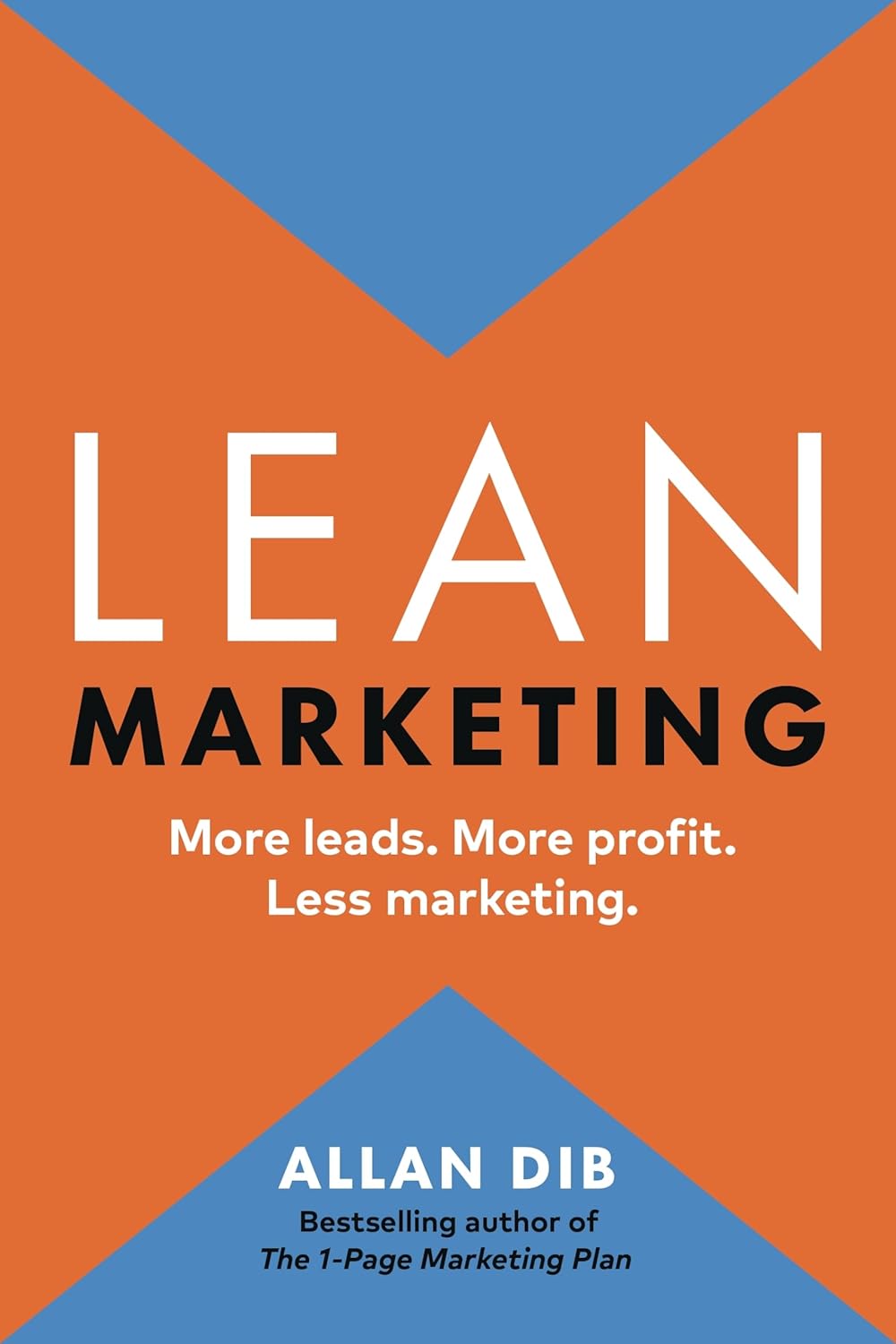
Lean Marketing by Allan Dib

රු1,900.00
3 X Rs. 633.33 or 8% Cashback with


or 3 X රු633.33 with


or up to 4 X රු475.00 with


Lean Marketing by Allan Dib is a practical business guide showing entrepreneurs and marketers how to generate more leads, improve profit and reduce wasted marketing activity. A follow-up to The 1-Page Marketing Plan, the book explains how to create strong product-market fit, attract ideal customers, build compelling offers, improve conversions, strengthen branding and turn marketing into a simple, structured and repeatable growth system. Ideal for entrepreneurs, marketers and small-business owners who want bigger results with less marketing complexity.
3 in stock
Purchase & earn 19 points!
Category: Business & Management
Lean Marketing by Allan Dib is a practical business and marketing guide about generating more leads, creating stronger customer demand, increasing profit and building an effective marketing system without wasting time, money and energy on unnecessary activities.
Business owners are constantly told:
Post more.
Advertise more.
Create more content.
Use more platforms.
Send more emails.
Follow more trends.
Spend more money.
Do more marketing.
But doing more does not automatically produce better results.
In fact, many businesses become overwhelmed because their marketing consists of disconnected activities.
A social media campaign here.
A Facebook ad there.
A new website.
A few emails.
A discount.
A new platform.
Another marketing tool.
Another strategy.
Everything looks busy.
But there is no system connecting it all.
That is the problem Lean Marketing by Allan Dib is designed to solve.
Allan Dib argues that effective marketing should be:
Simple.
Structured.
Systematic.
Measurable.
Repeatable.
Profitable.
Instead of asking, “How can we do more marketing?” businesses should ask:
What is the smallest amount of marketing activity that can create the greatest useful result?
That is the heart of lean marketing.
Lean Marketing by Allan Dib – Book Overview
Lean Marketing by Allan Dib applies the broader idea of “lean” thinking to marketing.
Lean thinking became famous in manufacturing because organizations learned to remove waste while improving quality and efficiency.
Allan Dib applies a similar principle to customer acquisition and business growth.
Remove activities that do not create meaningful results.
Keep the activities that work.
Improve them.
Systemize them.
Repeat them.
The goal is not simply to reduce spending.
The goal is to create more value from fewer wasted activities.
This makes the book especially useful for entrepreneurs, small-business owners, marketers and leaders who feel overwhelmed by modern marketing.
More Leads. More Profit. Less Marketing.
The subtitle captures the book’s central promise:
More Leads. More Profit. Less Marketing.
At first, this may sound contradictory.
How can doing less marketing create more business?
The answer is focus.
A business can perform dozens of marketing activities badly.
Or it can identify the few activities that create the most value and execute them extremely well.
This is one of the central ideas in Lean Marketing by Allan Dib.
The objective is not:
Less growth.
Less ambition.
Less customer acquisition.
It is:
Less waste.
Less confusion.
Less random activity.
Less complexity.
Stop Random Acts of Marketing
Many businesses do marketing reactively.
Someone says:
“You need TikTok.”
So they start TikTok.
Someone says:
“Email marketing is dead.”
They stop email.
Someone says:
“AI is everything.”
They immediately chase another tool.
A competitor launches a promotion.
They copy it.
This creates what Allan Dib describes as random acts of marketing.
There is activity.
But no clear strategy.
A lean approach asks:
Who are we trying to reach?
What do they need?
What problem do we solve?
What message will matter to them?
How will we generate demand?
How will we convert attention into sales?
How will we measure the result?
Marketing becomes intentional rather than random.
Marketing Should Be a System
One of the strongest ideas in Lean Marketing by Allan Dib is that marketing should operate as a system.
A system produces predictable activity.
For example:
Generate attention.
Capture leads.
Nurture prospects.
Convert customers.
Deliver value.
Encourage repeat purchases.
Build referrals.
Each stage connects to the next.
This is far more powerful than running disconnected campaigns without knowing how customers move from awareness to purchase.
Systems Beat Motivation
A business should not need the owner to suddenly “feel inspired” before marketing happens.
Marketing should continue consistently.
Emails should go out.
Leads should be followed up.
Campaigns should be measured.
Customers should receive communication.
Reviews should be requested.
Offers should be tested.
Systems make this possible.
A system reduces dependence on memory and motivation.
Simplicity
Modern marketing can feel incredibly complicated.
There are:
Websites.
SEO.
Social media.
Paid ads.
Email.
Video.
Influencers.
Content marketing.
Affiliate marketing.
Automation.
Analytics.
AI.
CRM platforms.
Funnels.
Landing pages.
Businesses can easily believe they need everything.
Lean Marketing by Allan Dib encourages simplicity.
You do not necessarily need every channel.
You need the right channels.
Focus on What Works
A lean marketer asks:
Which customer segment creates the most value?
Which offer converts best?
Which channel produces profitable leads?
Which message attracts the right customer?
Which activity creates repeatable growth?
Once something works, the goal is not immediately to abandon it for the latest trend.
The goal is to improve and scale it.
Product-Market Fit
Product-market fit is one of the most important topics associated with Lean Marketing by Allan Dib.
Marketing becomes extremely difficult when people do not strongly want the product.
Businesses sometimes attempt to solve a product problem with advertising.
The offer is weak.
Customers are not excited.
Sales are poor.
The response is:
Spend more on marketing.
But better advertising cannot permanently rescue something the market does not want.
Create Something People Want
Strong marketing starts before the advertisement.
It begins with:
The product.
The service.
The target customer.
The problem.
The offer.
If the product solves an important problem for a clearly defined market, marketing becomes easier.
People pay attention because the offer is relevant.
Target Market
Trying to market to everyone usually produces weak communication.
If the message is designed for everyone, it often feels specific to no one.
A strong target market allows the business to understand:
Who the customer is.
What they want.
What they fear.
What frustrates them.
What alternatives they already use.
What language they understand.
This makes marketing more effective.
Ideal Customers
Not every customer is equally valuable.
Some customers:
Buy more.
Stay longer.
Refer others.
Require less support.
Appreciate your value.
Others may:
Constantly negotiate.
Complain.
Create excessive work.
Generate little profit.
Lean Marketing by Allan Dib encourages businesses to think carefully about attracting customers who are genuinely suited to the offer.
Understand the Customer’s Problem
Customers rarely care about a product simply because the business created it.
They care about what the product does for them.
A customer does not buy:
A drill.
They want a hole.
A person does not buy:
Accounting software.
They want better financial control.
A company does not buy:
Marketing services.
They want more customers and revenue.
Good marketing connects the product to the outcome.
Message Matters
A weak message creates weak marketing.
If customers do not quickly understand:
What you offer.
Who it is for.
Why it matters.
Why you are different.
What they should do next.
they may leave.
A strong message reduces confusion.
Clarity Over Cleverness
Businesses often try to sound creative.
But clever messaging can become unclear.
Customers should not need to decode your advertisement.
Clear marketing tells people:
Here is the problem.
Here is our solution.
Here is the benefit.
Here is what to do next.
Clarity usually beats unnecessary complexity.
Value Proposition
A strong value proposition answers:
Why should someone choose you?
Not merely:
What do you sell?
Two businesses may sell similar products.
The difference may be:
Convenience.
Service.
Specialization.
Speed.
Selection.
Trust.
Experience.
Price.
Quality.
Guarantees.
Brand.
Your value proposition gives customers a reason to care.
Strong Offers
Sometimes the problem is not the product.
The problem is the offer.
The offer may feel:
Confusing.
Risky.
Too expensive.
Hard to understand.
Easy to postpone.
A better offer can increase conversion without increasing advertising spend.
Reduce Risk
Customers hesitate because buying involves risk.
Will this work?
Is this company reliable?
Is the quality good?
Will I regret spending money?
Businesses can reduce risk through:
Testimonials.
Guarantees.
Clear policies.
Case studies.
Reviews.
Demonstrations.
Transparent information.
Reducing uncertainty can improve conversions.
Lead Generation
Lean Marketing by Allan Dib focuses on creating a marketing system capable of generating leads.
Attention alone is not enough.
Thousands of followers do not automatically create revenue.
The business needs a way to move interested people toward becoming customers.
That may include:
Landing pages.
Email lists.
Contact forms.
Free resources.
Consultations.
Trials.
Offers.
The objective is to capture and continue the relationship.
Attention Is Not the Same as Revenue
Businesses can become obsessed with:
Views.
Likes.
Followers.
Reach.
Impressions.
These metrics may be useful.
But they are not the final objective.
A business ultimately needs:
Qualified leads.
Sales.
Repeat customers.
Profit.
Marketing metrics should connect back to business outcomes.
Conversion
Generating leads is only the beginning.
The next question is:
How many leads become customers?
If 1,000 people visit a website and only one buys, simply attracting more visitors may not be the best solution.
Improving conversion might create better results with the traffic already available.
Conversion Optimization
A lean approach looks for bottlenecks.
Where are customers disappearing?
Website?
Checkout?
Follow-up?
Offer?
Pricing?
Trust?
Message?
Each improvement can increase the value of existing marketing.
This is why optimization can be more powerful than simply adding another channel.
Customer Journey
Customers rarely move instantly from:
“I’ve never heard of you.”
to:
“Here is my money.”
They may need time.
Awareness.
Information.
Trust.
Proof.
A reason to act.
Marketing should understand this journey.
Follow-Up
Many businesses lose sales because they do not follow up.
A customer asks a question.
No one replies quickly.
A prospect requests information.
No one contacts them again.
Someone visits a website.
The relationship ends.
Follow-up can dramatically improve marketing efficiency because the business is using leads it has already generated.
Email Marketing
Email can become part of an effective follow-up system.
It allows businesses to:
Educate.
Build trust.
Share offers.
Explain benefits.
Stay memorable.
Create repeat sales.
The strength of email is that businesses can continue communicating with interested prospects rather than constantly paying to reacquire attention.
Customer Lifetime Value
A business should not think only about the first transaction.
One customer may buy once.
Another may buy:
Five times.
Ten times.
Twenty times.
They may also refer friends.
That is why customer lifetime value matters.
Improving repeat purchases can create growth without constantly finding completely new customers.
Retention
Many businesses focus heavily on acquisition.
Get new customers.
More customers.
More traffic.
More leads.
But existing customers already know the business.
If they had a good experience, selling to them again may be easier.
Lean marketing therefore values retention.
Repeat Purchases
Businesses can encourage repeat purchases through:
Email.
Loyalty programs.
New-product announcements.
Personalized offers.
Subscriptions.
Customer service.
Reminders.
Recommendations.
A strong repeat-purchase system can significantly increase profitability.
Referrals
Happy customers can become powerful marketers.
They already have credibility with friends, colleagues and family.
Referral systems can help businesses generate new customers at lower acquisition cost.
But referrals should not always be left to chance.
Businesses can intentionally create:
Referral requests.
Referral incentives.
Shareable experiences.
Excellent service.
Brand
Lean Marketing by Allan Dib also emphasizes building a strong brand.
Brand is not simply:
Logo.
Colors.
Fonts.
Packaging.
A brand is what customers believe about you.
It includes:
Reputation.
Experience.
Trust.
Expectation.
Positioning.
A strong brand can make future marketing easier because customers already understand and trust what you represent.
Brand Goodwill
Goodwill builds over time.
Customers remember:
Good service.
Reliable delivery.
Honest communication.
Useful content.
Consistent quality.
Keeping promises.
Every positive experience strengthens the brand.
Every poor experience can weaken it.
Marketing Without Hype
One important idea in Lean Marketing by Allan Dib is that effective marketing does not require deception.
Businesses do not need:
Fake scarcity.
Manipulative pressure.
Exaggerated claims.
Misleading promises.
Marketing can still be persuasive while remaining ethical.
Ethical Marketing
Good marketing should create a genuine match.
The customer has a problem.
The business has a useful solution.
Marketing helps the customer understand the value.
That is different from pressuring someone into buying something they do not need.
Stop Trying to Outshout Competitors
Traditional marketing often becomes a volume competition.
More ads.
Louder claims.
More promotions.
More discounts.
But constantly trying to shout louder becomes expensive.
A better approach is to become more relevant.
Speak directly to the right customer.
Solve a meaningful problem.
Make the offer easy to understand.
Relevance can outperform noise.
Marketing Efficiency
Efficiency asks:
What are we getting for what we spend?
A campaign costing $1,000 and generating $10,000 of profitable revenue may be far more valuable than a campaign generating millions of views without sales.
Lean marketing cares about outcomes.
Return on Investment
Marketing should eventually connect to business results.
Businesses should understand numbers such as:
Customer acquisition cost.
Conversion rate.
Average order value.
Lifetime value.
Profit.
Return on advertising spend.
These metrics make decision-making more objective.
Measure What Matters
Data can help businesses decide:
What should we stop?
What should we continue?
What should we improve?
What should we scale?
Without measurement, marketing decisions can become based entirely on opinions.
Test and Improve
Lean marketing is not about finding one perfect campaign.
It is about continuous improvement.
Try something.
Measure it.
Learn.
Improve.
Repeat.
Small improvements can accumulate into major gains.
Experimentation
Businesses should test:
Headlines.
Offers.
Landing pages.
Emails.
Advertisements.
Pricing.
Calls to action.
But experiments should have a purpose.
Randomly changing everything creates confusion.
Eliminate Waste
Waste can appear in marketing through:
Channels producing no return.
Unnecessary tools.
Duplicated work.
Poor targeting.
Weak follow-up.
Complex approval processes.
Bad campaigns that continue because “we’ve always done it.”
Lean thinking asks:
Does this create value?
If not, why are we doing it?
Complexity Is Expensive
Every new tool or channel creates additional work.
Someone needs to:
Manage it.
Learn it.
Measure it.
Update it.
Integrate it.
Complexity has a cost.
Businesses should add complexity only when the expected benefit justifies it.
Marketing Technology
Technology can improve marketing.
Automation.
CRM.
Email platforms.
Analytics.
AI.
Advertising platforms.
But tools are not strategy.
Buying expensive software does not automatically create a good marketing system.
Strategy should come first.
Technology should support it.
Automation
Once a marketing process works, automation can help make it more efficient.
For example:
Lead capture.
Email sequences.
Customer reminders.
Review requests.
Reporting.
Follow-up.
Automation reduces repetitive manual work.
But automating a bad process simply makes the bad process run faster.
Build the Process First
A useful sequence is:
Understand.
Test.
Improve.
Systemize.
Automate.
This prevents businesses from investing heavily before knowing what works.
Marketing Team
A strong marketing function also needs clear responsibility.
Who owns:
Content?
Advertising?
Email?
Analytics?
Website conversion?
Lead follow-up?
Without ownership, tasks can easily disappear.
Systems make responsibilities visible.
Delegation
Business owners often become the bottleneck.
Every campaign needs their approval.
Every email needs their input.
Every social post requires them.
This prevents scale.
A documented marketing system makes delegation easier.
Standard Operating Procedures
Processes can be documented.
How do we create a campaign?
How do we publish content?
How do we follow up with a lead?
How do we measure performance?
Documentation helps the business become less dependent on one person.
Marketing That Works Without the Owner
A powerful business should not require the founder to personally perform every marketing activity forever.
The goal is to create a system that can continue operating with:
Processes.
People.
Technology.
Metrics.
This gives the owner more time to focus on strategy and growth.
Entrepreneurship
Lean Marketing by Allan Dib is particularly useful for entrepreneurs because small businesses usually have limited resources.
They cannot waste:
Money.
Time.
Staff.
Attention.
A large corporation may survive an expensive failed campaign.
A small business may not.
Efficiency therefore matters.
Small Business Marketing
Small businesses do not always need to compete with larger organizations by spending more.
They can compete through:
Specialization.
Speed.
Customer service.
Niche positioning.
Personal relationships.
Strong offers.
Agility.
Lean marketing helps smaller companies use these strengths.
Productive Marketing Versus Busy Marketing
A marketer can spend the entire day:
Editing posts.
Checking analytics.
Designing graphics.
Attending meetings.
Testing tools.
But the important question is:
Did any of this move the business closer to revenue?
Busy is not the same as productive.
Do Less, Better
This could summarize much of Lean Marketing by Allan Dib.
Instead of doing fifteen channels poorly:
Choose fewer.
Understand them.
Measure them.
Improve them.
Build systems.
Scale what works.
Growth
Sustainable growth comes from systems that can handle more customers.
Marketing should not create demand the business cannot serve.
Growth requires coordination between:
Marketing.
Sales.
Operations.
Customer service.
Delivery.
A marketing system works best when the rest of the business can support it.
Profit Matters
Revenue alone is not enough.
A business can have huge sales and still lose money.
Marketing should therefore consider profitability.
How much does the customer cost to acquire?
How much margin remains?
How long does the customer stay?
Do they purchase again?
Profit is a better indicator of healthy growth than vanity revenue alone.
The 1-Page Marketing Plan and Lean Marketing
Lean Marketing by Allan Dib is a follow-up to Allan Dib’s internationally successful book The 1-Page Marketing Plan.
The two books complement each other.
The 1-Page Marketing Plan helps readers simplify marketing strategy.
Lean Marketing focuses more strongly on turning marketing into a practical, efficient and systematic operating process.
Readers who enjoyed The 1-Page Marketing Plan may find Lean Marketing a natural next step.
Strategy Versus Implementation
Knowing what to do is not enough.
Businesses often have plans that never become consistent action.
Implementation requires:
People.
Processes.
Deadlines.
Measurement.
Accountability.
Systems.
That gap between knowing and doing is one of the biggest problems in business.
From Marketing Plan to Marketing Engine
A plan explains direction.
A marketing engine consistently produces activity.
Lead generation.
Follow-up.
Conversion.
Retention.
Referrals.
The goal of Lean Marketing by Allan Dib is to move businesses toward a repeatable growth engine rather than occasional campaigns.
Building a Marketing Operating System
A useful way to think about lean marketing is as a marketing operating system.
The business should know:
Who we target.
What we say.
How we reach them.
How we capture leads.
How we follow up.
How we convert.
How we retain.
How we measure.
Once those pieces work together, marketing becomes more predictable.
Stop Chasing Every New Trend
There will always be a new platform.
New technology.
New tactic.
New marketing buzzword.
New AI tool.
New content format.
Some will be useful.
Many will not matter to your business.
A lean marketer asks:
Will this improve our system?
If the answer is unclear, there may be no reason to chase it immediately.
Marketing Discipline
Focus requires discipline.
It is often more exciting to start something new than to improve something existing.
But successful businesses frequently grow through consistent optimization rather than constant reinvention.
Build Before You Scale
Scaling a broken system creates bigger problems.
If:
The offer is weak.
Conversion is poor.
Customer service is bad.
Retention is low.
then increasing traffic may only multiply the problem.
Fix the fundamentals first.
Then scale.
Customer Experience
Marketing does not end at the sale.
The customer experience affects:
Reviews.
Referrals.
Repeat purchases.
Brand reputation.
A disappointing experience can undo expensive advertising.
That is why delivery becomes part of marketing.
Happy Customers Become Marketing Assets
Satisfied customers create:
Testimonials.
Reviews.
Referrals.
Word of mouth.
Repeat purchases.
Case studies.
This reduces dependence on constantly paying for attention.
Marketing and Sales
Marketing and sales should support each other.
Marketing creates:
Awareness.
Interest.
Leads.
Sales converts qualified opportunities.
If these teams are disconnected, leads can be wasted.
A clear system helps ensure handoffs happen properly.
7 Powerful Marketing Lessons From Lean Marketing
There are many useful ideas in Lean Marketing by Allan Dib, but seven stand out:
- Do less marketing, but make it more effective – More activity does not automatically create more growth. Focus on the activities that generate measurable business results.
- Build a marketing system instead of running random campaigns – Lead generation, follow-up, conversion, retention and referrals should work together as a repeatable process.
- Start with product-market fit – Marketing becomes easier when the target market genuinely wants what you offer.
- Measure outcomes instead of vanity metrics – Likes, views and followers matter far less than qualified leads, sales, profit and customer lifetime value.
- Eliminate waste before adding more complexity – Remove ineffective channels, unnecessary tools and activities that consume resources without producing value.
- Systemize and automate what works – Once a process proves effective, document it, delegate it and automate appropriate parts so marketing can operate consistently.
- Build a brand and customer experience that generate future growth – Trust, repeat purchases, reviews and referrals can make marketing increasingly efficient over time.
Why Read Lean Marketing by Allan Dib?
Lean Marketing by Allan Dib is an excellent choice for readers interested in:
- Marketing
- Allan Dib books
- Business growth
- Entrepreneurship
- Small-business marketing
- Lead generation
- Digital marketing
- Marketing systems
- Sales
- Customer acquisition
- Product-market fit
- Branding
- Conversion optimization
- Marketing automation
- Customer retention
- Business strategy
- Profitability
- The 1-Page Marketing Plan
- Startup growth
- Marketing efficiency
It is especially valuable for business owners who feel they are doing a lot of marketing without seeing enough measurable results.
Who Should Read This Book?
Lean Marketing by Allan Dib may especially appeal to:
- Entrepreneurs
- Small-business owners
- Startup founders
- Marketing managers
- Sales managers
- Digital marketers
- Consultants
- Freelancers
- E-commerce owners
- Retail-business owners
- Agency owners
- Business students
- CEOs
- Founders building marketing teams
- Readers of The 1-Page Marketing Plan
- Anyone trying to generate more leads with limited resources
Bigger Results With Less Waste
Lean Marketing by Allan Dib challenges one of the most common assumptions in business:
That growth requires doing more of everything.
More ads.
More channels.
More posts.
More tools.
More campaigns.
More complexity.
Allan Dib offers a different approach.
Understand your customer.
Create strong product-market fit.
Develop a compelling offer.
Choose the right channels.
Capture leads.
Follow up.
Improve conversion.
Retain customers.
Measure performance.
Eliminate waste.
Systemize what works.
Then scale.
The result is not less ambition.
It is better execution.
Marketing becomes a repeatable business system rather than a collection of random tasks.
For entrepreneurs, marketers and business owners who want more leads, stronger customer relationships, higher profitability and a simpler approach to growth, Lean Marketing by Allan Dib offers a practical framework for creating bigger results without continually adding more marketing complexity.
Learn more about Lean Marketing by Allan Dib on Allan Dib’s official website.
Explore more marketing and business books at Bargain Books.
Be the first to review “Lean Marketing by Allan Dib” Cancel reply
Related products
Business, Finance & Economics
රු1,750.00
Purchase & earn 18 points!
3 X Rs. 583.33 or 8% Cashback with
or 3 X රු583.33 with
or up to 4 X රු437.50 with
-13%

Out of stock
3 X Rs. 1,166.67 or 8% Cashback with
or 3 X රු1,166.67 with
or up to 4 X රු875.00 with
Business & Management
රු2,200.00
Purchase & earn 22 points!
3 X Rs. 733.33 or 8% Cashback with
or 3 X රු733.33 with
or up to 4 X රු550.00 with
Business & Management
රු1,500.00
Purchase & earn 15 points!
3 X Rs. 500.00 or 8% Cashback with
or 3 X රු500.00 with
or up to 4 X රු375.00 with
Out of stock
රු1,750.00
Purchase & earn 18 points!
3 X Rs. 583.33 or 8% Cashback with
or 3 X රු583.33 with
or up to 4 X රු437.50 with
Business
Coffee Can Investing by Sanjay Bakshi – A Simple, High-Reward Strategy for Building Long-Term Wealth
රු1,750.00
Purchase & earn 18 points!
3 X Rs. 583.33 or 8% Cashback with
or 3 X රු583.33 with
or up to 4 X රු437.50 with

රු2,000.00
Purchase & earn 20 points!
3 X Rs. 666.67 or 8% Cashback with
or 3 X රු666.67 with
or up to 4 X රු500.00 with
-17%

Out of stock
3 X Rs. 800.00 or 8% Cashback with
or 3 X රු800.00 with
or up to 4 X රු600.00 with
Reviews
There are no reviews yet.