
No products in the cart.
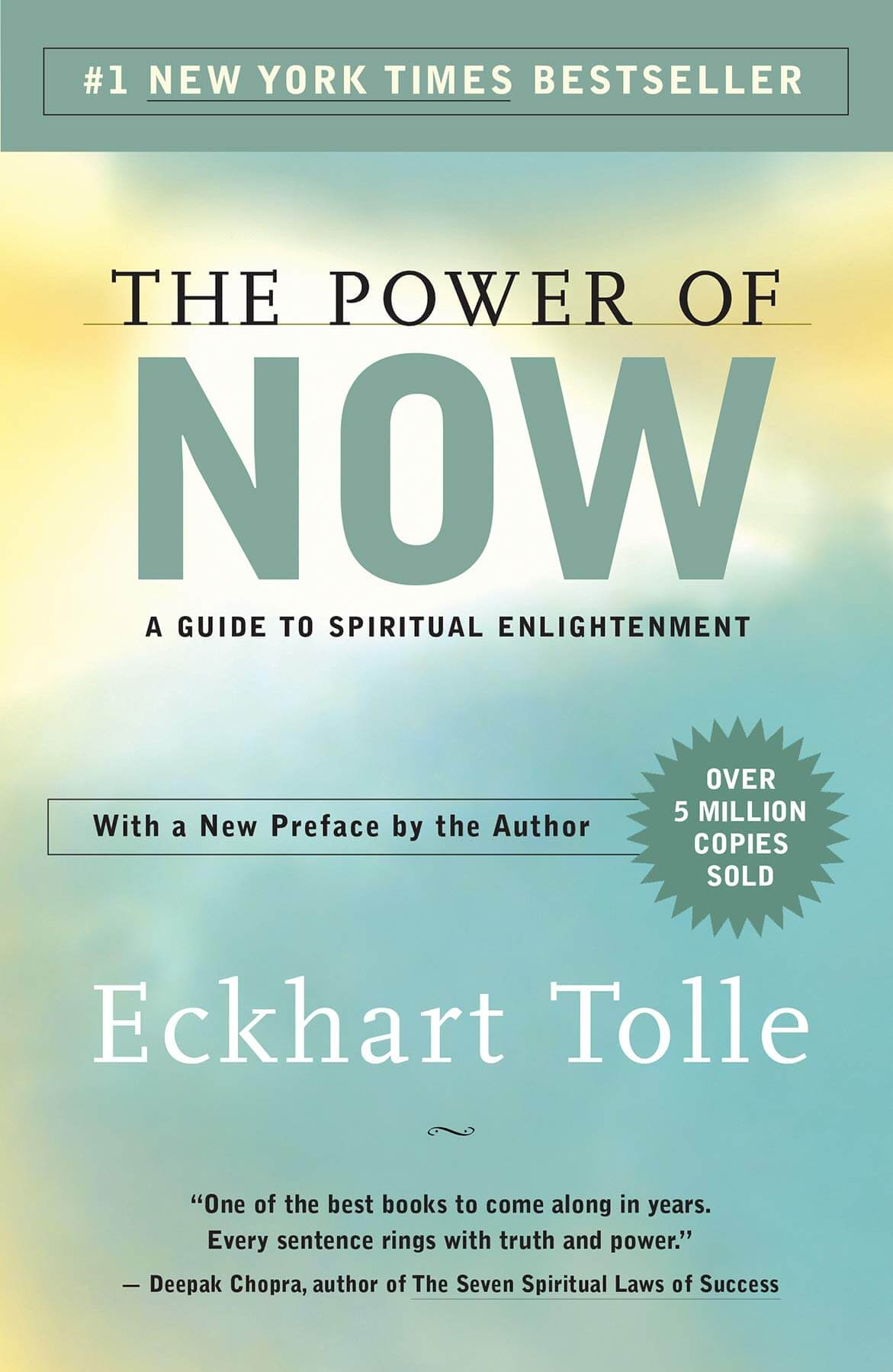
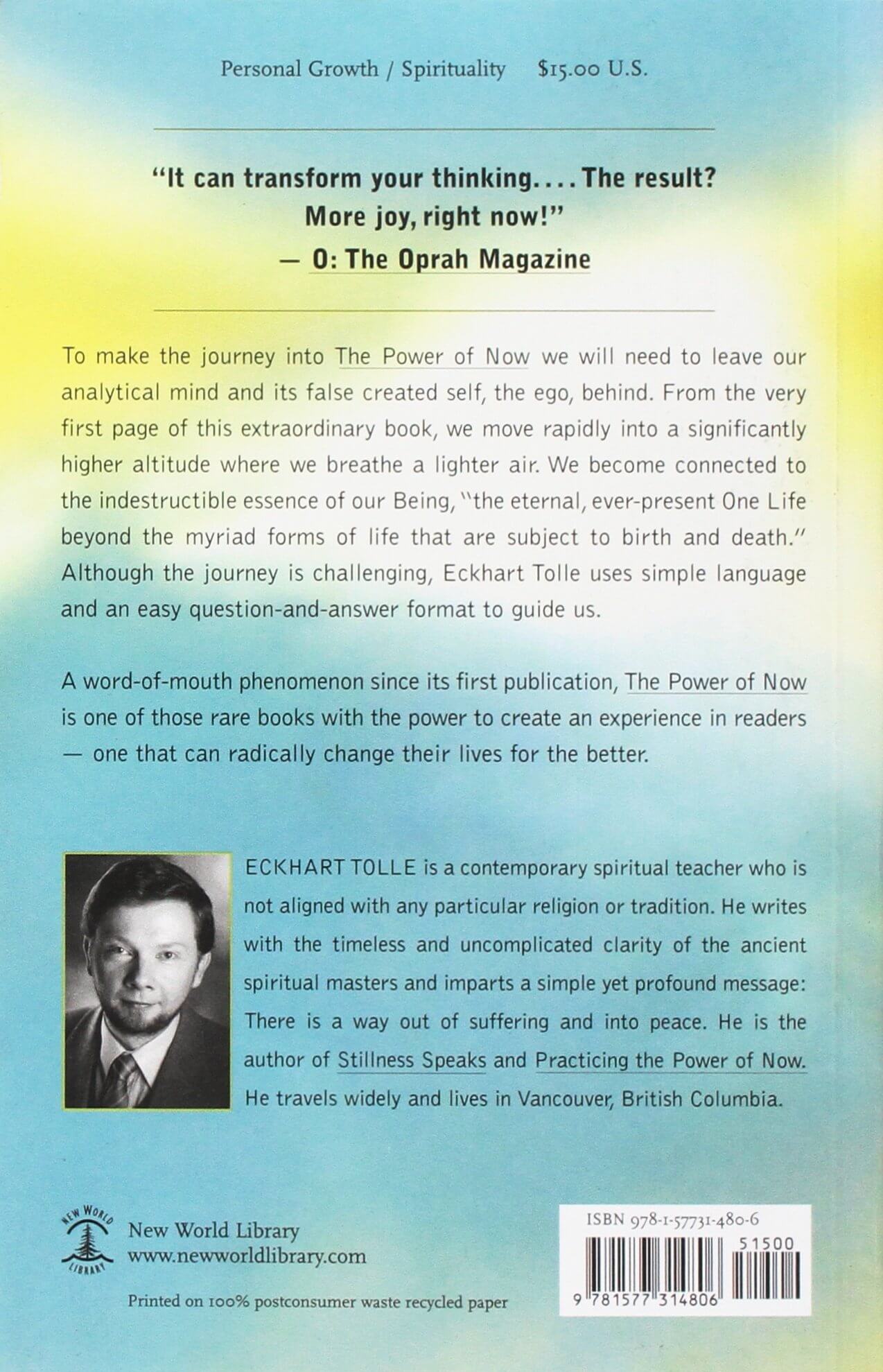
The Power of Now by Eckhart Tolle
රු1,750.00
3 X Rs. 583.33 or 8% Cashback with


or 3 X රු583.33 with


or up to 4 X රු437.50 with


“The Power of Now” by Eckhart Tolle is a transformative guide that teaches readers how to live in the present moment, free from the distractions of past regrets and future anxieties. Through profound insights and practical exercises, Tolle shows how embracing the “now” can lead to a deeper sense of peace, happiness, and spiritual awakening.
50 in stock
The Power of Now by Eckhart Tolle is an influential spiritual and personal-development book about learning to live more fully in the present moment instead of becoming trapped in constant thinking about the past or future.
Most people spend enormous amounts of time mentally somewhere else.
Remembering what happened.
Regretting what they said.
Planning what comes next.
Worrying about what might go wrong.
Replaying old conversations.
Imagining future success.
Imagining future disaster.
Meanwhile, the only moment in which life is actually happening is:
Now.
Eckhart Tolle argues that much unnecessary psychological suffering is created when people become completely identified with their thoughts and lose contact with present-moment awareness.
Instead of treating every thought as absolute truth, Tolle encourages readers to notice the mind itself.
Observe thoughts.
Notice emotions.
Become aware of inner reactions.
Pay attention to the body.
Accept the reality of the present moment before deciding what action is needed.
The Power of Now by Eckhart Tolle is not primarily a productivity book, time-management guide or conventional motivational manual.
It is a spiritual book concerned with consciousness, ego, awareness and the possibility of experiencing life more directly.
Tolle uses accessible language and a question-and-answer style to explore ideas such as the thinking mind, ego, emotional pain, acceptance, surrender, stillness, relationships and spiritual awakening. His official site describes The Power of Now as a guide to spiritual enlightenment centered on leaving excessive identification with the analytical mind and becoming more aware of the present.
The Power of Now by Eckhart Tolle – Book Overview
The Power of Now by Eckhart Tolle begins with a simple but challenging idea:
You are not identical to every thought that passes through your mind.
Thoughts happen.
Memories appear.
Worries appear.
Judgments appear.
Mental commentary continues.
But something in you can also notice those thoughts.
Tolle places great importance on that observing awareness.
Instead of trying to win every argument inside your mind, he encourages readers to become conscious of the fact that thinking is happening.
That small shift—from being completely absorbed in a thought to observing it—forms the foundation of much of the book.
Living in the Present Moment
The central teaching is obvious from the title.
Life happens in the present.
The past once existed as a present moment.
The future, if it arrives, will also arrive as a present moment.
Yet people often treat the present merely as a bridge toward something else.
Finish work.
Then relax.
Earn more money.
Then feel secure.
Reach a goal.
Then feel complete.
Solve this problem.
Then begin living.
Tolle challenges that pattern.
The Past
The past matters.
We can learn from it.
Remember loved ones.
Understand mistakes.
Study history.
But mentally replaying painful events over and over does not physically return us to the past.
Sometimes memory becomes useful information.
Sometimes it becomes repetitive suffering.
The Power of Now by Eckhart Tolle encourages readers to notice the difference.
The Future
Planning is also necessary.
You may need to:
Plan a business.
Prepare for an examination.
Book a flight.
Save money.
Set goals.
Tolle’s argument is not that planning should disappear.
The problem appears when the future becomes psychologically more important than the present.
A person may spend years thinking:
“I will finally be happy when…”
Then the future arrives and immediately becomes another problem to solve.
Clock Time and Psychological Time
A useful way of understanding Tolle’s teaching is distinguishing practical time from psychological time.
Practical time helps us:
Meet deadlines.
Learn from experience.
Plan.
Organize.
Psychological time appears when identity becomes trapped in mental stories about what happened or what might happen.
The first is useful.
The second can become exhausting.
The Thinking Mind
The human mind is extraordinarily useful.
It solves problems.
Builds technology.
Writes books.
Creates businesses.
Develops medicine.
But a useful tool can become problematic when it never stops.
Imagine a phone notification sounding continuously.
Eventually, even useful information becomes noise.
Tolle encourages readers to create moments where thinking is no longer automatically dominating attention.
You Are Not Every Thought
This is one of the most important practical lessons in The Power of Now by Eckhart Tolle.
A thought may say:
“I am going to fail.”
That does not make failure inevitable.
A thought may say:
“Nobody respects me.”
That does not make the statement objectively true.
A thought may say:
“I will never recover.”
Again, it is still a thought.
Recognizing thoughts as mental events can create a little space between:
Thought
and
reaction.
Observing the Mind
Tolle recommends observing thoughts without immediately judging them.
For example, instead of:
“I should not be anxious. Something is wrong with me.”
you might notice:
“There is an anxious thought.”
This shift can reduce automatic identification with mental commentary.
It does not require pretending difficult emotions do not exist.
The Ego
The ego is one of Tolle’s major concepts.
In his framework, ego is the identity created through thought.
“I am my job.”
“I am my status.”
“I am my possessions.”
“I am my achievements.”
“I am what other people think of me.”
When identity depends entirely on these things, life becomes fragile.
Jobs change.
Money changes.
Bodies age.
Reputations change.
People disagree with us.
The ego constantly needs reinforcement.
Comparison
Comparison strengthens ego.
Someone has:
More money.
A better job.
More followers.
A nicer home.
A more impressive degree.
Then the mind says:
They are ahead.
I am behind.
Another person has less, and the mind says:
I am better.
Both reactions create identity through comparison.
The Power of Now by Eckhart Tolle invites readers to experience worth without constantly measuring themselves against other people.
Social Media and the Ego
The book predates today’s social-media environment, but its ideas apply easily.
Modern platforms make comparison available every minute.
Achievements.
Relationships.
Travel.
Bodies.
Homes.
Careers.
The mind can continually compare an ordinary private life with someone else’s carefully selected public image.
Present-moment awareness can interrupt that cycle.
The Pain-Body
Another distinctive concept in the book is what Tolle calls the pain-body.
He uses this term to describe accumulated emotional pain that can become activated and influence behavior.
A small disagreement may trigger a much larger reaction because it connects with older emotional wounds.
Whether readers adopt Tolle’s exact terminology or not, the underlying observation is recognizable:
Current situations can activate old emotional patterns.
Emotional Triggers
Suppose someone criticizes your work.
The immediate event may be small.
But the reaction may contain years of:
Fear of failure.
Childhood criticism.
Professional insecurity.
Past humiliation.
Suddenly the present moment becomes mixed with the emotional past.
Awareness helps create an opportunity to respond instead of reacting automatically.
Reaction Versus Response
A reaction happens quickly.
Someone says something.
You become angry.
You reply immediately.
A response contains a pause.
You notice:
What happened?
What am I feeling?
What actually needs to be said?
That pause may be only a few seconds.
But it can change conversations, relationships and decisions.
Acceptance
Acceptance is frequently misunderstood.
Tolle does not need to be interpreted as saying:
Accept injustice and do nothing.
Accept abuse.
Accept dangerous circumstances.
Accept every bad situation forever.
A more useful interpretation is:
First recognize what is actually happening.
Then decide what action is required.
Fighting mentally with the fact that something has already happened does not change the event.
Acceptance and Action
Imagine you miss a flight.
You can spend an hour thinking:
This should not have happened.
This is terrible.
Why always me?
Or you can acknowledge:
I missed the flight.
Now:
What is the next available flight?
Can the ticket be changed?
Acceptance does not mean liking the situation.
It means beginning from reality.
Surrender
Tolle uses the word surrender, which can sound passive.
But surrender in this context is closer to stopping unnecessary resistance to the fact of the present moment.
After that, action may still be required.
Sometimes very strong action.
The difference is that action comes from greater clarity rather than emotional resistance alone.
Problems Versus Situations
One interesting idea in The Power of Now by Eckhart Tolle is the distinction between a present situation and the larger mental story built around it.
For example:
Present situation:
“I need to pay this invoice by Friday.”
Mental story:
“My finances are a disaster. Everything is collapsing. I will never succeed.”
The first may need practical action.
The second may consume enormous mental energy without solving the invoice.
Focus on the Next Action
Present-moment awareness can make problems smaller.
Instead of solving your entire life, ask:
What needs attention now?
Send one email.
Call one customer.
Study one chapter.
Complete one task.
Rest.
Ask for help.
The next useful action is often easier to manage than the entire imagined future.
Presence
Presence means giving real attention to what is happening.
If someone is talking, listen.
If you are eating, notice the food.
If you are walking, notice your surroundings.
If you are working, work.
Many people physically perform one activity while mentally doing five others.
Presence brings attention back.
The Inner Body
Tolle frequently encourages awareness of the body from within.
Instead of focusing only on thoughts, notice physical sensations.
Breathing.
Hands.
Feet.
Chest.
Heartbeat.
The body becomes an anchor to present awareness.
Breathing
You do not need a complicated spiritual practice to begin.
Notice one breath.
Feel the inhale.
Feel the exhale.
You have immediately moved attention away from abstract mental time and toward direct present experience.
This does not magically solve life’s problems.
It simply creates a moment of awareness.
Stillness
Stillness does not necessarily mean complete external silence.
You can experience inner stillness:
On a bus.
At work.
Walking.
Waiting.
Listening.
The point is not eliminating all thought permanently.
It is discovering that consciousness can exist without continuous mental commentary.
Silence
Most people try to fill silence.
Phones.
Music.
Videos.
Conversation.
Notifications.
Silence can initially feel uncomfortable because the mind suddenly becomes more noticeable.
Tolle encourages readers to become more comfortable with stillness rather than constantly escaping it.
Listening
One practical way of becoming present is listening carefully.
When another person speaks, many people are already preparing their reply.
Presence means listening before constructing the response.
This can improve communication dramatically.
Relationships
The Power of Now by Eckhart Tolle also applies its ideas to relationships.
Conflict often becomes worse when two egos defend identity.
“I need to be right.”
“You need to admit you were wrong.”
“I need to win.”
A disagreement about one issue can become a battle over personal identity.
Awareness can reduce this escalation.
Being Present With Another Person
Sometimes someone does not need immediate advice.
They need attention.
Listening without:
Checking the phone.
Interrupting.
Preparing the next argument.
can be a powerful form of presence.
Love and Attachment
Tolle distinguishes deeper love from egoic attachment.
Attachment may say:
I need this person to make me complete.
When another person becomes responsible for your entire emotional identity, fear grows.
What if they leave?
What if they change?
Healthy connection becomes harder when it is dominated by fear of loss.
The Need to Be Right
One of the ego’s favorite activities is being right.
Being factually correct matters in many situations.
But sometimes people continue an argument long after the original subject matters because winning has become part of identity.
Ask:
Do I want truth?
Or do I want victory?
That question alone can change many arguments.
Forgiveness and the Past
Remaining mentally connected to past injury can give another event continuing power over the present.
Forgiveness does not necessarily mean:
Approving what happened.
Trusting the person again.
Removing boundaries.
For some readers, it may simply mean refusing to spend the rest of life repeatedly reliving the same injury.
Mindfulness and The Power of Now
There is considerable overlap between Tolle’s teaching and what many readers today call mindfulness.
Both emphasize awareness of present experience.
However, The Power of Now by Eckhart Tolle is broader and explicitly spiritual.
It discusses concepts such as:
Being.
Consciousness.
Enlightenment.
Ego.
Presence.
Spiritual awakening.
So readers wanting a purely secular mindfulness manual should know that this book has a strong spiritual framework.
Is The Power of Now Religious?
It is spiritual but not a conventional book teaching one specific organized religion.
Tolle draws on ideas that can remind readers of multiple contemplative traditions.
His official author materials describe the teaching as centered on present-moment awareness and spiritual awakening rather than adherence to a single religious institution.
Readers from different religious backgrounds may interpret his ideas differently.
Enlightenment
Tolle uses the term enlightenment to describe a state in which people no longer identify completely with the thinking mind and ego.
This is not something that can be measured like a university qualification.
It belongs to the book’s spiritual framework.
Readers should approach these claims as spiritual teaching rather than established scientific conclusions.
Spirituality and Science
This distinction is important.
The book contains insights that some readers find useful for:
Attention.
Self-awareness.
Stressful thinking.
Relationships.
But its spiritual concepts should not be presented as medically or scientifically proven facts simply because readers find them meaningful.
Mental Health
The Power of Now by Eckhart Tolle can complement practices such as reflection and mindfulness for some readers, but it should not replace professional treatment for significant mental-health conditions.
Severe depression, anxiety disorders, trauma, suicidal thoughts or other serious symptoms deserve appropriate support from qualified health professionals.
Spiritual practice and professional care do not need to compete.
Anxiety About the Future
Many forms of everyday worry are future-oriented.
What if?
What happens next?
What if I fail?
Tolle’s approach asks:
Is that problem happening right now?
Sometimes the answer is yes, and action is needed.
Sometimes the answer is no.
The mind is rehearsing a future that has not happened.
Recognizing the difference can reduce unnecessary mental activity.
Regret About the Past
Regret can teach.
You made a mistake.
You learn.
You apologize.
You change behavior.
That is useful.
But after the lesson is learned, endless repetition may no longer add information.
Presence asks whether continuing to replay the event is helping.
Work
Present-moment awareness can also improve work.
Instead of thinking:
“I have twenty things to do,”
focus on the task currently being completed.
Multitasking often creates the feeling of doing everything while fully attending to nothing.
Presence improves quality by concentrating attention.
Productivity Without Obsession
Interestingly, a book about stepping away from mental overactivity can support better productivity.
When attention is not constantly divided between:
Past mistakes.
Future worries.
Notifications.
Comparison.
you may be able to work more effectively on what is actually in front of you.
Goals
Tolle does not require abandoning goals.
Goals can provide direction.
The danger comes when the goal becomes:
“I cannot be okay until I achieve this.”
Then the present becomes only a sacrifice for the future.
A healthier approach is:
Work toward the goal while remaining present during the process.
Success
Success often keeps moving.
You want:
A job.
Then promotion.
Then more money.
Then a bigger business.
Then more recognition.
There is nothing automatically wrong with ambition.
But if happiness is always assigned to the next achievement, the present never receives permission to be enough.
Money
Money solves many practical problems.
It matters.
But Tolle’s teachings suggest that money cannot permanently silence an identity built on insecurity.
A person can become wealthier and immediately create a new comparison.
The external number changes.
The internal pattern remains.
Consumerism
Ego frequently seeks identity through possessions.
My car.
My phone.
My clothes.
My house.
Brands can become extensions of identity.
Possessions are useful.
The problem comes when self-worth becomes dependent upon them.
Letting Go
Letting go is another recurring idea.
People hold tightly to:
Old arguments.
Old identities.
Expectations.
Plans.
Stories about themselves.
Sometimes growth requires releasing something that once felt essential.
Identity
Consider sentences beginning with:
“I am the kind of person who…”
Some are useful.
Others become cages.
“I am bad at speaking.”
“I am not disciplined.”
“I always fail relationships.”
Repeated stories can become identities.
Presence creates an opportunity to ask:
Is that true now?
Change Happens Now
You cannot change yesterday.
You cannot act tomorrow yet.
Every real behavior change occurs in a present moment.
Exercise happens now.
Studying happens now.
Apologizing happens now.
Saving money happens now.
This is one practical interpretation of the book’s title.
The Question-and-Answer Style
The Power of Now by Eckhart Tolle uses a conversational question-and-answer structure.
Tolle presents common doubts or objections and then responds to them.
This format makes abstract spiritual ideas more approachable than a purely academic philosophical text. Hachette specifically notes the simple language and question-and-answer format of the book.
Is The Power of Now a Self-Help Book?
Yes, but it is more specifically a spiritual self-development / mindfulness book.
Your BookLounge category Non-Fiction > Health, Wellness & Spirituality is therefore appropriate.
It could also logically appear in a Self-Help or Mindfulness collection if your store uses secondary categories.
Is The Power of Now Easy to Read?
The sentences are generally accessible.
The ideas can be more challenging.
Some readers immediately connect with Tolle’s descriptions of mental overthinking.
Others may need to read slowly because concepts such as:
Being.
Ego.
Presence.
Enlightenment.
Pain-body.
are being used in a specific spiritual sense.
This is a book that many readers prefer to read gradually rather than quickly.
Should You Read It More Than Once?
It can benefit from rereading.
A first reading may introduce the concepts.
Later readings may feel different after the reader has experimented with:
Observing thoughts.
Mindful breathing.
Listening.
Present-moment attention.
The value often comes from application rather than simply finishing the pages.
The Power of Now and Practicing the Power of Now
These are different books.
The Power of Now presents Tolle’s core teachings in full.
Practicing the Power of Now is a shorter companion assembled around practices and selected teachings from the original work. Tolle’s official site describes it as a practical collection of excerpts and exercises derived from The Power of Now.
For a first-time reader, start with The Power of Now.
The Power of Now and A New Earth
A New Earth is another major Eckhart Tolle book.
It expands many related ideas, particularly around:
Ego.
Human consciousness.
Purpose.
Collective patterns.
But it is not necessary to read A New Earth first.
The Power of Now by Eckhart Tolle works completely on its own.
Do You Need a Reading Order?
No strict reading order is required.
A practical order for beginners is:
- The Power of Now
- Practicing the Power of Now if you want a more practice-oriented companion
- A New Earth if you want to explore Tolle’s broader discussion of ego and consciousness
Who Is Eckhart Tolle?
Eckhart Tolle is a spiritual teacher and author best known for The Power of Now and A New Earth.
His work centers on present-moment awareness, the nature of ego and spiritual awakening. His official website identifies The Power of Now as A Guide to Spiritual Enlightenment and presents it as one of his central teachings.
Your Edition Details
Your procurement file lists:
Title: Power of Now
Author: Eckhart Tolle
ISBN: 9781399743303
Hachette confirms that ISBN as the special hardcover edition of The Power of Now, released January 16, 2025.
So for your WooCommerce listing, you can safely use:
Product Title: The Power of Now by Eckhart Tolle
Format: Hardcover
ISBN: 9781399743303
If the barcode on your physical copy differs, use the details printed on that copy because numerous paperback and international editions also exist.
Important Themes
The Power of Now by Eckhart Tolle explores present-moment awareness, mindfulness, ego, consciousness, overthinking, emotional pain, acceptance, surrender, relationships, fear, identity, stillness, listening, inner peace, spiritual awakening, attention, thought, self-awareness, letting go and the relationship between past, present and future.
7 Powerful Lessons From The Power of Now by Eckhart Tolle
- The present moment is where life actually happens. The past survives through memory and the future through imagination, but action and experience can only occur now.
- You do not have to believe every thought your mind produces. Observing thoughts creates distance between mental commentary and automatic behavior.
- Acceptance can create clearer action. Recognizing the reality of a situation is different from approving it; once reality is acknowledged, practical action often becomes easier.
- The ego constantly searches for identity through comparison and external validation. Status, possessions and recognition may be useful, but they become unstable foundations for self-worth.
- Emotional reactions often contain more than the present event. Old wounds and learned patterns can intensify current conflict, making awareness important before responding.
- Presence can improve relationships. Listening fully and responding without constantly defending ego can reduce unnecessary conflict and create more genuine connection.
- Inner peace is not something that must always be postponed until every external problem disappears. Tolle’s central spiritual message is that awareness and presence can be practiced even while life remains imperfect.
Why Read The Power of Now by Eckhart Tolle?
The Power of Now by Eckhart Tolle is an excellent choice for readers interested in mindfulness, spirituality, meditation, personal development, inner peace, self-awareness, overthinking, emotional awareness and living more intentionally.
It may especially appeal to people who often notice themselves:
Replaying old events.
Worrying about future possibilities.
Constantly comparing themselves with others.
Feeling mentally distracted even during enjoyable experiences.
Struggling to switch off internal commentary.
The book does not promise that ordinary life will suddenly become problem-free.
Bills still exist.
Deadlines still exist.
Loss exists.
Difficult people exist.
What changes is the relationship with mental activity.
Instead of allowing every thought to pull attention automatically, the reader practices returning to what is actually happening.
Who Should Read This Book?
The Power of Now by Eckhart Tolle may especially appeal to readers interested in spiritual growth, mindfulness beginners, meditation practitioners, people who struggle with everyday overthinking, readers exploring ego and consciousness, fans of reflective self-development books, and anyone who wants to become more attentive to everyday life.
Readers who prefer strictly scientific psychology may find some of Tolle’s spiritual language less appealing. The book is best approached as a spiritual and philosophical guide rather than a clinical psychology textbook.
The Power of Now by Eckhart Tolle – Stop Waiting to Begin Living
The Power of Now by Eckhart Tolle asks readers to notice something almost embarrassingly simple.
Life keeps happening while we are thinking about life.
You drink coffee while worrying about work.
You drive home while replaying an argument.
You sit with someone you love while checking your phone.
You complete one goal while immediately worrying about the next.
Years can pass this way.
Always moving.
Always planning.
Always remembering.
Always waiting.
Waiting for:
More money.
More confidence.
The perfect relationship.
The right job.
A quieter schedule.
A better future.
Then life will finally feel complete.
Tolle challenges that assumption.
The future is useful for planning.
The past is useful for learning.
But neither can be directly lived.
The only place experience actually happens is the present.
That does not mean abandoning ambition.
You can still:
Build the business.
Study.
Save.
Travel.
Improve your health.
Work toward a promotion.
Create goals.
But instead of treating today’s life as an obstacle standing between you and tomorrow’s happiness, you can pay attention while the journey is happening.
This is the deeper meaning behind The Power of Now by Eckhart Tolle.
Presence does not mean never thinking.
It means no longer being completely controlled by thought.
It means noticing when the mind is turning one difficult event into an entire imagined future.
It means recognizing when an old memory is controlling a new conversation.
It means listening when someone speaks.
Breathing without needing the moment to become something else.
Working on the task in front of you.
Accepting reality before deciding what needs to change.
For readers drawn to mindfulness, spiritual reflection, self-awareness and the search for greater inner calm, The Power of Now by Eckhart Tolle remains a highly influential guide to one deceptively simple practice:
Be here for the life that is happening now.
Learn more about The Power of Now by Eckhart Tolle on the official Eckhart Tolle website.
Explore more spirituality and personal development books at Bargain Books.
| Weight | 0.358 kg |
|---|---|
| Author | Eckhart Tolle |
| Language | English |
| Type | Paperback Printed Book (Second Quality Copy) |
| ISBN/ISSN | 8190105914 |
Be the first to review “The Power of Now by Eckhart Tolle”
Related products
-13%
Out of stock
Non-Fiction & Knowledge
Original price was: රු3,900.00.රු3,400.00Current price is: රු3,400.00.
3 X Rs. 1,133.33 or 8% Cashback with
or 3 X රු1,133.33 with
or up to 4 X රු850.00 with
-26%

Non-Fiction & Knowledge
Original price was: රු2,000.00.රු1,490.00Current price is: රු1,490.00.
3 X Rs. 496.67 or 8% Cashback with
or 3 X රු496.67 with
or up to 4 X රු372.50 with

රු2,000.00
3 X Rs. 666.67 or 8% Cashback with
or 3 X රු666.67 with
or up to 4 X රු500.00 with

Non-Fiction & Knowledge
රු1,950.00
3 X Rs. 650.00 or 8% Cashback with
or 3 X රු650.00 with
or up to 4 X රු487.50 with

Non-Fiction & Knowledge
රු1,700.00
3 X Rs. 566.67 or 8% Cashback with
or 3 X රු566.67 with
or up to 4 X රු425.00 with
Non-Fiction & Knowledge
රු1,550.00
3 X Rs. 516.67 or 8% Cashback with
or 3 X රු516.67 with
or up to 4 X රු387.50 with
-24%
Out of stock
Non-Fiction & Knowledge
Original price was: රු2,100.00.රු1,600.00Current price is: රු1,600.00.
3 X Rs. 533.33 or 8% Cashback with
or 3 X රු533.33 with
or up to 4 X රු400.00 with
Non-Fiction & Knowledge
රු1,800.00
3 X Rs. 600.00 or 8% Cashback with
or 3 X රු600.00 with
or up to 4 X රු450.00 with
Reviews
There are no reviews yet.