
No products in the cart.
-24%
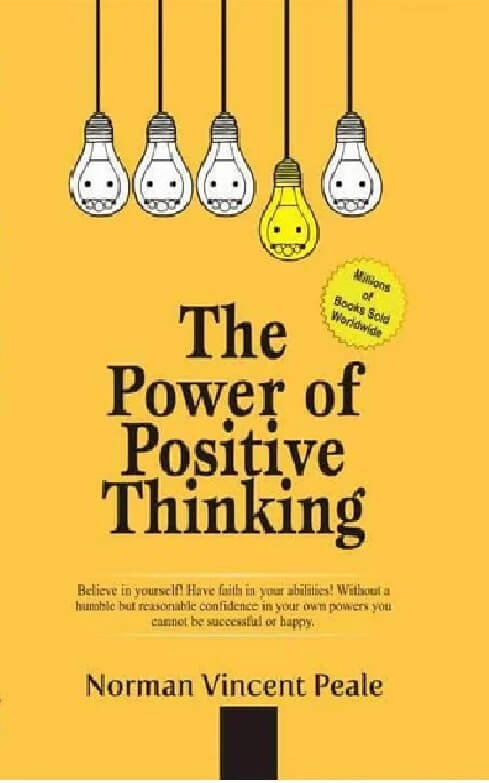
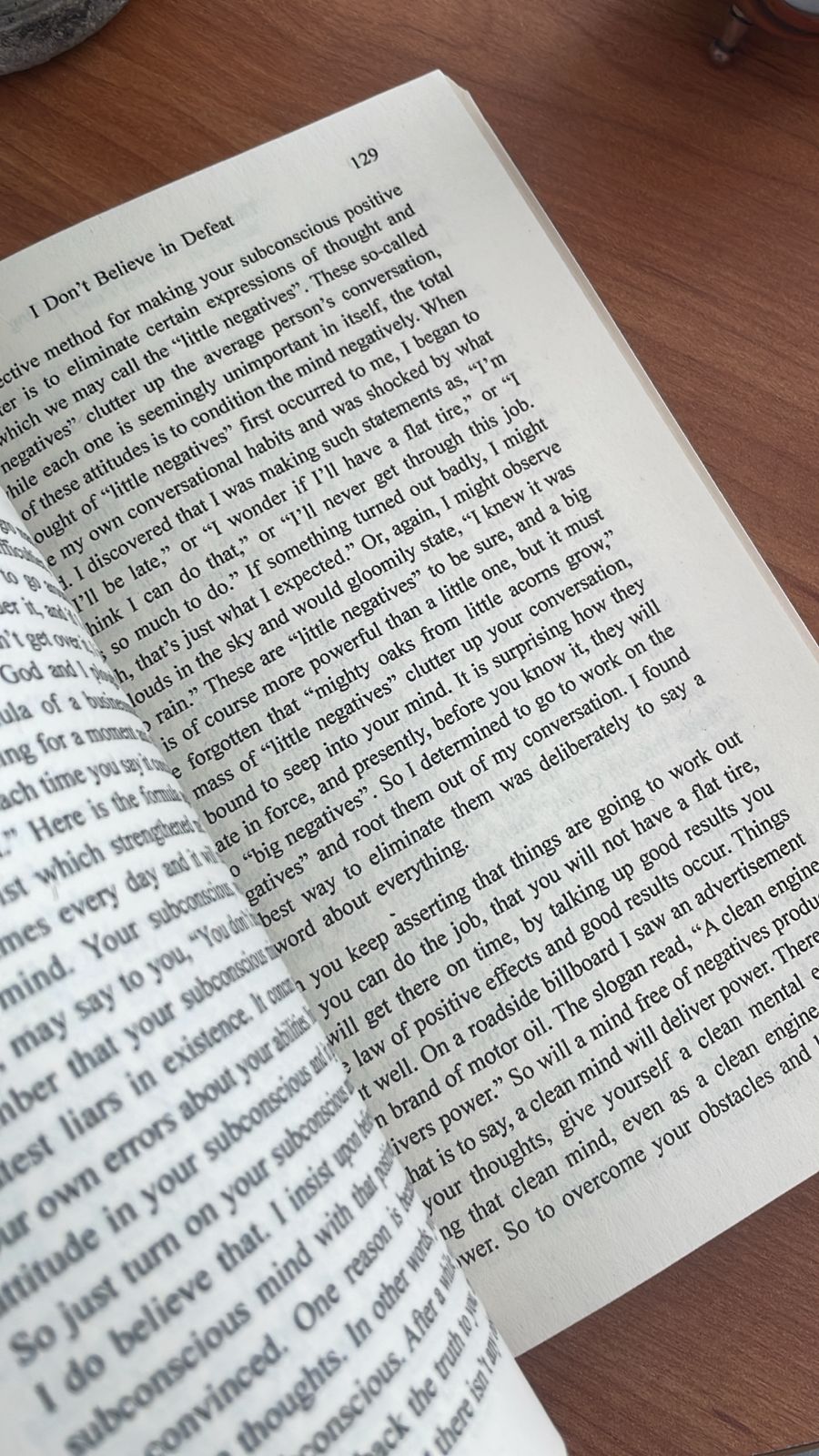
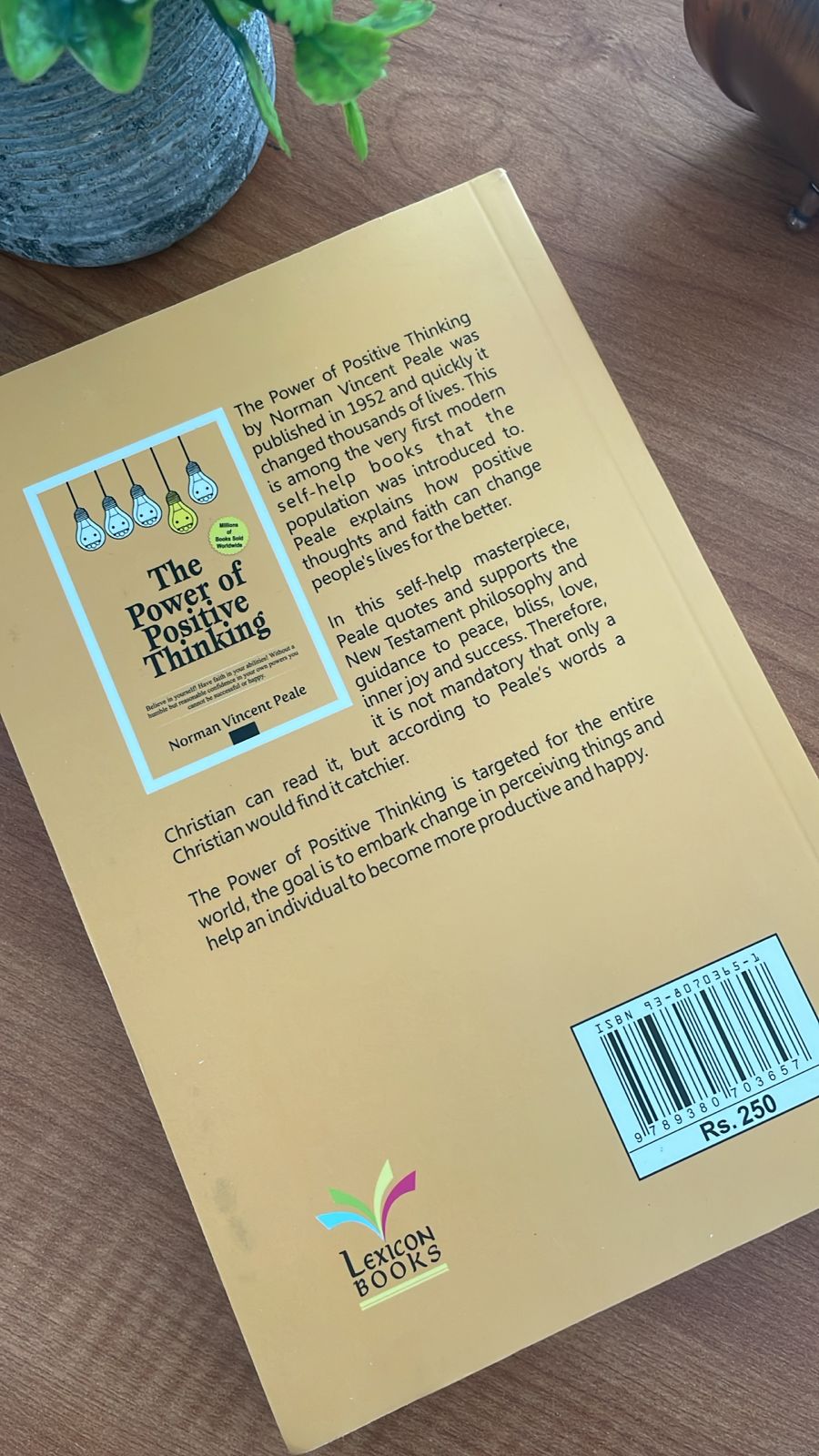
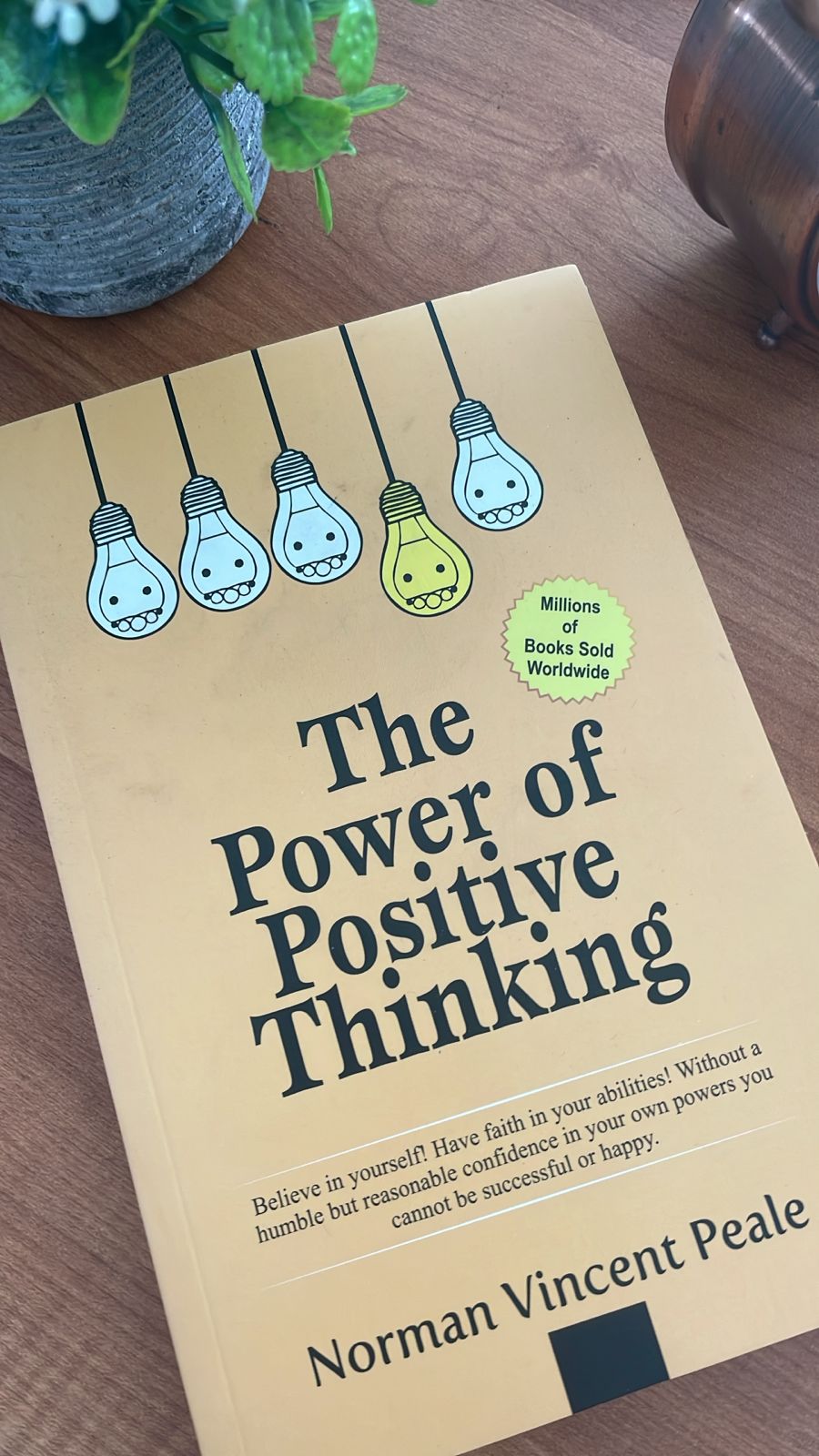
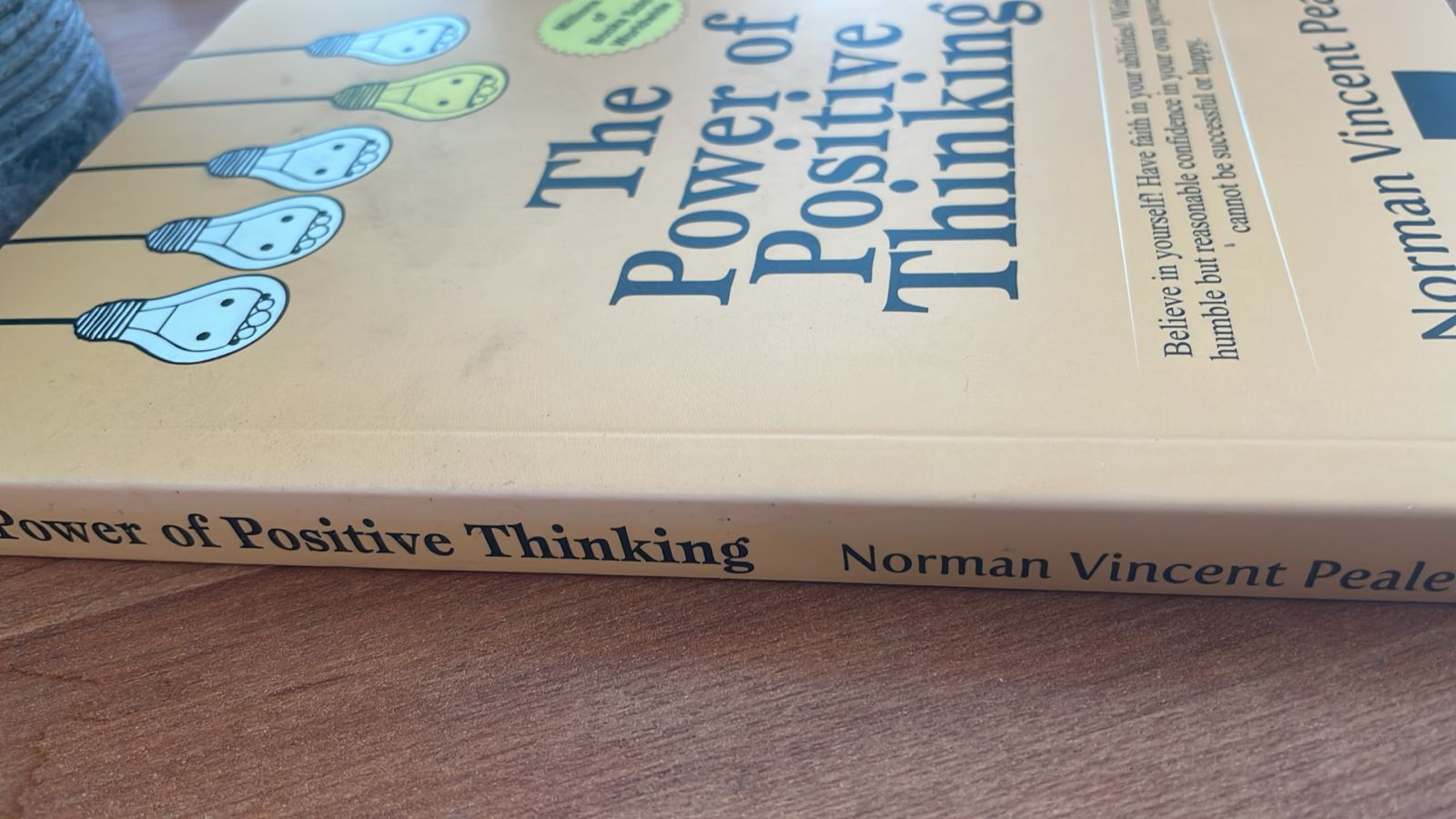


Power of Positive Thinking by Dr. Norman Vincent Peale
Original price was: රු2,100.00.රු1,600.00Current price is: රු1,600.00.
3 X Rs. 533.33 or 8% Cashback with


or 3 X රු533.33 with


or up to 4 X රු400.00 with


The Power of Positive Thinking by Norman Vincent Peale is a classic motivational and faith-based self-help book about building confidence, reducing worry, strengthening resilience and approaching life’s challenges with a more constructive mindset. Peale combines practical advice with Christian faith, prayer and inspirational guidance to help readers challenge defeatist thinking, pursue goals and develop greater inner peace. Ideal for readers interested in positive thinking, personal development, motivation and Christian inspirational books.
3 in stock
The Power of Positive Thinking by Norman Vincent Peale is a classic motivational book about developing confidence, reducing destructive worry, strengthening faith and approaching life’s difficulties with a more constructive mindset.
Many people spend enormous amounts of time thinking about what could go wrong.
What if I fail?
What if I am not good enough?
What if people reject me?
What if I cannot solve this problem?
Peale argues that repeatedly feeding the mind with fear, defeat and self-doubt can influence how a person approaches opportunities and setbacks.
His alternative is not simply pretending problems do not exist.
Instead, he encourages readers to combine:
Positive expectation.
Faith.
Constructive self-talk.
Prayer.
Persistence.
Relaxation.
Purposeful action.
The book was written from Peale’s explicitly Christian perspective, and faith in God forms a major part of his method. Readers should therefore expect frequent references to prayer, scripture and religious belief rather than a purely secular psychology book.
At the same time, many of the broader themes—confidence, challenging discouraging thoughts, reducing unnecessary worry, perseverance and treating other people better—can be understood even by readers approaching the book primarily as motivational literature.
The Power of Positive Thinking by Norman Vincent Peale – Book Overview
The Power of Positive Thinking by Norman Vincent Peale is built around the idea that thought patterns influence behavior.
If someone repeatedly tells themselves:
I cannot do this.
I always fail.
Nothing will improve.
they may become less likely to:
Try.
Prepare.
Speak confidently.
Take useful risks.
Continue after setbacks.
Peale encourages readers to replace habitual defeatism with thoughts that support action.
The goal is not merely to “feel positive.”
The goal is to become more capable of approaching life constructively.
Believe in Yourself
One of the most famous themes in The Power of Positive Thinking by Norman Vincent Peale is self-belief.
Peale argues that people often limit themselves before circumstances actually defeat them.
They decide:
I am not smart enough.
I do not have the right background.
Other people are better than me.
Why even try?
That internal defeat can become more damaging than the original obstacle.
Confidence Is Not Perfection
Healthy confidence does not mean believing:
I will never fail.
It means something closer to:
I can prepare.
I can learn.
I can improve.
I can recover if something goes wrong.
This form of confidence is more sustainable than pretending failure is impossible.
The Inferiority Habit
Peale discusses feelings of inadequacy and inferiority.
Many people compare themselves constantly with:
More successful coworkers.
Wealthier people.
More attractive people.
More confident speakers.
Social comparison can create the impression that everyone else is moving ahead while you remain behind.
The problem is that comparison rarely includes the full story.
You see someone else’s visible result.
You do not always see:
Their failures.
Their advantages.
Their private struggles.
Their preparation.
Stop Rehearsing Failure
People sometimes mentally rehearse failure before important events.
Before an interview:
“I’m going to embarrass myself.”
Before an exam:
“I’ll definitely fail.”
Before a presentation:
“Everyone will think I’m terrible.”
Repeatedly imagining disaster can increase anxiety.
Peale encourages replacing those automatic predictions with constructive expectations.
A modern, realistic version might be:
“I may feel nervous, but I can prepare well and handle the situation.”
Faith
Faith is central to the book.
Peale was a Christian minister, and his method repeatedly combines positive thinking with belief in God.
He encourages readers to use:
Prayer.
Biblical passages.
Faith.
Spiritual trust.
as sources of confidence and peace.
This religious foundation is important to understand before buying the book.
Positive Thinking Is Not Magic
This distinction matters.
Thinking positively does not automatically:
Create money.
Cure illness.
Guarantee promotion.
Fix relationships.
Remove structural problems.
A useful interpretation of positive thinking is that it can influence how someone responds to circumstances.
Thoughts may affect:
Motivation.
Persistence.
Communication.
Preparation.
Stress.
But external reality still matters.
Action Still Matters
Imagine someone wants a better job.
Positive thinking might help them believe improvement is possible.
But they still need to:
Build skills.
Prepare a CV.
Apply.
Network.
Practice interviews.
Take action.
Optimism without action becomes wishful thinking.
Worry
Another major theme in The Power of Positive Thinking by Norman Vincent Peale is worry.
Worry often involves mentally living inside a future problem before it has happened.
“What if?”
The mind repeatedly creates scenarios.
Sometimes planning is useful.
But endless worry can consume energy without improving the situation.
Worry Versus Planning
There is an important difference.
Planning asks:
What could happen, and what should I do?
Worry often asks:
What if something terrible happens?
Then repeats the question without reaching action.
A practical approach is to convert worry into a plan whenever possible.
Break the Worry Habit
Peale encourages readers to deliberately interrupt repetitive negative thought patterns.
That could involve:
Prayer.
Quiet reflection.
Positive statements.
Relaxation.
Focusing on constructive action.
The broader lesson remains useful:
Do not allow every fearful thought to automatically become your conclusion.
A Peaceful Mind
Peale places significant emphasis on inner peace.
A constantly agitated mind can make ordinary problems feel larger.
Calm helps people:
Think clearly.
Communicate better.
Prioritize.
Avoid impulsive decisions.
Rest is not wasted time if it improves judgment.
Slow Down Mentally
Modern life encourages constant stimulation.
Messages.
Notifications.
News.
Work.
Social media.
Deadlines.
Even though Peale wrote decades before smartphones, the idea of deliberately creating mental quiet may feel especially relevant today.
Energy
Peale also connects attitude with personal energy.
When people feel defeated before beginning, tasks can feel heavier.
When they believe effort may produce progress, action becomes easier.
This does not mean fatigue is imaginary.
Sleep, nutrition, health and workload matter.
But mental outlook can influence willingness to begin.
Enthusiasm
Enthusiasm can help create momentum.
Someone excited about a project may:
Work more consistently.
Communicate more convincingly.
Persist longer.
Attract collaborators.
But enthusiasm should be connected with reality.
Excitement is most useful when supported by preparation.
Expecting the Best
Peale frequently encourages expecting positive outcomes.
A balanced interpretation is not:
“Everything will definitely work.”
Instead:
“I will approach this believing a good outcome is possible.”
That mindset leaves room for hope without denying uncertainty.
The Power of Words
The language we repeatedly use about ourselves can influence our self-image.
Compare:
“I’m terrible at this.”
with:
“I’m still learning this.”
The first sounds permanent.
The second allows growth.
Language shapes how we interpret experience.
Positive Self-Talk
Constructive self-talk should remain believable.
Saying:
“I am the greatest person in the world”
may feel ridiculous.
Saying:
“I can learn this if I practice consistently”
is specific and actionable.
The strongest positive thinking supports reality rather than replacing it.
Problems Are Part of Life
The Power of Positive Thinking by Norman Vincent Peale does not promise a life without problems.
Instead, it focuses on developing attitudes that help readers face difficulty.
Problems may involve:
Work.
Money.
Health.
Relationships.
Confidence.
Fear.
The mindset becomes:
There may be a way forward.
Let me look for it.
Turn Problems Into Questions
Instead of:
“This is impossible.”
ask:
“What part can I solve first?”
Instead of:
“My business is failing.”
ask:
“Where exactly are we losing customers?”
Questions encourage investigation.
Statements of defeat often stop it.
Persistence
Positive thinking becomes meaningful when connected with perseverance.
A person may fail at the first attempt.
Or the fifth.
The key question becomes:
What should I learn before trying again?
Persistence should not mean repeating the same ineffective method forever.
It should include adaptation.
Failure Is an Event
One useful mindset is to separate:
“I failed”
from
“I am a failure.”
One describes an outcome.
The other turns an outcome into identity.
People can:
Fail an exam.
Lose a customer.
Miss an opportunity.
Make a mistake.
and still improve afterward.
Relationships
The official publisher also highlights improving personal and professional relationships as one of the book’s goals.
How we think about other people affects how we treat them.
If you constantly expect hostility, your own behavior may become defensive.
If you approach people with respect and openness, conversations may change.
Listen to People
Positive relationships require more than positive statements.
They require:
Listening.
Respect.
Patience.
Empathy.
Clear communication.
A positive attitude cannot replace these skills.
Resentment
Holding resentment can keep the mind focused on previous hurt.
That does not mean serious wrongdoing should be ignored.
Boundaries may still be necessary.
But constantly replaying anger can damage the person carrying it.
Peale encourages forgiveness and release through a Christian spiritual framework.
Kindness
Kindness is another practical expression of positive thinking.
A positive outlook that never improves how you treat other people is incomplete.
Character appears through behavior.
Gratitude
Gratitude redirects attention toward what is already valuable.
Health.
Family.
Friends.
Food.
Shelter.
Opportunity.
Skills.
Small improvements.
Gratitude does not mean ignoring problems.
It prevents problems from becoming the only things we notice.
Focus Shapes Experience
Two people can experience the same day differently depending on what they repeatedly notice.
One remembers:
Traffic.
A rude customer.
One mistake.
Another remembers:
A useful conversation.
Something learned.
A good meal.
Neither perspective contains the entire day.
Attention filters experience.
Goals
Peale encourages readers to develop confidence in pursuing ambitions.
Goals work better when translated into specific action.
Instead of:
“I want to become successful.”
ask:
What does success mean?
How will I measure progress?
What skill do I need next?
What should I do this week?
Positive thinking becomes stronger when attached to clear behavior.
Visualization
The book encourages mentally picturing constructive outcomes.
Visualization can help people rehearse:
Presentations.
Interviews.
Sports performance.
Difficult conversations.
However, visualization is most useful when combined with preparation.
Imagining success is not a substitute for doing the work required.
Faith Plus Effort
A recurring idea in The Power of Positive Thinking by Norman Vincent Peale is combining spiritual faith with purposeful effort.
For Peale, faith gives confidence and strength.
Then the reader acts.
This is important because the book should not be reduced to:
“Think good thoughts and wait.”
Its practical emphasis is closer to:
Believe.
Prepare.
Act.
Persist.
Handling Difficult Days
Positive thinkers still experience bad days.
They still feel:
Sad.
Angry.
Worried.
Exhausted.
The goal should not be forcing yourself to feel happy constantly.
Emotions provide information.
The healthier question is whether one difficult emotion will control every decision that follows.
Toxic Positivity
A modern reader should distinguish Peale’s constructive optimism from what is now sometimes called toxic positivity.
Toxic positivity happens when legitimate difficulty is dismissed with statements such as:
“Just be positive.”
“Everything happens for a reason.”
“Stop being negative.”
Serious problems may require:
Medical treatment.
Therapy.
Financial assistance.
Legal help.
Rest.
Practical change.
Positive thinking can complement appropriate support; it should not replace it.
Mental Health
Readers experiencing severe anxiety, depression, trauma or other mental-health symptoms should not treat The Power of Positive Thinking by Norman Vincent Peale as a substitute for qualified professional care.
Motivational books can provide encouragement.
Clinical conditions may require professional assessment and treatment.
Business Lessons
Business owners can apply several principles from the book.
Do not assume:
Customers will never buy.
A new idea will definitely fail.
The competition is unbeatable.
Instead, investigate.
Test.
Learn.
Improve.
Optimism can encourage experimentation.
Leadership
Leaders influence team atmosphere.
A leader who constantly communicates:
“We are doomed”
may reduce morale.
A leader who says:
“This is difficult, but here is our plan”
creates something different.
Good positive leadership combines:
Realism.
Hope.
Clarity.
Action.
Students
Students can apply the same ideas.
One bad result does not determine an entire academic future.
Ask:
What went wrong?
Did I study incorrectly?
Did I understand the questions?
Did I leave preparation too late?
How can I improve?
Constructive thinking turns disappointment into information.
Career Development
Job rejection can feel personal.
But rejection may reflect:
Competition.
Experience requirements.
Timing.
Fit.
Budget.
Many factors.
A positive response does not pretend rejection feels good.
It asks:
What do I improve before the next application?
Positive Thinking and Discipline
Positive thinking works best beside discipline.
Motivation says:
“I can do this.”
Discipline says:
“I will do today’s work even when I do not feel excited.”
Long-term improvement usually needs both.
Habits
Thinking patterns can become habits.
If your automatic response to every challenge is:
Impossible.
you are practicing pessimism.
Changing that habit takes repetition.
Notice the thought.
Question it.
Replace it with something more useful.
Then act.
Is The Power of Positive Thinking a Christian Book?
Yes.
This is important.
Norman Vincent Peale was a Christian clergyman, and the book openly uses Christian faith, prayer and scripture as central parts of its approach. Simon & Schuster specifically describes the book’s message in terms of “faith and inspiration” and “faith in action.”
Readers looking for completely secular self-help should know this before purchasing.
Is It a Psychology Book?
Not in the modern academic or clinical sense.
It is better categorized as:
Self-Help & Personal Development / Inspirational / Christian Motivation
Peale offers motivational and religious guidance rather than a modern evidence-based textbook in psychology.
Is It Still Relevant?
Many examples and some language reflect an older era.
However, themes such as:
Self-confidence.
Worry.
Discouragement.
Persistence.
Relationships.
Hope.
remain recognizable.
Modern readers can take useful principles while applying appropriate contemporary understanding of mental health and psychology.
Norman Vincent Peale
Norman Vincent Peale lived from 1898 to 1993 and wrote numerous books on faith, motivation and positive thinking. Simon & Schuster identifies him as the author of 46 books and one of the influential clergymen of his era.
The Power of Positive Thinking became his best-known work.
Edition Note
There are many editions of this classic, so check the ISBN on your physical copy before entering WooCommerce details.
For reference, Simon & Schuster currently lists the Touchstone trade paperback edition with:
Title: The Power of Positive Thinking
Author: Dr. Norman Vincent Peale
Publisher: Touchstone
ISBN-13: 9780743234801
Pages: 240
Publication date for this edition: March 12, 2003.
Your actual edition may use a different ISBN, page count, cover or publisher.
Important Themes
The Power of Positive Thinking by Norman Vincent Peale explores:
- Positive thinking
- Self-confidence
- Faith
- Prayer
- Worry
- Stress
- Perseverance
- Goal setting
- Optimism
- Relationships
- Inner peace
- Motivation
- Constructive self-talk
- Gratitude
- Resilience
- Fear
- Personal development
- Hope
- Discipline
- Christian spirituality
7 Powerful Lessons From The Power of Positive Thinking by Norman Vincent Peale
- Do not defeat yourself before you begin. Constantly telling yourself that something is impossible reduces the chance that you will prepare, attempt and persist long enough to discover what is actually possible.
- Confidence grows through constructive thinking and action. Positive statements alone are limited; they become more useful when followed by preparation, practice and real-world effort.
- Turn worry into action whenever possible. Repeatedly imagining future problems consumes energy. Identify what you can control and take the next useful step.
- Faith can provide strength during uncertainty. Peale’s explicitly Christian approach uses prayer, scripture and trust in God as sources of courage and emotional stability.
- Failure should not become identity. A failed attempt is information about one event, not permanent proof of your value or future potential.
- Your mental habits influence how you experience life. Repeated attention to fear and defeat can strengthen pessimism, while gratitude, hope and constructive self-talk can encourage a more productive response.
- Positive thinking works best with realistic action. Optimism should not mean denying difficulties. The strongest approach combines hope with discipline, problem-solving, learning and appropriate support.
Why Read The Power of Positive Thinking by Norman Vincent Peale?
The Power of Positive Thinking by Norman Vincent Peale is a strong choice for readers interested in classic self-help, confidence, motivation, faith, personal growth, overcoming worry and developing a more constructive attitude toward challenges.
It may especially appeal to readers who appreciate motivational books that combine practical advice with Christian spirituality.
The book can encourage readers to examine the sentences they repeat internally:
I cannot.
I always fail.
There is no point.
What if those thoughts were replaced with:
Let me prepare.
Let me try.
Let me learn.
Let me take the next step.
That small shift does not guarantee success.
But it can change behavior.
And behavior changes outcomes far more reliably than wishful thinking alone.
Who Should Read This Book?
The Power of Positive Thinking by Norman Vincent Peale may especially appeal to:
- Readers of classic self-help
- People working on confidence
- Readers interested in Christian motivation
- Students facing self-doubt
- Entrepreneurs and business professionals
- Readers dealing with excessive everyday worry
- People interested in positive self-talk
- Readers who enjoy motivational classics
- People pursuing personal-development goals
- Anyone interested in the historical development of positive-thinking literature
Readers wanting modern clinical psychology or evidence-based mental-health treatment should use this as motivational literature rather than as a substitute for professional guidance.
The Power of Positive Thinking by Norman Vincent Peale – Change the Way You Face the Problem
The Power of Positive Thinking by Norman Vincent Peale is ultimately about changing the mental position from which you approach life.
The obstacle may still exist.
The deadline remains.
The interview remains.
The financial problem remains.
The difficult conversation remains.
Positive thinking does not magically remove those things.
What it can change is the person meeting them.
Instead of:
“I cannot handle this,”
you may begin with:
“What can I do next?”
Instead of:
“I failed, so I am a failure,”
you can ask:
“What did this failure teach me?”
Instead of allowing worry to repeat the same frightening future endlessly, you can search for one concrete action available today.
For Peale, Christian faith provides the foundation beneath that mindset.
For many readers, that spiritual emphasis is one of the book’s greatest strengths.
Other readers may prefer to separate the broader principles of confidence and resilience from the theology.
Either way, the enduring reason people continue returning to the book is simple:
Human beings still struggle with fear.
Self-doubt.
Worry.
Discouragement.
And the temptation to surrender before finding out what another attempt might accomplish.
The Power of Positive Thinking by Norman Vincent Peale offers a classic message of faith, hope and constructive action for readers who want to approach those challenges with greater confidence.
Learn more about The Power of Positive Thinking by Norman Vincent Peale on the official Simon & Schuster website.
Explore more motivational and personal development books at Bargain Books.
| Author | Dr. Norman Vincent Peale |
|---|---|
| Language | English |
| Type | Paperback Printed Book (Second Quality Copy) |
Be the first to review “Power of Positive Thinking by Dr. Norman Vincent Peale”
Related products
-34%

Self-Help & Psychology
Original price was: රු2,350.00.රු1,550.00Current price is: රු1,550.00.
3 X Rs. 516.67 or 8% Cashback with
or 3 X රු516.67 with
or up to 4 X රු387.50 with
-26%
Non-Fiction & Knowledge
Original price was: රු2,000.00.රු1,490.00Current price is: රු1,490.00.
3 X Rs. 496.67 or 8% Cashback with
or 3 X රු496.67 with
or up to 4 X රු372.50 with
රු2,000.00
3 X Rs. 666.67 or 8% Cashback with
or 3 X රු666.67 with
or up to 4 X රු500.00 with
-34%
Non-Fiction & Knowledge
Original price was: රු2,250.00.රු1,490.00Current price is: රු1,490.00.
3 X Rs. 496.67 or 8% Cashback with
or 3 X රු496.67 with
or up to 4 X රු372.50 with

Non-Fiction & Knowledge
රු1,950.00
3 X Rs. 650.00 or 8% Cashback with
or 3 X රු650.00 with
or up to 4 X රු487.50 with
-24%
Out of stock
Non-Fiction & Knowledge
Original price was: රු2,100.00.රු1,600.00Current price is: රු1,600.00.
3 X Rs. 533.33 or 8% Cashback with
or 3 X රු533.33 with
or up to 4 X රු400.00 with
Self-Help & Psychology
රු2,200.00
3 X Rs. 733.33 or 8% Cashback with
or 3 X රු733.33 with
or up to 4 X රු550.00 with
-23%

Non-Fiction & Knowledge
Original price was: රු2,200.00.රු1,700.00Current price is: රු1,700.00.
3 X Rs. 566.67 or 8% Cashback with
or 3 X රු566.67 with
or up to 4 X රු425.00 with
Reviews
There are no reviews yet.