
No products in the cart.
-17%
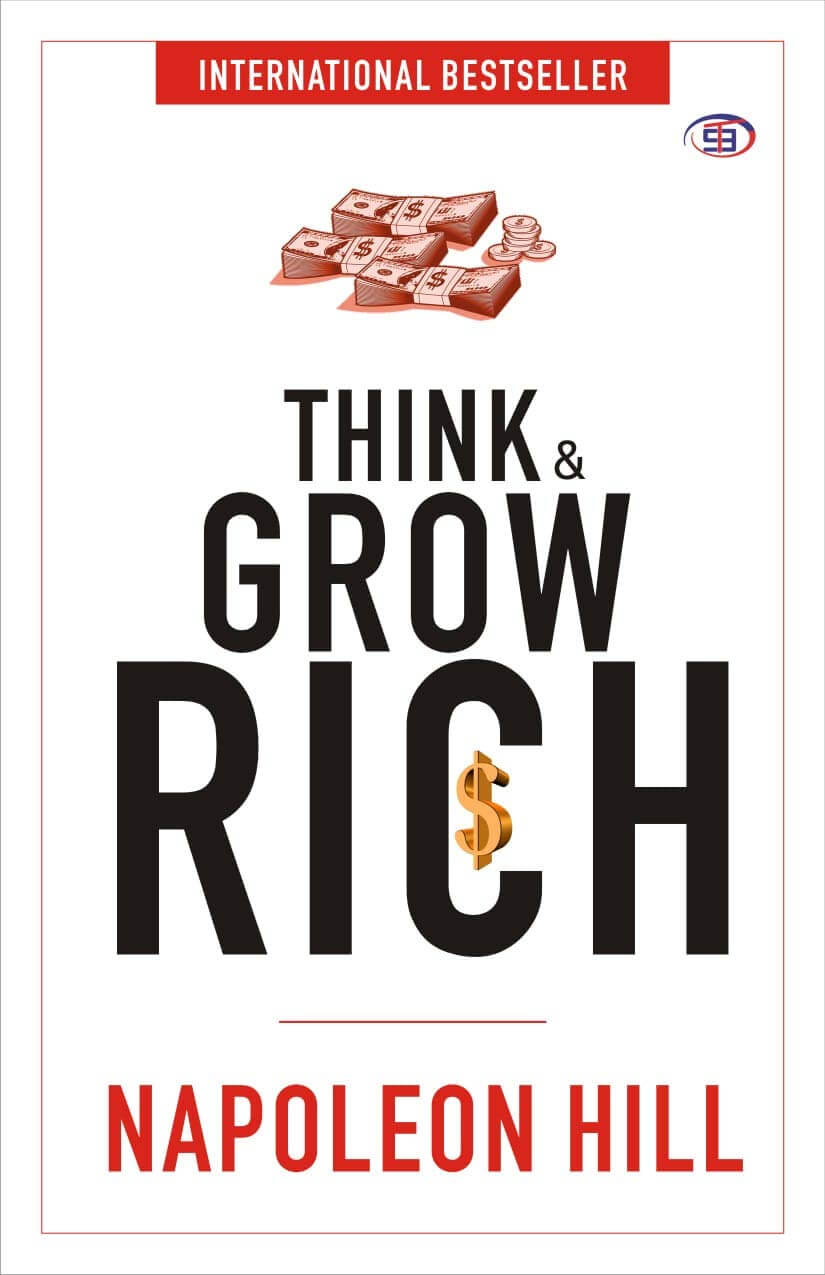
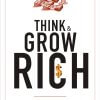
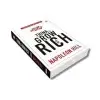
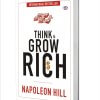
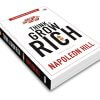
Think and Grow Rich by Napoleon Hill
Original price was: රු1,800.00.රු1,500.00Current price is: රු1,500.00.
3 X Rs. 500.00 or 8% Cashback with


or 3 X රු500.00 with


or up to 4 X රු375.00 with


“Think and Grow Rich” by Napoleon Hill is a timeless classic that has inspired millions to achieve success and wealth through the power of positive thinking and goal-setting. Based on Hill’s study of the habits of successful individuals, this book offers a step-by-step guide to transforming desires into financial and personal success.
Out of stock
Email when stock available
Think and Grow Rich by Napoleon Hill
Think and Grow Rich by Napoleon Hill is one of the most influential personal-development and success books ever published.
First released in 1937, the book explores the habits, attitudes, and principles Hill believed were commonly found among highly successful people.
Despite its title, the book is not only about becoming financially wealthy.
It discusses goal setting, confidence, persistence, decision-making, planning, knowledge, leadership, and turning ideas into action.
About Think and Grow Rich
Napoleon Hill spent years studying business leaders, inventors, entrepreneurs, and other successful individuals.
From these observations, he developed a framework built around thirteen principles.
His central argument is that major achievements usually begin with a clear purpose.
A vague wish is rarely enough.
People must decide what they want, build a plan, take action, and continue working when difficulties appear.
Think and Grow Rich presents this process through stories, principles, and exercises.
13 Principles in Think and Grow Rich
1. Desire
Hill begins with desire.
He argues that meaningful achievement starts with a strong and clearly defined goal.
Simply saying “I want to be successful” is too vague.
The desired outcome should be specific.
A clear target makes planning easier.
It also gives people something measurable to work toward.
2. Faith
Faith in the book refers largely to developing confidence in your ability to pursue a goal.
Self-doubt can discourage action.
Confidence can make persistence easier.
Hill encourages readers to repeatedly focus on their goals and reinforce the belief that those goals are achievable through effort and planning.
3. Autosuggestion
Autosuggestion involves intentionally influencing your thinking through repeated ideas and statements.
Hill recommends regularly reviewing goals.
The purpose is to keep those goals visible instead of allowing them to disappear beneath everyday distractions.
Modern readers may think of this as reinforcing priorities and intentions.
4. Specialized Knowledge
General knowledge alone does not automatically create success.
Think and Grow Rich emphasizes knowledge that can be applied toward a specific objective.
A person does not need to know everything.
They need relevant knowledge.
They can also collaborate with people who possess skills they do not have.
5. Imagination
Ideas often begin with imagination.
Entrepreneurs imagine products.
Writers imagine stories.
Engineers imagine solutions.
Business leaders imagine better systems.
Hill argues that imagination allows people to combine existing knowledge in new ways.
Ideas become more valuable when they are converted into practical action.
6. Organized Planning
Desire without a plan can remain only a dream.
Hill encourages readers to create organized plans.
If the first plan fails, revise it.
A failed strategy does not necessarily mean the goal itself is impossible.
It may simply mean a different approach is required.
7. Decision
Successful people need to make decisions.
Constant hesitation can prevent progress.
Hill warns against allowing other people’s opinions to control every choice.
Gather information.
Think carefully.
Then decide.
The ability to make thoughtful decisions is especially important in business and leadership.
8. Persistence
Persistence is one of the best-known principles in Think and Grow Rich.
Most meaningful goals involve setbacks.
A business can struggle.
A project can fail.
An application can be rejected.
The first attempt may not work.
Hill argues that persistence separates temporary failure from permanent defeat.
9. The Master Mind
The Master Mind principle focuses on cooperation.
One person has limited knowledge and experience.
A strong group can combine different abilities.
Hill encourages readers to build relationships with people who bring useful knowledge, experience, perspective, and support.
This idea remains relevant to teams, partnerships, and professional networks.
10. Sex Transmutation
This is one of the more unusual chapters for modern readers.
Hill argues that strong human drives and emotional energy can sometimes be redirected into creativity, ambition, and productive work.
Readers may interpret this more broadly as the idea of channeling intense energy toward constructive goals.
11. The Subconscious Mind
Hill believed that repeated thoughts influence behaviour.
Ideas repeatedly reinforced can affect confidence, habits, and decisions.
This section reflects the psychological language available during Hill’s era.
Some claims should be read as motivational philosophy rather than established modern neuroscience.
12. The Brain
Hill discusses the brain as part of the process connecting thought, emotion, and action.
Some scientific claims in this chapter reflect ideas from the early twentieth century and should not automatically be treated as current scientific conclusions.
The practical takeaway is simpler.
What people repeatedly focus on can influence their behaviour.
13. The Sixth Sense
The final principle concerns intuition.
Hill describes a stage where knowledge, experience, judgment, and awareness may help someone recognize possibilities more quickly.
Modern readers may interpret this as experienced intuition rather than a supernatural guarantee.
Good intuition often develops through repeated exposure and learning.
Desire Must Become Action
One of the strongest messages in Think and Grow Rich is that wanting something is not enough.
People often say they want success.
Far fewer define what success means.
Fewer still build a clear plan.
Hill repeatedly encourages readers to turn vague wishes into definite goals.
Write the goal down.
Determine what actions are required.
Then start working.
Persistence After Failure
Failure receives significant attention throughout the book.
Hill does not treat every setback as evidence that a goal should be abandoned.
Instead, he encourages readers to study what went wrong.
Was the strategy weak?
Was important knowledge missing?
Was the timing poor?
Could a different plan work?
This makes failure part of the learning process.
The Importance of Planning
Plans create structure.
A large goal can feel overwhelming.
Breaking it into smaller actions makes progress easier to manage.
Entrepreneurs can turn ideas into tasks.
Students can divide study goals into daily targets.
Professionals can create milestones.
The exact method may differ.
The principle remains useful.
Specialized Knowledge and Learning
Think and Grow Rich emphasizes continuous learning.
A person may need to develop new skills to achieve a particular goal.
They may also need help from others.
Modern professional success often depends on the same principle.
Technology changes.
Industries change.
Customer behavior changes.
People who continue learning can adapt more effectively.
The Master Mind Principle
No one succeeds entirely alone.
Teachers provide knowledge.
Colleagues provide skills.
Partners provide resources.
Mentors provide experience.
Customers provide feedback.
Hill’s Master Mind concept highlights the power of combining complementary abilities.
A good team can often solve problems more effectively than one person working alone.
Decision and Procrastination
Procrastination can turn opportunities into missed chances.
Hill connects procrastination with indecision.
This does not mean every decision should be rushed.
Important decisions deserve careful thinking.
But endless analysis can also become a form of avoidance.
The practical lesson is to gather sufficient information and then move forward.
Confidence and Self-Belief
Confidence affects action.
Someone who assumes failure is guaranteed may never begin.
Someone who believes improvement is possible is more likely to practise and persist.
Hill therefore spends considerable time discussing belief.
However, confidence should be combined with action.
Belief alone does not replace knowledge, effort, planning, or realistic evaluation.
Money Is Not the Only Meaning of Rich
Although the title says Think and Grow Rich, readers can apply many of its principles beyond money.
A student can use clear goals.
An athlete can use persistence.
A business owner can use organized planning.
A professional can build specialized knowledge.
Success can include financial achievement.
But it can also involve personal development, meaningful work, or accomplishing a difficult objective.
Reading the Book with a Modern Perspective
Some parts of the book remain highly practical.
Goal setting, persistence, planning, networking, learning, and decision-making are widely relevant.
Other sections reflect the language and scientific understanding of the 1930s.
Readers should distinguish motivational ideas from scientifically established claims.
The book is best approached as a classic of personal-development literature rather than a modern academic psychology textbook.
Who Should Read This Book?
Think and Grow Rich is ideal for readers interested in personal development, entrepreneurship, business, motivation, and productivity.
Entrepreneurs may appreciate its emphasis on purpose and persistence.
Students can apply its ideas about goals and learning.
Professionals may find useful lessons about planning, collaboration, and decision-making.
Readers interested in the history of modern self-help literature may also find it significant.
About Napoleon Hill
Napoleon Hill was an American author best known for writing about personal achievement and success.
His work became highly influential in twentieth-century self-help and business literature.
Think and Grow Rich remains his best-known book.
Other titles associated with Hill include The Law of Success, Outwitting the Devil, and Success Through a Positive Mental Attitude.
Readers can learn more about available editions through the official Penguin Random House Think and Grow Rich page.
Product Details
Title: Think and Grow Rich
Author: Napoleon Hill
Genre: Self-Help / Personal Development / Business / Success
Language: English
Original Publication: 1937
Main Topics: Goal Setting, Desire, Planning, Persistence, Decision-Making, Knowledge, Cooperation, Success
Because Think and Grow Rich is a public-domain-era classic with many modern reprints and revised editions, ISBN, publisher, page count, cover design, dimensions, and additional material vary significantly.
Always check the ISBN printed on the physical copy you are selling before entering the final WooCommerce product specifications.
Explore More Self-Development Books
Think and Grow Rich has remained popular because many of its central principles are simple to understand and broadly applicable.
Define what you want.
Create a plan.
Develop useful knowledge.
Work with good people.
Make decisions.
Learn from failure.
And continue working toward meaningful goals.
Readers interested in mindset and personal development can explore more Self-Help & Psychology Books at Bargain Books.
Readers interested in entrepreneurship and professional success can also explore Business, Finance & Economics Books at Bargain Books.
For readers seeking a classic introduction to goal setting, persistence, planning, and achievement, Think and Grow Rich remains one of the best-known books in personal-development literature.
| Author | Napoleon Hill |
|---|---|
| Language | English |
| Type | Paperback Printed Book (Second Quality Copy) |
| ISBN/ISSN | 9353338158 |
| Pages | 240 |
Be the first to review “Think and Grow Rich by Napoleon Hill”
Related products
![Stories of bible [hardcover]](https://bargainbooks.lk/wp-content/uploads/Stories-of-bible-hardcover-3-3-300x450.jpeg)
Damaged & Imperfect Books
රු1,750.00
3 X Rs. 583.33 or 8% Cashback with
or 3 X රු583.33 with
or up to 4 X රු437.50 with
Damaged & Imperfect Books
රු1,700.00
3 X Rs. 566.67 or 8% Cashback with
or 3 X රු566.67 with
or up to 4 X රු425.00 with
-33%
Out of stock
Business, Finance & Economics
Original price was: රු2,300.00.රු1,550.00Current price is: රු1,550.00.
3 X Rs. 516.67 or 8% Cashback with
or 3 X රු516.67 with
or up to 4 X රු387.50 with
![Stories of bible [hardcover]](https://bargainbooks.lk/wp-content/uploads/Stories-of-bible-hardcover-3-2-300x450.jpeg)
Damaged & Imperfect Books
රු1,750.00
3 X Rs. 583.33 or 8% Cashback with
or 3 X රු583.33 with
or up to 4 X රු437.50 with
-16%
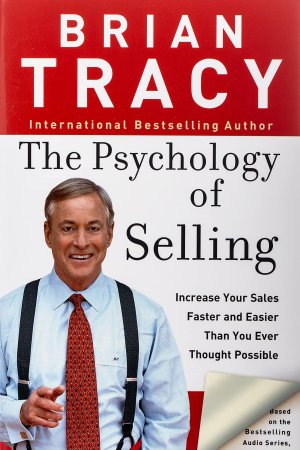
Out of stock
Business, Finance & Economics
Original price was: රු1,900.00.රු1,600.00Current price is: රු1,600.00.
3 X Rs. 533.33 or 8% Cashback with
or 3 X රු533.33 with
or up to 4 X රු400.00 with
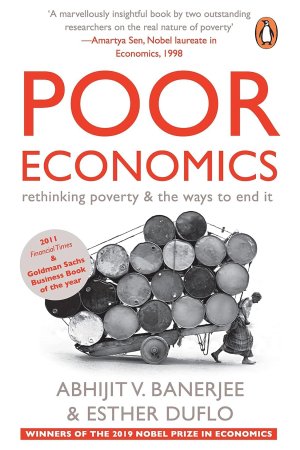
Business, Finance & Economics
රු2,500.00
3 X Rs. 833.33 or 8% Cashback with
or 3 X රු833.33 with
or up to 4 X රු625.00 with
-21%
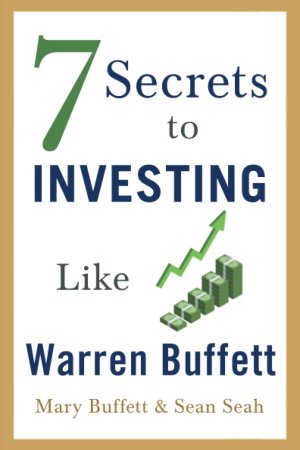
Non-Fiction & Knowledge
7 Secrets to Investing Like Warren Buffett by Mary Buffett & Sean Seah
Original price was: රු1,900.00.රු1,500.00Current price is: රු1,500.00.
3 X Rs. 500.00 or 8% Cashback with
or 3 X රු500.00 with
or up to 4 X රු375.00 with
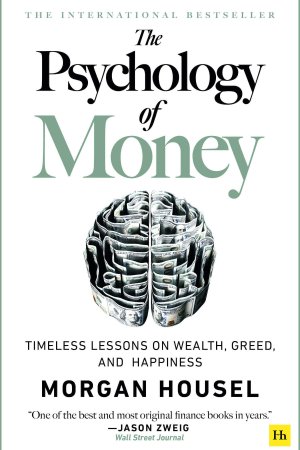
Out of stock
Business, Finance & Economics
රු1,700.00
3 X Rs. 566.67 or 8% Cashback with
or 3 X රු566.67 with
or up to 4 X රු425.00 with
Reviews
There are no reviews yet.