
No products in the cart.
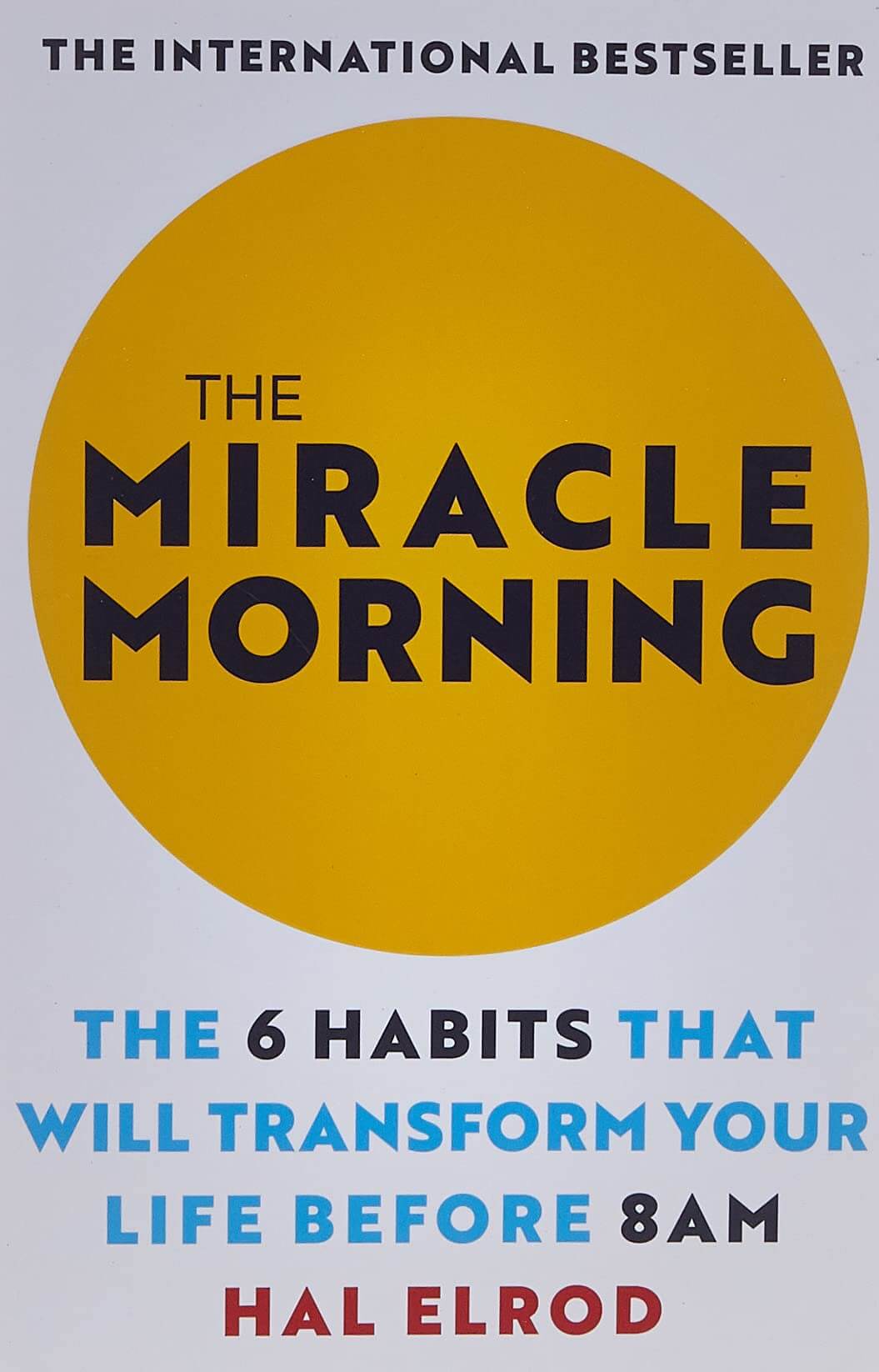
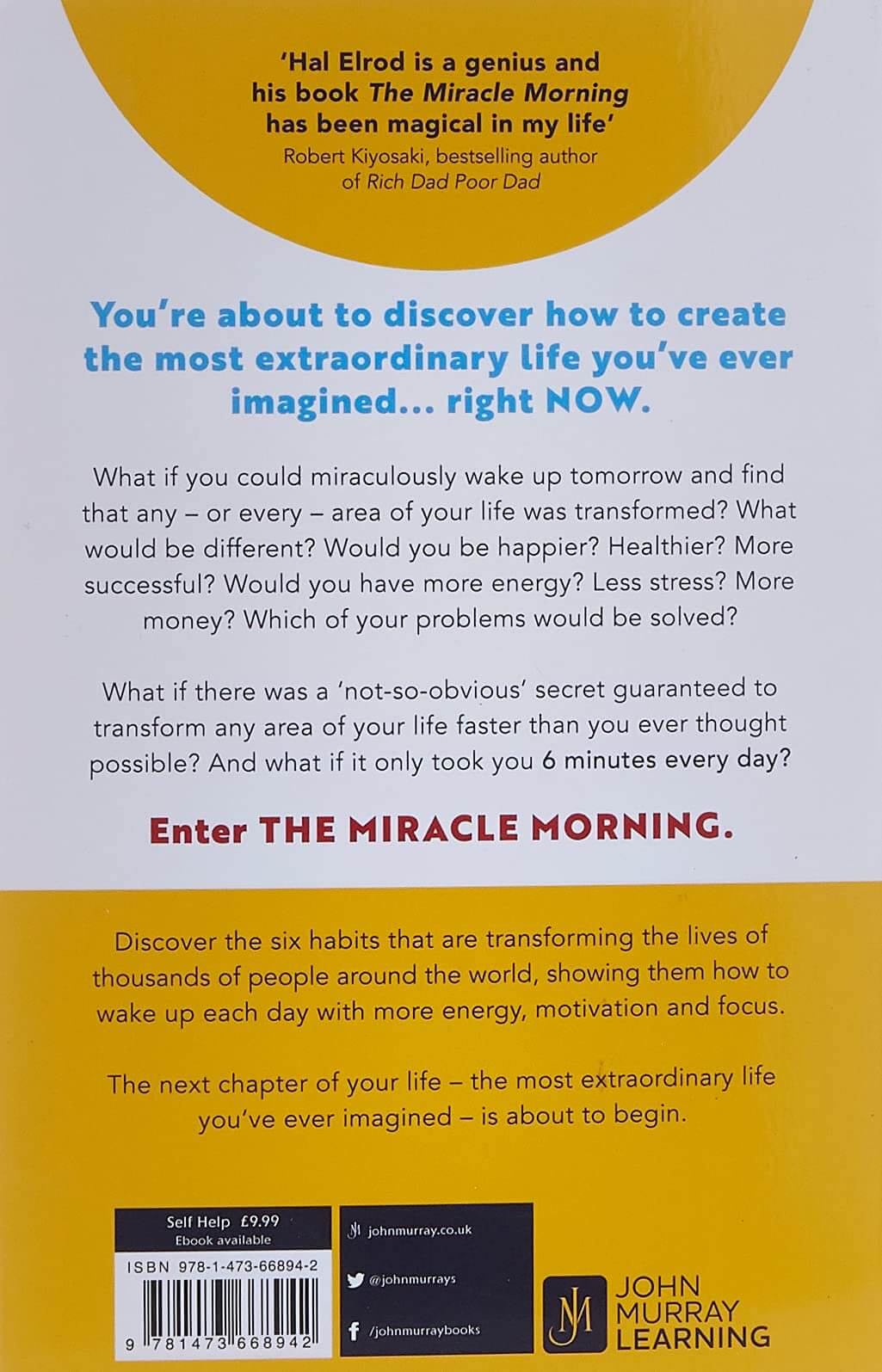

The Miracle Morning by Hal Elrod
රු1,300.00
3 X Rs. 433.33 or 8% Cashback with


or 3 X රු433.33 with


or up to 4 X රු325.00 with


The Miracle Morning by Hal Elrod is a bestselling personal-development guide built around the six-part S.A.V.E.R.S. morning routine: Silence, Affirmations, Visualization, Exercise, Reading and Scribing. Hal Elrod explains how a consistent morning routine can create intentional time for learning, fitness, reflection, goal setting and self-improvement. Practical and highly adaptable, it is ideal for students, professionals, entrepreneurs and anyone looking to build stronger habits and begin each day with greater purpose.
Out of stock
Email when stock available
The Miracle Morning by Hal Elrod is a practical personal-development book built around a simple idea: how you begin your morning can influence the direction of your entire day.
Many people wake up and immediately:
Check their phone.
Read messages.
Rush to get ready.
Think about work.
Feel stressed.
React to other people’s demands.
Hal Elrod proposes a different approach.
Instead of allowing the day to control you from the moment you wake up, create a small period of intentional personal development before the rest of the world begins demanding your attention.
The heart of the book is a six-part morning routine known as S.A.V.E.R.S.
The letters stand for:
Silence
Affirmations
Visualization
Exercise
Reading
Scribing
Each practice is designed to develop a different part of your life.
Silence can create calm.
Affirmations can clarify intentions.
Visualization can strengthen focus.
Exercise can increase physical activity and energy.
Reading can support learning.
Scribing can encourage reflection.
Together, they form what Hal Elrod calls the Miracle Morning.
The method does not require hours.
A full routine might take around an hour, but Elrod also explains how each practice can be shortened for people with very limited time.
The purpose is not simply becoming a “morning person.”
It is to create intentional time for personal growth.
The Miracle Morning by Hal Elrod may appeal especially to readers interested in:
Habits.
Productivity.
Motivation.
Self-discipline.
Goal setting.
Personal development.
Morning routines.
Mindfulness.
Reading.
Journaling.
Fitness.
The book is written in an energetic, motivational style and encourages readers to stop waiting for the perfect moment to improve their lives.
Instead:
Wake up.
Begin.
Repeat.
The Miracle Morning by Hal Elrod – Book Overview
The Miracle Morning by Hal Elrod asks readers to examine an important question:
What happens during the first hour of your day?
For many people, mornings happen almost automatically.
Alarm.
Snooze.
Phone.
Bathroom.
Breakfast.
Work.
There may be little time devoted intentionally to:
Thinking.
Learning.
Exercise.
Reflection.
Goals.
Elrod argues that creating even a small morning routine around these areas can gradually change how people approach the rest of their lives.
Why Morning Matters
Morning has one important advantage.
For many people, it occurs before the day’s responsibilities become fully active.
Later in the day, plans can be interrupted by:
Work.
Calls.
Family.
Traffic.
Messages.
Emergencies.
Fatigue.
A morning routine creates a protected space before those demands accumulate.
Morning Is Not Magic
The title uses the word “Miracle,” but readers should understand the practical idea correctly.
Waking up early does not magically guarantee:
Money.
Success.
Happiness.
Fitness.
Career advancement.
The value comes from what you repeatedly do with the time.
A morning routine is simply a structure.
Results still depend on:
Behavior.
Consistency.
Skills.
Circumstances.
Opportunity.
Personal Development Before Daily Demands
One of the most useful ideas in The Miracle Morning by Hal Elrod is putting personal development into the calendar rather than hoping it will happen eventually.
People often say:
I should read more.
I should exercise.
I should meditate.
I should journal.
I should plan my goals.
But “someday” can become never.
A routine gives those intentions a specific place.
The S.A.V.E.R.S. Framework
The central framework in the book is:
S – Silence
A – Affirmations
V – Visualization
E – Exercise
R – Reading
S – Scribing
These six habits are intended to work together.
You can also adapt the order according to personal preference.
Silence
The first practice is Silence.
Silence can involve:
Meditation.
Breathing.
Prayer.
Reflection.
Gratitude.
The important idea is beginning intentionally rather than immediately entering the noise of the outside world.
Why Silence Matters
Modern life contains constant stimulation.
Notifications.
Videos.
Messages.
News.
Music.
Conversation.
Silence creates a temporary break.
Instead of reacting immediately, you observe.
Meditation
Some readers may use meditation during the Silence portion.
A simple practice can involve:
Sit comfortably.
Focus on breathing.
Notice thoughts.
Return attention.
You do not need to eliminate every thought.
The goal is awareness.
Prayer
Readers with religious or spiritual practices may prefer prayer.
The framework is flexible.
The important thing is choosing a form of quiet reflection that is personally meaningful.
Gratitude
Silence can also include thinking about things you appreciate.
Gratitude does not require denying problems.
You can acknowledge difficulty while still noticing what is good.
Affirmations
The second practice is Affirmations.
Affirmations are intentional statements about:
Goals.
Values.
Identity.
Actions.
Elrod encourages readers to move beyond vague positive statements.
Effective Affirmations
An affirmation should not simply say:
“I am rich.”
or:
“I am successful.”
A more useful affirmation can include:
What you want.
Why it matters.
What you will do.
For example:
“I am becoming a stronger communicator by practicing public speaking twice each week because clear communication will help me become a better leader.”
This connects intention with action.
Affirmations Are Not Magic Spells
Repeating a sentence alone does not automatically change reality.
Affirmations are most useful when they reinforce:
Priorities.
Commitments.
Behaviors.
They should support action, not replace it.
Identity
Affirmations can help clarify the kind of person you want to become.
Instead of only focusing on:
What do I want?
ask:
Who do I need to become?
Disciplined?
Patient?
Healthy?
Skilled?
Consistent?
Visualization
The third practice is Visualization.
Visualization involves mentally imagining:
Goals.
Actions.
Desired outcomes.
Elrod encourages readers to picture both success and the behaviors required to create it.
Visualize the Process
Imagine wanting to become fit.
Do not only imagine the final body.
Visualize:
Putting on training clothes.
Going to the gym.
Completing the workout.
Making healthier food choices.
This connects visualization with behavior.
Goals Become More Concrete
A vague goal such as:
“I want a successful business”
can feel distant.
Visualization may help make the goal more specific.
Imagine:
Serving customers.
Building the product.
Handling difficult conversations.
Reviewing financial results.
Improving operations.
The goal begins to feel connected with actual work.
Visualization and Motivation
Visualization can increase motivation for some people because it reminds them what they are working toward.
But visualization should remain paired with action.
Imagining success without doing the work does not create success.
Exercise
The fourth practice is Exercise.
Elrod includes physical movement because personal development should not focus only on the mind.
Exercise can support:
Energy.
Fitness.
Mood.
General health.
Exercise Does Not Need to Be Complicated
Morning exercise could involve:
Walking.
Stretching.
Yoga.
Bodyweight movements.
Cardio.
Strength training.
The exact routine depends on:
Health.
Fitness level.
Available time.
Personal goals.
Start Small
If you currently exercise zero minutes each morning, beginning with five or ten minutes may be more sustainable than suddenly planning a ninety-minute workout.
Consistency matters.
Movement and Energy
Some people assume exercise will make them more tired.
In reality, moderate physical activity can help many people feel more alert.
However, individuals should choose exercise appropriate to their health and abilities.
Reading
The fifth practice is Reading.
Reading allows you to learn from people who have already spent years studying or experiencing something.
In a short period each morning, you can study:
Business.
Psychology.
Finance.
Leadership.
Health.
Relationships.
History.
Skills.
Read With Purpose
Do not read only to finish pages.
Ask:
What can I learn?
What can I apply?
What idea should I remember?
Reading becomes more valuable when it changes behavior.
Ten Pages a Day
A small daily reading target can become surprisingly significant.
Ten pages may feel insignificant.
But repeated across hundreds of days, it can mean completing many books each year.
This illustrates an important principle in The Miracle Morning by Hal Elrod:
Small daily actions accumulate.
Learning Compounds
One book may teach one useful idea.
That idea may improve:
Career.
Business.
Relationships.
Money.
Decision-making.
Then another book adds another idea.
Knowledge can compound when it is applied.
Scribing
The final practice is Scribing, which means writing.
Elrod uses the word “Scribing” so the final letter of SAVERS works.
In practice, this usually means:
Journaling.
Writing reflections.
Planning.
Recording gratitude.
Tracking goals.
Journaling
Writing can help turn vague thoughts into something visible.
A thought can feel confusing inside the mind.
Put it on paper and it may become clearer.
What Can You Write?
You might write:
What am I grateful for?
What did I learn yesterday?
What is my most important goal?
What am I worried about?
What action should I take today?
What went well?
What should I improve?
Reflection
Without reflection, people can repeat the same patterns for years.
Journaling creates an opportunity to review:
Choices.
Progress.
Mistakes.
Emotions.
Tracking Progress
A journal also creates a record.
Weeks later, you can look back and notice:
What improved.
What remained difficult.
Which goals changed.
That can provide perspective.
The Six-Minute Miracle Morning
One of the most practical ideas in the book is that the routine can be compressed.
If you do not have an hour, you might spend roughly one minute on each SAVERS practice.
The exact timing can vary.
The point is flexibility.
One Minute of Silence
Breathe.
Pause.
Become present.
One Minute of Affirmations
Review your most important commitments.
One Minute of Visualization
Imagine the priority and the actions required.
One Minute of Exercise
Move your body.
One Minute of Reading
Read a page or useful passage.
One Minute of Scribing
Write one thought, goal or point of gratitude.
Even a short routine can reinforce consistency.
Consistency Over Perfection
This is one of the strongest practical lessons in The Miracle Morning by Hal Elrod.
A perfect routine performed three times may be less useful than a simple routine maintained consistently.
Do not make the routine so complicated that you abandon it.
Waking Up Earlier
The book often encourages waking earlier in order to create this personal-development time.
But the deeper lesson is not that everyone must wake at exactly:
4:00 AM.
5:00 AM.
6:00 AM.
People have different:
Jobs.
Sleep needs.
Family responsibilities.
Chronotypes.
Schedules.
Sleep Still Matters
Getting up earlier should not mean constantly sleeping less.
Sleep is essential for:
Health.
Attention.
Memory.
Mood.
Performance.
If you move your wake time earlier, moving bedtime earlier may also be necessary.
Do Not Sacrifice Sleep for Productivity
A responsible application of The Miracle Morning by Hal Elrod should not turn into:
“I will sleep four hours so I can wake up at 4 AM.”
Chronic sleep deprivation can damage performance and health.
The goal is better mornings, not exhausted mornings.
The Snooze Button
Elrod discusses the difficulty many people have getting out of bed.
Alarm.
Snooze.
Five more minutes.
Again.
Again.
He encourages creating a wake-up strategy that reduces decision-making.
Put the Alarm Away From the Bed
A simple method is placing the alarm somewhere that requires you to physically get up.
Once standing, waking fully can become easier.
Drink Water
After sleeping for several hours, drinking water can become part of a wake-up routine.
Simple actions can signal:
The day has started.
Create Momentum
Wake up.
Drink water.
Brush teeth.
Change clothes.
Begin routine.
One action leads into the next.
This reduces the need to repeatedly decide what to do.
Habits
Morning routines depend heavily on habits.
A habit removes some decision-making.
Instead of asking each morning:
Should I read today?
the routine already contains reading.
Decision Fatigue
Every small decision consumes attention.
A repeated routine can reduce that.
The sequence becomes familiar.
Silence.
Affirmations.
Visualization.
Exercise.
Reading.
Scribing.
Habit Stacking
Although this term is widely associated with other habit literature, the Miracle Morning naturally works like a sequence of connected habits.
Completing one becomes the cue for the next.
Motivation Is Unreliable
Some mornings you will feel motivated.
Others you will not.
A routine reduces dependence on emotion.
You do it because:
This is what I do in the morning.
Discipline
Discipline means following through even when temporary feelings say:
Skip it.
Not today.
Tomorrow.
This does not mean ignoring illness or genuine need for rest.
It means distinguishing between:
Needing recovery.
And simply avoiding effort.
Personal Development
The Miracle Morning by Hal Elrod is ultimately a personal-development system.
The six activities are not completely new individually.
People have practiced:
Meditation.
Exercise.
Reading.
Writing.
Goal setting.
for centuries.
The innovation is bringing them together into one repeatable morning system.
Becoming Better Before Doing More
Many people focus on:
More goals.
More work.
More money.
More projects.
Elrod emphasizes developing the person pursuing those goals.
Better:
Mindset.
Knowledge.
Health.
Clarity.
Discipline.
Level 10 Life
The book encourages readers to improve multiple areas of life rather than focusing entirely on one.
For example:
Health.
Finances.
Career.
Relationships.
Personal growth.
Spirituality.
Happiness.
Success Is Multidimensional
Someone can have an excellent career while struggling with:
Health.
Relationships.
Mental well-being.
A balanced personal-development approach asks whether growth is happening across important areas.
Goals
Goals provide direction.
Without a clear target, effort becomes scattered.
A goal answers:
Where am I trying to go?
A system answers:
What am I repeatedly doing to get there?
The Miracle Morning provides a system for supporting those goals.
Write Down Goals
Writing goals can make them more concrete.
Instead of:
“I want to improve my finances”
write:
“I will save X amount each month.”
Specificity improves accountability.
Break Large Goals Into Actions
Goal:
Write a book.
Action:
Write 500 words each morning.
Goal:
Improve English.
Action:
Read five English pages and learn five new words each morning.
Goal:
Start a business.
Action:
Contact three potential customers each day.
Big goals become less intimidating when translated into repeatable actions.
Morning Routines for Students
Students can adapt SAVERS.
Silence:
Two minutes of breathing.
Affirmations:
Review academic goals.
Visualization:
Picture focused study.
Exercise:
Stretch or walk.
Reading:
Study useful material.
Scribing:
Plan the day’s priorities.
Morning Routines for Entrepreneurs
Entrepreneurs can also adapt The Miracle Morning by Hal Elrod.
Silence can help manage stress.
Affirmations clarify business priorities.
Visualization prepares for important conversations.
Exercise supports energy.
Reading develops business knowledge.
Scribing helps review goals and decisions.
Morning Routines for Professionals
Professionals can use morning time for:
Learning.
Career planning.
Exercise.
Reflection.
Instead of arriving at work already mentally overwhelmed, they begin with intentional activity.
Morning Routines for Creatives
Writers, designers and creators may use the quiet morning period for:
Reading.
Journaling.
Idea generation.
Visualization.
Creative practice.
Some people find early hours particularly useful because interruptions are limited.
Reading Every Day
The reading portion is especially valuable for lifelong learning.
Imagine reading ten pages of:
Business.
Finance.
Psychology.
Leadership.
Communication.
every day.
Over time, exposure to useful ideas can become substantial.
Apply What You Read
Reading alone is not enough.
Ask:
What one thing from today’s pages can I use?
Application converts information into value.
Journaling for Business
Entrepreneurs might write:
Yesterday’s sales.
Today’s priority.
Current problem.
Potential solution.
Important customer feedback.
This turns journaling into practical business reflection.
Visualization Before Important Events
Visualization may also be useful before:
Presentations.
Interviews.
Sales meetings.
Exams.
Imagine not just success but performing the necessary actions calmly and effectively.
Affirmations for Skills
Instead of:
“I am an amazing public speaker”
try:
“I am improving as a public speaker by practicing weekly, requesting feedback and preparing thoroughly.”
This remains grounded in action.
Morning Exercise and Productivity
Physical movement can help create separation between:
Sleep.
And focused work.
Even a short walk can become a transition ritual.
Create Your Own Version
You do not have to copy another person’s exact morning.
Your routine may be:
20 minutes.
30 minutes.
60 minutes.
What matters is designing something you can actually maintain.
Order of SAVERS
The sequence is flexible.
Perhaps you prefer:
Exercise first.
Then shower.
Then Silence.
Then Reading.
That is fine.
The principles matter more than rigid order.
Morning Versus Evening
What if you genuinely work better at night?
You can still use many ideas from The Miracle Morning by Hal Elrod.
The book emphasizes mornings, but:
Reading.
Writing.
Meditation.
Exercise.
Goal review.
remain valuable at other times.
The best routine is one that works within your life.
Avoid Morning-Routine Competition
Social media can turn morning routines into status competitions.
Wake up at 4:30.
Run 10 km.
Read 100 pages.
Meditate 60 minutes.
Cold shower.
Journal.
Work by 7.
That can become unrealistic.
The purpose of a routine is improvement, not proving that you are more disciplined than everyone else.
Start Small
A sustainable beginning might be:
5 minutes Silence.
5 minutes Reading.
5 minutes Scribing.
Then gradually add other practices.
Build Gradually
If a one-hour routine feels impossible, do not use that as a reason to do nothing.
Ten minutes is still something.
Track the Habit
Use:
Calendar.
Habit tracker.
Notebook.
App.
Mark each day completed.
Visible consistency can motivate continued effort.
Missing a Day
One missed day does not destroy a habit.
The danger is turning:
One day
into:
One week.
Return at the next reasonable opportunity.
Avoid All-or-Nothing Thinking
You wake up late.
You only have ten minutes.
Fixed thinking:
“No time. Skip everything.”
Flexible thinking:
“I can do a short version.”
Adaptation protects consistency.
The 30-Day Challenge
The Miracle Morning approach often encourages readers to commit long enough to experience the routine rather than judging after two days.
Building habits can feel difficult at first.
Then familiarity increases.
Habit Development Is Not Exact
Popular habit advice sometimes gives exact numbers of days.
Real habit formation varies depending on:
Behavior.
Person.
Environment.
Frequency.
Difficulty.
Do not assume one fixed number applies universally.
Morning Environment
Design your surroundings to make the routine easier.
Prepare:
Book.
Journal.
Exercise clothes.
Water.
Meditation space.
the night before.
Reduce friction.
Prepare at Night
A strong morning often begins the previous evening.
Decide:
Wake time.
First activity.
Clothes.
Important priority.
Then mornings require fewer decisions.
Evening Routine
Good mornings are difficult without reasonable nights.
An evening routine might include:
Reducing screens.
Preparing tomorrow.
Setting alarm.
Going to bed consistently.
Phone Use
One of the easiest ways to lose a morning is opening social media immediately.
A quick check becomes:
10 minutes.
20 minutes.
30 minutes.
Consider delaying nonessential phone use until after the personal-development routine.
Protect Attention
Attention is valuable.
The first thing you consume each morning can influence what occupies your mind.
Choose intentionally.
News
News can be important.
But it may not need to be the first thing your mind receives every morning.
You can decide when to engage with it rather than allowing notifications to decide for you.
A Morning Routine Creates Agency
This may be one of the deepest benefits of The Miracle Morning by Hal Elrod.
Before reacting to everyone else’s priorities, you spend time with your own.
That creates a sense of agency.
Self-Confidence
Confidence can grow when you repeatedly keep promises to yourself.
You said:
I will read.
Then you read.
I will exercise.
Then you exercise.
Small acts of follow-through can strengthen self-trust.
Self-Trust
Self-trust matters because goals depend on believing:
When I make a commitment, I will attempt to follow it.
Breaking every personal promise weakens that trust.
Identity-Based Habit Change
Over time, actions can influence identity.
Read daily:
I am a reader.
Exercise regularly:
I am someone who cares for my health.
Journal:
I am reflective.
Identity can reinforce behavior.
Resilience
Hal Elrod’s own story is closely connected with resilience.
He has publicly discussed surviving a serious car accident and later other major health challenges.
His personal experiences contribute to the motivational tone of the book.
Adversity
One message in The Miracle Morning by Hal Elrod is that circumstances can be extremely difficult while people still retain some control over their next actions.
However, this should not be misread as claiming positive thinking solves every serious problem.
Medical, financial or psychological difficulties may require professional help and practical support.
Responsibility Without Self-Blame
Taking responsibility can mean asking:
What can I do next?
It does not mean:
Every bad thing that happened is my fault.
That distinction matters.
Emotional Well-Being
Practices such as:
Reflection.
Journaling.
Exercise.
Meditation.
may support well-being for many people.
But they should not be treated as substitutes for professional mental-health treatment when someone needs it.
Productivity
The Miracle Morning is often categorized as a productivity book.
But its approach is broader.
The goal is not simply doing more work.
It includes:
Health.
Reflection.
Learning.
Personal growth.
Productivity Should Serve Life
Doing more tasks is not automatically success.
Productivity should ideally help you spend more time on things that matter.
Priorities
Your morning routine can include reviewing your most important priority.
Ask:
If only one meaningful thing gets done today, what should it be?
This reduces scattered attention.
Deep Work
After completing a morning routine, some people may choose to move directly into focused work.
The early hours can be useful for tasks requiring concentration.
Learning New Skills
The reading and writing parts can support skill development.
If you want to improve English:
Read English every morning.
Write a paragraph.
If you want to learn business:
Read business books.
Take notes.
If you want to learn coding:
Read technical material.
Practice.
The framework is adaptable.
Personal Finance
A Miracle Morning routine could include financial review.
Read about money.
Write financial goals.
Review spending.
Plan savings.
The method does not dictate the goal.
It provides protected time.
Relationships
Personal development should not become so obsessive that relationships are neglected.
A successful morning routine should improve your life, not create constant conflict with:
Partner.
Children.
Household responsibilities.
Adapt appropriately.
Parents
Parents of young children may not have predictable quiet mornings.
That does not mean the framework is useless.
The routine may need to be:
Shorter.
Moved.
Split.
Flexible.
Real life matters more than rigid rules.
Shift Workers
People working:
Night shifts.
Rotating shifts.
Early retail shifts.
Healthcare schedules.
may not fit a traditional early-morning routine.
The core idea can become a post-waking routine, regardless of clock time.
The Best Time Is the Time You Can Maintain
Some people function best early.
Others later.
The deeper principle is consistency and intentional practice.
Is The Miracle Morning a Self-Help Book?
Yes.
The Miracle Morning by Hal Elrod fits strongly within:
Self-help.
Personal development.
Productivity.
Habits.
Motivation.
It combines motivational storytelling with a practical morning-routine framework.
Is The Miracle Morning About Waking at 5 AM?
Not specifically.
The important idea is creating intentional personal-development time early in your day.
The exact wake time depends on your schedule.
Do I Have to Do All Six SAVERS?
The full system includes all six.
But readers can adapt:
Timing.
Order.
Duration.
The goal is building a sustainable routine.
Is The Miracle Morning Good for Beginners?
Yes.
The SAVERS framework is straightforward and does not require advanced knowledge.
Beginners can start with short versions.
Is The Miracle Morning Good for Students?
Yes.
Students can use the framework for:
Study.
Goal setting.
Reading.
Exercise.
Journaling.
Stress management.
Is The Miracle Morning Good for Entrepreneurs?
Yes.
Entrepreneurs may find it useful for establishing consistent time for:
Learning.
Planning.
Health.
Reflection.
Goals.
Does the Miracle Morning Guarantee Success?
No.
No morning routine guarantees:
Wealth.
Career success.
Health.
Happiness.
The routine provides a structure that can support constructive habits.
Results depend on many other factors.
Is Waking Up Early Always Better?
No.
Adequate sleep is more important than forcing an unnecessarily early wake time.
Someone who sleeps from midnight to 4 AM simply to perform a morning routine may be harming rather than improving performance.
Important Themes
The Miracle Morning by Hal Elrod explores:
- Morning routines
- Personal development
- SAVERS
- Silence
- Affirmations
- Visualization
- Exercise
- Reading
- Scribing
- Journaling
- Habits
- Goal setting
- Discipline
- Motivation
- Productivity
- Self-improvement
- Learning
- Consistency
- Resilience
- Intentional living
7 Powerful Habits and Lessons From The Miracle Morning by Hal Elrod
There are many lessons in The Miracle Morning by Hal Elrod, but seven stand out:
- Begin the day intentionally rather than reactively – Creating a protected period before daily demands can help you focus on your own growth and priorities.
- Use the SAVERS framework to develop multiple areas of life – Silence, Affirmations, Visualization, Exercise, Reading and Scribing combine mental, physical and reflective practices.
- Consistency matters more than creating a perfect routine – A short routine maintained regularly can be more useful than an ambitious routine that quickly becomes impossible to sustain.
- Affirmations should support action rather than magical thinking – Useful affirmations clarify goals, reasons and specific behaviors that move you toward improvement.
- Reading and journaling turn mornings into learning time – A small amount of daily reading and reflection can accumulate into significant personal development over time.
- Your routine should adapt to your real life – Students, parents, shift workers, entrepreneurs and professionals can adjust the timing and duration rather than following one rigid schedule.
- Protect sleep while improving your morning – Waking earlier can create useful time, but the routine should not depend on chronic sleep deprivation.
Why Read The Miracle Morning by Hal Elrod?
The Miracle Morning by Hal Elrod is an excellent choice for readers interested in:
- Morning routines
- Hal Elrod
- SAVERS
- Self-help
- Personal development
- Productivity
- Motivation
- Habit building
- Goal setting
- Meditation
- Affirmations
- Visualization
- Exercise
- Reading
- Journaling
- Self-discipline
- Time management
- Personal growth
- Success habits
- Intentional living
It is especially suitable for readers who frequently say:
“I want to improve myself, but I never find the time.”
The book offers one possible answer:
Create the time before the rest of the day takes over.
Who Should Read This Book?
The Miracle Morning by Hal Elrod may especially appeal to:
- Students
- Entrepreneurs
- Business owners
- Professionals
- Personal-development readers
- People trying to become more disciplined
- Readers interested in productivity
- People wanting to read more
- People trying to start journaling
- Readers interested in meditation
- People building healthier routines
- Anyone who struggles with unstructured mornings
- People working toward long-term goals
- Readers who enjoy practical self-help books
The Miracle Morning by Hal Elrod – Win the Morning by Investing in Yourself
The Miracle Morning by Hal Elrod is ultimately not really about the alarm clock.
It is about intention.
Most people have goals.
Learn more.
Become healthier.
Build a business.
Write.
Read.
Meditate.
Improve relationships.
Develop skills.
But daily life easily pushes those goals aside.
Work becomes urgent.
Messages become urgent.
Other people’s needs become urgent.
Personal development becomes:
Tomorrow.
Then tomorrow becomes next week.
Then next year.
The Miracle Morning creates a simple rule:
Give some of the beginning of the day to yourself.
Sit quietly.
Clarify what matters.
Picture where you are going.
Move your body.
Learn something.
Write something.
Then begin the rest of the day.
None of these actions is miraculous by itself.
The power comes from repetition.
One page does not transform your knowledge.
But thousands of pages may.
One short workout does not transform your health.
But hundreds of workouts may.
One journal entry may not change your life.
But years of reflection can reveal patterns you would otherwise miss.
One morning rarely creates transformation.
A pattern of intentional mornings can influence the kind of person you become.
That is the deeper message behind The Miracle Morning by Hal Elrod.
You do not have to wait for:
More motivation.
More confidence.
More free time.
A perfect Monday.
A new year.
Start with tomorrow morning.
Even if you only have six minutes.
Use the time intentionally.
Then repeat.
For readers interested in habits, productivity, motivation, self-discipline and personal growth, The Miracle Morning by Hal Elrod offers a memorable and flexible framework for making personal development part of everyday life rather than something continually postponed.
Learn more about The Miracle Morning by Hal Elrod on The Miracle Morning official website.
Explore more personal development and productivity books at Bargain Books.
| Weight | 0.163 kg |
|---|---|
| Dimensions | 13.02 × 1.27 × 20 cm |
| Author | Hal Elrod |
| Language | English |
| Type | Paperback Printed Book (Second Quality Copy) |
| ISBN/ISSN | 1473668948 |
| Pages | 224 |
Be the first to review “The Miracle Morning by Hal Elrod”
Related products
-24%
Out of stock
Non-Fiction & Knowledge
Original price was: රු2,100.00.රු1,600.00Current price is: රු1,600.00.
3 X Rs. 533.33 or 8% Cashback with
or 3 X රු533.33 with
or up to 4 X රු400.00 with
-19%
Out of stock
Non-Fiction & Knowledge
Original price was: රු2,650.00.රු2,150.00Current price is: රු2,150.00.
3 X Rs. 716.67 or 8% Cashback with
or 3 X රු716.67 with
or up to 4 X රු537.50 with
-24%
Out of stock
Non-Fiction & Knowledge
Original price was: රු2,100.00.රු1,600.00Current price is: රු1,600.00.
3 X Rs. 533.33 or 8% Cashback with
or 3 X රු533.33 with
or up to 4 X රු400.00 with

Non-Fiction & Knowledge
රු1,700.00
3 X Rs. 566.67 or 8% Cashback with
or 3 X රු566.67 with
or up to 4 X රු425.00 with
-26%
Out of stock
Non-Fiction & Knowledge
Original price was: රු2,000.00.රු1,490.00Current price is: රු1,490.00.
3 X Rs. 496.67 or 8% Cashback with
or 3 X රු496.67 with
or up to 4 X රු372.50 with
රු2,000.00
3 X Rs. 666.67 or 8% Cashback with
or 3 X රු666.67 with
or up to 4 X රු500.00 with
Out of stock
Non-Fiction & Knowledge
රු1,600.00
3 X Rs. 533.33 or 8% Cashback with
or 3 X රු533.33 with
or up to 4 X රු400.00 with
-19%

Out of stock
Biography
Original price was: රු2,400.00.රු1,950.00Current price is: රු1,950.00.
3 X Rs. 650.00 or 8% Cashback with
or 3 X රු650.00 with
or up to 4 X රු487.50 with
Reviews
There are no reviews yet.