
No products in the cart.
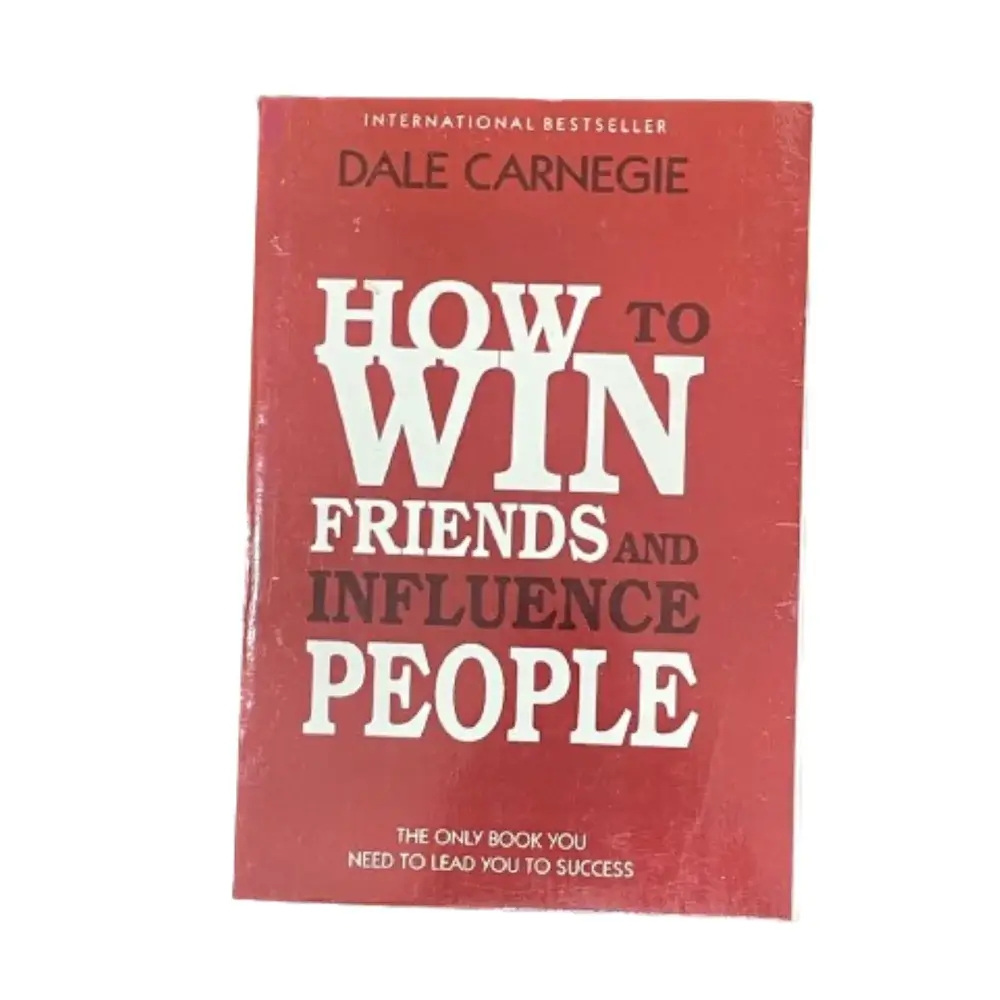




How To win Friends And Influence People by Dale Carnegie


රු1,600.00
3 X Rs. 533.33 or 8% Cashback with


or 3 X රු533.33 with


or up to 4 X රු400.00 with


How to Win Friends and Influence People by Dale Carnegie is a timeless communication and personal-development classic that teaches readers how to build stronger relationships, listen effectively, avoid unnecessary conflict, influence people respectfully, become more persuasive, and improve leadership and social skills.
Out of stock
Email when stock available
How to Win Friends and Influence People by Dale Carnegie is a timeless personal-development classic that teaches practical principles for communicating better, building stronger relationships, becoming more persuasive, handling disagreements, and understanding what motivates other people.
Originally published in 1936, the book has remained popular because its central ideas are based on human behavior rather than temporary business trends.
People want to feel appreciated.
They want to feel heard.
They dislike being embarrassed.
They often resist direct criticism.
They respond better when someone shows genuine interest in them.
These simple observations form the foundation of How to Win Friends and Influence People by Dale Carnegie.
Rather than teaching manipulation, Carnegie focuses on improving the way people interact with one another.
The book encourages readers to listen carefully, avoid unnecessary arguments, recognize other people’s perspectives, show sincere appreciation, and communicate in ways that make cooperation easier.
Its lessons can be used in personal relationships, business, leadership, sales, customer service, networking, management, and everyday conversations.
How to Win Friends and Influence People by Dale Carnegie – Book Overview
How to Win Friends and Influence People by Dale Carnegie is organized around practical principles for dealing with people.
The book covers several major areas:
- Fundamental techniques for handling people
- Ways to make people like you
- Methods for winning people to your way of thinking
- Leadership techniques for influencing behavior without creating resentment
Each principle is supported with stories and examples.
The ideas are deliberately simple.
Carnegie does not ask readers to memorize complex psychological theories.
Instead, he focuses on everyday behaviors that can change the way people respond to us.
Smile.
Remember names.
Listen.
Ask questions.
Show appreciation.
Avoid unnecessary criticism.
Try to understand the other person’s point of view.
These actions may seem small, but repeated consistently they can have a major effect on relationships.
Don’t Criticize, Condemn, or Complain
One of the most famous principles in How to Win Friends and Influence People by Dale Carnegie is to avoid unnecessary criticism.
People rarely enjoy being told they are wrong.
Even when criticism is accurate, the person receiving it may become defensive.
They may justify their behavior.
They may become angry.
They may stop listening.
Carnegie encourages readers to understand why someone behaved in a particular way before immediately condemning them.
This does not mean ignoring serious problems.
Managers still need to correct mistakes.
Parents need to guide children.
Colleagues sometimes need honest feedback.
But there is a difference between constructive feedback and humiliation.
The goal should be improvement, not simply proving that another person was wrong.
Give Honest and Sincere Appreciation
Appreciation is another central lesson in How to Win Friends and Influence People by Dale Carnegie.
People naturally want recognition.
They want their effort to matter.
They want to know when they have done something well.
Carnegie distinguishes genuine appreciation from empty flattery.
Flattery is often insincere and designed to manipulate.
Appreciation is based on something real.
A manager might thank an employee for handling a difficult customer well.
A teacher might recognize a student’s improvement.
A friend might acknowledge someone’s support during a difficult period.
Specific appreciation is usually more meaningful than vague praise.
Instead of saying, “Good job,” explain what was done well.
This makes the appreciation feel genuine.
Become Genuinely Interested in Other People
One of the most practical lessons in How to Win Friends and Influence People by Dale Carnegie is that people tend to respond positively when someone shows genuine interest in them.
Many conversations fail because both people are waiting for an opportunity to talk about themselves.
A better approach is curiosity.
Ask about the other person’s work.
Interests.
Experiences.
Ideas.
Goals.
Family.
Challenges.
Then actually listen to the answer.
The word “genuinely” matters.
Pretending to be interested simply to gain something from another person usually becomes obvious eventually.
Real relationships develop when curiosity is sincere.
Remember People’s Names
Carnegie famously emphasizes the importance of names.
A person’s name is deeply connected to identity.
Remembering someone’s name communicates attention.
Forgetting it repeatedly can communicate the opposite.
How to Win Friends and Influence People by Dale Carnegie encourages readers to make a conscious effort to remember names when meeting people.
Pay attention during introductions.
Repeat the name naturally.
Connect it with something memorable.
Use it appropriately in conversation.
This technique can be especially useful in:
- Networking
- Sales
- Customer service
- Leadership
- Teaching
- Business meetings
- Social events
Remembering small personal details can also strengthen relationships.
Be a Good Listener
Listening is one of the most important communication skills discussed in How to Win Friends and Influence People by Dale Carnegie.
People often believe being a good conversationalist means being interesting.
Carnegie shows that it also means being interested.
A strong listener does not constantly interrupt.
They do not immediately redirect every conversation toward themselves.
They allow the other person to finish.
They ask follow-up questions.
They notice important details.
Listening creates connection because people feel respected when they are heard.
This principle applies equally to friendships, relationships, management, customer service, and leadership.
Talk in Terms of the Other Person’s Interests
People naturally pay more attention to subjects that matter to them.
How to Win Friends and Influence People by Dale Carnegie encourages readers to understand another person’s interests before trying to communicate an idea.
Suppose you are presenting a proposal to your manager.
You may care about how interesting the project is.
Your manager may care more about cost, customer satisfaction, and revenue.
If you communicate only from your own perspective, the proposal may fail.
A better approach is to connect the idea with the other person’s priorities.
This does not mean manipulating them.
It means communicating in a way that makes the relevance clear.
Make the Other Person Feel Important
People want to feel valued.
How to Win Friends and Influence People by Dale Carnegie encourages readers to recognize this need.
Respect people.
Ask for their opinions.
Acknowledge expertise.
Show appreciation.
Avoid making people feel insignificant.
This principle is especially important for leaders.
Employees who feel respected may become more engaged.
Customers who feel valued may become more loyal.
Friends who feel appreciated are more likely to maintain strong relationships.
The key is sincerity.
Making people feel important works only when you genuinely recognize their value.
Avoid Arguments
One of Carnegie’s famous ideas is that winning an argument can still mean losing the relationship.
How to Win Friends and Influence People by Dale Carnegie explains that arguments often make people more committed to their original position.
When someone feels attacked, they defend themselves.
Even if you prove them technically wrong, they may leave the conversation feeling embarrassed or resentful.
This does not mean never disagreeing.
Disagreement is normal.
Instead, Carnegie encourages respectful discussion.
Listen first.
Find areas of agreement.
Avoid humiliating the other person.
Ask questions.
Present your perspective calmly.
The objective should be understanding and progress rather than victory.
Show Respect for Other People’s Opinions
People are more willing to listen when they feel respected.
Statements such as “You’re completely wrong” can immediately create resistance.
How to Win Friends and Influence People by Dale Carnegie encourages readers to communicate disagreement more carefully.
You might say:
“I see it differently.”
“I may be mistaken, but here’s how I understand it.”
“Can we look at another possibility?”
This creates space for discussion.
Respect does not require agreement.
You can strongly disagree while still treating the other person with dignity.
Admit When You Are Wrong
Admitting mistakes can be difficult.
People naturally want to protect their reputation.
But How to Win Friends and Influence People by Dale Carnegie teaches that admitting a mistake quickly can actually increase respect.
If you know you were wrong, attempting to defend the mistake often makes the situation worse.
A clear admission can reduce tension.
“I made the wrong decision.”
“I misunderstood the situation.”
“I should have handled that differently.”
These statements show maturity.
Leaders especially benefit from this principle because employees notice when managers refuse to accept responsibility.
Begin in a Friendly Way
The beginning of a difficult conversation can influence everything that follows.
If someone begins aggressively, the other person may immediately become defensive.
How to Win Friends and Influence People by Dale Carnegie encourages readers to start difficult conversations in a friendly manner whenever possible.
You can acknowledge something positive.
Express respect.
Explain the issue calmly.
Ask for cooperation.
A friendly opening does not guarantee agreement.
But it increases the chances that the conversation remains productive.
Try to See Things From the Other Person’s Perspective
Empathy is one of the strongest underlying themes in How to Win Friends and Influence People by Dale Carnegie.
Before judging someone’s behavior, ask:
Why might they see the situation differently?
What information do they have?
What pressures are they facing?
What do they want?
What are they afraid of losing?
Understanding another person’s perspective does not mean accepting everything they do.
It simply gives you more information.
That information can make communication much more effective.
Let the Other Person Feel the Idea Is Theirs
People are often more committed to ideas they helped create.
This principle is especially valuable in leadership and management.
Instead of simply telling a team exactly what to do, a manager might ask:
“What do you think would solve this problem?”
“What approach would work best?”
“What would you change?”
When people participate in creating a solution, they may feel greater ownership over the result.
How to Win Friends and Influence People by Dale Carnegie encourages readers to involve people rather than unnecessarily controlling them.
Appeal to Better Motives
People generally prefer to think of themselves positively.
They may want to see themselves as responsible, fair, honest, generous, or professional.
Carnegie suggests that communication can sometimes become more effective when it appeals to these positive motives.
Instead of threatening someone, remind them of the values they already believe in.
For example, a manager may emphasize professionalism and responsibility rather than immediately using punishment.
This approach works best when it is sincere and connected to real expectations.
Leadership Without Creating Resentment
Leadership is an important part of How to Win Friends and Influence People by Dale Carnegie.
Leaders need to influence behavior.
But poorly delivered criticism can damage confidence and relationships.
Carnegie offers several ideas for correcting people more effectively.
Begin with appreciation.
Discuss mistakes indirectly when appropriate.
Mention your own mistakes.
Ask questions instead of always giving direct orders.
Allow people to save face.
Praise improvement.
Give people a positive reputation to live up to.
These techniques aim to improve behavior without unnecessarily damaging dignity.
Let People Save Face
Embarrassing someone publicly can create long-term resentment.
How to Win Friends and Influence People by Dale Carnegie encourages readers to protect people’s dignity.
Suppose an employee makes a mistake.
Correcting them privately may produce better results than humiliating them in front of colleagues.
The issue can still be addressed.
Standards can still be maintained.
But the person does not need to be publicly embarrassed.
This principle applies to workplaces, classrooms, families, and friendships.
Praise Improvement
People are more motivated when progress is recognized.
Carnegie encourages readers to notice improvement rather than focusing only on remaining mistakes.
How to Win Friends and Influence People by Dale Carnegie demonstrates how encouragement can influence behavior.
If someone is learning a new skill, early performance may not be perfect.
But recognizing progress can help them continue.
This principle is especially useful for:
- Managers
- Teachers
- Parents
- Coaches
- Team leaders
- Mentors
Encouragement can help people believe improvement is possible.
Make Faults Seem Easy to Correct
When people believe a problem is impossible to fix, they may stop trying.
How to Win Friends and Influence People by Dale Carnegie encourages leaders to communicate confidence.
Instead of saying:
“You are terrible at presentations.”
A manager might say:
“Your content is strong. If we improve the opening and slow down the delivery, this presentation could become much more effective.”
The second approach identifies a problem while also suggesting improvement is achievable.
This can create motivation instead of discouragement.
Communication in Business
The principles in How to Win Friends and Influence People by Dale Carnegie are highly relevant to professional life.
The book can help with:
- Leadership
- Sales
- Customer service
- Negotiation
- Networking
- Management
- Interviews
- Teamwork
- Business relationships
- Workplace communication
Technical knowledge is important.
But success often also depends on relationships.
A brilliant employee who cannot communicate may struggle to influence others.
A manager who does not listen may lose talented employees.
A salesperson who focuses only on the product may fail to understand the customer.
People skills can therefore become a major professional advantage.
Communication in Personal Relationships
The same principles also apply outside business.
Friends want to feel heard.
Partners want appreciation.
Family members want respect.
Arguments become easier when people try to understand each other’s perspectives.
How to Win Friends and Influence People by Dale Carnegie encourages readers to improve relationships through simple behaviors.
Listen.
Avoid unnecessary criticism.
Show appreciation.
Admit mistakes.
Respect opinions.
Remember important details.
These habits can strengthen both personal and professional connections.
Influence Without Manipulation
The word “influence” sometimes creates concern because people associate it with manipulation.
But the core message of How to Win Friends and Influence People by Dale Carnegie is different.
Carnegie repeatedly emphasizes genuine interest, sincere appreciation, and respect.
Manipulation is usually designed to benefit one person regardless of what happens to the other.
Healthy influence looks for cooperation.
It asks:
How can we create a result that works for both sides?
Understanding motivation makes communication more effective.
But respect should remain part of the process.
7 Powerful Lessons From How to Win Friends and Influence People
How to Win Friends and Influence People by Dale Carnegie contains many practical principles, but seven lessons stand out:
- Avoid unnecessary criticism – People respond better when their dignity is respected.
- Give sincere appreciation – Genuine recognition strengthens relationships.
- Become interested in other people – Curiosity creates stronger connections.
- Listen carefully – Good communication involves understanding, not only speaking.
- See things from the other person’s perspective – Empathy improves persuasion and relationships.
- Admit mistakes quickly – Responsibility builds trust.
- Influence through respect – Cooperation is usually stronger than force.
Why Read How to Win Friends and Influence People by Dale Carnegie?
How to Win Friends and Influence People by Dale Carnegie is an excellent choice for readers interested in:
- Communication skills
- Leadership
- Personal development
- Relationships
- Persuasion
- Networking
- People skills
- Sales
- Management
- Confidence
- Customer service
- Teamwork
- Negotiation
- Social skills
- Career growth
Its lessons are straightforward enough to apply almost immediately.
Who Should Read This Book?
How to Win Friends and Influence People by Dale Carnegie may especially appeal to:
- Students
- Entrepreneurs
- Managers
- Business owners
- Sales professionals
- Customer-service professionals
- Team leaders
- Job seekers
- Teachers
- Young professionals
- Networking beginners
- Readers interested in leadership
- People wanting stronger relationships
- Anyone who wants to communicate more effectively
The principles can be useful whether someone is managing hundreds of employees or simply trying to become a better friend, colleague, partner, or conversationalist.
A Timeless Guide to Better Relationships and Communication
How to Win Friends and Influence People by Dale Carnegie teaches that success with people often begins with changing our own behavior.
Instead of asking why people do not listen to us, we can become better listeners.
Instead of demanding appreciation, we can show more appreciation.
Instead of proving someone wrong, we can understand their perspective.
Instead of criticizing immediately, we can look for a more constructive way to communicate.
These principles may seem simple.
Applying them consistently requires effort.
But small improvements in communication can create significant changes in relationships.
For readers interested in leadership, persuasion, communication, networking, social confidence, professional growth, and building stronger relationships, How to Win Friends and Influence People by Dale Carnegie remains one of the most practical and influential guides to working successfully with people.
Learn more about How to Win Friends and Influence People by Dale Carnegie on the official Simon & Schuster website.
Explore more personal development and communication books at Bargain Books.

| Author | Dale Carnegie |
|---|---|
| Language | English |
| Type | Paperback Printed Book (Second Quality Copy) |
Be the first to review “How To win Friends And Influence People by Dale Carnegie”
Related products

Out of stock
Non-Fiction & Knowledge
රු1,600.00
3 X Rs. 533.33 or 8% Cashback with
or 3 X රු533.33 with
or up to 4 X රු400.00 with

රු2,000.00
3 X Rs. 666.67 or 8% Cashback with
or 3 X රු666.67 with
or up to 4 X රු500.00 with
-24%

Out of stock
Non-Fiction & Knowledge
Original price was: රු2,100.00.රු1,600.00Current price is: රු1,600.00.
3 X Rs. 533.33 or 8% Cashback with
or 3 X රු533.33 with
or up to 4 X රු400.00 with
-24%

Out of stock
Non-Fiction & Knowledge
Original price was: රු2,100.00.රු1,600.00Current price is: රු1,600.00.
3 X Rs. 533.33 or 8% Cashback with
or 3 X රු533.33 with
or up to 4 X රු400.00 with

Non-Fiction & Knowledge
රු1,550.00
3 X Rs. 516.67 or 8% Cashback with
or 3 X රු516.67 with
or up to 4 X රු387.50 with

Non-Fiction & Knowledge
රු1,700.00
3 X Rs. 566.67 or 8% Cashback with
or 3 X රු566.67 with
or up to 4 X රු425.00 with
-23%

Non-Fiction & Knowledge
Original price was: රු2,200.00.රු1,700.00Current price is: රු1,700.00.
3 X Rs. 566.67 or 8% Cashback with
or 3 X රු566.67 with
or up to 4 X රු425.00 with
-19%

Out of stock
Biography
Original price was: රු2,400.00.රු1,950.00Current price is: රු1,950.00.
3 X Rs. 650.00 or 8% Cashback with
or 3 X රු650.00 with
or up to 4 X රු487.50 with
Reviews
There are no reviews yet.